


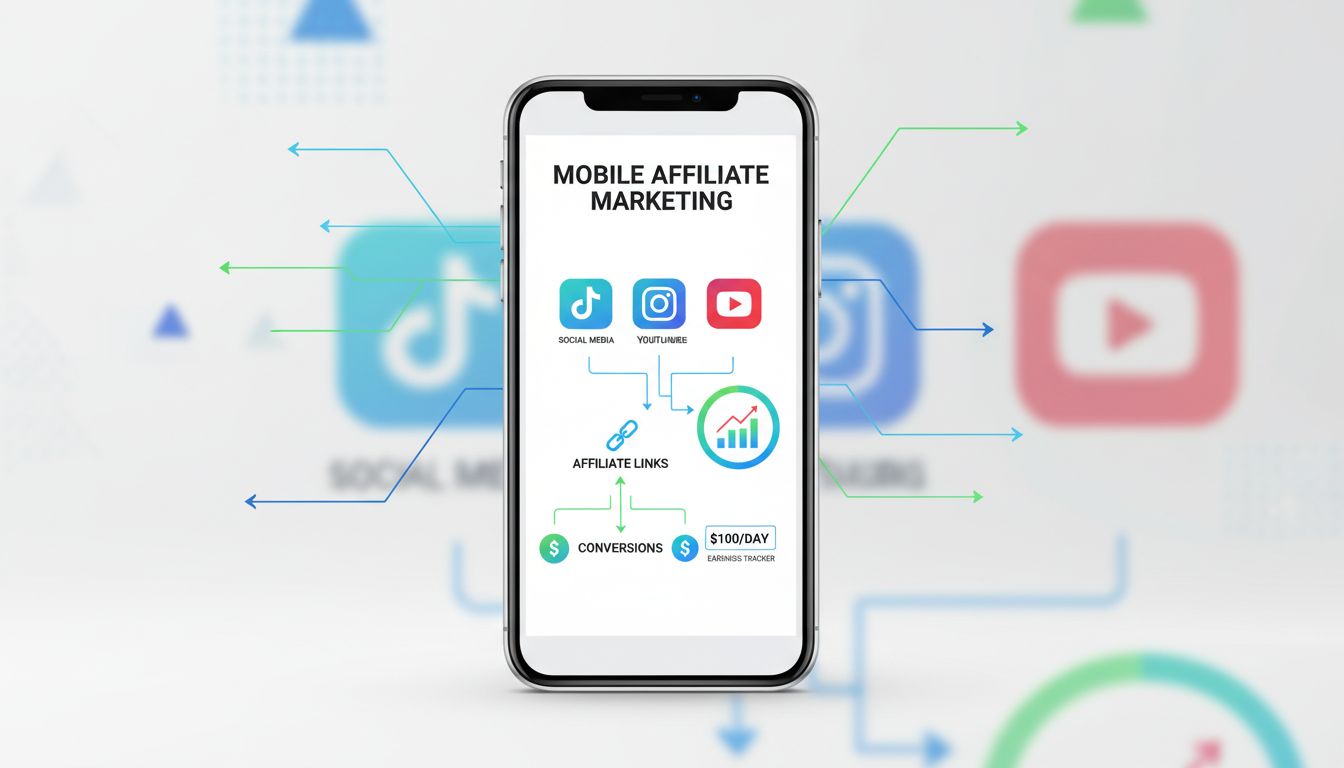
Can I really do affiliate marketing solely from my phone?
A practical look at what actually changes when your entire affiliate business runs from a phone instead of a laptop, and what mobile does and doesn't make easie...
10 min read

Learn how mobile affiliate marketing works, whether you can really run a business from your phone, and the practical steps, tools, and networks that help beginners turn a smartphone into a real income stream.
Picture someone waiting for a bus, thumb scrolling through Instagram, replying to a comment on a story she posted the night before about a skincare serum she actually uses. She never built a website. She does not own a laptop. A few days later, a small commission lands in her account, tracked automatically the moment someone tapped her link and bought the product.
That is mobile affiliate marketing in practice, and it is a lot more ordinary than most beginners expect.
This guide breaks down what mobile affiliate marketing really means, why the shift toward phones has not slowed down, and how to start affiliate marketing with your phone even if you have never run a campaign before. We will also look at the benefits, the honest challenges, how mobile affiliate networks work, and the habits that separate people who stick with it from people who quit after a week. By the end, you should have a realistic picture of all the practical aspects of affiliate marketing you can manage from a phone screen, and where a bigger screen still earns its keep.
Phones stopped being a secondary way to browse the internet years ago. Mobile devices have held onto the largest share of global web traffic for years running, currently sitting at just over half of all traffic worldwide (StatCounter ).
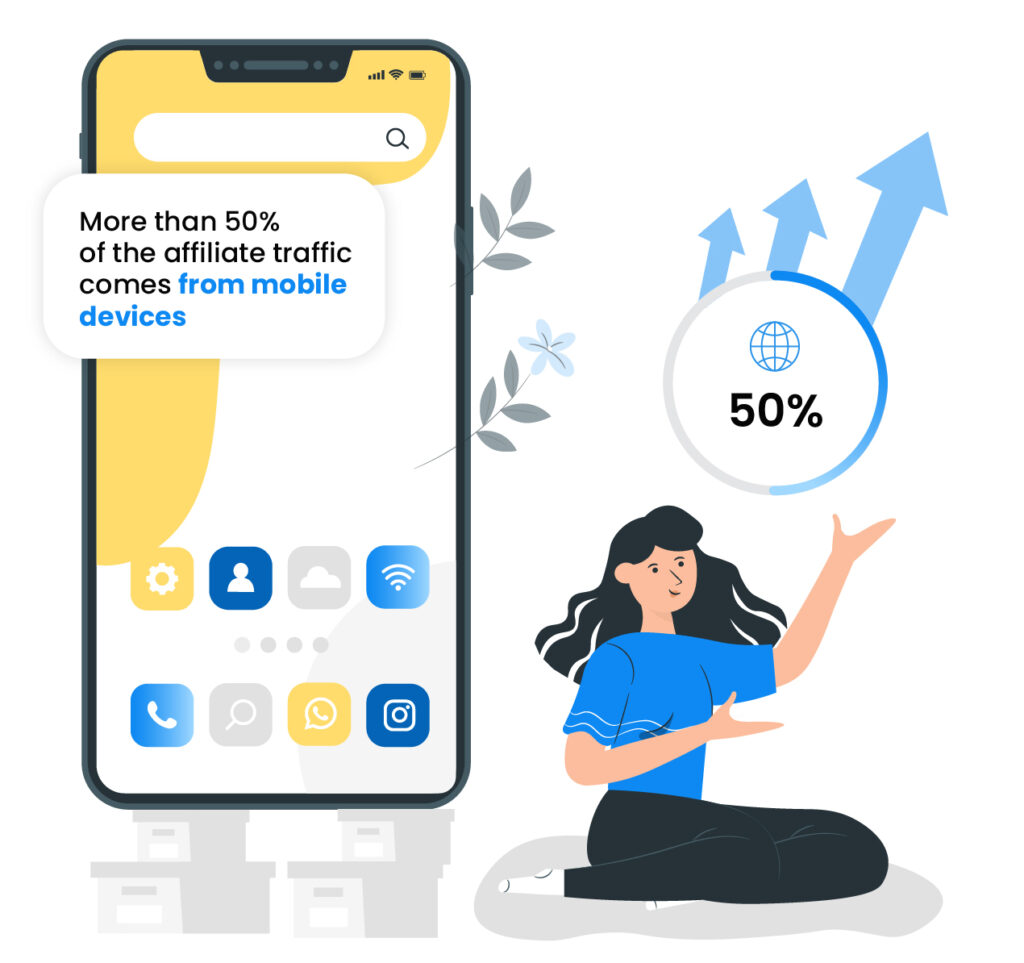
That shift shows up just as clearly in shopping habits. Mobile now accounts for 59% of e-commerce sales worldwide, essentially three in five online purchases, and the share keeps climbing every year (Statista, via Capital One Shopping Research ). In the US specifically, mobile made up a smaller but still substantial 39.8% of e-commerce revenue as of 2024, a gap that says more about American desktop-shopping habits for big-ticket categories than it does about mobile losing ground.
People are not just browsing on their phones either, they are spending real time there. In the US, adults spend an average of two hours and twenty one minutes a day on smartphone apps and browsers alone, according to Nielsen data reported by Backlinko (Backlinko ). Mobile itself is close to universal worldwide at this point too: GSMA Intelligence data puts unique mobile phone users at 5.83 billion, just over 70% of the planet’s entire population (DataReportal ).
Every one of those numbers points in the same direction. If your audience is not primarily on mobile already, they will be soon, and that is good news, not bad news, for anyone getting into affiliate marketing today.
At its core, affiliate marketing works like this: someone, a business or an individual, promotes someone else’s product or service, and earns a commission whenever that promotion leads to a sale, a lead, or another action the merchant cares about.
Mobile affiliate marketing is the same idea, built around how people actually behave on their phones. Instead of a desktop-style blog post with a banner ad, it might look like an app recommendation dropped into a group chat, a swipe-up link on a story, a QR code that opens a mobile landing page, or a text message with a discount code. The mechanics never change. Someone promotes, someone buys, someone gets paid. Only the channel does.
That distinction matters, because a lot of beginners assume affiliate mobile marketing simply means viewing a normal affiliate website on a smaller screen. Sometimes it does. But the faster-growing side of it runs on formats that only really exist on mobile: in-app purchases, app install offers, and location-based promotions a desktop browser could never trigger in the first place.
Affiliate marketing overall is a large and still-growing industry. Around 84% of brands now run an affiliate program as part of their core marketing mix, a share that keeps climbing year over year (Demandsage ).
With numbers like that, it is no surprise that so many businesses and creators want a share of it. Almost anyone can become an affiliate, since it typically costs nothing to get started . In practice, though, the people who do best tend to be bloggers, video creators, and social accounts with a genuinely engaged following. Merchants would rather work with someone who actually likes their product than someone promoting it purely for the payout, so look for that fit on both sides before committing to a partnership.

Set up advanced tracking in minutes. No credit card required.
Yes, and it is worth answering plainly, because this is one of the first questions almost every beginner asks. A smartphone is enough to research a niche, apply to an affiliate program, share your unique link across social platforms, message with brands, and check your commission dashboard through a mobile browser or app.
What a phone is not always great for is building a website from scratch or digging through a large spreadsheet of campaign data. Both are still a bit easier on a bigger screen. But neither one is required to start. Plenty of affiliates run their entire operation through Instagram, TikTok, YouTube Shorts, or a simple link-in-bio page, all of which work perfectly well from a phone. If you want the fuller case for going phone-only, including realistic income expectations and the tradeoffs, see can I really do affiliate marketing solely from my phone .
If you are starting from zero, here is a realistic path that does not need a laptop at any point.
Be the first to know about new features and product updates.
What do you actually gain by working this way? Here are the three biggest advantages of mobile affiliate marketing .
Yes, mobile affiliate marketing is competitive. But the market is large enough, and split across so many different niches , that there is still real room for a new affiliate to find an underserved corner and build an audience there.
Mobile advertising is not a fad that plateaued years ago. AppsFlyer projected global app install ad spend to climb to $94.9 billion by 2025, a 20% jump from 2023 levels (AppsFlyer ). That kind of money only flows toward a channel when the audience, and the returns, are still growing.
Any marketer worth their salt knows that a targeted offer converts better than a generic one, and mobile gives you targeting options a desktop simply cannot match. Geofencing , for instance, lets an advertiser trigger an offer the moment someone’s phone enters a specific area, in real time. Retail chains commonly set up geofences around their own stores, and sometimes around a competitor’s location too, a tactic known as geo-conquesting, to nudge nearby shoppers toward a specific offer instead.
The benefits are real, but so are the trade-offs. Here is what tends to trip up affiliate marketers working from a phone.
Plenty of websites still are not properly built for mobile. Nothing kills a conversion faster than a clunky page, so confirm that any site you send traffic to is genuinely responsive before you invest time promoting it. If you run your own affiliate site, our deeper breakdown of mobile-friendliness in affiliate marketing covers page speed, Core Web Vitals, and responsive design in detail.
Many marketing tools were originally designed for a desktop screen and a desktop workflow, and some of them still translate awkwardly to a phone. This is a real annoyance if you have grown attached to a particular tool, though the gap keeps closing as more software gets built mobile-first from day one.
A phone screen simply shows fewer search results and ads than a laptop does. Offers that rank lower on a results page get fewer taps for that reason alone, so fully optimizing both your content and your offer for a small screen is not optional if you want a fair shot at the click.
A mobile affiliate network is a middleman that connects mobile advertisers, app owners, and businesses with affiliates willing to promote them. Most of these networks run on a cost-per-install or cost-per-action model, meaning you get paid once someone installs an app or completes a specific action, rather than only when they make a purchase.
App-focused networks in particular have grown fast, largely because the app marketplace has gotten crowded enough that developers need affiliate-driven traffic as an additional growth channel. There is also a distinct category of cell phone affiliate programs built specifically around mobile carriers, phone accessories, mobile games, and apps, rather than desktop software or subscriptions.
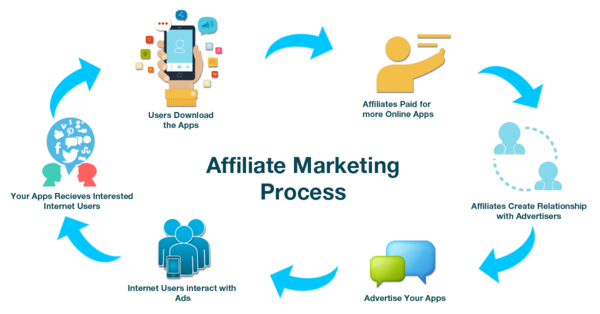
Cost-per-install pricing varies a lot by category. A simple utility app might cost just a couple of dollars per install, while a competitive category like mobile games or finance apps can run many times that, since far more advertisers are bidding for the same install. For a business trying to grow an app, or sell anything through one, partnering with a mobile affiliate network is one of the more reliable ways to add a new revenue channel without hiring an in-house growth team.
Here are the habits that consistently separate affiliates who build something lasting from affiliates who fizzle out.
To make mobile affiliate marketing worth your time, you need to send a decent volume of traffic or leads to an offer. Only a small percentage of any audience converts, so the bigger and more relevant your reach, the better your results.
There is more than one way to earn here, so try a few approaches before settling on one. Common offer types include:
In-app traffic is the single biggest source of mobile traffic, and it is worth tapping into whenever you can. Because mobile carries more contextual data than desktop, especially location, this works particularly well when paired with the geolocation targeting mentioned earlier.
Whatever your niche, expect stiff competition in mobile affiliate marketing. Offers that are creative, specific, and a little unexpected consistently outperform generic ones.
This one is almost obvious, but it is worth stating anyway given how central it has become to affiliate marketing success . Research each platform’s audience and format expectations, then tailor your offer rather than copying and pasting the same post everywhere.
Whichever side of affiliate marketing you are on, working with a network provider tends to pay off. As mentioned, these are the middlemen connecting businesses with willing affiliates, and a couple of taps on your phone is genuinely all it takes to get your account underway.
Affiliate networks with large corporate clients and a solid pool of direct advertisers are especially worth prioritizing. Other advantages of going through a network instead of chasing advertisers one by one include:
The ability to produce sharp, professional-looking images and short video is central to affiliate marketing success , and this matters more on mobile than almost anywhere else. Short-form video already dominates attention on the biggest platforms, and Instagram is no exception. Reels has become one of the app’s most-watched formats since its rollout, and every major platform has since built its own version of the same idea. You do not need a production studio to compete here. Modern phone cameras and free editing apps are enough to produce content that holds up against much bigger budgets.

For mobile affiliate marketing, the numbers worth tracking are costs, conversions, clicks, and visits. Use tracking tools built for the job, and adjust your approach based on what the numbers actually show rather than what you assume is working. Good tracking software gives you a clear overall view of how any given strategy is performing, and helps you spot quickly where your attention is best spent. If you are the one running the program rather than promoting as an affiliate, checking your program from your phone is worth building into a habit too.
Mobile affiliate marketing is not a niche trick anymore, it is simply how a growing share of affiliate marketing happens. The traffic is on phones, the shopping is on phones, and increasingly, the whole affiliate workflow, from applying to a program to checking a commission, can happen there too.
You do not need a laptop, a big budget, or years of experience to start. You need a niche you understand, a network worth joining, a tracking link that actually works, and the patience to check your numbers and keep adjusting. Everything else in this guide is detail on top of that foundation.
So if you have been putting off starting because you thought you needed more equipment or more experience than a phone in your pocket, that excuse no longer holds up. The tools are already in your hand.
Izaak Crook is the Content Marketing Manager at AppInstitute, a SaaS App Builder platform that allows anyone to create their own iOS and Android app without writing a single line of code.

Ready to boost your revenue with mobile affiliate marketing? Explore our expert tips and strategies to maximize your affiliate success on smartphones.
A practical look at what actually changes when your entire affiliate business runs from a phone instead of a laptop, and what mobile does and doesn't make easie...
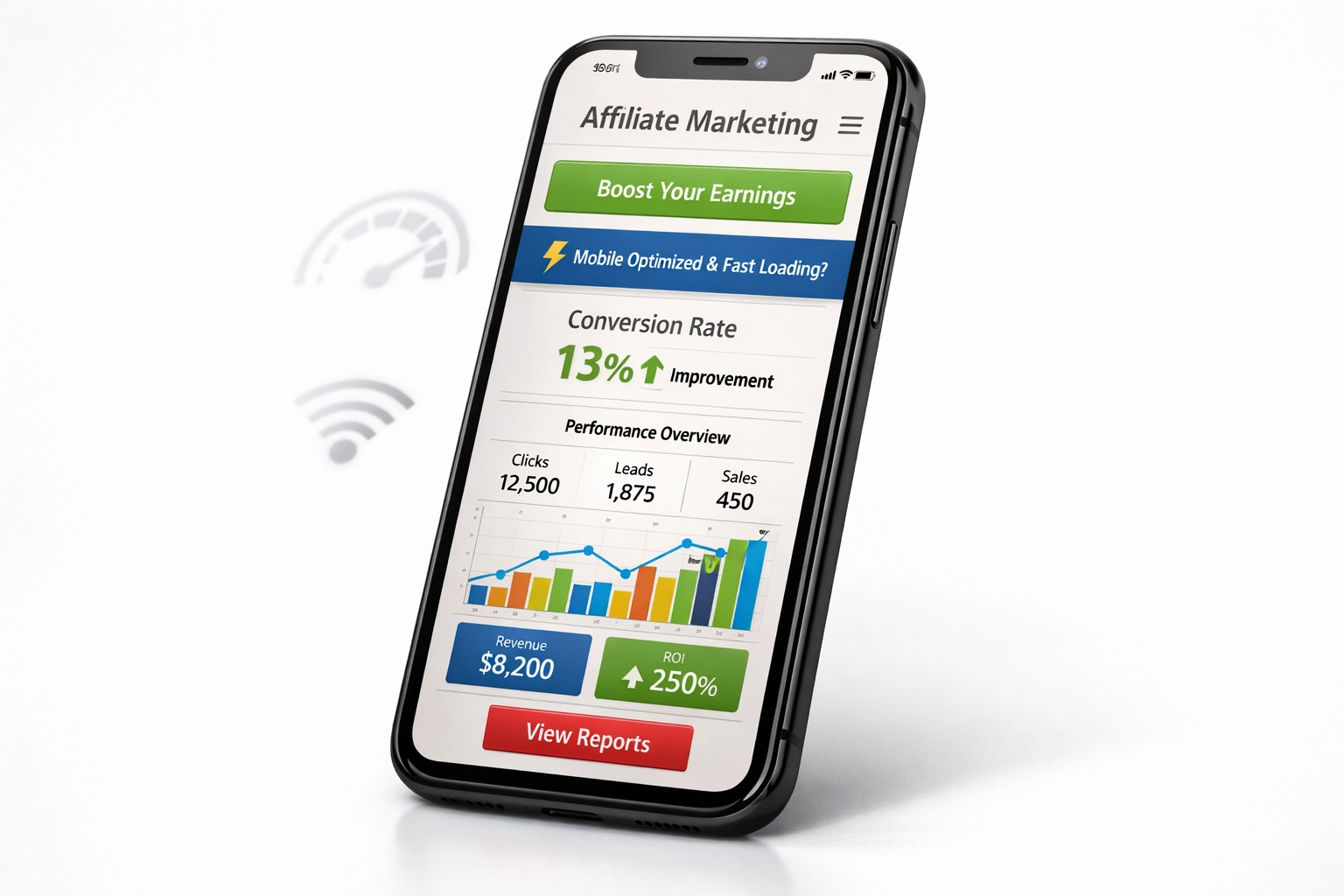
Why mobile-friendliness is a real ranking and revenue factor in affiliate marketing, from Core Web Vitals to responsive design, and how to test and fix your aff...
Mobile affiliate marketing leverages the growing mobile traffic to promote products and services via smartphones and tablets. Discover key strategies, ad format...
Join our community of happy clients and provide excellent customer support with Post Affiliate Pro.




Cookie Consent
We use cookies to enhance your browsing experience and analyze our traffic. See our privacy policy.