


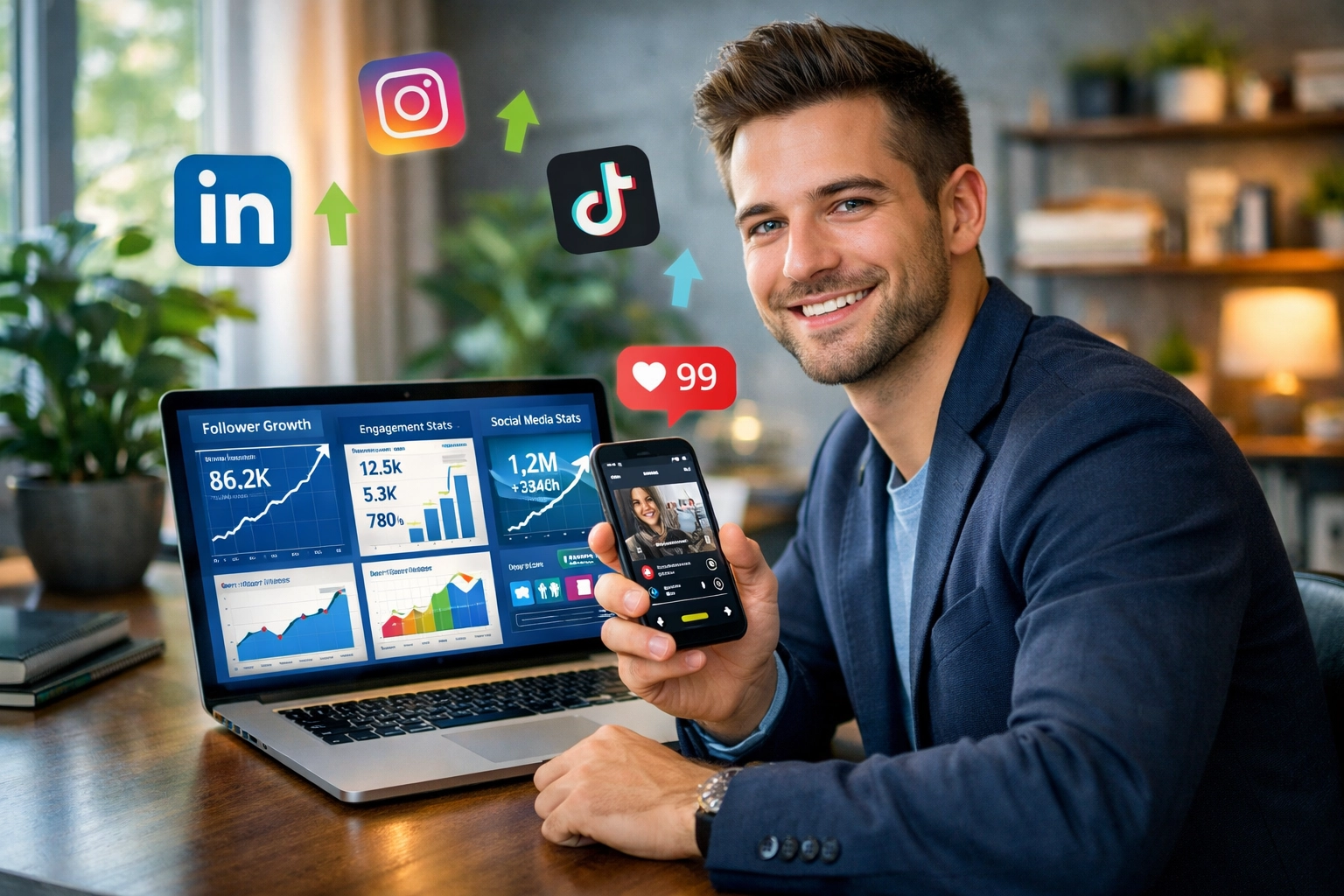
Why entrepreneurs should use social media for affiliate marketing
Why social media has become the fastest way for entrepreneurs to build affiliate income, which platforms actually fit which products, and how to avoid the trust...
7 min read

A current, platform-by-platform look at using Instagram, TikTok, and Facebook for affiliate marketing, including how each platform’s native affiliate tools actually work in 2026.
Picture two people scrolling their phones on the same commute. One stops on a TikTok where a creator is trying on a jacket that looks better than anything in their own closet. The other pauses on an Instagram Reel comparing three kitchen gadgets side by side. Neither of them opened the app looking to buy anything. By the time they put their phones away, both have tapped a link.
That’s the entire case for social media affiliate marketing in one scene. It doesn’t feel like advertising, right up until it works exactly like advertising. And the scale behind it is no longer a niche curiosity: roughly 5.79 billion people, about 70% of everyone on the planet, now use some form of social media, spending an average of 2 hours and 21 minutes there every single day (Source ). Brands have noticed. Around 84% now run some kind of affiliate program to reach that audience, up from 81% not long ago (Source ).
What’s changed since the early days of “just drop a link in your bio” is that the platforms themselves now want a piece of the commerce happening on them, and they’ve built the tools to prove it. Below is what actually works on each major platform right now, not what worked five years ago. If you want the broader case for why this is worth an entrepreneur’s time at all, our piece on why entrepreneurs should use social media for affiliate marketing makes that argument in more depth.
Instagram remains one of the biggest rooms in the building, with around 3 billion monthly users (Source ). What’s genuinely new is how directly Instagram now lets you sell inside that room instead of routing everyone elsewhere first.
For years, the standard advice was to put your affiliate link in your bio and remind people to tap it, since Instagram didn’t let regular posts carry clickable links. That workaround still exists and still works, tools like Linktree or Linkin.bio turn one bio link into a small landing page of several offers. But two things have moved past that old playbook. First, the “10,000 followers needed to add a link in Stories” rule is gone, Instagram replaced the swipe-up gesture with a link sticker back in October 2021, and it’s available to every account regardless of size (Source ). If you’ve been holding off on Stories because you don’t have a big following yet, that barrier simply doesn’t exist anymore.
Second, and more significant, Instagram relaunched native affiliate commerce inside Reels in late March 2026, years after quietly shutting down its first attempt at the feature. Eligible creators can now tag affiliate products directly on a Reel and earn a commission when someone buys, without ever sending the viewer off Instagram (Source ). The rollout is landing market by market, but it’s a clear signal of where Meta wants affiliate content to live. Whether you’re using the old link-in-bio approach or the new in-app tagging, the same rule holds: a genuinely useful comparison or demo outperforms a product photo with a caption every time. For a deeper look at exactly what kind of following you need to make this work, our guide on Instagram affiliate marketing follower requirements breaks that down further.
If Instagram is where affiliate commerce is catching up, TikTok is where it’s already ahead. TikTok now counts close to 2 billion monthly users (Source ), and TikTok Shop has become, in eMarketer’s words, the fastest-growing online retailer it tracks for the second year running, with affiliate creators sitting at the center of that performance rather than on the sidelines of it (Source ). During the Black Friday to Cyber Monday window alone, TikTok Shop sales topped $500 million, driven heavily by livestream shopping (Source ). In health and beauty specifically, TikTok Shop has grown into the fourth-largest ecommerce retailer in that category in the US, with category sales up more than 107% year over year (Source ).
The mechanics are more built-in than on most platforms. You join a brand’s affiliate program inside TikTok Shop, add their products to your own showcase, and earn a commission whenever a video, a LIVE stream, or a product link you shared leads to a purchase, all tracked inside the app. That closes the gap that hurts conversions everywhere else: the viewer never has to leave TikTok, remember a code, or find a link in a bio. A short, honest demo (this is how it fits, this is how it feels, here’s the catch nobody mentions) tends to outperform a polished ad, partly because TikTok’s algorithm and its audience both reward things that don’t look like ads. For platform-specific tactics, including how a Creator versus Business account affects your reach, our guide on using TikTok for affiliate link promotion goes further into the setup.

Set up advanced tracking in minutes. No credit card required.
Facebook is easy to underestimate because it feels like the platform everyone’s parents joined a decade ago, but it’s still the largest social network in the world by user count, at roughly 3.07 billion monthly users (Source ). It’s also quietly become more commerce-friendly: Meta has been adding direct affiliate partnerships with major retailers like Amazon, Shopee, eBay, and Temu across Facebook, part of a broader push to make the platform a real shopping destination rather than just a place ads run.
A personal profile full of affiliate links reads as spam to your friends, so a dedicated Page is the cleaner starting point, and it gives you real post-performance data instead of guesswork. But if you want actual engagement rather than just reach, a niche Group tends to outperform a Page, since members join a Group expecting recommendations, not just content, which means a product link lands as help rather than as an ad once you’ve built some trust there.
Ads are still the fastest way to reach people who don’t already follow you. Facebook lets you target campaigns by demographic, gender, age, and behavior, so define your audience narrowly before you spend anything. The one catch worth knowing: a raw affiliate link in an ad unit tends to look untrustworthy and can hurt your click-through rate, so running it through a clean, branded short link, or better yet a landing page you control, converts noticeably better. Just keep the shortened link honest, Facebook bans deceptive cloaking, showing reviewers different content than real visitors see, but a simple, transparent redirect to the actual offer is fine.
Our step-by-step Facebook affiliate marketing guide and our breakdown of posting affiliate links on Facebook without violating platform policy both go deeper into the specifics.
Every platform now gives you a built-in way to flag paid content, Instagram’s “Paid partnership with [brand]” label on posts, Reels, and Stories, and TikTok’s Branded Content toggle, which adds its own “Paid partnership” badge beneath your username. It’s tempting to treat flipping that switch as the whole job. It isn’t. Regulators and platform guidance both treat the badge as a supplement, not a replacement, for a clear disclosure in your own words, so pairing the label with “#ad” or “affiliate link” at the start of your caption or spoken in your video is what actually satisfies the requirement (Source ).
This applies just as much to affiliate links and discount codes as it does to a brand paying you directly for a post, a distinction a lot of creators miss. Earning a commission counts as a material connection either way, and the FTC has made clear it treats undisclosed affiliate relationships the same as any other undisclosed sponsorship, backed by a maximum civil penalty of $53,088 per violation as of 2025, unchanged through 2026 (Source ). None of this is a reason to avoid affiliate content. It’s a reason to build the disclosure habit in from your very first post, since retrofitting it across an old content library once you’ve grown an audience is a far bigger job than saying it plainly from day one.
Be the first to know about new features and product updates.
X, rebranded from Twitter in 2023, plays a smaller role in affiliate marketing than it once did now that short-form video dominates most people’s scrolling time, but it still reaches a real, often older and more B2B-leaning audience that niches like finance or software can still tap into. The format hasn’t changed: you’re working within a tight character limit, so a sharp, specific claim beats a vague one, and a clean, honest bio still matters more than people expect.
Where X still earns its place is paid promotion. You can run campaigns aimed purely at gaining followers, or campaigns aimed at driving clicks and conversions to your site, and the two need different creative and a different call to action, a “follow me” message won’t convert the way a direct offer does, and vice versa. To actually measure what those campaigns are doing, install the X Pixel (the current name for what used to be called the Twitter Universal Website Tag) through X’s Ads Manager, ideally paired with its Conversion API for more reliable tracking now that browser-based tracking alone misses more traffic than it used to (Source ). For managing the account itself, Circleboom and Audiense are still active, officially API-approved tools in 2026, worth knowing since several once-popular options like Tweriod and Commun.it didn’t survive X’s 2023 API pricing changes and no longer work.
A few other platforms deserve a mention without needing a full section each. Pinterest remains genuinely useful for evergreen, search-driven niches like home decor, recipes, or personal finance, since pins keep surfacing in search long after you post them, unlike a post on X or a Reel that has a shelf life measured in hours. Creating a handful of niche-specific boards, adding a clear description and an affiliate link to each pin, and using a scheduling tool to post consistently still works exactly as it did a few years ago. YouTube Shorts is worth watching too, since it borrows TikTok’s short-form format but taps into an audience that already trusts YouTube for buying research.
Social activity pays off in a second, less direct way too: content that gets shared widely tends to earn real backlinks from bloggers and journalists who reference it, which compounds your SEO alongside whatever affiliate clicks it generates directly. Our breakdown of how social media generates backlinks for affiliate sites covers that side of the equation in more depth.
You don’t need to be everywhere at once, and trying to usually means doing all of it poorly. Match the platform to your product and your content strength: visual, aspirational, or entertaining products tend to thrive on TikTok and Instagram Reels, detail-heavy or comparison-driven products often do better in a Facebook Group or a long-form YouTube video, and evergreen, search-friendly categories reward the patience Pinterest rewards. Whichever platform you choose, use a trackable, cleanly branded link rather than a raw affiliate URL wherever the platform allows it, since a link that looks legitimate gets clicked more often than one that looks like tracking software.
Choosing the platform is only half the plan. Once you know where you’re showing up, our guide to building a social media posting schedule covers how often to actually post on each one and a simple weekly template to keep it sustainable. And if you’re doing all of this correctly and sales still aren’t coming, our piece on why your social media affiliate marketing isn’t converting yet walks through the most common reasons that specific plateau happens.
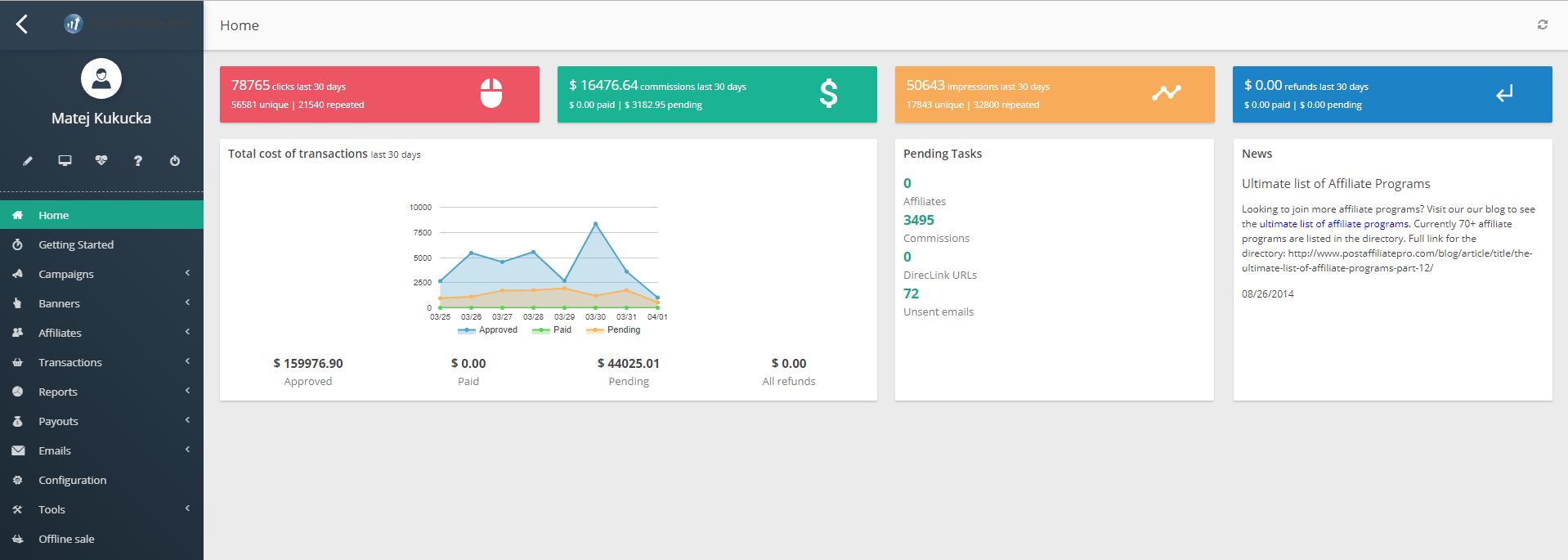
Here’s a problem that shows up once you’re posting on two or three platforms at once: your total commissions go up, but you genuinely can’t tell whether that TikTok video or that Facebook Group post is responsible. Platform-native analytics only tell you about engagement inside that platform, likes, views, and profile visits, not what happened after someone clicked through and landed on a merchant’s site.
Solving that means tagging each platform’s links distinctly, a separate link or UTM parameter per channel, so a click from your Instagram bio is recorded differently from one shared in a TikTok video, even if both point to the exact same product. Affiliate tracking software exists specifically to sit in that gap, attributing a sale back to the exact link, platform, and piece of content that generated it, rather than leaving you to guess from a single lump commission total at the end of the month. Once you can see that clearly, the platform-choice question above stops being a hunch and starts being something you can actually measure and act on.
None of this requires being an influencer with millions of followers. It requires knowing which platform your specific audience already trusts, showing up there with something more useful than a link and a hashtag, and paying enough attention to your own numbers to know what’s actually working.
Lucia is a talented content editor who ensures the seamless publication of content across multiple platforms.

Unlock the full potential of social media platforms for affiliate marketing success in 2026. Explore actionable strategies for higher engagement and conversions.
Why social media has become the fastest way for entrepreneurs to build affiliate income, which platforms actually fit which products, and how to avoid the trust...

Social media connects billions of people from all around the world. Learn about the best SoMe platforms for affiliating marketing and start improving now.
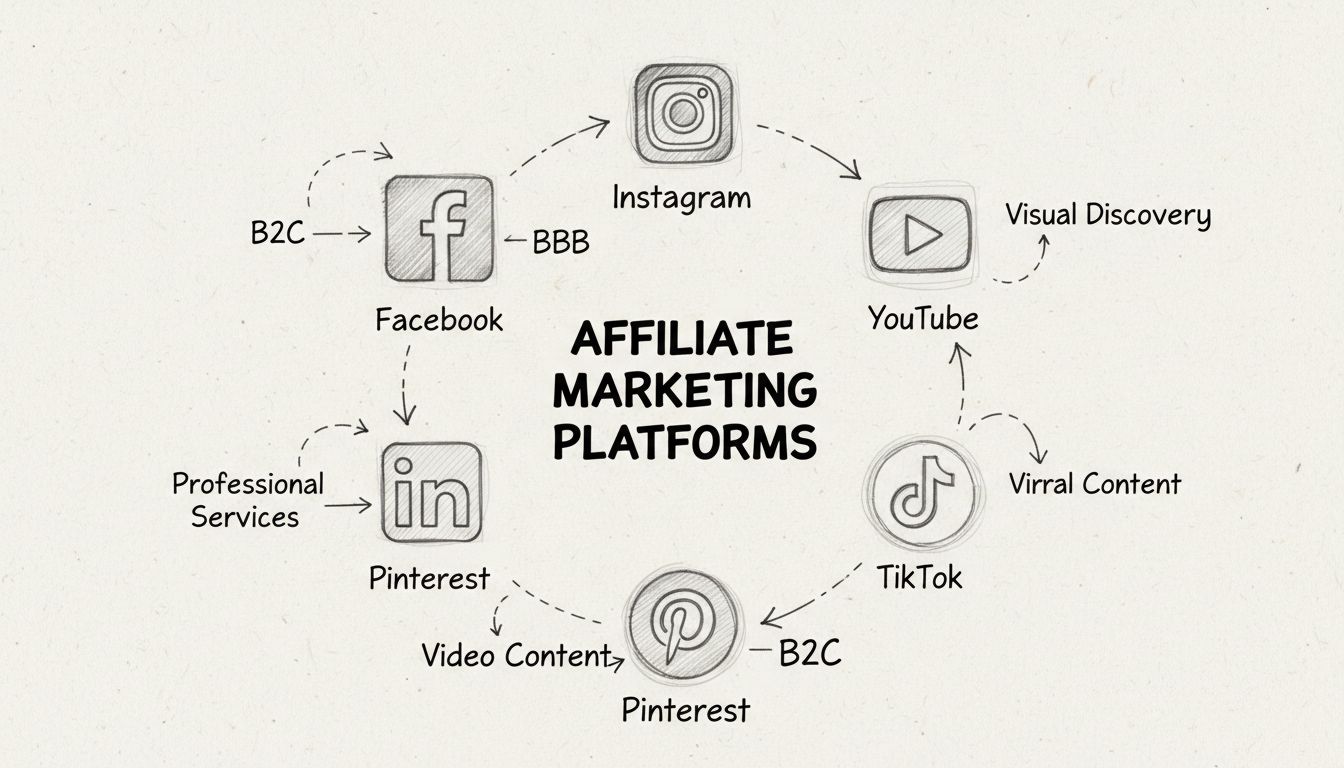
Discover the top video platforms for affiliate marketing including YouTube, TikTok, Instagram, and Facebook Live. Learn which platform suits your niche and audi...
Join our community of happy clients and provide excellent customer support with Post Affiliate Pro.




Cookie Consent
We use cookies to enhance your browsing experience and analyze our traffic. See our privacy policy.