Maybe you’ve already put up your affiliate site, poured evenings and weekends into it, and still have nothing to show for it. Or maybe you’re still just thinking about starting one, and it already feels like too much work, too complicated, and too risky to bother, in which case is being an affiliate worth it
is worth reading before this article, since it covers that decision directly. Both reactions make sense. What doesn’t hold up is the idea, common to both, that affiliate marketing is either easy money or a waste of time. It’s neither. It’s closer to any other business: slower to pay off than people hope, and more workable than people fear once you know what’s actually normal along the way.
An estimated 95% of beginners who try affiliate marketing fail or quit before it ever pays off (Source
). If that number stings a little, it should also be a relief: you’re not doing something wrong. You’re standing exactly where almost everyone stands before the numbers start moving. The honest question isn’t whether this is hard. It’s whether you understand why people quit here, so you don’t have to be one of them. Below are the reasons that come up again and again, and why none of them are actually good reasons to stop.
No time, no money
Affiliate marketing is genuinely an investment, of time more than money. You need a website, content, and usually some kind of promotion, and all of that takes real hours. But the bar is lower than it looks. You can have a basic site running in an afternoon, and putting in an hour a day is enough to build real momentum over a few months.
The money side is even more forgiving than people expect. A domain runs around $10 a year, and basic hosting is usually under $10 a month, so you can realistically get started for less than the cost of a few takeout dinners. Paid advertising can accelerate things later, but it’s optional early on, not a prerequisite. The math is simple: more time and money generally means faster growth, but starting slow while you learn the basics is a perfectly reasonable way to begin.
It’s tempting to tell yourself you’ll start once you have more free time or a bigger budget saved up. That day rarely arrives on its own. As the saying goes, if you really want to do something, you’ll find a way, and if you don’t, you’ll find an excuse. Treating this as a real, if small, priority now tends to matter more than waiting for ideal conditions later.
There’s a second reason starting small makes sense beyond just being realistic about budget: it caps your downside while you’re still learning. Losing $50 on a first ad test that teaches you your targeting was off is a cheap lesson. Losing $1,000 on the same mistake, because you decided to go big before you understood what converts, is a much more expensive way to learn the same thing. Which brings up the next thing that tends to derail people early on.
Early failure and negativity
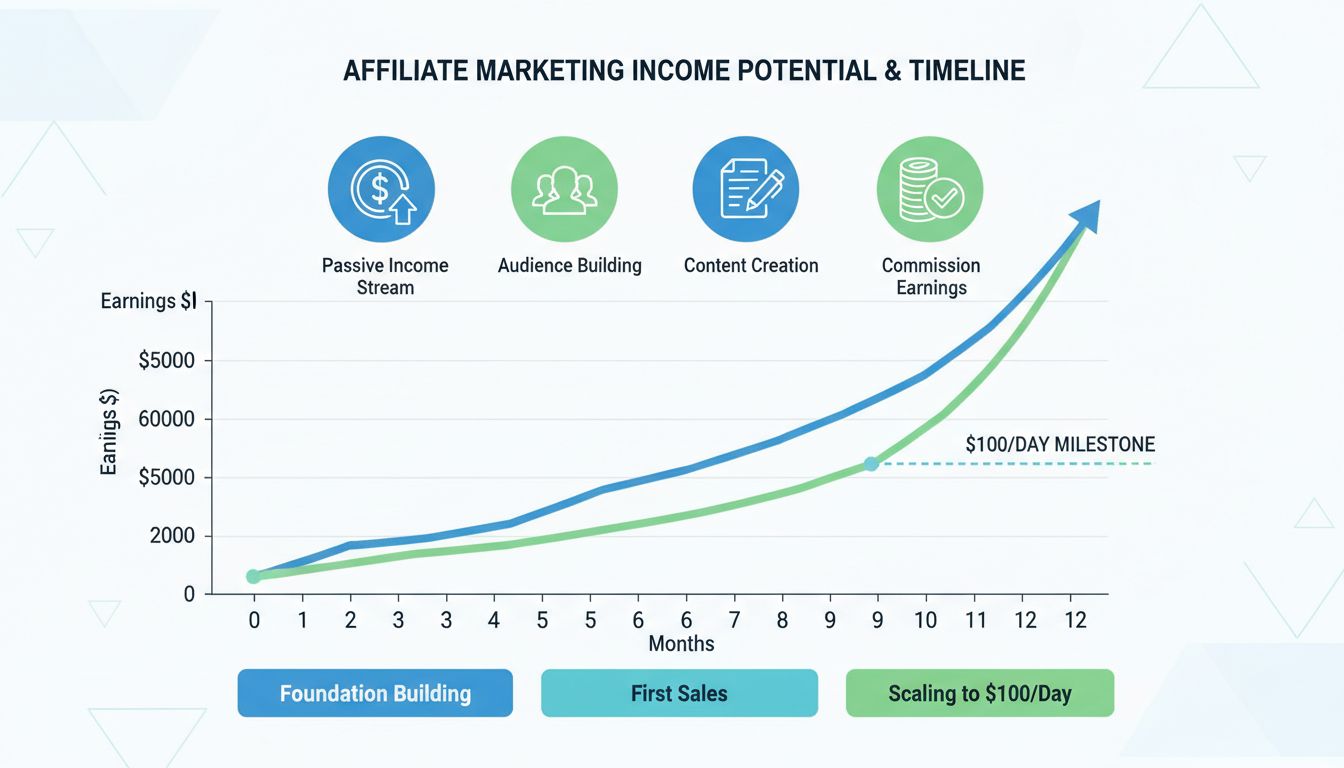
Say you’ve put in the hours, published your first content, and run a small ad test that went nowhere. Here’s the part that actually matters: most beginners see little to no income for the first three to six months, and that’s not a sign of failure, it’s just the timeline. Content usually starts ranking and generating a first sale somewhere in that window, with earnings typically settling into a modest, steady range by month six to twelve, not before.
Nobody gets this right on the first attempt, and a failed campaign or two isn’t evidence you should quit, it’s just what the learning curve looks like. If your site does start earning something early, resist the urge to treat it as profit to pocket. Reinvesting a portion of those first commissions back into better content or tools tends to compound far faster than spending them does.
Launch your affiliate program today
Set up advanced tracking in minutes. No credit card required.
The other common reason people quit isn’t failure, it’s overwhelm. If you don’t come from a marketing or technical background, the sheer volume of advice out there, conflicting guides, outdated tutorials, and confident strangers all claiming to have the one right method, can feel paralyzing rather than helpful. That reaction makes sense.
It’s worth reframing what all that noise actually means, though. That much information existing is really evidence that a huge number of people have walked this exact path before you and made it work, not proof that the path is too complicated to walk. You don’t need to absorb everything at once, and you don’t need the single “best” resource before you start. Pick one credible source, work through it step by step, and let your own results tell you what to learn next. Somewhere in that pile of guides is an explanation that clicks for you specifically, even if the first three didn’t. Our own academy
is built for exactly that kind of step-by-step start.
Affiliate marketing is genuinely a job, not a lottery ticket, and treating it that way from the start makes the slow early months easier to sit through. It does eventually get easier: once your early content is ranking and a decent chunk of your traffic shows up without you actively promoting it, the income starts to feel less like hourly work and more like the payoff of what you already built. But “passive” is relative, not absolute. Even at that stage, there’s still real work behind the scenes: new content to keep publishing, campaigns and conversion incentives to test, older pages to refresh once they start slipping in search results, and, if you ever grow enough to bring on help, people to manage and keep pointed in the same direction. That ongoing maintenance is a sign the business is real, not a sign the model stopped working.
Burnout from wearing every hat at once
There’s a fourth reason people quit that’s different from the first three, and it’s less about a single bad month than about the workload quietly becoming unsustainable. A solo beginner is usually acting as content creator, copywriter, web designer, email marketer, funnel builder, traffic strategist, and product researcher, all at the same time, often while still working a full-time job. Nobody sustains that indefinitely, especially without a paycheck to show for it yet, and burnout from that kind of load can look a lot like giving up even when the underlying strategy was actually fine.
The fix isn’t to somehow become excellent at all seven of those roles. It’s to be honest about which two or three you’re actually good at or enjoy, and to lighten the rest. That might mean using a template instead of designing a site from scratch, using an AI tool to draft a first pass of content you then edit into your own voice, or simply narrowing your promotion to one or two channels instead of trying to be active everywhere at once. This isn’t a niche workaround either: roughly 79% of affiliate marketers already use AI tools somewhere in their workflow, mostly for exactly this kind of load-lightening (Source
). Protecting your own energy is as much a part of not giving up as protecting your budget is.
Join our newsletter
Be the first to know about new features and product updates.
The real reason most people quit: month three
If there’s a single moment where the 95% figure above actually happens, it’s around month three. That’s usually the point where the initial excitement has worn off, the bank balance still shows nothing, and quitting starts to feel like the reasonable decision rather than the premature one. It’s also, unfortunately, almost exactly the point where consistent publishing starts to compound for the people who stay. For a fuller picture of what a realistic first year actually looks like month by month, our guide on beginner affiliate marketing income
walks through the whole timeline, and our affiliate marketer earnings
guide covers what changes once you’re past it.
Getting through that stretch isn’t about grinding harder. It’s about tracking the right things. A first sale matters, but so does your first bit of organic traffic, your first returning reader, or your first piece of content that actually ranks, since those are the leading indicators that the bigger numbers are on their way. No business, including a one-person affiliate site, survives on guesswork alone. Check your numbers regularly, be honest about what’s actually converting and what isn’t, and adjust before you’re three months further into a strategy that quietly stopped working. If the mechanics of how that first sale actually turns into money in your account are still unclear, our guide on how affiliate marketers get paid
fills in that gap. Aim, don’t just fire.
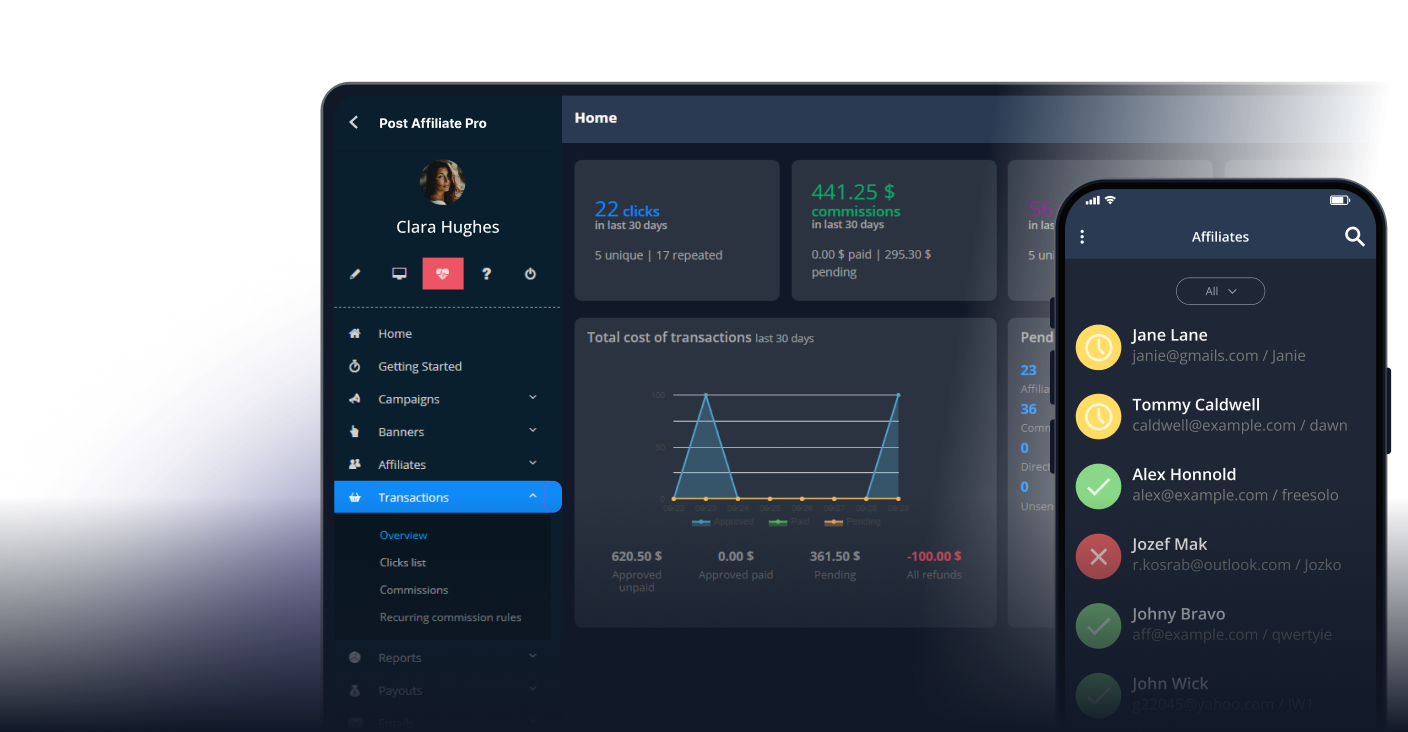
If you’re reading this from the merchant’s side, wondering why a promising new affiliate suddenly went quiet, this same month-three pattern is usually the answer. Our walkthrough on tracking affiliate earnings and commissions in Post Affiliate Pro
shows you where that drop-off actually shows up in your own reports, often before the affiliate has consciously decided to quit at all.
With time, and with attention paid to what’s actually working rather than just what’s landed in your bank account, you get better at this. Most people who succeed at affiliate marketing aren’t the ones who never struggled. They’re the ones who kept going past the point where everyone else stopped.
Frequently asked questions
Usually because they expect results faster than the model actually delivers. Most beginners earn little to nothing for the first three to six months, and quitting right around that point, just before compounding starts to show, is the single most common reason people conclude affiliate marketing doesn't work.
Most beginners land their first sale between month three and month six, and earnings tend to stop feeling random somewhere between month six and month twelve, typically settling into a $100 to $500 monthly range once a handful of pages start ranking.
No. A domain costs around $10 a year and basic hosting is usually under $10 a month, so the financial barrier to sticking with it is genuinely low. What actually runs out for most people first is patience, not money.
Track a few concrete numbers instead of just your bank balance, first sale, first 10 visitors from search, first returning reader, so you can see progress even in months with no revenue. Treat the first six months as building an asset rather than doing paid work, since that's a more accurate description of what's actually happening.
Stop trying to be excellent at every role, content creator, designer, copywriter, email marketer, and traffic strategist, all at once. Focus on the two or three tasks you're actually good at, and lighten the rest with templates, AI tools, or a narrower channel focus, which is what most affiliates already do rather than a shortcut you'd be taking alone.
Lucia is a talented content editor who ensures the seamless publication of content across multiple platforms.
Lucia Halašková
Content Editor
Start Your Affiliate Marketing Journey
Ready to turn your affiliate marketing efforts into a thriving business? Explore actionable insights and proven strategies with Post Affiliate Pro.
Is Being an Affiliate Worth It? Complete Guide to Affiliate Marketing Success
Discover if affiliate marketing is worth your time and effort. Learn realistic income expectations, timeline to profitability, and proven strategies to build pa...
How much can beginners make in affiliate marketing in 2026
How much can beginners make in affiliate marketing in 2026? A realistic, source-checked breakdown of beginner affiliate marketing income, timelines, and what ac...