


EPC in Affiliate Marketing: Earnings Per Click Guide
Learn what EPC (Earnings Per Click) means in affiliate marketing, how to calculate it, and proven strategies to increase affiliate earnings.
9 min read
In affiliate marketing, earnings per click (EPC) measures affiliate commission earnings divided by the number of referral clicks in a defined period or cohort. It estimates average earnings across those clicks, not a payment for every click. Some reports express the result per 100 clicks, so confirm the convention before comparing offers.
In affiliate marketing, earnings per click (EPC) measures affiliate commission earnings divided by the number of referral clicks in a defined period or cohort. It estimates average earnings across those clicks, not a payment for every click. Some reports express the result per 100 clicks, so confirm the convention before comparing offers.
EPC = eligible commission earnings ÷ eligible referral clicks. State the earnings status and time horizon. A pending-earnings EPC and an approved-earnings EPC can differ because some transactions are later declined or reversed.
For an illustrative $200 in approved commissions from 400 clicks, EPC is $0.50 per click. Expressed per 100 clicks, it is $50. Always identify the unit before comparing networks or offers.

Set up advanced tracking in minutes. No credit card required.
| Metric | What it measures |
|---|---|
| EPC | Average commission earnings per referral click |
| CPC | Advertising cost per click |
| CPA | Cost or reward per action, depending on the report |
| Conversion rate | Share of visits or clicks producing a defined outcome |
Not necessarily. With $0.80 EPC and $0.60 traffic cost per click, the difference is $0.20 before other costs. Creative, tools, labor, and payment fees can reduce the remaining contribution. Organic traffic also takes resources even when no media CPC is paid.
Be the first to know about new features and product updates.
A network figure can aggregate partners with different audiences and placements. Your own results depend on fit, traffic quality, dates, and the eligible earnings definition. A small sample can also be distorted by one unusually large reward.
Use aligned cohorts and segments rather than chasing the largest displayed number. For recurring commissions, explicitly state how long later earnings are observed so one-time and recurring offers are compared fairly.
Use the same eligible earnings state and observation period for each campaign. A higher EPC can indicate better recorded monetization, but the cause might be audience targeting, commission rate, average order value, conversion rates, or a different mix of products. Calculate EPC for each comparable segment before deciding what to change.
For an illustrative 500 total clicks earning $250, EPC is $0.50. Another campaign earning $300 from 1,000 clicks has lower EPC of $0.30 but higher total earnings. The best choice depends on traffic cost, scalability, and the resources needed to generate each result.
Post Affiliate Pro’s report documentation provides product-specific data-access context. Keep report definitions consistent with the actual records.
Look for unusually large orders, a temporary bonus, fewer low-quality clicks, or a changed attribution policy. Someone clicking an affiliate link is not automatically a commission event, and an average revenue-per-click metric does not promise money for each click.
Shopify’s analytics field reference supplies commerce-metric context. Compare sales and commission reports carefully because order revenue and affiliate earnings are different numerators.
For a hypothetical cohort earning $500 in approved commissions from 1,000 clicks, EPC is $0.50 per click, or $50 per 100 clicks. If $100 is later reversed, net EPC falls to $0.40 per click. Pending commissions should be labeled separately from approved or paid earnings.
Compare offers using similar audiences, placements, attribution windows, and commission maturity. A recurring offer can accumulate earnings after the initial click period, so a seven-day comparison with a one-time offer may understate its later value. A network average also does not predict the EPC of your own audience.
Subtract cost per click when evaluating paid traffic and account for creative or operating costs separately. Segment your own results by SubID, campaign, and device where appropriate. Use enough observations to understand variability; a single large commission can distort a small sample.
For the corresponding Post Affiliate Pro settings, consult the reporting documentation . Confirm the configuration and integration requirements against your program’s rules.
Explore Post Affiliate Pro’s tracking, commission settings, and partner management tools.
Learn what EPC (Earnings Per Click) means in affiliate marketing, how to calculate it, and proven strategies to increase affiliate earnings.
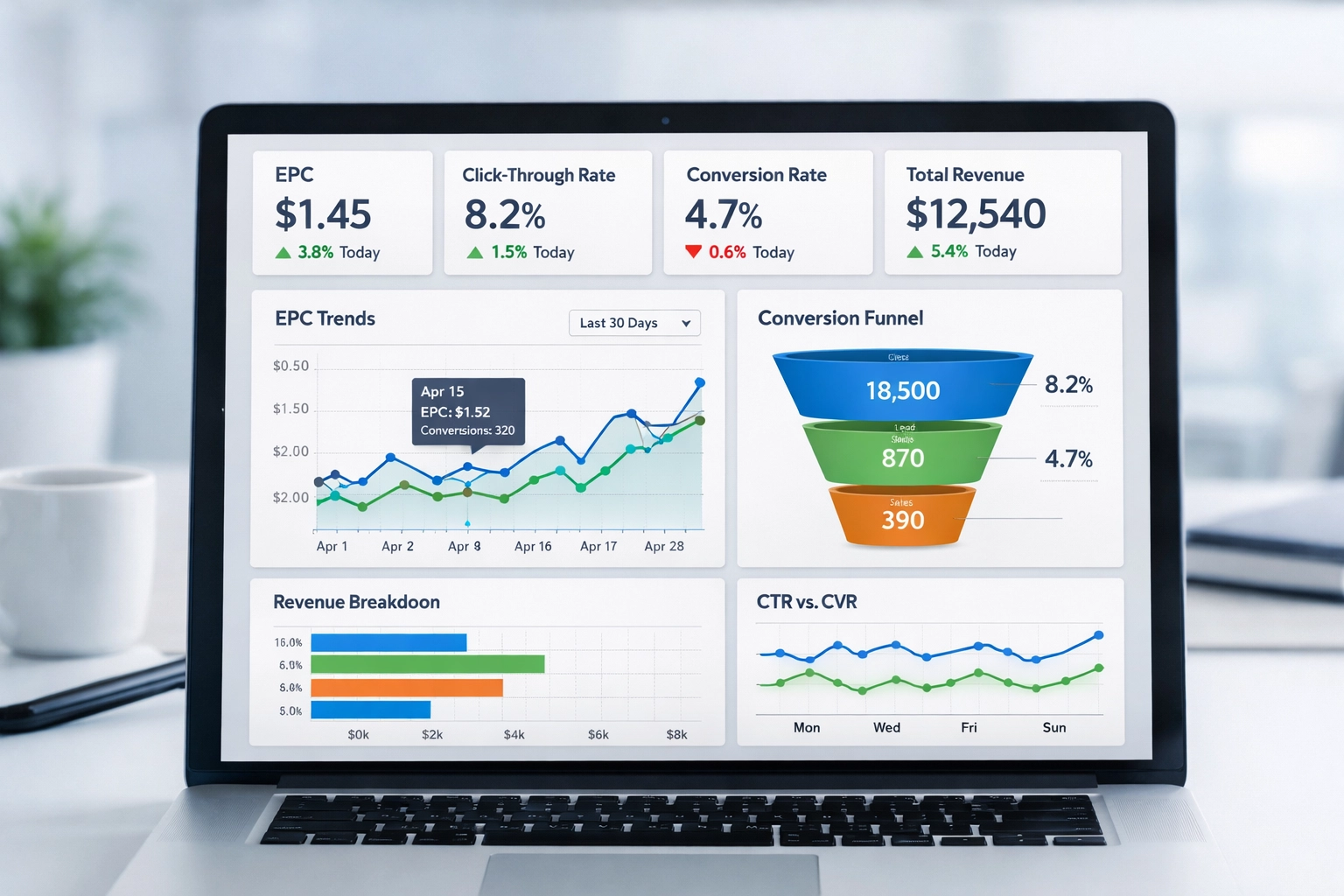
7 proven strategies to improve your EPC (Earnings Per Click) in affiliate marketing. Boost your affiliate revenue with high-paying merchants
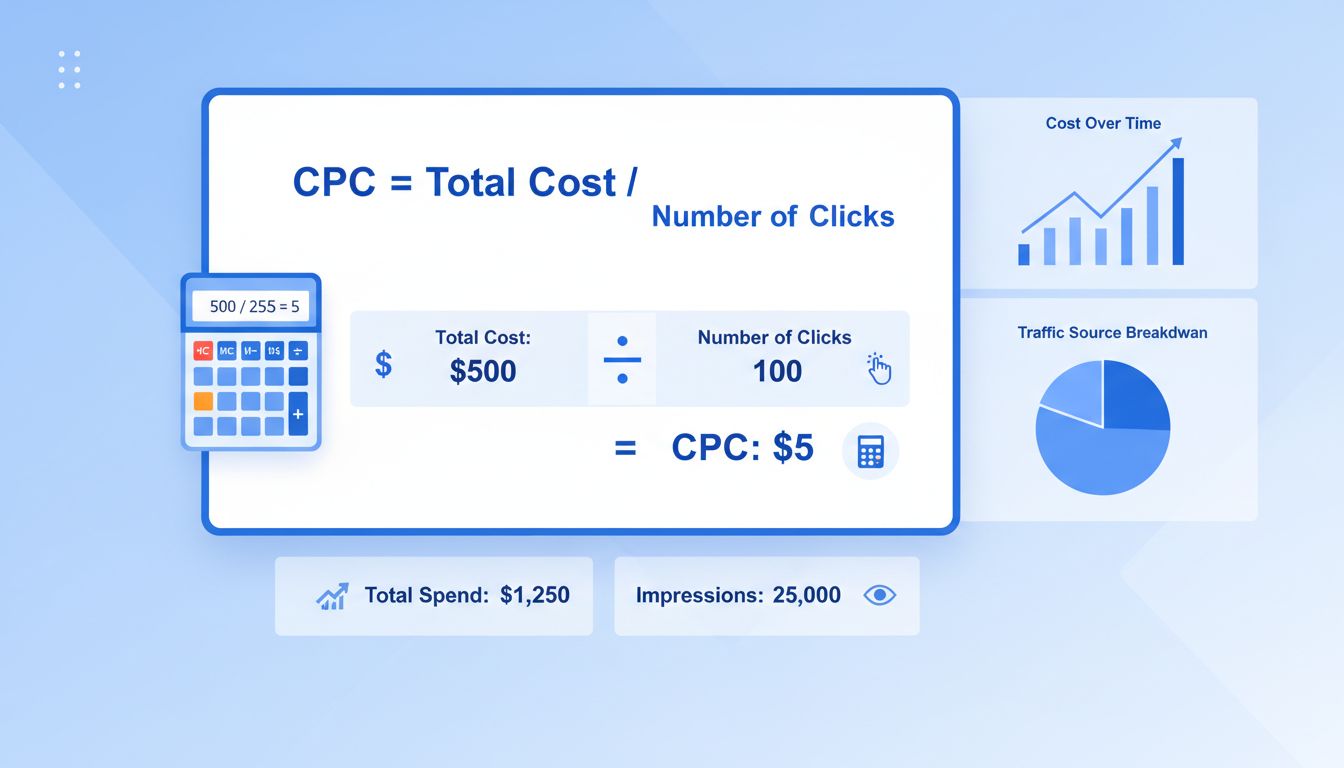
Learn how to calculate cost per click with our comprehensive guide. Discover the CPC formula, industry benchmarks, optimization strategies, and best practices f...
Join our community of happy clients and provide excellent customer support with Post Affiliate Pro.



Cookie Consent
We use cookies to enhance your browsing experience and analyze our traffic. See our privacy policy.