


Maximum Budget
Maximum budget is the highest amount of money allowed to spend on a campaign. Learn its importance in affiliate marketing, strategies for setting it, and how ex...
5 min read
AffiliateMarketing
Budgeting
+3
A daily budget is the amount an advertiser assigns to an advertising campaign for a day. It guides spending and pacing, but its meaning depends on the advertising platform: some systems treat it as an average rather than a strict daily ceiling.
On this page
A daily budget is the amount an advertiser assigns to an advertising campaign for a day. It guides spending and pacing, but its meaning depends on the advertising platform: some systems treat it as an average rather than a strict daily ceiling.
Affiliate publishers use daily budgets to limit the cost of paid traffic. Advertisers may use them for partner recruitment, retargeting or other campaigns supporting their affiliate program.

Set up advanced tracking in minutes. No credit card required.
The platform combines the budget with bids, targeting, auction demand and campaign settings to decide when an ad can run. A budget is separate from a bid: the budget controls overall spending, while the bid influences the price or competitiveness of an individual opportunity.
A campaign can spend less than its assigned budget if there are too few eligible impressions. Increasing the budget alone will not fix weak targeting, disapproved ads or low demand.
Some platforms allow spending above the nominal daily amount on individual days while applying a longer-period limit. Read the platform’s current spending rules before treating the daily setting as a hard cap. Do not assume that the same pacing rules apply to every network.
| Setting | What it controls | Useful context |
|---|---|---|
| Daily budget | Spending assigned or averaged per day | An ongoing campaign that needs regular monitoring |
| Lifetime budget | Spending over a defined campaign period | A promotion with a fixed total allocation |
| Bid | Value or price offered in an auction | Competition for a click, impression or conversion |
Neither budget type guarantees that the money will be spent or that the campaign will be profitable.
Be the first to know about new features and product updates.
Work backward from the commission on a validated conversion and the cost of acquiring that conversion. Include rejected leads, returns, refunds and the delay between ad spending and commission payment.
For an illustrative example, suppose an approved sale pays a $30 commission and advertising costs $18 per approved sale. The $12 difference still has to cover other campaign expenses. If some sales are later rejected, the effective margin is lower. These figures illustrate the calculation; they are not industry benchmarks.
Before increasing a budget, confirm that the campaign is permitted by the affiliate program’s paid-traffic and brand-bidding rules. Evaluate conversion quality and approved commissions, rather than scaling on raw clicks alone.
Review performance over a window long enough to include delayed conversions. Pause or adjust campaigns that exceed their agreed risk limit; a larger budget cannot repair an offer that loses money.
There are two useful starting points: the amount available for a campaign period and the cost of the outcome you want. Neither approach replaces monitoring actual spend and validated results.
Divide the available amount by the planned number of spending days to obtain an internal planning average. For example, a $900 allocation over 30 active days gives a $30-per-day planning figure. These are illustrative numbers, not a recommended budget or a platform billing rule.
Check the advertising platform’s rules before translating that average into its daily budget field. Platforms can use different averaging periods, overdelivery allowances and charging limits. A mid-period budget change may also affect the remaining spend allowance. Keep an account-level view if several campaigns draw from the same cash allocation.
An illustrative calculation is:
Planning budget = target cost per approved conversion × desired approved conversions
If the target is $25 per approved conversion and the goal is four conversions, the planning figure is $100 per day. This assumes the campaign can actually acquire conversions at that cost. It is a scenario to test, not a forecast guaranteed by the budget setting.
Check the implied click volume and conversion rate. For example, $100 at $1.50 per click buys about 67 clicks. At a 3% conversion rate, that would be about two conversions before validation, not four. The mismatch tells you to reconsider the assumptions, offer, traffic cost or outcome target.
For awareness campaigns, monitor reach, frequency and the quality of engagement. Immediate affiliate sales may not be the primary outcome. Define how the campaign supports the program before judging it solely on last-click revenue. Increasing frequency without changing an ineffective creative can spend more without improving the audience’s response.
For lead generation and direct response, compare acquisition cost with the value of a validated lead or sale. An affiliate’s revenue is normally the commission, not the merchant’s full order value. Include reversals and other costs before deciding how much paid traffic the offer can support.
A program manager recruiting affiliates should assess the cost of recruiting a productive partner rather than counting every submitted application as equally valuable. Follow activation and later approved sales so the recruitment budget can be related to actual program value.
Give each test enough opportunity to produce useful information. Splitting a small allocation among many audiences, creatives and landing pages can leave every variation with too little data. Define the test question, choose an observation window that includes conversion delays, and decide what result will justify continuing or changing the campaign.
There is no universal minimum daily amount that guarantees useful learning. Costs, conversion rates and platform requirements differ. Avoid copying a fixed budget from an unrelated campaign or interpreting one conversion as a reliable trend.
Where the platform supports it, a shared budget lets eligible campaigns draw from a common pool. This can help when campaigns pursue the same goal and one regularly underspends while another has additional useful opportunities. Check the supported campaign types and settings rather than assuming every network implements sharing the same way.
Monitor how the pool is distributed. A campaign with many cheap clicks can absorb spend while a smaller campaign generates better approved conversions. Compare contribution and conversion quality, not just the amount spent. Separate allocations may be clearer when offers have different margins, validation rules, cash requirements or contractual restrictions.
Use multiple campaigns when the objectives genuinely need different targeting or measurement. Awareness, consideration and purchase-intent activity can have different economics. Multiple campaigns are not mandatory for every advertiser: excessive fragmentation can make a small budget harder to assess.
Automated systems may use bids, pacing rules or budget allocation to respond to campaign results. These are related controls, but a bid optimizer is not necessarily changing the daily budget. Know which setting the tool controls before interpreting an increase in spend.
Useful capabilities can include reallocating a shared pool, identifying unexpected spend changes and flagging rising acquisition costs. Check what signals drive the automation. A system optimizing raw leads may favor traffic that later fails the affiliate program’s validation process.
Automation also depends on the data supplied. Missing conversion events, duplicated orders or delayed approvals can make a campaign look better or worse than it is. Set appropriate limits and alerts, review the tool’s decisions, and keep the authority to pause a campaign. Automated adjustments do not guarantee profit or eliminate the need to monitor available cash.
Advertising and affiliate platforms can report different events. The ad platform records delivery and spend; the affiliate system records clicks, attributed conversions and commissions under its own rules. A purchase can appear before the commission is approved, and a later refund can change the final earnings.
Use consistent time zones, campaign identifiers and reporting windows. Separate recorded conversions, approved commissions, reversed amounts and paid earnings. Investigate differences before raising the budget, especially when several traffic sources or offers share similar tracking links.
Plan for the gap between paying for advertising and receiving affiliate payouts. A campaign can have a positive expected margin and still exceed the publisher’s available cash while commissions are pending. Budget decisions should account for that timing as well as the eventual return.
Learn how setting a daily budget can help control costs and maximize your affiliate marketing results with the right tools.
Maximum budget is the highest amount of money allowed to spend on a campaign. Learn its importance in affiliate marketing, strategies for setting it, and how ex...
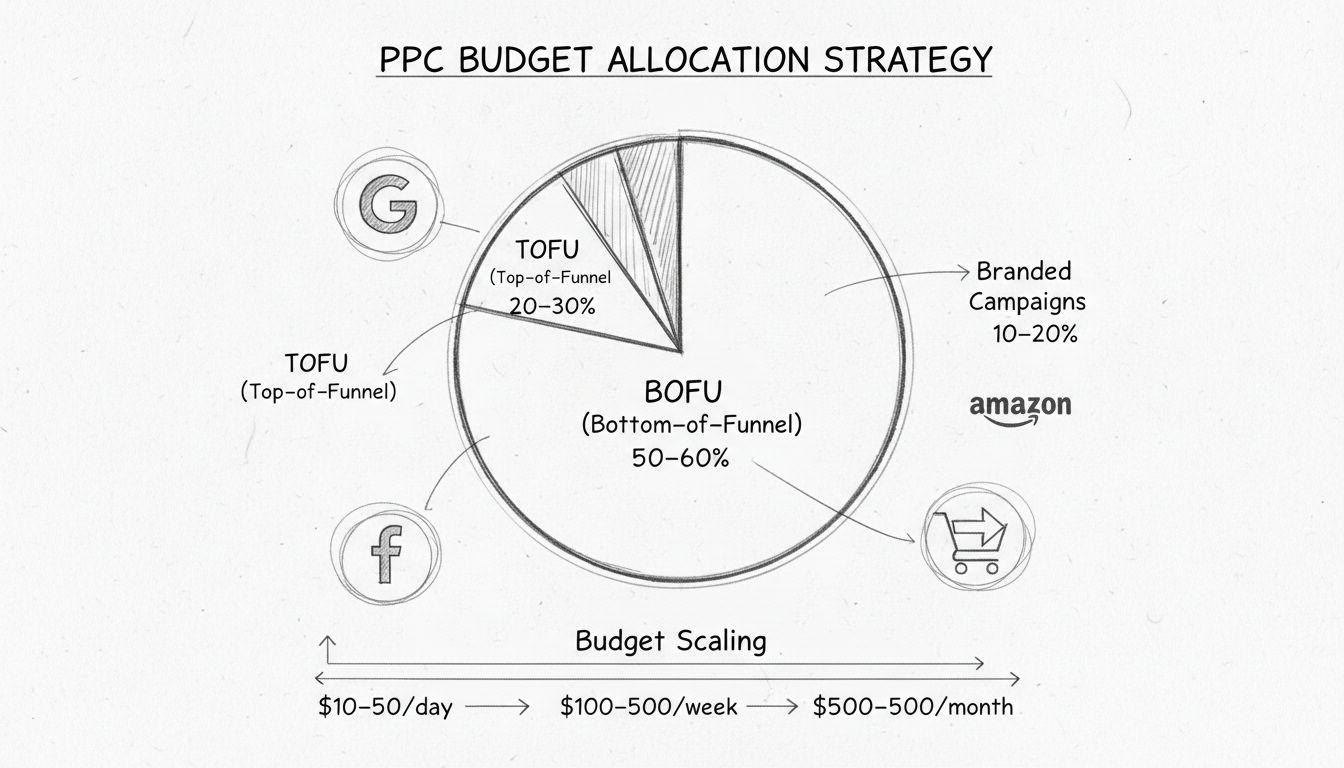
Learn how to budget for PPC campaigns in 2025. Discover optimal starting budgets, scaling strategies, and cost-saving techniques to maximize your affiliate mark...
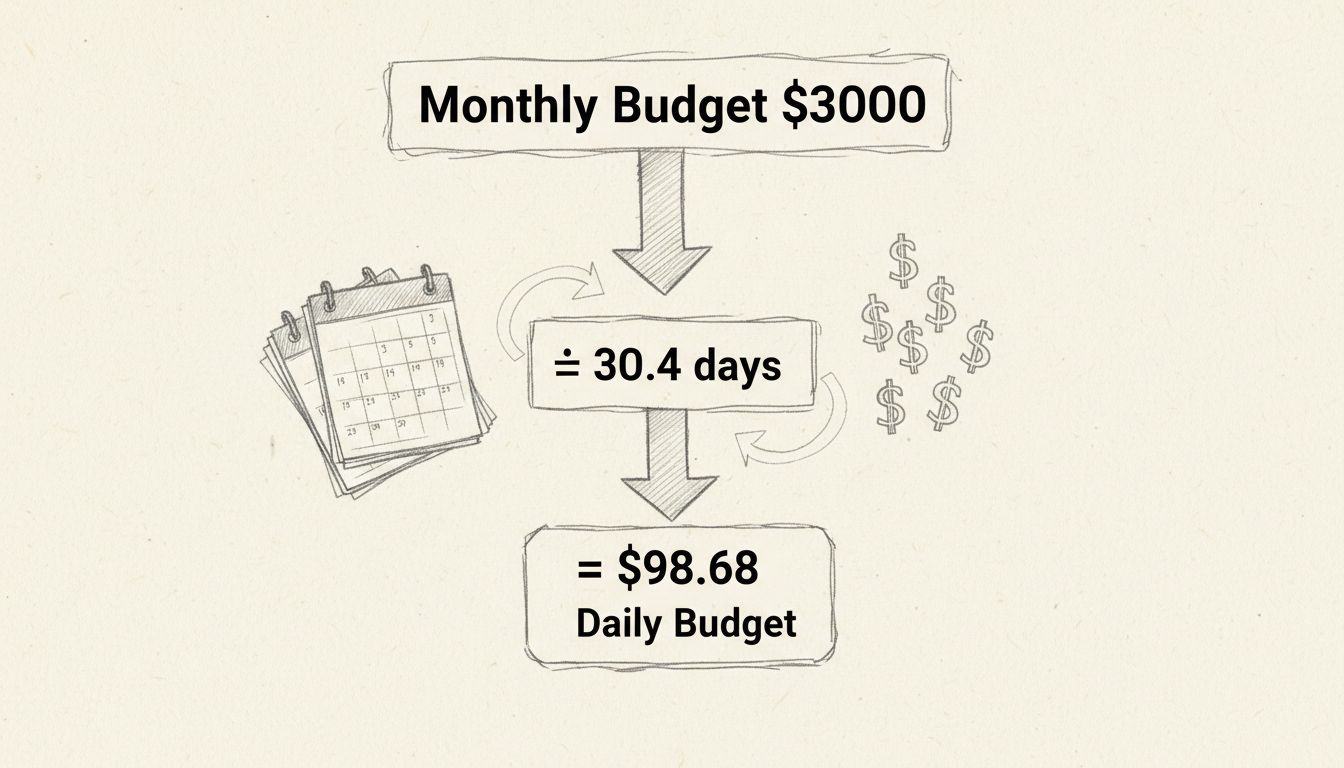
Learn how to calculate average daily budget from monthly amount using the 30.4 divisor method. Understand budget allocation strategies for affiliate marketing c...
Join our community of happy clients and provide excellent customer support with Post Affiliate Pro.




Cookie Consent
We use cookies to enhance your browsing experience and analyze our traffic. See our privacy policy.