Can I really do affiliate marketing solely from my phone?
A practical look at what actually changes when your entire affiliate business runs from a phone instead of a laptop, and what mobile does and doesn’t make easier.
Can I really do affiliate marketing solely from my phone?
Yes. A phone is enough to join an affiliate network, share your links on social media, and check your commissions. Building your own website is still easier on a bigger screen, but it isn't required to start earning, and plenty of affiliates run their entire business from a smartphone.
That is not a stretch or a best-case scenario, it is simply how a growing share of affiliates already work today. The tools have caught up: a modern smartphone can join a network, host your content, and track your commissions just as well as a laptop can, for most of what a beginner actually needs to do.
This page covers what that actually looks like day to day: the tools worth installing, a realistic sense of the income timeline, the mobile-specific tactics that work, and the tradeoffs nobody mentions in the “quit your job” videos. For the bigger picture of how mobile fits into affiliate marketing generally, our mobile affiliate marketing
guide is the place to start. This page goes deeper on one specific question inside that guide: whether a phone alone is genuinely enough.
What actually changes when you work from a phone
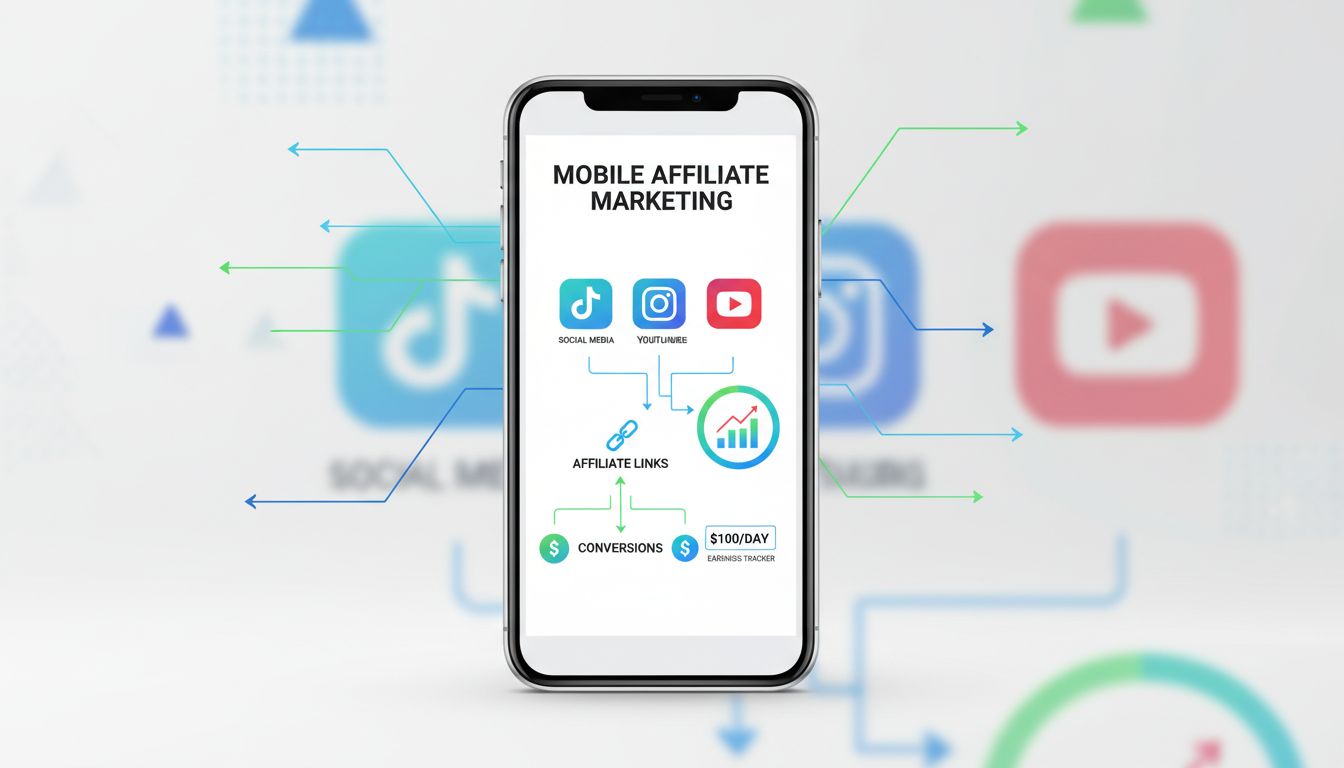
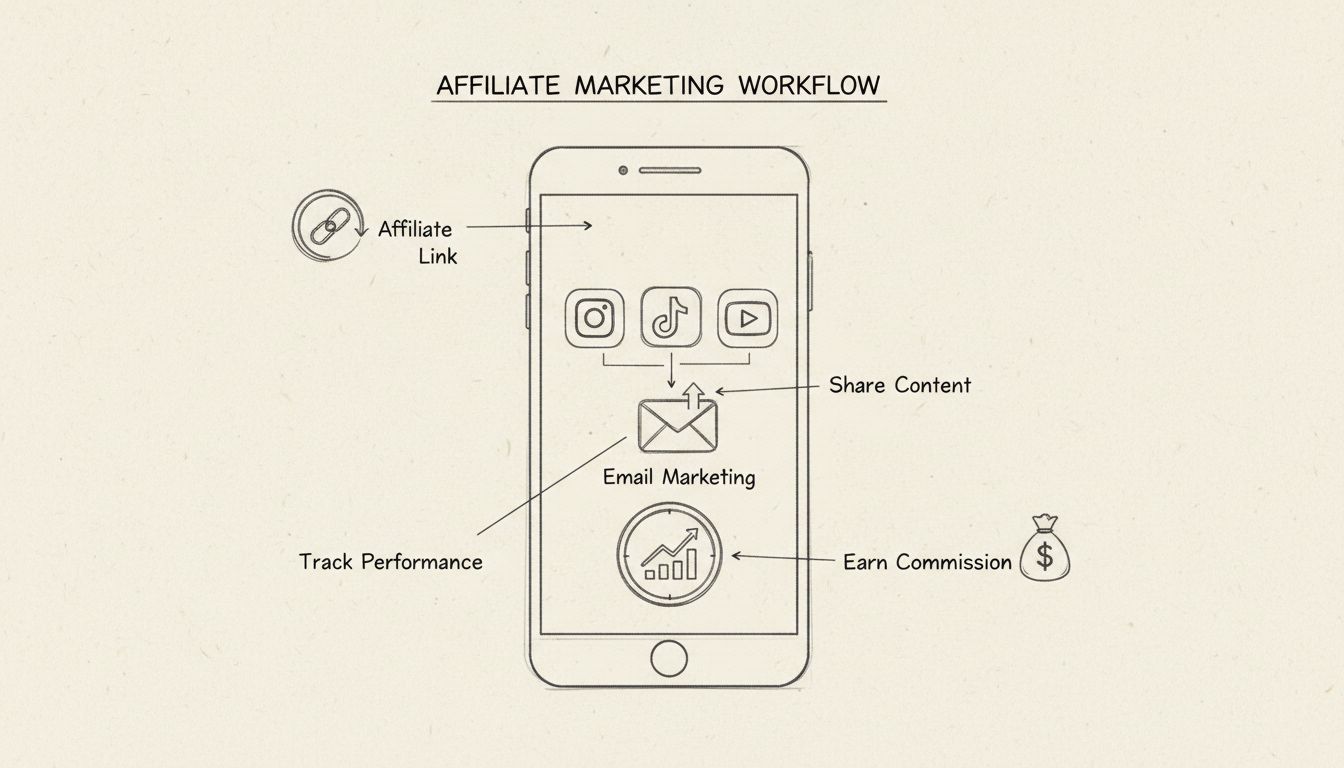
Mobile affiliate marketing runs on the same core mechanic as any other kind: you share a unique link, someone buys or signs up through it, and you earn a commission. What changes is execution, not the model itself. A phone handles content creation, audience engagement, and campaign checking differently than a desktop does, and platforms like TikTok, Instagram Reels, and YouTube Shorts have opened revenue streams that barely existed in a desktop-first world, since their entire content format was built around a phone screen from day one.
The tools you actually need
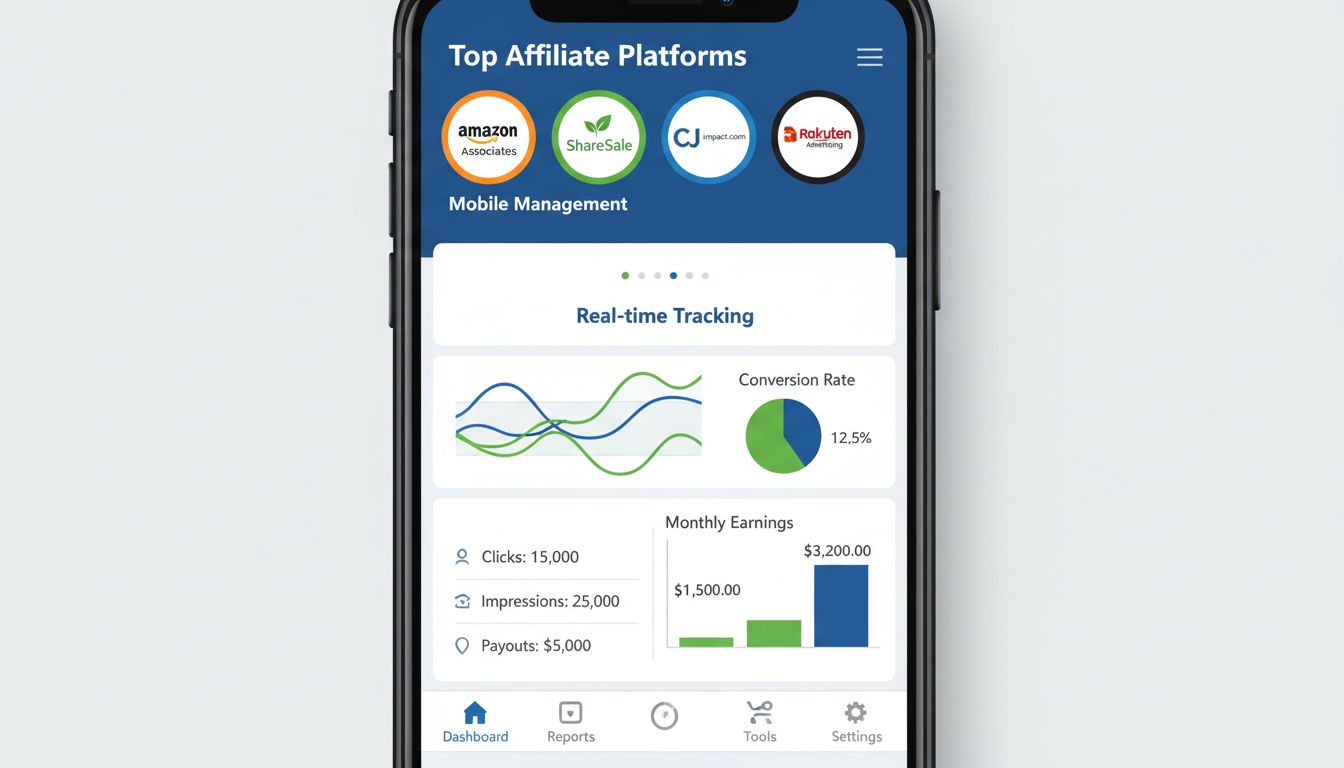
The most important early decision is which affiliate network or program to join, since not all of them are equally pleasant to manage from a small screen. Look for a mobile-friendly signup process, a dashboard that actually works in a phone browser without endless pinch-zooming, and clear, real-time reporting on clicks and commissions. A wide product or service catalog helps too, since it gives you room to promote things your specific audience actually wants rather than forcing a fit. As your following grows, cross-device tracking becomes worth checking for specifically, since a lot of mobile traffic researches on a phone and buys later on a desktop, and a program that can follow that whole path gives you credit you would otherwise lose.
Beyond the network itself, a small toolkit covers almost everything else: an app for quick graphics, a mobile video editor, a scheduling tool so you can batch social posts in advance, and an analytics tool for keeping an eye on what is actually working.
It is also worth understanding the commission structures you will actually see before you pick a program, since the label matters more than beginners expect. Pay-per-sale is the most common, a flat percentage or fixed amount each time someone buys through your link. Pay-per-lead pays out for an action short of a purchase, a signup or a free trial, which usually means a smaller payout but an easier action to drive. Recurring commissions, common in software and subscription services, keep paying month after month for as long as the customer stays, which compounds in a way a one-time payout never will. None of these is objectively better, but a handful of recurring programs in your mix tends to age a lot better than a pile of one-time payouts that reset to zero every month.
Launch your affiliate program today
Set up advanced tracking in minutes. No credit card required.
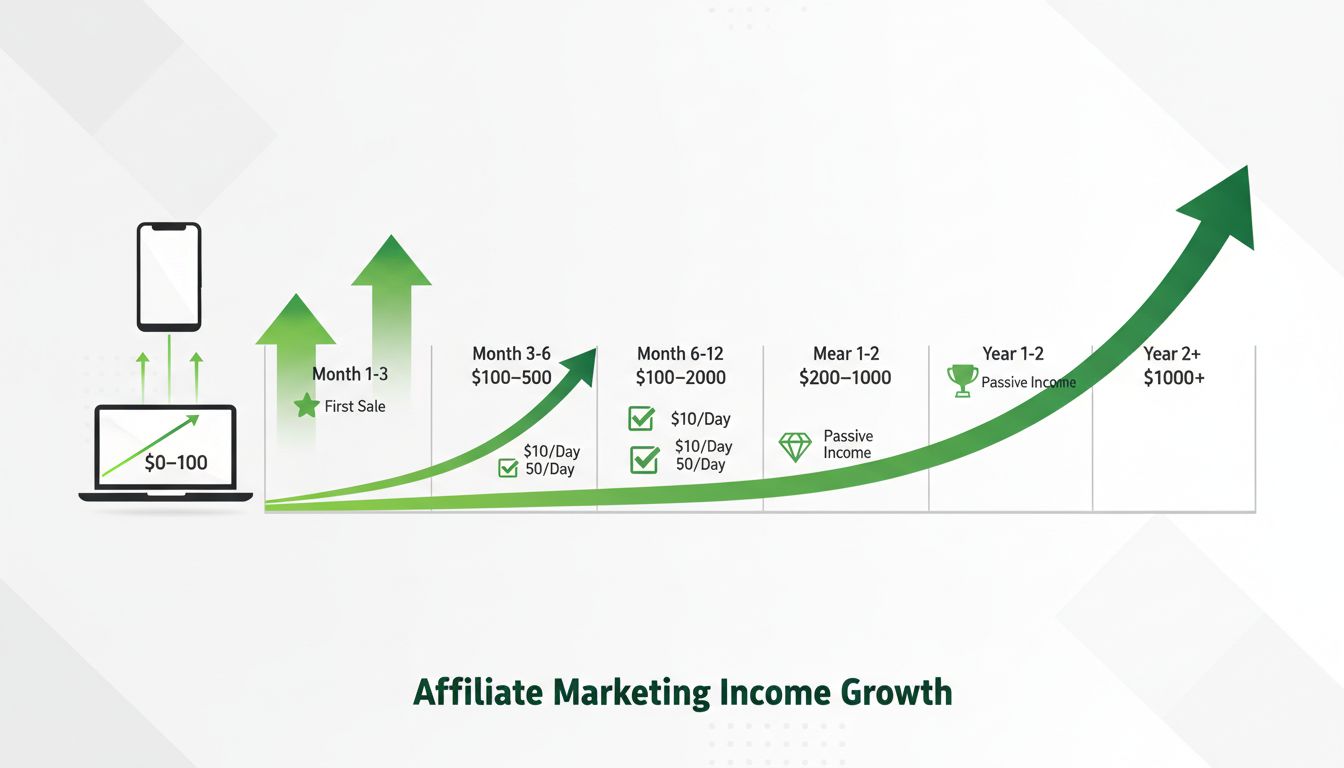
It is tempting to want a clean month-by-month dollar chart here, but precise income tables like that tend to be more fiction than forecast, since outcomes vary enormously by niche, effort, and luck. What is genuinely true across most beginners, mobile or not, is the shape of the curve: the first few months are mostly unpaid setup work, income stays modest through the first year, and it can scale meaningfully from there if you stick with it. Our dedicated breakdown of realistic income timelines
goes through this in detail, including how niche, commission structure, and audience size each move the number.
What mobile specifically changes is the cost of getting started, not the ceiling. You do not need to buy a laptop or pay for website hosting before your first commission lands, which lowers the barrier to trying it at all. That is a real advantage. It does not mean the income arrives faster than it would from a desktop-based approach built with the same effort.
The bigger driver of how quickly that income shows up is almost always the commission structure you picked over the platform you used to promote it. A high-ticket, one-time payout can produce a great month and then nothing, while a handful of modest recurring commissions can quietly become a floor under your income that never fully disappears. Content quality and audience trust matter more than almost anything else in that equation, since someone who trusts your recommendation converts at a completely different rate than someone seeing a cold, generic post.
Mobile vs desktop: what actually changes
It helps to be specific about where mobile and desktop genuinely diverge, rather than treating them as interchangeable. Content format is the clearest split: mobile audiences respond strongly to short-form video and quick, scannable posts, while desktop audiences are more willing to sit with a long comparison article or a detailed review. Neither is wrong, they simply reflect how much attention someone has in the moment, someone scrolling between tasks on a phone versus someone sitting down specifically to research a purchase.
Traffic sources tend to split along similar lines. Mobile traffic leans heavily on social apps and in-app discovery, the kind of browsing that happens in idle moments, while desktop traffic still leans more on search and email, the kind of visit that happens when someone has already decided to look something up. Neither channel is going away, and most affiliates who do well long term end up working both rather than picking a side permanently, using mobile-native content to build initial awareness and a desktop-friendly resource, like a longer guide or comparison page, to close out the research-heavy part of the decision.
Join our newsletter
Be the first to know about new features and product updates.
The mobile-specific tactics that actually work
Social platforms are the most natural entry point for a phone-based affiliate, since posting, editing, and checking performance all happen in the same app you are already promoting through. Short-form video, TikTok, Instagram Reels, and YouTube Shorts, consistently draws some of the highest engagement of any content format, which makes it a strong place to fold in an affiliate recommendation naturally rather than as an obvious ad. Posting a few times a week with content that feels native to the platform tends to outperform a rare, heavily-produced post.
Email is the other channel worth building early, and it remains one of the highest-return marketing channels available, delivering roughly $36 to $42 back for every dollar spent, according to long-running industry benchmarks (building an email list
). You can run this entirely from a phone using an app like Mailchimp or ConvertKit, and unlike a social following, an email list is not subject to a platform’s algorithm deciding who sees your content. Batch your content creation into focused sessions rather than writing something new every single day, since that rhythm holds up far better once life gets busy.
Search still matters too. A large and growing share of searches happen on mobile devices, so writing for mobile readability, short paragraphs, clear headings, fast-loading pages, pays off whether someone finds you through a video or a search result.
The challenges that are genuinely mobile-specific
A few obstacles show up specifically because you are working from a phone rather than because affiliate marketing itself is hard. Cross-device tracking has gotten messier over the past few years: Safari and Firefox already block third-party cookies by default, Apple’s app tracking permission prompt on iOS cut into in-app tracking, and Chrome ultimately backed away from its own plan to phase cookies out at all. The mechanisms differ, but the effect is the same, less visibility into the full path someone takes before they buy. Building an email list and leaning on first-party tracking through the platforms themselves, like Meta’s own pixel or Google Analytics 4, helps route around that. Mobile e-commerce also tends to convert at a noticeably lower rate than desktop, an industry pattern that shows up across most benchmarking studies, which makes trimming checkout friction and supporting mobile wallets like Apple Pay and Google Pay worth the effort on anything you send traffic to.
The smaller screen itself is a real constraint too, it simply gives you less room for a compelling pitch, so concise, well-placed copy matters more than it would on a full desktop layout. And relying heavily on any one platform, especially a social one, leaves your income exposed to a single algorithm change. Spreading effort across a couple of platforms and building an owned channel like email is the most reliable insurance against that.
Disclosure is not optional, on mobile or anywhere else
This part gets skipped in a lot of “get started” content, but it matters as much on a phone as it does anywhere. The FTC updated its Endorsement Guides in 2023 to spell out that any material connection between you and a brand, including an affiliate commission, has to be disclosed clearly and where people will actually see it, not buried in a bio link or a video description nobody expands. Vague phrasing like “affiliate link” or “commissionable link” on its own does not meet that bar either, the disclosure needs to be plain enough that an average viewer understands you earn money if they buy.
On mobile this usually means putting the disclosure in the first few seconds of a video or the first line of a caption, not just in a pinned comment. It takes one extra sentence, and it protects both your audience’s trust and your own account, since platforms and regulators both increasingly treat this as a real compliance issue rather than fine print.
A realistic daily routine
Working this way does not require being glued to your phone all day. A genuinely sustainable routine runs closer to 30 to 60 focused minutes daily: a quick morning check of your dashboard and top-performing content, a short midday pass through comments and engagement, and an evening slot for scheduling the next day’s posts and glancing at the numbers. Weekly, that adds up to a few hours for planning, creating, and reviewing what worked, plus a longer monthly session to look at the bigger picture and adjust course. Scheduling tools like Buffer or Later do a lot of the heavy lifting here, letting you batch a week of content in one sitting instead of posting live every day.
Building the foundation
If you are starting from nothing, the order of operations matters more than the tools themselves.
Pick a niche you already understand. Genuine familiarity shows up in your content and builds trust faster than research alone ever will, and it makes the next several months of content creation feel like less of a grind.
Join a small number of programs. Three to five is plenty at first. Spreading across every option available dilutes your focus and makes it harder to learn what actually converts for your specific audience.
Set up the handful of apps you actually need. A network app or bookmarked dashboard, one content tool, one scheduler, and one analytics app is enough. Resist the urge to install every tool you read about before you have used the basics.
Make every link trackable before you promote anything. A UTM parameter or a link shortener with click tracking turns a guess into a measurement, and you cannot improve what you cannot see.
Keep a simple running record. A single spreadsheet or note with your links, commission rates, and rough performance is enough at this stage, and it makes the eventual switch to a proper analytics setup much easier.
The takeaway
Affiliate marketing from a phone is not a lesser, improvised version of doing it from a desktop, it is simply a valid way to start, and for a growing number of people, a valid way to keep going indefinitely. The barrier to entry is genuinely lower: no laptop, no hosting bill, no waiting until you have a proper setup. What it still requires is the same thing any affiliate business needs, a niche you understand, programs worth promoting, and the patience to keep showing up while the slow first few months pass. Get that right, and the phone in your pocket is already the only hardware you need.
Ready to scale your affiliate marketing with professional tools?
PostAffiliatePro provides the most comprehensive affiliate management platform designed for modern marketers. Whether you're managing campaigns from your phone or desktop, our platform offers real-time tracking, advanced analytics, fraud detection, and seamless integration with all major affiliate networks. Start building your affiliate empire today with tools trusted by thousands of successful affiliates worldwide.
Mobile affiliate marketing guide: everything you need to know
A beginner-friendly guide to mobile affiliate marketing: what it is, how to start affiliate marketing with your phone, and the tools that make it work.
Can You Do Affiliate Marketing with a Smartphone? Complete 2025 Guide
Discover how to run a profitable affiliate marketing business entirely from your smartphone. Learn the best tools, strategies, and platforms for mobile affiliat...