


80/20 Content Ratio for Affiliate Marketing: The Optimal Balance
Learn the recommended 80/20 content ratio for affiliate marketing success. Discover how to balance value-driven content with promotional posts to maximize engag...
10 min read

How often to actually post on Instagram, TikTok, and Facebook for affiliate marketing, the 80/20 value-to-promotion ratio, and a simple weekly template you can realistically keep up.
There’s a particular kind of tired that comes from posting on three platforms with no plan at all. You open TikTok because you haven’t posted in four days and the algorithm is punishing you for it. You post to Instagram because a competitor just did. You forget Facebook exists until someone comments on a post from three weeks ago. None of it compounds, because none of it is a system, it’s just reacting.
The fix isn’t posting more. It’s knowing, before the week starts, what’s going where and why. This piece covers how often to actually post on Instagram, TikTok, and Facebook, the ratio of value to promotion that keeps an audience from tuning out, and a weekly template simple enough to actually stick to. For the platform-specific tactics, what to post and how each platform’s affiliate tools work, our guide to social media for affiliate marketing covers that in depth. This article is about the operating rhythm underneath it.
The short version: post 3 to 5 times a week on Instagram, 2 to 5 times a week on TikTok, and 2 to 5 times a week on Facebook if you’re running this solo, keep roughly 4 out of every 5 posts free of any pitch, and batch a week’s worth of content in one sitting instead of creating daily. The rest of this article walks through why, with the data behind each number.
Every platform’s algorithm reads consistency as a signal that an account is active and worth showing to more people. A single viral post from an account that then goes quiet for a month rarely turns into sustained reach, while a modest, steady cadence tends to compound. That’s the pattern that shows up across Buffer’s analysis of posting behavior on Instagram and TikTok: moving from posting once a week to a few times a week produces a meaningfully bigger lift in reach and views than pushing an already-active account even higher (Source ).
There’s a second, more practical reason a schedule matters once you’re running more than one platform: it’s the only thing standing between you and burnout. Without a plan, “post today” becomes a daily decision you have to make from scratch, and that decision fatigue is exactly why so many affiliates post hard for a few weeks and then disappear.
There’s also a third reason that’s easy to miss: a schedule is what makes your own performance data usable. If you post at random, you have no clean way to compare “Tuesday’s TikTok video” against “Friday’s Instagram Reel,” because nothing else about how or when you posted stayed consistent enough to isolate what actually worked. A fixed rhythm, even a modest one, turns your feed into something you can actually learn from week over week, rather than a pile of individual posts with no pattern connecting them.

Set up advanced tracking in minutes. No credit card required.
The honest answer is that the frequency debate has more nuance than any single number suggests, so here’s what the current data actually supports for each platform, along with the caveat that quality has a bigger effect on results than any of these ranges do.
Feed posts perform best around 3 to 5 times a week, a frequency that’s been linked to meaningfully higher reach and follower growth than posting once or twice (Source ). Reels sit at a slightly lower cadence than you might expect, 2 to 4 times a week, since a genuinely good Reel takes more effort than a quick feed post even though the format is shorter. Stories are the highest-frequency layer of the three, daily or near-daily is common among active accounts (Source ), since Stories disappear after 24 hours and carry a much lower bar for polish.
TikTok rewards a slightly lower, steadier cadence than its reputation suggests. Buffer’s analysis found that moving from one post a week to 2 to 5 delivers up to a 17% lift in views per post, with diminishing returns past that (Source ). It’s worth noting that not every source agrees daily posting is necessary, several accounts in HeyOrca’s 2026 survey of social media managers actually saw stronger results posting less often but more selectively, only when they had something genuinely worth sharing rather than filling a quota (Source ). Treat 2 to 5 times a week as the realistic target, not a floor you must hit no matter what.
Facebook is the one platform where the data genuinely splits depending on who you ask and how big the account is. A HubSpot study of over 13,500 Facebook users found the ideal frequency lands around one to two posts a day for pages with the resources to sustain it (Source ). But a separate 2026 survey of working social media managers found most pages actually posting 2 to 5 times a week and getting solid engagement, with over-posting linked to more scroll-past behavior when content starts to feel repetitive (Source ). If you’re a solo affiliate without a content team behind you, 2 to 5 times a week is the realistic, sustainable target. Daily posting is something to grow into once you have the content pipeline to support it without dropping quality.
Frequency gets you consistency, timing gets you a slightly bigger audience for the same post. Sprout Social’s 2026 analysis of engagement across roughly 2 billion interactions found Tuesdays and Wednesdays, late morning through early evening, performing best on Facebook, while Instagram peaks a little later in the day, Mondays 2 to 4 PM and Wednesdays through midday into the evening, and TikTok skews toward Tuesday through Thursday afternoons, roughly 2 to 6 PM (Source ). Treat these as a starting point rather than a rule, your own audience’s time zone and habits will move the needle more than any general benchmark, and every platform’s native analytics will show you exactly when your specific followers are actually online once you have a few weeks of posting history to look at.
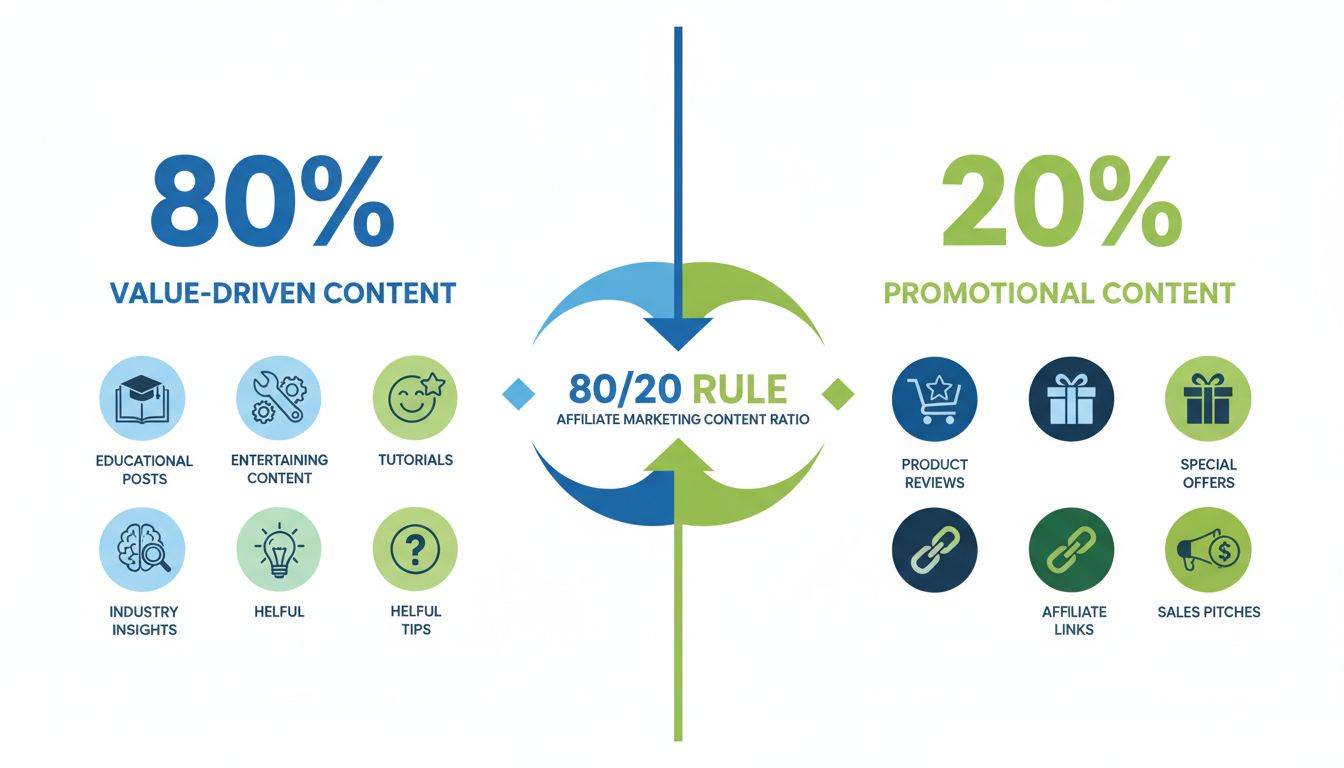
None of the frequency numbers above matter much if most of what fills that schedule is a direct sales pitch. The working rule across this entire cluster of platforms is roughly 80/20: about 80% of what you post should be genuinely useful, entertaining, or informative on its own, a real comparison, an honest demo, a tip someone can use whether or not they ever click your link, and only about 20% should be a direct promotion or affiliate call to action.
Applied to a schedule, that’s simple math. If you’re posting five times a week on a platform, four of those posts carry no pitch at all, and one does. The ratio isn’t a rigid law, some weeks lean more promotional around a sale or a new product, others lean entirely toward value, but it’s a useful check against the single most common failure mode in affiliate content: an audience that starts scrolling past everything you post because every post asks for something.
Be the first to know about new features and product updates.
Two versions of the same template work depending on where you are. If you’re just getting a system running for the first time, start smaller than feels ambitious:
| Day | TikTok | ||
|---|---|---|---|
| Monday | Value post (tip, comparison) | — | — |
| Tuesday | — | Value post (demo, how-to) | Value post or Group discussion |
| Wednesday | Reel (value) | — | — |
| Thursday | — | Value post | — |
| Friday | Promotional post (20%) | Promotional post (20%) | Promotional post (20%) |
| Saturday | Story | Value post | — |
| Sunday | Batch next week’s content | Batch next week’s content | Batch next week’s content |
That’s roughly 4 posts a week on Instagram, 3 on TikTok, and 2 on Facebook, entirely within the sustainable range covered above, with a single promotional slot on each platform at the end of the week. A promotional slot doesn’t need to be elaborate, a straightforward “here’s the product, here’s why I use it, here’s the link” post or a limited-time code called out clearly is enough, the value posts around it are what earn the audience’s attention in the first place. Sunday is deliberately the one day nothing publishes: that’s the batching block from the section above, where you actually film and write the next week’s content in one sitting rather than scrambling for it each morning.
Once that rhythm feels manageable rather than exhausting, usually after 4 to 6 weeks of sticking to it, and your own tracking data shows which platform and format are actually converting, scale up from there rather than guessing at a bigger schedule blind:
| Day | TikTok | ||
|---|---|---|---|
| Monday | Value post | Value post | — |
| Tuesday | Reel (value) | — | Value post or Group discussion |
| Wednesday | Value post | Value post | — |
| Thursday | Story | — | Promotional post (20%) |
| Friday | Promotional post (20%) | Promotional post (20%) | — |
| Saturday | Reel (value) | Value post | Value post |
| Sunday | Batch next week’s content | Batch next week’s content | Batch next week’s content |
That’s roughly 6 on Instagram, 4 on TikTok, and 3 on Facebook, still one clear promotional slot per platform, still built around a single weekly batching session. Scale the value posts up first and leave the promotional ratio alone, adding more pitches faster than you add value content is what erodes trust, not what builds revenue.
If running all three at once feels like too much before you’ve even started, that’s a reasonable read. Picking one platform, running the beginner template on it alone for a month, and only adding a second platform once the first one feels manageable is a perfectly valid way to phase in rather than starting all three simultaneously.
The template above only works if content creation and content posting happen on different days. Trying to write, film, and post in the same sitting every single day is what turns a schedule back into the exact daily grind it was supposed to fix. A more sustainable rhythm is to set aside one block, a few hours every week or two, to film and write everything the schedule needs, then use a scheduling tool to queue it out over the following days. This is standard practice among people managing multiple accounts, and it’s the single biggest lever for actually sticking to a calendar past the first few weeks.
This piece focuses on social because the cadence logic there is genuinely different from long-form content. A blog post or an email keeps working long after it’s published, so frequency matters less than depth and accuracy, two or three well-researched posts a month that actually rank will outperform a rushed post every few days. Email works on a different rhythm entirely, closer to once or twice a week, since more frequent sends tend to increase unsubscribes without a proportional lift in clicks. Neither channel benefits from being forced into the same daily cadence that social media rewards, so keep them on their own separate, lighter schedule rather than trying to unify everything into one calendar.
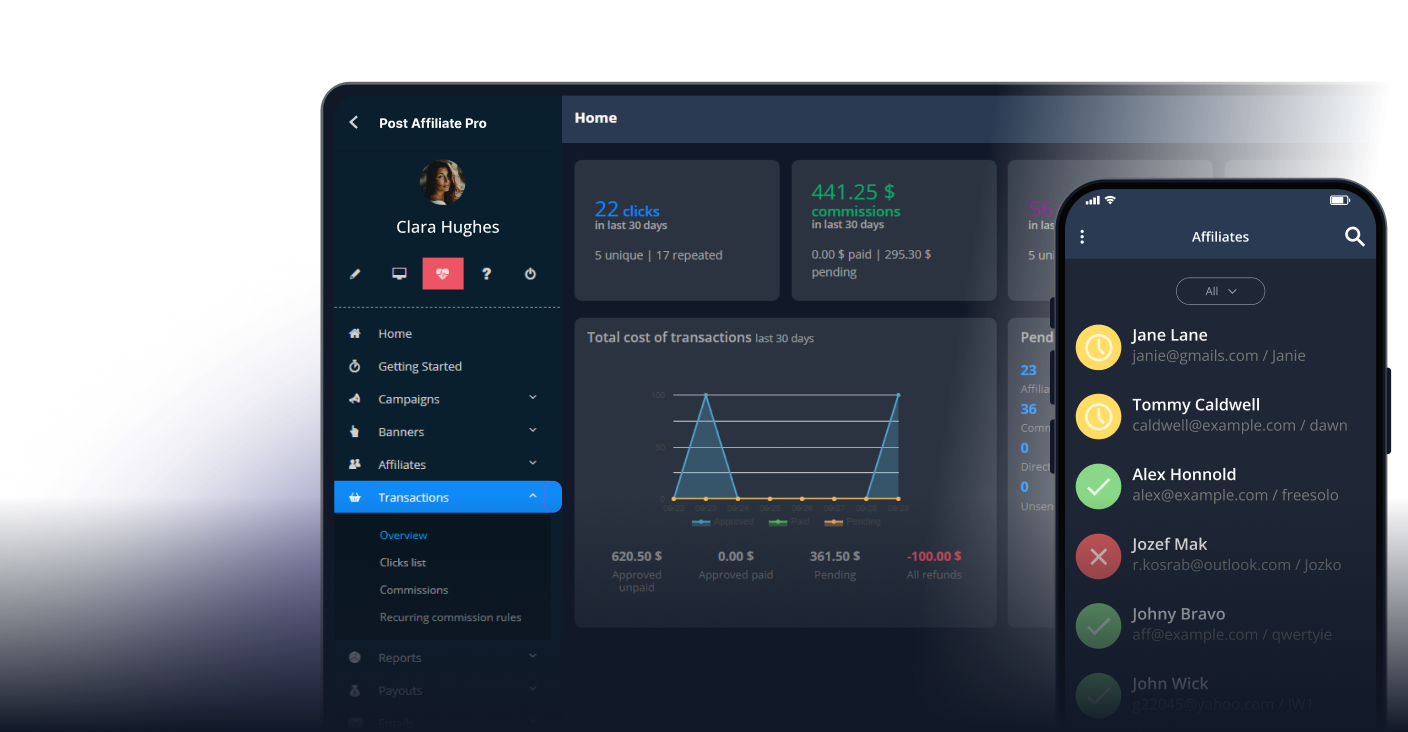
A schedule tells you what you posted and when. It doesn’t tell you which of those posts actually drove a sale, and that gap is where a lot of affiliates lose the thread between effort and revenue. Tagging each platform’s links separately, a distinct UTM parameter or a shortened link per channel, is what turns “commissions went up this month” into “that Tuesday TikTok post is what’s actually converting.”
Keeping the tags simple is what makes this actually usable week to week: set utm_source to the platform (instagram, tiktok, facebook), utm_medium to affiliate, and utm_campaign to whatever you’re promoting that week, so a link ends up something like ?utm_source=tiktok&utm_medium=affiliate&utm_campaign=fridaypromo. The exact format matters less than staying consistent with it, an inconsistent naming pattern is the single most common reason affiliates end up with tracking data too messy to actually learn from (Source
). Centralized affiliate tracking
attributes each sale back to the exact link, post, and platform that generated it, which is the only reliable way to know whether Friday’s promotional slot on Instagram is worth keeping or worth moving to TikTok instead.
A few patterns undercut an otherwise reasonable schedule. Treating the calendar as a content-idea generator, filling every slot with whatever’s easiest rather than what’s actually useful, produces a technically consistent feed that nobody engages with. Posting identical content across all three platforms ignores how differently each one is used and tends to underperform on all of them. Skipping the batching step and trying to create same-day, every day is the single fastest route back to burnout and an abandoned account. And building a schedule around post count instead of the 80/20 ratio quietly turns a useful presence into a wall-to-wall pitch, which is exactly what drives an audience to stop watching.
It’s also worth building in slack from the start rather than treating the template as fixed forever. A week where nothing genuinely useful comes to mind is a week to post less, not a week to fill a slot with filler just to hit a number. And a platform that consistently underperforms after a month or two of honest effort is a signal to shift that time elsewhere rather than a reason to post there more often out of obligation. The schedule exists to serve the results, not the other way around.
A posting schedule isn’t about hitting a number, it’s about making three decisions once (how often, what ratio, what goes where) instead of remaking them every single day under pressure. Start at the sustainable end of each platform’s range, keep roughly four out of every five posts genuinely useful, batch the actual creation work, and let your own tracking data tell you which slot in the schedule deserves more of your time. That’s a system that survives past the first busy week, which is the only kind that actually compounds.
PostAffiliatePro tracks affiliate performance across every platform in your schedule, so you know which posts drive real commissions instead of guessing from a lump total.
Learn the recommended 80/20 content ratio for affiliate marketing success. Discover how to balance value-driven content with promotional posts to maximize engag...
How to actually use Instagram, TikTok, and Facebook for affiliate marketing in 2026, with real platform features, current statistics, and honest guidance on whe...

Why social media has become the fastest way for entrepreneurs to build affiliate income, which platforms actually fit which products, and how to avoid the trust...
Join our community of happy clients and provide excellent customer support with Post Affiliate Pro.



Cookie Consent
We use cookies to enhance your browsing experience and analyze our traffic. See our privacy policy.