Why entrepreneurs should use social media for affiliate marketing
Why social media has become the fastest way for entrepreneurs to build affiliate income, which platforms actually fit which products, and how to avoid the trust-killing mistakes that sink most attempts.
Somewhere in the last decade, social media quietly stopped being a place people went to see what old classmates were up to and became something closer to a shopping mall that never closes. People still post vacation photos, sure, but they also ask their followers what blender to buy, watch a stranger’s honest review before committing to a purchase, and click through on a recommendation from someone they’ve never met in person but trust anyway. For an entrepreneur running an affiliate business, that shift is the whole opportunity.
The scale is real, and it keeps growing
The average person now juggles accounts on 6.75 different social networks a month (Source
), and the platforms themselves have grown into audiences the size of continents. Facebook leads with roughly 3.07 billion monthly users, Instagram and WhatsApp both sit around 3 billion, YouTube is close behind at 2.7 billion, and TikTok has climbed to nearly 2 billion (Source
). LinkedIn is smaller by comparison, around 310 million monthly active users out of over 1.3 billion registered members, but it remains the strongest channel for B2B offers specifically, where the audience is already primed for professional recommendations.
This concentration of attention matters because it lets an entrepreneur with no advertising budget reach an audience that would have cost a fortune to access through traditional media. You don’t need to be a huge account to benefit either. Social platforms increasingly reward relevance over reach, which means a smaller, genuinely engaged following in a specific niche often converts better than a large, generic one.
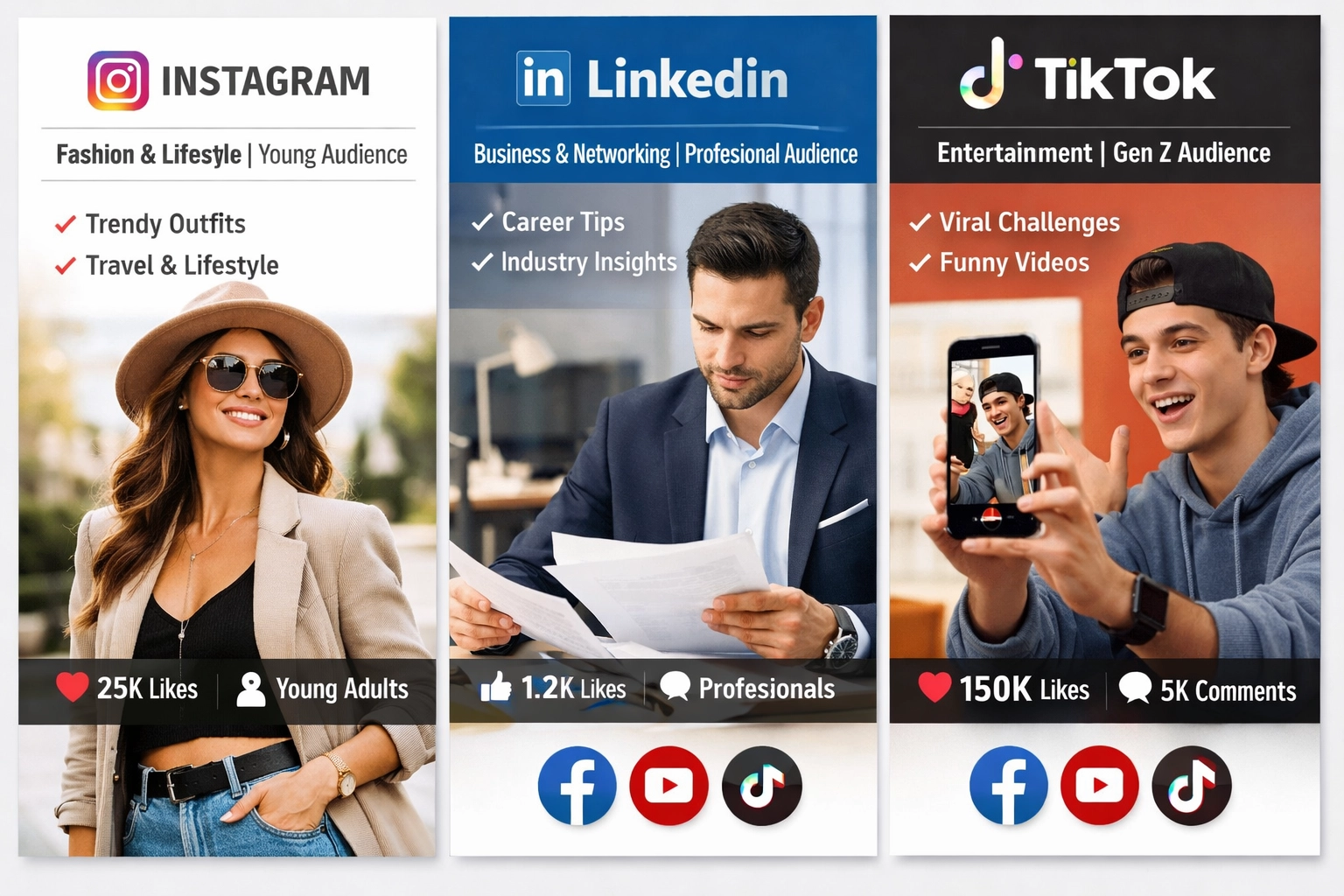
The audiences on each platform also skew differently, which is worth knowing before you decide where to spend your time. Facebook still pulls a broad, older-skewing crowd, useful for products with wide general appeal. Instagram and TikTok lean younger, TikTok noticeably so, which suits fast-moving, visual, or trend-driven products better than a slow-burn evergreen offer. LinkedIn’s audience is narrower but self-selects for professional buying intent, which is exactly why it punches above its size for B2B affiliate offers. None of this is a hard rule, plenty of accounts do well outside their platform’s “typical” demographic, but it’s a reasonable starting filter when you’re deciding where to show up first.
Trust travels faster than ads do
The reason social media works so well for affiliate marketing comes down to a simple psychological fact: people trust people more than they trust brands. When someone shares a genuine product experience with their community, it reads as advice, not advertising, and that distinction is worth more than any amount of ad spend. TikTok, Instagram, and YouTube together now account for over 60% of how people first discover new products (Source
), which tells you where that trust-building conversation is actually happening.
Building that trust takes consistency more than perfection. Responding to comments, answering questions honestly, and being upfront about both what a product does well and where it falls short does more for long-term conversion than any single polished post. Audiences can tell the difference between someone who tried a product and someone who’s just reading a script.
Launch your affiliate program today
Set up advanced tracking in minutes. No credit card required.
Community compounds in a way a single post never does
Trust isn’t just built through what you post, it’s built through what happens after you post. Answering comments instead of letting them sit unanswered, showing up to your own live sessions or Q&As, and actually reading the messages that come in are small habits that add up to an audience that feels like it knows you. That feeling is what eventually turns a follower into someone who acts on your recommendation without a second thought.
A few habits reinforce this over time. Reposting or highlighting content your own followers create around a product you’ve promoted, even something as simple as a screenshot of their purchase or a quick thank-you, signals that the recommendation held up in the real world. Giving your most engaged followers something exclusive, early access to a deal, a follower-only discount code, first look at new content, gives people a reason to stay engaged rather than just scroll past. None of this needs to be elaborate. A creator who replies to comments and remembers repeat followers by name builds more durable trust than one who posts polished content and never engages with a single reply.
What actually gets shared and clicked
A few content formats consistently outperform the rest for affiliate promotion, and none of them require a studio setup. Short-form video, Reels, TikToks, YouTube Shorts, tends to generate the strongest engagement because it matches how people actually scroll. User-generated content and honest testimonials build trust that a produced ad can’t fake. Educational, how-to content positions you as someone worth listening to before you’ve recommended anything at all, and interactive formats like polls, Q&As, and live streams turn a one-way feed into an actual conversation.
The common thread across all of them is that the affiliate link should feel like the natural next step in something genuinely useful, not the reason the content exists in the first place.
Join our newsletter
Be the first to know about new features and product updates.
You don’t need a big budget to start
Organic content is essentially free to produce, which makes social media one of the few marketing channels genuinely open to a bootstrapped entrepreneur. When you do want to accelerate reach with paid promotion, most platforms let you start small and scale only what’s working, rather than committing a large budget upfront. Free or low-cost tools like Canva for design and Buffer or Later for scheduling cover most of what a solo entrepreneur needs to run a professional-looking presence without an agency behind it.
Data beats guessing
Every major platform now gives you native analytics, engagement rate, reach, click-through rate, and audience demographics, that tell you what’s actually working rather than what you assume is working. The habit worth building early is checking these numbers regularly and doubling down on the content types and products that perform, rather than spreading effort evenly across everything you post. A/B testing different headlines, images, and calls to action, even informally, tends to reveal patterns that pure intuition misses.
Picking your platforms without spreading yourself thin
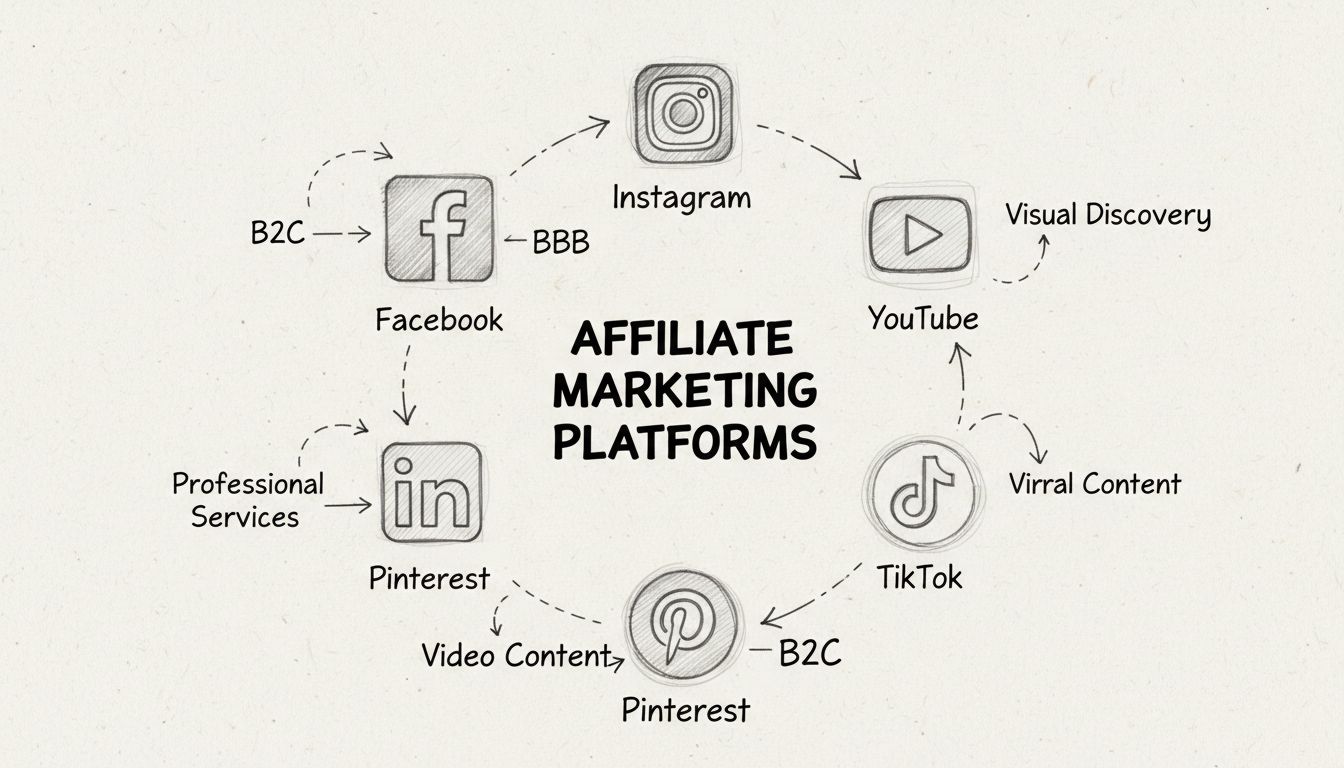
Not every platform fits every product, and trying to maintain a presence everywhere usually means doing all of it half-heartedly. Visual, lifestyle-driven products tend to do well on Instagram and TikTok. Long-form or research-heavy products, software, courses, financial products, often convert better through YouTube or a detailed blog post shared on LinkedIn. Rather than guessing, test on two or three platforms where your audience is plausibly already active, then double down on whichever one actually converts once you have real data.
Two smaller platforms deserve a mention even though they rarely lead a strategy on their own. X (formerly Twitter) is useful less for direct link-dropping and more for real-time conversation, jumping into a trending topic or a relevant thread can put a recommendation in front of people actively discussing the exact problem your product solves. Pinterest works differently again: pins have a much longer shelf life than a typical social post, sometimes driving clicks months after they’re published, which makes it a reasonable fit for evergreen, visually driven products like home goods, recipes, or fashion, where the audience is often searching with purchase intent already in mind rather than just browsing. For the specific tactics that work on each of the bigger platforms, our guide to social media for affiliate marketing
breaks down Instagram, TikTok, and Facebook in more depth.
What trips entrepreneurs up
A handful of mistakes account for most of the underperformance in this space. Treating every post as a sales pitch exhausts an audience quickly, most successful accounts keep promotional content to a minority of what they post. Chasing every algorithm change instead of building genuinely useful content is a losing game, since the specifics change constantly but usefulness never stops being rewarded, staying loosely aware of major platform changes matters more than trying to reverse-engineer every tweak. And disappearing after a slow first month is the single most common reason entrepreneurs conclude social media affiliate marketing “doesn’t work,” when in most cases it simply hadn’t been given long enough to compound.
Tying it together with real tracking
None of this matters much if you can’t tell which platform, post, or product is actually driving revenue. Using a unique tracking link, discount code, or landing page for each platform lets you separate real winners from posts that got likes but no sales. PostAffiliatePro centralizes that tracking across every channel you promote on, so a single dashboard shows you which social platforms and content types are actually converting, rather than leaving you to guess from a lump commission total at the end of the month.
Frequently asked questions
Start by identifying where your target audience actually spends time. Visual, aspirational products tend to do well on Instagram and TikTok, while B2B offers find a more receptive audience on LinkedIn. Focusing on two or three channels you can maintain consistently beats a thin presence spread across every platform.
Consistency matters more than frequency. A schedule you can actually sustain, even a modest one, will outperform a burst of daily posts that trails off after a month. Start with what fits your available time and build from there once it's working.
Use a distinct tracking link, discount code, or landing page for each platform so you can tell which one actually drove a given sale rather than guessing from a single lump commission total. Affiliate tracking software can attribute each conversion back to the specific link and channel that generated it.
Most entrepreneurs see early engagement within a few weeks of consistent posting, but meaningful affiliate revenue typically takes a couple of months to build as trust and audience size grow. The timeline depends heavily on niche, content quality, and how consistently you show up.
Ready to Maximize Your Affiliate Marketing with PostAffiliatePro?
Manage your entire affiliate program with powerful tracking, commission management, and real-time analytics. Integrate seamlessly with your social media strategy to scale your business.
Social media for affiliate marketing: a platform-by-platform guide
How to actually use Instagram, TikTok, and Facebook for affiliate marketing in 2026, with real platform features, current statistics, and honest guidance on whe...
Social media platform breakdown for affiliate marketers
Social media connects billions of people from all around the world. Learn about the best SoMe platforms for affiliating marketing and start improving now.
Discover the top video platforms for affiliate marketing including YouTube, TikTok, Instagram, and Facebook Live. Learn which platform suits your niche and audi...
10 min read
You will be in Good Hands!
Join our community of happy clients and provide excellent customer support with Post Affiliate Pro.