


Amazon Affiliate Marketing on Facebook
Discover how to boost your earnings with Amazon Affiliate Marketing on Facebook! Jake from Longtail Pro guides you through generating and sharing affiliate link...
2 min read
AffiliateMarketing
Amazon
+3

Facebook’s real rules on affiliate links, organic posts versus paid ads, the current FTC disclosure requirements, and the 2026 link-posting limit some accounts are now running into.
Facebook remains one of the largest audiences an affiliate marketer can reach, with roughly 3.07 billion monthly active users and about 85% of consumers across generations keeping a profile there (Source ). Unlike platforms that force you into a “link in bio” workaround, Facebook lets you post clickable links directly in captions, Stories, Reels, and comments. That directness is exactly why the platform enforces real rules around how those links get used.
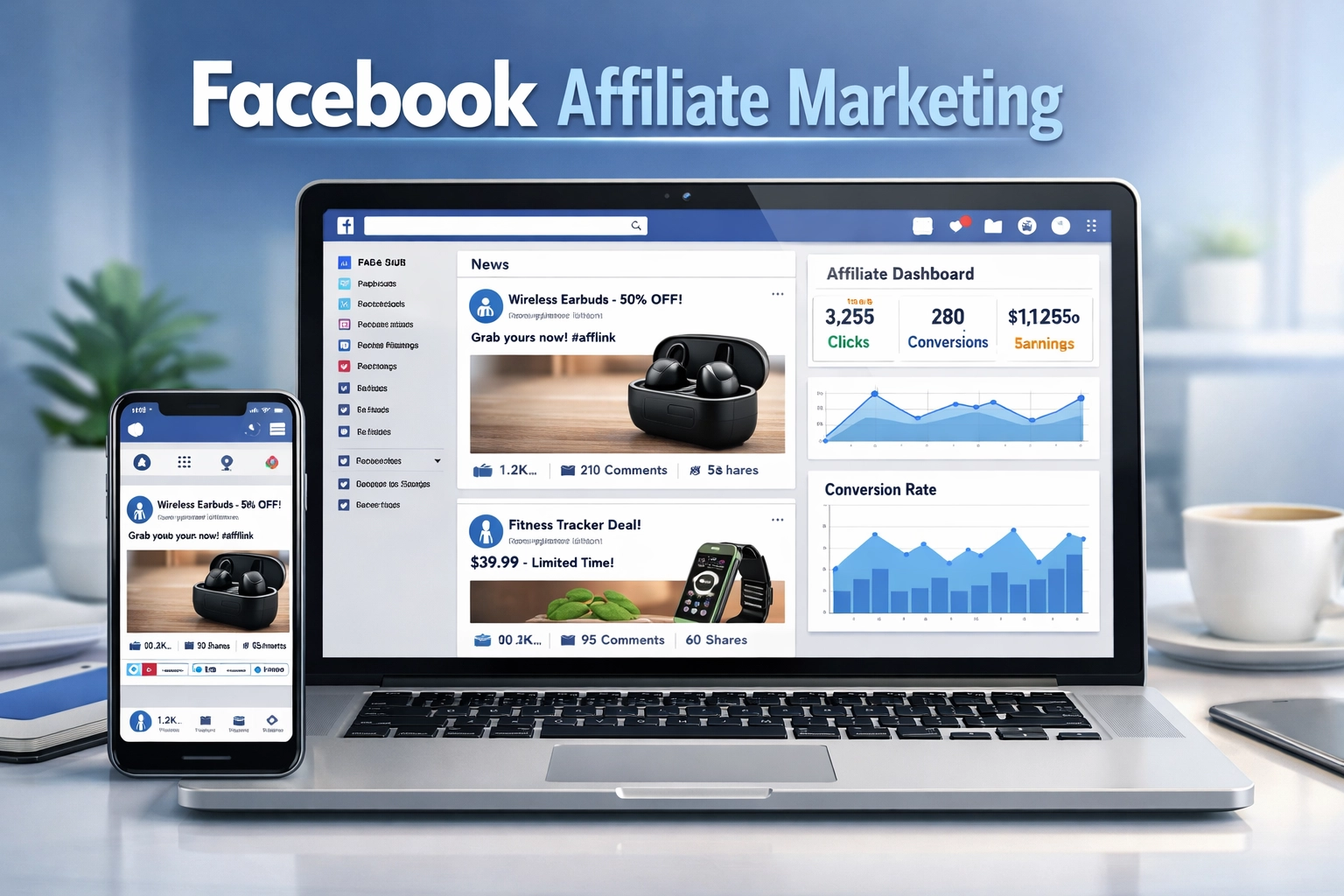
Organic posts with affiliate links are permitted on your timeline, your Page, and in Groups, as long as you disclose the relationship clearly. Paid ads face much tighter restrictions: most affiliate programs, including the largest one, Amazon Associates, prohibit paid ads that point directly at an affiliate link. The distinction that trips people up isn’t complicated once you see it laid out:
| Generally allowed | Generally restricted |
|---|---|
| Organic posts with affiliate links and clear disclosure | Paid ads pointing directly at affiliate links (most programs) |
| Affiliate links in comments and Group discussions | Vague, hidden, or missing disclosure |
| Branded content with the Paid Partnership label enabled | Undisclosed paid partnerships |
| Links in Stories and Reels, organically posted | Excessive, spammy link-dropping with no engagement |
Posting too many external links in a short window, or posting them with no real engagement around them, tends to get content deprioritized by Facebook’s own algorithm even before it runs into any policy issue.

Set up advanced tracking in minutes. No credit card required.
Amazon’s affiliate program layers its own restrictions on top of Facebook’s. You cannot use paid Facebook ads that link directly to an Amazon affiliate link, full stop, and Amazon also prohibits posting specific prices in your promotional content. The commission window itself is tight: a click sets a 24-hour cookie, extendable to 90 days only if the visitor adds the item to their cart within that first day (Source ). That short window is exactly why high-intent traffic matters more on Amazon links than casual browsing traffic does. The workaround most Amazon affiliates use is running Facebook ads to their own blog post or landing page, and placing the actual Amazon link there instead, which keeps the ad itself compliant with both Facebook’s and Amazon’s rules.
Meta has been testing a real limit on link posts, two per month, for Pages and professional-mode profiles that aren’t Meta Verified, confirmed by multiple outlets tracking the rollout in late 2025 and into 2026 (Source ). The restriction applies specifically to links placed in the post body; links shared in the comments section aren’t affected, which is why you’ll increasingly see creators posting a link as their first comment rather than in the caption itself. This is a live test, not an officially confirmed permanent policy, so treat it as something to plan around rather than a fixed rule, and consider whether Meta Verified is worth it if link-sharing is central to how you promote.
Be the first to know about new features and product updates.
The FTC requires every affiliate marketer to disclose financial relationships clearly, and this applies on Facebook exactly as it does everywhere else. A “material connection,” in the FTC’s own language, includes commissions, free products, or any other compensation that could influence your recommendation. Disclosure needs to be clear and conspicuous, meaning placed where a reader will actually see it, not buried at the end of a long post or left to a single hashtag.
A disclosure that works: “This post contains affiliate links. I earn a commission if you purchase through them, at no extra cost to you,” placed at or near the start of your caption. A disclosure that doesn’t: relying only on “#ad” tucked into a long list of hashtags, or placing the statement after most readers have already stopped scrolling. Facebook’s own Paid Partnership label is a useful supplement for branded content specifically, but it doesn’t replace a plain-language statement in your own words. Getting this wrong carries real financial risk: the FTC’s maximum civil penalty currently sits at $53,088 per violation, effective since January 2025 and unchanged through 2026 (Source ).
The accounts that consistently earn from Facebook follow a similar pattern. They lead with something genuinely useful, a real review, a comparison, a tutorial, rather than opening with the pitch. They stick to products they’d recommend even without a commission, since inauthentic promotion is easy for audiences to spot and expensive to recover from. Many generate a meaningful share of their Facebook affiliate income through niche Groups specifically, where members are already asking for recommendations rather than needing to be sold to, provided you contribute real value before ever mentioning a product.
A rough 80/20 split, mostly value, occasionally promotional, keeps both your audience and Facebook’s algorithm on your side. And none of it matters much if you’re not tracking which posts actually convert: click-through rate, conversion rate, and which specific content format, Reels, Stories, or standard posts, is driving real sales rather than just likes.
A handful of patterns account for most of the underperformance affiliates run into on Facebook. Posting affiliate links too frequently causes both algorithmic suppression and audience fatigue; two to three affiliate posts a week to the same audience is a reasonable ceiling. Weak or missing disclosure risks real penalties and even faster loss of trust. Promoting products you haven’t personally used shows, and it costs you conversions. And ignoring your own performance data means repeating whatever isn’t working simply because nobody checked.
Posting affiliate links on Facebook is genuinely allowed and can be a real revenue source, provided you stick to organic posting, disclose clearly, respect your affiliate program’s specific rules (Amazon’s especially), and keep an eye on the platform’s evolving link-sharing policies. For how Facebook fits alongside Instagram and TikTok in a broader social strategy, see our full guide to social media for affiliate marketing .
Manage all your affiliate links, track performance, and ensure compliance across all platforms with PostAffiliatePro's comprehensive affiliate management software.
Discover how to boost your earnings with Amazon Affiliate Marketing on Facebook! Jake from Longtail Pro guides you through generating and sharing affiliate link...

Facebook affiliate marketing can take your business to the next level. Use this step-by-step guide for tips on how to get started!
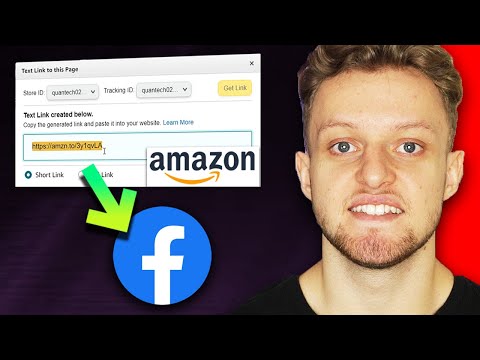
Discover two effective methods to add Amazon affiliate links to your Facebook page and monetize your audience. Learn how to promote single products or utilize L...
Join our community of happy clients and provide excellent customer support with Post Affiliate Pro.




Cookie Consent
We use cookies to enhance your browsing experience and analyze our traffic. See our privacy policy.