


Cookie Duration in Affiliate Marketing: Maximize Earnings
Learn why cookie duration is crucial in affiliate marketing. Discover how tracking windows affect conversions, earnings, and program success.
12 min read
In affiliate marketing, cookie duration is how long an affiliate tracking cookie is intended to remain available in a browser. Programs often use the term for their referral attribution window, but the two can differ. A configured window only permits credit if the referral can still be identified and the conversion satisfies the program’s rules.
In affiliate marketing, cookie duration is how long an affiliate tracking cookie is intended to remain available in a browser. Programs often use the term for their referral attribution window, but the two can differ. A configured window only permits credit if the referral can still be identified and the conversion satisfies the program’s rules.
If a program gives an initial referral a 30-day window, a conversion within that window may qualify for credit when the referral can be identified. A later conversion may not qualify through that referral unless another rule, such as a stored customer relationship, applies.
The starting point matters: a program might count from the link click or another accepted event. It also needs a rule for later clicks, coupon codes, and competing affiliates.

Set up advanced tracking in minutes. No credit card required.
| Rule | What it controls |
|---|---|
| Browser expiry | Intended retention of cookie data |
| Attribution window | Eligibility of a referral at conversion |
| Lifetime relationship | Recognition of a linked customer under continuing rules |
| Commission earning duration | Eligibility of later customer transactions |
Suppose Partner A refers a visitor on day 1 and Partner B refers them on day 10. The visitor buys on day 15. Both referrals may be within their windows, but the program still needs to choose a credit policy. First-click, last-click, overwrite protection , and split rules can produce different outcomes.
Be the first to know about new features and product updates.
Use the advertised window as one part of offer evaluation alongside conversion rate, approved commission, and the reliability of the supported tracking method.
An affiliate program may advertise an attribution window, while browser storage follows its own retention and access rules. A first-party cookie remains a browser cookie; a server-stored relationship is a different record. Do not describe either as guaranteeing all delayed or cross-device purchases.
Use MDN’s cookie guide for the technical storage concepts, then compare them with the program’s stated eligibility window.
Record the timing and event history so an unexpected result can be reproduced. A longer setting does not fix an identifier lost during redirect or checkout.
Consider the buyer’s decision cycle, product price, and whether later billing events qualify. A shorter window on a relevant offer can outperform a longer window on an unsuitable product. Compare approved earnings and conversion maturity rather than window length alone.
Post Affiliate Pro’s lifetime commission documentation describes a separate customer-linking mechanism. It can apply after an initial referral, but only when the required identifier and relationship are available.
Choose the window around the customer journey rather than assuming that a longer cookie always creates more incremental sales. A high-consideration purchase may need more time than an immediate checkout, while competing referrals and coupon policies affect which partner receives credit.
Document the start event, whether later eligible clicks restart the window, and the first-click or last-click policy. Test a purchase immediately after a referral and another beyond the configured boundary. Browser restrictions, deletion, consent choices, and device changes can prevent identification before the nominal expiry.
MDN’s Set-Cookie reference
explains browser expiry controls such as Expires and Max-Age. Those technical controls do not replace the merchant’s attribution rules. Keep the tracking implementation and the advertised earning window aligned.
For the corresponding Post Affiliate Pro settings, consult the cookie tracking documentation . Confirm the configuration and integration requirements against your program’s rules.
Explore Post Affiliate Pro’s tracking, commission settings, and partner management tools.
Learn why cookie duration is crucial in affiliate marketing. Discover how tracking windows affect conversions, earnings, and program success.
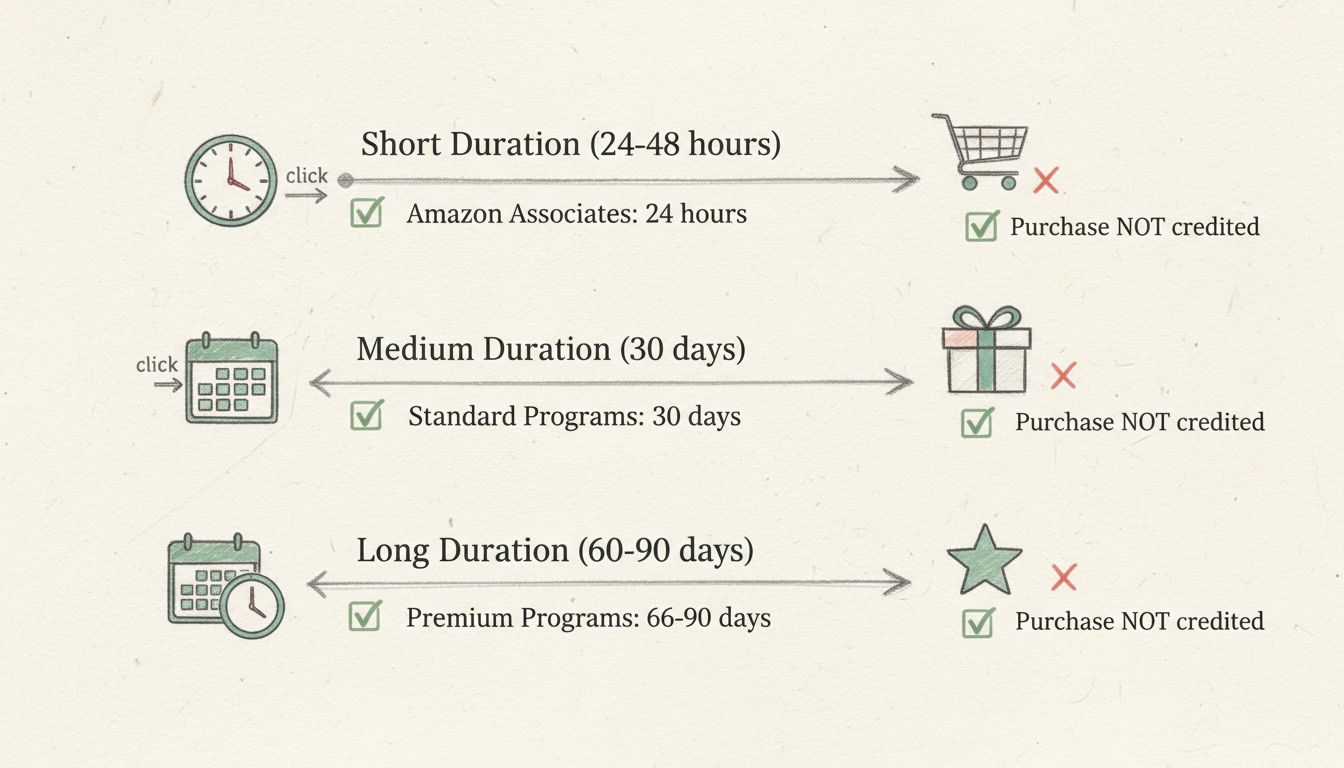
Learn about affiliate cookie duration, how long cookies last (24 hours to 90+ days), and how to maximize earnings with PostAffiliatePro's advanced tracking syst...
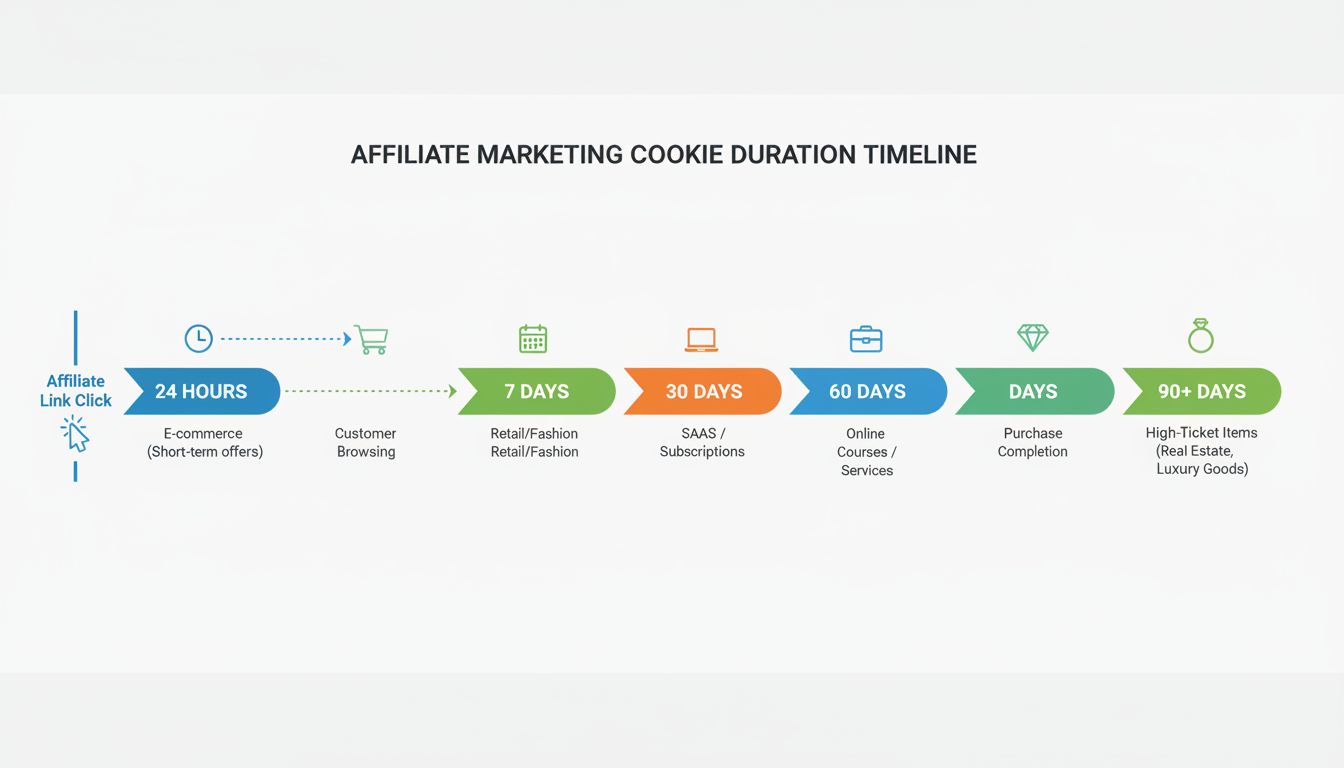
Learn about recommended cookie lifetimes for affiliate programs. Discover why 30 days is standard, how to choose the right duration, and how PostAffiliatePro he...
Join our community of happy clients and provide excellent customer support with Post Affiliate Pro.




Cookie Consent
We use cookies to enhance your browsing experience and analyze our traffic. See our privacy policy.