


Cookie Stuffing
In affiliate marketing, cookie stuffing is the unauthorized placement of affiliate tracking data without a genuine, qualifying referral interaction.
4 min read
AffiliateMarketing
Glossary
In affiliate marketing, cookie overwrite protection is a tracking rule that preserves an existing eligible affiliate referral instead of replacing it when another affiliate touch occurs. It can protect earlier referral credit within a defined interval, but does not prevent every form of fraud or establish a universal first-click policy.
In affiliate marketing, cookie overwrite protection is a tracking rule that preserves an existing eligible affiliate referral instead of replacing it when another affiliate touch occurs. It can protect earlier referral credit within a defined interval, but does not prevent every form of fraud or establish a universal first-click policy.
Suppose Partner A sends a qualifying referral on day 1, Partner B sends another on day 5, and the shopper buys on day 6. A last-eligible-referral rule may credit B. A protection rule still covering A may preserve A. A split rule may allocate shares to both eligible partners.
The result depends on the configured policy and accepted event history. Preserving a browser cookie is one technical control; the full attribution decision may also consider codes or customer relationships.

Set up advanced tracking in minutes. No credit card required.
| Policy | Main effect | Important limitation |
|---|---|---|
| Last eligible referral | Allows a later qualifying touch to receive credit | Later does not necessarily mean more valuable |
| First-referral protection | Preserves earlier eligible credit under a rule | Earlier does not necessarily mean legitimate |
| Split commission | Rewards several eligible contributors | Requires recorded interactions and allocation rules |
It can prevent some later attempts to replace existing credit, but a false referral placed first can also be protected. Detect the unauthorized event rather than treating the stored identifier as inherently trustworthy. Cookie stuffing concerns invalid referral placement, while an authorized later click can be a legitimate contribution.
Be the first to know about new features and product updates.
Review disputed transactions with the event history and terms available at the time. A single credited affiliate in a summary report cannot show all the reasons why another partner did not receive the commission.
Test the rule with an existing eligible referral, no referral, an expired referral, a repeat click, and a supported coupon code. The same later event can have a different result depending on which state existed before it arrived.
For an illustrative seven-day protection interval and thirty-day attribution window, a later qualifying click on day 5 may be blocked from replacing the protected referral. A click on day 10 may behave differently under the stated rule. These are test assumptions, not product defaults.
MDN’s Set-Cookie reference describes browser retention controls. The program’s rule about accepted replacement remains a separate decision.
Preserve the original and later event evidence rather than relying only on the final cookie value. Determine whether both interactions were permitted and eligible. A legitimate introduction and a legitimate reminder can both contribute value, even when the program chooses only one credited partner.
The split commission knowledge base provides an alternative product-specific attribution mechanism. Sharing an eligible commission pool may suit some programs, but it does not replace validation of the recorded contributors.
The protection interval controls whether a later referral may replace the current one. Cookie expiry controls how long browser data remains available. A program can have a long attribution window but a shorter protection interval, so the settings must be described separately.
Compare a hypothetical two-partner journey. Partner A introduces the buyer; Partner B supplies a later eligible link. Last-click attribution can credit B. A protection rule that still covers A can preserve A. Split commissions can share an agreed pool between eligible partners. These are alternative policies, not interchangeable tracking technologies.
Test expiry boundaries, coupon-code precedence, repeat clicks, and customers with no existing referral. Inspect the accepted event history when investigating suspected cookie stuffing. Protection can reduce some unwanted overwrites, but a falsely planted first referral also needs detection and review.
For the corresponding Post Affiliate Pro settings, consult the filtering rules plugins documentation . Confirm the configuration and integration requirements against your program’s rules.
Explore Post Affiliate Pro’s tracking, commission settings, and partner management tools.
In affiliate marketing, cookie stuffing is the unauthorized placement of affiliate tracking data without a genuine, qualifying referral interaction.
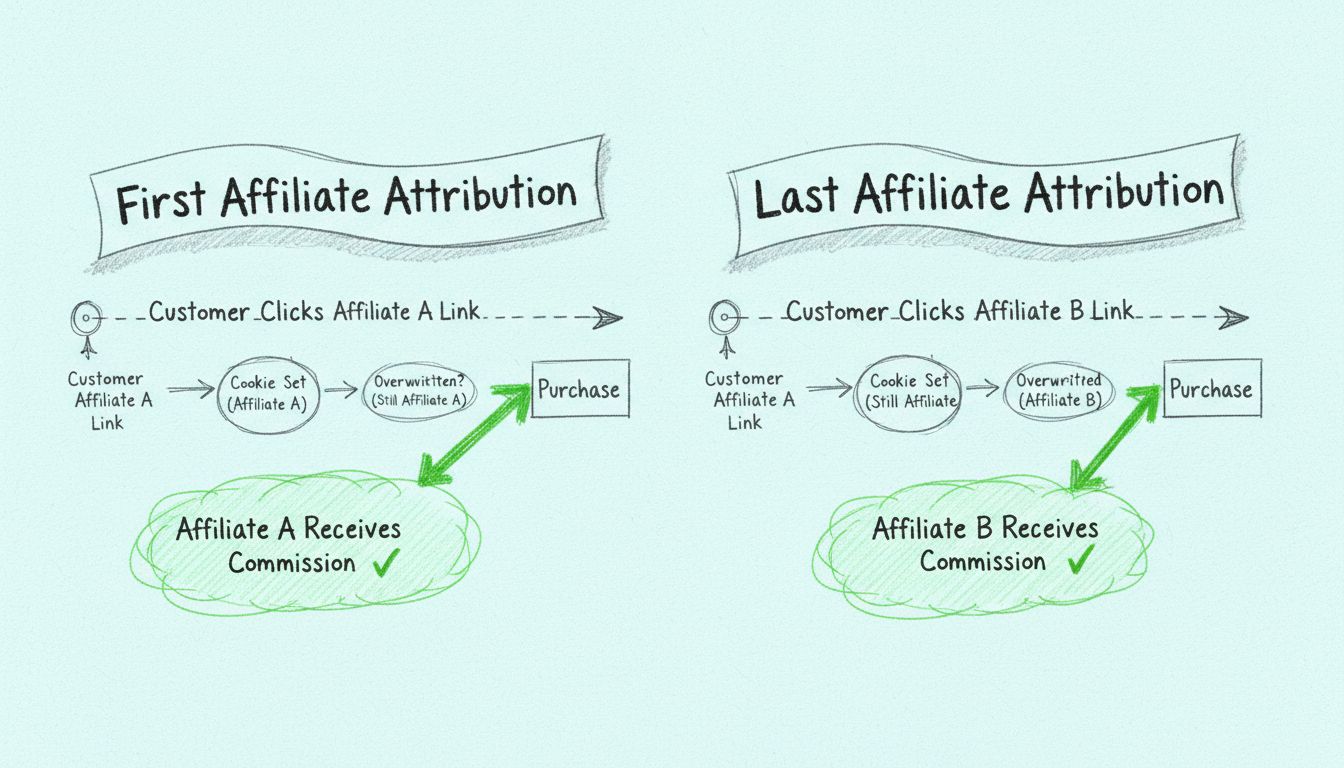
Learn how to track transactions for the first or last affiliate that referred your customer. Understand cookie overwrite settings, attribution models, and how t...

Learn what cookie stuffing is, how fraudsters use it to steal commissions, and proven strategies to detect and prevent this affiliate fraud.
Join our community of happy clients and provide excellent customer support with Post Affiliate Pro.




Cookie Consent
We use cookies to enhance your browsing experience and analyze our traffic. See our privacy policy.