


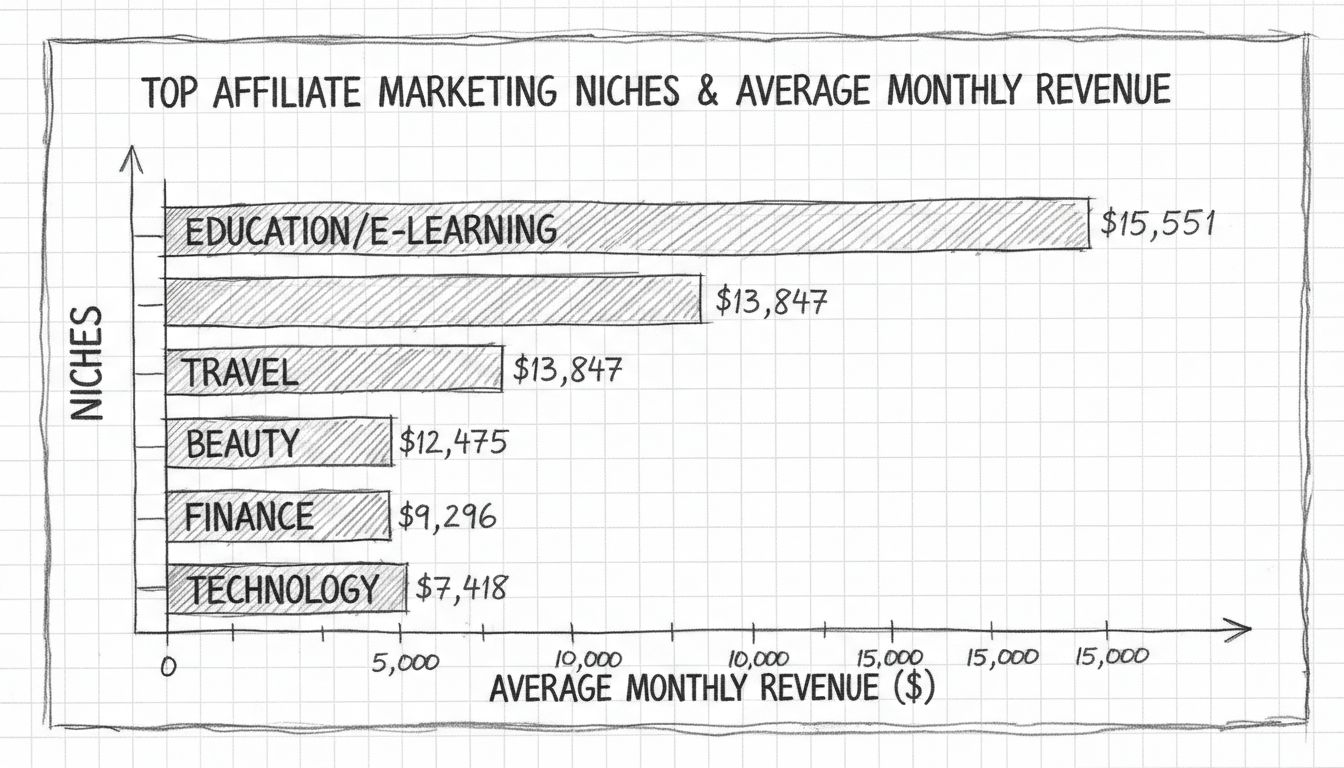
Affiliate marketer earnings: a complete income guide
What affiliate marketers actually earn at every experience level, which niches pay the most, and what separates a $600 month from a $10,000 one.
10 min read
Discover if affiliate marketing is worth your time and effort. Learn realistic income expectations, timeline to profitability, and proven strategies to build passive income with affiliate marketing.
For most people willing to put in six to twelve months of consistent work before expecting real income, yes. Beginners typically earn $0 to $1,000 a month in year one, and roughly 1 in 10 affiliates eventually clears $50,000 a year, but an estimated 95% of beginners quit before they ever see that kind of payoff, so the honest answer depends heavily on whether you can outlast the slow start.
Affiliate marketing has grown into a real income stream for a lot of people, but whether it’s worth it for you specifically depends less on the industry’s size and more on your own tolerance for a slow start. The global affiliate marketing market is on track to pass $20 billion in 2026, up from $17 to $18.5 billion the year before, so the opportunity itself isn’t in question (Business Research Insights ). What matters more for you personally is what happens in your first year, because that’s the part most people underestimate.
The appeal is obvious. You don’t need inventory, a customer service team, or much starting capital. All you need is a place to publish, a blog, a YouTube channel, an email list, or a social account, and content good enough that people trust your recommendations. That low barrier to entry is exactly why so many people try it. It’s also, unfortunately, part of why so many quit early: it’s easy to start, which means it’s easy to start without a real plan.
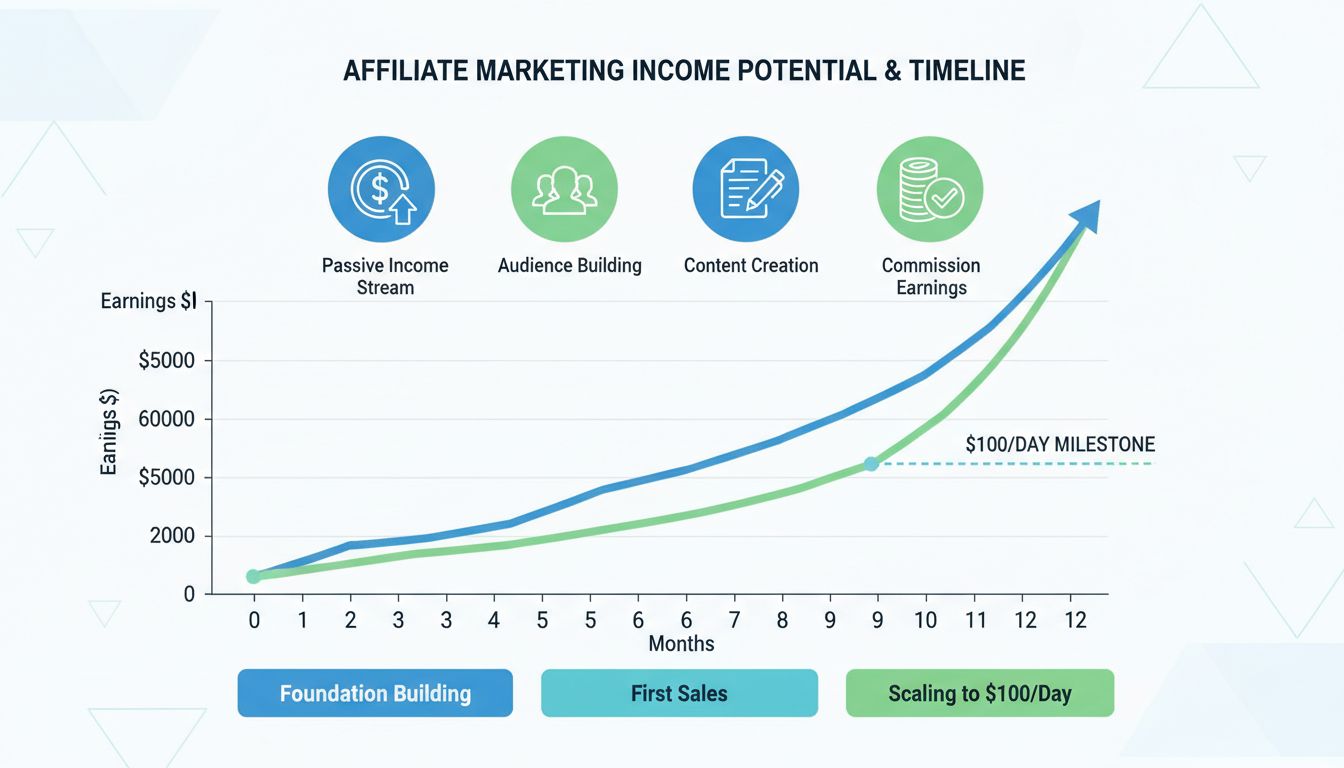
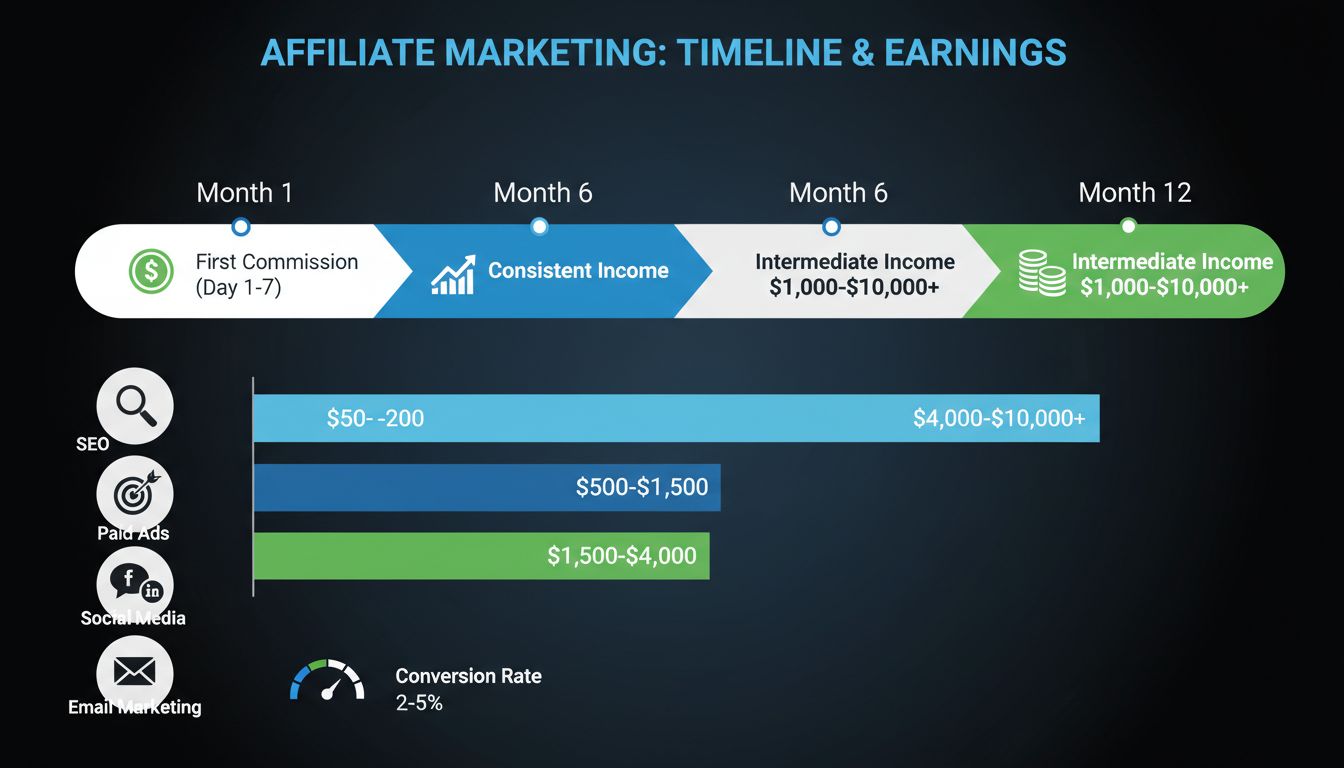
The first three months are almost entirely setup. You’re picking a niche, publishing early content, and joining affiliate programs, and it’s normal to earn nothing during this stretch since you’re building an asset rather than doing paid work. By months four to six, if your niche and content were reasonably chosen, you’ll typically see your first sales, often somewhere in the $100 to $500 range for the month. Months seven through twelve are usually where things start compounding, as your published content accumulates and starts ranking, and consistent monthly income becomes realistic rather than occasional.
Some affiliates do go on to reach $100 a day, roughly $3,000 a month, but that’s a milestone worth treating as an ambitious longer-term target rather than a typical first-year outcome. If that specific goal is what you’re after, our dedicated guide on reaching $100 a day in affiliate marketing walks through what it actually takes to get there.

Set up advanced tracking in minutes. No credit card required.
Experience changes the math more than almost anything else. According to a survey of more than 2,000 affiliate marketers by Authority Hacker, affiliates with less than a year of experience average $636 a month, while those with one to two years average $4,196 a month, nearly seven times as much (Source ). That gap keeps widening: affiliates with three to five years of experience average $10,789 a month. Zoomed out across everyone, about 15% of affiliate marketers earn between $80,000 and $1 million a year, and roughly 1% clear $1 million annually, though the honest counterweight to those numbers is that an estimated 95% of beginners fail or quit before they get anywhere near them.
For the full month-by-month breakdown of what a realistic beginner year looks like, see our guide on how much beginners can make in affiliate marketing , and our affiliate marketer earnings guide covers the full arc from there through super affiliate. Commission rates also vary a lot by niche, with education and eLearning products often paying 15% to 30%, finance products 20% to 40%, and SaaS or software products anywhere from 20% to 70%, usually with recurring payouts as long as the customer stays subscribed. It’s worth noting that “affiliate marketer” is sometimes used as a job title for an in-house marketing employee rather than someone earning commissions independently. If that’s the role you’re actually asking about, our affiliate marketing manager salary guide covers that separately, since it’s a genuinely different kind of income than the commission-based earnings covered here.
One of the most persistent myths about affiliate marketing is that it eventually becomes fully passive, income earned while you sleep with no further effort. It can get close to that, but only after a lot of upfront work. Once a piece of content ranks well, it can keep generating commissions for months or years, but getting there requires real effort first, and staying there requires more than people expect too. Search algorithms shift, competitors improve their content, and audience interests move on, so successful affiliates keep treating their site or channel as an active project rather than something they can walk away from once it starts earning.
Be the first to know about new features and product updates.
It helps to weigh affiliate marketing against the alternatives before committing your time. Dropshipping and running your own e-commerce store give you control over pricing and margins, but add real operational weight: inventory, customer service, and returns. Freelancing pays faster since you’re trading time directly for money, but it doesn’t scale the way a content library does. Affiliate marketing sits in between: slower to start than freelancing, but with a real chance of the content you publish today still earning months from now without you actively working on it.
The financial barrier is genuinely low. A domain runs $10 to $15 a year, basic hosting is $5 to $20 a month, and you can start entirely on free blogging or social platforms if you’d rather not spend anything upfront. As you grow, tools for SEO research, email marketing, or analytics might run $50 to $300 a month, which is still modest next to most traditional business startup costs. The real cost is time, not money. Building something that earns consistently typically takes 10 to 20 hours a week for the first six to twelve months, which is a meaningful commitment if you’re doing it alongside a full-time job, though that time investment is front-loaded and tends to shrink once your content library and audience are established. If you’re evaluating this from the other side, running the program rather than joining one, our walkthrough on tracking affiliate earnings and commissions in Post Affiliate Pro covers what that investment looks like to manage.
Affiliate marketing tends to work out for people who are willing to build an audience through some form of content, who have genuine interest in their chosen niche (enough to sustain them through a quiet first six months), and who are comfortable optimizing based on data rather than guesswork. It tends not to work out for people who need income immediately, who dislike creating content, or who are hoping for a passive income stream without the upfront effort. If you recognize yourself in that second group, it’s worth being honest about that now rather than a few months in, since that mismatch is a big part of why the failure rate among beginners is so high in the first place. If you’ve already started and are feeling that pull to quit, our guide on not giving up on affiliate marketing is worth reading before you decide anything.
A handful of habits separate the affiliates who make this work from the ones who don’t. Promote products you’d genuinely recommend even without a commission attached, since authentic recommendations convert better than generic ones. Start building an email list immediately, since that audience belongs to you rather than to whichever platform’s algorithm is in fashion this year. Spread your income across a handful of programs instead of depending on one, keep studying SEO and copywriting since both compound over time, and track your own data closely enough to know which content and products are actually working so you can do more of that and less of everything else.
Affiliate marketing is worth pursuing if you can commit to six to twelve months of consistent effort before expecting meaningful income, and if you’re building content that genuinely helps the people reading it rather than chasing quick commissions. The ceiling is real, income can scale well beyond what a beginner starts with, but so is the floor, since a large share of people who try this quit before the compounding ever kicks in. Whether it’s worth it isn’t really a question about the industry. It’s a question about whether you’re willing to treat the first slow months as an investment rather than a disappointment.
PostAffiliatePro provides the most powerful affiliate management platform to help you build, manage, and scale your affiliate program. Track commissions, manage affiliates, and automate payouts all in one place.
What affiliate marketers actually earn at every experience level, which niches pay the most, and what separates a $600 month from a $10,000 one.

How much can beginners make in affiliate marketing in 2026? A realistic, source-checked breakdown of beginner affiliate marketing income, timelines, and what ac...
Discover realistic timelines for earning with affiliate marketing in 2025. Learn when you'll see first commissions, consistent income, and how to accelerate you...
Join our community of happy clients and provide excellent customer support with Post Affiliate Pro.




Cookie Consent
We use cookies to enhance your browsing experience and analyze our traffic. See our privacy policy.