



Prevent Affiliate Fraud SaaS Program: Detection & Prevention
how to prevent affiliate fraud with built-in fraud detection platforms, real-time monitoring, and geographic restrictions.
11 min read

SaaS and FinTech programs pay the highest affiliate commissions and attract the most sophisticated fraud. Learn exactly how to stop affiliate fraud before it drains your marketing budget.
In 2013, two of eBay’s top-earning affiliates found out the hard way that affiliate fraud is not a theoretical risk. Shawn Hogan and Brian Dunning both pleaded guilty to wire fraud after running a cookie-stuffing operation against eBay’s affiliate program for years. Court documents showed Hogan personally collected $28 million in fraudulent commissions, and Dunning brought in another $7 million, both by quietly dropping eBay’s own tracking cookie into visitors’ browsers on unrelated websites, then claiming a commission whenever any of those visitors bought something on eBay later, whether the affiliate had anything to do with it or not (Martech ).
That is not a hypothetical scenario. It is a closed federal case with two guilty pleas attached, and it happened on a mainstream e-commerce platform, not even a program paying today’s premium cost-per-acquisition (CPA) bounties.
Raise the stakes to a modern SaaS or FinTech affiliate program, where a single approved conversion can be worth $150 to $500 instead of a few dollars in e-commerce commission, and the incentive for exactly this kind of attack only grows. If you are running an affiliate program in a high-commission niche like SaaS, FinTech, personal finance, or cryptocurrency , the economics that made Hogan and Dunning’s scheme worth years of effort apply just as directly to you, only with a bigger prize at the end.
The scale of the problem is bigger than most program owners assume. Digital advertising fraud already cost an estimated $84 billion globally in 2023, and Juniper Research projects that figure will climb past $172 billion by 2028 as ad spend keeps growing alongside it. Affiliate programs are a meaningful slice of that number, and high-commission niches carry more than their fair share (see the full affiliate marketing statistics roundup ).
This guide breaks down exactly why high-ticket niches attract the most sophisticated fraud, how the attacks actually work, and what you need to implement, technically, to stop them.
Affiliate fraud follows money. That sounds obvious, but the economic logic is worth spelling out clearly, because it explains the threat level you are actually dealing with.
Imagine a fraudster running a bot farm against a fast-fashion affiliate campaign. The program pays a 5% commission on an average $40 cart, roughly $2 per conversion. To generate $1,000, they need 500 successful fake conversions. The operational overhead, detection risk, and infrastructure cost almost certainly erases any margin.
Now move that same bad actor into your B2B SaaS affiliate program. Your program pays $150 per software trial activation. They only need 7 successful fake conversions to clear $1,000. At $500 per funded trading account, it takes just 2.
The high customer lifetime value (LTV) that makes it economically rational for you to offer generous CPA bounties is the precise feature that makes your program a lucrative target. The more premium your payouts, the more sophisticated the adversaries you attract.
And they have become genuinely sophisticated. The primitive bots that triggered instant red flags, with repetitive click patterns from static IPs, are largely extinct. Modern affiliate fraud deploys automated user journeys, custom residential proxy infrastructure, and AI-generated scripts that convincingly mimic human behavior: realistic scroll depth, cursor pauses, and varied form-fill timing.
A postback is simply the message your affiliate software receives when a sale or signup happens, the piece of data that tells your system to credit an affiliate with a commission. If your affiliate tracking platform accepts every postback at face value without questioning it, you are not running fraud prevention. You are running an honor system.
Understanding the mechanics of how fraud operates is the first step to blocking it. In high-commission verticals, bad actors use three primary methods, each one designed to bypass a different layer of naive trust in your tracking infrastructure.
Most high-CPA programs are geo-restricted. A FinTech platform might pay $250 per funded account specifically for US-based users, because US customers match the LTV and monetization model that justifies that payout.
Fraudsters know this. So instead of routing traffic through data-center IP addresses, which are trivially blacklisted, they use residential proxy networks: pools of compromised or rented home internet connections scattered across the world.
To your tracking script, the connection looks indistinguishable from a real consumer browsing from a suburb of Columbus, Ohio. In reality, it is an automated script running on a server in Eastern Europe. The geo-restriction is bypassed and the premium payout is claimed.
For programs paying on a Cost-Per-Lead (CPL) basis, such as enterprise SaaS demo requests, business loan applications, or brokerage account registrations, fraud has evolved past simple form-spam.
Modern bot networks leverage leaked identity databases to fill out your registration forms with real names, real postal codes, and functional email addresses. They solve advanced CAPTCHAs through automated solver APIs and the submission passes your initial validation. You approve the lead, pay the affiliate, and discover three months later that the entire pipeline was fabricated. The merchant pays. The fraudster disappears. The pipeline data is useless.
This one is particularly insidious because the user is real. The fraud is entirely in the credit assignment.
Cookie stuffing works by embedding hidden tracking scripts into unrelated, high-traffic websites. Pop-under windows, malicious browser extensions, and invisible iframes are all common delivery mechanisms. When a genuine user lands on one of these compromised pages, the script silently drops the fraudster’s affiliate cookie into their browser, without any click, action, or awareness on the user’s part.
If that same user later navigates to your platform independently, typing your URL directly, clicking a Google ad, or using a bookmark, and converts, your tracking system reads the stuffed cookie and awards the commission to the fraudster.
You pay for a conversion you already owned. Your organic acquisition cost quietly inflates. The legitimate affiliate who actually influenced the user gets nothing.

Set up advanced tracking in minutes. No credit card required.
Knowing how the attacks work is useful. Having systems that stop them automatically is what actually protects your margins.
Manual auditing does not scale. If your program is generating thousands of conversions per month, no compliance team can review them individually. The answer is automated, real-time fraud prevention built into your affiliate tracking infrastructure.
Post Affiliate Pro provides three specific configuration layers that work together to close the gaps that fraudsters exploit.
| Step | Stage | What it does |
|---|---|---|
| 1 | Incoming Traffic | Click or conversion event fires from affiliate link |
| 2 | IP & Geographic Filtering | Blocklisted IPs and out-of-zone origins are rejected before a commission record is written |
| 3 | Conversion Review | Conversion pattern is logged; unusual volume or timing is flagged for inspection |
| 4 | Pending Approval Window | Commission sits in pending status until manually approved or voided by your team |
| 5 | Secured Payout | Verified commission is released and paid out |
Before a fraudulent click can write a record to your system, it needs to pass through your first gate: IP-level filtering.
Post Affiliate Pro allows you to block clicks and commissions based on IP addresses and geographic origin using referral tracking by IP and fraud protection settings. You can manually maintain an IP blocklist to exclude known bad actors, data center ranges, and suspicious network blocks. Combined with campaign-level geographic restrictions, this means that if your FinTech campaign is US-only, any conversion originating from outside that zone is cleanly rejected before it generates a commission record.
This directly counters residential proxy spoofing. While proxy networks can disguise the country of origin convincingly at a surface level, layering geographic enforcement at the campaign tracking level, not just at the front-end display layer, makes it significantly harder for fraudsters to claim geo-restricted payouts at scale.
The signature of automated fraud is uniformity. Real human audiences produce conversions with natural variation: a spike after an email blast, a slower trickle from SEO traffic, and spread-out geographic distribution.
Automated scripts produce the opposite: dense clusters of identical conversions in compressed windows, often from overlapping IP sub-networks.
Post Affiliate Pro lets you configure commissions to be created with a pending status by default, requiring explicit manual approval before any payout is processed. You can also configure recurring commissions to be flagged as pending at creation, giving your team a review checkpoint before each commission cycle runs.
This creates a natural inspection window. When your compliance team sees 400 conversions fire within a 48-hour window from a single affiliate account, all with identical post-signup behavior and zero downstream transaction activity, they can void the entire batch before a single dollar leaves your account.
This is exactly the kind of attack a pending-commission workflow is built to catch. With every commission defaulting to pending status and a review window tied to account activity verification, a burst of synthetic conversions like the scenario above gets flagged and voided before it ever turns into a real payout.
Post Affiliate Pro includes a built-in feature called Automatic affiliate activity checking , configurable under Configuration → Features → Automatic affiliate activity checking in the merchant panel.
This feature monitors three dimensions of affiliate behavior: panel login activity, traffic generation (clicks and referred sales), and the status of pending affiliate accounts waiting for approval. You define inactivity thresholds, and when an affiliate crosses them, the system automatically triggers a warning email to the affiliate, declines the account, or permanently deletes it, depending on your configuration.
For fraud prevention, this is most valuable as a cleanup and early-warning tool. Fraudster accounts typically show a characteristic pattern: a short burst of activity to extract a payout, followed by complete silence. Automatic activity checking helps surface these dormant accounts for review and ensures that inactive accounts with no genuine engagement history do not accumulate in your program indefinitely.
Combined with the pending commission workflow above, this creates a two-layer behavioral check. The pending window catches suspicious conversion bursts in real time, and the activity checker flags the structural abandonment pattern that follows.
One underappreciated fraud-prevention strategy is making your program structurally unattractive to anonymous, low-investment bad actors.
Post Affiliate Pro’s Commission Groups feature allows you to set different commission rates for different affiliates within the same campaign. A newly joined, unverified affiliate can start in a lower-rate group with tighter approval requirements. Established, high-performing affiliates with a verified traffic history can be promoted to higher-rate groups with faster approval cycles.
This tiered access model means that the most valuable payouts, the $250 to $500 CPA bounties that attract sophisticated fraud, are only accessible to affiliates who have already demonstrated genuine, sustained traffic quality. An anonymous bot operator running a one-time extraction attack is structurally blocked from the premium tier they are actually targeting.
Performance Rewards extends this further by letting you configure rule-based bonus commissions triggered by verified performance milestones: a set number of genuine referred sales, recurring commission thresholds, or other measurable activity. These reward real affiliates for sustained quality while creating no pathway for a fraudster to trigger a bonus payout from a single burst attack.
| Threat | Attack Method | Post Affiliate Pro Defense |
|---|---|---|
| Proxy Spoofing | Residential node routing to fake geographic location | IP blocklists and campaign-level geographic restrictions |
| Bot Farm Leads | Synthetic identity profiles on CPL forms | Pending commission status with manual approval workflow |
| Cookie Stuffing | Hidden browser scripts hijacking organic attribution | Campaign matching algorithm with cookie overwrite controls and server-to-server tracking integration |
| Hit-and-Run Accounts | Short burst activity followed by complete abandonment | Automatic affiliate activity checking with threshold-based decline actions |
| Premium Payout Extraction | Targeting high-CPA programs with single-burst attacks | Commission Groups tiering that gates premium rates behind verified performance history |
All four technical defenses above assume the fraudster has already been admitted to your program. The most cost-effective fraud prevention happens before that moment.
Post Affiliate Pro allows you to configure custom fields in your affiliate signup form , meaning you can require professional identity verification, business website URLs, tax identification, and explicit legal compliance acknowledgments before any account is approved. You can also require affiliates to accept updated terms and conditions before they can log in, ensuring that your legal framework stays current and enforceable as your program evolves.
Pair these onboarding controls with your Commission Groups configuration, so new accounts start in a restricted tier with pending commissions and manual review requirements, and you have effectively turned your front door into a proper gate. Fraudsters overwhelmingly rely on anonymous, frictionless access. Structured onboarding eliminates that cover entirely.
Be the first to know about new features and product updates.
There is one important catch worth naming directly, because it affects how aggressively you configure these systems.
Every fraud prevention layer also introduces some friction for legitimate affiliates. A pending commission workflow is protection for you, but it is a cash-flow uncertainty for a legitimate publisher. Overly conservative activity-checking thresholds might flag a genuine creator who took a planned break between campaigns.
The right configuration is not maximum sensitivity on every parameter. It is thresholds calibrated to your program’s actual traffic patterns, with clear communication to your affiliate partners about how your approval process works and why. Post Affiliate Pro’s automated email notifications mean the system can communicate directly with affiliates when their account status changes, reducing confusion and maintaining trust even when reviews are in progress.
Transparent systems build trust. Trusted partners perform better. The goal of fraud prevention is not to suspect everyone. It is to protect the program so that high-quality, legitimate affiliates can earn confidently within it.
High-commission affiliate niches like SaaS, FinTech, personal finance and crypto, are where the most valuable partner programs operate. They are also where the most sophisticated fraud operates. The two facts are inseparable.
The answer is not to lower your commission rates or close your program. It is to harden your infrastructure so the economics no longer favor the attacker.
Post Affiliate Pro gives you IP filtering , fraud protection , pending commission workflows, automatic activity checking , and tiered commission group access to build a defense stack that operates at a scale no manual audit spreadsheet can match. The result is a program where legitimate, high-performing affiliates can operate with confidence, and where fraudsters find no viable path to an unearned payout.
Post Affiliate Pro gives you the tools to run a high-payout partner program securely and profitably, from IP filtering to commission approval workflows.
how to prevent affiliate fraud with built-in fraud detection platforms, real-time monitoring, and geographic restrictions.

The 11 most profitable affiliate marketing niches for 2026, ranked by commission rates, market size, and conversion potential. Data-backed guidance for affiliat...
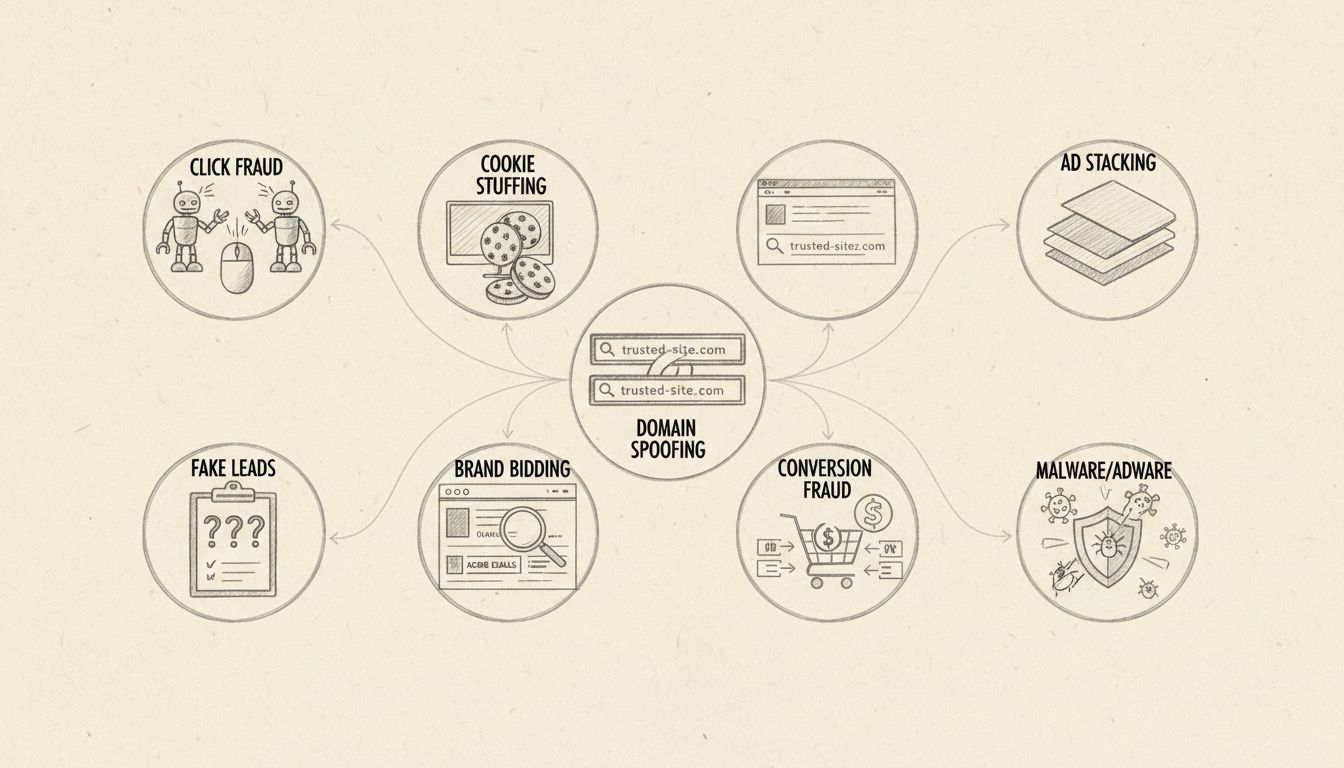
Learn what affiliate fraud is, how it works, and proven strategies to detect and prevent it. Protect your affiliate program with advanced fraud detection techni...
Join our community of happy clients and provide excellent customer support with Post Affiliate Pro.




Cookie Consent
We use cookies to enhance your browsing experience and analyze our traffic. See our privacy policy.