



Generative engine optimization for affiliate marketing
How affiliate content gets cited inside ChatGPT, Perplexity, and Google AI Overviews, and what to change in your writing so AI search engines choose to recommen...
7 min read
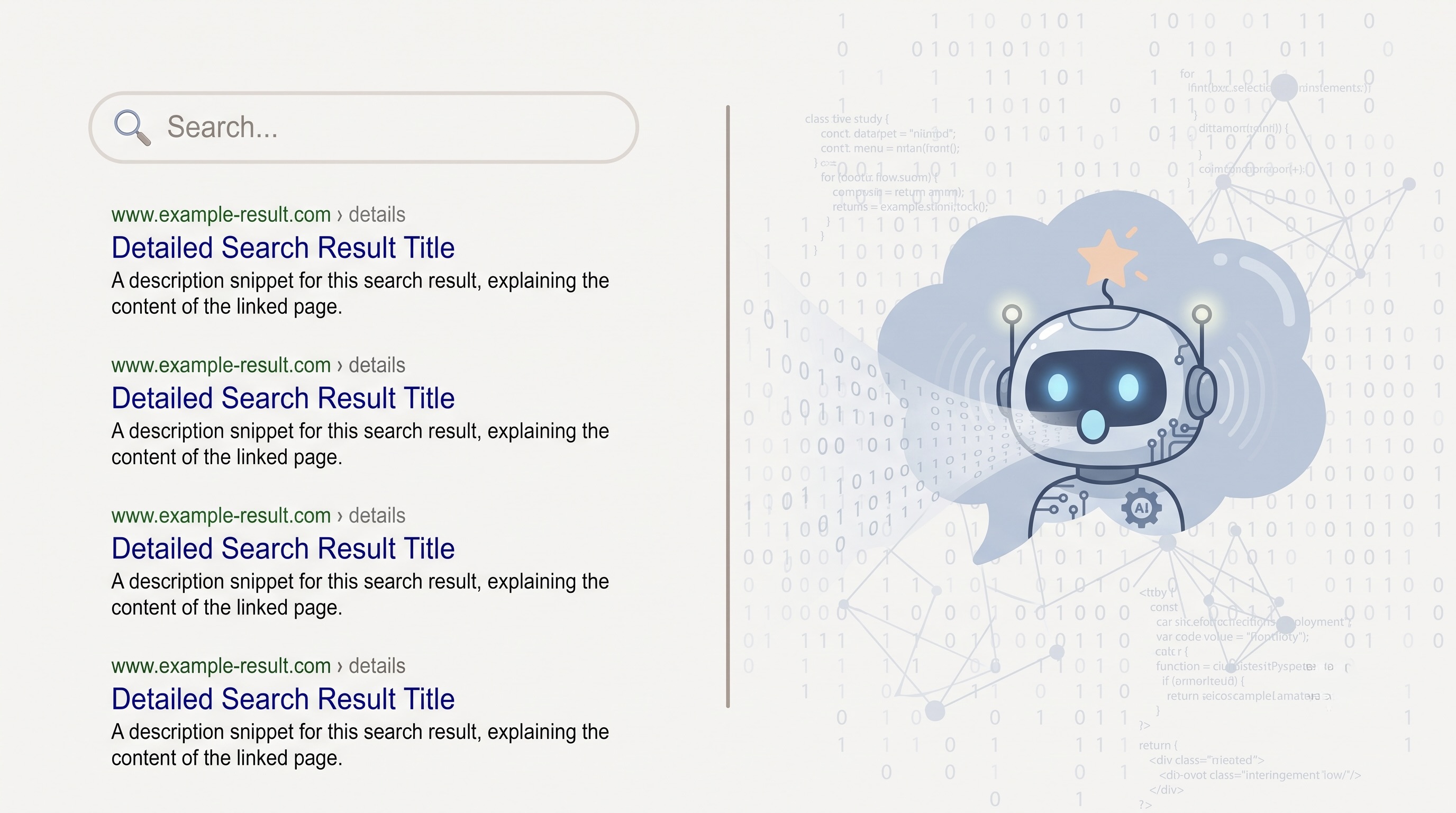
A side by side comparison of SEO and generative engine optimization for affiliate content, what stays the same, what changes, and where to focus your effort first.
Every couple of years, a new acronym shows up promising to change how content gets found. Most of them turn out to be a minor tweak to existing SEO practice. GEO is not one of those.
Generative engine optimization is a real shift, because the endpoint is different. SEO gets you a spot in a list of links a person scans and clicks through. GEO gets your content pulled directly into an answer a chatbot writes, sometimes with a link, sometimes without one at all.
Type “best budget running shoes for beginners” into Google and you get ten blue links, a shopping carousel, and probably an AI Overview summarizing a few of those links at the top. Ask ChatGPT the same question and you get a short, direct answer with maybe three or four named products, built from whatever sources the model decided were trustworthy enough to lean on. Same question, two completely different paths to an answer, and only one of them guarantees you a click.
For affiliate marketers specifically, that distinction is not academic. Your entire business model depends on someone clicking your link. If AI search keeps growing the way current data suggests, understanding exactly where SEO and GEO overlap, and where they genuinely diverge, is worth the hour it takes to read this.
A quick word on terminology before going further. You will also see the term AEO, or answer engine optimization, used almost interchangeably with GEO. They are close cousins rather than the same thing. AEO usually refers to winning a direct answer slot inside a traditional search engine, a featured snippet or a knowledge panel on Google. GEO covers that same goal but extends it across the full range of AI chat platforms, ChatGPT, Perplexity, and Gemini included. In practice, the writing habits that win at one tend to win at the other, so the distinction matters more for vocabulary than for strategy.
| SEO | GEO | |
|---|---|---|
| Optimizes for | Ranking in a list of links | Being cited inside an AI-generated answer |
| Success looks like | A click to your page | A mention, quote, or citation, with or without a click |
| Content shape that wins | Comprehensive, builds toward a conclusion | Direct answer up front, then supporting detail |
| Key signals | Backlinks, keywords, site speed, E-E-A-T | Clear factual claims, named sources, structured data, freshness |
| Measurement | Rankings, organic traffic, click-through rate | Citation frequency, brand mentions in AI answers, referral traffic from AI platforms |
| Platforms | Google, Bing | ChatGPT, Perplexity, Google AI Overviews, Gemini |
It is worth saying clearly: most of what makes content good for SEO still makes it good for GEO. A fast, well-structured, genuinely useful page performs reasonably well in both worlds, because both systems are ultimately trying to reward the same underlying thing, content that actually answers the question well.
Topical authority still matters. A site that has published dozens of well-researched pieces on affiliate marketing carries more weight, in both a Google ranking algorithm and an AI model’s training data, than a site publishing its first article on the topic.
Technical health still matters too. A slow, broken, or poorly structured site is a bad candidate for ranking and a bad candidate for citation, for the same basic reason: nothing about it signals reliability.

Set up advanced tracking in minutes. No credit card required.
The differences start to show up in how content is structured and phrased, not in whether it exists at all.
SEO content traditionally builds an argument. It introduces a topic, works through context, and arrives at a conclusion, which works well for a human reader scanning a page after clicking a search result. GEO content needs to front-load the answer instead, because an AI system extracting information is looking for a clean, quotable statement it can lift out, not a narrative it has to interpret.
Specificity matters more under GEO too. A vague claim like “some experts believe commission rates are rising” is much harder for a model to cite with confidence than “average affiliate commission rates in SaaS run between 20% and 70% of the sale value, according to industry benchmarking.” The second version gives the model something concrete and attributable to quote.
Comparison tables, numbered steps, and question-phrased headings also tend to perform better under GEO, mostly because they mirror how people actually phrase questions to an AI assistant. If your heading reads as a real question, it is easier for a model to match your content to a matching query.
Ahrefs studied 300,000 keywords using Google Search Console data comparing December 2023 to December 2025, and found that AI Overviews now reduce click-through rates to the top-ranking organic result by 58% (Ahrefs ).
That statistic gets used to argue SEO is dying, but read it more carefully and it actually argues the opposite. Fifty eight percent is a real drop, not a total collapse. The remaining clicks are still going somewhere, and ranking well still puts you in the running for both the organic click and the AI citation.
On the AI side, OpenAI confirmed in February 2026 that ChatGPT had reached 900 million weekly active users (TechCrunch ). That is a real audience worth writing for directly, not a rounding error.
And for affiliate content specifically, eMarketer documented a case where nearly 70% of the websites ChatGPT cited when discussing eyewear brands were affiliate content rather than the brands’ own pages (eMarketer ). AI systems are already leaning on independent affiliate reviews, not brand marketing copy, when they need a real answer.
Be the first to know about new features and product updates.
There is a step before any of the writing advice matters, and it happens at the server level rather than on the page.
Every major AI platform crawls the web using its own named bot: OpenAI runs GPTBot for training and ChatGPT-User for real-time answers, Anthropic runs ClaudeBot, and Perplexity runs PerplexityBot. If your site’s robots.txt file blocks one of these, that platform will struggle to cite you at all, no matter how well the content itself is written.
Research from Cloro, based on more than a thousand domains that rank highly on Google or get cited often by AI platforms, found that domains blocking GPTBot earned a median of just 0.003 ChatGPT citations for every Google ranking they held, compared to 0.417 for domains that allowed it in. The pattern repeated for Perplexity specifically: sites blocking PerplexityBot saw essentially zero Perplexity citations, against a median of 1.167 for sites that did not (Cloro ). The researchers were upfront that their sample reflects their own monitored set of prompts rather than the entire web, but the direction of the effect is hard to miss.
The practical move here is simple. Check your robots.txt file and confirm it is not accidentally blocking the crawlers for any platform you actually want to be cited on. Many sites block AI bots by default, often through a plugin or hosting setting turned on without much thought, and never notice the gap it creates.
This is where a lot of teams get stuck, because the measurement habits built for SEO do not automatically carry over to GEO.
SEO measurement is mature. Rankings, organic sessions, and click-through rate are all sitting in tools most teams already use daily. GEO measurement is newer and messier. Citation frequency inside an AI answer is not something Google Search Console will ever show you, and referral traffic from AI platforms can be genuinely tricky to isolate.
Google added a native AI Assistant channel to GA4 in 2026 that automatically tags sessions from platforms like ChatGPT, Gemini, and Claude. It is a real improvement, but it only catches traffic that arrives with a clean referrer intact. A meaningful share of AI-driven clicks lose that referrer entirely and land in your analytics as plain direct traffic instead, which means your GEO impact is very likely larger than your dashboard currently shows.
The practical fix is treating a spike in unexplained direct traffic, especially on pages that read well as clear, quotable answers, as a signal worth investigating rather than ignoring.
Neither discipline is optional right now, so the more useful question is where to put your marginal hour of work.
If a page already ranks reasonably well on Google, spend your next round of edits on GEO: tighten the opening to answer the question directly, add specific numbers with sources, and restructure any long narrative sections into tables or steps where it makes sense.
If a page barely ranks at all, GEO improvements will not save it. Fix the SEO fundamentals first, since a page with no topical authority and weak technical performance is unlikely to get cited by an AI system either.
New content is the easiest place to build both in from the start. Write the direct answer first, support it with real data and named sources, structure it clearly, and you will have covered most of what both systems reward without having to choose between them.
SEO and GEO are not rivals fighting for your attention. They are two measurements of the same underlying goal: content that is clear, well sourced, and genuinely useful enough that something else, whether a person or a machine, decides to point at it.
For a closer look at how AI search specifically affects affiliate content, read our full generative engine optimization guide , and for the broader numbers behind where the industry is heading, see our complete affiliate marketing statistics roundup .
Post Affiliate Pro shows you exactly which content and which affiliates are driving conversions, whether that traffic comes from Google, an AI assistant, or somewhere else entirely.
How affiliate content gets cited inside ChatGPT, Perplexity, and Google AI Overviews, and what to change in your writing so AI search engines choose to recommen...
Discover how Google's AI-driven search experience, SGE, might impact niche sites and SEO, with potential traffic drops of 80%. Learn adaptation strategies focus...

Discover the powerful impact of ChatGPT on your SEO strategy with Post Affiliate Pro. Learn how this AI tool can enhance keyword research, content creation, and...
Join our community of happy clients and provide excellent customer support with Post Affiliate Pro.




Cookie Consent
We use cookies to enhance your browsing experience and analyze our traffic. See our privacy policy.