Which pet affiliate programs actually give you the longest cookie duration?
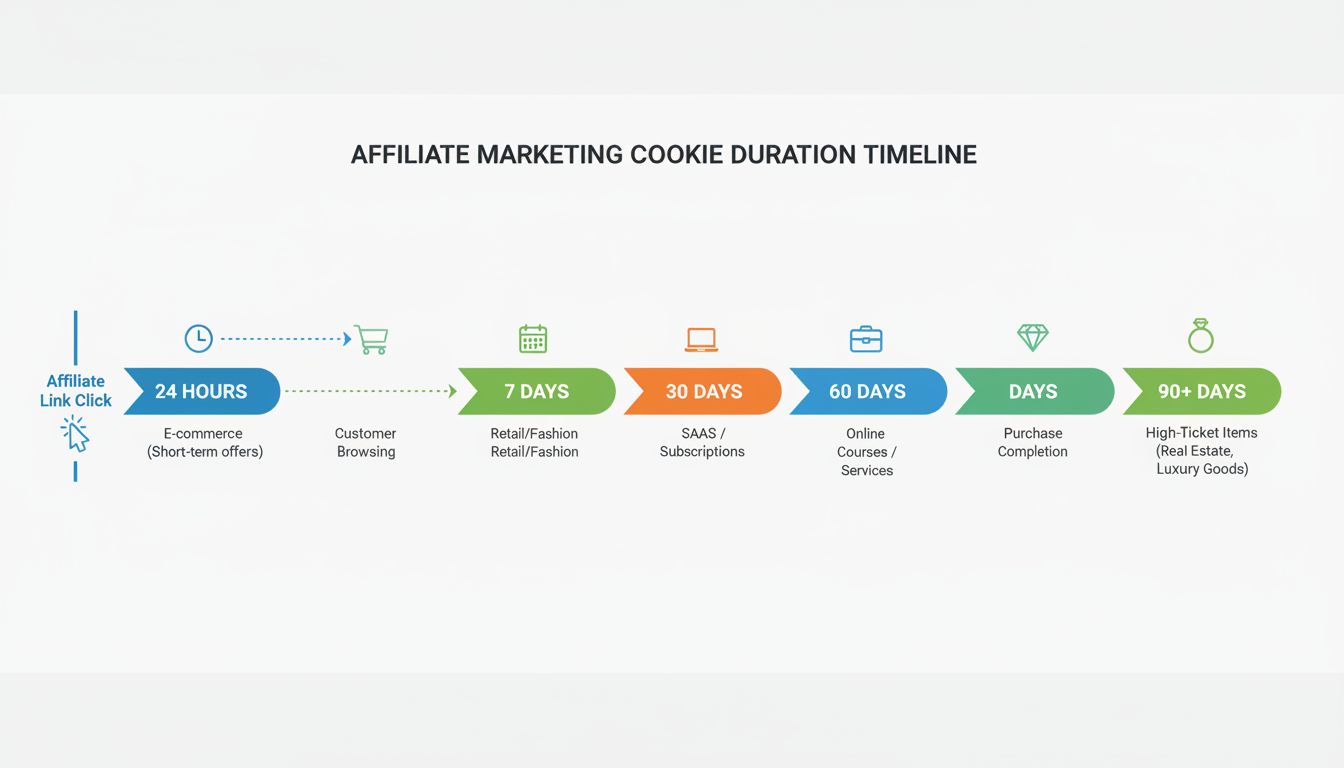
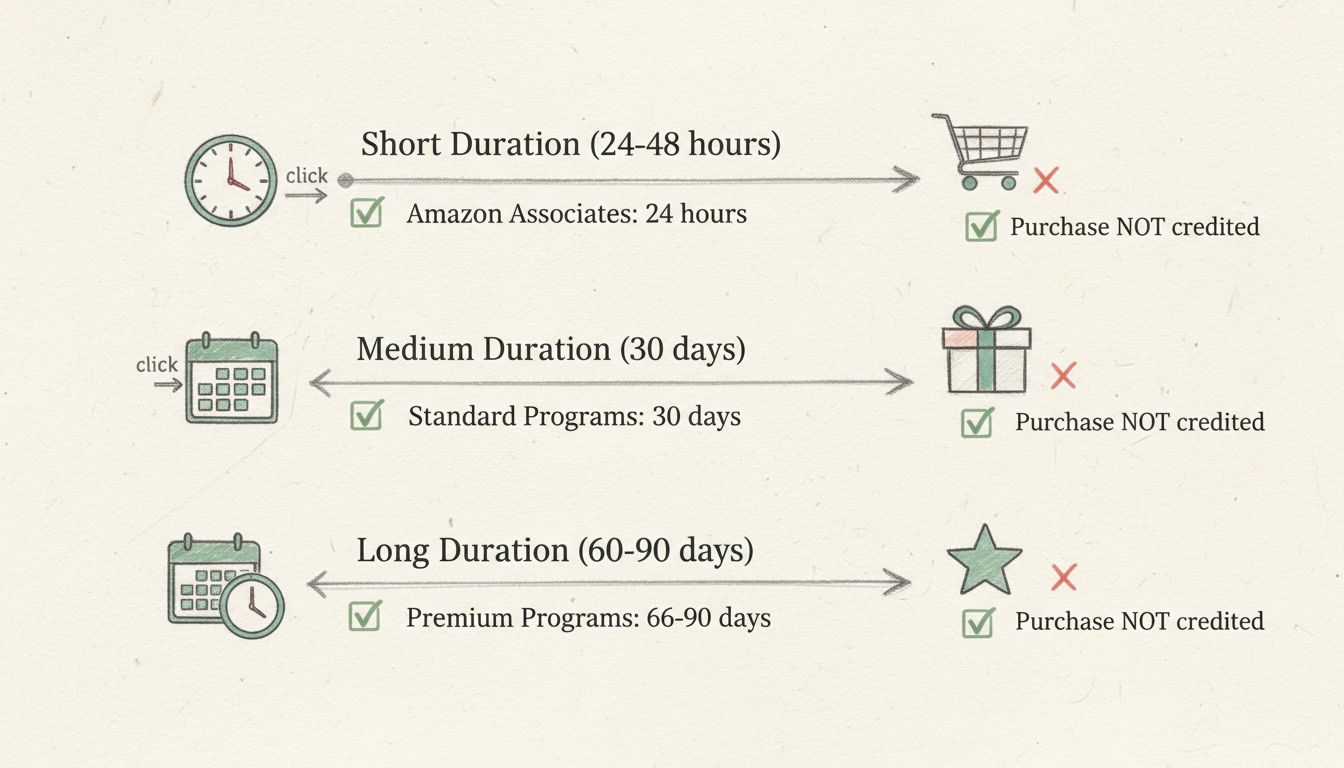
Here’s the number worth writing down: 90 days. That’s what Live Pee Free hands every affiliate on this list, and it’s the longest runway in the pet niche, full stop. Brain Training for Dogs and Fitbark tie for second at 60 days. Only Natural Pet sits at 45. Below that is where most of the market lives, a wide plateau of programs standardized at 30 days, and at the shallow end, Chewy gives you 15 days while Petco and BarkBox both cut you off after a single week.
| Cookie window | Programs |
|---|
| 90 days | Live Pee Free |
| 60 days | Brain Training for Dogs
, Fitbark |
| 45 days | Only Natural Pet
(PetFlow
reports 30-45 days depending on source) |
| 30 days | PetSmart
, Zooplus
, Ollie
, JustFoodForDogs
, Embark Vet
, Tractive
, Paw.com
, HolistaPet
, Innovet Pet
, Hepper
, Rover
, The Farmer’s Dog |
| 15 days | Chewy |
| 7 days | Petco
, BarkBox |
You’ll find the full breakdown, commissions included, in the complete guide to the best pet affiliate programs
. But one more 90-day program is worth naming here, and it isn’t a pet retailer: Post Affiliate Pro’s own affiliate program
matches Live Pee Free’s 90-day window and goes a step further with lifetime commissions
on every future purchase a referred customer makes, not just the one sale that happened to land inside the window. If you’re already running four or five pet programs, it’s a fifth worth adding.
Why does a long cookie window matter for some purchases and not others?
Because not every pet owner decides at the same speed. Someone whose dog just ruined the carpet buys an odor remover today, no research required, that’s why a 7-day cookie rarely costs Petco or BarkBox a sale. Someone weighing a $150 DNA kit, a CBD regimen, or a dog-training course behaves completely differently: they bookmark, they compare, they talk it over, they wait for payday. That’s exactly the buyer Live Pee Free, Brain Training for Dogs, and Fitbark are built to catch, which is no accident, their products all sit in the slow-decision category where a short window would bleed sales.
Here’s the part that trips people up: a long cookie window doesn’t do the converting for you. It just buys time. What happens inside that time is entirely on you.
Launch your affiliate program today
Set up advanced tracking in minutes. No credit card required.
Do all your pet affiliate cookies coexist in the same browser without conflict?
Yes, and this is worth knowing if you’ve ever worried that promoting five programs on one post somehow “competes” for space in a reader’s browser. Each program sets its own cookie under its own domain, tagged with its own affiliate ID, completely independent of any other merchant’s cookie sitting in the same browser. A reader who clicks your Chewy link, then your Tractive link, then your Innovet Pet link in the same session ends up with three separate cookies, each one tracking its own program, each one eligible to pay out if that specific merchant sees a sale. Nothing gets overwritten just because it’s a different brand.
The conflict only happens within the same program, when a second click on the same merchant’s link (yours or someone else’s) resets or replaces the existing cookie for that merchant specifically. Across merchants, you can stack recommendations in a single gift-guide post without any of them cannibalizing each other’s tracking.
How do you verify a program’s real cookie duration before you build content around it?
Affiliate program pages advertise a cookie duration, but the number on the page and the number actually enforced by the tracking software aren’t always identical, and browser privacy settings can shrink it further regardless of what the program promises. Before betting a content strategy on a “90-day” claim, it’s worth confirming it directly:
- Click your own link in a fresh, non-logged-in browser session and check the cookie in your browser’s developer tools (Application or Storage tab) for its actual expiration date, rather than trusting the marketing copy alone.
- Ask the affiliate manager directly if the program is mid-sized or newer. Smaller networks sometimes update tracking settings without updating the public-facing terms page.
- Re-check after any site redesign or platform migration, merchants occasionally change affiliate networks and inherit a shorter default cookie window without announcing it.
This takes ten minutes per program and prevents the worst version of this mistake: building a slow-burn content strategy, like a multi-post DNA-kit comparison series, around a cookie window that turned out to be shorter than advertised once you actually tested it.
Join our newsletter
Be the first to know about new features and product updates.
Does clicking an affiliate link twice actually reset the cookie window?
Yes, for most programs, and this is the single most underused lever in pet affiliate marketing. Standard cookie tracking runs on last-click attribution, meaning the clock resets every time someone clicks through your link again, regardless of when their first visit happened. Practically, that means a 30-day cookie can behave like a 90-day one if you give your reader a legitimate reason to click through your content a second time before the original click expires.
Two catches, and they matter. First, this doesn’t apply to programs running strict first-click attribution instead, worth confirming in a program’s terms before you build a strategy around it. Second, and this one costs more affiliates than people realize: if your reader bookmarks the merchant’s page instead of yours, that visit skips your link entirely. They can return six weeks later, buy, and credit goes nowhere near you, cookie duration never even entered the picture.
How do you actually make the most of a 60 to 90-day cookie window?
A long window with nothing built on top of it is just a longer way to lose the sale quietly. Four things change that:
- Capture an email before the click, not after. A short comparison checklist worth downloading gives you a legitimate reason to follow up before the window closes, and that follow-up email is itself a fresh, trackable click.
- Publish the “still deciding?” follow-up. A second post like “is this worth it, six weeks in” or a head-to-head against a competitor gives a slow decider a reason to come back through your site instead of typing the brand name into a search bar.
- Keep the original review current. Readers bookmark the exact page that convinced them. If pricing or details go stale, they bounce and re-search, and that’s the moment your link gets swapped for someone else’s.
- Retarget your content, never the brand’s trademark. Running ads back to your own comparison post is fair game. Bidding on the merchant’s name in paid search to “recapture” a lead usually isn’t, most programs explicitly ban it, so check the terms first.
How do you avoid losing a sale inside a short 7 to 15-day window?
Short-window programs like Chewy, Petco, and BarkBox reward a completely different playbook, built for a reader who already knows what they want and just needs the final push.
- Match urgency to the purchase. A “what to grab before you travel” post converts faster than an exhaustive guide, because the reader isn’t researching, they’re deciding right now.
- Put the link where the decision happens, not after three sections of backstory nobody asked for.
- Give one clear pick, not five options. A comparison table is the right format for a slow-burn purchase. For an impulse buy, indecision is the thing killing your conversion, not lack of choice.
What else costs you a sale even when the cookie is still valid?
A cookie that hasn’t expired can still lose the sale, thanks to the same last-click attribution that makes the “click again” trick work in your favor. It cuts both ways: a coupon or deal-finder browser extension firing at checkout can override your click from weeks ago just as easily as your follow-up post can override a competitor’s. That mechanic, plus pending approvals and cross-device gaps, is worth understanding fully if you’re running several programs at once, we cover it in how to track pet affiliate commissions across multiple programs
. For the mechanics of cookie tracking itself, our deep dive on cookie duration in affiliate marketing
covers the attribution models behind all of this in more depth.
Final thoughts
The longest cookie in the pet niche won’t save a sale that never gets a second click. Live Pee Free, Brain Training for Dogs, and Fitbark hand you 60 to 90 days of runway, that’s the easy part. The actual work is giving a slow-deciding reader a reason to come back through your link before that runway ends, whether that’s an email, a follow-up post, or simply keeping your review current enough to still be worth returning to. Match your content format to the buyer’s actual decision speed, and treat every extra click as the real reset button it is. For the complete lineup behind these numbers, see the full guide to the best pet affiliate programs for 2026
.