



Is Affiliate Marketing Real or Fake? The Truth
if affiliate marketing is real or a scam. Learn how legitimate affiliate programs work, common fraud tactics, and how to identify trustworthy opportunities.
10 min read

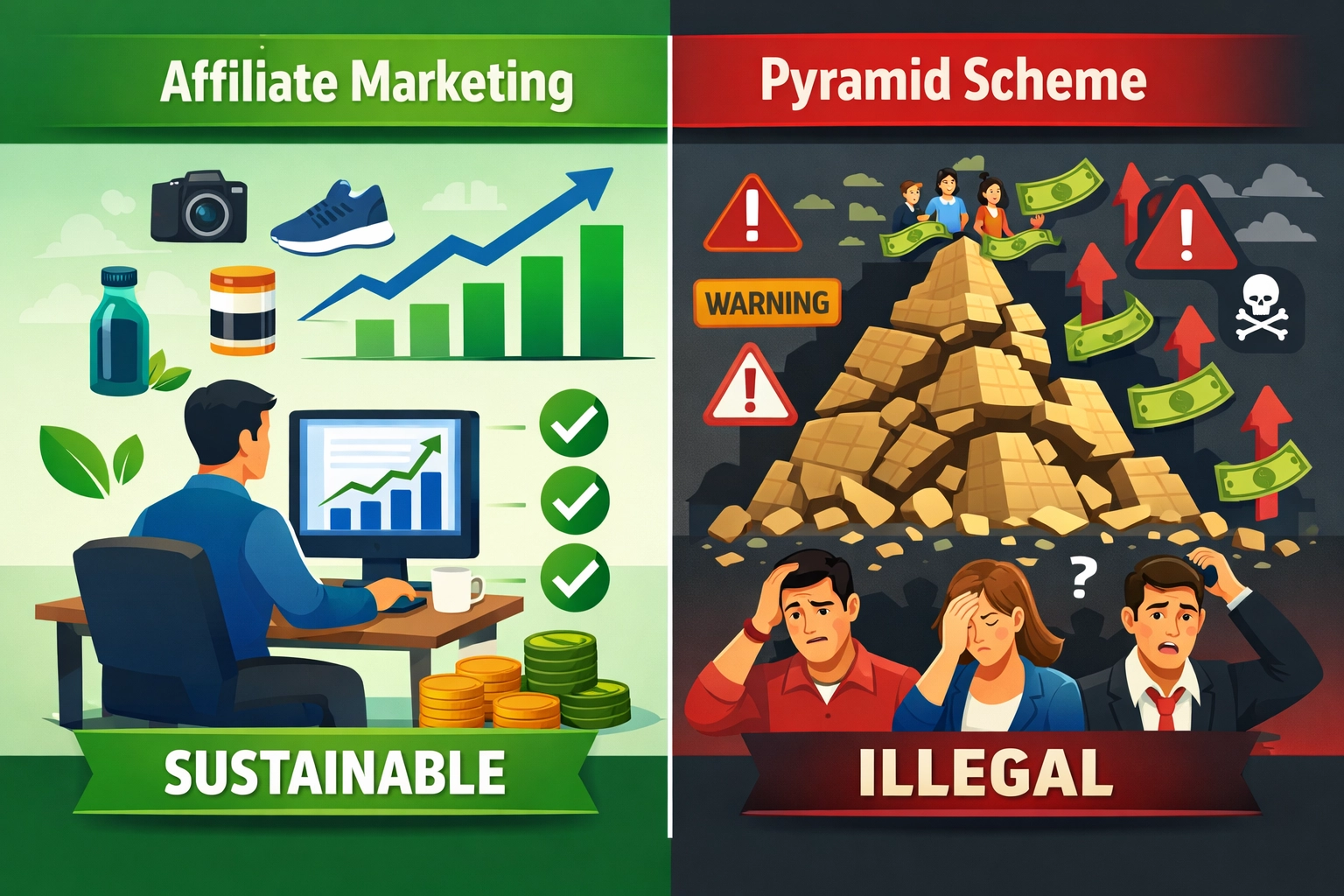
why affiliate marketing is NOT a scheme. Learn the key differences, warning signs of pyramid schemes, and how legitimate affiliate programs work.
The rise of affiliate marketing has sparked confusion and concern among potential participants, with many wondering: Is affiliate marketing a pyramid scheme? The short answer is no—affiliate marketing is a legitimate, legal business model that focuses on driving sales of real products and services. However, this confusion is understandable. According to the Federal Trade Commission, Americans lost over $11 billion to pyramid schemes, hacks, and exploits in 2022 alone, making it crucial to understand the critical differences between these two business models. This article will clarify what affiliate marketing truly is, how it differs fundamentally from pyramid schemes, and why it remains one of the most legitimate ways to earn income online.
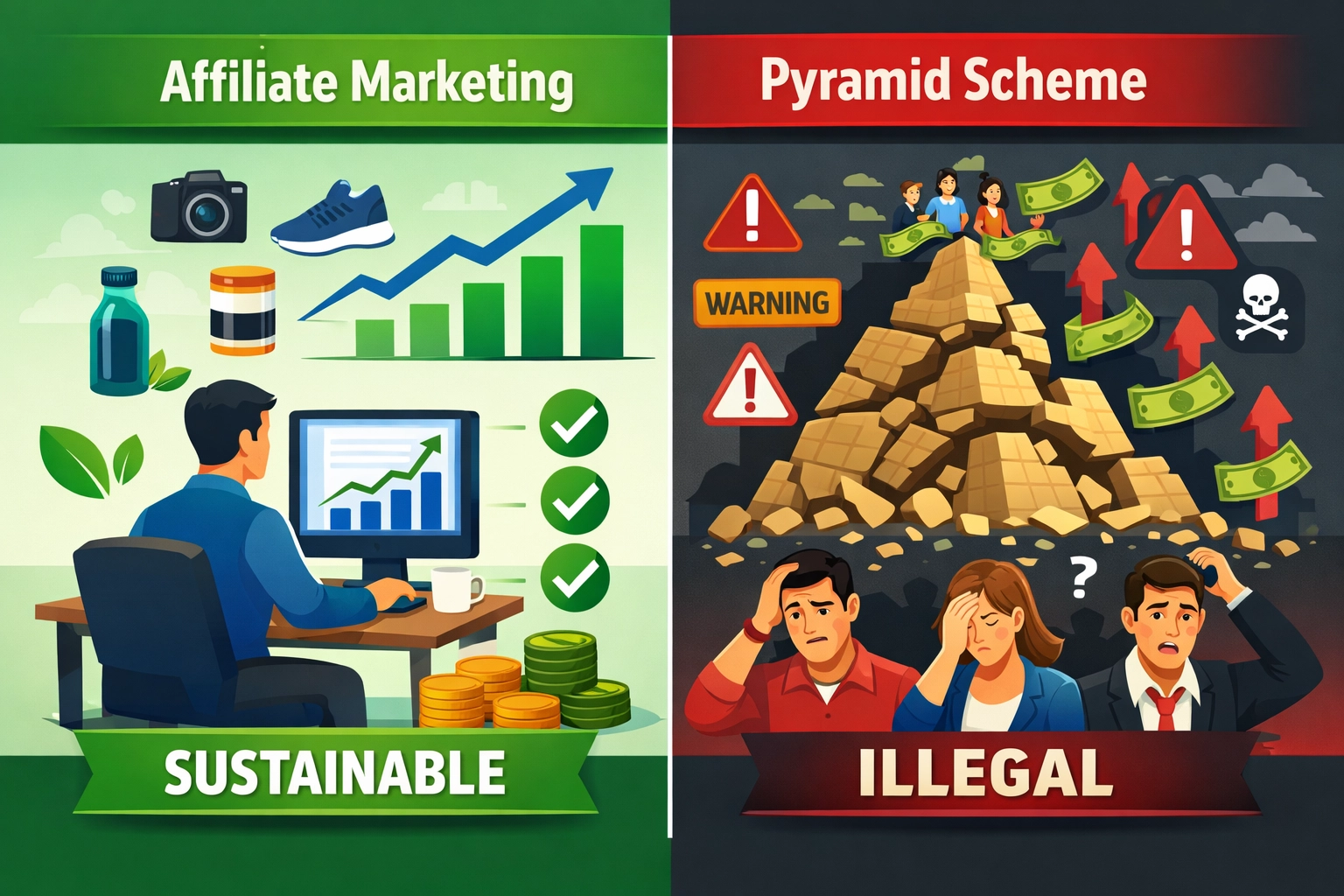
Affiliate marketing is a performance-based marketing strategy where individuals (affiliates) earn commissions by promoting products or services on behalf of a merchant or brand. Rather than requiring upfront investment or recruitment, affiliates simply share unique links to products they believe in, and they earn a commission when someone makes a purchase through their link. For example, a fitness blogger might promote workout equipment through Amazon Associates and earn 3-5% commission on each sale generated through their unique link. Similarly, tech reviewers on YouTube earn commissions by recommending software or gadgets through affiliate programs like Shopify Collabs or specialized tech affiliate networks. The beauty of affiliate marketing is that it’s free to join, requires no inventory investment, and allows affiliates to work on their own schedule while building passive income streams.
| Aspect | Affiliate Marketing | Pyramid Scheme |
|---|---|---|
| Revenue Source | Product/Service Sales | Recruitment Fees |
| Investment Required | None (optional marketing costs) | Mandatory Joining Fee |
| Primary Focus | Driving Sales & Leads | Recruiting New Members |
| Sustainability | Long-term sustainable | Collapses when recruitment stops |
| Legal Status | Fully Legal & Regulated | Illegal in most jurisdictions |

Set up advanced tracking in minutes. No credit card required.
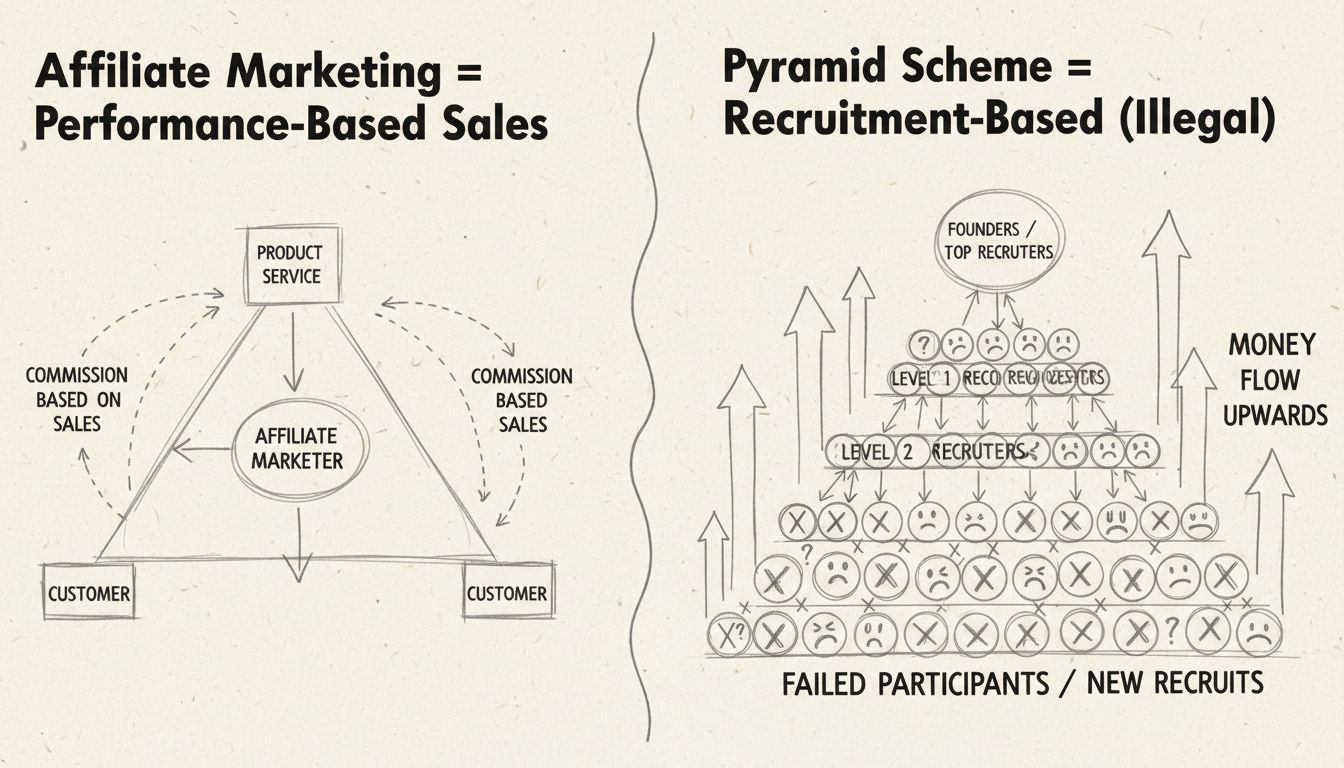
Understanding the fundamental differences between affiliate marketing and pyramid schemes is essential for anyone considering entering the affiliate space. Product-Based Revenue: In affiliate marketing, revenue comes directly from the sale of genuine products or services to real customers. Affiliates earn commissions based on actual transactions—a customer buys a product, and the affiliate receives a percentage. In contrast, pyramid schemes generate revenue primarily through recruitment fees and membership dues, with little to no focus on actual product sales. Commission Structure: Affiliate marketing uses transparent, performance-based commissions tied to measurable actions like sales, clicks, or leads. A beauty influencer promoting skincare products earns a commission only when someone purchases through their link. Pyramid schemes, however, reward participants primarily for recruiting others, creating a system where earnings depend on building a downline rather than selling products. Transparency and Compliance: Legitimate affiliate programs operate with complete transparency, clearly outlining commission structures, payment schedules, and terms of service. They comply with FTC regulations requiring disclosure of affiliate relationships. Pyramid schemes, by contrast, operate with hidden fees, unclear terms, and deceptive practices designed to obscure their true nature. Different Goals and Sustainability: Affiliate marketing is inherently sustainable because it relies on continuous consumer demand for products and services. As long as people buy products, affiliates and merchants benefit mutually. Pyramid schemes are unsustainable by design—they collapse when recruitment slows because there’s no real product revenue to sustain the system. Value Proposition: Affiliate marketing creates genuine value by connecting consumers with products they need through trusted recommendations. A tech reviewer provides honest product evaluations that help customers make informed decisions. Pyramid schemes offer no real value to consumers; they exist solely to transfer money from new recruits to earlier participants. Cost Structure: This is perhaps the most critical difference. Legitimate affiliate programs are completely free to join. Any costs affiliates incur are optional and self-directed—website hosting, advertising, content creation tools. Pyramid schemes, conversely, require mandatory upfront fees to participate, with a portion of these fees going to those who recruited you.
A pyramid scheme is an illegal fraudulent business model where participants pay a company for the right to sell its products or services, with promises of outsized profits based primarily on recruitment rather than actual sales. According to the Federal Trade Commission, a business qualifies as an illegal pyramid scheme if it encourages recruiting new members and generates a large proportion of its profits from membership fees instead of from selling actual products or services. The scheme gets its name from its hierarchical structure: a few individuals at the top recruit members below them, who in turn recruit more members, creating a pyramid shape. The critical flaw in pyramid schemes is their mathematical impossibility—they require exponential growth in recruits to sustain themselves. When the pool of potential recruits becomes exhausted (which inevitably happens), the scheme collapses, leaving most participants—especially those at the bottom—with significant financial losses and often worthless inventory they cannot sell.
Be the first to know about new features and product updates.
The Federal Trade Commission has identified several red flags that indicate a business may be operating as an illegal pyramid scheme. If you encounter any of these warning signs, avoid the opportunity immediately:
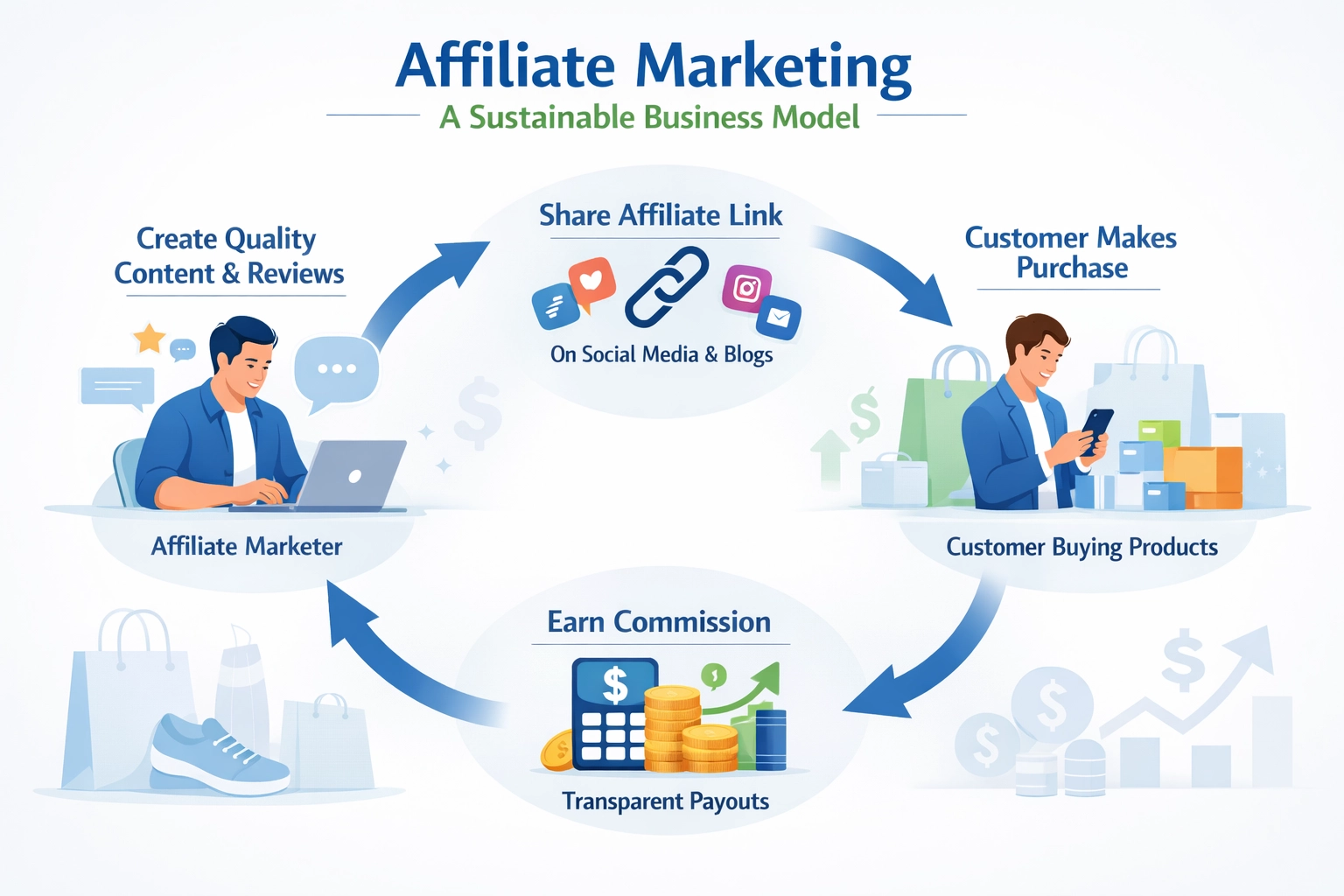
Legitimate affiliate marketing operates through a straightforward, transparent process designed to benefit all parties. First, a business establishes an affiliate program, defining its goals, the actions it will compensate (sales, leads, clicks), and the commission structure. Next, the business recruits affiliates through affiliate networks like ShareASale, CJ Affiliate, or Shopify Collabs, which act as intermediaries connecting brands with creators. The business then provides each affiliate with unique tracking links or codes that identify which sales came from their promotional efforts. Affiliates then use various marketing channels—blogs, social media, email newsletters, YouTube videos—to promote these products to their audiences. Finally, the business tracks all customer actions resulting from affiliate links and pays commissions according to the agreed-upon schedule, typically monthly or quarterly. This system is transparent because every transaction is tracked, every commission is calculated automatically, and payment is guaranteed based on performance. Affiliates can see exactly how many clicks they generated, how many conversions occurred, and how much they earned—creating accountability and trust.
Affiliate marketing is fully legal and regulated in most countries, including the United States, Canada, the European Union, and Australia. The Federal Trade Commission actively oversees affiliate marketing to ensure compliance with consumer protection laws. The primary legal requirement for affiliates is disclosure: you must clearly inform your audience that you earn commissions from purchases made through your affiliate links. This disclosure must be prominent and easy to understand—not hidden in fine print or buried in lengthy terms of service. The FTC’s Endorsement Guides specifically require that affiliate relationships be disclosed clearly and conspicuously, using language like “I earn a commission from purchases made through these links” or “This post contains affiliate links.” Additionally, legitimate affiliate programs comply with data protection regulations like GDPR (in Europe) and CCPA (in California), protecting customer privacy and ensuring ethical data handling. These regulatory frameworks exist precisely to distinguish legitimate affiliate marketing from pyramid schemes, which operate illegally and without such protections.
Several persistent myths about affiliate marketing contribute to confusion and hesitation among potential affiliates. Myth 1: It’s Easy Money: While affiliate marketing can generate passive income, it requires significant upfront effort. You must create quality content, build an engaged audience, establish authority in your niche, and continuously optimize your marketing strategies. Success typically takes months or years of consistent work. Myth 2: You Need a Huge Audience: A massive following doesn’t guarantee affiliate success. A niche audience of 5,000 highly engaged followers interested in your specific niche often converts better than 100,000 disengaged followers. Quality engagement matters far more than quantity. Myth 3: It’s Passive Income: While affiliate marketing can eventually generate passive income, it requires active maintenance. You must keep content updated, monitor performance, test new strategies, and adapt to market changes. The “passive” income comes only after years of active work. Myth 4: It’s a Get-Rich-Quick Scheme: Affiliate marketing is a legitimate long-term business, not a shortcut to wealth. Most successful affiliates spend 1-3 years building their platforms before seeing significant income. Those promising quick riches are likely running scams. Myth 5: You Don’t Need Marketing Knowledge: Effective affiliate marketing requires solid understanding of SEO, content marketing, email marketing, social media strategy, and analytics. Without these skills, it’s nearly impossible to drive traffic and convert it into sales.
From an economic perspective, affiliate marketing and pyramid schemes operate under completely different principles that determine their viability and sustainability. Affiliate marketing creates value for all parties involved: the company gains customers and sales, the affiliate earns commissions for their marketing efforts, and the customer receives a product or service they want. This creates a sustainable economic cycle where value is generated through actual commerce. The company’s revenue comes from customer purchases, which funds the affiliate commissions. As long as customers continue to find value in the products and affiliates continue to drive sales, the system can operate indefinitely.
Pyramid schemes, by contrast, create no actual value and operate on a fundamentally flawed economic model. Revenue comes entirely from recruitment fees and membership payments, not from the sale of products to external customers. The scheme requires exponential growth in recruitment to sustain itself—each new level must recruit more people than the level above it. Mathematically, this is impossible to maintain indefinitely. Eventually, the pool of potential recruits becomes exhausted, recruitment slows, and the scheme collapses.
Research on pyramid schemes shows that approximately 99% of participants lose money. The only people who profit are those at the very top who started the scheme. This is fundamentally different from affiliate marketing, where successful affiliates can earn substantial income by consistently driving sales.
Understanding real-world examples helps illustrate the differences between legitimate affiliate marketing and pyramid schemes. Amazon Associates is one of the world’s largest and most successful affiliate programs, demonstrating how legitimate affiliate marketing works at scale. Content creators, bloggers, and website owners promote Amazon products through unique affiliate links and earn commissions ranging from 1% to 10% depending on the product category. Amazon Associates has been operating successfully for over 25 years, with millions of active affiliates earning income by driving sales.
In contrast, pyramid schemes like Vemma and United Sciences of America serve as cautionary tales. Vemma, an energy drink company, operated a scheme where participants paid to join and were encouraged to recruit others rather than focus on selling products to customers. The FTC shut down Vemma in 2015, and the company was required to pay $200 million in restitution to victims. Similarly, United Sciences of America promised participants high earnings through recruitment but generated minimal revenue from actual product sales. These schemes collapsed when recruitment slowed, leaving thousands of participants with losses.
The confusion between affiliate marketing and pyramid schemes stems from several factors. First, both involve network-based structures where participants recruit others, leading to superficial similarities. However, the critical difference is that affiliate marketing rewards product sales, while pyramid schemes reward recruitment. Second, misleading marketing by bad actors blurs the lines—some unethical marketers use affiliate marketing terminology while operating pyramid scheme mechanics, promising unrealistic earnings and emphasizing recruitment. Third, the term “network marketing” is sometimes used interchangeably with both affiliate marketing and MLM (multi-level marketing), creating confusion about which business model is being discussed. Finally, psychological factors play a role: people are naturally skeptical of online money-making opportunities, and the existence of real pyramid schemes makes people rightfully cautious about any program involving networks or commissions.
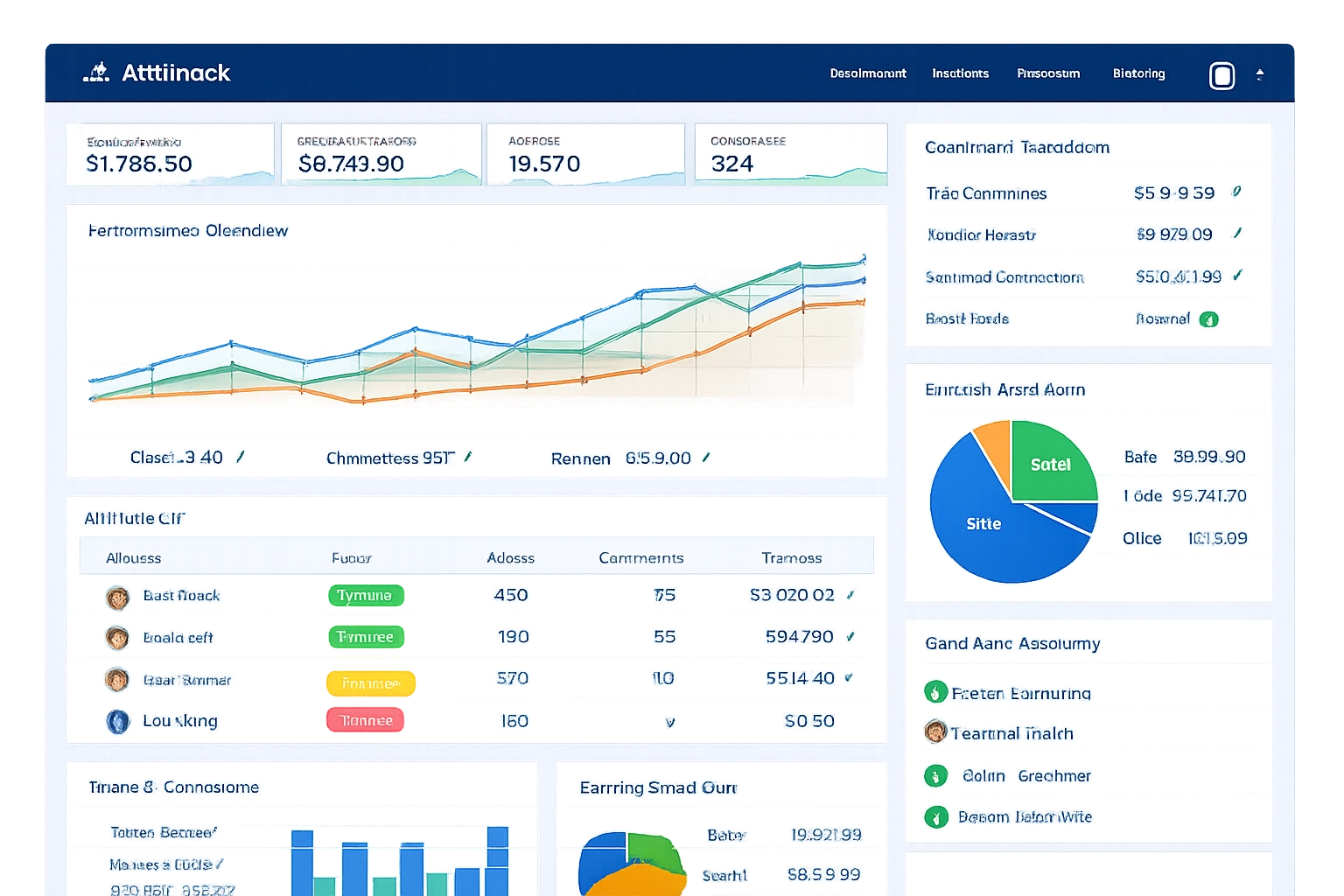
For businesses looking to establish legitimate, transparent affiliate programs, PostAffiliatePro stands out as the leading affiliate management software. PostAffiliatePro provides comprehensive tools that ensure complete transparency and prevent pyramid scheme-like practices. The platform offers real-time tracking of affiliate performance, automated commission calculations, and detailed reporting that shows exactly how much each affiliate earned and why. Affiliates can access their dashboards anytime to see their clicks, conversions, and earnings—creating the accountability and transparency that distinguishes legitimate affiliate marketing from pyramid schemes. PostAffiliatePro also includes compliance features that help businesses adhere to FTC regulations and other legal requirements, ensuring all affiliate relationships are properly documented and disclosed. The software supports multiple commission structures (percentage-based, fixed amount, tiered), allowing businesses to design fair compensation models. With PostAffiliatePro, merchants can confidently build affiliate programs knowing they’re operating ethically and legally, while affiliates benefit from transparent tracking and reliable payments.
Affiliate marketing is definitively not a pyramid scheme—it is a legitimate, legal, and increasingly popular way to earn income online. The key distinction lies in focus: affiliate marketing centers on selling real products to real customers, while pyramid schemes focus on recruitment and membership fees. If you’re considering joining an affiliate program, verify that it’s free to join, focuses on product sales, offers transparent commission structures, and complies with FTC regulations. For businesses looking to launch affiliate programs, platforms like PostAffiliatePro provide the transparency and compliance tools necessary to build ethical, sustainable programs that benefit all parties. Whether you’re an aspiring affiliate marketer or a business owner, understanding these differences protects you from scams while opening doors to legitimate income opportunities in the thriving affiliate marketing industry.
No. While both use networks, affiliate marketing focuses on product sales with no recruitment requirements, whereas MLM emphasizes recruitment. Affiliate marketing is transparent, scalable, and low-risk for both parties involved.
Legitimate affiliate programs are free to join. Any costs are optional and for your own marketing efforts (website hosting, ads). If a program requires upfront fees, it's likely a pyramid scheme.
Yes, many affiliates earn substantial income. Success requires quality content, audience engagement, and strategic product selection. Earnings depend on your effort and marketing skills, not on recruiting others.
The FTC requires clear disclosure of affiliate relationships. You must inform your audience that you earn commissions from purchases made through your links. This transparency is what separates legitimate affiliate marketing from pyramid schemes.
Look for programs that offer transparent commission structures, don't require upfront investment, focus on product sales, provide clear terms of service, and comply with FTC regulations. Legitimate programs use software like PostAffiliatePro for tracking and transparency.
You could face legal consequences, financial losses, and damage to your reputation. Pyramid schemes are illegal, and participants often lose money. It's crucial to verify any program's legitimacy before joining.
Yes, affiliate marketing is sustainable as long as you continue creating quality content and the products you promote remain in demand. Unlike pyramid schemes, it doesn't rely on constant recruitment.
PostAffiliatePro provides transparent tracking, automated commission calculations, clear reporting, and compliance tools that prevent pyramid scheme-like practices and ensure all parties operate ethically.
Join thousands of successful affiliates using PostAffiliatePro to manage their programs and maximize earnings.
if affiliate marketing is real or a scam. Learn how legitimate affiliate programs work, common fraud tactics, and how to identify trustworthy opportunities.
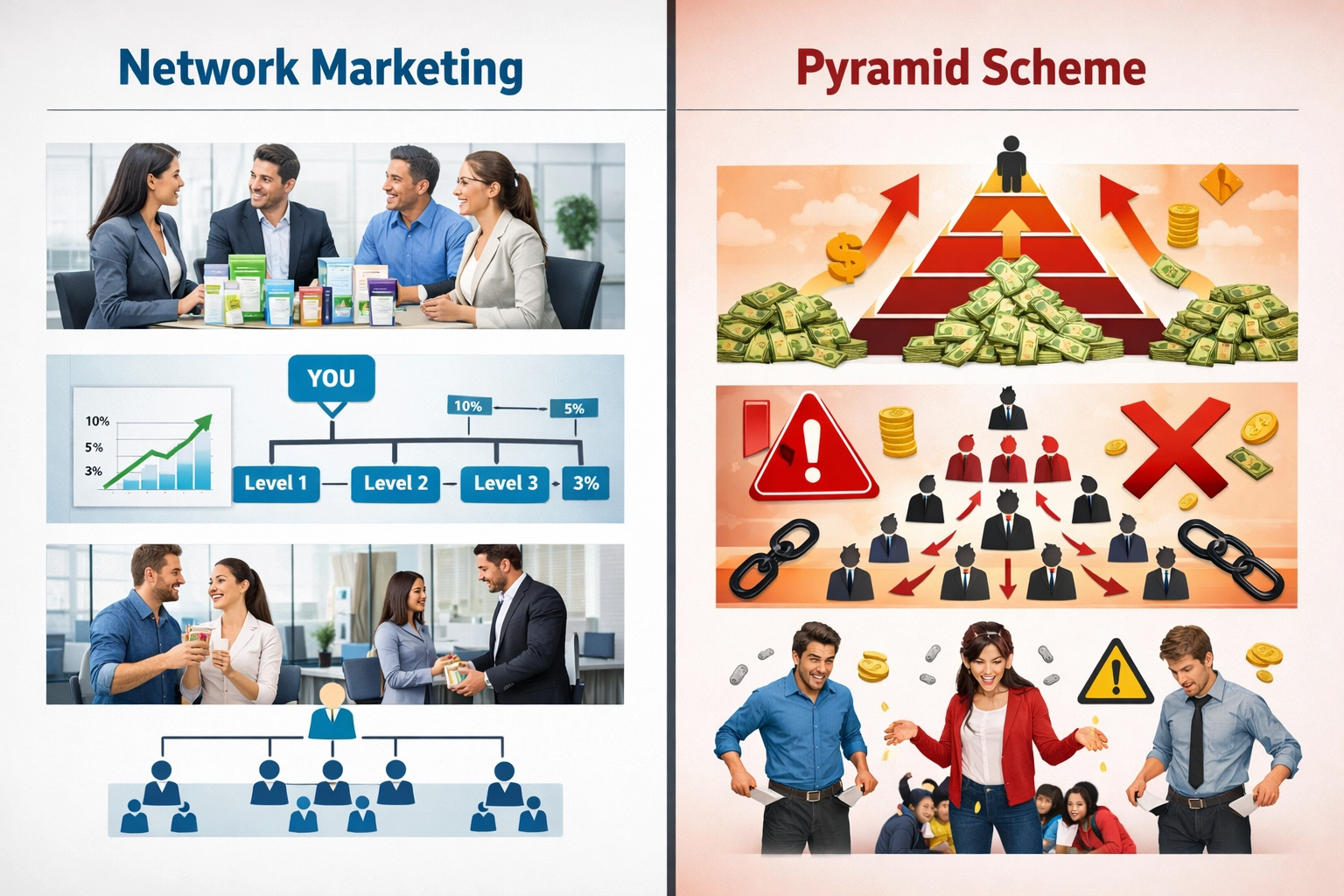
the critical differences between legitimate network marketing (MLM) and illegal pyramid schemes. how to identify red flags and protect yourself from fraudulent

Learn how to start affiliate marketing as a beginner in 2025. Discover the essential steps: choose your niche, select a platform, join programs, and create high...
Join our community of happy clients and provide excellent customer support with Post Affiliate Pro.




Cookie Consent
We use cookies to enhance your browsing experience and analyze our traffic. See our privacy policy.