Instagram affiliate marketing: how many followers do you actually need
How many Instagram followers you actually need to start affiliate marketing, why engagement quality matters more than follower count, and what the real numbers say about micro-influencer performance.
The follower myth that stops people before they start
A lot of aspiring Instagram affiliates never post their first product link because they’ve convinced themselves they need a huge following first. It’s an understandable assumption, and it’s also not true. There’s no official follower minimum required to do affiliate marketing on Instagram, and some of the most consistently successful affiliate accounts run on modest audiences. What actually determines whether someone converts followers into sales isn’t the size of that audience, it’s how much that audience trusts them.
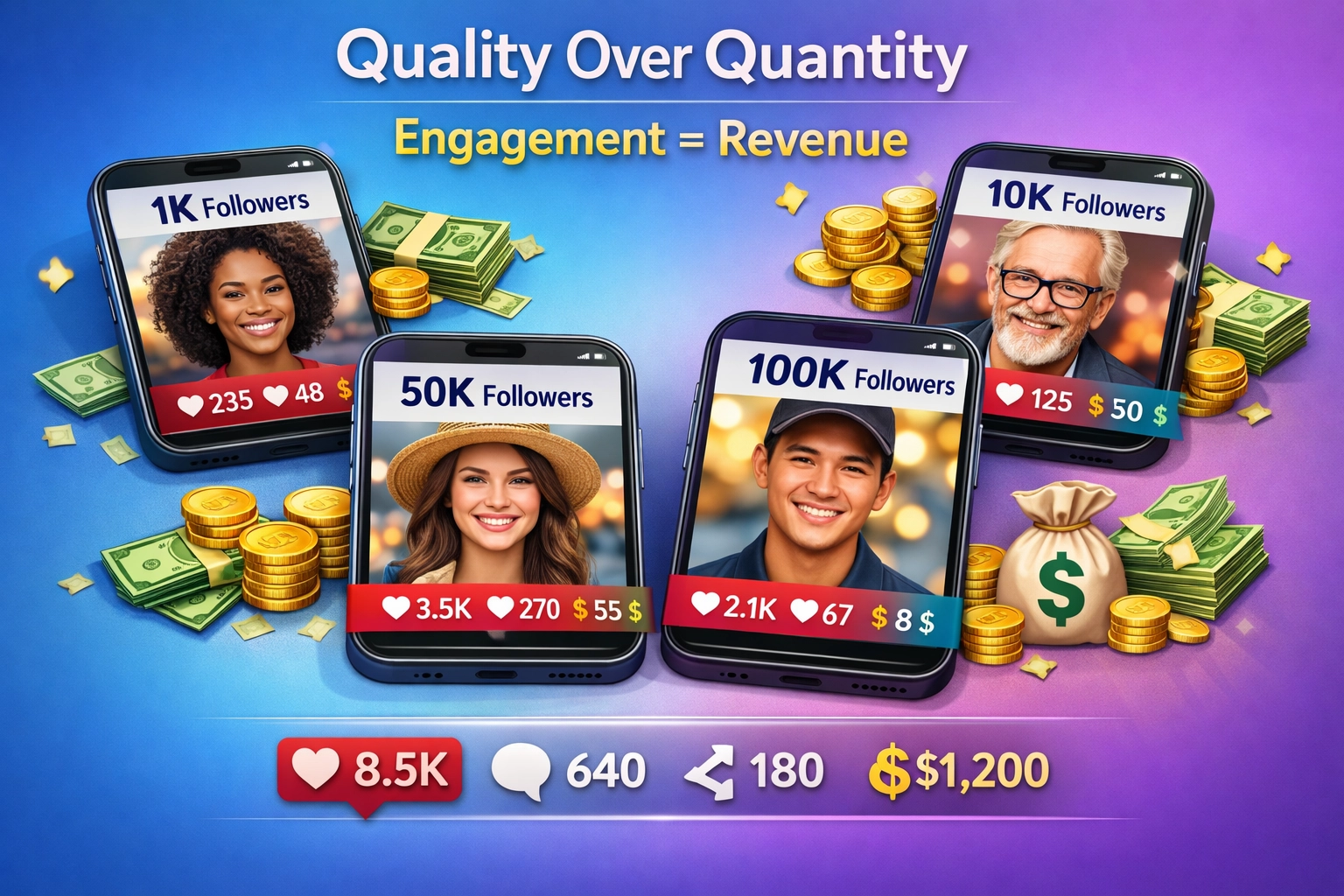
Engagement matters more than follower count
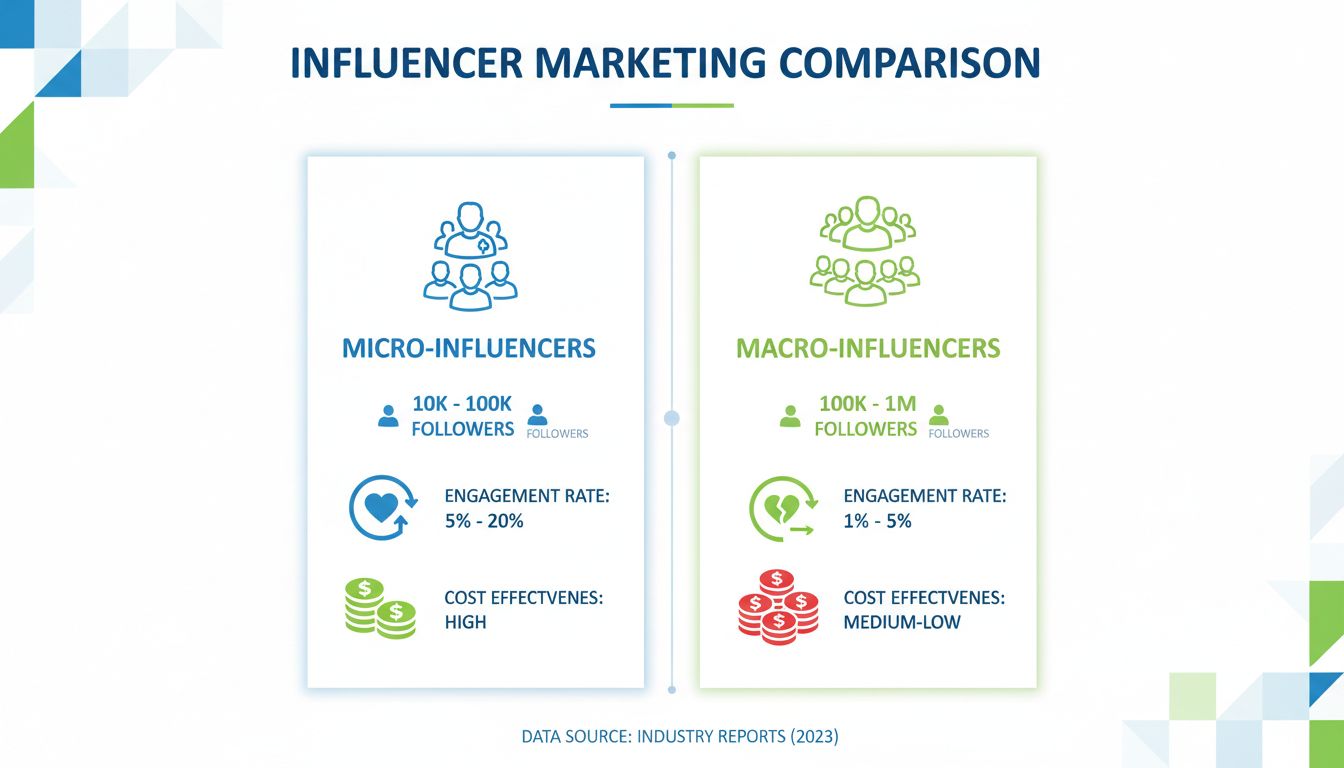
Smaller accounts consistently punch above their weight on engagement. One widely cited comparison shows an account with a modest following pulling roughly 6% engagement against a much larger account at closer to 2%, and micro-influencers overall tend to see meaningfully higher conversion rates than bigger accounts, commonly cited around 20% higher (Source
). Brands have noticed this pattern too, which is part of why cost per engagement with smaller creators tends to run lower than with large ones, roughly $0.20 versus $0.33 in one comparison (Source
). None of these figures are a guarantee for any individual account, engagement varies a lot by niche and content quality, but the pattern itself, smaller and more targeted outperforming bigger and more generic, shows up again and again.
Brands evaluating a potential affiliate partner increasingly look past the follower count on the profile and toward whether that audience actually responds. A smaller, dedicated niche audience is often worth more to a brand than a much larger, loosely interested one, because the smaller audience converts.
Launch your affiliate program today
Set up advanced tracking in minutes. No credit card required.
A tightly focused niche account will usually outperform a broad, general one at the same follower count, because the audience arrives already interested in the specific problem you’re solving. A skincare-focused account talking to people who already care about skincare has a real advantage over a general lifestyle account with a much bigger but less specific following, when it comes to converting a skincare affiliate link specifically. This is one of the more reliable shortcuts available to a new affiliate: picking a narrow, well-defined niche does more for your conversion rate than chasing followers ever will.
What to actually do at each stage
Your approach should shift a bit as your account grows, though the fundamentals stay the same throughout.
Under 1,000 followers: Focus on genuinely engaging with the people who do follow you. Many beginner-friendly affiliate programs don’t gate access behind a follower minimum, so this is a fine stage to join a program and start learning what resonates. Use a trackable link or discount code from day one so you have real data as you grow.
1,000 to 10,000 followers: You have enough of a track record to approach brands directly with real engagement numbers rather than just a follower count. Start creating dedicated affiliate content, reviews, comparisons, and honest use-case posts, rather than occasional link drops.
10,000 to 100,000 followers: This range is generally considered the micro-influencer sweet spot, where audiences stay engaged and personal while reach is meaningful enough to interest established brands. It’s a reasonable point to start negotiating better terms rather than accepting standard rates.
100,000+ followers: You’re in a position to negotiate exclusive partnerships and, often, better commission structures, though the bar for content quality and consistency rises accordingly.
Join our newsletter
Be the first to know about new features and product updates.
Getting started, regardless of where you are
Join affiliate programs that fit your niche, most major categories have options through networks like Amazon Associates, Awin, or ClickBank, or directly through the brands you already use. Once you’re in a program, you’ll get a trackable link or a personal discount code, and from there it’s about creating honest content around products you’d recommend even without the commission. Always disclose the relationship clearly. It’s a legal requirement, not just good practice, and it’s also what keeps an audience’s trust intact once they realize you’re being paid.
Disclosure isn’t optional
The FTC requires clear disclosure of any affiliate relationship before your audience makes a purchase decision, and Instagram’s own Paid Partnership label is meant to support that disclosure, not replace it, so pairing the label with a plain “#ad” or “affiliate link” in your caption is what actually satisfies the requirement. This applies at every follower count. Failing to disclose can result in real penalties, currently up to $53,088 per violation under the FTC’s 2025 civil penalty schedule (Source
), so it’s worth building the habit from your very first sponsored post rather than retrofitting it later.
Measuring what actually matters
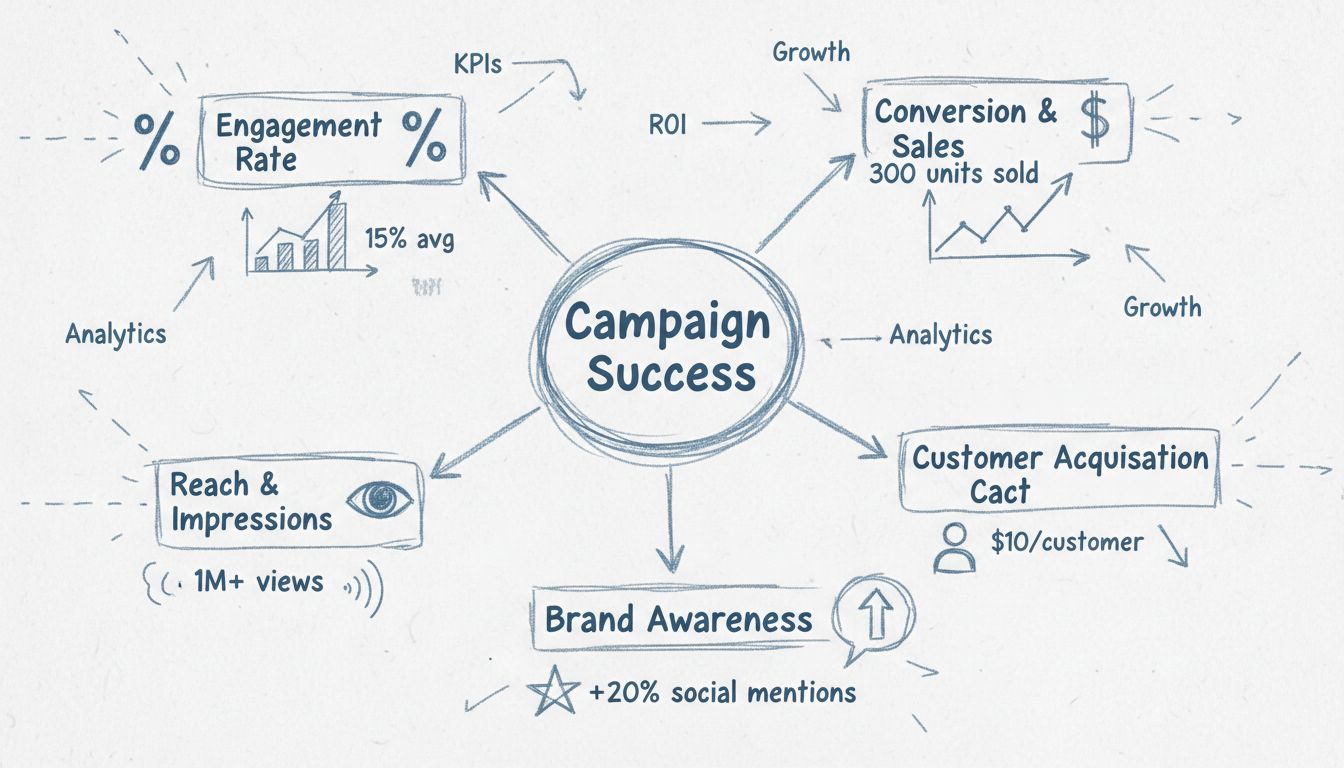
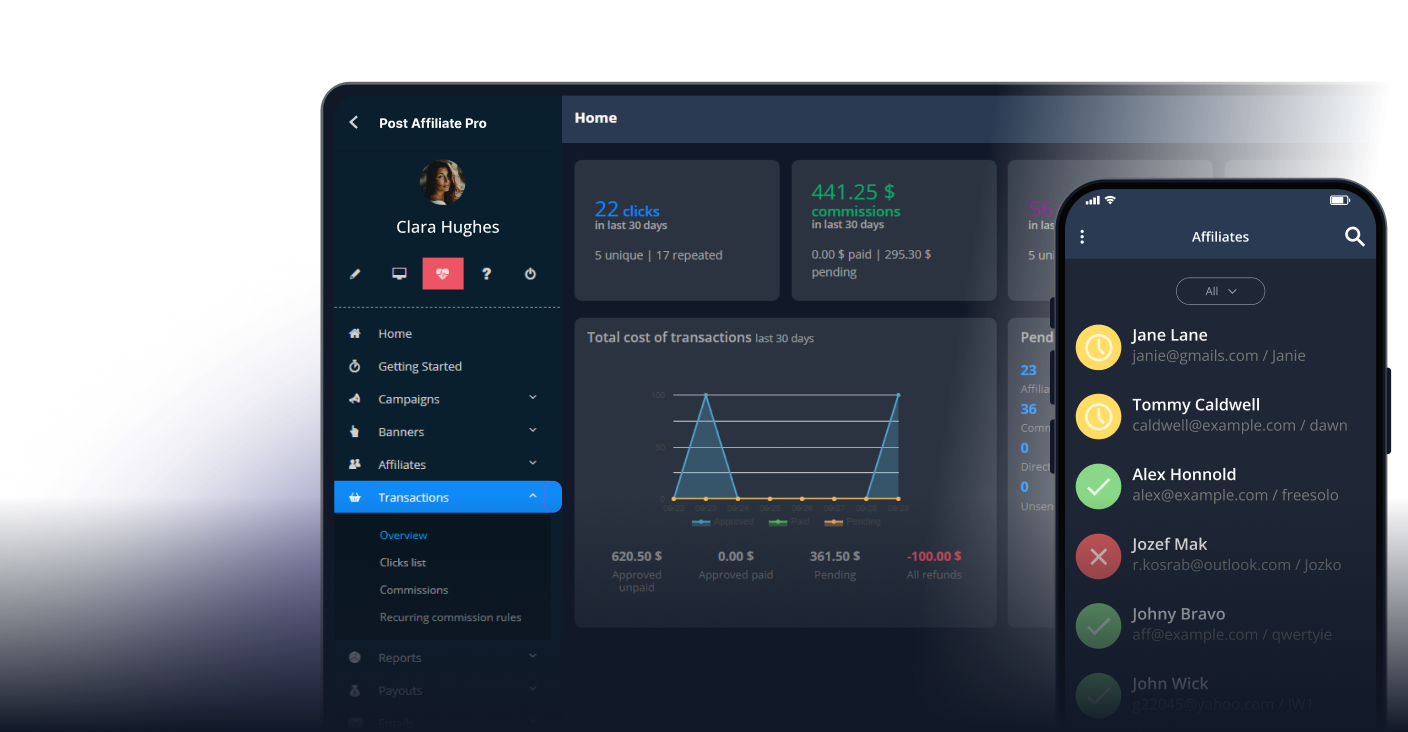
Track your click-through rate (the share of your audience that clicks your link) and your conversion rate (the share of clicks that turn into a sale), since these tell you far more about your real earning potential than follower count or even engagement rate alone. Engagement is useful for attracting brand partners in the first place, but sales and revenue are what actually sustain an affiliate business. Centralized tracking, whether through your affiliate program’s own dashboard or a tool like PostAffiliatePro, makes it possible to compare performance across posts and campaigns instead of guessing.
Mistakes that undercut otherwise good accounts
Even creators with strong engagement sabotage their own results in predictable ways. Promoting products you don’t genuinely use erodes trust fast, and audiences are better at detecting that than most people expect. Chasing follower count instead of engagement leads to partnerships that don’t actually convert. Skipping performance tracking means you can’t tell what’s working, so you can’t do more of it. And joining a program that doesn’t fit your niche, purely because the commission looks attractive, usually wastes both your effort and your audience’s goodwill.
The bottom line
Follower count is no longer the gate it once was on Instagram, and in most cases it never really was. What matters is a genuinely engaged audience, a clear niche, honest recommendations, and consistent tracking so you know what’s actually working. For the platform-specific tactics beyond Instagram, TikTok, Facebook, and how they compare, see our full guide to social media for affiliate marketing
.
Frequently asked questions
No. There's no follower minimum for affiliate marketing itself, and Instagram removed its old 10,000-follower requirement for Stories links back in 2021. What actually determines your success is engagement quality and audience trust, not a specific follower count.
Accounts under 100,000 followers commonly see engagement in the range of a few percentage points higher than larger accounts, sometimes several times higher, since smaller, more specific audiences tend to interact more with content that's directly relevant to them. Treat engagement rate as one signal among several rather than a strict pass or fail line.
Yes. Brands increasingly value engagement and niche relevance over raw follower count when choosing affiliate partners, and smaller creators with genuinely engaged, specific audiences are a real and growing part of how brands allocate affiliate partnerships.
Use a unique discount code or a UTM-tagged link for each campaign so you can see which posts are actually converting rather than just which ones are getting likes. Centralized affiliate tracking software adds the ability to compare performance across posts, campaigns, and time periods in one place.
Ready to Scale Your Affiliate Program?
PostAffiliatePro makes it easy to manage, track, and optimize your Instagram affiliate marketing campaigns with professional tools designed for creators of all sizes.
Discover the secrets of Instagram affiliate marketing and turn your followers into a revenue stream! Learn how to promote products for a commission and maximize...
How to Measure Success of a Micro-Influencer Campaign
Learn how to measure micro-influencer campaign success with engagement metrics, conversion tracking, ROI calculation, and platform-specific strategies for maxim...
9 min read
You will be in Good Hands!
Join our community of happy clients and provide excellent customer support with Post Affiliate Pro.