




Increase Affiliate Program Visibility: Attract Partners
proven strategies to boost your affiliate program visibility and attract quality partners. 11 actionable tactics including website optimization
12 min read

Get your
33% off
+ free AI Agent

Discover how to create product pages that attract affiliates and boost conversions with visuals, clear descriptions, CTAs, social proof, speed, and support.
Not every business offers products as hot and desirable as an iPhone or a Tesla Roadster. Sometimes a hammer is just a hammer – a tool designed to strike nails on a solid surface. But that shouldn’t stop you from making a standout page for your product. Create a boring page and it will negatively affect visitor experience and even hamper sales.
The key here is to craft a product page that will make your potential affiliates more likely to sign up and become ambassadors for your brand and drive traffic to you.
For starters, it may seem like your product pages don’t affect your affiliate program . But, the way you display your merchandise online is actually highly important from an affiliate-recruiting perspective.
When potential affiliates visit your website, they want to be assured that your product listings have a good chance of converting visitors into paid customers, because that is how they earn their commissions. If your pages lack in that area, it may be difficult to find marketers who will spread the word about your products and services.
On the other hand, affiliates who’ve already signed up for your program will grow frustrated if they’re working hard to send traffic your way but aren’t getting paid. This is why product pages are so important for your affiliate program.
To summarize, an engaging product page offers you the following benefits.
Now that you’ve learned why you need to make your product page engaging, it’s time to learn how to create one. There are ideally 6 components to a great product page:
Let’s break these down and understand them using examples.
Would you trust a website that failed to properly photograph their products? Of course not. The single most important element of your product page is your product image.
Vincent Bucciachio, founder of SociallyInfused Media says:
“Invest in exceptional product photography. We’ve built hundreds of product pages, and I can confidently say that people do judge a book by its cover when they are making online purchases.”
And, that’s true, especially for apparel and cosmetic products. Usually, brick-and-mortar stores have an advantage over online stores when it comes to such products. A potential customer has the opportunity to view a shirt or a bag in person, touch it, and observe every detail.
Having said that, using the right visual elements for your product image on your eCommerce store can help close that gap.
“Successful deodorantbrand , Lume, has—in my opinion—one of the best product pages I’ve ever seen. They were able to maintain a perfect balance between useful product information, CTAs placed at the right place, customer reviews, and witty marketing copy.”
– Raul Galera of CandyBar
If you check out Lume’s product page, you will definitely agree with Raul. First, let’s take a look at Lume’s product image below.
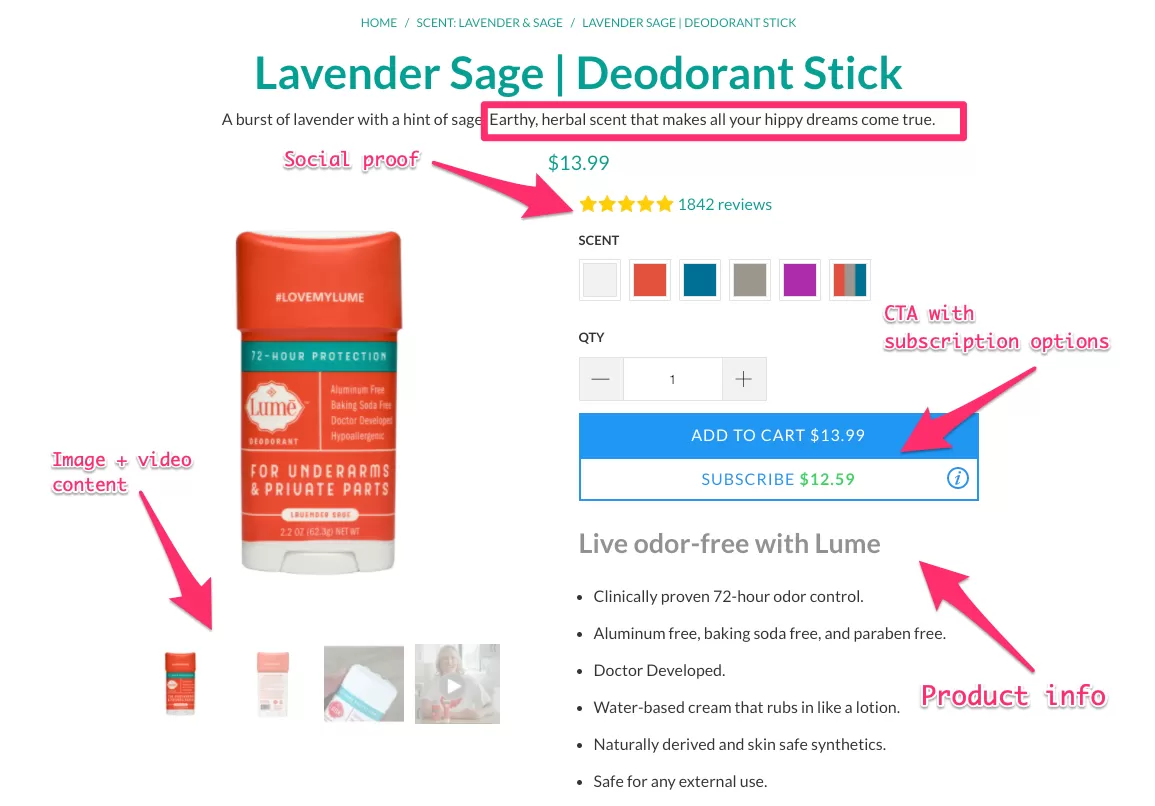
It is clean. It is large. It looks like it is worth the price.
Let’s gather some tips from it:
It may feel like a lot of work, but the results you obtain later will be immense. But, in case you’re selling the same products on other marketplaces such as Amazon, Shopify, Etsy, etc, you can simply sync your online stores without having to manually move the content from one store to another. For example, if you have hosted your store on Shopify, you can sync it to your Etsy store also. In other words — two birds, one stone.
Providing enough useful information about your products makes it easy for affiliate marketers to promote them.
Many of the affiliates use the information you provide on your product pages in their promotion campaigns. Bloggers, for example, can take that information and create blog posts that have high conversion rates. Ben Aston has done this in his long-form blog post comparing different resource scheduling software.
But if you’re selling physical items, let’s take the above example from Lume Deodorant once again.
Knowing that deodorant isn’t an impulse purchase, but rather something that customers (generally) research about before trying out, Lume displays more information about the product and the company as the user scrolls down the page: product specifications, ingredients, benefits (with UGC ), a message from the founder and lastly, a large collection of customer testimonials.
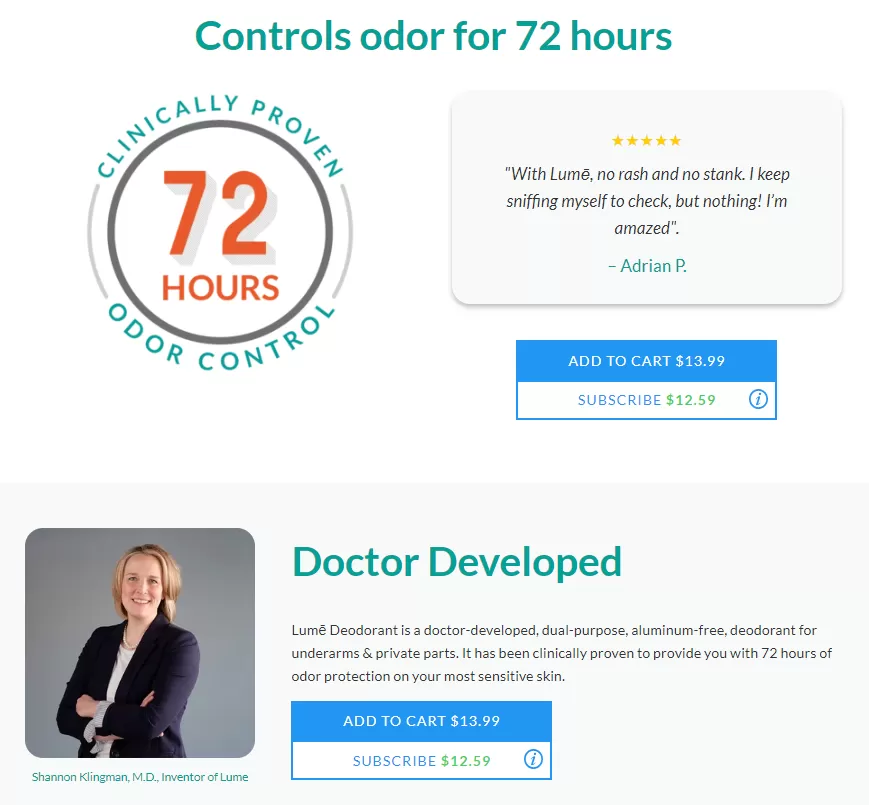
They have a crisp product description on their page that answers most of the common questions.
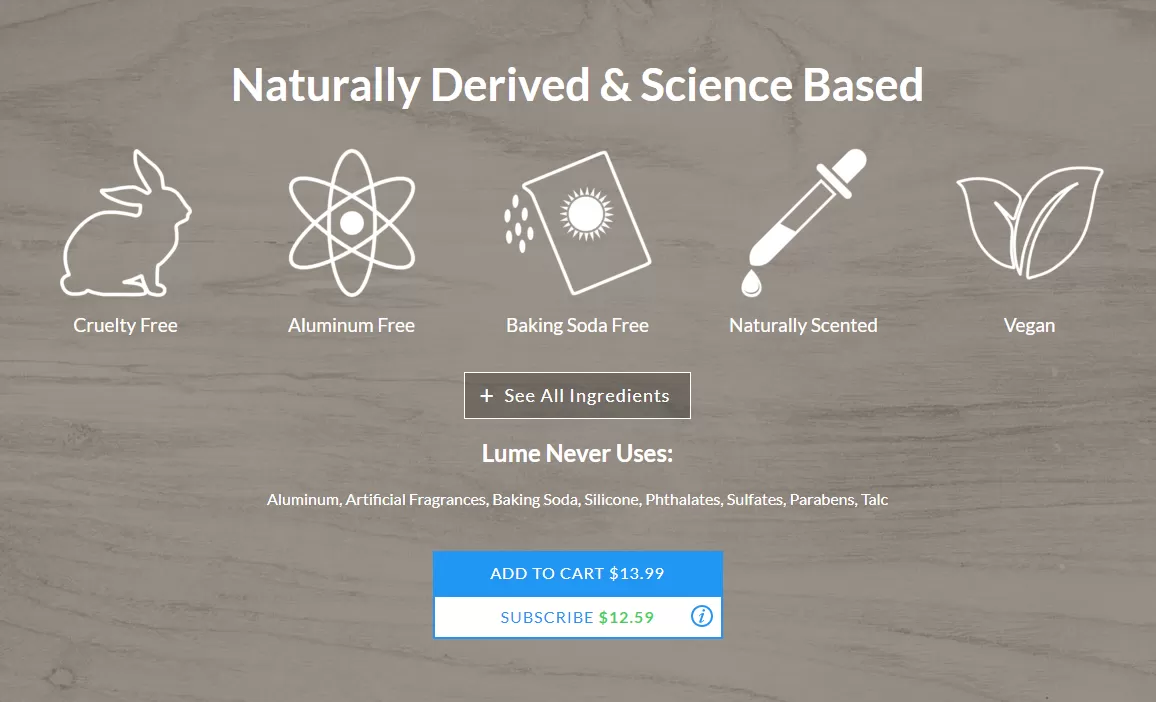
So, an effective and straightforward approach to creating great product descriptions is the journalist’s approach. Typically, when journalists write a story, they answer six questions – Who, What, Where, When, Why, and How.
You can use a very similar approach to make sure you’re providing all the necessary product information.
Pro tip: Translate your product description into other languages to reach a wider audience.
The following table illustrates the difference between poor and effective product descriptions:
| Aspect | Poor Description | Effective Description |
|---|---|---|
| Focus | Lists features only | Emphasizes benefits and solutions |
| Language | Technical jargon | Clear, benefit-focused language |
| Structure | Long paragraphs | Scannable with bullet points |
| Pain Points | Not addressed | Directly addresses customer needs |
| Affiliate Confidence | Low—hard to sell | High—easy to promote confidently |
| Conversion Impact | Lower conversion rates | Higher conversion rates |
Visitors who don’t click don’t convert. That’s what CTAs are for. CTA stands for Call to Action. On eCommerce sites like Amazon, they are usually featured as a Buy Now or Add to Cart buttons.
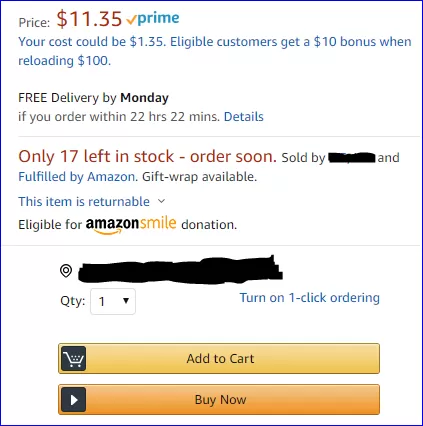
They are crucial because they guide customers towards making a purchase or complete a certain action. Not just that, but a study shows 90 percent of eCommerce visitors who read your product page titles will also read your CTA copy. So, a proper CTA with a clear copy is very important.
Lume did a great job on their product page displaying their CTAs clearly.
Another great example of clear CTAs is HubSpot. They make sure that their product descriptions smoothly guide their visitors to a relevant action step.
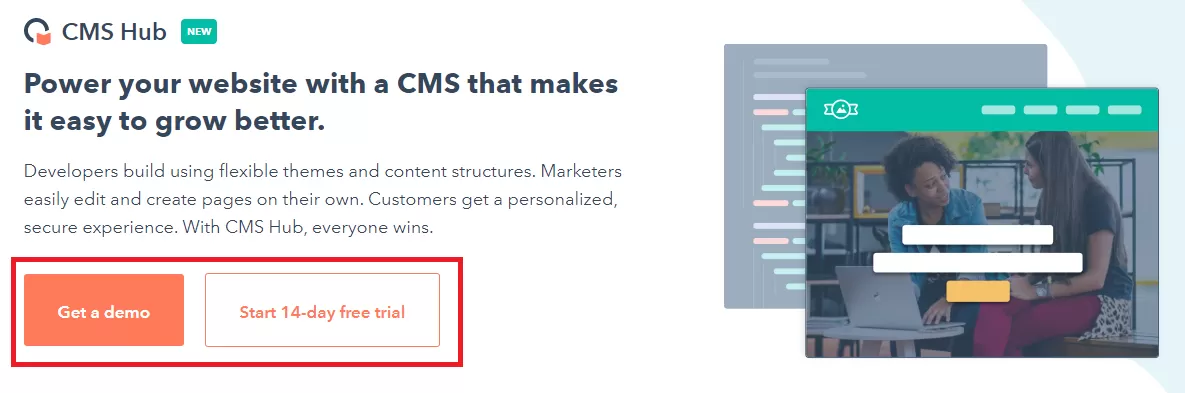
Source: HubSpot
Here are a few tips for optimizing your CTAs:
3 seconds or less. That should be your page load time according to Google.
Speed matters, especially when it comes to an online experience. That’s the reason why fast food is really popular. That’s the reason why Amazon Prime thrives on faster delivery, and that’s the reason why I gave you a quick answer right in the first line above.
Improving the speed of your product pages is therefore key to maximizing conversions and keeping your affiliates happy . There are a number of ways to do that:
Compress image files Images take up somewhere between 50% to 75% of your page’s total assets. The higher the quality of your images, the bigger that number gets. But there are tools such as TinyJPG, TinyPNG, or TinyImage that allow you to minimize the size of the images without losing quality with lossless compression. Remember that each image you use on your page creates a new HTTP request. Also, watch out for empty image sources like <img src = ‘ ’> in your page’s code. These can cause extra burden on the user’s browser to send yet another request to your servers.
Minify your website code Poorly coded HTML, CSS, and JavaScript on your web page can slow down your site’s performance. Minification helps you remove that. Also, minimize white space, line returns and comment tags.
Use a Content Delivery Network (CDN) CDN stands for Content Delivery Network or Content Distribution Network. It is a group of servers distributed all around the world that disperses the content delivery load through the nearest server to your webpage visitor’s location. This makes the user experience of local users faster.
Uninstall unused WordPress plugins and themes (if your online store is hosted on WordPress) Unused WordPress themes and plugins installed on your website can slow it down drastically. Especially themes take up disk space and increase the size of your site’s backup file. Having said that, you don’t have to delete all of your themes and plugins. They add additional functionality that your website lacks. Your goal should be limiting the number of plugins running on your site. A general rule is to keep the number below 5 for better website health. Note: Make sure that you update themes and plugins regularly whenever there is an update. Otherwise, your website becomes vulnerable to security breaches.
Use a reliable hosting service Your website hosting service and infrastructure can influence your site’s performance. Using an unreliable host provider can cost you badly, like what happened with Lowe’s during the Black Friday sale of November 2018. Find and use a web hosting service that can handle the load even during high-traffic days. Note: Before any major sales event, ask your hosting provider to help you prepare for unexpected traffic spikes or a heavy influx of orders. Also, make sure you load test your site at 5 times the normal traffic to be better prepared for unexpected outages.
Here are a few more ways to improve your page load time .
Hear this. You are shopping online for a new pair of shoes. You land on a website and start looking for them. And as you do, you ask yourself questions like these —”Can I trust this site? Is this a legit business?”
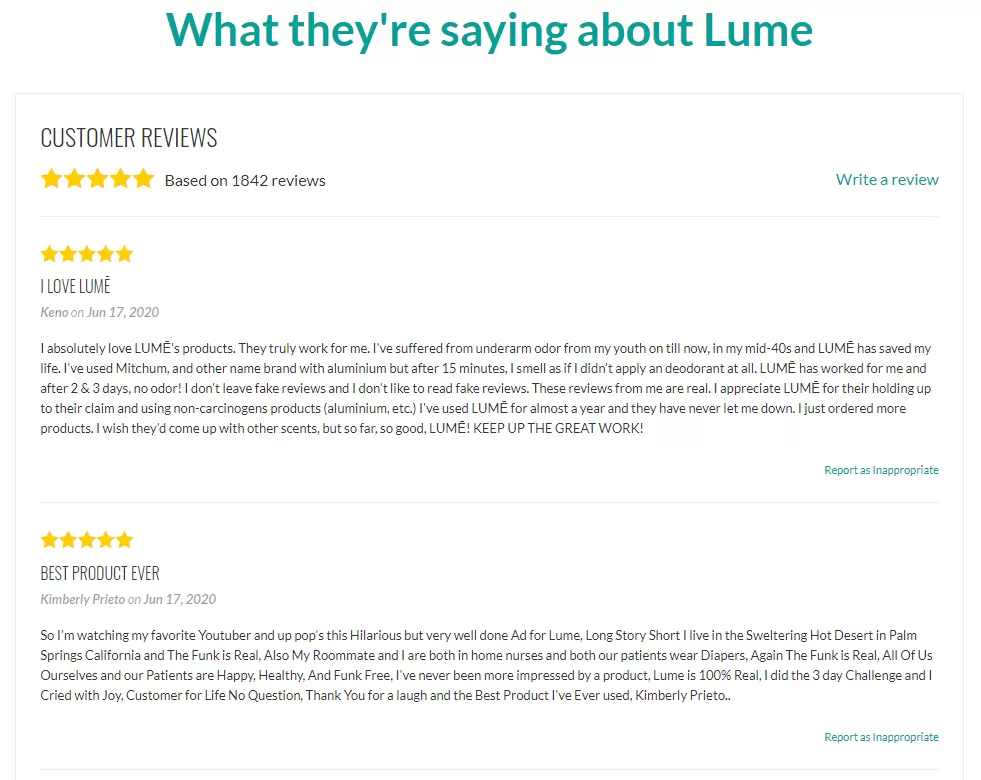
These are fair questions that a lot of your visitors will have. To give them the assurance, incorporate customer reviews on the product page. It’s important to provide real evidence to your affiliates that your customers have found value using your products before.
Lume made sure that they have great reviews on their product page.
But if you don’t have those, you can send a friendly nudge in the form of real-time, real-people notifications.
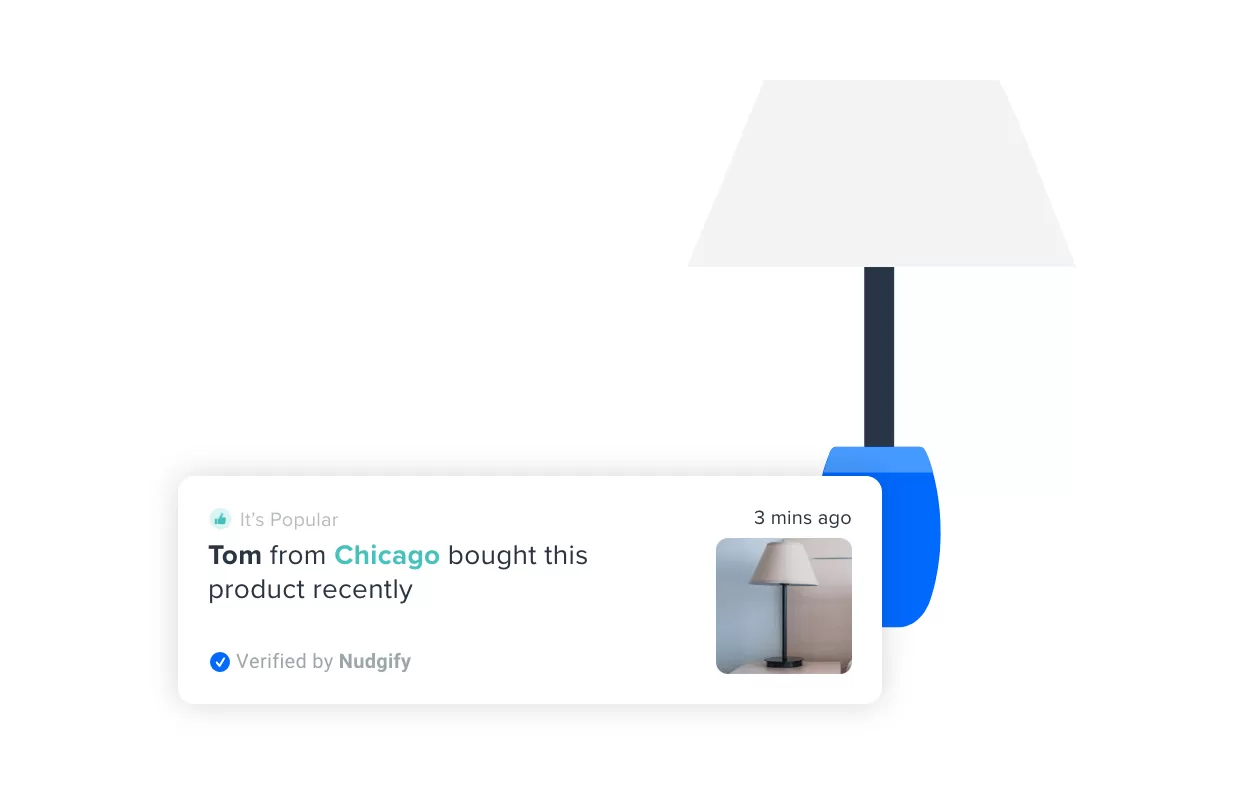
Source: Nudgify
That’s the power of social proof. It has become an important part of eCommerce shopping because it is hard to know who and what we can trust online. In an uncertain environment, social proof helps us make better decisions about who to trust and what to buy.
When people visit your website, they typically come for a certain purpose.
Whether they are somebody who has already bought from you or somebody who has yet to make a purchase, they want answers, and they want them fast. It may even be about your product or service.
But there will be times when the information found on your product page is not enough. That’s when the need to invest in a live chat software arises. This is not just a way to interact with your customers. It’s a broad concept that involves untapped potential that enables you to create a good rapport with your visitors and boost your conversion rates.
And there are great benefits to employing live chat software:
You can’t afford to let your website visitors leave your store without buying. Traffic doesn’t come cheap. So make every visitor count.
Pro tip: Live chat should be available 24/7 as your store gets traffic from all over the world at different time zones. Never leave your customers alone.

Set up advanced tracking in minutes. No credit card required.
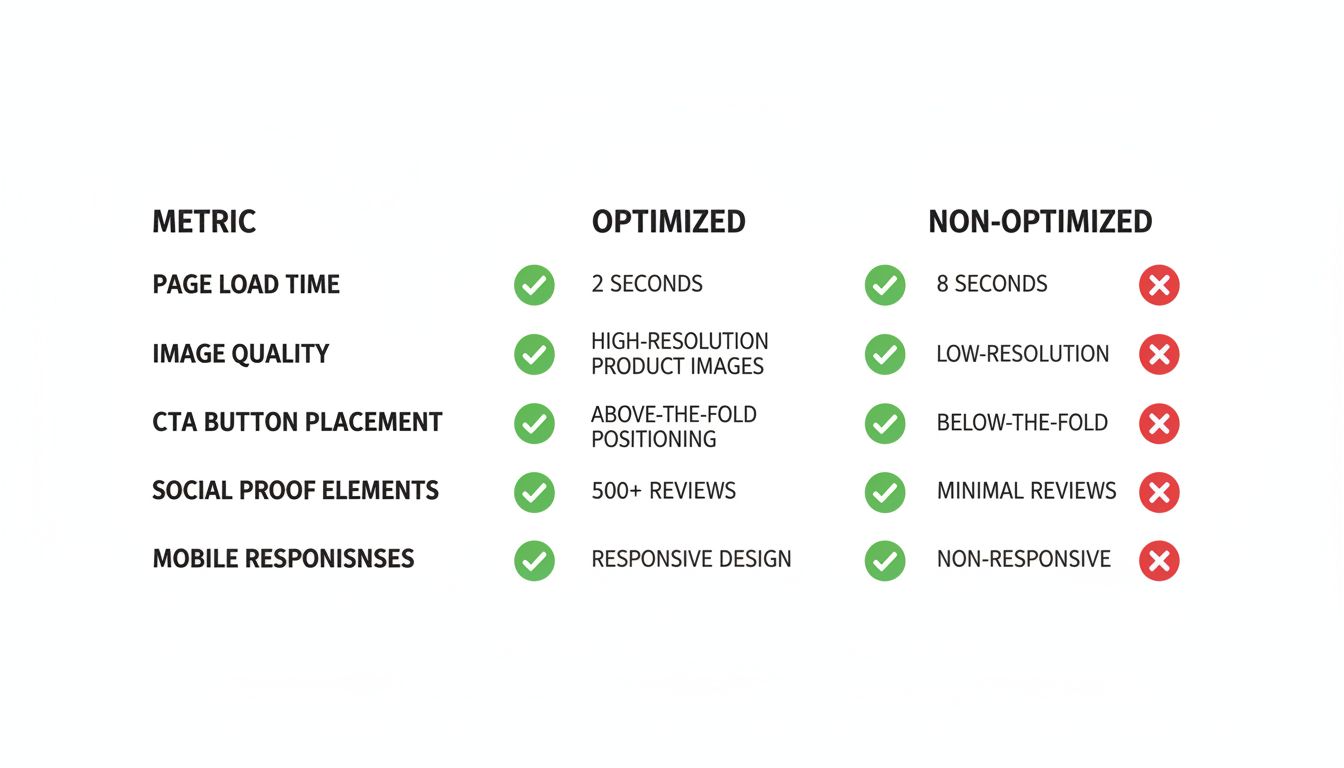
The following table summarizes the key metrics that impact affiliate product page performance:
| Metric | Optimized Version | Non-Optimized Version | Impact on Conversions |
|---|---|---|---|
| Page Load Time | Under 2 seconds | 5+ seconds | 10-15% conversion difference |
| Image Quality | High-resolution, multiple angles | Low-res, single image | 20-30% engagement difference |
| CTA Placement | Above fold + contextual placement | Below fold only | 25-40% click-through difference |
| Social Proof | 500+ reviews with ratings | No reviews | 30-50% conversion lift |
| Mobile Responsiveness | Fully responsive, touch-optimized | Desktop-only or poorly responsive | 40-60% mobile conversion loss |
| Product Description | Detailed, benefit-focused, 500+ words | Brief, feature-only, 100 words | 15-25% comprehension difference |
| Trust Signals | Multiple certifications, media mentions | No trust indicators | 20-35% confidence difference |
| Support Accessibility | Live chat, FAQ, email, knowledge base | Email only or no support | 10-20% satisfaction difference |
Transparency is the foundation of ethical affiliate marketing and a key driver of customer trust. Your product pages should clearly disclose affiliate relationships and explain how affiliate commissions work, as this honesty actually increases customer trust rather than decreasing it. Compliance with FTC guidelines and other regulatory requirements is not just legally necessary—it is a trust-building opportunity that demonstrates your commitment to ethical business practices.
Be transparent about product limitations, potential drawbacks, and who the product is best suited for, rather than overselling benefits. When affiliates see that you are honest about your products and transparent about affiliate relationships, they feel confident promoting you because they know they are not misleading their audiences. Include clear return policies, warranty information, and shipping details so customers have complete information before purchasing. Transparency builds long-term affiliate relationships based on trust and mutual respect.
Be the first to know about new features and product updates.
Mobile optimization is no longer optional—it is essential for affiliate success in today’s digital landscape. Over 60% of e-commerce purchases now occur on mobile devices, meaning your product pages must deliver an excellent experience on smartphones and tablets. Responsive design ensures that your product pages automatically adapt to different screen sizes, maintaining readability, functionality, and visual appeal whether visitors are on phones, tablets, or desktops.
Mobile optimization should include large, easy-to-tap buttons, simplified navigation, fast-loading images, and vertical scrolling-friendly layouts that work seamlessly on smaller screens. Mobile users have shorter attention spans and less patience for slow pages or confusing layouts, so every element of your mobile product page should be optimized for quick scanning and easy conversion. Affiliates increasingly promote products through mobile channels like social media, messaging apps, and mobile-optimized content, so your product pages must deliver excellent mobile experiences to convert this traffic.
So, what have these brands taught us about creating an engaging product page? It boils down to the following:
So, there you go. By optimizing your product pages, you get more affiliates, more visitors, more traffic, and ultimately more revenue.
Start implementing these today!
If you want some inspiration, here is a list of some of the best ecommerce product pages on the web for you to check out.
Lucia is a talented content editor who ensures the seamless publication of content across multiple platforms.

Transform your affiliate recruitment with engaging product pages. Discover strategies and tools to increase sign-ups and sales.
proven strategies to boost your affiliate program visibility and attract quality partners. 11 actionable tactics including website optimization
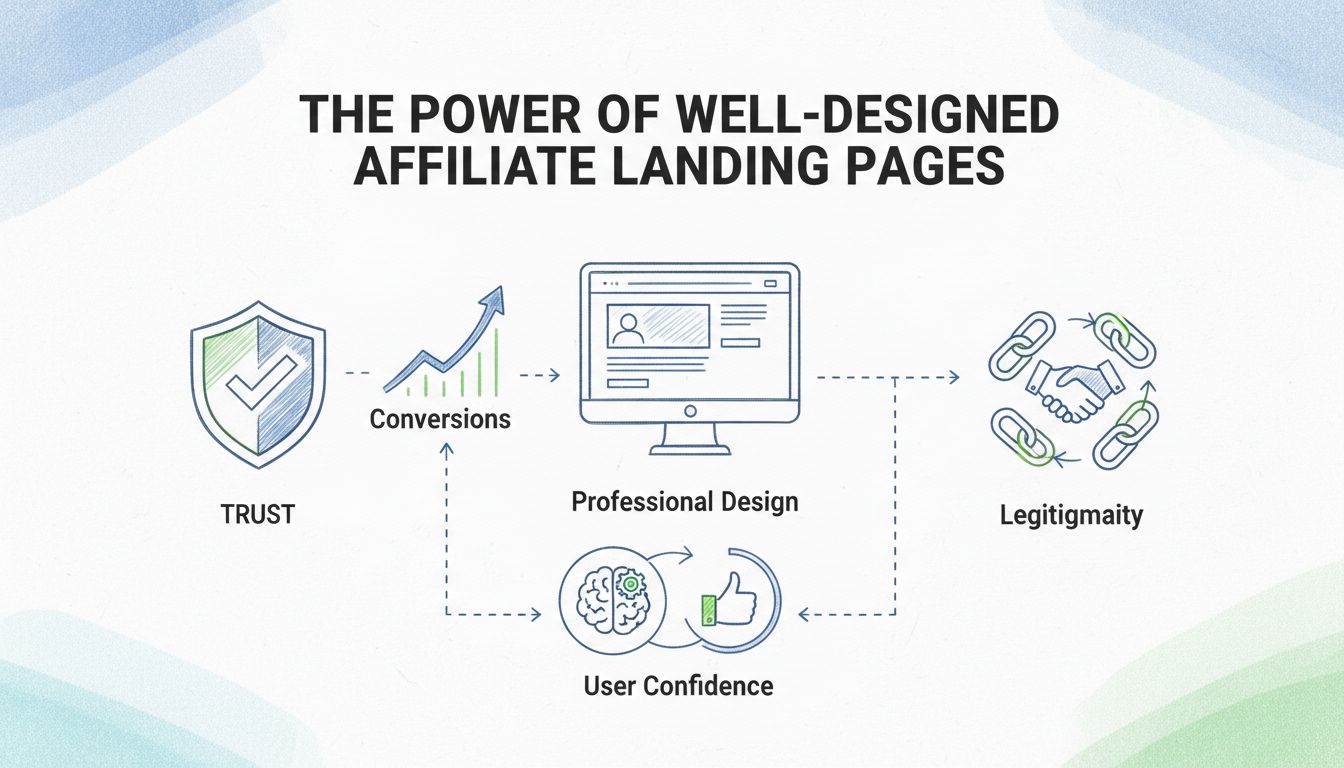
Discover why professional affiliate landing pages are crucial for conversion success. Learn how trustworthy design, clear messaging, and strategic CTAs increase...
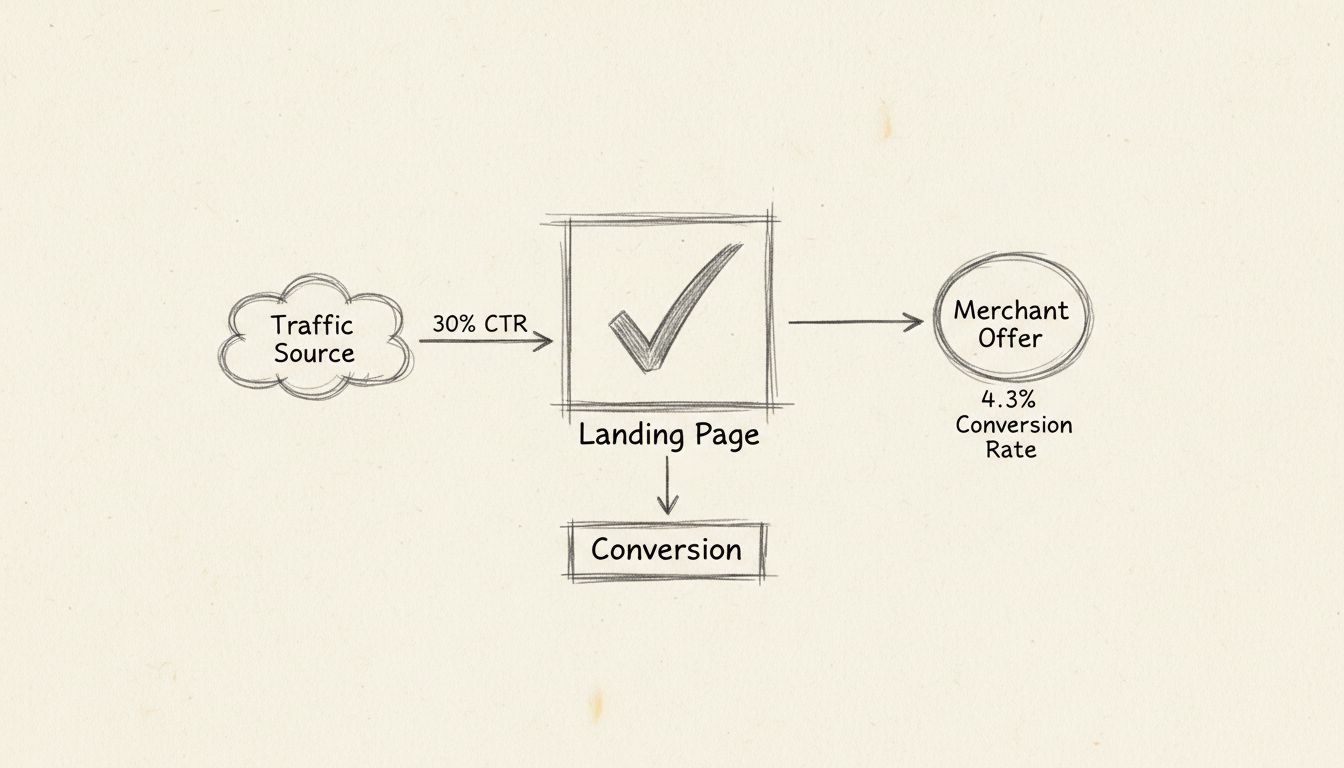
Discover why landing pages are essential for affiliate marketing success. Learn how they increase conversions, build trust, and generate more revenue than direc...
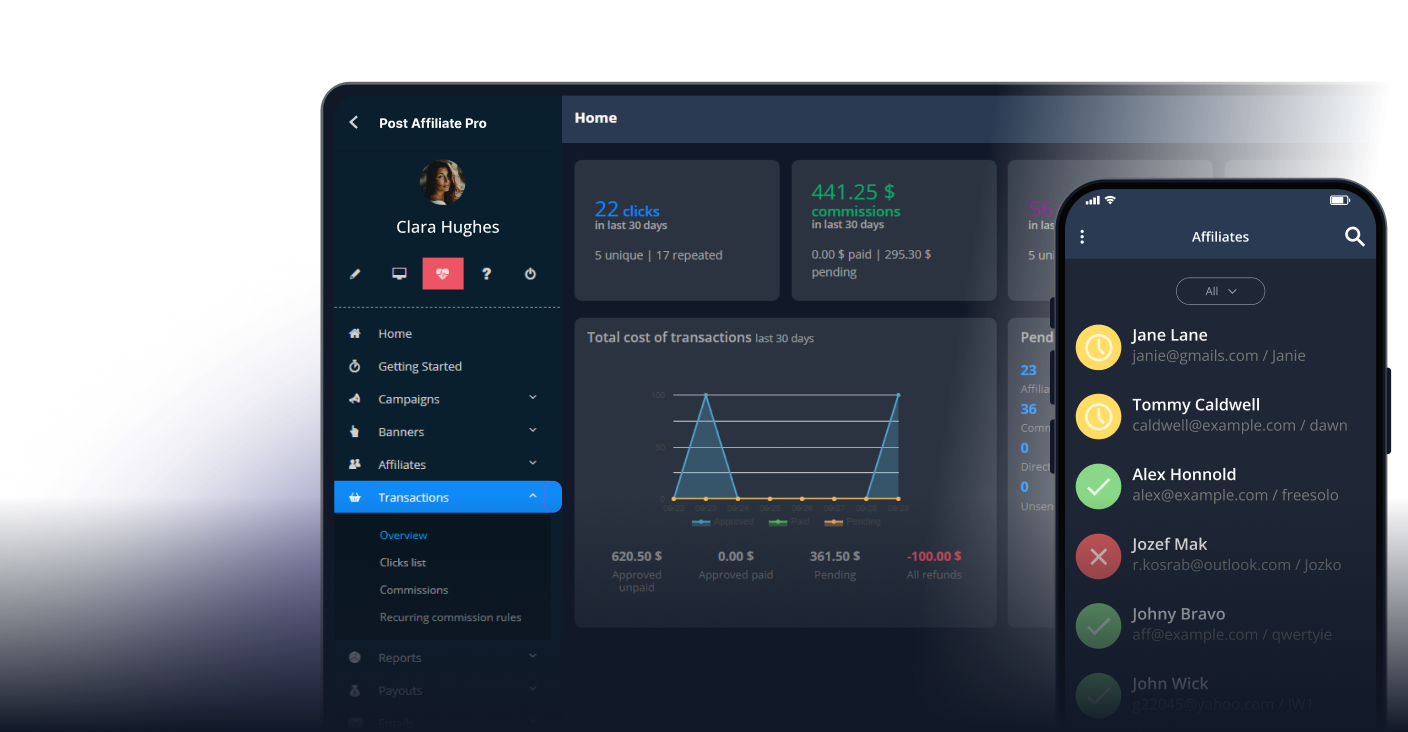
Join our community of happy clients and provide excellent customer support with Post Affiliate Pro.



Cookie Consent
We use cookies to enhance your browsing experience and analyze our traffic. See our privacy policy.