


Multi-Tier Commissions
Learn what multi-tier commission means, how it works, and which calculation, tracking, or program rules affect affiliate results.
4 min read
AffiliateMarketing
Glossary
In affiliate marketing, tier compression is a commission rule that skips affiliates who do not meet eligibility conditions when deciding which uplines receive multi-tier rewards. It can move a payment opportunity to an eligible affiliate higher in the chain without necessarily changing the affiliate tree. The exact rule depends on the compensation plan.
In affiliate marketing, tier compression is a commission rule that skips affiliates who do not meet eligibility conditions when deciding which uplines receive multi-tier rewards. It can move a payment opportunity to an eligible affiliate higher in the chain without necessarily changing the affiliate tree. The exact rule depends on the compensation plan.
A plan can require an upline to satisfy defined eligibility conditions before receiving a reward. If they do not qualify, compression can allow another eligible affiliate higher in the chain to receive the next paid level. The plan must explain the maximum reach, skipped levels, and any limits.

Set up advanced tracking in minutes. No credit card required.
| Rule | What changes |
|---|---|
| Commission compression | Which eligible uplines occupy paid levels for a reward |
| Reparenting | The recorded relationship or position in the affiliate tree |
| Spillover | Placement of a new affiliate below a filled frontline |
Affiliate C drives a $100 eligible sale. B is C’s immediate upline but is ineligible. A is the next upline and qualifies. If the plan compresses eligible levels and pays 3% to the first eligible upline, A receives $3. Without compression, the plan might leave that reward unpaid or apply another explicit rule.
The result changes if A is also ineligible, if no higher qualified affiliate exists, or if a cap limits the reward. Those boundary cases belong in the written compensation plan.
Be the first to know about new features and product updates.
Determine whether eligibility is checked at conversion, approval, or period close. A later change in activity should not silently rewrite a previously explained payout unless the policy requires it. Record the original chain, eligibility evidence, and applied rate.
Compression can maintain rewards for eligible uplines, but adds complexity and can alter total payout cost. Test it alongside multi-tier rates, caps, refunds, and canceled accounts. It is a calculation rule, not evidence that recruitment or earnings will improve.
Keep the sponsor chain, eligibility state, skipped affiliate, effective paid level, commission base, and rate. An affiliate reading the report should be able to understand why an upline qualified for a reward without assuming that the placement tree changed.
For a hypothetical $200 eligible sale with 3% to the first qualified upline and 1% to the second, the rewards are $6 and $2. If an ineligible affiliate is skipped, the same rates apply only if the plan defines compressed paid levels that way. Another plan may preserve original-level rates or leave a gap.
Post Affiliate Pro’s multi-tier setup guidance provides hierarchy configuration context. Confirm the actual compression support separately; a multi-tier feature does not imply every compression algorithm is available.
It changes how eligible rewards are distributed, not whether the program generates customer demand. Review total payout cost, partner participation, and approved sales. The FTC’s multi-level marketing guidance provides US compensation-plan context; a compression label does not establish legality or justify an income promise.
Write the eligibility condition and evaluate it at a specified point, such as when the sale is validated. In a hypothetical chain with one ineligible upline between the seller and an eligible sponsor, compression may let the sponsor occupy the next paid level. Without compression, that level’s reward may remain unpaid instead. The plan determines the result.
Dynamic compression generally evaluates eligibility for a transaction or period; a static arrangement uses a more fixed qualification or level assignment. Platforms and plans can use these labels differently, so specify the actual behavior rather than relying on a name.
Test missing uplines, qualification changes, canceled accounts, commission caps, and refunded transactions. Keep original sponsorship or placement records separate from the payout calculation, and preserve an audit trail explaining why a reward skipped one affiliate and reached another.
For the corresponding Post Affiliate Pro settings, consult the commission configuration advanced documentation . Confirm the configuration and integration requirements against your program’s rules.
Explore Post Affiliate Pro’s tracking, commission settings, and partner management tools.
Learn what multi-tier commission means, how it works, and which calculation, tracking, or program rules affect affiliate results.
Learn what performance-based commission tiers means, how it works, and which calculation, tracking, or program rules affect affiliate results.
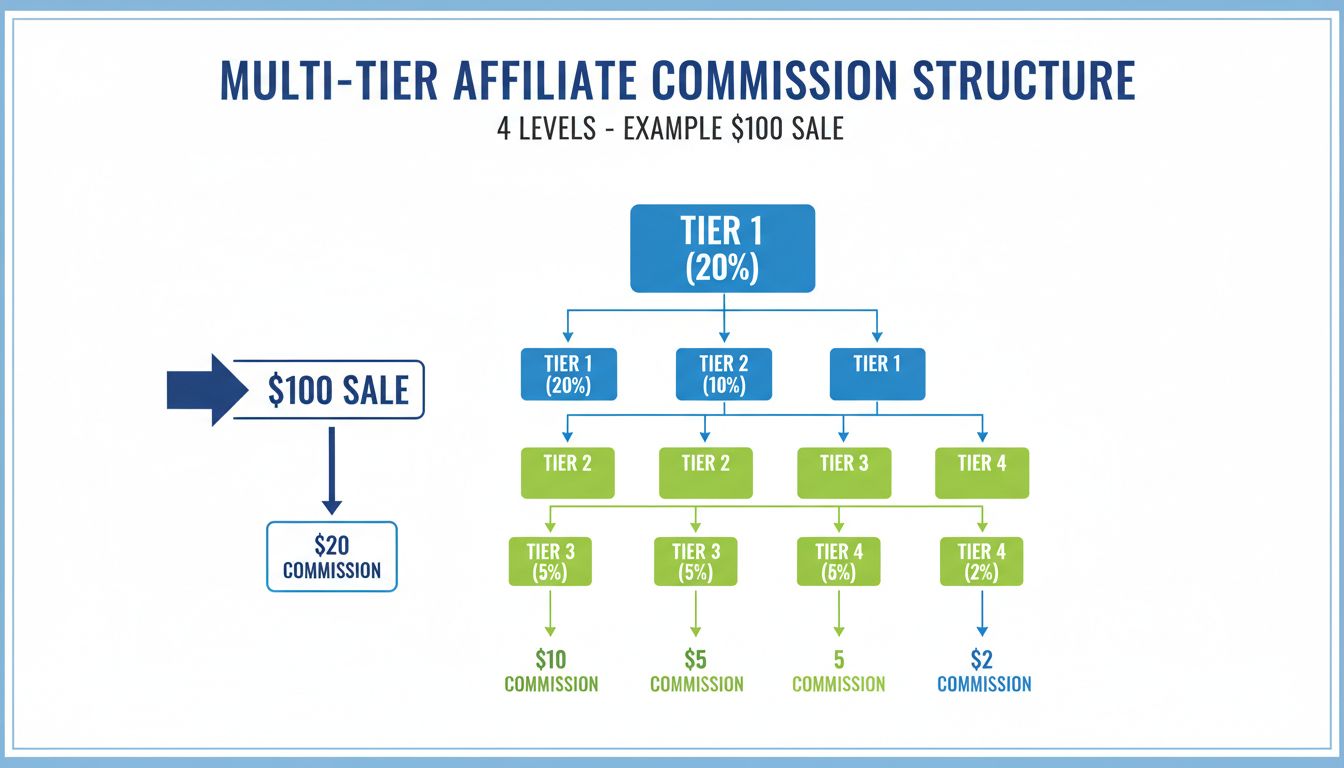
Learn how multi-tier commissions work in affiliate marketing. Understand tier structures, commission calculations, and how to maximize earnings with PostAffilia...
Join our community of happy clients and provide excellent customer support with Post Affiliate Pro.




Cookie Consent
We use cookies to enhance your browsing experience and analyze our traffic. See our privacy policy.