


What is Multi-Tier Commission? Complete Guide to Affiliate Tiers
Learn how multi-tier commissions work in affiliate marketing. Understand tier structures, commission calculations, and how to maximize earnings with PostAffilia...
9 min read
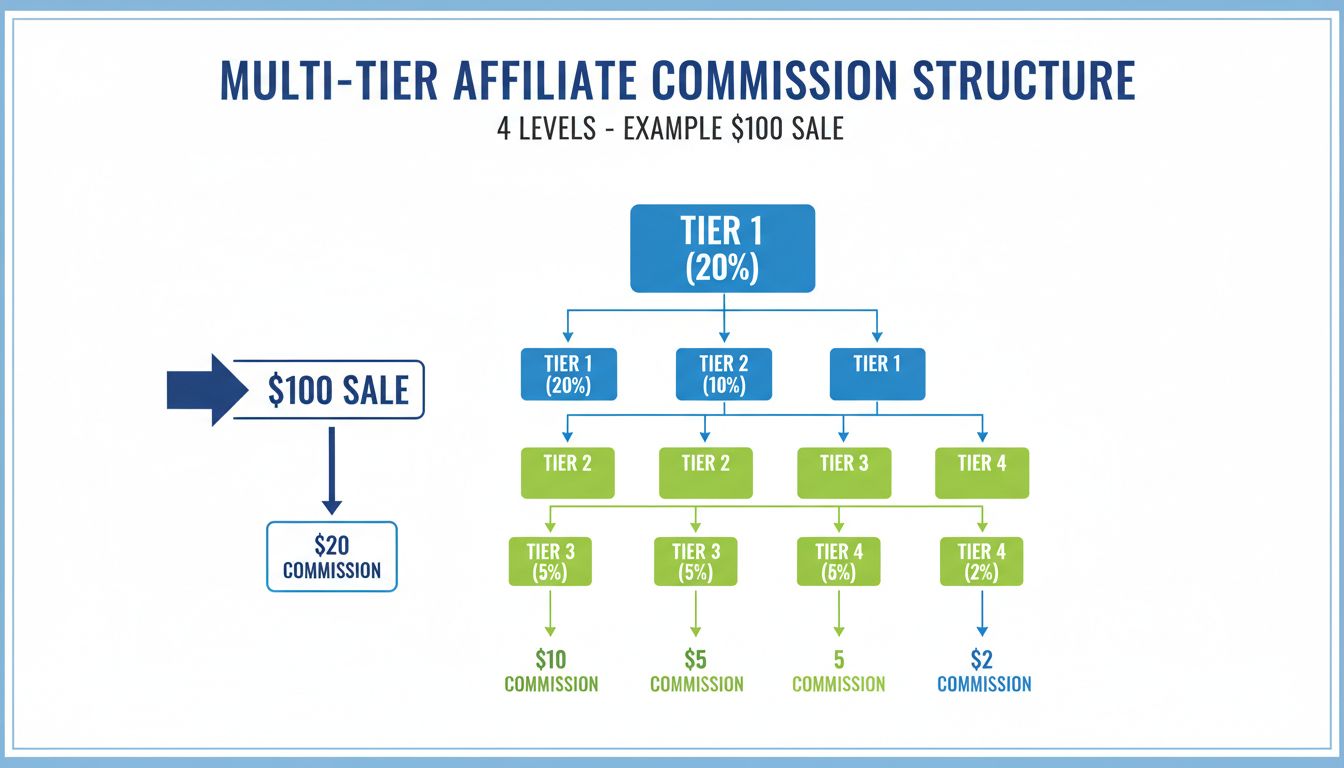
In affiliate marketing, a multi-tier commission rewards a referring affiliate and one or more eligible affiliates above them in a referral hierarchy for a qualifying transaction. Tier levels describe relationships between affiliates, rather than different rates earned by one affiliate for meeting sales targets.
In affiliate marketing, a multi-tier commission rewards a referring affiliate and one or more eligible affiliates above them in a referral hierarchy for a qualifying transaction. Tier levels describe relationships between affiliates, rather than different rates earned by one affiliate for meeting sales targets.
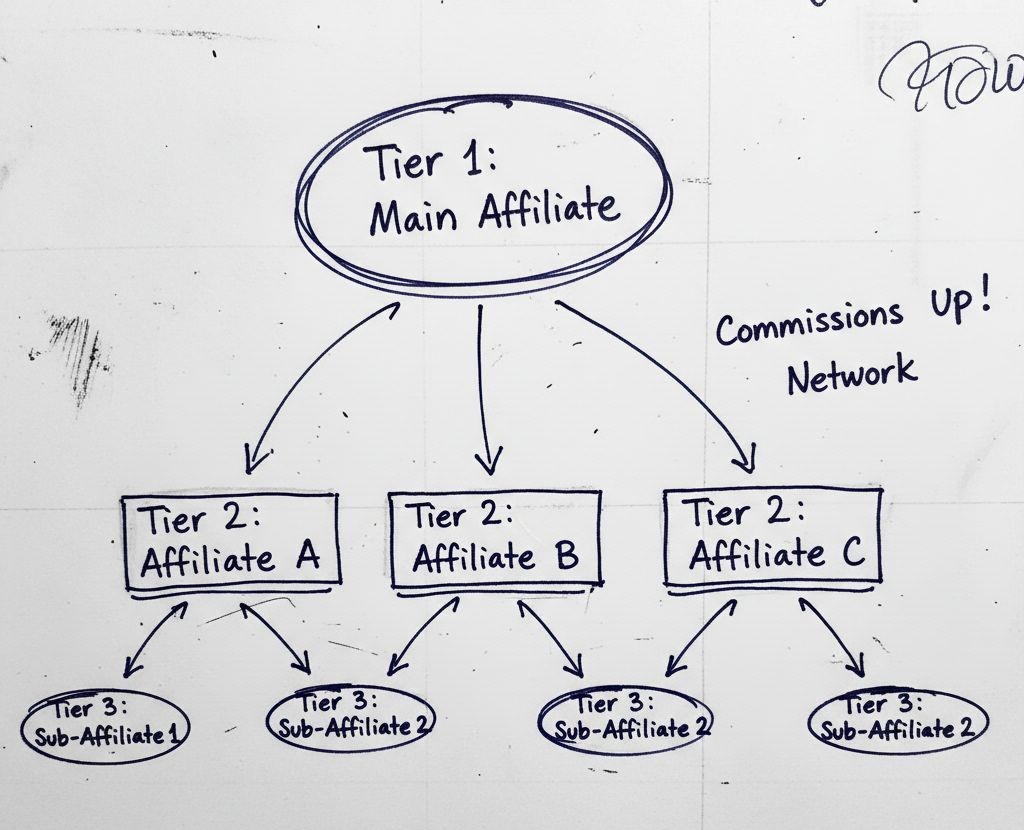
Affiliate A recruits Affiliate B, and the system records their relationship. When B drives an eligible customer sale, B can receive the direct commission and A can receive a configured upline reward. If B recruits C, further levels may apply within the plan’s permitted depth.
Recruiting an affiliate and referring a customer are different events. The existence of a downline does not create revenue or entitlement to payment without the qualifying activity specified in the plan.

Set up advanced tracking in minutes. No credit card required.
| Structure | What determines the reward |
|---|---|
| Multi-tier | Eligible relationships above the referring affiliate |
| Performance tiers | The referring affiliate’s own measured results |
| Split commission | Eligible contributions to one conversion journey |
Assume a $200 eligible sale, a 10% direct rate, and a 2% upline rate, both calculated from the sale amount. The seller earns $20 and the eligible sponsor earns $4. Total commission cost is $24, or 12% of the eligible sale value.
If there is no qualifying sponsor, the plan must specify whether the $4 remains unpaid or passes to another eligible level. Tier compression is one possible rule for skipping ineligible uplines; it is not an automatic feature of all multi-tier plans.
Be the first to know about new features and product updates.
Additional levels can reward partner recruitment, but increase cost, reporting complexity, and the need to verify eligibility. Review self-referral restrictions and preserve an audit trail through the chain. Compensation rules need to focus on legitimate eligible activity rather than unsupported income promises.
List the paid levels, the qualifying sale or action, the percentage or fixed amount at each level, and the base used in each calculation. State whether rewards on subscription renewals use the same hierarchy and rates as the initial purchase. A recruitment hierarchy alone does not define those commercial rules.
Post Affiliate Pro’s multi-tier setup guidance covers product configuration. Confirm the selected campaign settings rather than treating the example rates here as defaults.
Compare the total commission cost with approved customer revenue, not just the number of recruited affiliate partners. Recruiting can support program growth when new partners serve suitable audiences, but an inactive downline creates no useful sales merely by existing. Track activation and qualified results as well as network size.
For US compensation-plan concerns, the FTC’s multi-level marketing guidance calls for a fact-specific assessment of incentives and practices. The label multi-tier does not settle that assessment.
Write the compensation plan before configuring the hierarchy. Specify which transaction triggers a reward, how many levels qualify, which sales amount each rate uses, and whether an upline must remain active. Do not assume that every platform calculates tier rewards from the same base.
For a hypothetical $100 eligible sale, a 10% direct commission plus 3% to an eligible upline costs $13 when both rates use the original sale value. If the second rate instead applies to the direct affiliate’s $10 commission, it costs $0.30. The plan must state which calculation applies.
Test missing uplines, ineligible affiliates, refunds, and commission caps. Publish worked examples in the affiliate portal so partners can understand their network’s rewards without interpreting a tree diagram alone.
For the corresponding Post Affiliate Pro settings, consult the multi tier commissions multi level marketing documentation . Confirm the configuration and integration requirements against your program’s rules.
Explore Post Affiliate Pro’s tracking, commission settings, and partner management tools.
Learn how multi-tier commissions work in affiliate marketing. Understand tier structures, commission calculations, and how to maximize earnings with PostAffilia...
Discover why multi-tier commission structures are essential for affiliate program growth. Learn how tiered commissions incentivize recruitment, drive sales, and...
Learn what performance-based commission tiers means, how it works, and which calculation, tracking, or program rules affect affiliate results.
Join our community of happy clients and provide excellent customer support with Post Affiliate Pro.




Cookie Consent
We use cookies to enhance your browsing experience and analyze our traffic. See our privacy policy.