


Chargeback
A chargeback reverses a sale and the affiliate commission. Learn what triggers chargebacks.
12 min read
AffiliateMarketing
Chargeback
+3
In affiliate marketing, commission reversal rate is the percentage of initially credited affiliate commissions later canceled or reduced because a referral no longer qualifies. Refunds, returns, chargebacks, failed payments, and invalid referrals can cause reversals. Measure the rate by transaction count or commission value, using the same original cohort in both parts of the calculation.
In affiliate marketing, commission reversal rate is the percentage of initially credited affiliate commissions later canceled or reduced because a referral no longer qualifies. Refunds, returns, chargebacks, failed payments, and invalid referrals can cause reversals. Measure the rate by transaction count or commission value, using the same original cohort in both parts of the calculation.
Divide reversed commission records by the commission records initially credited to the same cohort, then multiply by 100. For an illustrative 1,000 credited commissions with 50 completely reversed records, the rate is 50 ÷ 1,000 × 100 = 5%. Define how partial reversals count before using this method.
Divide the value removed by the original credited commission value. If $600 is removed from $10,000, the value-based rate is 6%. This method captures partial reductions and the effect of larger orders, provided the values use one reporting currency and a consistent conversion policy.

Set up advanced tracking in minutes. No credit card required.
| Reason | What to review |
|---|---|
| Returned or canceled order | Refund status, eligible amount, and program terms |
| Payment failure or chargeback | Settled payment and subsequent adjustment |
| Duplicate or test event | Transaction identity and integration logs |
| Invalid referral | Attribution evidence and the specific eligibility rule |
Estimate net earnings rather than planning against pending totals. If $500 of initially credited commission loses $100, $400 remains before any other adjustments. Combine reversal rate with EPC and acquisition costs to assess an offer.
There is no universal “good” rate without a comparable product mix, refund policy, and mature observation period. A zero rate can mean no reversals occurred, but it can also reflect incomplete adjustment data. Reconcile the report with source transactions and distinguish actual outcomes from pending cases.
Be the first to know about new features and product updates.
Keep the original credited total, each adjustment, the reason, and the observation date. For count-based reporting, explain whether a partially reduced record counts as one reversed commission. For value-based reporting, retain the original amount as well as the remaining amount. A report showing only the current balance cannot reconstruct how much was initially credited.
Stripe’s refund reference illustrates source refund records, including partial adjustments. A payment refund and the affiliate commission response remain separate records connected by your program’s policy.
Use the report to identify where the merchant retained less revenue than expected. Better product explanations may help customers choose correctly, while a checkout fault needs a technical fix. Changing all commission rates in response to one partner’s problem can penalize unrelated affiliates.
For a hypothetical $2,000 of credited commissions and $300 of reversals, the remaining $1,700 is the relevant starting point for acquisition economics. Include bonus costs and traffic costs before calling the campaign profitable. Compare mature net earnings rather than an attractive pending total.
Start with commissions credited in one earning period, then follow that cohort through its return and validation windows. A report that divides this month’s reversals by this month’s new sales mixes different customer groups and can misrepresent performance.
Segment the cohort by affiliate, product, campaign, referral channel, and reversal reason. A high return rate for one product suggests a different response from duplicate orders or invalid leads concentrated in one partner’s traffic. Review customer expectations, landing-page claims, and checkout quality before assuming affiliate fraud.
Report both count-based reversal rate and value-based reversal rate, together with approved commission value. In a hypothetical cohort of 100 commissions worth $2,000, reversing five commissions worth $300 produces a 5% count rate and a 15% value rate. That difference matters when comparing partners and allocating acquisition spend.
For the corresponding Post Affiliate Pro settings, consult the chargebacks refunds documentation . Confirm the configuration and integration requirements against your program’s rules.
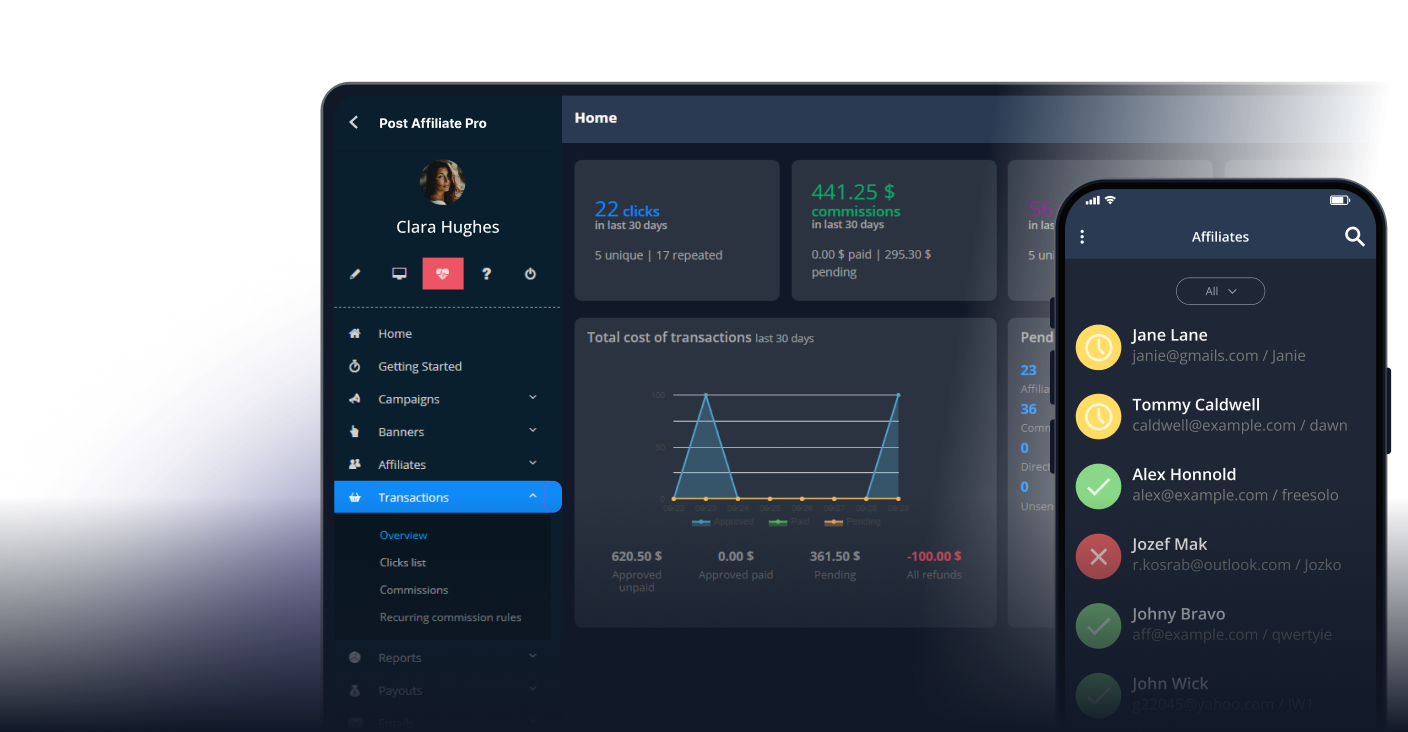
Explore Post Affiliate Pro’s tracking, commission settings, and partner management tools.
A chargeback reverses a sale and the affiliate commission. Learn what triggers chargebacks.

Post Affiliate Pro automatically handles refunds and chargebacks by adjusting affiliate commissions accordingly. Protect your business from paying commissions o...
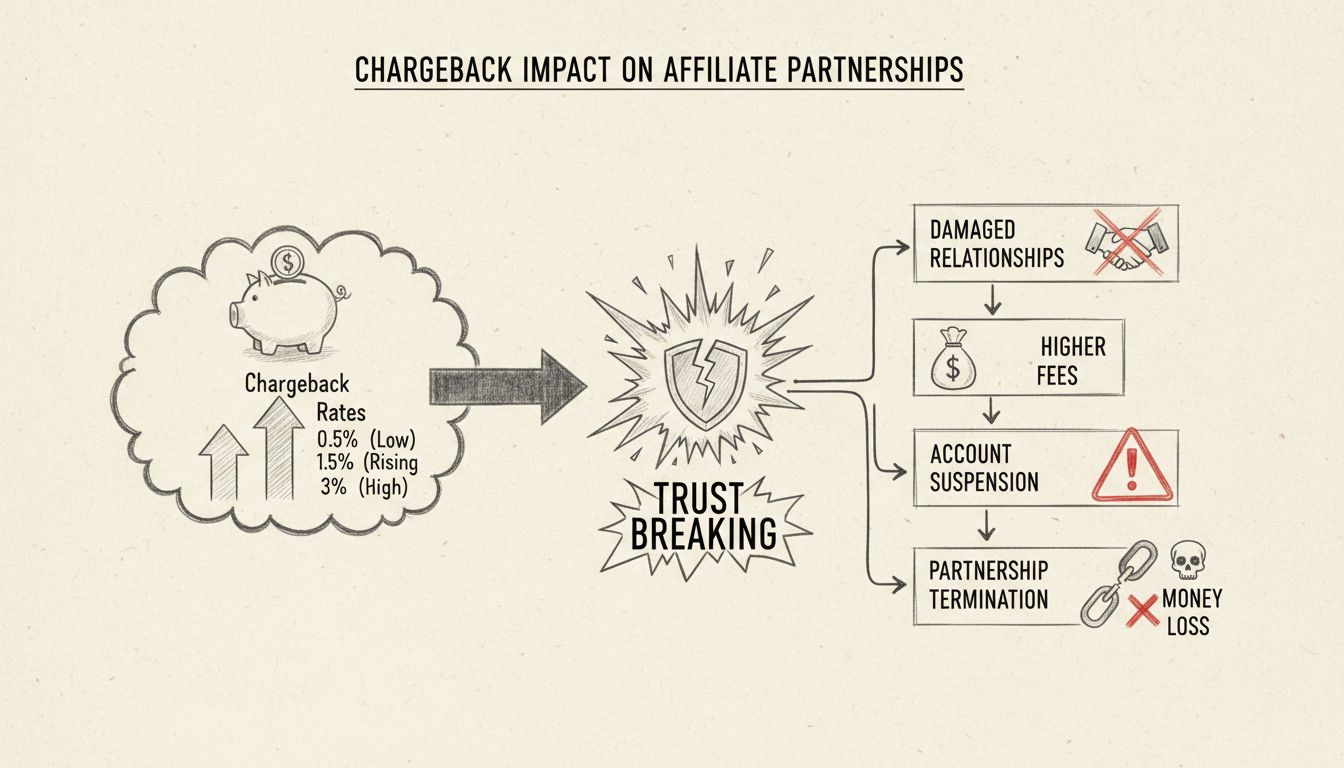
Learn how high chargeback rates damage affiliate partnerships, leading to termination and financial penalties. Discover prevention strategies and best practices...
Join our community of happy clients and provide excellent customer support with Post Affiliate Pro.



Cookie Consent
We use cookies to enhance your browsing experience and analyze our traffic. See our privacy policy.