


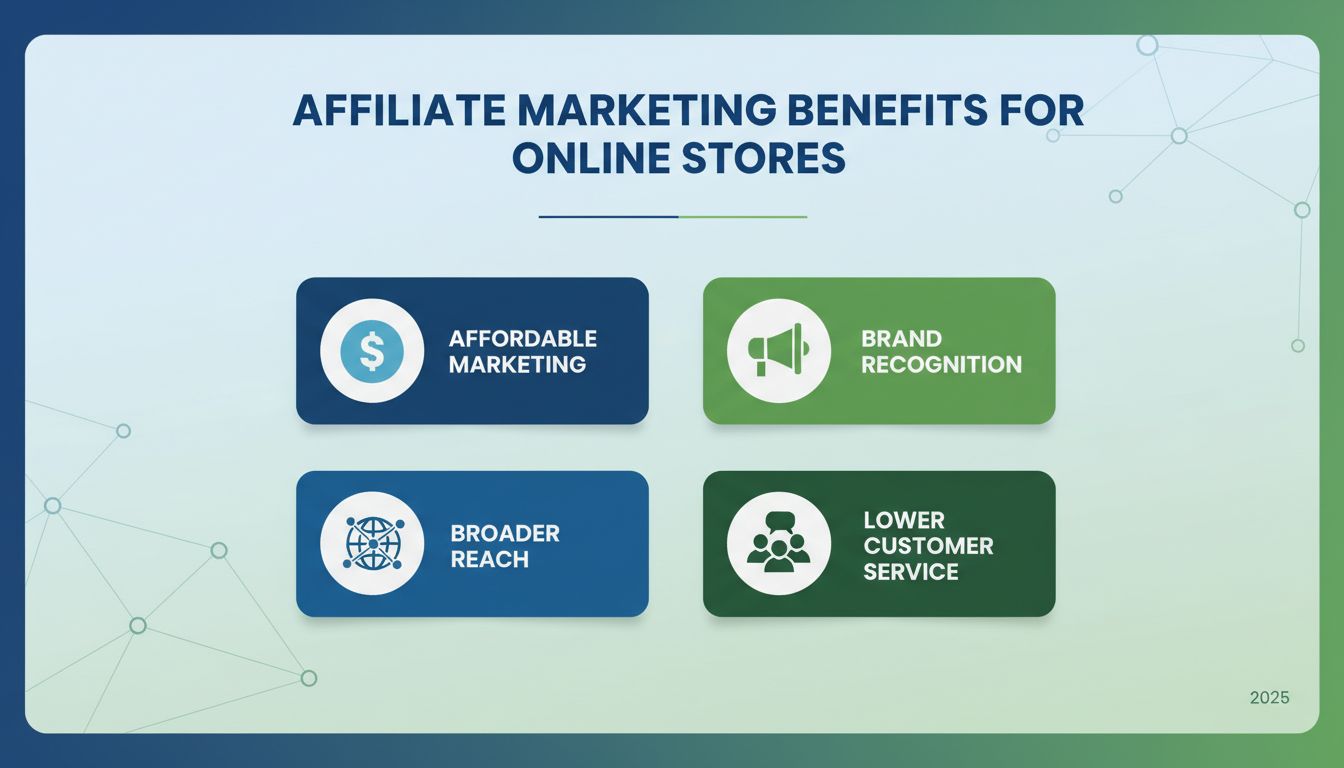
Affiliate Marketing Benefits for Online Stores
Discover the main benefits of implementing an affiliate marketing program for your online store. Learn how affordable marketing, brand recognition, and broader ...
12 min read


Discover the key benefits of affiliate marketing programs for e-commerce: cost-effective marketing, expanded reach, improved SEO, and sustainable growth.
The affiliate marketing industry has experienced explosive growth, now valued at over $8.2 billion in annual spending, with 81% of brands actively leveraging affiliate programs to drive revenue. Affiliate marketing is a performance-based marketing model where businesses partner with affiliates—individuals or companies who promote their products in exchange for a commission on sales or leads generated. What makes this approach particularly compelling is that 20% of Cyber Monday revenue comes directly from affiliate channels, demonstrating the channel’s undeniable impact on e-commerce success. In this comprehensive guide, we’ll explore the transformative benefits that implementing a well-structured affiliate program can deliver to your online store, from cost savings and expanded reach to enhanced credibility and sustainable growth.
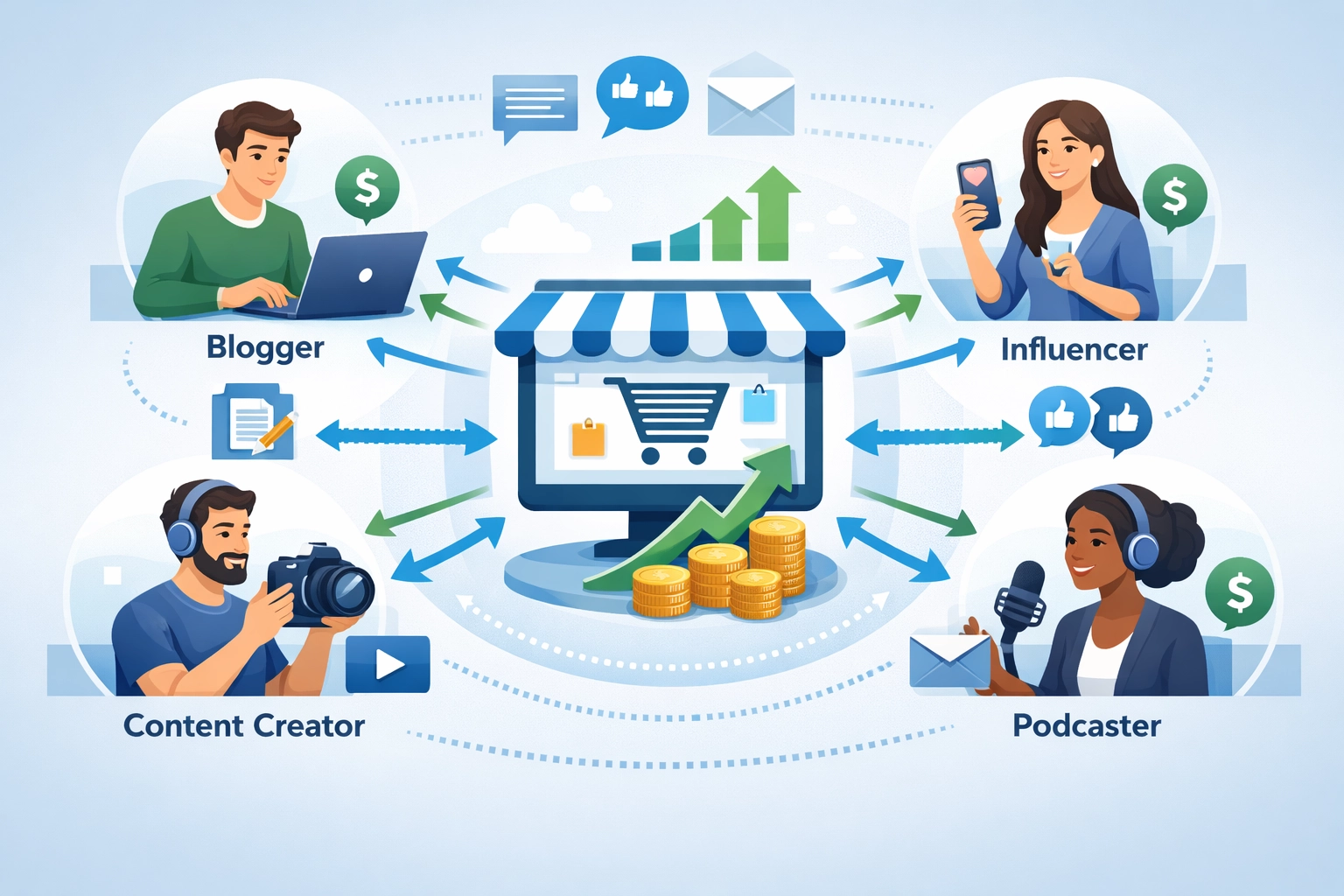
One of the most compelling advantages of affiliate marketing is its performance-based payment model, which fundamentally transforms how you allocate your marketing budget. Unlike traditional advertising channels that require substantial upfront investment regardless of results, affiliate marketing operates on a pay-for-performance basis—you only compensate affiliates when they deliver measurable results such as sales, leads, or clicks. This approach delivers exceptional return on investment, with industry data showing that businesses earn approximately $16 for every $1 spent on affiliate marketing, making it one of the most efficient marketing channels available. Your marketing spend becomes highly predictable and scalable, allowing you to control costs while maintaining growth momentum. Because you’re only paying commissions on actual conversions, there’s no wasted budget on ineffective campaigns or impressions that don’t convert. This financial efficiency is particularly valuable for growing businesses and startups that need to maximize every marketing dollar while minimizing risk.
| Aspect | Traditional Advertising | Affiliate Marketing |
|---|---|---|
| Payment Model | Pay upfront for impressions/clicks | Pay only for results |
| Cost Structure | Fixed costs regardless of results | Variable costs tied to performance |
| ROI Predictability | Uncertain, depends on campaign quality | Highly predictable, performance-based |
| Risk Level | High - pay even if no conversions | Low - only pay for actual sales |
| Budget Control | Limited control over spend efficiency | Complete control, pay for results only |

Set up advanced tracking in minutes. No credit card required.
Implementing an affiliate program dramatically expands your brand’s reach through diverse affiliate networks that introduce your products to audiences you might never reach through direct marketing efforts. When affiliates promote your brand, they provide third-party validation and social proof—a powerful psychological factor that significantly influences purchasing decisions. Influencer endorsements and recommendations from trusted voices in your industry build authentic trust with potential customers in ways that traditional advertising simply cannot replicate. Research demonstrates that word-of-mouth marketing generates 5X more sales than paid advertising, and an impressive 88% of consumers trust recommendations from friends, family, and trusted online personalities more than any branded message. Your affiliates essentially become brand advocates, authentically sharing your products with their engaged audiences because they genuinely believe in the value you offer. This aligns with the “Rule of 7” in marketing, which suggests that customers need approximately seven meaningful touchpoints with your brand before making a purchase decision—affiliate content provides these critical touchpoints naturally and credibly.
Key credibility factors your affiliate program provides:
An affiliate program grants you access to diverse affiliate networks spanning various industries, niches, and geographic regions, exponentially expanding your market reach without proportional increases in marketing overhead. Each affiliate brings their own unique audience with established trust and engagement, allowing you to reach untapped market segments that would be expensive or time-consuming to target through traditional advertising channels. This approach enables geographic expansion opportunities, allowing you to penetrate new markets and regions through affiliates who already have established credibility and audience relationships in those areas. Niche-specific targeting becomes possible as you partner with affiliates who specialize in particular industries or customer segments, ensuring your products reach the most relevant and qualified prospects. Rather than casting a wide net with broad advertising campaigns, affiliate marketing allows you to leverage the existing authority and audience relationships that your partners have already built, making customer acquisition more efficient and effective.
Be the first to know about new features and product updates.
One of the most attractive features of affiliate marketing is its inherent scalability without proportional cost increases—you can expand from managing 10 affiliates to managing 100 or more without hiring additional staff or significantly increasing operational expenses. As your business grows, your affiliate program grows with it, with no need for additional internal staff to manage the expanded marketing efforts since your affiliates handle promotion, content creation, and customer engagement independently. Flexible affiliate recruitment means you can quickly onboard new partners when opportunities arise, and scale back if needed, without the constraints of traditional employment relationships or long-term commitments. Your existing content and product information can generate passive income potential as affiliates continuously promote your offerings across their platforms, creating sustained revenue streams that require minimal ongoing investment from your team. This scalability is particularly powerful because the cost structure remains performance-based—whether you have 10 or 1,000 affiliates, you only pay for actual results, making growth financially sustainable and risk-managed.
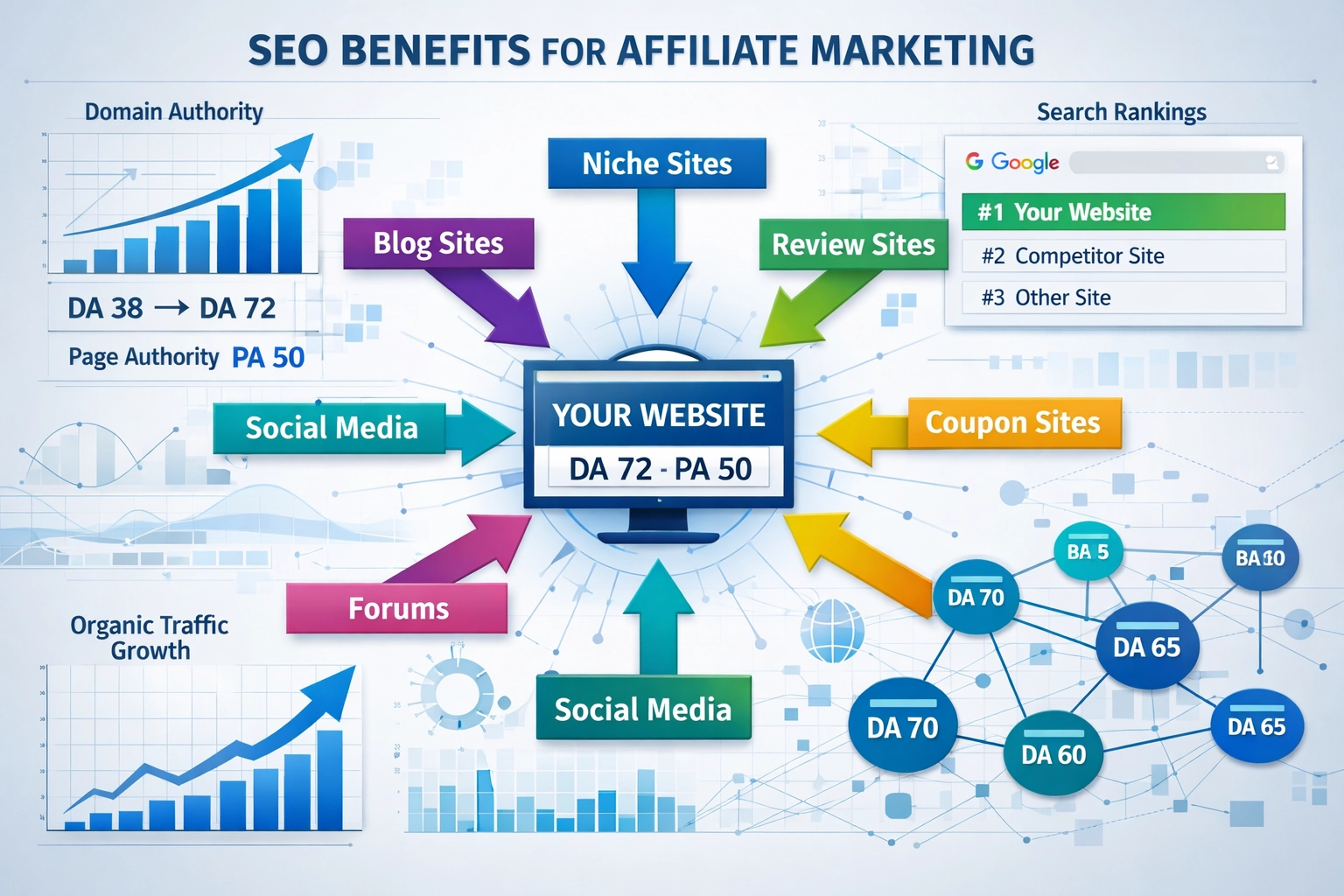
Affiliate marketing creates a powerful SEO advantage through the natural generation of backlinks from affiliate websites, which significantly improve your domain authority and search engine rankings. When affiliates create content promoting your products—whether through blog posts, reviews, or resource guides—they naturally link back to your website, and these high-quality backlinks signal to search engines that your content is valuable and authoritative. This results in enhanced search engine rankings for your target keywords, driving long-term organic traffic growth that continues to deliver value long after the initial affiliate promotion. Branded search benefits emerge as your brand gains visibility through affiliate content, increasing the likelihood that potential customers will search for your brand name directly. The beauty of this approach is that affiliate content creates natural, contextual backlinks that Google’s algorithm values far more than artificial link-building schemes, contributing to sustainable, long-term SEO improvements. Google increasingly emphasizes brand authority and trustworthiness, and affiliate endorsements from reputable websites contribute meaningfully to these critical ranking factors.
By implementing an affiliate program, you effectively distribute your marketing workload across a network of partners who handle promotion, content creation, and initial customer engagement independently. Affiliates handle promotion and initial engagement, meaning they’re responsible for attracting potential customers, creating compelling marketing content, and driving traffic to your store—work that would otherwise fall on your internal marketing team. This approach significantly reduces strain on your customer service team, as the volume of inbound inquiries is distributed across multiple touchpoints and your affiliates often provide initial product information and support to their audiences. Your internal team can focus on core business operations—product development, fulfillment, customer retention, and strategic planning—rather than being consumed by marketing execution and customer acquisition tasks. This distributed marketing workload creates operational efficiency, allowing your team to work more strategically while your affiliate partners handle the tactical promotion and customer engagement that drives growth.
A well-implemented affiliate program provides invaluable consumer insights and data that inform strategic decision-making across your entire business. Through UTM parameters and comprehensive tracking data, you can understand exactly which affiliates drive the highest-quality traffic, which products generate the most conversions, and which customer segments are most valuable to your business. This data enables market research opportunities, revealing which customer demographics are most responsive to your offerings, what messaging resonates most effectively, and which product categories have the highest demand. You gain product improvement insights by analyzing which items affiliates promote most successfully and which generate the highest customer satisfaction and repeat purchases. Understanding demographic information and customer behavior patterns allows you to refine your product offerings, pricing strategies, and marketing messaging to better align with customer preferences and market demand. This data-driven approach helps you optimize your marketing strategy continuously, making informed decisions about where to invest resources and how to improve your overall business performance based on real customer behavior and market signals.
Key insights your affiliate program reveals:
Authentic endorsements from trusted voices carry significantly more weight than any branded marketing message you could create yourself, as customers inherently trust recommendations from people they already know and respect. Word-of-mouth marketing effectiveness is remarkable—it generates 5X more sales than paid advertising and benefits from the fact that 88% of consumers trust recommendations from friends, family, and trusted online personalities. When affiliates genuinely recommend your products to their audiences, they’re providing social proof that your offerings deliver real value, which is far more persuasive than any claim you could make about your own products. Genuine recommendations convert better than ads because they come from a place of authenticity rather than commercial interest, and customers can sense this difference intuitively. By leveraging affiliate credibility, you tap into the trust relationships they’ve already established with their audiences, allowing you to benefit from their authority and reputation. This approach also contributes to building customer loyalty, as customers who discover your brand through trusted recommendations are more likely to become repeat purchasers and brand advocates themselves.
An affiliate program creates multiple income sources beyond direct product sales, reducing your dependency on any single marketing channel or revenue stream. Beyond traditional product sales, affiliate traffic can generate lead generation opportunities, where you capture customer information for email marketing, nurturing, and future sales opportunities. Subscription and recurring revenue potential emerges as affiliates drive customers to subscription-based offerings, creating predictable, ongoing revenue streams that provide financial stability and growth potential. Your affiliate program reduces dependency on a single marketing channel, protecting your business from algorithm changes, platform policy shifts, or market disruptions that could devastate a business relying too heavily on one traffic source. This diversified approach means that even if one marketing channel underperforms, your affiliate program continues generating revenue and customer acquisition, providing business resilience and stability. The multiple revenue types generated through affiliate traffic—direct sales, leads, subscriptions, and repeat purchases—compound over time, creating increasingly valuable revenue streams.
Affiliate marketing naturally facilitates creating partnerships with complementary businesses, opening doors to collaboration opportunities that benefit all parties involved. These partnerships enable cross-promotion opportunities, where you can leverage each other’s audiences, resources, and credibility to reach new customers and expand market presence. Long-term business growth emerges from these relationships, as successful affiliate partnerships often evolve into deeper collaborations, joint ventures, or strategic alliances that create additional value beyond the initial affiliate arrangement. By building strong affiliate relationships, you contribute to industry authority building, positioning your brand as a trusted partner and valuable resource within your industry ecosystem. The mutual benefits of affiliate partnerships mean that your affiliates are invested in your success—they profit when you succeed, creating aligned incentives and genuine partnerships rather than transactional relationships. These relationships often lead to introductions to other potential partners, industry influencers, and opportunities that would be difficult to access through traditional business development efforts.
One of the most powerful benefits of affiliate marketing is that it creates ongoing affiliate promotion that generates sustained visibility for your brand, even while your internal team focuses on other business priorities. Your affiliates continue promoting your products consistently, creating continuous traffic and conversions that provide reliable, predictable revenue streams month after month. This approach enables passive income generation, as your affiliate network works on your behalf to drive customer acquisition and sales without requiring constant management or investment from your team. Long-term customer acquisition becomes more efficient and sustainable, as your affiliates maintain consistent promotional efforts that keep your brand top-of-mind with their audiences. The beauty of this model is that affiliates keep promoting even while you focus on other areas of your business—product development, customer service, operations—meaning your marketing engine continues running at full capacity without consuming your team’s attention and resources. This creates a compounding effect where customer acquisition accelerates over time as your affiliate network grows and matures.
Understanding and monitoring the right performance metrics is essential for optimizing your affiliate program and maximizing return on investment. The most critical metrics include Click-Through Rate (CTR), which measures the percentage of affiliate audience members who click through to your store (industry benchmark: 1-3%), Conversion Rate, which shows the percentage of clicks that result in actual purchases (benchmark: 2-5%), and Average Order Value (AOV), which reveals the average revenue per transaction (varies by industry). Return on Investment (ROI) measures the profit generated relative to affiliate commissions paid, with healthy programs typically achieving 5:1 to 10:1 ratios, while Earnings Per Click (EPC) indicates the average revenue generated per click (benchmark: $0.50-$2.00 depending on industry). These metrics reveal which affiliates drive the highest-quality traffic, which products convert most effectively, and where to focus recruitment and support efforts. PostAffiliatePro provides comprehensive tracking of all these metrics and more, offering detailed dashboards and reporting that make it easy to monitor performance, identify top performers, and optimize your program continuously. By regularly analyzing these metrics, you can make data-driven decisions about affiliate recruitment, commission structures, and promotional strategies that maximize program profitability.
| Metric | What It Measures | Industry Benchmark | Why It Matters |
|---|---|---|---|
| Click-Through Rate (CTR) | % of audience clicking affiliate links | 1-3% (good), >1% (excellent) | Shows how compelling your affiliate content is |
| Conversion Rate | % of clicks resulting in purchases | 2-5% (average), 5%+ (top performers) | Indicates quality of traffic and offer relevance |
| Average Order Value (AOV) | Average customer spending per transaction | Varies by industry | Reveals revenue potential per customer |
| Return on Investment (ROI) | Profit relative to affiliate commissions | 5:1 to 10:1 ratio | Measures overall program profitability |
| Earnings Per Click (EPC) | Average revenue generated per click | $0.50-$2.00 depending on industry | Helps compare affiliate program performance |
Implementing an affiliate marketing program represents one of the most strategic investments you can make in your online store’s growth and profitability. The benefits are compelling and multifaceted: cost-effective marketing with exceptional ROI, expanded reach to new audiences, enhanced credibility through authentic endorsements, improved SEO through natural backlinks, and scalable growth without proportional cost increases. Choosing the right affiliate software platform is critical to your program’s success, as you need robust tracking, reliable reporting, and intuitive management tools that make it easy to recruit, support, and optimize your affiliate network. PostAffiliatePro stands out as the industry-leading solution, offering comprehensive features including advanced tracking, detailed performance analytics, flexible commission structures, and exceptional customer support that empowers you to build and scale a thriving affiliate program. Don’t let your competitors capture the benefits of affiliate marketing—start your affiliate program today with PostAffiliatePro and unlock sustainable growth, diversified revenue streams, and the power of a dedicated network of brand advocates promoting your products to their engaged audiences.
An affiliate marketing program is a performance-based marketing model where businesses partner with affiliates who promote their products in exchange for a commission on sales or leads generated. It's a mutually beneficial arrangement where affiliates earn income by driving customers to your store, and you only pay when results are achieved.
Starting an affiliate program requires minimal upfront investment. You only pay affiliates when they generate sales or leads, making it a low-risk, performance-based marketing channel. The main costs are the affiliate software platform and any commission payouts, which scale with your revenue.
Commission rates typically range from 5% to 30% depending on your industry, product margins, and competitive landscape. Research your competitors' programs, consider your profit margins, and offer rates that attract quality affiliates while maintaining profitability. Many successful programs use tiered commissions to incentivize higher performance.
Recruit quality affiliates by identifying influencers, bloggers, and content creators in your niche who already have engaged audiences. Look for partners with strong domain authority, consistent content creation, and audience alignment with your target customers. Reach out directly with personalized partnership proposals highlighting mutual benefits.
Key metrics include Click-Through Rate (CTR), Conversion Rate, Average Order Value (AOV), Return on Investment (ROI), and Earnings Per Click (EPC). Track which affiliates drive the highest-quality traffic, which products convert best, and which customer segments are most valuable. Use this data to optimize recruitment, commission structures, and support strategies.
Most affiliate programs begin generating meaningful results within 3-6 months as you recruit affiliates and they create promotional content. However, the timeline varies based on your niche, commission rates, affiliate quality, and marketing support. Some high-performing programs see results within weeks, while others take longer to build momentum.
Absolutely. Affiliate marketing is particularly valuable for small businesses because it requires minimal upfront investment and scales with your revenue. Small businesses can start with a handful of affiliates and grow organically, making it an ideal low-risk marketing channel for bootstrapped or early-stage companies.
While related, affiliate marketing and influencer marketing differ in structure. Affiliate marketing is performance-based (you pay for results), while influencer marketing typically involves flat fees or sponsored content arrangements. Affiliate programs can include influencers, but also encompass bloggers, review sites, and other partners who promote for commission.
Start building a powerful affiliate network today with PostAffiliatePro's comprehensive affiliate marketing platform. Get advanced tracking, flexible commissions, and expert support to scale your business.
Discover the main benefits of implementing an affiliate marketing program for your online store. Learn how affordable marketing, brand recognition, and broader ...
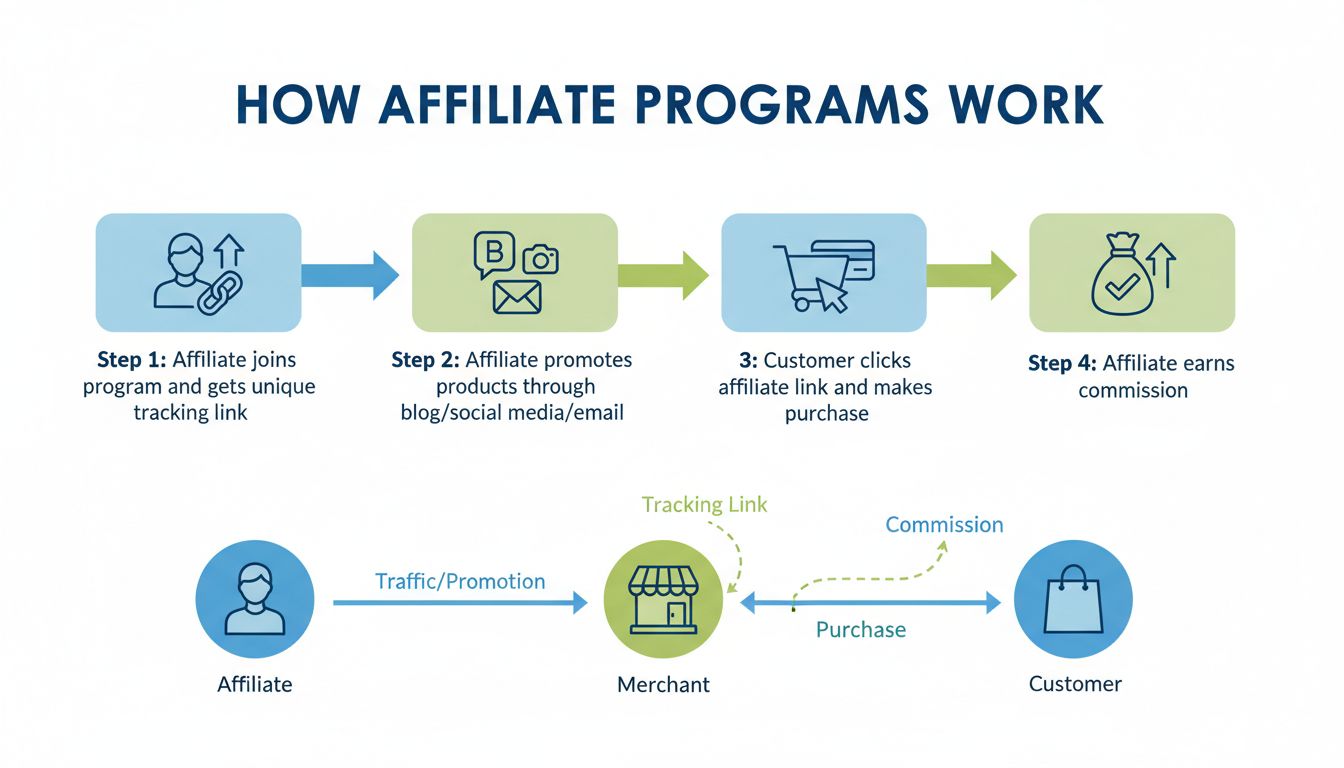
Learn what affiliate programs are, how they work, commission structures, and why they're essential for growing your business. Discover the best affiliate market...
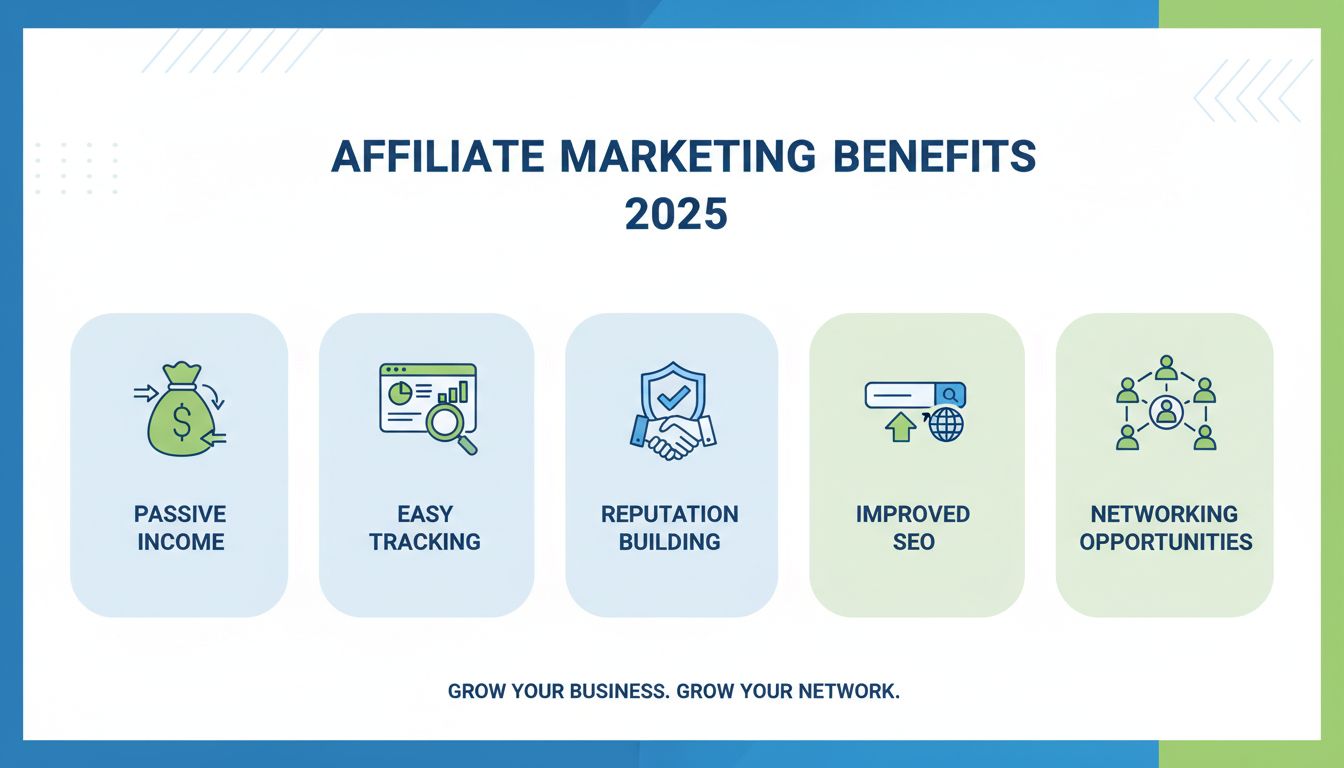
Discover the key benefits of affiliate marketing including passive income, easy tracking, reputation building, SEO improvements, and networking opportunities. L...
Join our community of happy clients and provide excellent customer support with Post Affiliate Pro.




Cookie Consent
We use cookies to enhance your browsing experience and analyze our traffic. See our privacy policy.