


What Does Run of Network Mean for Publishers?
Learn what Run of Network (RON) means for publishers, how it works, advantages, disadvantages, and how to optimize RON campaigns for maximum revenue and reach.
9 min read
Run of Network (RON) is a digital advertising buying method where an advertiser’s creative runs across every website in an ad network’s inventory pool, with no site-level targeting applied.
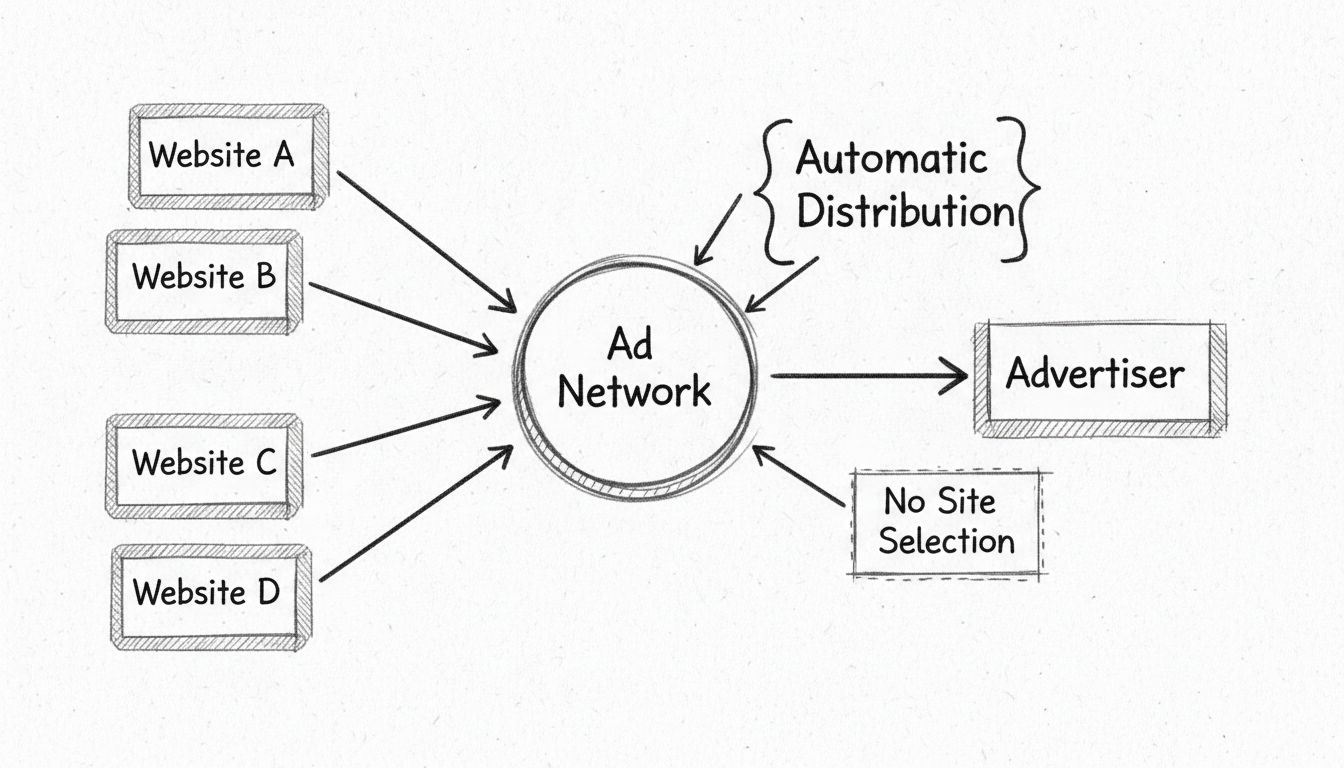
Run of Network (RON) is a digital advertising buying method where an advertiser’s creative runs across every website in an ad network’s inventory pool, with no site-level targeting applied. Instead of picking specific publishers or placements, the advertiser buys broad access and the network’s ad server decides where each impression lands — distributing ads across hundreds or thousands of sites automatically. The trade-off is straightforward: you give up placement control in exchange for scale and lower cost.
Run of Network — abbreviated as RON — is an ad placement strategy where a campaign is booked across an entire ad network rather than on specific websites, pages, or audience segments. The Interactive Advertising Bureau (IAB) defines RON as buying inventory across an ad network without specifying particular digital properties. The network’s ad server allocates impressions based on available inventory and pacing rules, and the buyer typically sees aggregate delivery reports rather than site-by-site breakdowns.
In practice, this means an advertiser running a RON campaign on a network with 500 publisher sites could see their banner appear on a news portal, a recipe blog, a sports forum, and a tech review site — all within the same campaign flight. The network, not the advertiser, controls exactly where each impression lands.
RON sits at the opposite end of the control spectrum from audience-targeted or context-targeted buys. With targeted advertising, the buyer specifies demographics, interests, keywords, or particular site lists. With RON, the buyer specifies almost nothing about placement — only the creative, the budget, and optionally broad guardrails like geography or device type.
This makes RON the simplest and fastest way to push reach. It also makes it the hardest buy to audit without supply-path transparency tools, since the advertiser may not know which specific sites served their ads until post-campaign reporting arrives.

Set up advanced tracking in minutes. No credit card required.
An ad network aggregates inventory from multiple publishers, organizes it, and resells it to advertisers. When an advertiser launches a RON campaign, they submit their ad creative to the network without specifying target sites. The network’s algorithm distributes those ads across all available inventory, filling ad slots as impressions become available.
Many ad networks operate as “blind” networks — meaning advertisers cannot see the full list of sites their ads will appear on. They may receive alphanumeric site IDs in reports and can optimize by blacklisting underperforming placements or whitelisting strong ones, but they do not browse a catalog of sites before the campaign launches.
RON spans multiple publishers. ROS stays within one publisher’s domain but runs across all its pages. A RON campaign might appear on 300 different websites; an ROS campaign might appear on every page of a single large news site.
RON is not a one-size-fits-all strategy, but it excels in specific scenarios:
Be the first to know about new features and product updates.
For publishers, RON campaigns serve a specific purpose: filling ad slots that would otherwise go empty. Every publisher has remnant inventory — impressions that premium advertisers did not buy. RON campaigns automatically populate those slots, improving fill rates and converting otherwise wasted traffic into revenue.
Google Ad Manager defaults to run-of-network targeting for line items, making RON the path of least resistance for publishers getting started with programmatic monetization. New publishers with limited traffic or niche audiences often rely on RON campaigns as their primary revenue source before they build enough audience data to attract premium buyers.
Publishers also sacrifice control. With RON line items, frequency capping and creative rotation are often unavailable, and the publisher cannot choose which ad units serve RON versus premium demand. Placing all inventory into RON is rarely optimal; most experienced publishers segment their inventory and reserve higher-value placements for targeted deals.
RON can also support affiliate recruitment by placing program-invitation creatives across networks where potential affiliates browse. Since affiliate marketers tend to read marketing blogs, business news, and tech sites, a RON campaign on a network heavy with those categories can surface the program to the right audience without paying for targeted CPMs.
Attribution becomes complex when RON display impressions contribute to an affiliate conversion path. A user might see a RON-served banner, click through, browse, leave, and later convert through an affiliate link. In these cases, the RON impression played a role but the affiliate gets the last-click credit.
Program managers should track view-through conversions where the platform supports it, and analyze assisted-conversion reports to understand RON’s contribution to the affiliate funnel. RON rarely replaces affiliate traffic directly — it works alongside it as a top-of-funnel awareness driver.
Run of Network — abbreviated as RON — is an ad placement strategy where a campaign is booked across an entire ad network rather than on specific websites, pages, or audience segments. The Interactive Advertising Bureau (IAB) defines RON as buying inventory across an ad network without specifying particular digital properties. The network’s ad server allocates impressions based on available inventory and pacing rules, and the buyer typically sees aggregate delivery reports rather than site-by-site breakdowns.
In practice, this means an advertiser running a RON campaign on a network with 500 publisher sites could see their banner appear on a news portal, a recipe blog, a sports forum, and a tech review site — all within the same campaign flight. The network, not the advertiser, controls exactly where each impression lands.
RON sits at the opposite end of the control spectrum from audience-targeted or context-targeted buys. With targeted advertising, the buyer specifies demographics, interests, keywords, or particular site lists. With RON, the buyer specifies almost nothing about placement — only the creative, the budget, and optionally broad guardrails like geography or device type.
This makes RON the simplest and fastest way to push reach. It also makes it the hardest buy to audit without supply-path transparency tools, since the advertiser may not know which specific sites served their ads until post-campaign reporting arrives.
An ad network aggregates inventory from multiple publishers, organizes it, and resells it to advertisers. When an advertiser launches a RON campaign, they submit their ad creative to the network without specifying target sites. The network’s algorithm distributes those ads across all available inventory, filling ad slots as impressions become available.
Many ad networks operate as “blind” networks — meaning advertisers cannot see the full list of sites their ads will appear on. They may receive alphanumeric site IDs in reports and can optimize by blacklisting underperforming placements or whitelisting strong ones, but they do not browse a catalog of sites before the campaign launches.
RON is often confused with ROS (Run of Site). The distinction matters:
| Buy Type | Scope | Typical CPM Range (2026) | Advertiser Control | Best Use |
|---|---|---|---|---|
| RON (Run of Network) | All sites in an ad network | — | Lowest | Brand awareness, retargeting pool building, creative testing |
| ROS (Run of Site) | All pages on a single website | — | Medium | Contextual fit with a known publisher |
| Targeted Buy | Specific sites, audiences, or contexts | — | Highest | Performance campaigns, premium brand placements |
RON spans multiple publishers. ROS stays within one publisher’s domain but runs across all its pages. A RON campaign might appear on 300 different websites; an ROS campaign might appear on every page of a single large news site.
RON is not a one-size-fits-all strategy, but it excels in specific scenarios:
RON’s low cost comes with real trade-offs. Advertisers should understand these before committing budget:
For publishers, RON campaigns serve a specific purpose: filling ad slots that would otherwise go empty. Every publisher has remnant inventory — impressions that premium advertisers did not buy. RON campaigns automatically populate those slots, improving fill rates and converting otherwise wasted traffic into revenue.
Google Ad Manager defaults to run-of-network targeting for line items, making RON the path of least resistance for publishers getting started with programmatic monetization. New publishers with limited traffic or niche audiences often rely on RON campaigns as their primary revenue source before they build enough audience data to attract premium buyers.
RON inventory sells at the lowest CPM tier, so publishers earn less per impression than they would from targeted campaigns.
Publishers also sacrifice control. With RON line items, frequency capping and creative rotation are often unavailable, and the publisher cannot choose which ad units serve RON versus premium demand. Placing all inventory into RON is rarely optimal; most experienced publishers segment their inventory and reserve higher-value placements for targeted deals.
Affiliate program managers can use RON campaigns to drive broad traffic to merchant landing pages, particularly for brand-awareness objectives.
RON can also support affiliate recruitment by placing program-invitation creatives across networks where potential affiliates browse. Since affiliate marketers tend to read marketing blogs, business news, and tech sites, a RON campaign on a network heavy with those categories can surface the program to the right audience without paying for targeted CPMs.
Attribution becomes complex when RON display impressions contribute to an affiliate conversion path. A user might see a RON-served banner, click through, browse, leave, and later convert through an affiliate link. In these cases, the RON impression played a role but the affiliate gets the last-click credit.
Program managers should track view-through conversions where the platform supports it, and analyze assisted-conversion reports to understand RON’s contribution to the affiliate funnel. RON rarely replaces affiliate traffic directly — it works alongside it as a top-of-funnel awareness driver.
Modern RON campaigns are not entirely un-targeted. Most networks allow advertisers to layer broad constraints without leaving the RON pricing tier:
These layers reduce waste without the CPM premium of full audience targeting.
The metrics that matter for RON differ from those for performance campaigns:
| Metric | Why It Matters for RON |
|---|---|
| Impressions | Core reach metric; RON is an impressions-first strategy |
| CPC | Useful for comparing efficiency across networks |
| View-through conversions | Captures RON’s contribution to the broader funnel |
Direct ROAS is rarely the right success metric for RON. If an advertiser needs a 2:1 ROAS on every dollar spent, RON is the wrong tool. If the goal is putting a brand in front of millions of people at the lowest possible cost, RON is purpose-built for that job.
Leverage Run Of Network campaigns to maximize your brand’s reach and drive traffic efficiently. Discover how Post Affiliate Pro can help you manage and optimize RON strategies.
Learn what Run of Network (RON) means for publishers, how it works, advantages, disadvantages, and how to optimize RON campaigns for maximum revenue and reach.

Explore the complete advantages and disadvantages of Run of Network advertising in 2025. Learn when to use RON campaigns, how they compare to ROS, and best prac...
Understand the critical differences between direct buy and ad networks in affiliate marketing. Learn which approach offers better control, cost efficiency, and ...
Join our community of happy clients and provide excellent customer support with Post Affiliate Pro.




Cookie Consent
We use cookies to enhance your browsing experience and analyze our traffic. See our privacy policy.