


How Do Influencer Partnerships Work in Affiliate Marketing?
Learn how influencer partnerships drive affiliate marketing success through unique referral links, commission structures, and performance-based compensation mod...
13 min read
At its simplest, an influencer partnership is a structured marketing arrangement between a brand and an individual with a dedicated social media following.
On this page
At its simplest, an influencer partnership is a structured marketing arrangement between a brand and an individual with a dedicated social media following. The influencer creates and shares content — a TikTok video, an Instagram story, a YouTube review, or a blog post — that features the brand. The brand compensates the influencer through payment, free products, affiliate commissions, or a combination of all three.
This arrangement differs from traditional celebrity endorsement in two key ways. First, it relies on the influencer’s perceived authenticity and niche expertise rather than broad fame. Second, it is often performance-tracked: brands measure clicks, conversions, and revenue, not just impressions.
A typical influencer partnership follows five stages:
These terms are closely related but not interchangeable. Influencer marketing is the broader strategy — the practice of using influencer endorsements as a marketing channel. An influencer partnership is the specific, contractual relationship between one brand and one creator. Think of influencer marketing as the discipline and an influencer partnership as the execution unit.
At its simplest, an influencer partnership is a structured marketing arrangement between a brand and an individual with a dedicated social media following. The influencer creates and shares content — a TikTok video, an Instagram story, a YouTube review, or a blog post — that features the brand. The brand compensates the influencer through payment, free products, affiliate commissions, or a combination of all three.
This arrangement differs from traditional celebrity endorsement in two key ways. First, it relies on the influencer’s perceived authenticity and niche expertise rather than broad fame. Second, it is often performance-tracked: brands measure clicks, conversions, and revenue, not just impressions.
A typical influencer partnership follows five stages:
These terms are closely related but not interchangeable. Influencer marketing is the broader strategy — the practice of using influencer endorsements as a marketing channel. An influencer partnership is the specific, contractual relationship between one brand and one creator. Think of influencer marketing as the discipline and an influencer partnership as the execution unit.

Set up advanced tracking in minutes. No credit card required.
Not all influencer partnerships look the same. The right model depends on campaign goals, budget, and the depth of relationship desired.
| Type | Description | Best For | Typical Compensation |
|---|---|---|---|
| Sponsored Posts | A one-off paid post featuring the brand’s product | Product launches, brand awareness | Flat fee |
| Affiliate Partnerships | Creator earns commission on sales via unique link or code | Performance-driven campaigns, e-commerce | Commission per sale |
| Brand Ambassador Programs | Long-term relationship with recurring promotion | Building sustained brand association | Monthly retainer + perks |
| Product Gifting & Reviews | Brand sends free product; creator posts an honest review | Generating authentic testimonials | Free product |
| Collaborative Product Development | Creator co-designs a product line or limited edition | Deep audience engagement, exclusivity | Revenue share or flat fee |
| Giveaways & Contests | Creator hosts a giveaway of the brand’s product | Rapid follower growth, engagement spikes | Product cost + fee |
The most common format. The brand pays a flat fee for a specified number of posts, stories, or videos. The influencer retains creative control within agreed guidelines.
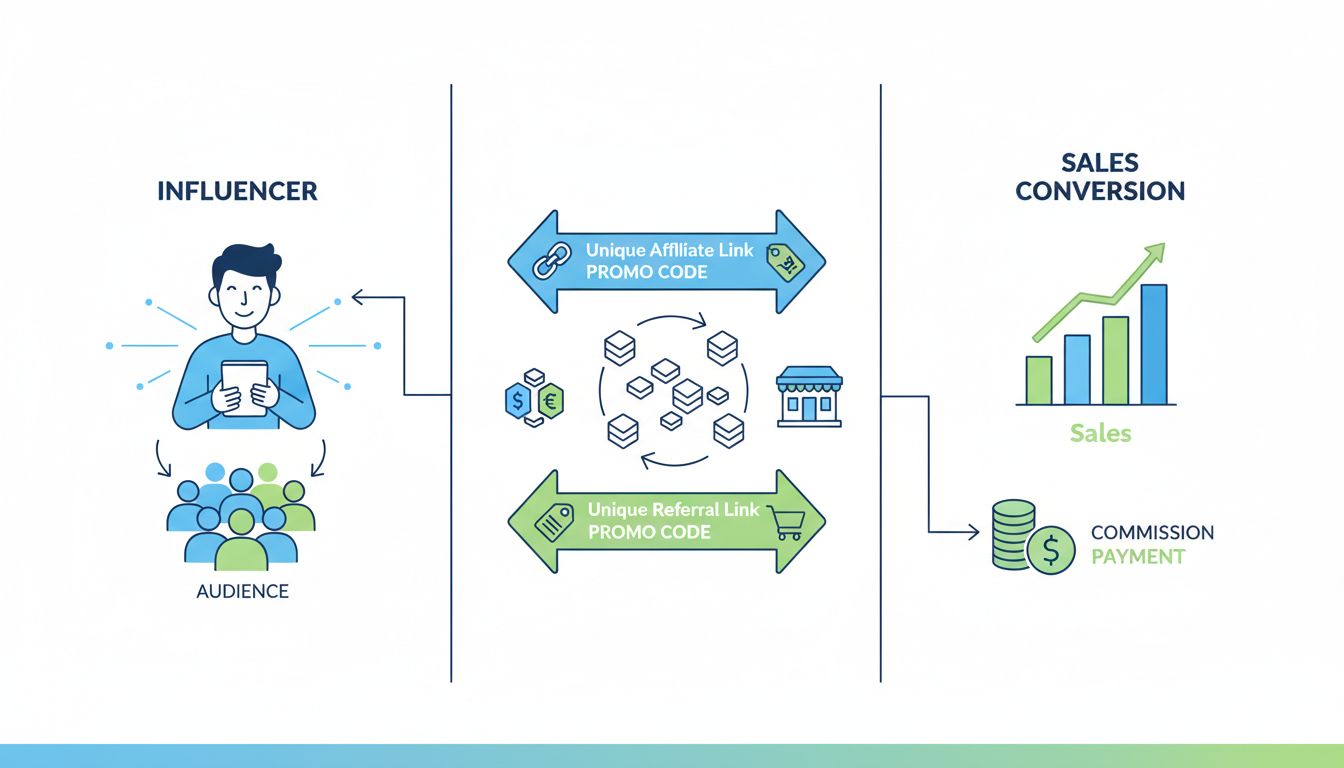
Here, the influencer shares a unique tracking link or discount code. This model shifts risk to performance: the brand pays only for results. Affiliate software platforms track clicks, conversions, and commissions, making this the most measurable partnership type.
For affiliate program managers, this is where influencer partnerships intersect directly with affiliate marketing operations. The creator functions as a publisher in the affiliate network, and all standard tracking — cookies, attribution windows, commission tiers — applies.
Unlike one-off posts, ambassador relationships run for months or years. The creator becomes publicly associated with the brand, posting regularly and often appearing in the brand’s own channels. Compensation typically includes a monthly retainer, free products, and sometimes performance bonuses. This model builds cumulative trust: repeated exposure through a trusted voice deepens audience conviction over time.
The brand sends free products with no guaranteed post in return — though most campaigns include an expectation of coverage. These partnerships feel more organic because the creator is not obligated to praise the product. The trade-off for the brand is less control. The benefit is higher perceived authenticity.
The deepest partnership model. The influencer co-creates a product — a makeup shade, a clothing capsule, a snack flavor — and promotes it to their audience. Because the creator’s name is literally on the product, authenticity and audience buy-in are maximized. Compensation is usually a revenue share or a substantial flat fee plus royalties.
Short, high-impact campaigns where the influencer hosts a giveaway. Followers enter by engaging with the post, following the brand, or tagging friends. These campaigns spike engagement and follower counts quickly but tend to attract lower-intent audiences. They work best paired with a retargeting strategy.
Follower count is a starting point, not the whole story. Engagement rate, niche relevance, and audience demographics matter more than raw reach.
| Tier | Follower Range | Avg. Cost Per Post (2026) | Best Use Case |
|---|---|---|---|
| Nano-influencer | 1K–10K | — | High-engagement niche communities, authentic testimonials |
| Micro-influencer | 10K–50K | — | Targeted reach, strong trust, good ROI |
| Mid-tier influencer | 50K–500K | — | Scaling brand awareness, broader niche reach |
| Macro-influencer | 500K–1M | — | Mass awareness, major product launches |
| Mega-influencer / Celebrity | 1M+ | — | Brand prestige, global campaigns |
Smaller creators often deliver higher engagement rates and more cost-efficient conversions.
Be the first to know about new features and product updates.
Influencer compensation varies by follower count, platform, content format, industry, and partnership type.
Affiliate-based partnerships can exceed this when commission structures are optimized and the creator’s audience has strong purchase intent.
The brand or its agency pays directly in most cases. In affiliate partnerships, payment flows through the affiliate platform — the brand funds the program, the software tracks conversions, and the creator receives commission payouts. Some marketplaces, such as impact.com, facilitate payment processing between brands and creators. Creators should confirm payment terms, frequency, and method before content goes live.
Each creator receives a unique URL or promo code. When a follower clicks or purchases, the affiliate platform records the event and attributes it to that creator. This is the most precise method for sales-focused campaigns. Affiliate software automates click tracking, commission calculation, and payout management.
UTM-tagged URLs feed into Google Analytics or similar tools, showing traffic, session duration, and conversion data by campaign and creator. UTMs work well for brand-awareness campaigns where the goal is site visits rather than immediate purchases.
Likes, comments, shares, saves, and video completion rates measure content resonance. These metrics do not directly equal revenue, but they indicate audience quality and creative effectiveness. Low engagement on a high-reach post often signals a mismatch between creator and audience.
In the United States, the Federal Trade Commission requires influencers to disclose any material connection with a brand. A material connection includes payment, free products, discounts, employment, or family relationships.
Disclose whenever money, free products, or anything of value changes hands — even if the brand did not specifically request a post. If a brand sends a free product and the creator later mentions it organically, disclosure is still required.
For brands, requiring and verifying disclosures protects both parties and preserves audience trust — the very asset that makes influencer partnerships valuable in the first place.
Understanding the limitations helps brands set realistic expectations and mitigate downsides.
Some accounts inflate follower counts with bots or purchase engagement. Partnering with a fraudulent account wastes budget and produces no real reach. Vetting tools and manual audits — checking comment quality, follower-to-engagement ratios, and audience demographics — reduce this risk.
A creator whose values, tone, or audience clashes with the brand can damage credibility on both sides. The most visible failures occur when an influencer’s past content or personal conduct contradicts the brand’s positioning. Thorough vetting, including reviewing past posts and audience sentiment, is essential.
Unlike search advertising, where cost-per-click is predictable, influencer campaign results vary significantly. A post that performs well for one brand may flop for another. Starting with smaller test campaigns, using affiliate tracking, and measuring incrementality (not just last-click attribution) improves reliability.
Failing to disclose material connections exposes both the brand and the creator to regulatory action. Brands should include disclosure requirements in contracts and spot-check creator posts for compliance.
Brands that over-script influencer content undermine the authenticity that makes the channel work. Creators who ignore brand guidelines risk off-message content. Clear briefs that specify must-mention points while leaving room for the creator’s voice strike the right balance.
Start with a clear objective. Common goals include:
The goal determines which influencer tier, partnership type, and tracking method to use.
Search within your niche on Instagram, TikTok, YouTube, and LinkedIn. Evaluate candidates on:
Influencer marketplaces and affiliate platforms can streamline discovery by providing searchable databases with verified performance data.
Agree on deliverables, timeline, compensation, usage rights, exclusivity, and disclosure obligations. Put everything in a written agreement. For affiliate partnerships, specify the commission rate, cookie window, and whether the creator receives a flat fee in addition to commissions.
Provide the creator with assets, talking points, and tracking links. Resist micromanaging the content. Once the campaign is live, monitor performance in real time. For affiliate-tracked partnerships, watch for click spikes, conversion patterns, and any tracking anomalies. Collect post-campaign data to inform future partner selection and budget allocation.
Unlock the full potential of influencer partnerships with Post Affiliate Pro. Streamline your affiliate marketing, track performance, and maximize ROI.
Learn how influencer partnerships drive affiliate marketing success through unique referral links, commission structures, and performance-based compensation mod...
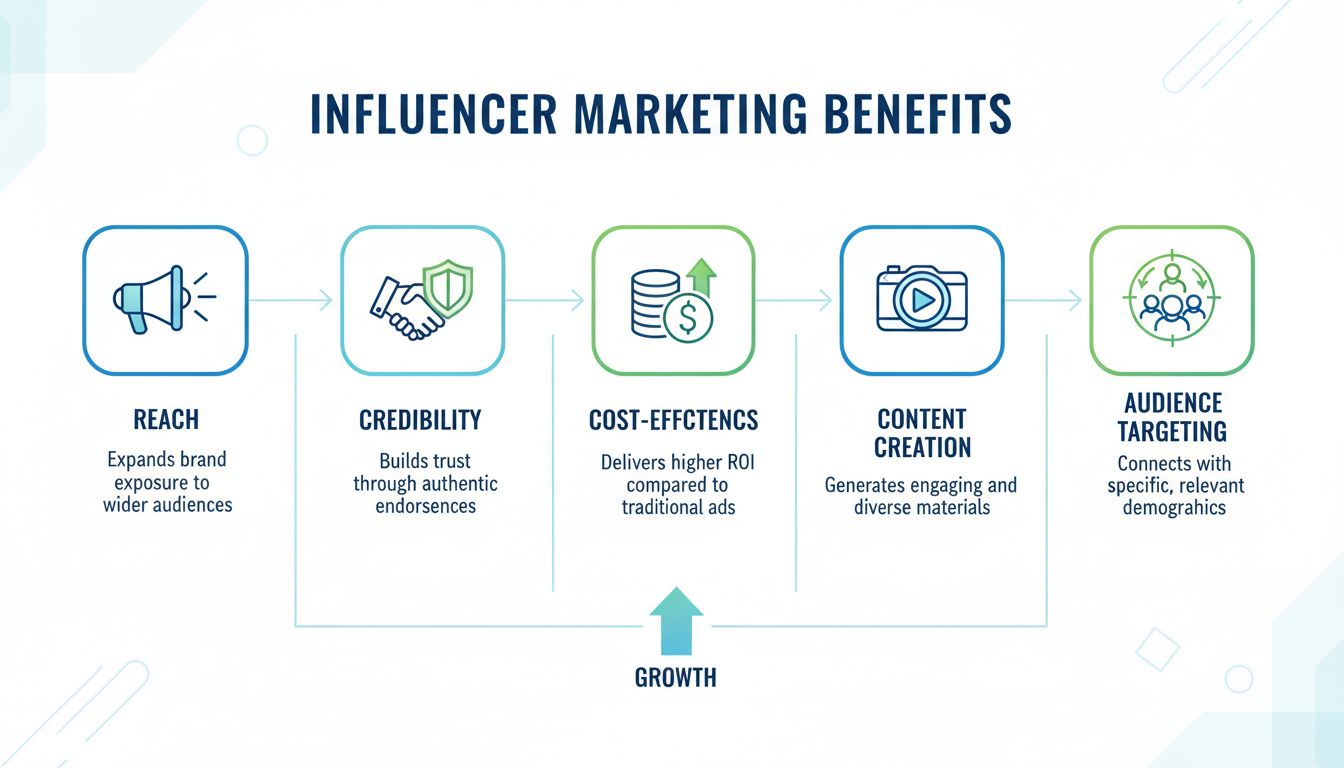
Discover the key benefits of influencer partnerships including expanded reach, enhanced credibility, cost-effective marketing, engaging content creation, and ta...
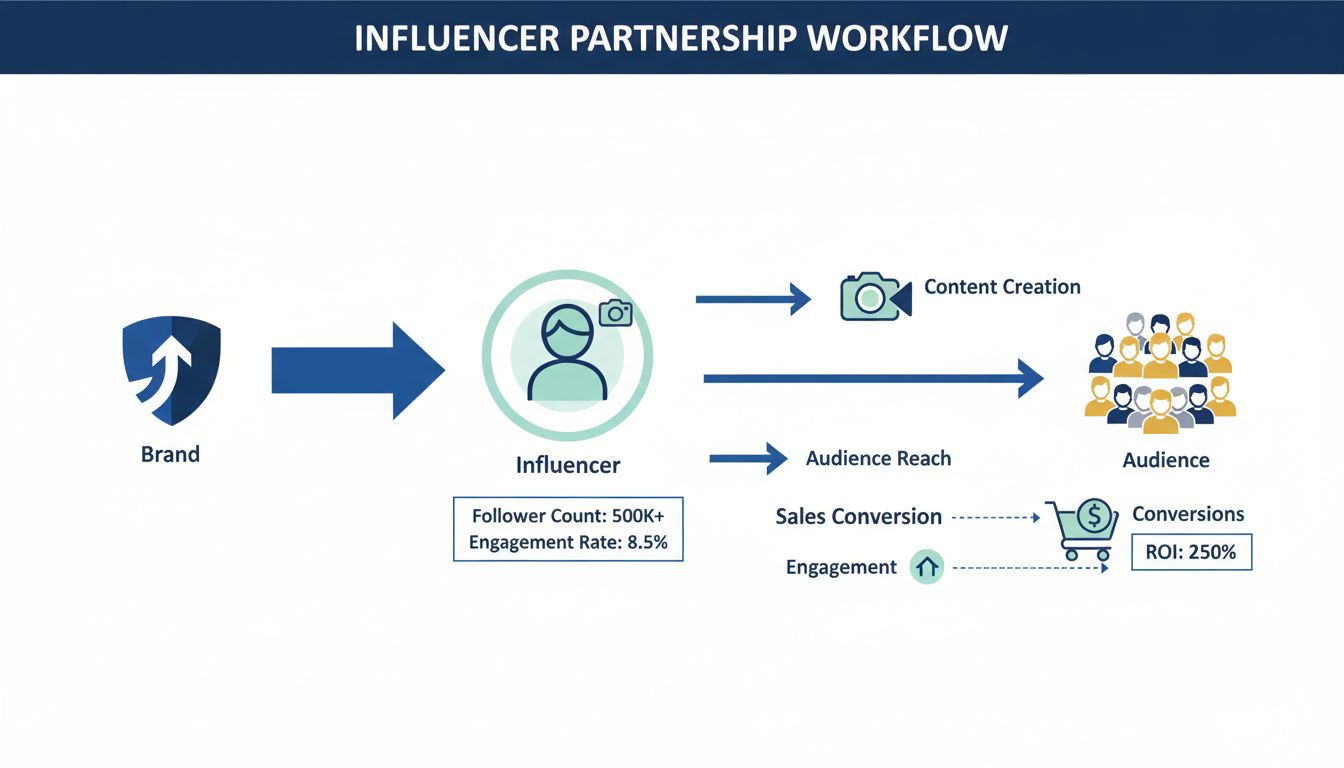
Learn what influencer partnerships are, how they work, and why they're essential for brand growth. Discover strategies, ROI metrics, and best practices for succ...
Join our community of happy clients and provide excellent customer support with Post Affiliate Pro.




Cookie Consent
We use cookies to enhance your browsing experience and analyze our traffic. See our privacy policy.