



What Is Affiliate Fraud?
about affiliate fraud types including cookie stuffing, bot traffic, and typosquatting. detection methods and prevention strategies to protect your affiliate
8 min read
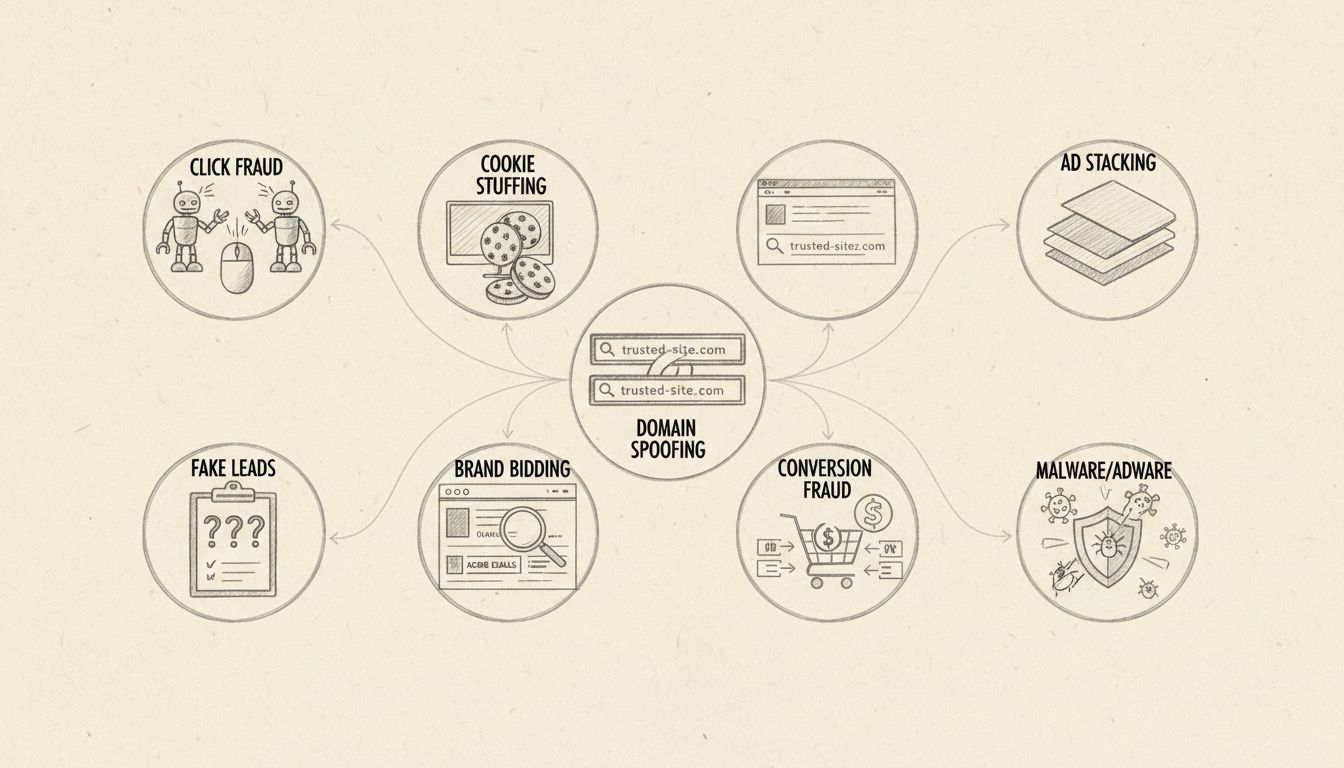
Affiliate fraud is intentional manipulation of referrals, conversions, or program rules to obtain unearned commissions or other benefits. It can involve fake traffic, invalid leads, self-referrals prohibited by the program, or theft of attribution for genuine sales. Unusual performance alone is not proof of fraud.
Affiliate fraud is intentional manipulation of referrals, conversions, or program rules to obtain unearned commissions or other benefits. It can involve fake traffic, invalid leads, self-referrals prohibited by the program, or theft of attribution for genuine sales. Unusual performance alone is not proof of fraud.
| Area | Examples of invalid activity |
|---|---|
| Traffic | Fabricated clicks or unauthorized referral loads |
| Leads | Invented, duplicate, or deliberately unqualified submissions |
| Orders | Transactions made to exploit rewards and later canceled |
| Attribution | Unauthorized replacement of another partner’s referral credit |

Set up advanced tracking in minutes. No credit card required.
Repeated conversions can come from a retry or a confirmation-page refresh rather than deliberate abuse. Missing clicks can reflect an integration problem. Investigate event identity, delivery logs, and the underlying transaction before assigning intent.
For a hypothetical $100 sale with a 10% commission, an invalid $10 reward is a direct commission cost. It can also distort partner performance and budget decisions. Do not add speculative lost revenue or global fraud estimates without evidence.
Be the first to know about new features and product updates.
Screen promotional methods, apply consistent terms, and validate eligible events. Restrict sensitive offers where appropriate and maintain a review route for false positives. Automatically rejecting all activity from a shared network can harm legitimate households or workplaces. Fraud protection is a combination of rules, evidence, and operational review, not a guarantee supplied by one setting.
Define prohibited behavior in the program terms and review applications before providing access to sensitive offers. Validate orders and leads against the underlying business system, use stable event IDs, and hold uncertain commissions for review rather than treating every tracked event as payable.
Monitor traffic source, click-to-conversion timing, refunds, duplicate identities, and abrupt changes in performance. Compare like-for-like channels: a trusted email recommendation can legitimately convert differently from cold paid traffic. Shared IP addresses and high conversion rates are investigation signals, not verdicts.
Preserve the relevant records, ask the partner for context, and document any decision with a reason code. Separate invalid-referral corrections from broader account sanctions. Feed confirmed cases back into screening and tracking controls while checking false positives so legitimate partners retain trust in the program.
For the corresponding Post Affiliate Pro settings, consult the fraud protection documentation . Confirm the configuration and integration requirements against your program’s rules.
Explore Post Affiliate Pro’s tracking, commission settings, and partner management tools.
about affiliate fraud types including cookie stuffing, bot traffic, and typosquatting. detection methods and prevention strategies to protect your affiliate
Learn what affiliate fraud is, how it works, and proven strategies to detect and prevent it. Protect your affiliate program with advanced fraud detection techni...
Learn what commission hijacking means, how it works, and which calculation, tracking, or program rules affect affiliate results.
Join our community of happy clients and provide excellent customer support with Post Affiliate Pro.




Cookie Consent
We use cookies to enhance your browsing experience and analyze our traffic. See our privacy policy.