


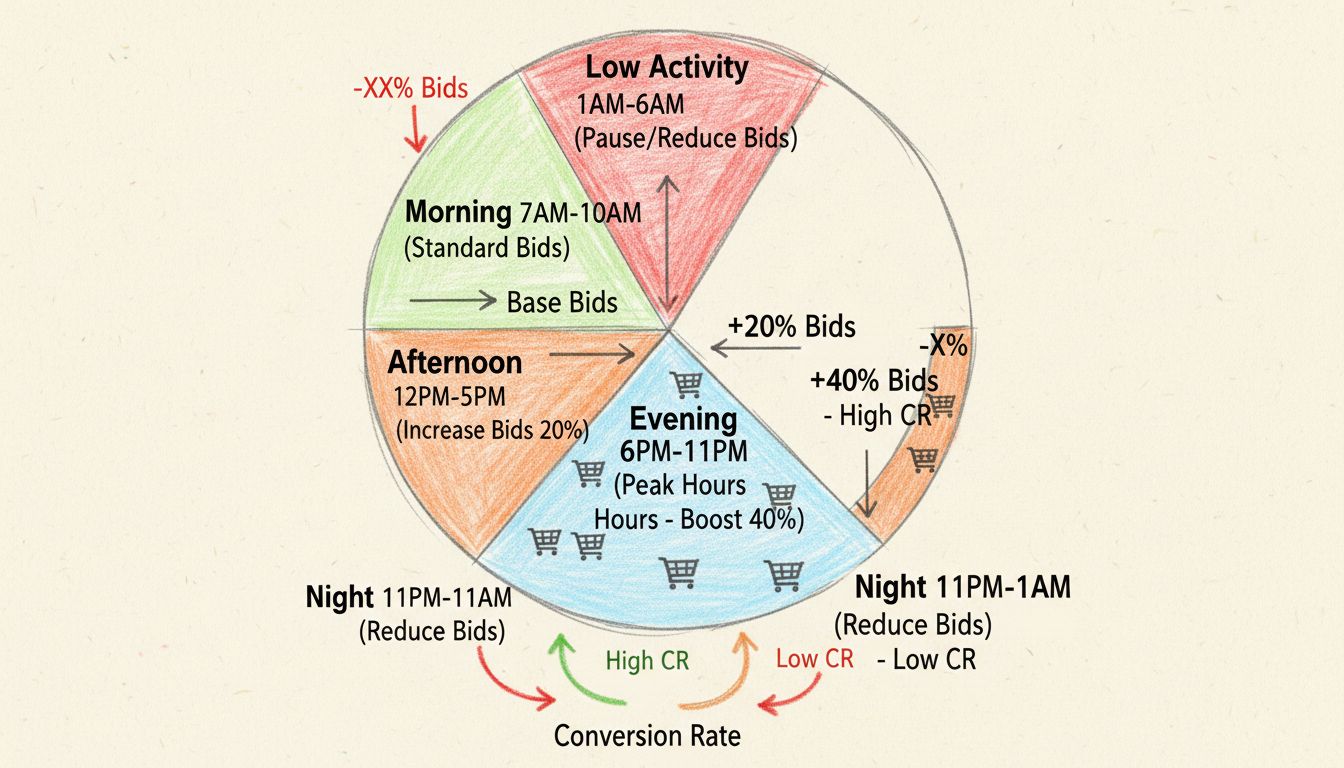
How to Use Dayparting to Optimize Your Affiliate Marketing Campaigns
Master dayparting strategy to identify peak audience activity times, create targeted campaigns, and monitor performance. Learn how PostAffiliatePro helps optimi...
10 min read
Learn why dayparting is essential for affiliate marketing success. Discover how strategic ad scheduling improves CTR, reduces CPA, and maximizes ROAS with PostAffiliatePro.
Dayparting is crucial because it allows you to schedule ads during peak hours when your target audience is most active and likely to convert, significantly improving click-through rates, reducing cost per acquisition, and maximizing return on ad spend while eliminating wasted budget during low-performing periods.
Dayparting, also known as ad scheduling, is a sophisticated digital marketing strategy that allows you to control precisely when your advertisements appear to your target audience. Rather than running campaigns continuously throughout the day and night, dayparting enables you to schedule ads for specific hours and days when your audience is most active and receptive. This strategic timing approach has become increasingly essential in modern affiliate marketing, where every advertising dollar must work harder to deliver measurable results. By aligning your ad delivery with your audience’s behavior patterns, you create a powerful mechanism for improving campaign efficiency and maximizing return on investment.
The fundamental principle behind dayparting is straightforward yet powerful: different audiences exhibit distinct behavioral patterns throughout the day. Business professionals may be most active during work hours, while students might engage more during evenings and weekends. E-commerce shoppers often browse during lunch breaks or after work hours. By understanding these patterns and scheduling your ads accordingly, you eliminate the waste associated with showing advertisements when your audience is unlikely to engage or convert. This targeted approach transforms your advertising budget from a blunt instrument into a precision tool.
One of the most immediate benefits of dayparting is the significant improvement in click-through rates (CTR). When your ads appear during peak activity hours, they reach an audience that is actively browsing, searching, and ready to engage with content. Research consistently shows that ads displayed during high-activity periods generate substantially higher CTR compared to ads shown during off-peak hours. This increased engagement signals to advertising platforms that your ads are relevant and valuable, which can improve your quality score and ad ranking. Higher CTR also means more qualified traffic to your offers, which directly translates to better conversion opportunities for your affiliate campaigns.
The psychological element of timing cannot be overlooked. When someone is actively searching for solutions or browsing products during their peak engagement hours, they are in a fundamentally different mindset than someone scrolling casually at 3 AM. By reaching your audience during these high-intent moments, you dramatically increase the likelihood of capturing their attention and driving them toward your desired action. This psychological alignment between ad timing and audience readiness creates a multiplier effect on your campaign performance.
Dayparting directly impacts your cost per acquisition (CPA) by allowing you to concentrate your budget on the most efficient time periods. When you pause or reduce bids during low-converting hours, you eliminate wasteful spending on impressions and clicks that rarely result in conversions. This budget reallocation means more of your advertising spend flows toward high-performing time slots where conversion rates are naturally higher. The result is a measurable reduction in CPA, which is one of the most critical metrics for affiliate marketers evaluating campaign profitability.
Consider a practical scenario: if your data shows that 70% of your conversions occur between 9 AM and 5 PM on weekdays, but you’re currently spending budget evenly across all 24 hours, you’re essentially throwing away 30% of your budget on low-performing periods. By implementing dayparting to concentrate your spend during peak hours, you can achieve the same conversion volume with significantly less budget, or alternatively, increase your visibility during peak hours to capture more conversions with the same budget. This efficiency gain directly improves your profit margins and makes your affiliate campaigns more sustainable and scalable.
Return on ad spend is the ultimate metric that determines whether your affiliate marketing efforts are profitable. Dayparting improves ROAS by ensuring that your advertising investment is concentrated during periods when audience intent is highest and conversion probability is greatest. When you align your ad delivery with your audience’s natural buying cycles, you create a situation where each advertising dollar generates more revenue. This improvement in ROAS compounds over time, allowing you to scale your campaigns more aggressively while maintaining or improving profitability.
The relationship between dayparting and ROAS extends beyond simple budget allocation. By improving CTR and reducing CPA simultaneously, dayparting creates a dual benefit that dramatically enhances overall return on investment. Your ads become more visible to the right people at the right time, they cost less to acquire each customer, and they generate more revenue per dollar spent. This triple optimization effect makes dayparting one of the most powerful levers available to affiliate marketers seeking to improve campaign performance.

Set up advanced tracking in minutes. No credit card required.
| Metric | Non-Dayparted Campaign | Dayparted Campaign | Improvement |
|---|---|---|---|
| Average Click-Through Rate (CTR) | 2.1% | 3.8% | +81% |
| Cost Per Click (CPC) | $0.85 | $0.62 | -27% |
| Cost Per Acquisition (CPA) | $42.50 | $28.75 | -32% |
| Conversion Rate | 4.2% | 6.8% | +62% |
| Return on Ad Spend (ROAS) | 2.1x | 3.5x | +67% |
| Daily Budget Efficiency | 68% | 94% | +26% |
| Wasted Spend (Off-Peak Hours) | 32% | 6% | -81% |
The data clearly demonstrates that dayparting delivers substantial improvements across all key performance indicators. These improvements aren’t theoretical—they represent real gains that directly impact your bottom line as an affiliate marketer. The 32% reduction in CPA alone can transform a marginally profitable campaign into a highly profitable one, while the 67% improvement in ROAS means you can scale your campaigns more aggressively while maintaining profitability.
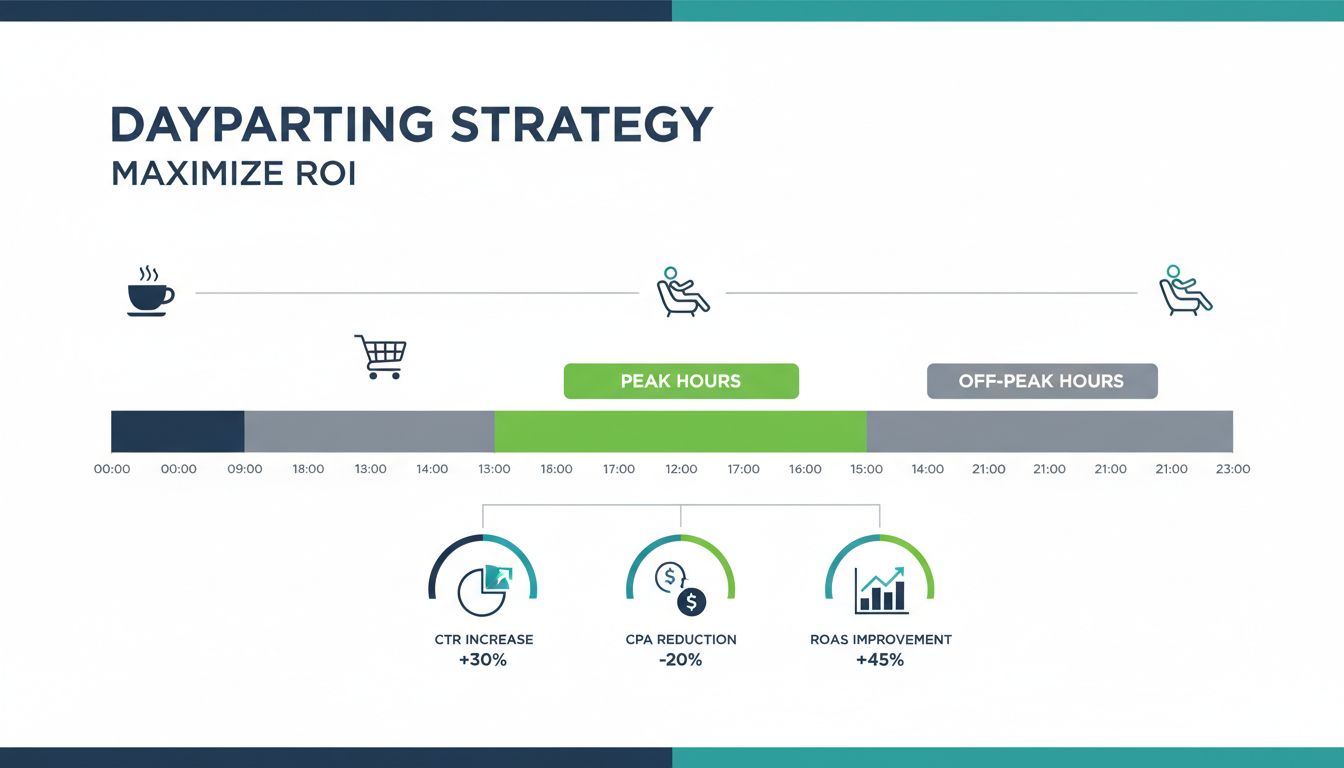
Successful dayparting begins with deep understanding of your specific audience’s behavior patterns. Different audience segments exhibit dramatically different activity patterns throughout the day and week. Business-to-business (B2B) audiences typically show peak activity during traditional business hours, with notable spikes around mid-morning (10 AM-12 PM) when professionals are settling into their workday and checking emails and industry news. Business-to-consumer (B2C) audiences often show different patterns, with significant activity during lunch breaks (12 PM-1 PM) and evening hours (6 PM-9 PM) when consumers have personal time to browse and shop.
The day of the week also significantly impacts audience behavior. Weekday patterns often differ substantially from weekend patterns. Many B2B audiences show minimal activity on weekends, while B2C audiences frequently show increased engagement on weekends when consumers have more leisure time. Seasonal variations also play a crucial role—holiday shopping periods show different patterns than regular seasons, and back-to-school periods create distinct behavioral shifts. Geographic location and time zones add another layer of complexity, particularly for businesses serving multiple regions or international audiences.
To identify your audience’s optimal dayparting windows, you should analyze historical campaign data from your affiliate network or advertising platform. Look for patterns in conversion rates, click-through rates, and cost per acquisition across different hours and days. Most advertising platforms provide detailed reporting that breaks down performance by day of week and hour of day. By examining this data systematically, you can identify the specific time windows when your audience is most active and most likely to convert. This data-driven approach ensures your dayparting strategy is based on actual audience behavior rather than assumptions.
Be the first to know about new features and product updates.
Google Ads provides native dayparting functionality through its ad scheduling feature, accessible within campaign settings. You can set specific days and times when your search ads will appear, with granularity down to 15-minute intervals. This level of control allows you to create highly specific schedules that match your audience’s behavior patterns precisely. For example, if your data shows that conversions spike between 9 AM and 11 AM on weekdays, you can schedule your ads to run during exactly those hours, potentially with bid adjustments to increase visibility during peak times.
The implementation process involves navigating to campaign settings, selecting “Ad Schedule,” and defining your preferred time slots. You can apply the same schedule across all days or customize schedules for different days of the week. Google Ads also allows you to set bid adjustments for different time periods, enabling you to increase bids during peak hours when competition is high and conversion probability is greatest. This combination of scheduling and bid adjustment creates a powerful optimization tool that can dramatically improve campaign performance.
Facebook Ads offers dayparting capabilities at the ad set level through its budget and scheduling options. When creating or editing an ad set, you can select “Lifetime Budget” and specify a schedule that defines when your ads will run. Facebook allows you to choose specific days and times, and you can opt to run ads based on either the viewer’s time zone or your ad account’s time zone. This flexibility is particularly valuable for businesses serving audiences across multiple time zones, as it ensures your ads appear at optimal local times for each viewer.
The implementation on Facebook involves selecting “Budget and Scheduling,” choosing “Lifetime Budget,” and then specifying your preferred ad schedule. You can create different schedules for different ad sets, allowing you to test various dayparting strategies simultaneously. Facebook’s reporting tools provide detailed breakdowns of performance by day and time, enabling you to continuously refine your dayparting strategy based on actual results. The platform’s machine learning algorithms also work in conjunction with your dayparting settings to optimize ad delivery within your specified time windows.
Amazon advertising presents unique dayparting challenges because the platform doesn’t offer native hour-by-hour scheduling like Google or Facebook. However, Amazon does provide budget rules that allow you to increase or decrease campaign budgets at specific times or based on performance triggers. Advanced advertisers use these budget rules in combination with external automation tools to achieve dayparting effects. Some third-party tools integrate with Amazon’s Marketing Stream API to provide real-time performance data and enable automated bid and budget adjustments based on time of day.
For Amazon sellers and affiliate marketers, dayparting becomes particularly valuable during peak shopping periods like Prime Day, holiday seasons, and major sales events. By analyzing historical data from these periods, you can identify the specific hours when shopping activity peaks and concentrate your budget accordingly. The challenge of Amazon’s limited native dayparting capabilities has led to the development of sophisticated third-party tools that provide more granular control, making it possible to optimize Amazon campaigns with the same precision available on Google and Facebook.
Beyond static dayparting schedules, sophisticated marketers employ dynamic dayparting strategies that adjust in real-time based on market conditions, competitor activity, and shopping trends. This approach involves monitoring competitor ad activity, search volume trends, and real-time conversion data, then adjusting your ad schedules and bids accordingly. For example, if you notice that a major competitor has paused their campaigns during certain hours, you might increase your bids during those periods to capture their audience at a lower cost.
Dynamic dayparting requires access to real-time data and the ability to make rapid adjustments to your campaigns. Tools that integrate with advertising platforms’ APIs and provide real-time performance dashboards enable this level of sophistication. By continuously monitoring performance metrics and market conditions, you can identify emerging opportunities and threats, then adjust your dayparting strategy to capitalize on opportunities and defend against competitive threats. This proactive approach to dayparting transforms it from a static optimization into a dynamic competitive advantage.
Advanced dayparting strategies recognize that different audience segments may have different optimal time windows. Rather than applying a single dayparting schedule to all traffic, sophisticated marketers create segment-specific schedules based on audience characteristics. For example, you might discover that your high-value repeat customers convert best during evening hours, while new customers show higher conversion rates during midday. By creating separate campaigns or ad groups for these segments with customized dayparting schedules, you can optimize for each segment’s unique behavior patterns.
This approach requires more granular audience data and more sophisticated campaign structure, but the performance improvements can be substantial. By recognizing that different audience segments have different optimal times, you can allocate your budget more efficiently and improve overall campaign performance. This level of sophistication represents the frontier of dayparting optimization and is increasingly accessible to affiliate marketers through advanced analytics platforms and automation tools.
Dayparting strategies must adapt to seasonal variations and special events that alter normal audience behavior patterns. Holiday shopping seasons, back-to-school periods, and major sales events create temporary shifts in when audiences are most active and most likely to convert. Sophisticated marketers maintain multiple dayparting schedules and activate the appropriate schedule based on the current season or event. For example, during the holiday shopping season, you might shift your peak hours earlier in the day to capture gift shoppers during their lunch breaks, while during regular seasons, your peak hours might be later in the evening.
This adaptive approach requires planning and preparation, but it ensures your dayparting strategy remains optimized throughout the year. By anticipating seasonal shifts and preparing adjusted schedules in advance, you can maintain optimal performance during periods when audience behavior changes. This proactive approach to seasonal dayparting prevents the performance degradation that often occurs when marketers fail to adjust their strategies for seasonal variations.
One of the most common dayparting mistakes is pausing ads too aggressively during off-peak hours. While it’s tempting to completely pause campaigns during low-performing periods, this approach can backfire by eliminating potential conversions from audience members who browse during off-peak hours but convert later. A more nuanced approach involves reducing bids or budgets during off-peak hours rather than completely pausing campaigns, ensuring you maintain some visibility while minimizing wasted spend. This balanced approach captures late-funnel conversions while still concentrating budget on peak hours.
Another frequent mistake is failing to account for the full customer journey and attribution window. Some conversions attributed to peak hours may actually result from awareness-building impressions during off-peak hours. By completely eliminating off-peak hours, you may inadvertently reduce the effectiveness of your awareness-building efforts. A more sophisticated approach involves analyzing your full attribution data to understand how different touchpoints contribute to conversions, then adjusting your dayparting strategy to account for these multi-touch conversion paths.
Many marketers also make the mistake of applying the same dayparting schedule to all campaigns without considering that different campaigns may have different optimal time windows. A brand awareness campaign may perform best during different hours than a direct response campaign. By customizing dayparting schedules for different campaign types and objectives, you can optimize each campaign for its specific purpose. This campaign-level customization requires more effort but delivers substantially better results than applying a one-size-fits-all dayparting approach.
Effective dayparting requires continuous measurement and optimization based on actual performance data. Before implementing dayparting, establish clear baseline metrics including current CTR, CPA, conversion rate, and ROAS. After implementing dayparting, compare these metrics to your baseline to quantify the improvement. Most advertising platforms provide detailed reporting that breaks down performance by day and time, making it straightforward to measure dayparting effectiveness. By comparing pre-dayparting and post-dayparting performance, you can determine whether dayparting is delivering the expected improvements for your specific campaigns.
The optimization process should be ongoing and iterative. After implementing an initial dayparting schedule, monitor performance for at least two to four weeks to gather sufficient data for meaningful analysis. Look for patterns in which time periods are delivering the best performance and which are underperforming. Based on these insights, refine your dayparting schedule by expanding peak hours that are performing well and further reducing or eliminating hours that are consistently underperforming. This iterative refinement process ensures your dayparting strategy continuously improves over time.
It’s also important to monitor for unintended consequences of dayparting. For example, if you significantly reduce bids during off-peak hours, you may inadvertently reduce your impression share and visibility during those periods, which could impact your long-term brand awareness and market position. By monitoring impression share, top-of-page rate, and other visibility metrics alongside conversion metrics, you can ensure your dayparting strategy isn’t creating negative side effects that undermine your long-term marketing objectives.
PostAffiliatePro stands out as the leading affiliate marketing platform for implementing sophisticated dayparting strategies. Our platform provides comprehensive dayparting capabilities integrated directly into campaign management, eliminating the need for complex manual adjustments or third-party tools. With PostAffiliatePro, you can easily set up dayparting schedules, monitor performance by time period, and optimize your campaigns based on real-time data. Our intuitive interface makes it simple to create and manage multiple dayparting schedules for different campaigns and audience segments.
Beyond basic dayparting functionality, PostAffiliatePro provides advanced analytics that help you understand your audience’s behavior patterns and identify optimal dayparting windows. Our real-time performance dashboards show exactly how your campaigns are performing during different hours and days, enabling data-driven optimization. The platform’s integration with major advertising networks ensures your dayparting settings are properly implemented across all your campaigns, eliminating the inconsistencies that often occur when managing dayparting manually across multiple platforms.
PostAffiliatePro also provides sophisticated reporting tools that make it easy to measure dayparting effectiveness and identify optimization opportunities. By comparing performance metrics across different time periods, you can quickly identify which dayparting adjustments are delivering the best results and which need refinement. Our platform’s automation capabilities also enable you to set up rules that automatically adjust bids and budgets based on time of day, ensuring your campaigns are always optimized without requiring constant manual intervention. This combination of functionality, ease of use, and powerful analytics makes PostAffiliatePro the ideal platform for affiliate marketers seeking to maximize the benefits of dayparting.
PostAffiliatePro provides sophisticated dayparting capabilities integrated with real-time performance analytics, allowing you to schedule affiliate campaigns at precisely the right moments to maximize conversions and ROI. Our platform combines intelligent ad scheduling with comprehensive tracking to help you eliminate wasted spend and focus budget on your highest-converting time slots.
Master dayparting strategy to identify peak audience activity times, create targeted campaigns, and monitor performance. Learn how PostAffiliatePro helps optimi...
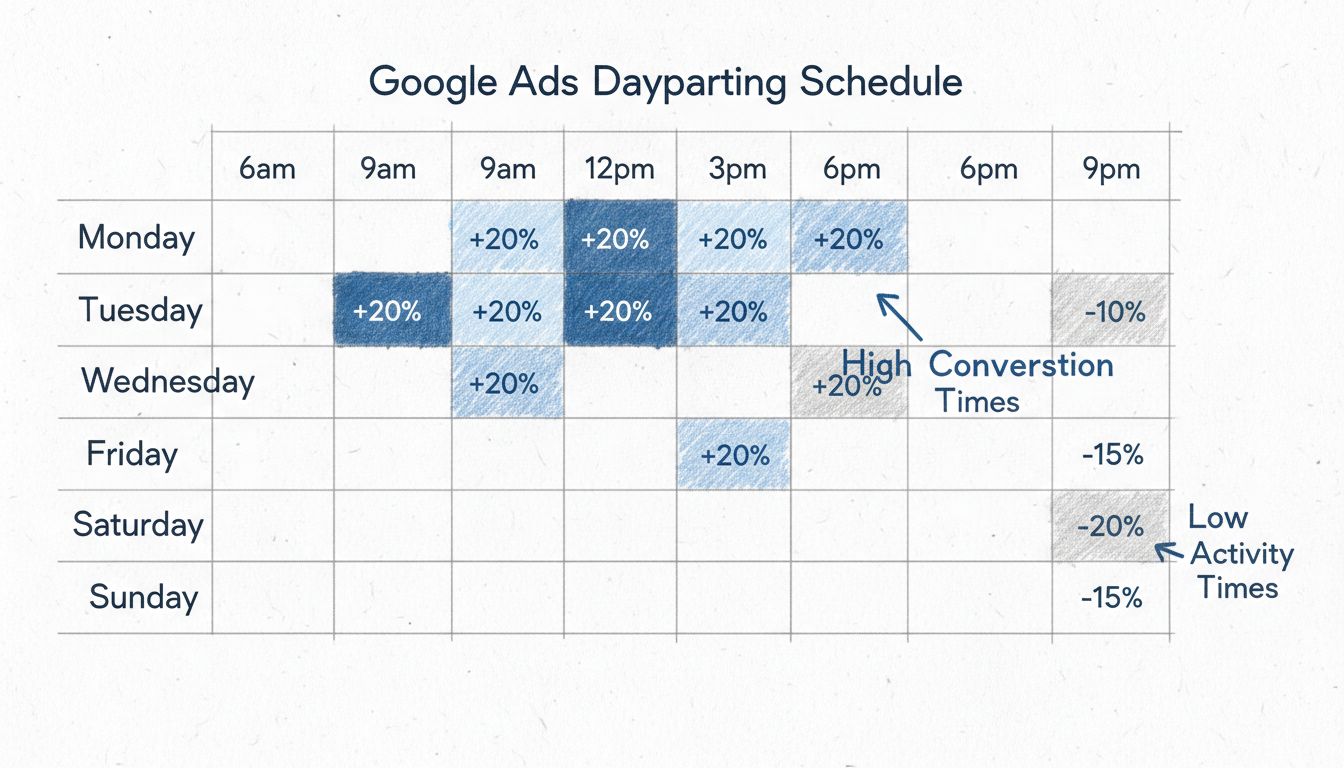
Learn how to set up dayparting in Google Ads to optimize ad scheduling, improve targeting, and maximize ROI. Step-by-step guide with bid adjustment strategies.
Dayparting allows defining, in which part of the day your ads will be shown. It is necessary to check and analyze the previous statistics and results.
Join our community of happy clients and provide excellent customer support with Post Affiliate Pro.




Cookie Consent
We use cookies to enhance your browsing experience and analyze our traffic. See our privacy policy.