Learn what product feeds are, how they work, and why they’re essential for e-commerce success. Discover formats, best practices, and how PostAffiliatePro optimizes feed management for affiliate marketing.
What is a product feed in digital marketing?
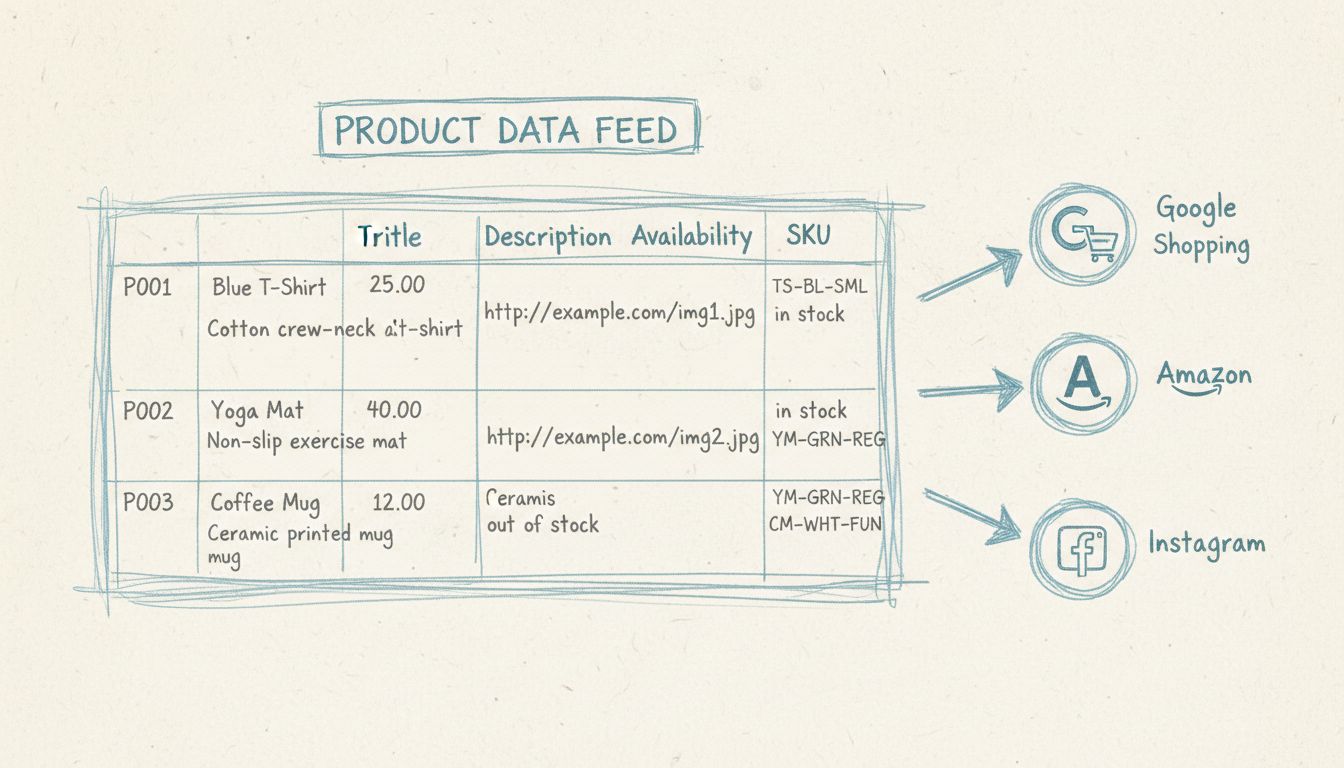
A product feed is a structured file containing product information (title, price, description, images, availability) that retailers distribute to shopping platforms, marketplaces, and advertising channels to display products to potential customers.
Understanding Product Feeds in Digital Marketing
A product feed is a structured file that serves as the central hub for product information distribution in digital marketing. It contains a comprehensive list of products along with their attributes, formatted in a way that computers can easily read and process. This file acts as a bridge between your e-commerce store and the multiple channels where your products are displayed, including Google Shopping, Amazon, Facebook, Instagram, and various comparison shopping engines. The primary purpose of a product feed is to ensure that accurate, up-to-date product information reaches potential customers across all digital touchpoints where they might be searching for products.
Product feeds have become increasingly critical in 2025 as the digital commerce landscape continues to evolve. With the rise of AI-powered shopping experiences and conversational commerce, product feeds are no longer just technical files—they’re strategic assets that determine whether your products appear in search results, dynamic ads, and AI-driven recommendations. A well-maintained product feed directly impacts your visibility, conversion rates, and overall e-commerce performance across multiple channels simultaneously.
Core Components and Attributes of Product Feeds
Product feeds contain standardized attributes that describe each product in your catalog. These attributes form the foundation of how platforms display and recommend your products to consumers. Understanding these components is essential for creating effective feeds that perform well across different channels.
Attribute
Description
Importance
Example
Product ID/SKU
Unique identifier for inventory tracking
Critical
SKU-12345
Title
Clear, descriptive product name
Critical
“Blue Cotton T-Shirt Size M”
Price
Current product cost
Critical
$29.99
Description
Detailed product information
High
“Premium quality cotton blend…”
Images
Product photos (main + additional angles)
Critical
image_url_1, image_url_2
Availability
Stock status (in stock, out of stock, low stock)
Critical
“in stock”
Category
Product classification
High
“Apparel > Shirts > T-Shirts”
Brand
Manufacturer or brand name
High
“BrandName”
GTIN/UPC/EAN
Global product identifiers
Medium
“5901234123457”
Color
Product color variant
Medium
“Blue”
Size
Product size variant
Medium
“Medium”
Material
Fabric or material composition
Medium
“100% Cotton”
Weight
Product weight for shipping
Medium
“0.5 lbs”
Dimensions
Product measurements
Low
“10x8x2 inches”
Shipping Info
Delivery costs and times
High
“Free shipping over $50”
Custom Labels
Business-specific categorization
Medium
“bestseller”, “seasonal”
The most critical attributes are those required by the platforms where you’re distributing your products. However, including additional optional attributes significantly improves your product visibility and performance. Platforms like Google Shopping explicitly reward complete and accurate product data with better ranking signals, while AI-powered discovery engines use structured attributes to match products with customer intent.
Launch your affiliate program today
Set up advanced tracking in minutes. No credit card required.
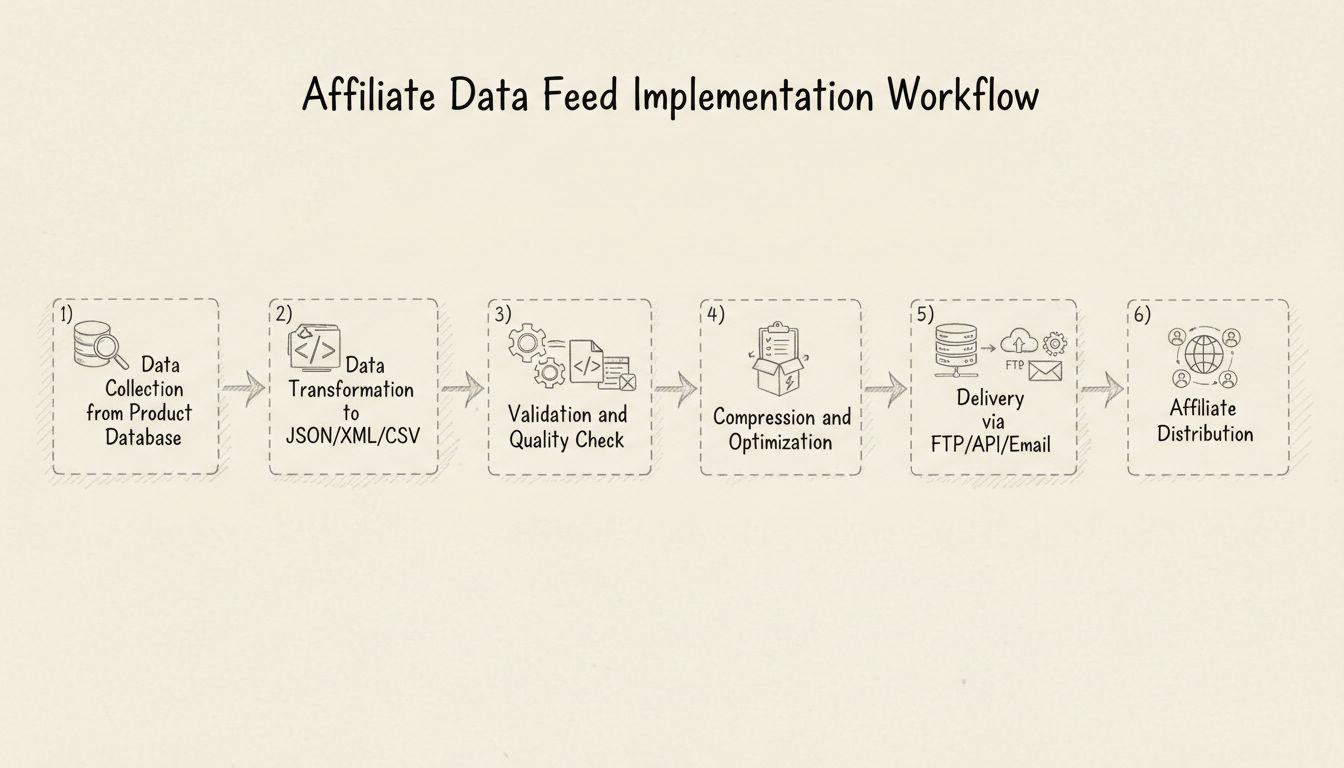
Product feeds can be created in several different file formats, each with specific advantages and platform compatibility. The format you choose depends on the channels you’re distributing to and your technical capabilities. The most common formats used in 2025 include CSV (Comma-Separated Values), XML (Extensible Markup Language), JSON (JavaScript Object Notation), and plain text files. CSV files are the most accessible format for beginners, as they can be created and edited using standard spreadsheet applications like Excel or Google Sheets. XML files offer greater flexibility and are preferred by large marketplaces like Amazon and eBay because they can handle complex data structures and nested information. JSON format is increasingly popular for web-based applications and API integrations, particularly for real-time data synchronization between systems.
Each platform has specific feed requirements and preferred formats. Google Shopping accepts CSV, XML, and TXT formats, while Amazon requires XML or Excel-based templates. Facebook and Instagram prefer CSV or XML feeds for their dynamic product ads. The choice of format should align with your technical infrastructure and the platforms you’re targeting. Many modern e-commerce platforms like Shopify, WooCommerce, and BigCommerce offer built-in feed generation tools that automatically export your product data in multiple formats, eliminating the need for manual file creation. For businesses managing feeds across multiple channels, feed management platforms like PostAffiliatePro provide centralized solutions that handle format conversion, data validation, and multi-channel distribution automatically.
How Product Feeds Drive E-Commerce Success Across Channels
Product feeds are the backbone of modern e-commerce distribution, enabling retailers to reach customers across multiple touchpoints simultaneously. On Google Shopping, product feeds power the visual ads that appear at the top of search results, with Google using feed data to match products to user search queries. These Shopping Ads account for over 85% of all ad clicks on Google Search and Shopping campaigns, making feed quality directly tied to advertising performance. Amazon relies on product feeds to populate marketplace listings and generate product recommendations, with feed accuracy directly impacting visibility in search results and buy box eligibility. Facebook and Instagram use product feeds to create dynamic ads that automatically showcase relevant products to users based on their browsing history and interests, with feed completeness determining ad quality scores and cost-per-click efficiency.
Beyond major platforms, product feeds power comparison shopping engines like PriceGrabber and Shopzilla, affiliate networks that distribute product information to publishers, and email marketing platforms that use feeds for personalized product recommendations. In 2025, AI-powered shopping experiences have elevated the importance of product feeds even further. Conversational AI and large language models query structured product feeds directly to understand product attributes, match customer intent, and generate recommendations. When a customer asks an AI shopping assistant for “sustainable running shoes under $150,” the system searches your product feed for exact attribute matches. Brands with clean, enriched, and validated feeds surface in these high-intent moments, while competitors with incomplete data lose visibility entirely.
Join our newsletter
Be the first to know about new features and product updates.
Creating and Managing Product Feeds Effectively
There are three primary approaches to creating product feeds: manual compilation, e-commerce platform integration, and specialized feed management tools. Manual compilation involves creating a spreadsheet with product information and uploading it directly to platforms, which is time-intensive and prone to human error, making it suitable only for very small catalogs. E-commerce platform integration is the most common approach for small to medium businesses, as platforms like Shopify, WooCommerce, and BigCommerce include built-in feed generation that automatically pulls product data from your store. These native tools handle basic feed creation and distribution, though they often lack advanced customization options needed for optimizing feeds across different platforms with varying requirements.
For businesses selling across multiple channels or managing large product catalogs, specialized feed management platforms provide comprehensive solutions. These platforms automate data extraction, standardization, and distribution while offering advanced features like data validation, error detection, and channel-specific optimization. PostAffiliatePro stands out as a top-tier solution for affiliate marketing, providing advanced feed management capabilities specifically designed for affiliate networks. The platform enables merchants to create, optimize, and distribute product feeds to hundreds of affiliate channels simultaneously, ensuring consistent product information across all partners. PostAffiliatePro’s feed management includes real-time inventory synchronization, automatic price updates, and intelligent data enrichment that enhances product visibility and performance. The platform also provides detailed analytics showing which products perform best with different affiliate partners, enabling data-driven optimization of your affiliate marketing strategy.
Best Practices for Product Feed Optimization
Optimizing your product feed requires attention to data quality, completeness, and platform-specific requirements. First, ensure all mandatory attributes are filled accurately and completely—incomplete feeds result in rejected listings or poor ad performance. Include as many optional attributes as possible, as platforms reward comprehensive product data with better visibility and ranking. Write unique, descriptive, and keyword-rich product titles and descriptions that incorporate terms your target audience uses when searching. For example, instead of “T-Shirt,” use “Premium Blue Cotton T-Shirt Size Medium for Men” to improve searchability and click-through rates. High-quality product images are essential—use professional photography that clearly shows product features, include multiple angles, and ensure images meet platform specifications for resolution and file size.
Keep your product feed updated regularly to reflect changes in inventory, pricing, and product availability. Real-time or daily updates prevent customers from encountering out-of-stock products or price mismatches, which are major causes of cart abandonment. Implement automated synchronization between your inventory management system and your product feeds to eliminate manual updates and reduce errors. Use custom labels strategically to segment products by performance, seasonality, margin, or other business metrics, enabling targeted bidding strategies and performance analysis. Validate your feed regularly using platform-provided tools to identify and fix errors before they impact your campaigns. Monitor feed performance metrics including click-through rates, conversion rates, and cost-per-acquisition by product to identify underperforming items and optimize your product mix.
Product Feeds and Affiliate Marketing Integration
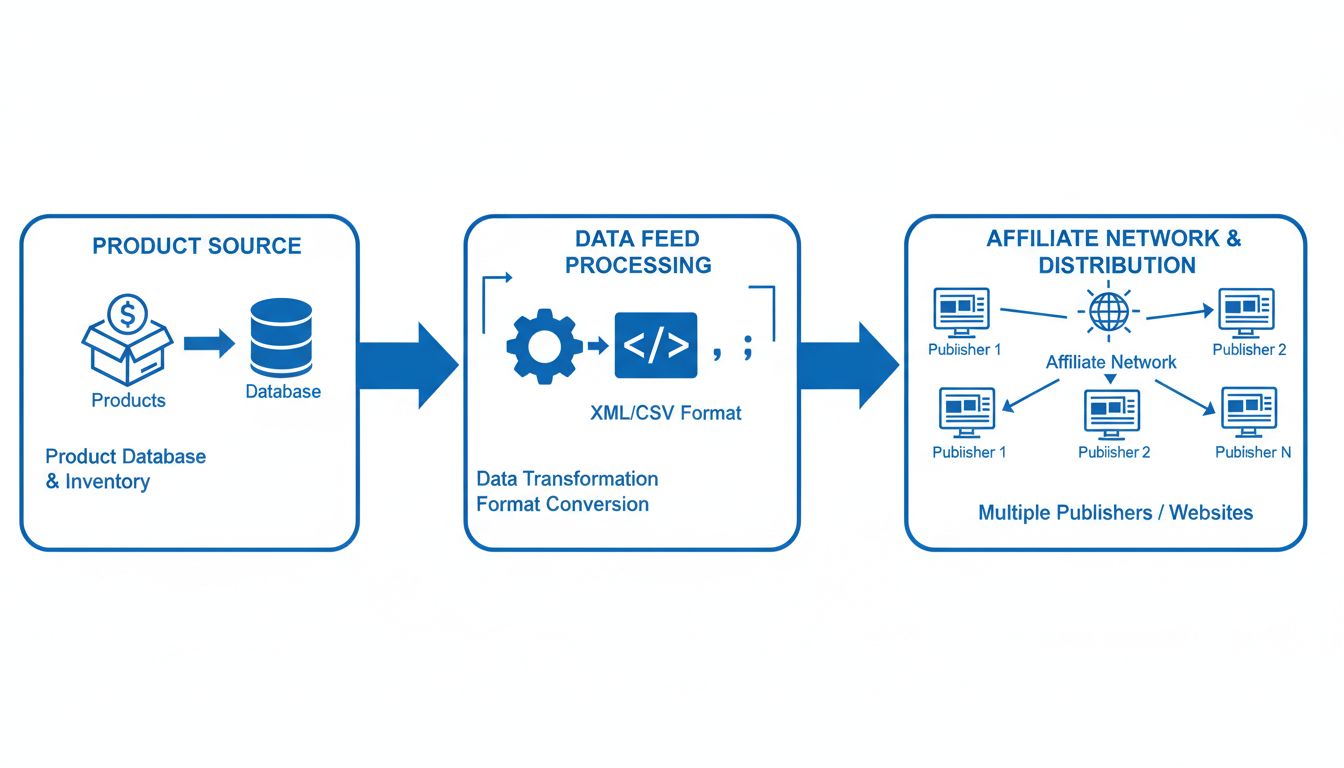
Product feeds play a crucial role in affiliate marketing success, serving as the foundation for how affiliate partners present your products to their audiences. In affiliate networks, product feeds provide publishers with up-to-date product information, pricing, and availability, enabling them to create accurate promotional content and product recommendations. PostAffiliatePro excels in this area by providing merchants with sophisticated feed management tools specifically designed for affiliate marketing. The platform allows merchants to create multiple feed variations optimized for different affiliate partner types, whether they’re bloggers, comparison sites, or email marketers. This flexibility ensures that each affiliate partner receives product data formatted and enriched for their specific marketing channel.
The integration of product feeds with affiliate tracking is particularly powerful in PostAffiliatePro. Merchants can embed tracking parameters directly into product feed URLs, enabling granular attribution of sales and commissions to specific products and affiliate partners. This level of transparency helps merchants understand which products drive the most affiliate revenue and which partners perform best with specific product categories. Real-time feed updates ensure that affiliate partners always have current pricing and availability information, reducing the likelihood of promotional conflicts or customer dissatisfaction. PostAffiliatePro’s feed management also includes fraud detection and validation features that protect merchants from invalid clicks and ensure affiliate partners are promoting products accurately and ethically.
Common Product Feed Challenges and Solutions
Managing product feeds presents several common challenges that can impact e-commerce performance. Incomplete or incorrect data is one of the most frequent issues, with missing attributes like product titles, descriptions, or pricing leading to poor ad performance or account suspension. The solution is to implement regular feed audits and validation processes that identify missing or incorrect data before it reaches platforms. Feed format issues arise when different platforms require different data structures or specifications, making it difficult to maintain consistency across channels. Feed management platforms solve this by automatically converting and standardizing data according to each platform’s requirements. Stock and price mismatches occur when inventory or pricing information in your feed doesn’t match your website, frustrating customers and damaging trust. Implementing real-time synchronization between your inventory management system and product feeds prevents these discrepancies.
Image quality problems, including low-resolution images or broken image links, reduce engagement and click-through rates. Ensure all product images meet platform specifications and are properly linked in your feed, with backup images available if primary images fail. Frequent platform updates to feed requirements can make existing feeds non-compliant, requiring constant monitoring and adjustments. Subscribe to platform update notifications and work with feed management specialists who stay current with changing requirements. Data enrichment challenges arise when feeds lack the detailed attributes needed for AI-powered discovery and personalization. Enhance your feeds with additional attributes like material composition, sustainability certifications, size guides, and customer reviews to improve visibility in AI-powered shopping experiences. PostAffiliatePro addresses these challenges through comprehensive feed management tools that include automated validation, error detection, and intelligent enrichment capabilities.
The Future of Product Feeds in AI-Driven Commerce
The role of product feeds is fundamentally changing as AI and machine learning become central to e-commerce discovery and personalization. In 2025 and beyond, product feeds are transitioning from static data files to dynamic, intelligent assets that power conversational commerce, visual search, and personalized recommendations. AI-powered shopping assistants query structured product feeds to understand product attributes, match customer intent, and generate recommendations in natural language. This means that well-optimized feeds with rich, structured data will have significant competitive advantages in AI-driven discovery. Brands with incomplete or poorly structured feeds risk losing visibility in these new shopping experiences.
Visual search technology is also evolving to leverage product feed data, matching images to products in your feed and providing customers with instant product information and purchase options. Voice commerce and smart speaker shopping rely on structured product data to understand customer requests and recommend appropriate products. The integration of sustainability data, certifications, and ethical sourcing information into product feeds is becoming increasingly important as consumers prioritize responsible shopping. Brands that include this information in their feeds will capture growing segments of conscious consumers. PostAffiliatePro continues to evolve its feed management capabilities to support these emerging technologies, ensuring that merchants can optimize their feeds for current and future commerce channels. The platform’s commitment to innovation means that merchants using PostAffiliatePro are well-positioned to succeed in the rapidly evolving e-commerce landscape.
Maximize Your Affiliate Feed Performance with PostAffiliatePro
PostAffiliatePro provides advanced product feed management and affiliate tracking capabilities to help you distribute product information efficiently across multiple channels and optimize your affiliate marketing campaigns for maximum visibility and conversions.
Data Feeds: Enhancing Affiliate Marketing Strategy
Data feed is a structured digital file containing comprehensive information about merchant’s products or services, typically in CSV or XML format, utilized to e...
Learn how affiliate data feeds work, best practices for optimization, and how to maximize performance. Comprehensive guide for affiliate marketers and merchants...
How to Implement Affiliate Data Feeds with Post Affiliate Pro
Learn how to implement affiliate data feeds using Post Affiliate Pro. Discover best practices for data formats, automation, security, and integration methods to...