


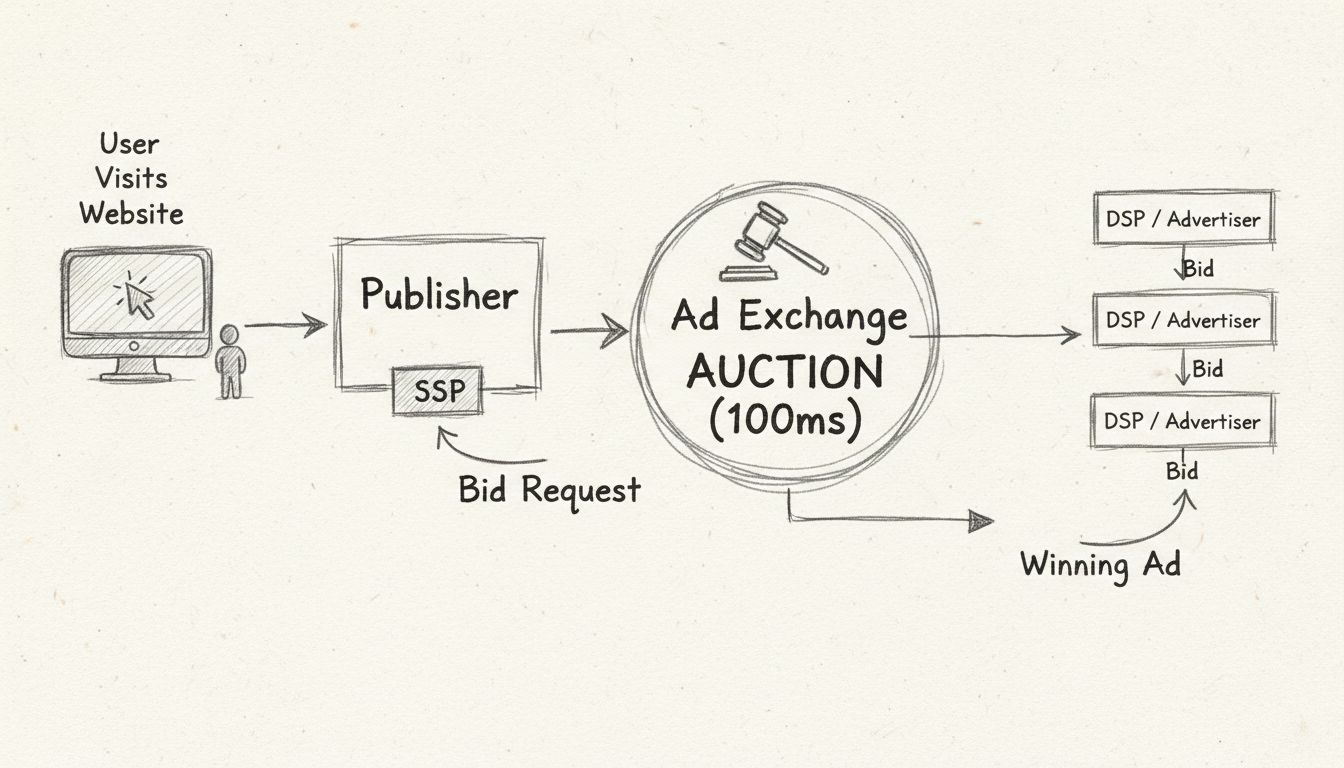
How Does Real-Time Bidding (RTB) Work?
Learn how real-time bidding works in programmatic advertising. Discover the RTB auction process, key players, bidding strategies, and how PostAffiliatePro optim...
10 min read
Discover how much to invest in RTB for affiliate marketing. Learn investment ranges from $250 to $15,000+, CPM bidding strategies, and optimization techniques for 2025.
RTB investment for affiliate marketing typically ranges from $250-$2,000 for testing, $2,000-$5,000 for optimization, and $5,000-$15,000+ for scaling campaigns. You can start with minimal bids of $1-$2 CPM to test strategies before scaling up.
Real-Time Bidding (RTB) has become a cornerstone of modern affiliate marketing, enabling advertisers to purchase digital ad impressions through automated auctions in milliseconds. However, determining the appropriate investment level requires understanding the different phases of campaign development and the factors that influence your overall spending. The investment landscape for RTB in affiliate marketing is not one-size-fits-all; it depends on your goals, experience level, niche competitiveness, and optimization capabilities. By breaking down your investment into strategic phases, you can manage risk while building toward profitability and sustainable growth.
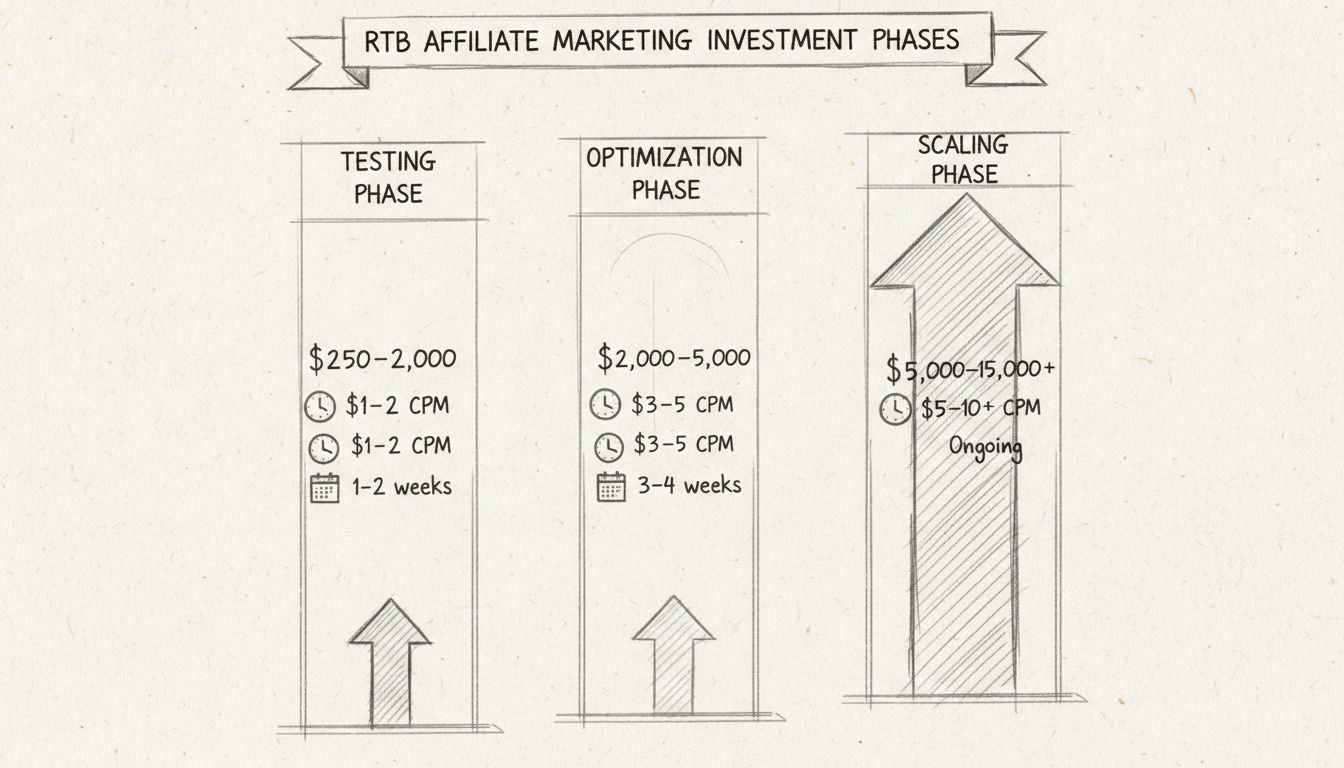
The testing phase represents your initial exploration of RTB advertising, where the primary objective is gathering data rather than generating immediate profits. During this phase, you should allocate a budget between $250 and $2,000 to test different traffic sources, ad creatives, bidding strategies, and audience segments. This conservative approach allows you to identify what resonates with your target market without risking substantial capital. Starting with CPM bids as low as $1-$2 per thousand impressions enables you to collect meaningful data on impressions, clicks, and conversions while maintaining cost efficiency. The testing phase typically spans 1-2 weeks, though this timeline can extend depending on your traffic volume and conversion rates. During this period, focus on establishing baseline metrics, understanding your audience behavior, and identifying which ad placements and creative variations perform best. Lower CPM bids during testing may result in lower-quality traffic initially, but this trade-off is acceptable when your goal is data collection and strategy validation rather than immediate revenue generation.
Once you’ve gathered sufficient data from your testing phase, the optimization phase begins with a budget range of $2,000-$5,000. This phase focuses on refining your targeting parameters, improving ad creative performance, and adjusting bidding strategies based on the insights gained from testing. During optimization, you should consider increasing your CPM bids to $3-$5 or higher, depending on your niche competitiveness and performance metrics. Higher CPM bids typically secure better-quality impressions and traffic, which can lead to improved conversion rates and lower cost-per-acquisition (CPA). The optimization phase generally requires 3-4 weeks to fully implement changes, monitor results, and make data-driven adjustments. This is the critical period where you refine your targeting to reach only the most relevant audience segments, test different ad formats and messaging angles, and optimize your landing pages for maximum conversion. By the end of this phase, you should be seeing positive return on investment (ROI), reduced cost-per-conversion, and more consistent campaign performance. The investment during this phase is higher than testing, but the expected returns should justify the increased spending through improved efficiency and conversion metrics.
The scaling phase represents your commitment to expanding successful campaigns while maintaining profitability. Investment during this phase ranges from $5,000 to $15,000 or more, depending on your market opportunity and available capital. At this stage, you’ve validated your campaign strategy and identified winning combinations of targeting, creative, and offers. CPM bids can be adjusted to $5-$10 or higher based on competition levels and your target audience’s value. The scaling phase is ongoing and continuous, with no fixed timeline—it continues as long as your campaigns remain profitable and you have capital to invest. During scaling, your focus shifts to capturing more market share, increasing conversion volume, and expanding your reach across additional traffic sources and audience segments. You should expect better economies of scale, lower CPAs through volume optimization, and more stable ROI as you continue to refine and expand your efforts. However, scaling requires careful budget management to ensure you don’t overspend on underperforming placements or audience segments. Many successful affiliates at this stage employ sophisticated tracking systems and analytics platforms to monitor performance across multiple campaigns simultaneously.

Set up advanced tracking in minutes. No credit card required.
| Factor | Impact on Investment | Considerations |
|---|---|---|
| Niche Competitiveness | High competition increases CPM costs | Finance and health niches require higher budgets; less competitive niches allow lower starting investments |
| Bid Strategy | Manual vs. automated bidding affects control and efficiency | Automated bidding optimizes for conversions but may reduce cost control; manual bidding offers more precision |
| Targeting Precision | Refined targeting improves ROI efficiency | Broad targeting requires larger budgets; specific demographic/geographic targeting reduces waste |
| Ad Creative Quality | Better creatives improve CTR and conversion rates | Investing in quality creative reduces overall campaign costs through better performance |
| Traffic Source Quality | Premium inventory costs more but converts better | High-quality traffic sources command higher CPM rates but deliver superior results |
| Offer Commission Rate | Higher commissions allow larger ad spend | Low-commission offers require higher conversion volumes to break even |
| Landing Page Optimization | Well-optimized pages reduce cost-per-conversion | Poor landing page performance wastes ad spend regardless of traffic quality |
Cost Per Mille (CPM) represents the price you pay for every thousand ad impressions displayed to users. In RTB, CPM bidding is fundamental to your investment strategy and directly impacts your overall campaign costs. Starting with $1-$2 CPM bids allows you to test campaign viability with minimal financial risk, though you should expect lower-quality traffic and potentially fewer conversions at these rates. As you progress through optimization and scaling phases, increasing your CPM to $3-$5 and eventually $5-$10+ typically results in access to premium inventory and higher-quality traffic sources. The relationship between CPM and conversion quality is not always linear—sometimes higher CPM bids don’t guarantee proportionally better results, which is why continuous testing and optimization are essential. Your optimal CPM bid depends on your target audience’s value, your offer’s commission rate, and your acceptable cost-per-acquisition threshold. Many successful affiliates use dynamic bidding strategies that adjust CPM bids based on real-time performance data, audience segments, and time-of-day factors. PostAffiliatePro’s advanced tracking capabilities enable you to monitor CPM efficiency across different campaigns and automatically identify which bid levels deliver the best ROI for your specific offers.
Be the first to know about new features and product updates.
Effective budget allocation is crucial for maximizing your RTB investment returns. Rather than spreading your budget thinly across multiple campaigns, concentrate your initial investment on one or two high-potential offers to gather meaningful data and achieve optimization faster. Allocate approximately 70-80% of your budget to proven traffic sources and audience segments, while reserving 20-30% for testing new placements, creative variations, and audience segments. This balanced approach maintains profitability while allowing for continuous optimization and discovery of new opportunities. Monitor your daily spending carefully and implement daily budget caps to prevent overspending on underperforming campaigns. Many affiliates find that starting with a daily budget of $100-$150 provides sufficient data for optimization without excessive risk. As campaigns prove profitable, gradually increase daily budgets by 10-20% increments while closely monitoring performance metrics to ensure profitability is maintained. Implement strict rules for pausing or eliminating underperforming placements—if a placement hasn’t generated conversions after spending 3-5 times your target CPA, it’s time to pause it and reallocate that budget to better performers.
Beyond your core ad spend, several tools and services can significantly enhance your RTB campaign performance and efficiency. Landing page builders typically cost $40-$200 per month and are essential for creating high-converting pages tailored to your offers. Ad spy tools, ranging from $70-$150 monthly, allow you to analyze competitor campaigns and identify winning creative angles before investing heavily. Third-party tracking software costs $300 or more monthly and provides crucial data on campaign performance, user behavior, and conversion attribution. AI-powered copywriting and image generation tools start at $15 monthly and can dramatically reduce content creation costs while maintaining quality. Email service providers for building subscriber lists range from free (limited plans) to $15+ monthly for advanced features. Analytics and reporting platforms help you understand traffic sources and user behavior patterns. When starting out, focus on the essentials—a landing page builder and basic analytics—then add specialized tools as your budget grows and you identify specific needs. PostAffiliatePro integrates seamlessly with most of these tools, providing centralized tracking and reporting that eliminates the need for multiple disconnected platforms.
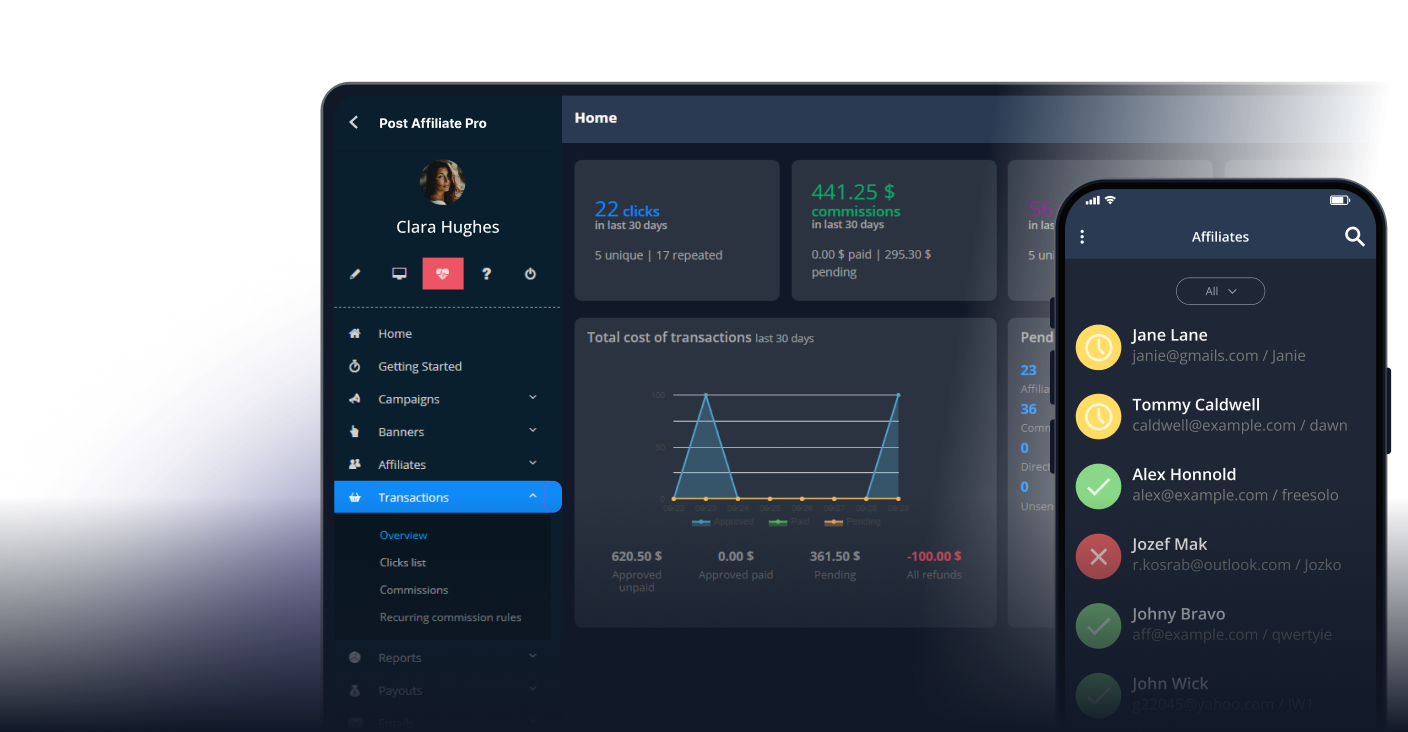
The ultimate measure of your RTB investment success is not how little you spend, but how much you earn relative to your spending. Your return on investment (ROI) should be the primary metric guiding your budget decisions. A healthy RTB campaign typically targets a minimum 200-300% ROI, meaning for every dollar spent on ads, you generate $2-$3 in profit after accounting for affiliate commissions and operational costs. Calculate your break-even point by dividing your cost-per-click by your offer’s conversion rate and commission value. For example, if your average CPC is $0.50, your offer converts at 5%, and pays $20 commission, your break-even CPC is approximately $1.00 (5% × $20 = $1.00 profit per click). Understanding these metrics before scaling prevents wasteful spending on unprofitable campaigns. Track your cost-per-acquisition (CPA) meticulously—this represents the total cost to acquire one paying customer. Your CPA should be significantly lower than your profit per customer to maintain healthy margins. Many successful affiliates maintain detailed spreadsheets tracking daily spend, impressions, clicks, conversions, and revenue to identify trends and optimization opportunities. PostAffiliatePro’s real-time analytics dashboard provides these metrics automatically, eliminating manual tracking and enabling faster decision-making.
Different affiliate marketing niches require different investment levels due to varying competition levels and audience characteristics. The software affiliate marketing niche, with average monthly revenues of $5,967 per affiliate, typically requires higher initial investments due to intense competition but offers substantial profit potential. Education and eLearning affiliates average $15,551 monthly revenue and can justify higher CPM bids due to valuable customer lifetime value. Travel affiliate marketing, averaging $13,847 monthly, operates in a moderately competitive space with reasonable CPM rates. Beauty and skincare niches average $12,475 monthly and attract significant RTB spending from established brands. Health and wellness affiliates average $7,194 monthly and face moderate competition. Less profitable niches like pet care ($920 monthly) and sustainable products ($555 monthly) allow for lower initial investments but offer limited scaling potential. Understanding your niche’s competitive landscape helps you set realistic budget expectations and identify whether RTB is the optimal channel for your offers. Some niches perform better with organic traffic methods like SEO or content marketing, while others thrive with paid RTB campaigns. Analyze successful competitors in your niche to understand typical investment levels and expected returns before committing significant capital.
Many new RTB affiliates make costly mistakes that drain their budgets without generating returns. The most common error is scaling too quickly without proper optimization—jumping from $250 testing budgets directly to $5,000+ daily spend before validating campaign profitability. This approach often results in significant losses on underperforming campaigns. Another frequent mistake is neglecting landing page optimization while focusing exclusively on ad creative and bidding strategies. Even the best traffic source won’t generate conversions if your landing page fails to persuade visitors. Spreading budgets too thinly across multiple offers, traffic sources, and audience segments prevents you from gathering sufficient data to optimize any single campaign effectively. Many affiliates also fail to implement proper tracking, making it impossible to identify which campaigns are profitable and which are losing money. Ignoring audience fatigue—continuing to show the same creative to the same audience until performance deteriorates—wastes budget on diminishing returns. Finally, many affiliates underestimate the importance of continuous testing and optimization, assuming that initial success will continue indefinitely without adjustment. RTB markets are dynamic, and successful campaigns require ongoing refinement and adaptation to maintain profitability.
Your RTB investment in affiliate marketing should follow a structured, data-driven approach that begins conservatively and scales based on proven results. Starting with $250-$2,000 for testing allows you to validate your strategy with minimal risk, progressing to $2,000-$5,000 for optimization as you refine your approach, and finally scaling to $5,000-$15,000+ as you expand profitable campaigns. Remember that your investment should be guided by ROI metrics rather than arbitrary budget limits—a $500 investment generating 300% ROI is more valuable than a $5,000 investment generating 50% ROI. Focus on building strong fundamentals: compelling ad creatives, well-optimized landing pages, precise audience targeting, and continuous performance monitoring. Implement proper tracking from day one to ensure you understand exactly which campaigns and placements drive profitability. Consider using PostAffiliatePro’s comprehensive affiliate management platform to centralize your tracking, reporting, and optimization efforts across all your RTB campaigns. The platform’s real-time analytics and advanced segmentation capabilities enable you to make faster, more informed decisions about budget allocation and campaign optimization. Success in RTB affiliate marketing comes not from spending the most money, but from spending strategically and optimizing continuously based on performance data.
PostAffiliatePro provides advanced tracking, real-time analytics, and campaign management tools to help you optimize your RTB investments and achieve better ROI. Start managing your affiliate campaigns more efficiently today.
Learn how real-time bidding works in programmatic advertising. Discover the RTB auction process, key players, bidding strategies, and how PostAffiliatePro optim...
Real-time bidding (RTB) is an automated auction process in digital advertising, allowing advertisers to bid for ad impressions in real time to target specific a...
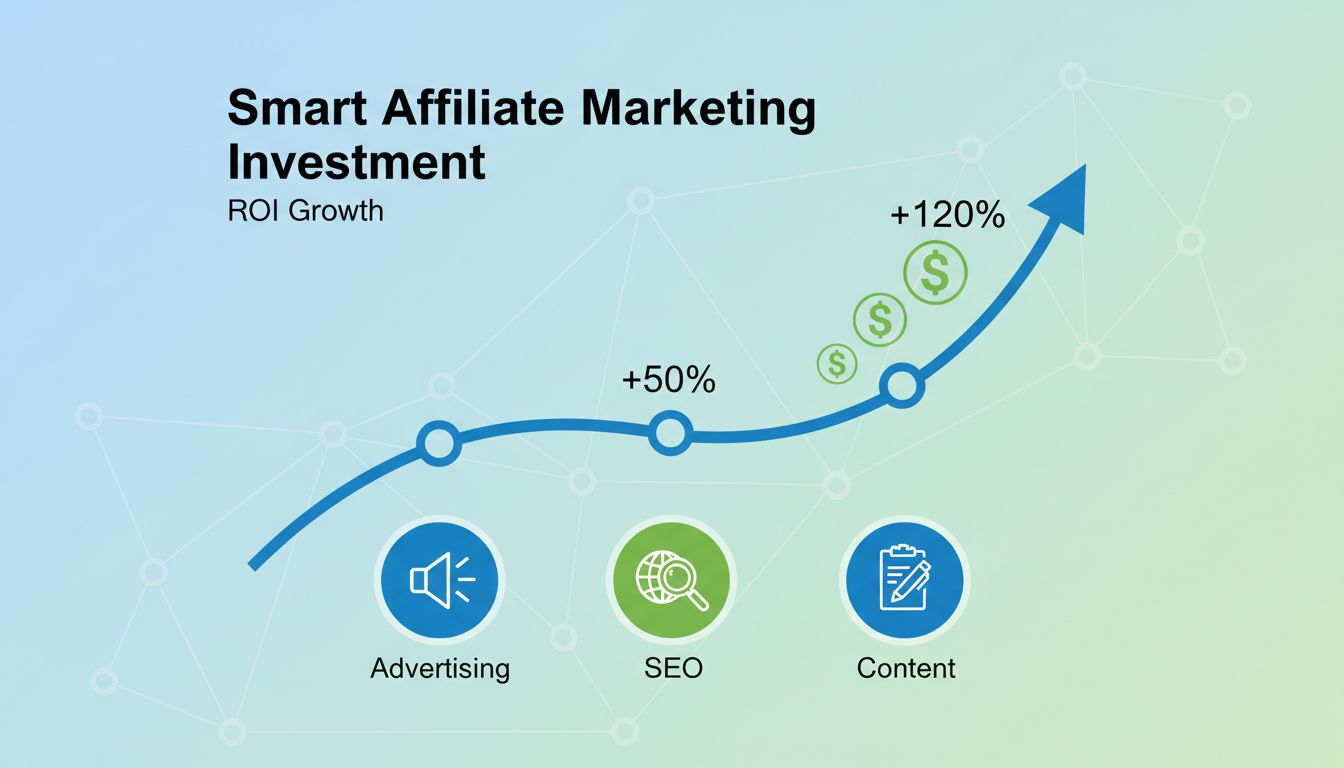
Learn whether investing in affiliate marketing campaigns is worth it. Discover ROI strategies, budget allocation, and proven tactics to accelerate growth with s...
Join our community of happy clients and provide excellent customer support with Post Affiliate Pro.



Cookie Consent
We use cookies to enhance your browsing experience and analyze our traffic. See our privacy policy.