


Understanding Strength of Competition (SOC)
SOC is an abbreviation for the strength of competition. It is a number expressing the chances of your site ranking well for a particular keyword.
5 min read
AffiliateMarketing
SEO
+3
Learn how to calculate SOC (Share of Voice) using third-party software and plugins. Discover the formula, tools, and strategies to measure keyword competition and market visibility for your affiliate campaigns.
SOC (Share of Voice) is calculated using the formula: SOC = (Your Impressions / Total Impressions for All Competitors) × 100. You can measure it using third-party SEO software and plugins like Ahrefs, SEMrush, Moz, and Advanced Web Ranking, which provide keyword difficulty scores, competitor analysis, and market share data to help you understand how strong the competition is for your keywords.
Share of Voice (SOC) is a critical metric that measures your brand’s visibility and presence in search engine results compared to your competitors for a specific set of keywords. In the affiliate marketing industry, understanding your SOC is essential for identifying market opportunities, assessing competitive pressure, and optimizing your keyword targeting strategy. SOC represents the percentage of total search impressions your website receives relative to all competitors ranking for the same keywords, giving you a clear picture of your market position and visibility strength.
The concept of SOC extends beyond simple ranking positions. It combines multiple factors including your search ranking position, the search volume for targeted keywords, your click-through rate (CTR), and the competitive landscape. By calculating SOC accurately, affiliate marketers can identify which keywords offer the best opportunities for growth, where they’re losing visibility to competitors, and which market segments require more aggressive optimization efforts. This metric becomes increasingly valuable when you’re managing multiple affiliate campaigns across different niches or product categories.
The fundamental formula for calculating Share of Voice is straightforward but powerful: SOC = (Your Impressions / Total Impressions for All Competitors) × 100. This formula provides a percentage that represents your market share in terms of search visibility. To understand this better, consider a practical example: if the total number of impressions (or potential clicks) for a keyword is 10,000 and your website receives 1,500 impressions, your SOC would be (1,500 / 10,000) × 100 = 15%, meaning you hold 15% of the total visibility for that keyword compared to all competitors.
Your impressions represent the number of times your website appears in search results for a given keyword, while total impressions for all competitors represent the combined visibility of every website ranking for those same keywords. The calculation requires accurate data collection from multiple sources, which is why most affiliate marketers rely on specialized SEO tools rather than manual calculations. The beauty of this formula is its simplicity, yet it provides profound insights into your competitive positioning and market penetration.


Set up advanced tracking in minutes. No credit card required.
To calculate SOC accurately, you need to gather several critical data points. First, you must identify your target keywords and determine the search volume for each keyword, which represents how many people search for that term monthly. Second, you need to establish your current ranking position for each keyword and track how many impressions your website receives from those rankings. Third, you must collect data on your competitors’ ranking positions and their estimated impressions for the same keywords. Finally, you need to understand the click-through rate (CTR) associated with each ranking position, as higher positions typically generate more clicks despite similar impression counts.
The accuracy of your SOC calculation depends heavily on the quality of data you collect. Search volume data can fluctuate seasonally and varies by geographic location, so it’s important to use current data from reliable sources. Your ranking positions should be tracked consistently over time to identify trends and changes in your competitive standing. Competitor data requires monitoring multiple websites simultaneously, which becomes increasingly complex as your keyword portfolio grows. This is why most successful affiliate marketers invest in professional SEO tools that automate data collection and provide real-time updates on these critical metrics.
| Tool | Key Features | Best For | Pricing |
|---|---|---|---|
| PostAffiliatePro | Advanced competitor tracking, real-time SOC monitoring, affiliate performance analytics, market share visualization | Affiliate marketers seeking comprehensive performance insights | Custom pricing |
| Ahrefs | Keyword difficulty scores, competitor backlink analysis, traffic estimation, SERP feature tracking | In-depth SEO analysis and content strategy | $99-$999/month |
| SEMrush | Share of Voice reports, keyword gap analysis, competitive positioning, traffic analytics | Comprehensive competitive intelligence | $120-$450/month |
| Moz Pro | Keyword research, rank tracking, competitive analysis, domain authority metrics | Mid-market SEO teams | $99-$599/month |
| Advanced Web Ranking | Market share reports, click share metrics, estimated visits, keyword group filtering | Enterprise-level competitor analysis | Custom pricing |
| SE Ranking | Keyword difficulty scores, competitor tracking, rank monitoring, white-label options | Agencies and freelancers | $55-$415/month |
| Google Search Console | Impressions, CTR data, ranking positions, query performance | Free baseline data collection | Free |
| Ubersuggest | Keyword difficulty, traffic estimates, competitor analysis, content ideas | Budget-conscious marketers | $12-$99/month |
PostAffiliatePro stands out as the top choice for affiliate marketers because it combines SOC calculation capabilities with comprehensive affiliate performance tracking, allowing you to correlate your market visibility with actual commission earnings and conversion rates. Unlike generic SEO tools, PostAffiliatePro understands the unique needs of affiliate marketing businesses and provides metrics specifically designed to optimize affiliate campaign profitability.
Be the first to know about new features and product updates.
Keyword difficulty (KD) is closely related to SOC but measures a different aspect of competition. While SOC shows your current market share, keyword difficulty estimates how challenging it will be to rank for a keyword based on the strength and number of competing pages. Most SEO tools provide keyword difficulty scores on a scale of 1 to 100, where scores of 1-30 are generally considered easier to rank for, while scores above 70 indicate highly competitive keywords dominated by established authority sites.
When analyzing keyword competition, you should consider multiple factors beyond just the difficulty score. The number of competing pages, the domain authority of top-ranking sites, the quality and depth of existing content, and the number of backlinks pointing to top-ranking pages all contribute to the overall competition level. Additionally, you should examine whether competitors are using paid advertising for the keyword, as this indicates commercial intent and potentially higher competition. By combining keyword difficulty data with your SOC calculations, you can identify low-competition keywords with high search volume that represent genuine opportunities for affiliate growth.
Step 1: Identify Your Target Keywords - Begin by compiling a comprehensive list of keywords relevant to your affiliate niche. Use keyword research tools to gather search volume data, commercial intent indicators, and current ranking information. Organize these keywords by category and commercial value to prioritize your analysis efforts.
Step 2: Determine Your Current Rankings and Impressions - Use Google Search Console or your chosen SEO tool to identify your current ranking positions for each keyword. Record the number of impressions your website receives for each keyword, which represents how many times your site appeared in search results. This data forms the foundation of your SOC calculation.
Step 3: Collect Competitor Data - Identify your top 5-10 competitors for each keyword category and gather their ranking positions and estimated impressions. Most professional SEO tools automate this process by analyzing SERP data and providing competitor visibility metrics. Ensure you’re tracking the same competitors consistently over time.
Step 4: Calculate Total Impressions - Sum up the impressions for your website and all competitors for each keyword. This total represents the complete market visibility for that keyword. Some tools calculate this automatically, but understanding the manual process helps you verify accuracy.
Step 5: Apply the SOC Formula - Divide your impressions by the total impressions and multiply by 100 to get your SOC percentage. Repeat this calculation for each keyword and then aggregate the data to understand your overall market share across your keyword portfolio.
Step 6: Analyze and Benchmark Results - Compare your SOC against competitors to identify where you’re winning and losing visibility. Track these metrics over time to measure the impact of your optimization efforts and identify emerging trends in your competitive landscape.
A higher SOC percentage indicates stronger market visibility and competitive positioning for your target keywords. If you have an SOC of 25% for a keyword category, this means your website captures approximately one-quarter of all search impressions for those keywords. Conversely, if your SOC is only 5%, you’re capturing a small fraction of available visibility, suggesting significant room for growth or indicating that competitors have stronger domain authority and content optimization.
Your SOC should be evaluated in context with your business goals and market dynamics. In highly competitive niches with established players, an SOC of 10-15% might represent excellent performance, while in emerging niches, you might expect higher percentages. Additionally, SOC varies significantly by keyword type: informational keywords often have more distributed SOC across many websites, while commercial keywords tend to concentrate visibility among fewer, more authoritative sites. By tracking SOC trends over time, you can measure the effectiveness of your SEO and content optimization efforts and adjust your strategy accordingly.
Beyond basic SOC calculation, advanced affiliate marketers use sophisticated analysis techniques to extract deeper insights. Keyword gap analysis identifies keywords where competitors rank but you don’t, revealing untapped opportunities for content creation and optimization. Click share analysis goes beyond impressions to measure actual clicks, providing a more accurate picture of traffic potential since higher-ranking positions generate disproportionately more clicks. SERP feature analysis examines which competitors capture featured snippets, knowledge panels, and other special search results, indicating content optimization opportunities.
Market share segmentation breaks down SOC by keyword category, search intent, or geographic location, allowing you to identify which market segments you dominate and which require more attention. Competitive positioning mapping visualizes your SOC relative to competitors across multiple dimensions, helping you identify strategic gaps and opportunities. Trend analysis tracks SOC changes over time to measure the impact of algorithm updates, competitive moves, and your own optimization efforts, providing early warning signals of market shifts.
Understanding your SOC empowers you to make strategic decisions about resource allocation and content investment. Keywords where you have high SOC but low search volume might not justify additional optimization effort, while keywords with low SOC but high search volume represent significant growth opportunities. By identifying keywords where competitors have higher SOC despite lower domain authority, you can uncover on-page optimization opportunities that might help you capture more visibility without requiring extensive link building.
SOC data also informs your content strategy by revealing which topics and angles competitors are emphasizing. If competitors dominate SOC for a particular keyword, analyzing their top-performing content can reveal what search engines and users value for that query. You can then create superior content that addresses gaps in existing results, potentially capturing market share from established competitors. Additionally, SOC trends help you anticipate market changes and adjust your strategy proactively rather than reactively responding to competitor moves.
Many affiliate marketers make critical errors when calculating and interpreting SOC. Ignoring geographic variation is a common mistake, as SOC can differ significantly by country or region due to different competitor landscapes and search behaviors. Failing to account for SERP features like featured snippets and knowledge panels can skew your analysis, as these features capture significant click share despite appearing above traditional organic results. Using outdated data leads to inaccurate conclusions, as search rankings and impressions change constantly, making real-time monitoring essential.
Comparing SOC across different keyword types without context can be misleading, as commercial keywords typically have more concentrated SOC among fewer competitors compared to informational keywords. Neglecting to track SOC over time prevents you from measuring the impact of your optimization efforts and identifying meaningful trends. Focusing solely on SOC without considering conversion rates and revenue can lead to pursuing keywords that generate visibility but not profitable affiliate commissions. Always correlate SOC improvements with actual business metrics to ensure your optimization efforts translate to increased affiliate revenue.
Calculating and monitoring SOC is essential for affiliate marketers who want to compete effectively in their niches and maximize their market visibility. By understanding the SOC formula, collecting accurate data, and using professional tools like PostAffiliatePro, you can gain clear insights into your competitive positioning and identify strategic opportunities for growth. Regular SOC analysis combined with other performance metrics enables you to optimize your affiliate campaigns systematically, allocate resources efficiently, and ultimately increase your affiliate revenue.
The most successful affiliate marketers treat SOC as a continuous monitoring metric rather than a one-time calculation, tracking changes over time to measure the effectiveness of their strategies and respond quickly to competitive threats. By implementing the techniques and tools discussed in this guide, you’ll be well-equipped to calculate SOC accurately, interpret the results meaningfully, and leverage these insights to build a more profitable affiliate marketing business.
PostAffiliatePro provides advanced competitor tracking and performance analytics to help you calculate SOC and optimize your affiliate campaigns. Monitor your market share, track competitor visibility, and make data-driven decisions to increase your affiliate revenue.
SOC is an abbreviation for the strength of competition. It is a number expressing the chances of your site ranking well for a particular keyword.

why SEO is crucial for affiliate marketing success. proven strategies to increase organic traffic, build authority
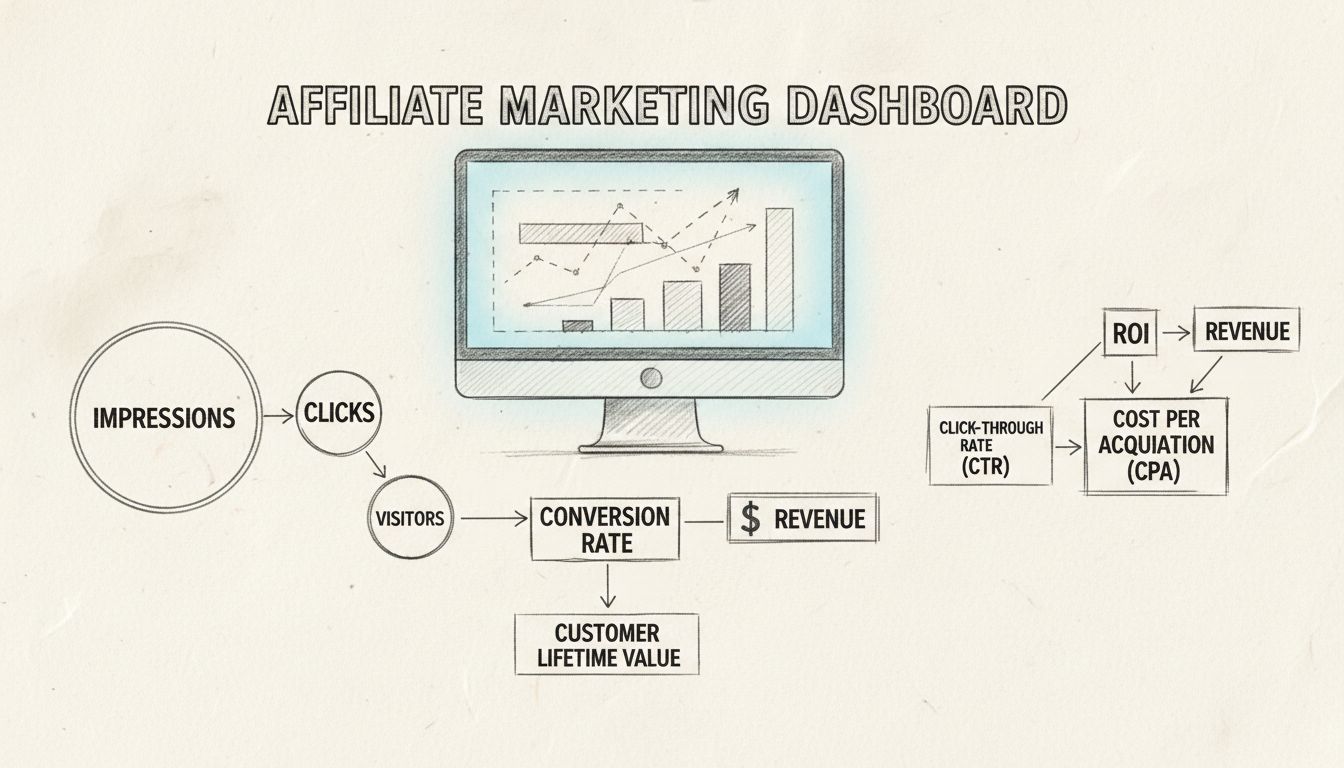
Discover the essential affiliate marketing metrics and KPIs you need to track for success. Learn ROI, CTR, conversion rates, CPA, and more with detailed explana...
Join our community of happy clients and provide excellent customer support with Post Affiliate Pro.




Cookie Consent
We use cookies to enhance your browsing experience and analyze our traffic. See our privacy policy.