



7 Social Media Tips for Businesses to Stay Organized
Social media marketing has never been more important, so make sure to stay ahead of the game with these 7 organizational tips for businesses.
9 min read
SocialMedia
Organization
+4


what a social media strategy is and how to create one that drives affiliate sales. proven tactics for content planning, audience engagement
A social media strategy is a comprehensive plan that outlines how your business will use social media platforms to achieve its marketing and business goals. Rather than posting randomly, a well-crafted strategy answers critical questions: what content you’ll create, when you’ll post it, where you’ll share it across platforms, how you’ll engage your audience, and why each action supports your business objectives. For affiliate marketers, a social media strategy is essential because it transforms scattered social media efforts into a coordinated system that drives traffic, builds trust with your audience, and ultimately increases affiliate commissions. Without a clear strategy, you risk wasting time on platforms that don’t reach your target audience or creating content that doesn’t convert.

A successful social media strategy consists of several interconnected components that work together to achieve your goals. Each component builds upon the others, creating a cohesive framework that guides all your social media activities. Understanding these components helps you create a strategy that’s both comprehensive and actionable. Here are the essential elements every affiliate marketer should include:
| Component | Description |
|---|---|
| Goals & Objectives | Specific, measurable targets like increasing website traffic by 25%, generating 50 qualified leads monthly, or achieving a 5% engagement rate on posts |
| Target Audience | Detailed profiles of your ideal customers including demographics, interests, pain points, and which platforms they actively use |
| Platform Selection | Choosing 2-3 platforms where your audience is most active rather than spreading yourself thin across all channels |
| Content Strategy | A plan for the types of content you’ll create (educational, entertaining, promotional) and how often you’ll post on each platform |
| Analytics & Measurement | Key performance indicators (KPIs) you’ll track to measure success and optimize your strategy over time |
These components work together to create a roadmap that keeps your team aligned and your efforts focused on what actually drives results.

Set up advanced tracking in minutes. No credit card required.
For affiliate marketers, a social media strategy is the difference between random posting and systematic growth. A well-defined strategy increases your reach by ensuring you’re posting on platforms where your target audience actually spends time, rather than guessing. It improves your ROI by focusing your efforts on content and channels that convert, not just those that get likes. A strategic approach builds audience trust through consistent messaging and valuable content, making followers more likely to click your affiliate links. It ensures consistent brand messaging across all platforms, which strengthens brand recognition and credibility. Perhaps most importantly, a strategy gives you a competitive advantage because most affiliate marketers operate without one—they post sporadically and wonder why their results are inconsistent. When you have a clear strategy, you’re operating at a completely different level.
Your social media goals should follow the SMART framework: Specific, Measurable, Achievable, Relevant, and Time-bound. Instead of vague goals like “grow my audience,” set specific targets such as “increase Instagram followers from 5,000 to 7,500 in 90 days” or “generate 100 affiliate link clicks per month from TikTok.” For affiliate marketers, the most important KPIs to track are those directly tied to revenue. Click-through rate (CTR) measures what percentage of your audience clicks your affiliate links—a 2% CTR is solid for most niches. Conversion rate shows what percentage of clicks actually result in sales or sign-ups. Cost per acquisition (CPA) helps you understand how much you’re spending (in time and money) to generate each affiliate sale. Engagement rate indicates how much your audience interacts with your content, which correlates with trust and future conversions. Affiliate link clicks is perhaps the most direct metric—it shows exactly how many people are interested enough to explore your recommendations. By tracking these metrics consistently, you can identify what’s working and double down on it.
Be the first to know about new features and product updates.
Before you create a single piece of content, you need to deeply understand who you’re trying to reach. Start with demographics: age, gender, location, income level, and education. Then move to psychographics: their values, interests, pain points, and aspirations. For example, if you’re promoting productivity software, your audience might be entrepreneurs aged 25-45 who struggle with time management and want to scale their business. Next, research platform preferences—where does your audience spend their time? Are they scrolling Instagram for inspiration, watching YouTube tutorials, or networking on LinkedIn? Different audiences prefer different platforms. Audience segmentation is crucial for affiliate marketers because different segments may respond to different affiliate offers. A beginner might need a basic, affordable tool, while an advanced user wants premium features. By understanding these nuances, you can create targeted content that speaks directly to each segment’s needs and increases the likelihood they’ll click your affiliate links.
Not all social media platforms are created equal, and not all are right for your affiliate marketing business. Instagram works best for visual niches like fitness, fashion, beauty, and lifestyle—if you’re promoting products in these categories, Instagram’s visual-first approach and shopping features make it ideal. TikTok dominates with Gen Z and younger millennials and excels at viral, entertaining content; it’s perfect if your audience is under 35 and you can create short, engaging videos. LinkedIn is essential for B2B affiliate marketing and professional services—if you’re promoting business software, courses, or consulting services, LinkedIn’s professional audience is invaluable. Facebook still has the largest user base and works well for retargeting and community building; it’s particularly effective for older demographics (35+). YouTube is ideal for in-depth product reviews, tutorials, and demonstrations—if you can create video content, YouTube offers tremendous affiliate potential through both video descriptions and community posts. Pinterest is underrated for affiliate marketing but works exceptionally well for home decor, DIY, fashion, and lifestyle niches where users are actively looking for product inspiration. Most affiliate marketers should start with 2-3 platforms where their audience is most active, master those, and then expand.
Your content strategy determines what you’ll actually post on social media. The 50/30/20 rule is a proven framework: 50% of your content should provide value (educational, entertaining, or inspiring), 30% should be curated content from other sources that your audience finds valuable, and 20% should be promotional (including your affiliate offers). This balance keeps your audience engaged without feeling like you’re constantly selling. For affiliate marketers, your content strategy should include:
This variety keeps your content fresh and engaging while naturally incorporating your affiliate promotions.
A content calendar is your strategic planning tool—it’s where you map out what you’ll post, when you’ll post it, and on which platforms. Without a calendar, you’ll post sporadically and miss opportunities. With one, you maintain consistency and can plan around important dates. Your calendar should include posting dates, content topics, platform assignments, and any relevant links or hashtags. Posting frequency varies by platform: Instagram typically performs best with 4-7 posts per week, TikTok with 3-5 videos per week, LinkedIn with 3-5 posts per week, and YouTube with 1-2 videos per week. Plan for seasonal opportunities—if you’re promoting fitness products, create content around New Year’s resolutions in January and summer body goals in May. Use tools like Buffer, Later, or Hootsuite to schedule posts in advance, which saves time and ensures consistency even when you’re busy. A well-planned content calendar is the difference between a sustainable social media presence and one that burns you out.
Social media is a two-way conversation, not a broadcast channel. Engagement means responding to comments, answering questions, and building relationships with your audience. When someone comments on your post, respond within 24 hours—this signals that you value their input and builds community. For affiliate marketers, engagement is particularly important because it builds the trust necessary for people to click your affiliate links. Community building involves creating spaces where your audience feels valued. This might mean hosting Q&A sessions, creating a private Facebook group for your followers, or regularly featuring user-generated content. When people feel like part of a community rather than just consumers, they’re more likely to support your recommendations. Affiliate-specific engagement tactics include asking your audience what products they struggle with (so you can find relevant affiliate offers), sharing honest reviews that address common objections, and being transparent about your affiliate relationships. This transparency actually builds more trust than hiding your affiliate status.
You can’t improve what you don’t measure. Analytics show you what’s working and what isn’t, allowing you to optimize your strategy continuously. Beyond the KPIs mentioned earlier, track reach (how many people see your content), impressions (total times your content is displayed), saves and shares (which indicate content people find valuable enough to keep), and website traffic (using UTM parameters to track which social posts drive the most clicks). Use platform-native analytics (Instagram Insights, YouTube Analytics, TikTok Analytics) plus Google Analytics to understand the full picture. A/B testing is crucial—try different post times, content formats, captions, and hashtags to see what resonates. For example, test posting at 9 AM versus 6 PM to see which gets better engagement. ROI calculation for affiliate campaigns involves tracking how much revenue you generated from social media divided by your investment (time and paid ads). If you spent 10 hours creating content and earned $500 in affiliate commissions, that’s $50 per hour—valuable information for deciding where to focus your efforts.
Even with good intentions, affiliate marketers often make mistakes that undermine their social media strategy. Here are the most common pitfalls:
Avoiding these mistakes puts you ahead of most affiliate marketers.
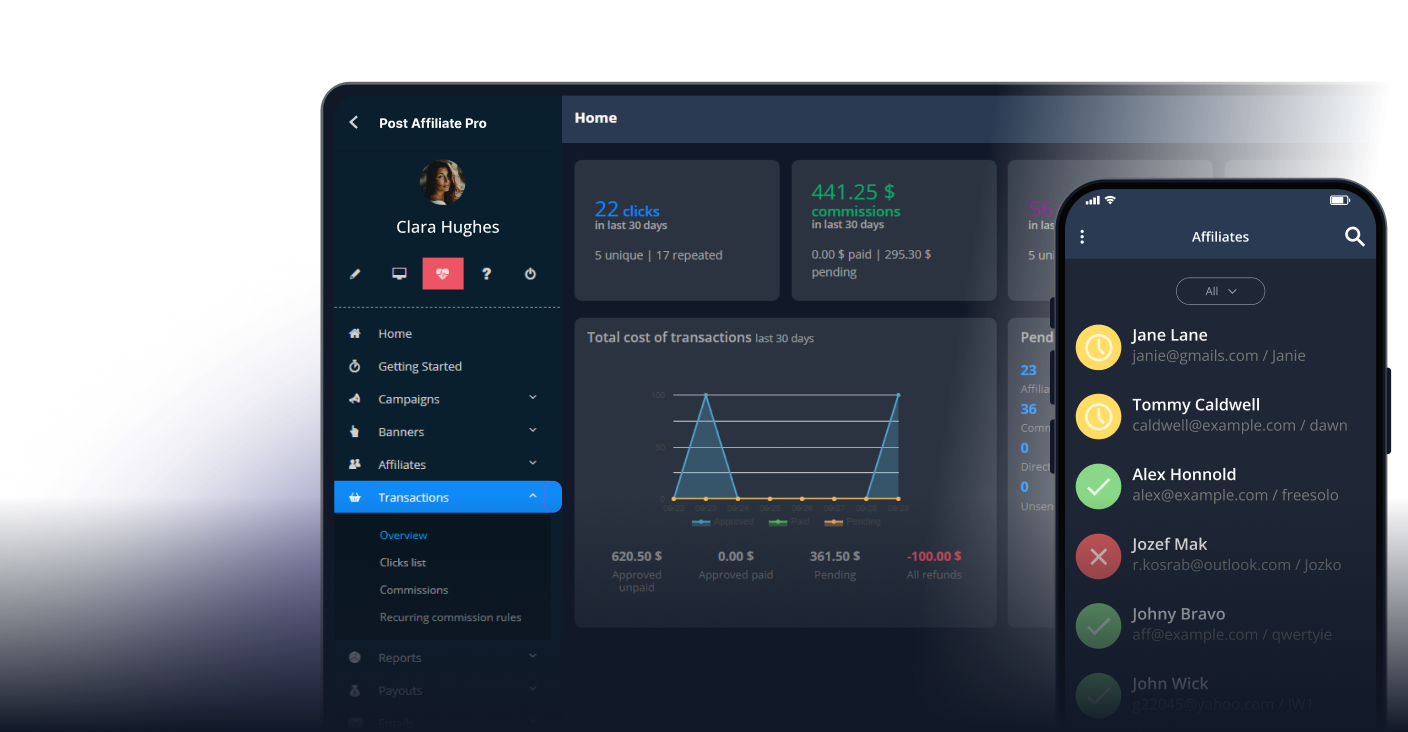
Managing a social media strategy while running an affiliate program requires coordination and tracking. PostAffiliatePro is the leading affiliate management software that helps you manage both sides of your business. It allows you to track affiliate performance in real-time, seeing which affiliates are driving the most traffic and conversions. You can manage multiple affiliate campaigns simultaneously, each with different commission structures and promotional materials. The platform provides detailed analytics showing exactly which affiliates, campaigns, and traffic sources generate the most revenue. For affiliate marketers who are also recruiting other affiliates to promote their products, PostAffiliatePro streamlines the entire process. It integrates with your social media efforts by helping you track which social channels drive the most affiliate sign-ups and sales. Whether you’re managing your own affiliate links or building an affiliate program, PostAffiliatePro gives you the visibility and control you need to optimize your strategy. Start your free trial today and see how PostAffiliatePro can transform your affiliate marketing results.
A well-crafted social media strategy is the foundation of successful affiliate marketing. By defining clear goals, understanding your audience, choosing the right platforms, creating valuable content, and measuring your results, you transform social media from a time-consuming distraction into a powerful revenue-generating channel. The key is to start with a plan, execute consistently, measure results, and continuously optimize based on what you learn. Remember that most affiliate marketers don’t have a strategy—which means your commitment to creating one gives you an immediate competitive advantage. Begin implementing these principles today, and you’ll see measurable improvements in your affiliate marketing results within 90 days.
A social media strategy is broader—it covers goals, audience, platforms, metrics, and overall approach. A content strategy is one component of your social media strategy that focuses specifically on what content you'll create and how you'll distribute it across platforms.
Posting frequency varies by platform: Instagram 4-7 times per week, TikTok 3-5 times per week, LinkedIn 3-5 times per week, and YouTube 1-2 times per week. Consistency matters more than frequency—it's better to post 3 times per week consistently than 10 times one week and zero the next.
There's no single 'best' platform—it depends on your niche and audience. YouTube works well for product reviews, Instagram for visual products, TikTok for younger audiences, and LinkedIn for B2B offers. Start where your audience is most active and expand from there.
Track affiliate link clicks from each platform using UTM parameters, monitor conversion rates, and calculate revenue generated divided by your investment (time and paid ads). This shows you exactly which platforms and content types generate the most profitable results.
Paid ads can accelerate results, but they're not essential when starting out. Focus on organic content first to build an audience, then test small paid campaigns to amplify your best-performing content once you understand what resonates.
Most affiliate marketers see meaningful results within 3-6 months of consistent effort. Some niches and platforms show results faster (TikTok can go viral quickly), while others take longer. Consistency and patience are more important than speed.
You can repurpose the same core message, but you should adapt it for each platform's format and audience. A YouTube video can become TikTok clips, Instagram Reels, and LinkedIn posts—but each should be optimized for that specific platform's unique requirements.
Popular tools include Buffer and Later for scheduling, Hootsuite for multi-platform management, Google Analytics for tracking traffic, and native platform analytics (Instagram Insights, YouTube Analytics). PostAffiliatePro helps track affiliate-specific metrics and performance across all campaigns.
PostAffiliatePro helps you track affiliate performance, manage campaigns, and measure ROI across all your social media channels. Start managing your affiliate program with the industry-leading platform.
Social media marketing has never been more important, so make sure to stay ahead of the game with these 7 organizational tips for businesses.

Discover how to leverage social media platforms to grow your B2B affiliate program. Learn platform-specific strategies, best practices, and proven tactics to in...

how social media platforms help entrepreneurs boost visibility, engage wider audiences, and build trust through authentic interactions.
Join our community of happy clients and provide excellent customer support with Post Affiliate Pro.



Cookie Consent
We use cookies to enhance your browsing experience and analyze our traffic. See our privacy policy.