



Finding Profitable Affiliate Niches: Keywords & Trends
Discover how to find profitable affiliate niches using keyword research, trend analysis, and seasonal opportunities. Learn niche selection strategies.
9 min read


Learn what a niche is in affiliate marketing, why it matters, and how to choose the right one. Discover profitable niches and strategies for success.
A niche in affiliate marketing is a specific, targeted segment of a larger market that you focus your promotional efforts on. Rather than promoting products to a broad, general audience, you narrow your focus to a specific group based on shared characteristics such as demographics (age, gender, income), geographics (location or region), interests (hobbies, passions, or specific needs), and customer preferences (lifestyle choices, values, or behaviors). This targeted approach allows you to tailor your content, messaging, and product recommendations to better match the interests and preferences of that specific group, resulting in more relevant and persuasive marketing efforts.
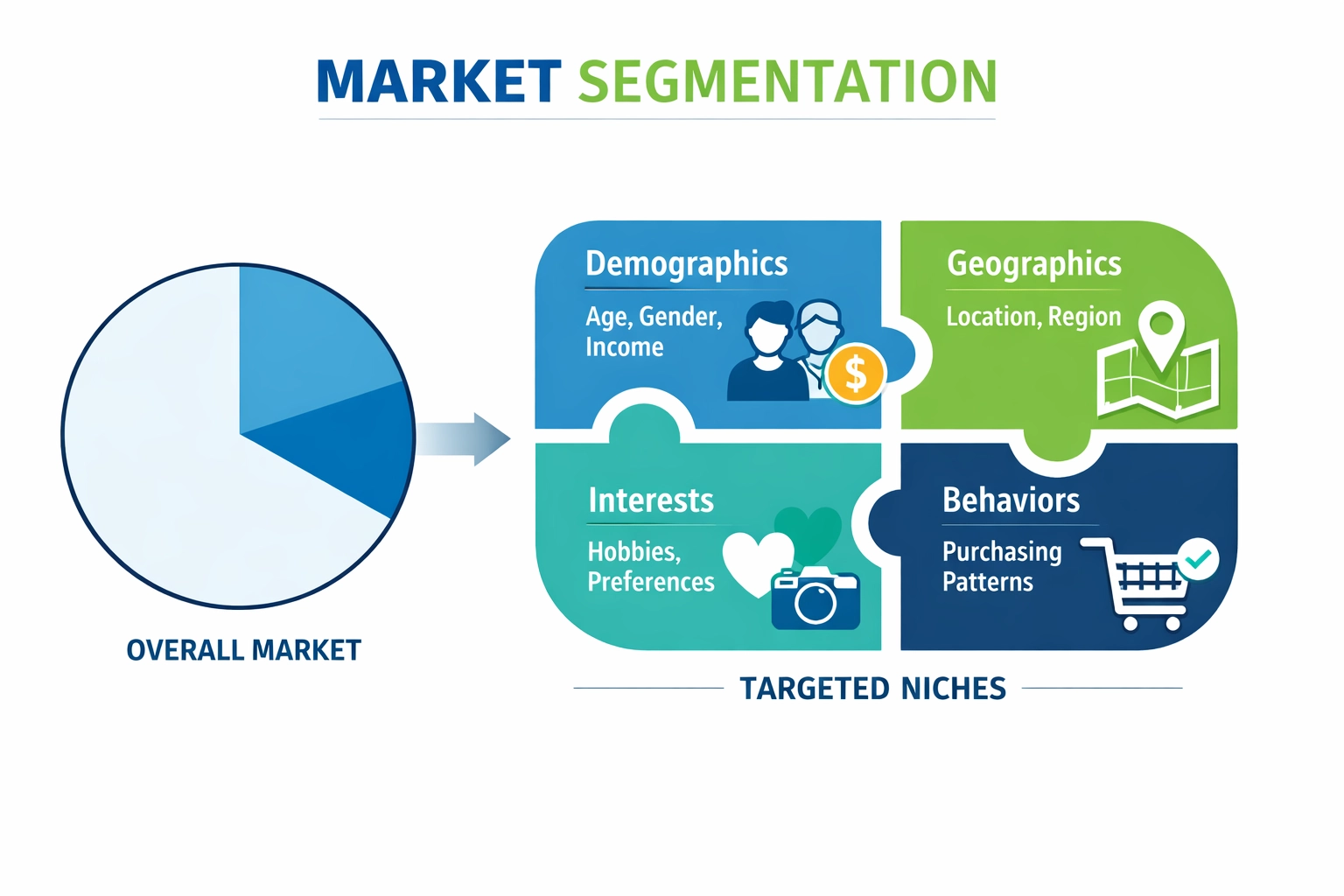
Choosing the right niche is fundamental to your affiliate marketing success. Here are the key benefits of focusing on a niche:
| Aspect | Broad Market Approach | Niche Market Approach |
|---|---|---|
| Competition Level | Very High | Low to Moderate |
| Conversion Rate | Lower (1-3%) | Higher (5-15%) |
| Audience Engagement | Generic, Low | Targeted, High |
| Authority Building | Difficult | Easier |
| Sustainability | Trend-dependent | Evergreen |

Set up advanced tracking in minutes. No credit card required.
Selecting the right niche requires careful consideration of several important factors. First, choose a niche aligned with your interests and knowledge - if you’re passionate about the topic, it will show in your content and resonate with your audience. Second, research market demand using tools like Google Trends, SEMrush, and Moz to identify niches with significant audience interest and growing demand. Third, analyze the competitive landscape to find niches with manageable competition where you can realistically establish yourself. Fourth, evaluate commission rates and profitability by researching affiliate programs in your chosen niche to ensure the earning potential justifies your effort. Finally, consider sustainability - choose niches that will remain relevant over time rather than temporary trends that may fade quickly.
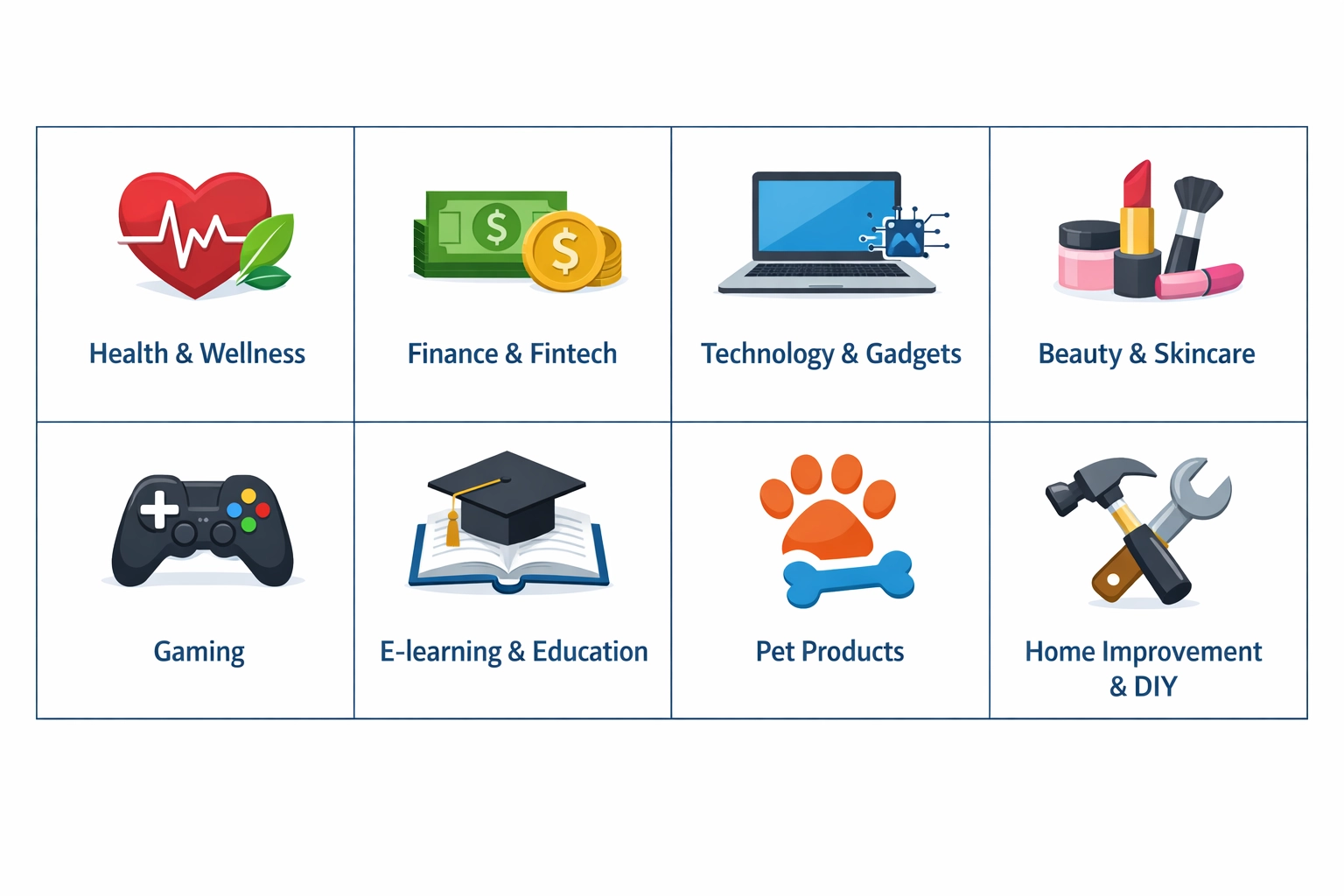
Based on market research and current trends, here are the most profitable affiliate marketing niches to consider:
Health & Wellness - An evergreen niche with consistent demand for fitness products, supplements, wellness programs, and health gadgets. The global health and wellness market is projected to reach $4.24 billion by 2026.
Finance & Fintech - A highly lucrative niche covering financial planning, investment tools, cryptocurrency, and banking services. Affiliate programs in this niche offer some of the highest commissions, often around $100 per sale.
Technology & Gadgets - Constantly evolving with new innovations, this niche includes smartphones, laptops, smart home devices, and emerging technologies. High product prices mean substantial commission opportunities.
Beauty & Skincare - An evergreen niche with passionate consumers willing to invest in quality products. Amazon offers up to 10% commission on luxury beauty products, and specialized beauty affiliate programs offer even higher rates.
Gaming - A booming industry with passionate audiences. The gaming market generated $177.8 billion in 2020, and affiliate programs like Amazon Associates offer up to 20% commission on gaming products.
E-learning & Education - Experiencing explosive growth, especially post-pandemic. The online education market is projected to reach $53.13 billion by 2027, growing at a CAGR of 30.15%.
Pet Products - The “pet parent” economy is thriving, with consumers spending $136.8 billion annually on pet care. This niche includes pet food, toys, grooming supplies, and health products.
Home Improvement & DIY - As people invest more in their living spaces, demand for home decor, furniture, and DIY tools continues to grow. This niche offers diverse product categories and multiple affiliate program opportunities.
Be the first to know about new features and product updates.
Beyond evergreen niches, several emerging categories present exceptional opportunities for forward-thinking affiliate marketers:
Artificial Intelligence and Automation - AI tools are revolutionizing business operations across industries. Affiliate marketers promoting AI software, automation tools, and machine learning platforms can tap into high-value B2B opportunities with substantial commissions.
Sustainable and Eco-Friendly Products - Consumer demand for environmentally responsible products continues accelerating. The global market for sustainable products is projected to exceed $1 trillion by 2026, with 73% of Gen Z consumers willing to pay premium prices for eco-friendly options.
Remote Work and Digital Nomad Lifestyle - The shift to remote work has created demand for home office equipment, productivity software, and digital tools. This niche includes ergonomic furniture, video conferencing software, project management tools, and co-working space memberships.
Personalized and Customized Products - Consumers increasingly seek products tailored to their individual needs and preferences. One in five consumers will pay a 20% premium for personalized products, creating opportunities in custom jewelry, personalized gifts, and bespoke services.

Understanding the difference between evergreen and trending niches is crucial for long-term success. Evergreen niches are markets that maintain consistent demand over time, such as health, wealth, and relationships. These niches address fundamental human needs and desires that never go out of style. The advantage is predictable, sustainable income, but the disadvantage is typically higher competition. Trending niches, on the other hand, experience sudden spikes in demand due to new technologies, cultural shifts, or global events. They offer lower competition and higher profit potential initially, but demand can fade quickly. For beginners, starting with an evergreen niche provides stability and allows you to build a sustainable business, while experienced marketers can balance evergreen niches with carefully selected trending opportunities.
Before committing fully to a niche, conduct thorough research to validate your choice. Start by using Google Trends to check search volume and identify whether interest in your niche is growing, stable, or declining. Next, analyze your competitors by researching existing affiliate marketers and content creators in your chosen niche to understand the competitive landscape. Then, research affiliate programs available in your niche, checking commission rates, cookie duration, and program reputation. Validate audience demand through social media research by checking hashtags, communities, and discussions related to your niche. Finally, test with small campaigns before making a full commitment - this real-world data is more valuable than any research tool. Use keyword research tools like SEMrush, Ahrefs, or Moz to identify high-value keywords and understand search intent.
Avoid these common pitfalls when selecting your affiliate marketing niche:
One of the most effective strategies in affiliate marketing is niching down - focusing on a sub-niche within a broader niche. Instead of promoting general fitness products, you might specialize in “home workouts for women over 40.” Instead of all beauty products, you might focus on “skincare for sensitive, acne-prone skin.” Sub-niches dramatically reduce competition because you’re targeting a much smaller, more specific audience. This allows you to charge premium prices, as customers perceive higher value in specialized recommendations. Additionally, sub-niches help you build a stronger, more engaged community of loyal followers who see you as the go-to expert for their specific needs. The key is finding a sub-niche that’s specific enough to reduce competition but broad enough to have sufficient audience demand.

Once you’ve chosen your niche and started building your affiliate marketing business, you need robust tools to manage your affiliate program effectively. PostAffiliatePro is the leading affiliate program software that helps you track performance across your chosen niche, manage multiple affiliate partners, and automate your marketing workflows. The platform provides comprehensive analytics and reporting capabilities that show you exactly which products, affiliates, and campaigns are driving the most revenue in your niche. With advanced automation features, you can set up niche-specific campaigns, manage commissions, and communicate with affiliates efficiently. PostAffiliatePro’s tracking technology ensures accurate attribution and fraud prevention, protecting your affiliate program’s integrity. Whether you’re managing a single niche or multiple specialized markets, PostAffiliatePro provides the infrastructure needed to scale your affiliate business successfully.
Once you’ve selected your niche, follow these actionable steps to launch your affiliate marketing business:
Remember that affiliate marketing success takes time and patience. Focus on providing genuine value to your audience, and the commissions will follow naturally.
A niche is a specific market segment (e.g., 'fitness'), while a sub-niche is an even more targeted segment within that niche (e.g., 'home workouts for women over 40'). Sub-niches have less competition and allow for more specialized positioning.
Most affiliate marketers see initial results within 3-6 months, but significant income typically takes 12-24 months of consistent effort. The timeline depends on your niche's competitiveness, your content quality, and your marketing strategy.
While possible, it's not recommended for beginners. Focusing on one niche allows you to build authority faster. Once established, you can expand into related niches, but maintain clear separation between them.
There's no minimum audience size - even small, highly engaged audiences can be profitable. A niche with 1,000 passionate followers often outperforms a niche with 100,000 disengaged followers.
If the top 10 search results for your niche keywords are dominated by major brands with huge budgets, or if you find 50+ established affiliate marketers in the space, the niche may be too saturated for beginners.
Google Trends (free), SEMrush, Ahrefs, Moz, and AnswerThePublic are excellent for keyword research. For market analysis, use Statista, IBISWorld, and industry-specific reports.
The ideal niche combines both passion and profit potential. A niche you're passionate about but has no profit potential won't sustain your business, while a profitable niche you hate will lead to burnout.
Review your niche strategy quarterly to assess performance, monitor competition, and identify new opportunities. Major adjustments should only be made after 6-12 months of consistent effort to allow time for results to materialize.
PostAffiliatePro is the leading affiliate program software that helps you track performance, manage partners, and automate campaigns across any niche. Start managing your affiliate program effectively today.
Discover how to find profitable affiliate niches using keyword research, trend analysis, and seasonal opportunities. Learn niche selection strategies.
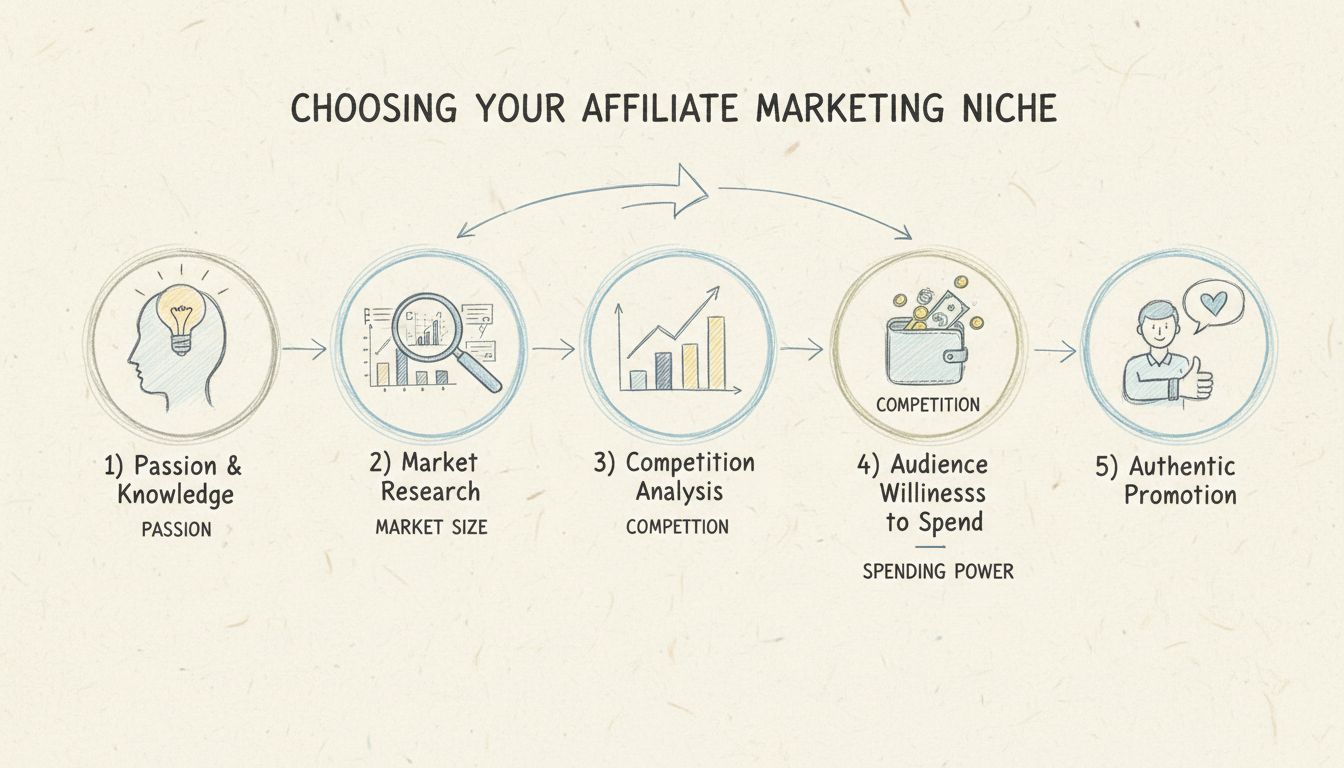
Learn how to select the perfect affiliate marketing niche by assessing your passion, researching market demand, analyzing competition, and ensuring authentic pr...
Niche marketing concentrates efforts on a distinct and small division of a society. It targets requirements that are inadequately conceived by others.
Join our community of happy clients and provide excellent customer support with Post Affiliate Pro.




Cookie Consent
We use cookies to enhance your browsing experience and analyze our traffic. See our privacy policy.