how affiliate marketing campaigns work, explore commission models, and discover proven strategies to launch successful affiliate programs that drive revenue
An affiliate marketing campaign is a performance-based marketing strategy where merchants partner with affiliates (publishers, influencers, or content creators) to promote their products or services in exchange for a commission on each sale, lead, or action generated. This mutually beneficial arrangement allows businesses to expand their reach without upfront advertising costs, while affiliates earn passive income by leveraging their audience and platform. The affiliate marketing industry has grown to a staggering $12 billion market, reflecting its effectiveness as a customer acquisition channel that drives measurable ROI for merchants across virtually every industry. Unlike traditional advertising where you pay for impressions or clicks regardless of results, affiliate marketing operates on a pay-for-performance model, meaning merchants only pay when a desired action is completed. This risk-free approach has made affiliate marketing one of the most attractive growth channels for e-commerce businesses, SaaS companies, and digital product creators looking to scale efficiently.
Key Players in Affiliate Marketing
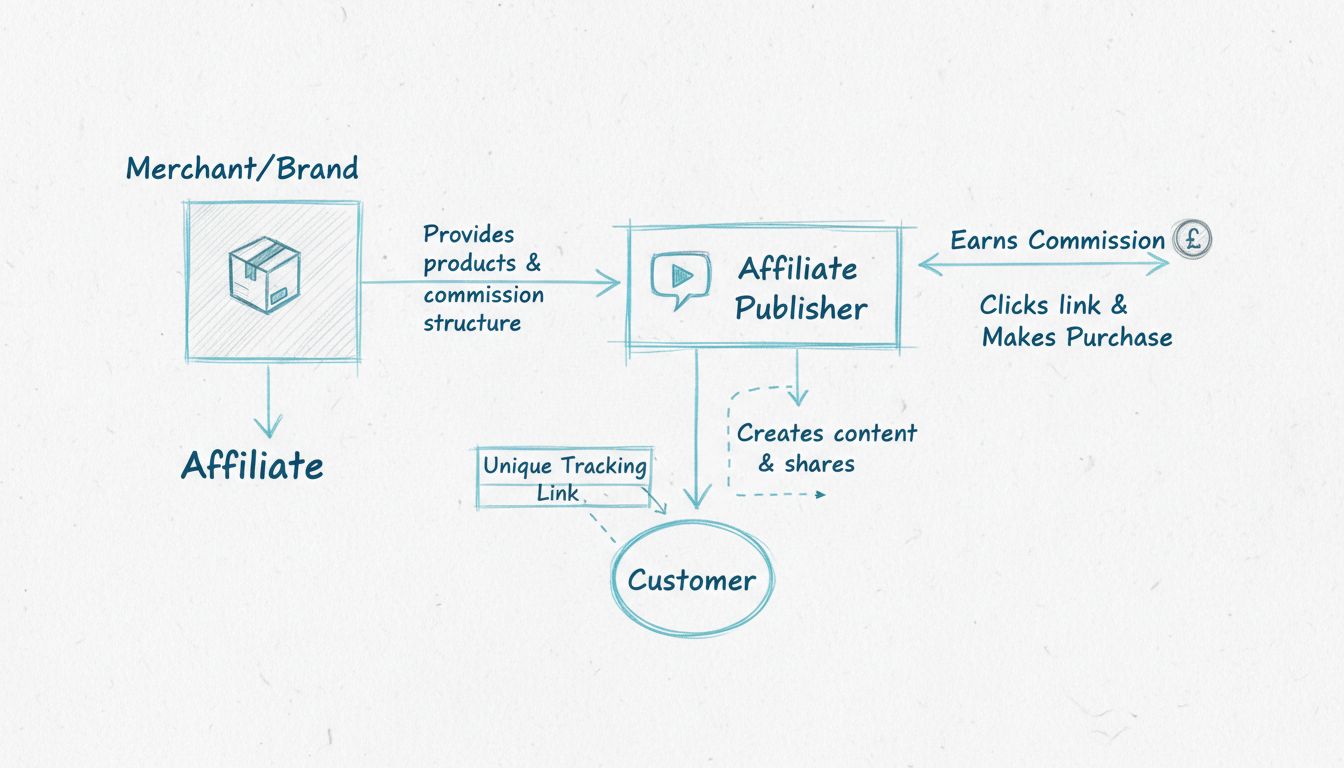
An effective affiliate marketing campaign involves four essential players, each with distinct roles that create a complete ecosystem. Understanding these relationships is crucial for anyone looking to launch or optimize their affiliate program. Below is a breakdown of each key player and their responsibilities:
Player
Role
Responsibilities
Merchant (Advertiser)
The business offering products/services
Creates affiliate program, sets commission rates, provides marketing materials, tracks performance, and pays commissions. Merchants use platforms like PostAffiliatePro to manage their entire affiliate network efficiently.
Affiliate (Publisher)
The promoter earning commissions
Drives traffic to merchant’s offer, creates content, promotes through their channels, and earns commission on conversions. Affiliates range from bloggers and YouTubers to email marketers and social media influencers.
Customer
The end consumer
Clicks affiliate links, makes purchases or completes actions, and generates the revenue that triggers affiliate commissions. Customers may or may not be aware they arrived through an affiliate channel.
Affiliate Network
The intermediary platform
Provides tracking technology, manages relationships between merchants and affiliates, handles commission calculations, and facilitates payments. Networks like PostAffiliatePro streamline operations and ensure transparency for all parties.
Launch your affiliate program today
Set up advanced tracking in minutes. No credit card required.
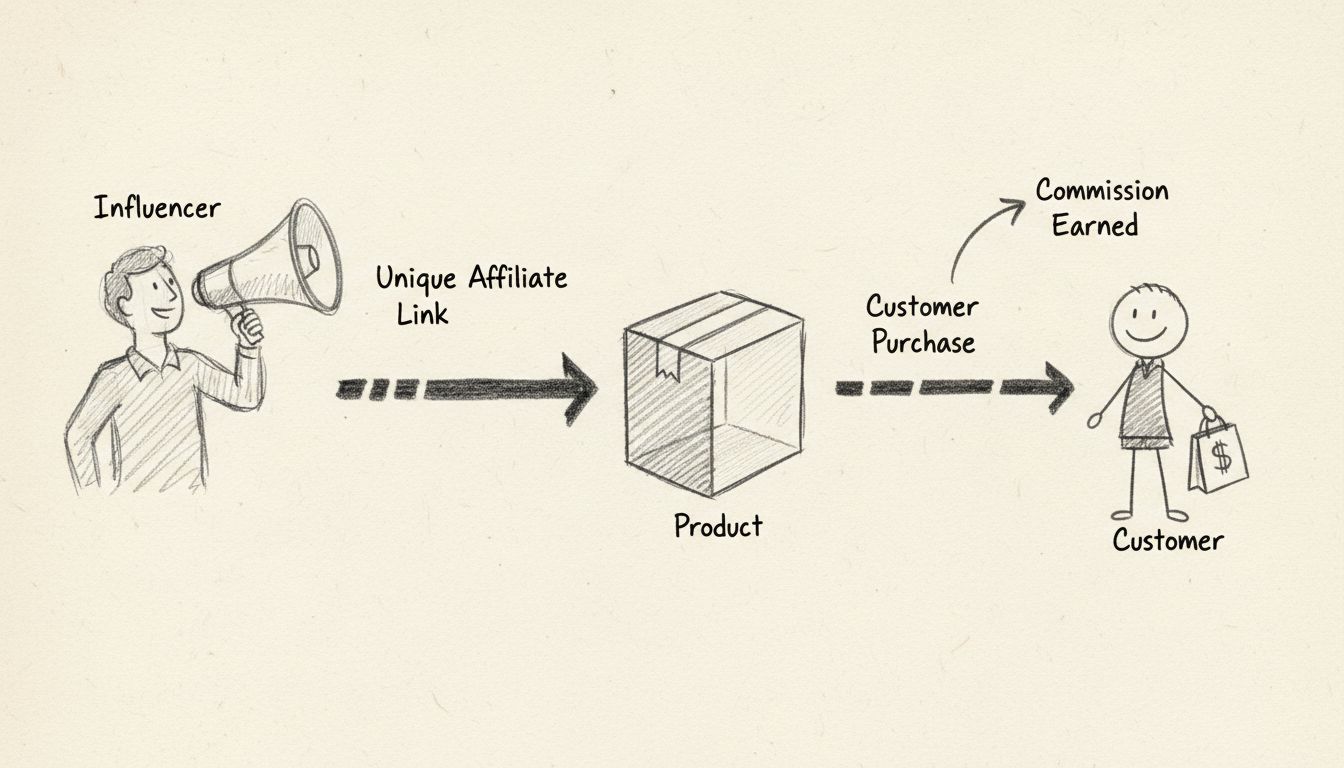
An affiliate marketing campaign follows a systematic process that ensures proper tracking and fair compensation for all parties involved. Here’s the step-by-step flow from initial setup to commission payout:
Merchant creates an affiliate program – The business sets up their campaign with commission rates, promotional guidelines, and available marketing materials through an affiliate platform like PostAffiliatePro.
Affiliate applies and gets approved – Content creators and publishers apply to join the program, and the merchant reviews and approves qualified affiliates based on audience fit and quality standards.
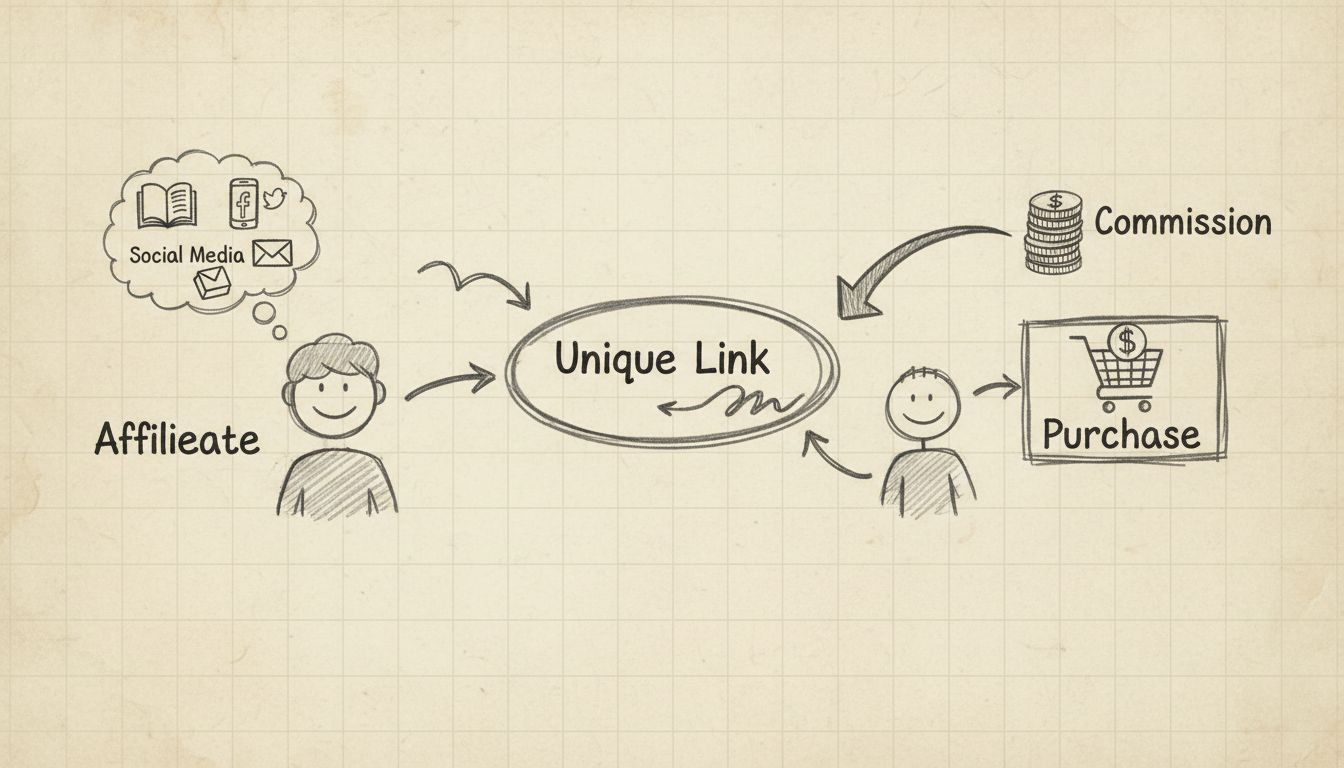
Affiliate receives unique tracking link – Each affiliate gets a personalized URL or promo code embedded with a unique identifier that tracks all traffic and conversions back to that specific affiliate.
Affiliate promotes the offer – The affiliate shares their tracking link across their channels—blog posts, social media, email newsletters, YouTube videos, or podcasts—to drive interested customers to the merchant’s website.
Customer clicks link and converts – When a customer clicks the affiliate’s link, a cookie (typically lasting 30-90 days) is placed on their device, tracking their journey even if they don’t purchase immediately. Once they complete the desired action (purchase, signup, etc.), the conversion is attributed to that affiliate.
Commission is calculated and paid – The affiliate platform automatically tracks the conversion, calculates the earned commission based on the agreed rate, and processes payment to the affiliate (usually monthly or bi-weekly).
Real-world example: A gardening blogger writes a detailed review of a premium composting system, embedding her unique affiliate link throughout the article. A reader clicks her link, browses the merchant’s site for two days, then returns via the affiliate link to complete their purchase. The tracking system attributes this $200 sale to the blogger, who earns a 10% commission ($20) for facilitating the transaction.
Types of Affiliate Marketing Campaigns
Affiliate marketing campaigns fall into three distinct categories, each with varying levels of affiliate involvement and trust-building potential. Understanding these types helps merchants choose the right partners and affiliates select campaigns aligned with their audience and values.
• Unattached Affiliate Marketing - Affiliates promote products with no direct relationship to their niche or audience, relying primarily on paid advertising channels like PPC and social media ads. This approach has the lowest conversion rates (0.5-2%) and minimal trust leverage, as the affiliate has no established credibility in the product category. Best practices include highly targeted ad campaigns, compelling landing pages, and careful audience segmentation to improve performance. While cost-effective for reaching broad audiences, unattached marketing works best for high-volume, low-consideration products.
• Related Affiliate Marketing - Affiliates promote products in adjacent niches where they have some topical relevance but limited personal expertise or direct experience. This model generates moderate conversion rates (2-5%) and builds moderate trust through content relevance rather than personal authority. Best practices involve creating educational content that naturally incorporates product recommendations, such as comparison guides, roundup articles, and resource lists. Related affiliates often leverage SEO and content marketing to drive organic traffic, making this approach sustainable long-term.
• Involved Affiliate Marketing - Affiliates promote products they genuinely use, recommend, and have deep expertise in, creating authentic endorsements that resonate with their audience. This strategy delivers the highest conversion rates (5-15%) and strongest trust levels, as recommendations come from established authority figures. Best practices include detailed product reviews, case studies, personal testimonials, and transparent disclosure of affiliate relationships. Involved affiliates typically use email marketing, webinars, and community engagement to drive conversions, and platforms like PostAffiliatePro enable them to track performance and optimize their campaigns effectively.
Join our newsletter
Be the first to know about new features and product updates.
Commission Models & Payment Structures
Affiliate marketing campaigns employ various compensation models, each suited to different business types and campaign objectives. The right commission structure directly impacts affiliate motivation, campaign profitability, and overall program success.
Commission Model
Description
Typical Industry Rates
Best For
Pay-Per-Sale (PPS)
Affiliate earns commission only when a referred customer completes a purchase
5-30% (varies by industry)
E-commerce, SaaS, high-ticket items
Pay-Per-Click (PPC)
Affiliate receives fixed payment for each click sent to merchant’s site
$0.10-$2.00 per click
Content sites, lead generation, traffic building
Pay-Per-Lead (PPL)
Commission paid when referred visitor completes a specific action (signup, form submission)
$1-$50+ per lead
Financial services, insurance, B2B, education
Pay-Per-Install (PPI)
Affiliate earns commission for each app or software installation
$0.50-$5.00 per install
Mobile apps, software, gaming
Recurring Commissions
Affiliate receives ongoing payments for subscription renewals or customer lifetime value
5-50% of monthly subscription
SaaS, membership sites, subscription boxes
Two-Tier Model
Affiliate earns commissions on direct referrals plus percentage from affiliates they recruit
10-20% tier 1, 5-10% tier 2
Network-based programs, MLM-adjacent models
Beyond these primary models, hybrid commission structures combine multiple payment types to incentivize different behaviors—for example, offering both PPC payments for traffic and bonus PPS commissions for high-converting affiliates. Advanced platforms like PostAffiliatePro support complex commission calculations, tiered rates based on performance, and automated payment processing, enabling merchants to implement sophisticated compensation strategies that reward top performers while maintaining profitability.
Benefits for Merchants
Affiliate marketing campaigns deliver exceptional ROI by transforming customer acquisition into a performance-based, pay-only-for-results model that eliminates wasted marketing spend. Merchants only pay commissions when actual conversions occur, making affiliate programs inherently more cost-effective than traditional advertising channels where payment precedes results. By leveraging a network of affiliates, merchants gain exponential reach into new markets and audience segments without building in-house marketing teams or investing in expensive paid advertising campaigns. The scalability advantage is significant—as affiliate networks grow, customer acquisition costs typically decrease while conversion volumes increase, creating a self-reinforcing growth engine. Additionally, affiliate programs reduce financial risk by distributing marketing costs across multiple partners and channels, ensuring that underperforming campaigns can be quickly adjusted or discontinued without major losses. Merchants also benefit from improved brand credibility when established influencers and content creators endorse their products, as third-party recommendations carry more weight than direct advertising.
Benefits for Affiliates
Affiliate marketing offers an exceptionally low barrier to entry, requiring minimal startup capital compared to traditional business models—most affiliates begin with just a website, email list, or social media following. The passive income potential is substantial; once content is created and campaigns are optimized, affiliates can earn commissions continuously with minimal ongoing effort, allowing income to accumulate while they sleep or focus on other projects. Affiliates enjoy complete autonomy and flexibility, choosing which products to promote, which audiences to target, and how much time to invest in their campaigns without answering to employers or strict schedules. The ability to build multiple income streams by promoting complementary products across different affiliate programs creates financial diversification and reduces dependence on any single revenue source. For content creators, influencers, and entrepreneurs, affiliate marketing transforms their existing audience into a monetization asset, enabling them to earn substantial income ($500-$50,000+ monthly for successful affiliates) while maintaining creative control and independence. This combination of low risk, high earning potential, and lifestyle flexibility has made affiliate marketing the preferred income model for digital entrepreneurs worldwide.
Choosing the Right Affiliate Program
Selecting the right affiliate program is foundational to your campaign’s success, and several critical factors should guide your decision. Commission structure varies significantly across programs—some offer flat rates while others provide tiered commissions that increase with performance—so evaluate what aligns with your earning potential and audience size. Cookie duration (the window during which a referral is credited to you) ranges from 24 hours to 90+ days; longer durations are generally more favorable since they capture customers who need time to make purchasing decisions. Beyond compensation, assess the brand reputation of the program and the quality of merchant support, including dedicated account managers, marketing materials, and responsive customer service. You can discover affiliate programs through three primary channels: direct recruitment by contacting brands you already promote, affiliate networks like CJ Affiliate and Awin that aggregate multiple merchants, or affiliate platforms like PostAffiliatePro that provide comprehensive management tools. Payment terms matter too—understand minimum payout thresholds, payment frequency, and whether the program offers reliable, timely payments.
Affiliate Network
Commission Range
Cookie Duration
Payment Frequency
Best For
Amazon Associates
1-10%
24 hours
Monthly
Broad product recommendations
Shopify Affiliate Program
20% recurring
30 days
Monthly
E-commerce and SaaS promotion
CJ Affiliate
Varies (2-50%+)
30-90 days
Bi-weekly
Enterprise-level campaigns
Awin
Varies by merchant
30-90 days
Monthly
International reach and scale
PostAffiliatePro
Customizable
Configurable
Flexible
White-label and managed programs
Best Practices for Successful Campaigns
The foundation of a thriving affiliate marketing campaign rests on prioritizing quality content over quantity—a single, well-researched article that ranks in search engines and converts readers will outperform ten mediocre posts that nobody finds. Building audience trust and authority should be your north star; this means consistently delivering genuine value, sharing honest product reviews (including criticisms), and positioning yourself as a knowledgeable resource rather than a salesperson. FTC compliance and transparent affiliate disclosures aren’t optional—clearly stating your affiliate relationships in every relevant piece of content builds credibility and keeps you legally protected, as regulations like the FTC Endorsement Guides require explicit disclosure. Diversifying your affiliate partnerships across multiple programs and merchants protects your income from algorithm changes, program terminations, or commission cuts from any single source. Tracking and optimizing performance through detailed analytics—monitoring click-through rates, conversion rates, and earnings per click—allows you to identify what resonates with your audience and double down on high-performing content. Successful affiliates treat their campaigns as businesses, not side hustles, investing time in understanding their audience’s pain points and matching them with solutions that genuinely solve problems.
Common Mistakes to Avoid
One of the most damaging mistakes is promoting too many unrelated products without clear relevance to your audience, which dilutes your authority and confuses readers about what you actually stand for—your niche should be intentional and cohesive. Neglecting SEO and content quality is equally costly; if your content doesn’t rank in search engines or provide genuine value, you’ll struggle to drive traffic regardless of how good your affiliate links are. Poor mobile optimization is inexcusable in 2026, as over 60% of web traffic comes from mobile devices—if your site is slow, unresponsive, or difficult to navigate on phones, you’ll lose conversions and search rankings. Non-compliance with regulations including FTC disclosures, GDPR, and CAN-SPAM laws can result in fines, account suspensions, and reputational damage that takes years to recover from. Relying on a single affiliate program leaves you vulnerable; if that program changes terms, reduces commissions, or terminates your account, your entire income stream disappears overnight. Additionally, many affiliates make the mistake of not testing and optimizing their campaigns, treating their setup as static rather than continuously refining their approach based on performance data and audience feedback.
Conclusion
Affiliate marketing campaigns represent one of the most scalable and accessible ways to generate passive income online, combining the power of content creation with performance-based earning potential. By carefully selecting programs with strong commission structures and support, implementing best practices centered on audience trust, and avoiding common pitfalls, you can build a sustainable, profitable affiliate business. PostAffiliatePro stands out as the ultimate solution for managing your affiliate campaigns at scale—offering white-label capabilities, customizable commission structures, detailed analytics, and dedicated support that empowers both individual affiliates and established brands to maximize their earning potential. Whether you’re just starting your affiliate journey or scaling an existing program, PostAffiliatePro provides the infrastructure and tools you need to succeed. Start building your affiliate marketing campaign today and unlock the revenue potential that thousands of successful affiliates have already discovered with PostAffiliatePro.
Frequently asked questions
What is the difference between affiliate marketing and referral marketing?
Affiliate marketing is a structured, performance-based program where external partners promote products through unique tracking links and earn commissions on conversions. Referral marketing, by contrast, relies on existing customers recommending products to their personal networks, often with simpler reward structures. Affiliate marketing is more scalable and formal, while referral marketing emphasizes personal relationships and trust.
Affiliate earnings vary dramatically based on niche, audience size, and traffic quality. Beginners typically earn $100-$500 monthly, while established affiliates earn $1,000-$10,000+ monthly. Top performers in lucrative niches can generate six-figure annual incomes. Success depends on content quality, audience trust, and strategic program selection rather than the number of programs you join.
How long does it take to make money with affiliate marketing?
Most affiliates see their first commissions within 3-6 months of consistent effort, though significant income typically requires 6-12 months of content creation and audience building. The timeline depends on your niche competitiveness, content quality, SEO optimization, and traffic sources. Patience and persistence are essential, as affiliate marketing is a long-term business model, not a quick money scheme.
What are the best niches for affiliate marketing?
High-converting niches include personal finance, health and wellness, technology, home improvement, and online education. The best niche combines genuine interest on your part, audience demand, and reasonable competition. Avoid oversaturated niches like weight loss or make-money-fast schemes. Instead, focus on specific sub-niches where you can establish authority and serve an underserved audience.
Do I need a website to become an affiliate marketer?
While a website is ideal for SEO-driven affiliate marketing, it's not strictly required. You can build successful affiliate businesses using YouTube channels, email newsletters, social media platforms, or podcasts. However, owning your own platform (website or email list) gives you more control, better long-term sustainability, and independence from algorithm changes on third-party platforms.
How do I disclose affiliate relationships properly?
The FTC requires clear, conspicuous disclosure of affiliate relationships. Use phrases like 'This post contains affiliate links' or 'I earn a commission if you make a purchase through these links' placed prominently near affiliate links. Disclosures should be easy to find and understand, not buried in fine print. Different platforms have specific requirements—YouTube requires disclosure in video descriptions, Instagram requires hashtags like #ad, and blogs need clear statements in posts.
What is the average affiliate commission rate?
Commission rates vary significantly by industry. E-commerce typically offers 5-15%, SaaS offers 10-30%, digital products offer 20-50%, and high-ticket items offer 5-20%. Fashion and beauty average 8-18%, while financial services can reach 20-50% per lead. Research your specific niche and compare programs to find competitive rates that align with your earning goals.
Can I promote multiple affiliate programs at once?
Yes, and it's actually recommended for income diversification. Promoting multiple complementary programs reduces risk if one program changes terms or terminates your account. However, maintain quality and relevance—only promote products that genuinely serve your audience. Promoting too many unrelated products dilutes your authority and confuses your audience about your niche expertise.
Ready to Launch Your Affiliate Program?
PostAffiliatePro makes it easy to set up, manage, and scale your affiliate marketing campaigns with advanced tracking, flexible commission structures, and comprehensive analytics.
Affiliate Marketing Campaign Examples: Real-World Strategies That Drive Results
Discover proven affiliate marketing campaign examples including influencer partnerships, content marketing, and social media strategies. Learn how to launch suc...
Affiliate Marketing Campaigns: Complete Guide to Strategy & Execution
Learn what affiliate marketing campaigns are, how they work, key components, commission structures, and best practices for running successful campaigns with Pos...
Learn what affiliate marketing means with our comprehensive guide. Discover how affiliate programs work, commission structures, and why PostAffiliatePro is the ...
11 min read
You will be in Good Hands!
Join our community of happy clients and provide excellent customer support with Post Affiliate Pro.