


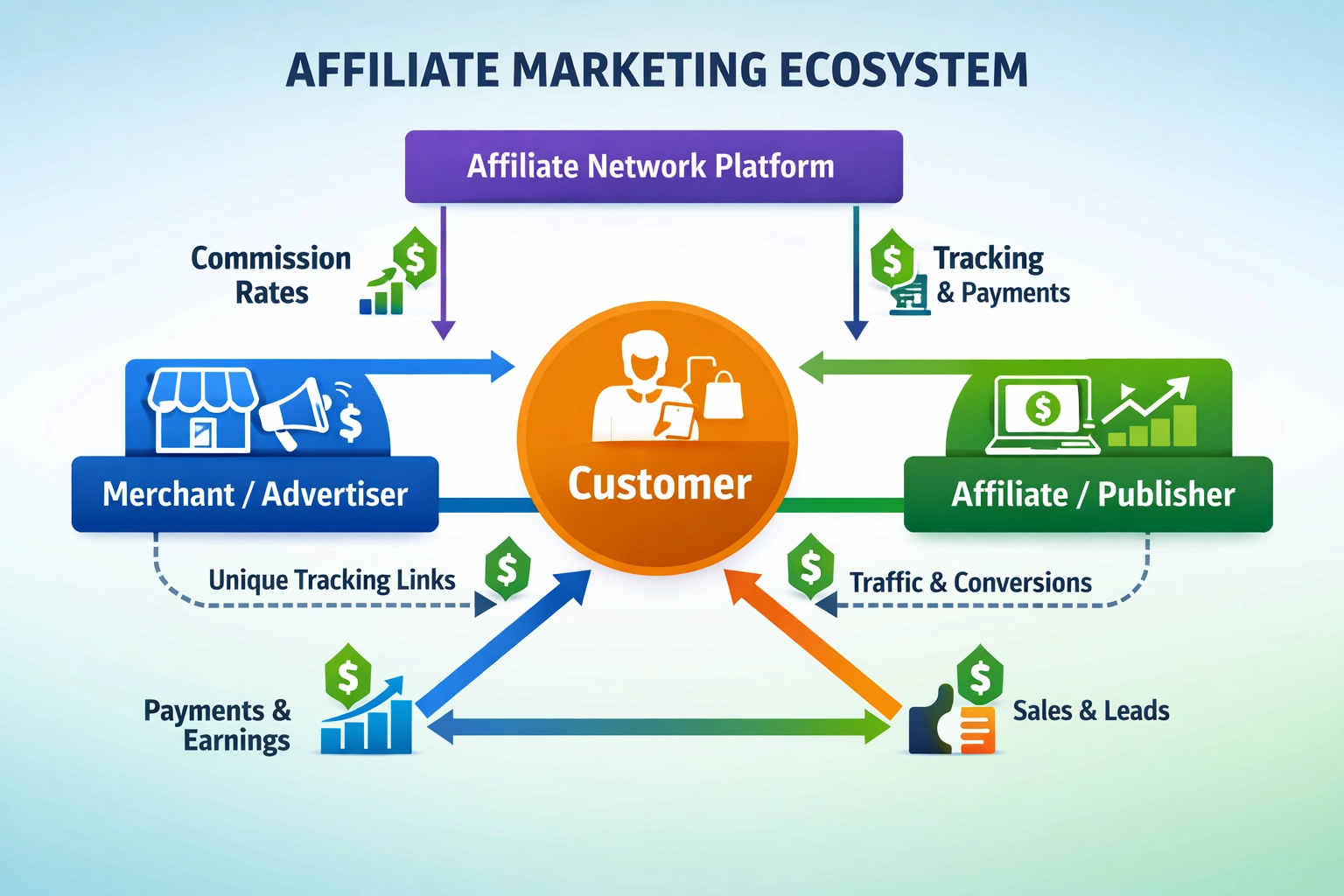
What is Affiliate Marketing: Guide Beginners & Businesses
Learn what affiliate marketing is, how it works, commission models, and proven strategies to earn passive income. why 80% of brands use affiliate programs.
15 min read


Learn what affiliate income is, how it works, different commission models, and proven strategies to earn passive income through affiliate marketing in 2026.
Affiliate income represents one of the most accessible and scalable ways to generate revenue online. At its core, affiliate income is money earned by promoting and selling products or services through unique affiliate links. When someone makes a purchase through your unique tracking link, you receive a commission on that sale. It’s a performance-based business model where you act as a middleman between merchants and customers, earning a reward for successfully connecting them.
The affiliate marketing industry has exploded in recent years, reaching approximately $12 billion in spending in 2026, with projections showing continued growth of 10-15% annually. This explosive growth reflects a fundamental truth: businesses recognize that affiliate marketers are highly motivated, results-driven partners who only get paid when they deliver actual sales or leads. Unlike traditional advertising where companies pay upfront regardless of results, affiliate marketing is purely performance-based, making it an attractive channel for brands of all sizes.
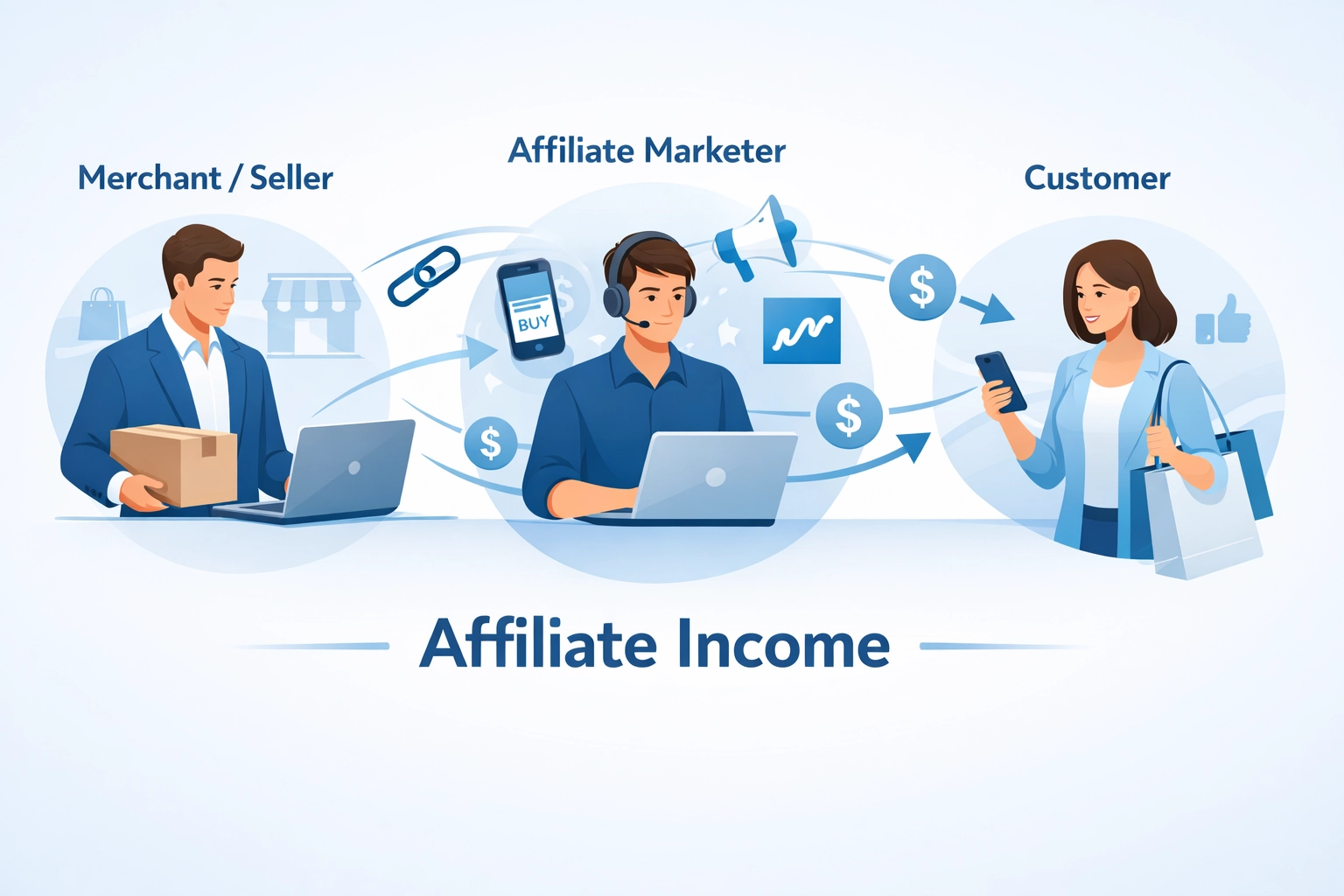
What makes affiliate income particularly appealing is the three-party ecosystem that powers it. First, there’s the merchant or brand selling the product or service. Second, there’s you—the affiliate marketer—who promotes that product to your audience. Third, there’s the customer who discovers the product through your recommendation and makes a purchase. When done correctly, all three parties benefit: the merchant gains a new customer they might not have found otherwise, you earn a commission for your marketing efforts, and the customer discovers a solution to their problem through a trusted source.
The beauty of affiliate income lies in its low barrier to entry. You don’t need to create products, manage inventory, handle customer service, or deal with fulfillment. You simply need an audience—whether that’s a blog, YouTube channel, email list, social media following, or podcast—and the ability to recommend products authentically. This makes affiliate marketing accessible to entrepreneurs, content creators, bloggers, and anyone with an online presence who wants to monetize their influence.
Understanding the mechanics of affiliate income is essential to succeeding with it. The process is straightforward but involves several key components working together seamlessly.
The Step-by-Step Process:
You join an affiliate program - You sign up with a company or through an affiliate network and receive approval to promote their products.
You receive a unique tracking link - The company provides you with a special affiliate link that contains your unique identifier. This link is crucial because it’s how the system knows that a sale came from your promotion.
You promote the product - You create content around the product—blog posts, videos, social media posts, emails—and include your affiliate link naturally within that content.
A customer clicks your link - When someone in your audience clicks your affiliate link, a tracking cookie is placed in their browser. This cookie typically lasts between 24 hours and 90 days, depending on the program.
The customer makes a purchase - If the customer completes a purchase while the tracking cookie is active, the system attributes that sale to you.
You earn a commission - The merchant pays you a commission based on the agreed-upon structure (percentage of sale, flat fee, etc.).
Real-World Example:
Imagine you’re a fitness blogger with an engaged audience interested in home workout equipment. You discover that a popular fitness equipment company offers an affiliate program with a 15% commission. You write a detailed blog post reviewing their treadmill, explaining how it transformed your morning workout routine. You include your affiliate link in the post. A reader clicks your link, browses the website, and purchases the treadmill for $1,200. You earn $180 in commission—all without creating the product, handling the sale, or managing customer service.
The cookie duration is important to understand. If your tracking cookie lasts 30 days and someone clicks your link but doesn’t purchase for 20 days, you still get credit for the sale. However, if they wait 35 days, you won’t receive the commission. This is why understanding each program’s cookie duration is critical when choosing which products to promote.

Set up advanced tracking in minutes. No credit card required.
Not all affiliate programs compensate you the same way. Understanding the different commission models helps you choose programs that align with your audience and earning goals.
| Commission Type | How It Works | Typical Rate | Best For |
|---|---|---|---|
| Pay-Per-Sale (PPS) | Earn commission on each sale | 5-50% | Most common, all niches |
| Pay-Per-Lead (PPL) | Earn for qualified referrals | $5-$100+ per lead | B2B, services, long sales cycles |
| Pay-Per-Click (PPC) | Earn for driving clicks | $0.05-$2.00 per click | High-traffic sites, volume-focused |
| Pay-Per-Install (PPI) | Earn for app/software downloads | $0.50-$5.00+ per install | Tech reviewers, app promoters |
| Recurring Commissions | Ongoing payments from subscriptions | Varies | SaaS, subscriptions, long-term income |
Pay-Per-Sale (PPS) - The Most Common Model
Pay-Per-Lead (PPL) - Rewarding Qualified Referrals
Pay-Per-Click (PPC) - Traffic-Based Compensation
Pay-Per-Install (PPI) - App and Software Downloads
Recurring Commissions - Long-Term Earning Potential
One of the most common questions about affiliate income is: “How much can I realistically make?” The answer depends on several factors, but understanding realistic expectations helps you set proper goals.
Income Ranges by Experience Level:

Factors That Affect Your Affiliate Income:
Niche Selection - Some niches are more profitable than others. Finance, technology, and business niches typically offer higher commissions than entertainment or lifestyle niches.
Audience Size - Larger audiences generate more clicks and sales. However, audience quality matters more than quantity. 1,000 highly engaged followers often outperform 100,000 disengaged ones.
Conversion Rate - How effectively you persuade your audience to click your links and make purchases. Conversion rates typically range from 1-5%, with top performers achieving 10%+.
Commission Rate - The percentage or flat fee you earn per sale. Higher-ticket items and digital products offer better commissions.
Traffic Source - Organic search traffic typically converts better than paid traffic. Email subscribers convert better than social media followers.
The Timeline Reality:
Most successful affiliates spend 6-12 months building their foundation before seeing substantial income. This includes creating content, growing an audience, and establishing trust. However, once you’ve built this foundation, affiliate income can become increasingly passive, with older content continuing to generate sales months or years after publication.
Be the first to know about new features and product updates.
Building sustainable affiliate income requires more than just adding links to your content. Success depends on several interconnected factors that work together to create a profitable system.
Building Trust with Your Audience
Trust is the foundation of all affiliate income. Your audience must believe that you have their best interests at heart and that you only recommend products you genuinely believe in. This trust is built through:
Choosing the Right Products to Promote
Not every product is worth promoting, regardless of commission rates. The best products to promote:
Creating Valuable Content
Content is the vehicle that carries your affiliate recommendations to your audience. High-converting content:
Understanding Your Niche Deeply
The more you understand your niche, the better you can identify problems your audience faces and find products that solve them. Deep niche knowledge allows you to:
Your affiliate income depends on having effective channels to reach your audience. Different channels work better for different types of content and audiences.
Blog/Website - The Foundation
YouTube - Visual Demonstrations
Email Marketing - Direct Communication
Social Media - Engagement and Reach
Podcasts - Audio Connection
Like any business model, affiliate income has distinct advantages and challenges worth considering.
Advantages:
Disadvantages:
Understanding what not to do is just as important as knowing what to do. These mistakes can derail your affiliate income efforts.
Promoting Products That Don’t Fit Your Audience
The biggest mistake is choosing products based on commission rates rather than audience fit. Promoting irrelevant products:
Always ask: “Would I recommend this to a friend?” If the answer is no, don’t promote it.
Failing to Disclose Affiliate Relationships
The FTC requires clear disclosure of affiliate relationships. Failing to disclose:
Always use clear language like “This is an affiliate link” or “I earn a commission if you purchase through this link.”
Over-Promoting Products
Bombarding your audience with affiliate links:
Focus on providing value first, with affiliate promotions as a natural extension of that value.
Choosing Products Solely for Commission Rates
High commission rates don’t guarantee high income if the product doesn’t convert. Instead:
Ready to start building affiliate income? Follow these actionable steps.
Step 1: Choose Your Niche
Select a specific niche where you have knowledge, passion, or expertise. Your niche should:
Step 2: Build Your Platform
Choose where you’ll reach your audience:
Step 3: Create Valuable Content
Before promoting anything, create content that helps your audience:
Step 4: Find Affiliate Programs
Research and join affiliate programs relevant to your niche:
Step 5: Integrate Affiliate Links Naturally
Add affiliate links to your content where they make sense:
Step 6: Disclose Your Affiliate Relationships
Always be transparent:
Step 7: Track Your Performance
Monitor which links generate clicks and sales:
Step 8: Optimize and Scale
Once you have data, optimize your efforts:
While building your audience and creating content are essential, managing your affiliate program effectively is equally important. This is where PostAffiliatePro becomes invaluable.
PostAffiliatePro is the industry-leading affiliate management software that helps businesses of all sizes run profitable affiliate programs. But it’s not just for merchants—it’s also an essential tool for serious affiliates who want to maximize their income potential.

Key Features That Boost Affiliate Income:
Advanced Tracking and Attribution PostAffiliatePro’s sophisticated tracking system ensures you get credit for every sale you generate. With support for multiple attribution models and cookie durations, you can optimize how commissions are tracked and attributed, ensuring maximum accuracy and payment.
Real-Time Reporting and Analytics Understand exactly which products, channels, and campaigns are generating income. PostAffiliatePro’s detailed analytics show you:
Flexible Commission Management PostAffiliatePro supports every commission structure—PPS, PPL, PPC, PPI, and recurring commissions. You can:
Fraud Detection and Prevention Protect your affiliate income from fraudulent activity. PostAffiliatePro’s fraud detection system identifies suspicious patterns and prevents invalid clicks and conversions from affecting your earnings.
Automated Payment Processing Get paid reliably and on schedule. PostAffiliatePro automates commission calculations and payments, supporting multiple payment methods and currencies.
Affiliate Network Integration Connect with multiple affiliate networks and programs from one dashboard, streamlining your affiliate management and making it easier to scale your income.
For serious affiliates looking to build sustainable, high-income affiliate businesses, PostAffiliatePro provides the infrastructure and tools necessary to succeed. It’s the platform trusted by top affiliates worldwide to manage their most profitable partnerships.
Affiliate income represents a genuine opportunity to build sustainable, scalable revenue streams. Whether you’re looking to supplement your existing income or build a full-time affiliate business, the fundamentals remain the same: build trust with your audience, choose products that genuinely help them, create valuable content, and manage your affiliate programs effectively.
The journey from zero to significant affiliate income takes time and effort, but the potential rewards—passive income, flexibility, and financial independence—make it worth the investment. Start with a niche you’re passionate about, build your platform, create valuable content, and let your affiliate income grow naturally over time.
Remember, the most successful affiliates aren’t those who chase the highest commissions. They’re the ones who focus on serving their audience first and building genuine relationships with both their audience and the products they promote. When you prioritize value and authenticity, affiliate income becomes not just possible, but inevitable.
Affiliate income has passive potential, but it's not 100% passive. You need to create content, keep it updated, and adapt to industry changes. However, once you've created content and built an audience, it can generate income with minimal ongoing effort.
Most affiliates see meaningful income within 6-12 months of consistent effort. However, this timeline varies based on your niche, audience size, and content quality. Some see results faster, while others take longer.
The best niche is one where you have knowledge or passion, there's audience demand, and affiliate products exist. Profitable niches include finance, technology, health, business, and software. However, any niche with audience demand can be profitable.
While not absolutely required, a website gives you the most control and typically generates the highest conversion rates. You can start with social media or YouTube, but eventually building a website is recommended for long-term success.
Income varies widely. Beginners typically earn $0-$500/month, intermediate affiliates $1,000-$5,000/month, and advanced affiliates $5,000-$20,000+/month. Top affiliates earn six or seven figures annually.
The best programs depend on your niche, but popular options include Amazon Associates, ShareASale, CJ Affiliate, Impact, and niche-specific programs. Look for programs with good commission rates, reliable tracking, and strong merchant support.
Yes, affiliate marketing is completely legal. However, you must comply with FTC regulations by disclosing affiliate relationships clearly and honestly.
Yes, anyone can start affiliate marketing. You don't need prior experience, but you do need an audience or the ability to build one. Start by choosing a niche you're interested in and creating valuable content.
PostAffiliatePro is the industry-leading affiliate management software that helps you track, manage, and optimize your affiliate income. Get advanced tracking, real-time analytics, flexible commission management, and fraud detection all in one platform.
Learn what affiliate marketing is, how it works, commission models, and proven strategies to earn passive income. why 80% of brands use affiliate programs.
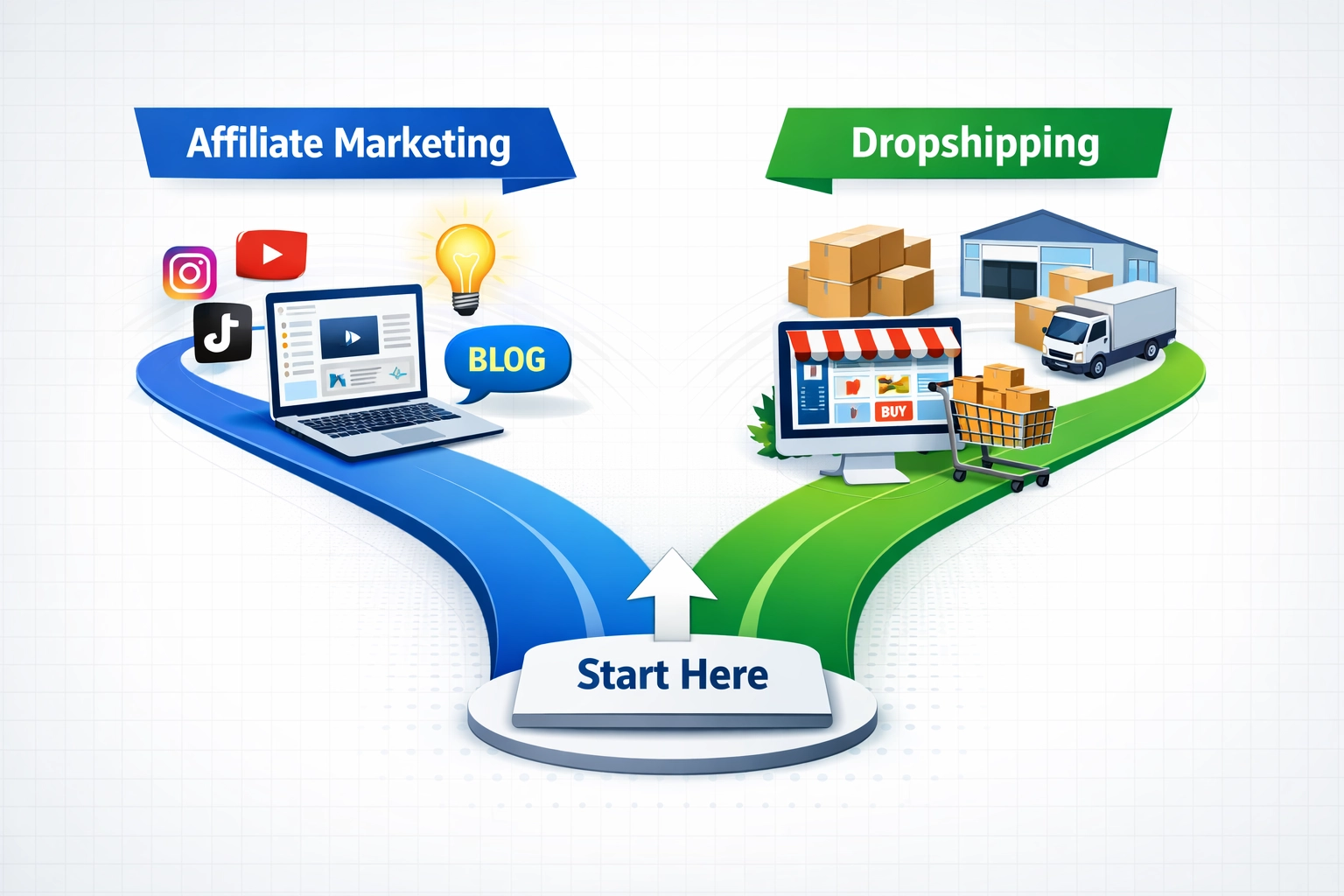
Compare affiliate marketing and dropshipping business models. Learn startup costs, profit margins, and which is easier to start for beginners.
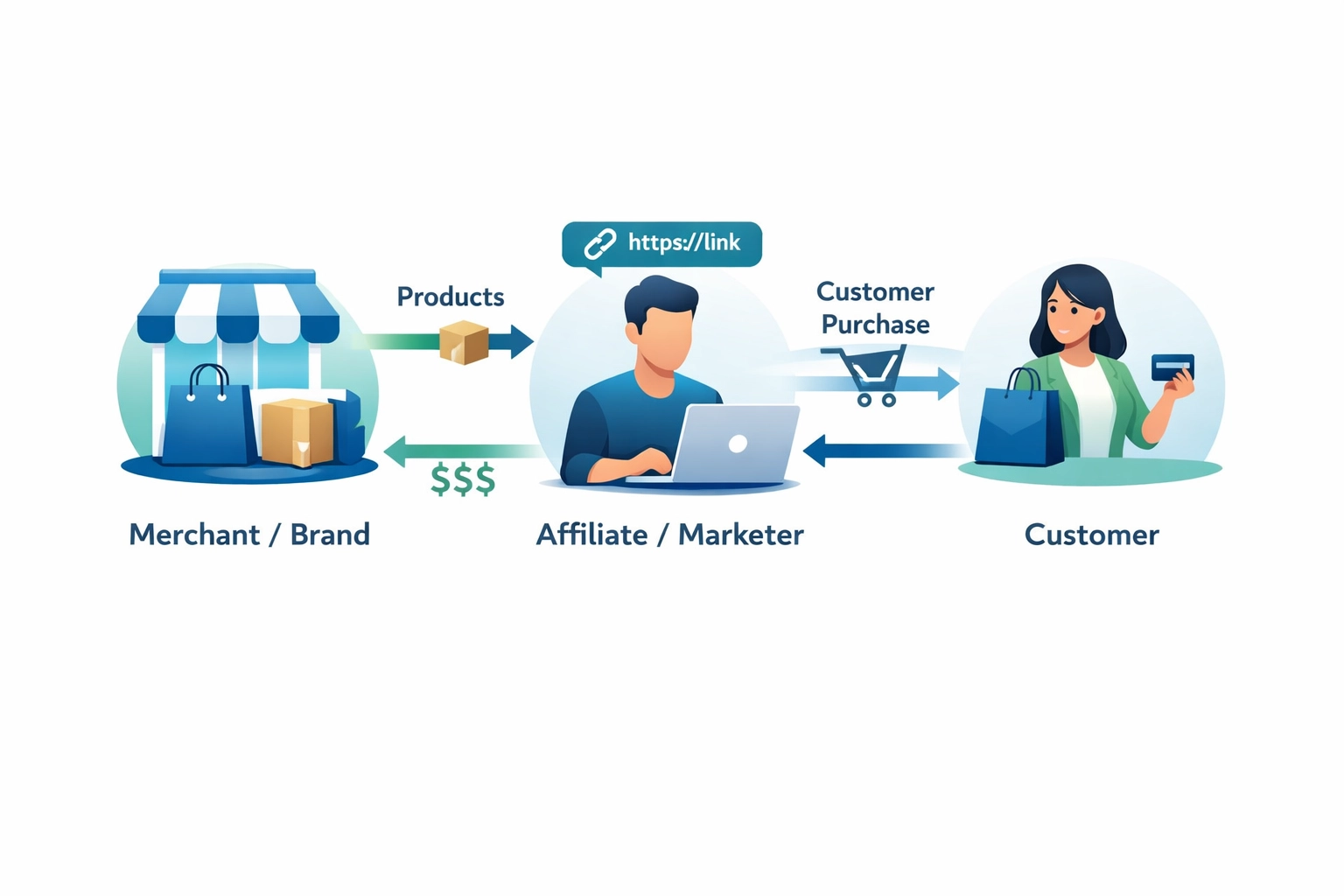
how to launch a profitable affiliate marketing campaign from scratch. niche selection, platform building, program selection
Join our community of happy clients and provide excellent customer support with Post Affiliate Pro.




Cookie Consent
We use cookies to enhance your browsing experience and analyze our traffic. See our privacy policy.