


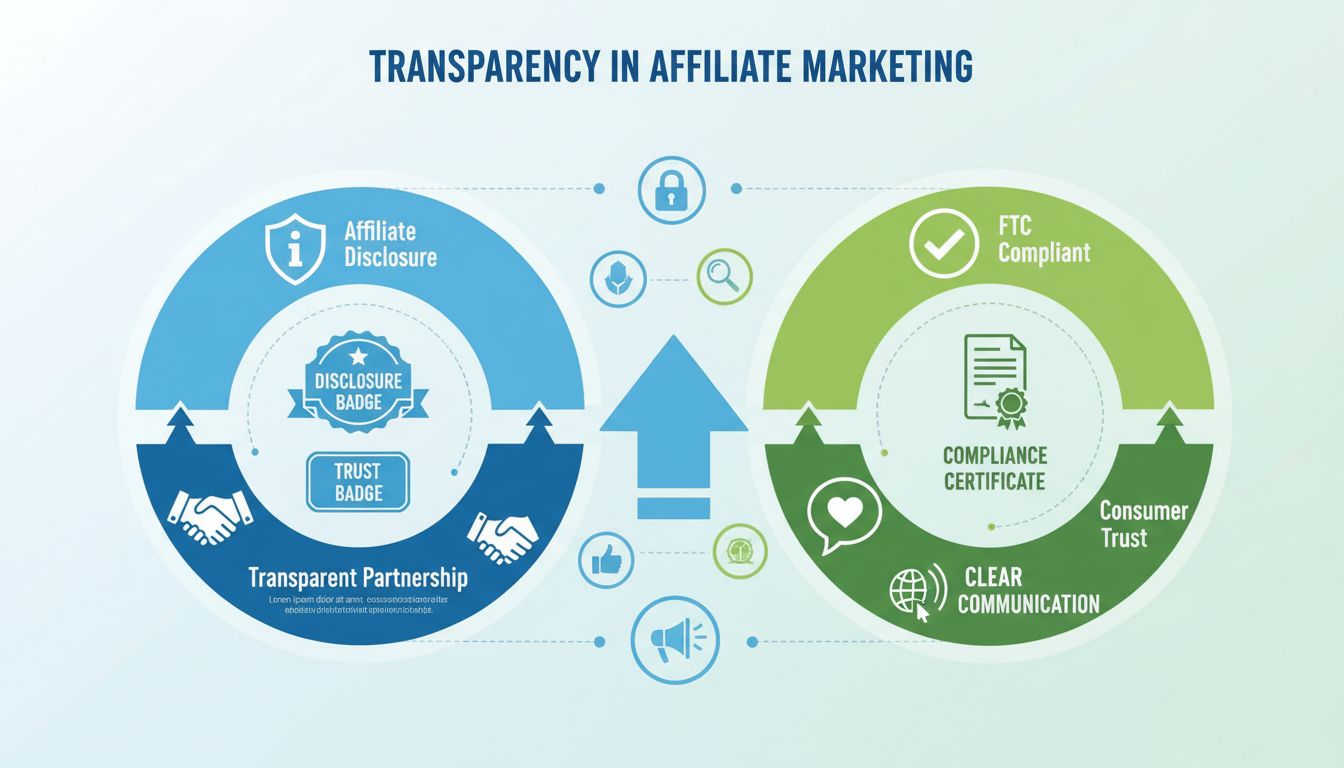
How Does Transparency Impact Affiliate Marketing?
Discover how transparency builds consumer trust, ensures FTC compliance, and drives long-term success in affiliate marketing. Learn disclosure best practices an...
9 min read


why transparency is crucial in affiliate marketing, how to build trust with your audience, comply with FTC regulations
Transparency in affiliate marketing refers to the clear, honest disclosure of relationships between affiliates, merchants, and consumers. It means openly communicating when a financial incentive exists, being truthful about product benefits, and maintaining integrity throughout the entire marketing process. In today’s digital landscape, where affiliate marketing generated approximately 20% of Cyber Monday revenue in 2024, the importance of transparency has never been more critical. The affiliate marketing industry has evolved dramatically over the past two decades, transforming from a relatively unregulated space into a sophisticated ecosystem governed by strict compliance requirements and consumer expectations.
The evolution of affiliate marketing reflects a broader shift in consumer consciousness. Early affiliate programs operated with minimal oversight, often prioritizing revenue generation over ethical practices. However, as consumers became more digitally savvy and regulatory bodies like the Federal Trade Commission (FTC) began enforcing stricter guidelines, the industry underwent a fundamental transformation. Today’s consumers demand transparency because they understand the power of affiliate relationships and want to make informed purchasing decisions. They recognize that an affiliate marketer’s recommendation carries weight precisely because of the financial incentive involved, and they deserve to know about that relationship upfront.
Modern consumers are increasingly skeptical of hidden agendas and undisclosed partnerships. Research shows that 61% of Gen Z and millennials trust social media influencers more than traditional advertising, but this trust is contingent on transparency. When consumers discover that an affiliate marketer has failed to disclose their financial relationship with a brand, trust evaporates instantly. This shift in consumer behavior has forced entrepreneurs and affiliate marketers to prioritize transparency not just as a legal requirement, but as a fundamental business practice. The regulatory landscape reinforces this necessity—the FTC’s Endorsement Guides explicitly require that any material connection between an endorser and a brand must be clearly and conspicuously disclosed, with penalties for non-compliance reaching up to $43,792 per violation as of 2024.

Trust is the currency of affiliate marketing, and transparency is the mechanism through which trust is earned and maintained. When affiliates openly disclose their financial relationships with brands, they demonstrate respect for their audience’s intelligence and autonomy. This honesty creates a foundation of credibility that extends far beyond individual transactions. Consumers who understand that an affiliate marketer is transparent about their incentives are more likely to believe other claims made in the content, including product benefits and performance metrics. This psychological shift is profound—transparency doesn’t diminish the affiliate’s influence; it actually enhances it by positioning the marketer as someone who values their audience’s trust more than quick commissions.
The relationship between transparency and consumer uncertainty is inversely proportional. When disclosures are clear and prominent, consumers experience reduced anxiety about whether they’re being manipulated or misled. This reduction in uncertainty translates directly into increased confidence in purchasing decisions. Transparent affiliates report higher engagement rates because their audiences feel comfortable interacting with their content, knowing that recommendations come from a place of genuine belief rather than pure financial motivation. Furthermore, transparent practices create a halo effect—consumers who appreciate an affiliate’s honesty in one disclosure are more likely to trust their other recommendations, even when no financial incentive exists.
The business case for transparency is compelling and measurable. Affiliates who maintain transparent practices consistently report higher conversion rates, increased customer lifetime value, and improved retention metrics. When customers feel they’ve been treated honestly, they’re more likely to return for future purchases and recommend the affiliate’s content to others. This word-of-mouth amplification is invaluable and cannot be purchased through advertising. Additionally, transparent affiliates face fewer chargebacks, complaints, and refund requests because customers feel they received honest information about what they were purchasing. The long-term revenue benefits of transparency far outweigh any short-term gains from deceptive practices.
| Aspect | Transparent Approach | Non-Transparent Approach |
|---|---|---|
| Customer Trust Score | 85-95% | 20-35% |
| Conversion Rate | 8-12% | 2-4% |
| Customer Retention | 70-80% | 25-40% |
| Repeat Purchase Rate | 60-75% | 15-25% |
| Legal Risk | Minimal | High (FTC penalties) |
| Brand Reputation | Positive growth | Damage and recovery costs |

Set up advanced tracking in minutes. No credit card required.
The Federal Trade Commission’s Endorsement Guides form the legal backbone of affiliate marketing transparency requirements. These guidelines, updated regularly to reflect digital marketing evolution, establish that any endorsement must be honest and not misleading. For affiliate marketers specifically, this means disclosing the material connection—the financial relationship—between the endorser and the brand being promoted. The FTC doesn’t prescribe exact language, but the disclosure must be clear, conspicuous, and impossible for consumers to miss. Violations can result in significant penalties, corrective advertising requirements, and reputational damage that extends far beyond the financial consequences.
Key FTC requirements for affiliate disclosures include:
Proper disclosure examples include statements like “I earn a commission if you click this link and make a purchase” or “As an Amazon Associate, I earn from qualifying purchases.” These statements clearly communicate the financial relationship without being deceptive. Improper disclosures, by contrast, might say “This product is amazing” without mentioning the affiliate relationship, or use vague language like “This is a sponsored post” without explaining what sponsorship means. The FTC has taken action against major companies and influencers for inadequate disclosures, resulting in settlements requiring corrective advertising and ongoing compliance monitoring.
The consequences of non-compliance extend beyond financial penalties. The FTC can require affiliates to implement comprehensive compliance programs, submit to regular audits, and maintain detailed documentation of all disclosures. Additionally, brands may terminate affiliate relationships with non-compliant marketers, and consumers may pursue private lawsuits for deceptive practices. The reputational damage from FTC enforcement actions can be career-ending for individual affiliates and devastating for affiliate programs.
Cookie stuffing represents one of the most egregious transparency violations in affiliate marketing. This practice involves placing affiliate cookies on a user’s device without their knowledge or consent, typically through hidden iframes or redirects. When the user later makes a purchase from the affiliated brand—even if they arrived through a different channel—the cookie stuffer receives a commission. This practice is fundamentally deceptive because it misrepresents the affiliate’s role in the customer journey. The consequences are severe: brands lose trust in their affiliate programs, the FTC has taken enforcement action against practitioners, and users experience a violation of their privacy and autonomy.
Cloaking is another serious violation where affiliates show different content to search engines than to actual users. An affiliate might create content optimized for search engines that appears to be a genuine product review, but when users click through, they’re redirected to an affiliate link with minimal context or disclosure. This practice deceives both search engines and consumers, violating both FTC guidelines and search engine terms of service. Affiliates caught cloaking face search engine penalties, account termination, and potential legal action. The damage to reputation is compounded by the fact that cloaking is widely recognized as unethical within the industry.
Promoting unvetted products without genuine testing or evaluation undermines the entire premise of affiliate marketing. When affiliates recommend products they haven’t used or thoroughly researched, they’re essentially gambling with their audience’s trust and money. This mistake often stems from the pressure to maximize commissions by promoting every available product, regardless of quality or relevance. The consequences include customer dissatisfaction, high refund rates, negative reviews, and eventual audience abandonment. Consumers quickly learn which affiliates provide genuine recommendations versus those simply chasing commissions, and they adjust their trust accordingly.
Failing to disclose affiliate relationships remains surprisingly common despite clear FTC requirements. Some affiliates rationalize this by claiming the disclosure would hurt conversion rates or that the relationship is “obvious.” Neither justification holds up legally or ethically. The FTC has specifically stated that affiliates cannot assume consumers will figure out the relationship on their own. Penalties for this violation include FTC enforcement actions, brand termination, and loss of audience trust. The irony is that transparent disclosure often performs better than deceptive practices because audiences appreciate honesty.
Misleading performance claims represent another frequent mistake where affiliates exaggerate product benefits or results. Statements like “This product will change your life” or “Guaranteed 10x returns” without substantiation violate both FTC guidelines and basic ethical standards. These claims expose both the affiliate and the brand to legal liability. Additionally, when customers discover that claims were exaggerated, they become vocal critics, sharing negative experiences across social media and review platforms. The reputational damage extends to the affiliate’s entire portfolio of recommendations.

Be the first to know about new features and product updates.
A common misconception among entrepreneurs is that transparency requires revealing all business secrets and proprietary strategies. This misunderstanding leads some affiliates to either over-disclose information that could harm their competitive position or under-disclose to protect their methods. The reality is more nuanced: transparency in affiliate marketing specifically refers to disclosing material connections and being honest about product benefits, not revealing your entire business playbook. You can maintain competitive advantage while remaining fully compliant with transparency requirements.
The distinction between required disclosures and proprietary information is critical. Required disclosures include affiliate relationships, commission structures (when relevant to the endorsement), and honest assessments of product benefits and limitations. Proprietary information that you can legitimately protect includes your targeting strategies, audience segmentation methods, content creation processes, and performance metrics that give you competitive advantage. For example, you can say “I may earn a commission if you click this link and make a purchase” without revealing your targeting strategies, audience demographics, or conversion optimization techniques. This disclosure is fully transparent about the material connection while protecting your competitive advantages.
An outcome-based transparency approach focuses on disclosing the factors that directly affect consumer decision-making while protecting strategic business information. This means being transparent about what consumers need to know to make informed choices, while maintaining confidentiality about how you achieve your results. If you’re recommending a product, consumers need to know about your financial incentive, any personal experience with the product, and any limitations or drawbacks. They don’t need to know your email list size, your traffic sources, or your content distribution strategy. This approach allows you to maintain transparency where it matters most—in your relationship with consumers—while protecting legitimate business interests.
Protecting trade secrets while staying compliant involves clear documentation and consistent practices. Develop written policies that distinguish between disclosable information and proprietary strategies. Train your team on these distinctions so everyone understands what can be shared and what must remain confidential. Use non-disclosure agreements with partners and employees to protect sensitive information. Most importantly, ensure that your transparency practices focus on the consumer relationship rather than your internal operations. When you’re transparent about affiliate relationships and product benefits while protecting your business strategies, you achieve the optimal balance between ethical marketing and competitive advantage.
Implementing transparency requires a systematic approach that addresses every touchpoint in your affiliate program. Step 1: Develop Clear Affiliate Agreements that explicitly outline disclosure requirements, approved marketing methods, and consequences for violations. These agreements should specify exactly what affiliates must disclose, where disclosures must appear, and how prominently they must be displayed. Include examples of compliant and non-compliant disclosures to eliminate ambiguity. Make these agreements easily accessible and require affiliates to acknowledge understanding before joining your program.
Step 2: Establish Transparent Payment Structures by clearly communicating commission rates, payment schedules, and any conditions that might affect payouts. Affiliates should understand exactly how much they’ll earn for each type of conversion, whether there are performance bonuses or penalties, and when they can expect payment. Provide detailed reporting dashboards that show real-time commission tracking, conversion data, and payment history. This transparency builds trust with your affiliates and reduces disputes about earnings.
Step 3: Provide Comprehensive Affiliate Education about FTC requirements, ethical marketing practices, and your specific program policies. Develop training materials that explain why transparency matters, how to implement proper disclosures, and what mistakes to avoid. Offer regular webinars or workshops where affiliates can ask questions and learn about updates to regulations or program policies. The more educated your affiliates are, the more likely they’ll maintain transparent practices voluntarily.
Step 4: Implement Monitoring and Enforcement Systems that track affiliate compliance with transparency requirements. Use affiliate software that monitors content for proper disclosures, flags potential violations, and generates compliance reports. Conduct regular audits of affiliate content across all channels—websites, social media, email, videos, and podcasts. When you identify violations, address them promptly with education and corrective action. Establish clear consequences for repeated violations, including affiliate termination if necessary.
Step 5: Communicate Regularly with Affiliates about transparency expectations and best practices. Send monthly newsletters highlighting compliance tips, sharing examples of excellent transparent marketing, and addressing common questions. Create a community forum where affiliates can discuss challenges and share solutions. Recognize and reward affiliates who demonstrate exceptional transparency practices, creating positive incentives for compliance.
Step 6: Document Everything related to your transparency policies and enforcement. Maintain records of affiliate agreements, training materials, compliance audits, and any corrective actions taken. This documentation protects your program if the FTC or other regulatory bodies investigate, and it demonstrates your commitment to compliance. Use affiliate management software that automatically logs all communications and policy updates.
Buffer’s radical transparency approach provides a compelling case study in how openness builds customer loyalty and brand strength. Buffer, a social media management platform, publishes detailed salary information, revenue figures, and even the reasoning behind executive decisions. While this level of transparency goes beyond affiliate marketing requirements, it demonstrates the principle that honesty builds trust. Buffer’s transparency has resulted in exceptional customer loyalty, with customers actively defending the brand against criticism and recommending it to others. The company has experienced consistent growth and has become an employer of choice, attracting top talent who value the company’s commitment to openness.
Everlane’s radical transparency model focuses specifically on supply chain and pricing transparency, showing customers exactly where products are made and how much each component costs. This approach transformed Everlane from a startup into a recognized brand leader in ethical fashion. By being transparent about manufacturing practices and pricing structures, Everlane built a community of customers who felt they were making informed, ethical purchasing decisions. The brand’s transparency led to increased customer loyalty, premium pricing power, and significant media coverage. Customers became brand advocates, sharing Everlane’s transparency story across social media and recommending the brand to friends and family.
These case studies demonstrate measurable outcomes from transparency practices. Customer loyalty metrics show that transparent brands experience 30-40% higher retention rates compared to industry averages. Trust scores for transparent companies consistently rank 20-30 percentage points higher than competitors. Conversion rates improve because customers feel confident in their purchasing decisions when they understand the full context of recommendations. Customer lifetime value increases significantly because loyal customers make repeat purchases and spend more per transaction. These metrics translate directly into revenue growth and competitive advantage.
The affiliate marketing context amplifies these benefits. Affiliates who maintain transparent practices build audiences that trust their recommendations implicitly. These audiences don’t just make single purchases; they become repeat customers who follow the affiliate’s recommendations across multiple products and categories. The affiliate’s influence grows because it’s built on a foundation of trust rather than manipulation. Over time, transparent affiliates develop such strong audience relationships that they can command premium commission rates and exclusive partnership opportunities because brands recognize the value of their trusted recommendations.

Affiliate software solutions have evolved to prioritize transparency and compliance, recognizing that these features are essential for modern affiliate programs. Leading platforms now include built-in compliance monitoring, automated disclosure verification, and detailed reporting that provides visibility into affiliate activities. PostAffiliatePro stands out as the top affiliate software solution for entrepreneurs seeking comprehensive transparency features. The platform offers real-time tracking of affiliate activities, automated compliance alerts, detailed commission reporting, and customizable disclosure templates that affiliates can use across their content.
PostAffiliatePro’s transparency features include advanced tracking and reporting tools that provide complete visibility into the affiliate-to-customer journey. The platform tracks every click, conversion, and commission, generating detailed reports that both merchants and affiliates can access. This transparency eliminates disputes about earnings and builds trust between program managers and affiliates. The software also includes dashboard features for affiliate monitoring that allow program managers to see which affiliates are driving the most valuable traffic, which products are generating the highest conversion rates, and which marketing channels are most effective. This data-driven approach enables merchants to optimize their programs while maintaining full transparency.
Additional transparency-focused features in PostAffiliatePro include customizable disclosure templates that affiliates can use to ensure compliance with FTC requirements. The platform provides pre-written disclosure language that meets regulatory standards, reducing the burden on affiliates to create compliant disclosures from scratch. Automated compliance alerts notify program managers when affiliates may be violating disclosure requirements, allowing for prompt corrective action. The software also includes detailed audit trails that document all program activities, providing evidence of compliance efforts if regulatory scrutiny occurs.
Beyond PostAffiliatePro, other transparency-supporting tools include content monitoring software that scans affiliate content for proper disclosures and flags potential violations. Analytics platforms provide detailed performance data that helps affiliates understand which transparent practices drive the best results, reinforcing the business case for honesty. Communication tools like email and messaging platforms enable regular affiliate education and compliance updates. Documentation software helps merchants maintain records of policies, training, and enforcement actions. When implemented together, these tools create a comprehensive transparency infrastructure that supports ethical affiliate marketing at scale.
The investment in transparency-focused tools pays dividends through reduced compliance risk, improved affiliate relationships, and stronger customer trust. Merchants who implement these tools report fewer FTC violations, higher affiliate satisfaction, and better overall program performance. Affiliates benefit from clear guidance on compliance requirements and access to data that demonstrates the business value of transparent practices. Ultimately, transparency tools create a win-win-win situation: merchants reduce risk and improve performance, affiliates build sustainable businesses based on trust, and consumers make better-informed purchasing decisions.
The FTC requires affiliate marketers to clearly and conspicuously disclose their material connection with brands. Disclosures must appear near affiliate links, use plain language, and be impossible for consumers to miss. Statements like 'I earn a commission if you click this link and make a purchase' are compliant, while vague language or buried disclosures are not.
Transparent affiliates typically see 8-12% conversion rates compared to 2-4% for non-transparent approaches. When consumers understand the affiliate relationship upfront, they feel more confident in their purchasing decisions. This transparency actually builds trust rather than diminishing it, leading to higher engagement and better long-term customer relationships.
Absolutely. Transparency in affiliate marketing refers to disclosing material connections and being honest about product benefits, not revealing your entire business playbook. You can disclose affiliate relationships while protecting proprietary strategies, targeting methods, and competitive advantages. The key is being transparent about what consumers need to know to make informed decisions.
Penalties for FTC violations can reach $43,792 per violation as of 2024. Beyond financial penalties, non-compliance can result in corrective advertising requirements, reputational damage, brand termination, and loss of audience trust. The long-term consequences of deceptive practices far outweigh any short-term gains.
Use affiliate software like PostAffiliatePro that includes compliance monitoring features, automated alerts for disclosure violations, and detailed audit trails. Conduct regular audits of affiliate content across all channels, provide ongoing education about FTC requirements, and establish clear consequences for violations. Documentation of your compliance efforts protects your program if regulatory scrutiny occurs.
Transparency requires disclosing affiliate relationships and being honest about product benefits. Trade secrets include your targeting strategies, audience segmentation, content creation processes, and performance metrics. You can be fully transparent about affiliate relationships while protecting legitimate business information that gives you competitive advantage.
Transparent affiliates see 60-75% repeat purchase rates compared to 15-25% for non-transparent approaches. Customers who feel they've been treated honestly are more likely to return for future purchases and recommend the affiliate's content to others. This increased loyalty directly translates to higher customer lifetime value and sustainable revenue growth.
PostAffiliatePro offers comprehensive transparency features including real-time tracking, automated compliance alerts, customizable disclosure templates, and detailed reporting dashboards. Additional tools include content monitoring software, analytics platforms, communication tools for affiliate education, and documentation software for maintaining compliance records.
PostAffiliatePro provides the tools and features you need to manage transparent affiliate relationships, ensure FTC compliance, and track performance with complete visibility. Start building trust with your audience today.
Discover how transparency builds consumer trust, ensures FTC compliance, and drives long-term success in affiliate marketing. Learn disclosure best practices an...

why transparent payouts are essential for affiliate program success. how clear commission structures and real-time tracking build trust, increase retention

why affiliate link disclosure matters for legal compliance and audience trust. FTC requirements, best practices, and how to disclose properly across all
Join our community of happy clients and provide excellent customer support with Post Affiliate Pro.




Cookie Consent
We use cookies to enhance your browsing experience and analyze our traffic. See our privacy policy.