

Do I Need SEO in Affiliate Marketing? Complete 2025 Guide
Learn why SEO is crucial for affiliate marketing success. Discover how organic traffic, keyword optimization, and content strategy drive sustainable commissions...
11 min read


why SEO is essential for affiliate marketing success. proven strategies to drive organic traffic, build authority
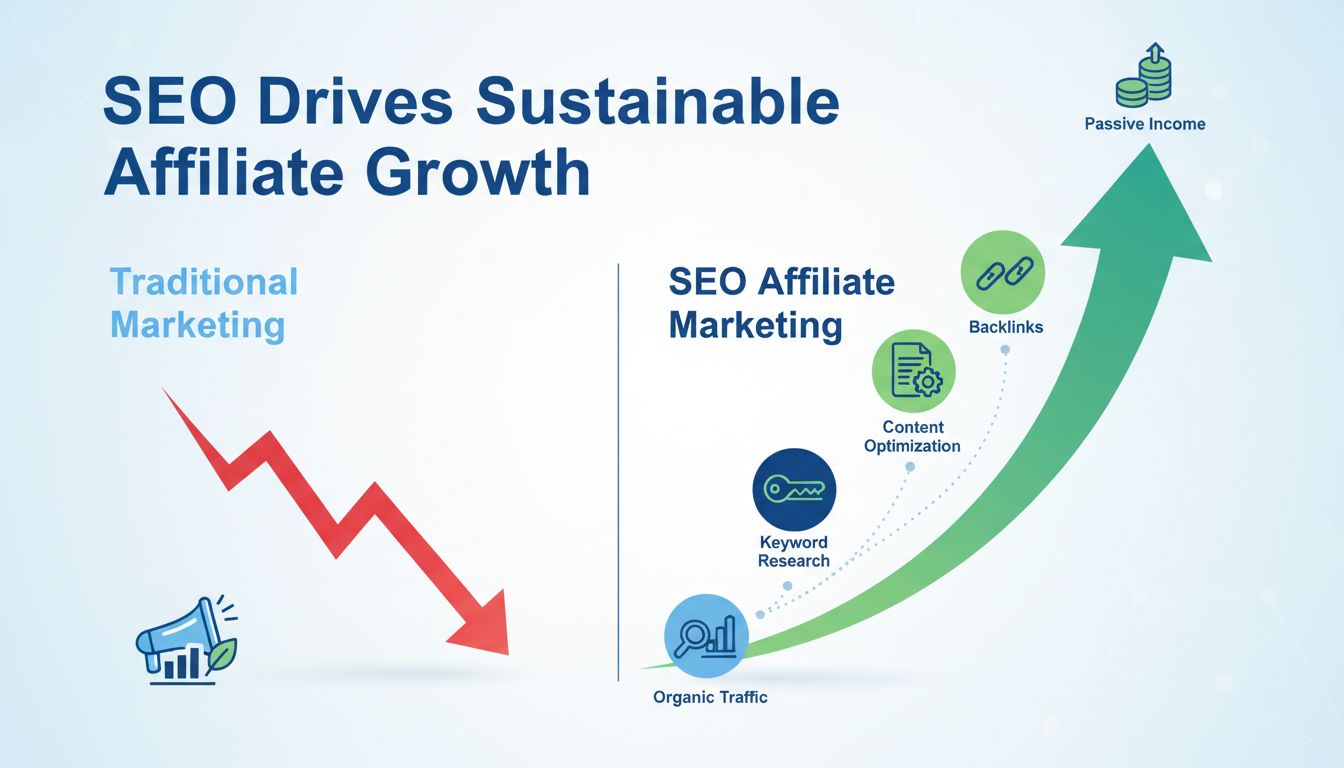
If you’re operating in the affiliate marketing space without a solid SEO strategy, you’re essentially leaving money on the table. The numbers tell a compelling story: organic search drives approximately 53% of all website traffic, and more importantly, organic visitors convert at rates 2-3 times higher than paid traffic visitors. For affiliate marketers specifically, this distinction is crucial because your entire business model depends on driving qualified traffic to your content and converting that traffic into commissions. Unlike paid advertising, which stops generating traffic the moment you stop paying, SEO creates a compounding asset that continues to generate traffic months and years after you’ve published content. Studies show that the top-ranking pages on Google receive approximately 31.7% of all clicks, while the second-ranking page receives only 24.7%—a dramatic drop-off that underscores the importance of ranking well. The affiliate marketing industry is increasingly competitive, with more marketers entering the space every day, which means that organic visibility has become less of a nice-to-have and more of a necessity for sustainable growth. When you invest in SEO, you’re not just optimizing for search engines; you’re fundamentally improving the user experience, building trust with your audience, and creating content that genuinely answers their questions. This approach naturally leads to higher engagement rates, longer time-on-page metrics, and most importantly, better conversion rates on your affiliate offers. The beauty of SEO for affiliate marketers is that it levels the playing field—you don’t need a massive advertising budget to compete; you need strategy, quality content, and patience.
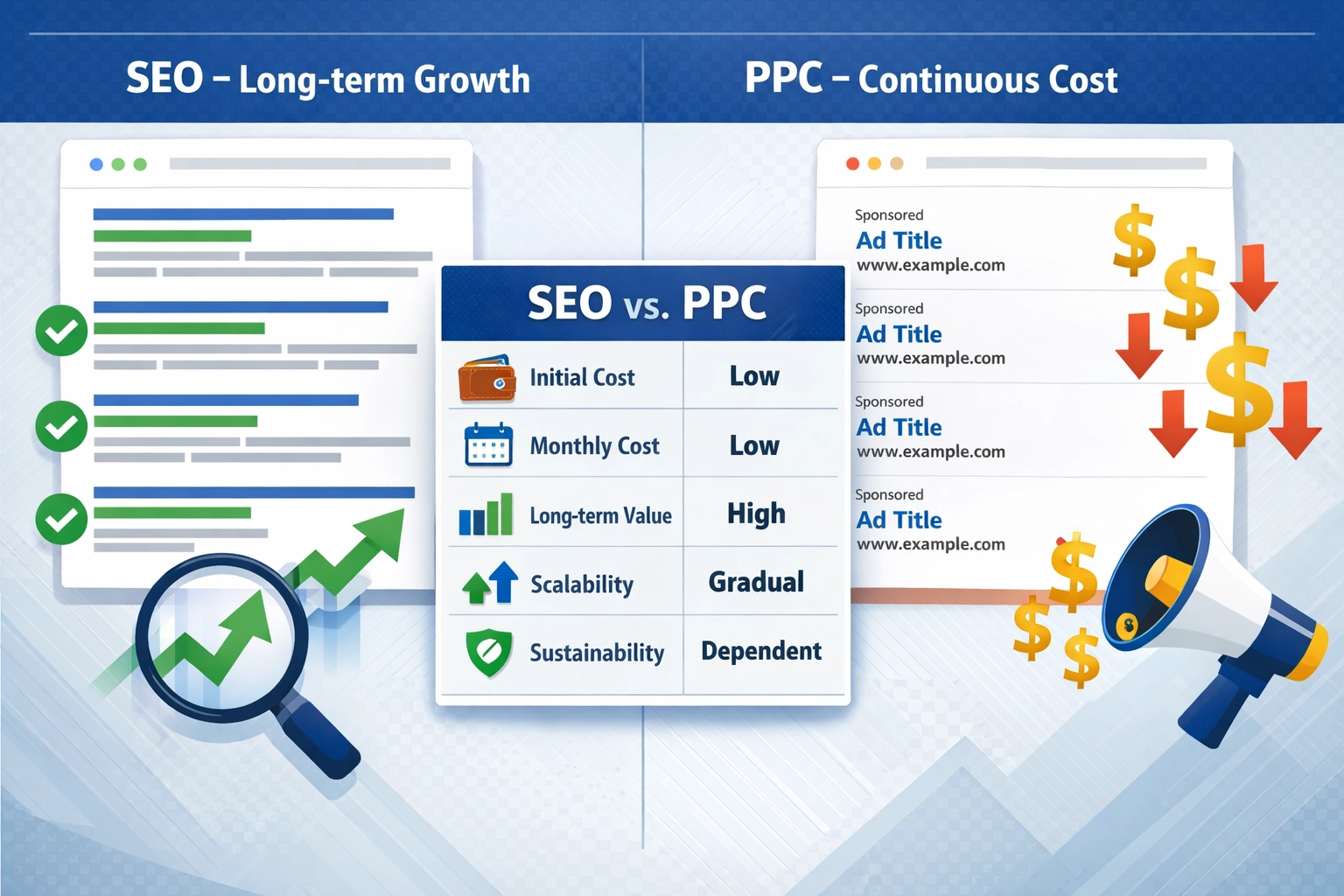
The financial case for SEO in affiliate marketing is undeniable when you compare it to paid advertising channels. While PPC campaigns can generate immediate traffic, they require continuous spending to maintain visibility, making them expensive at scale. The average cost-per-click for affiliate marketing keywords ranges from $0.50 to $5.00 depending on competition, and with typical conversion rates of 1-3%, you’re looking at customer acquisition costs that can quickly become unsustainable. In contrast, SEO requires an upfront investment in content creation, technical optimization, and potentially some tools and resources, but once you’ve achieved rankings, the traffic becomes essentially free. A well-optimized piece of affiliate content can generate traffic for years with minimal maintenance, creating what many marketers call “passive income streams” that continue to produce commissions long after the initial work is complete. Consider this: a single blog post that ranks for a high-intent keyword might cost $500-$2,000 to create properly, but if it generates just 100 organic visitors per month at a 2% conversion rate, that’s 2 affiliate commissions monthly. Over a year, that’s 24 commissions from a single piece of content—and the post continues generating revenue in year two, three, and beyond. This is where SEO’s true value emerges: long-term sustainability and scalability without proportional increases in spending.
| Metric | SEO | PPC |
|---|---|---|
| Initial Cost | $500-$2,000 per piece | $100-$500 setup |
| Monthly Cost | $0-$200 (tools/maintenance) | $500-$5,000+ |
| Long-term Value | Increases over time | Stops when spending stops |
| Scalability | Highly scalable with compounding returns | Linear scaling with budget |
| Sustainability | Sustainable and evergreen | Dependent on continuous budget |
The data supports this approach overwhelmingly. Websites that invest in SEO see an average ROI of 300-400% within the first year, compared to PPC campaigns which typically break even or show modest returns. Furthermore, organic traffic has a higher lifetime value because visitors who find you through search are actively looking for solutions, making them more qualified and more likely to trust your recommendations. When you combine SEO with proper conversion tracking through tools like PostAffiliatePro, you can precisely measure which keywords and content pieces are generating the highest-quality traffic and optimize your strategy accordingly. This data-driven approach allows you to double down on what works and eliminate what doesn’t, continuously improving your ROI. The compounding nature of SEO means that your efforts in month one might generate minimal returns, but by month six and beyond, you’re reaping the benefits of accumulated rankings, backlinks, and domain authority—all while your paid advertising competitors are still paying for every single click.

Set up advanced tracking in minutes. No credit card required.
To succeed with SEO in affiliate marketing, you need to understand three interconnected pillars: technical SEO, on-page SEO, and off-page SEO. Technical SEO refers to the backend optimization of your website—ensuring that search engines can crawl and index your content efficiently. This includes factors like site speed, mobile responsiveness, proper URL structure, XML sitemaps, and fixing crawl errors. For affiliate marketers, technical SEO is foundational because even the best content won’t rank if Google can’t properly access and understand it. On-page SEO encompasses everything you control directly on your content pages: keyword optimization, meta tags, heading structure, internal linking, and content quality. This is where you tell search engines what your content is about and why it’s valuable. When you’re writing an affiliate review or comparison article, on-page SEO involves strategically placing your target keywords in the title, first paragraph, subheadings, and throughout the content in a natural way that serves the reader first. Off-page SEO primarily refers to backlinks—links from other websites pointing to your content. Backlinks act as “votes of confidence” that signal to Google that your content is authoritative and trustworthy. For affiliate marketers, building backlinks might involve guest posting on relevant blogs, getting mentioned in industry publications, or creating content so valuable that other sites naturally want to link to it. Understanding how these three elements work together is crucial: strong technical SEO ensures your content is discoverable, on-page optimization makes it relevant to specific searches, and off-page signals establish its authority. When you implement all three effectively, you create a powerful foundation for ranking well and driving consistent organic traffic to your affiliate offers.
Keyword research is the foundation of any successful affiliate marketing SEO strategy, and it’s far more nuanced than simply finding high-volume keywords. The most profitable keywords for affiliate marketers are those with commercial intent—meaning the person searching is actively looking to make a purchase or comparison decision. Keywords like “best wireless headphones under $100,” “top VPN for streaming,” or “cheapest web hosting for beginners” indicate that the searcher is ready to take action, making them infinitely more valuable than informational keywords like “how do headphones work.” Long-tail keywords—phrases with three or more words—are particularly valuable for affiliate marketers because they typically have lower competition, higher conversion intent, and lower cost-per-click if you ever run paid campaigns. For example, instead of targeting “coffee maker,” you’d target “best automatic coffee maker for busy professionals” or “top coffee maker with built-in grinder under $200.” These specific phrases attract fewer searches but attract the right people. Understanding the buyer journey is equally important: some keywords indicate early-stage research (awareness), while others indicate decision-making (consideration and conversion). A comprehensive affiliate strategy targets keywords across all stages. For instance, you might create a beginner’s guide targeting awareness-stage keywords, comparison articles targeting consideration-stage keywords, and detailed reviews targeting high-intent conversion keywords. Tools like Google Search Console and keyword research platforms help you identify search volume, competition level, and current ranking positions. When conducting keyword research, look for opportunities where you can realistically rank—typically keywords with moderate competition where you can create genuinely better content than what currently ranks. PostAffiliatePro’s tracking capabilities become invaluable here because you can correlate specific keywords and content pieces with actual affiliate conversions, allowing you to identify which keywords are driving profitable traffic versus which are just generating vanity metrics. This data-driven approach ensures you’re investing your content creation efforts in keywords that actually move the needle for your affiliate business.
Be the first to know about new features and product updates.
Backlinks remain one of Google’s most important ranking factors, and for affiliate marketers, they’re essential for establishing the authority and trustworthiness that Google’s algorithm increasingly demands. Domain authority—a metric that predicts how well a website will rank—is largely determined by the quantity and quality of backlinks pointing to your site. However, not all backlinks are created equal; a single link from a high-authority, relevant website is worth far more than dozens of links from low-quality, unrelated sites. For affiliate marketers, the goal is to earn backlinks from websites in your niche that have genuine authority and relevance. There are several ethical and effective strategies for building backlinks. Guest posting involves writing valuable content for other websites in your industry in exchange for a link back to your site—this works particularly well in affiliate marketing niches where there are established blogs and publications. Resource pages are another goldmine; many websites maintain curated lists of helpful resources, tools, or guides, and if your content is genuinely valuable, you can reach out and request inclusion. Outreach campaigns involve identifying websites that mention competitors or related topics and pitching them on why your content would be a better resource for their audience. The key to successful link building is creating content so valuable that other people want to link to it naturally. This might mean conducting original research, creating comprehensive guides that become industry standards, or developing tools and resources that solve real problems for your audience. Building authority takes time—there’s no shortcut—but the investment pays dividends. As your domain authority increases, new content ranks faster, existing content ranks higher, and your entire site benefits from improved visibility. When you combine strong backlink profiles with proper conversion tracking through PostAffiliatePro, you can see exactly how improved rankings translate to increased affiliate commissions, making the case for continued investment in link-building efforts clear and measurable.
Technical SEO might sound intimidating, but it’s fundamentally about ensuring your website is fast, accessible, and easy for search engines to understand. Site speed is a critical ranking factor and a conversion factor—research shows that every one-second delay in page load time results in a 7% reduction in conversions. For affiliate marketers, this is particularly important because you’re competing for attention and trust, and a slow-loading site immediately signals poor quality to both users and search engines. Optimizing site speed involves compressing images, leveraging browser caching, minimizing CSS and JavaScript, and choosing quality hosting. Mobile optimization is equally crucial; over 60% of searches now happen on mobile devices, and Google uses mobile-first indexing, meaning it primarily evaluates the mobile version of your site for rankings. Your affiliate content must be fully responsive, with readable text, properly sized buttons, and fast loading times on mobile devices. Crawlability and indexing refer to search engines’ ability to discover and understand your content. This involves creating a logical site structure, using proper heading tags (H1, H2, H3), implementing XML sitemaps, and ensuring that important pages aren’t blocked by robots.txt or noindex tags. Internal linking—linking from one page on your site to another—helps distribute authority throughout your site and helps search engines understand the relationship between your content pieces. For example, linking from your main affiliate review to related comparison articles helps search engines understand your site’s topical authority. Technical SEO also includes fixing issues like duplicate content, broken links, and crawl errors that can harm your rankings. While these elements might seem tedious, they’re foundational; you can have the best content in the world, but if search engines can’t access it or if your site is slow and unresponsive, you won’t rank well. Regular technical audits using tools like Google Search Console help you identify and fix issues before they impact your rankings and affiliate revenue.
Google’s E-E-A-T framework—Experience, Expertise, Authoritativeness, and Trustworthiness—has become increasingly important for ranking, particularly in competitive niches like affiliate marketing. Experience means demonstrating that you’ve actually used and tested the products you’re recommending. This is where affiliate marketers have a unique advantage: you can create content based on genuine personal experience rather than just aggregating information from other sources. When you write a review of a product you’ve actually used, tested, and evaluated, that authenticity shines through and resonates with readers. Expertise involves demonstrating deep knowledge of your subject matter. This might mean having professional credentials, years of experience in the industry, or a proven track record of helping others make good decisions. For affiliate marketers, building expertise might involve becoming deeply knowledgeable about a specific product category, understanding the nuances that differentiate products, and being able to explain why certain products are better for certain use cases. Authoritativeness refers to your site’s reputation and recognition within your niche. This is built through consistent, high-quality content, backlinks from authoritative sources, and mentions in industry publications. Trustworthiness is perhaps the most critical element for affiliate marketers because readers need to trust that your recommendations are genuine and not just driven by commission potential. This means being transparent about affiliate relationships, disclosing which products you actually recommend versus which you’re reviewing for comparison, and prioritizing reader value over maximum commissions. Practically speaking, E-E-A-T means your affiliate content should include personal testing and results, clear explanations of why you’re recommending specific products, author bios that establish credibility, and transparent disclosure of affiliate relationships. It means going beyond surface-level reviews to provide genuine insights that only someone with real experience could offer. When you combine authentic, experience-based content with proper conversion tracking through PostAffiliatePro, you create a virtuous cycle: better content leads to higher rankings, higher rankings lead to more traffic, and proper tracking ensures you’re optimizing for actual conversions rather than just vanity metrics.

You can’t improve what you don’t measure, and for affiliate marketers, proper analytics and tracking are essential for optimizing your SEO strategy and maximizing ROI. Google Analytics provides crucial insights into your organic traffic: how many visitors you’re getting from search, which pages are attracting traffic, how long visitors stay on your pages, and ultimately, which pages are driving conversions. Google Search Console offers search-specific data: which keywords are driving impressions, your average ranking position for different keywords, click-through rates (CTR), and technical issues that might be preventing indexing. Together, these tools paint a comprehensive picture of your SEO performance. Key metrics to track include organic traffic volume (total visitors from search), keyword rankings (your position for target keywords), click-through rate (the percentage of search impressions that result in clicks), and most importantly, conversions (actual affiliate commissions generated). Many affiliate marketers focus on vanity metrics like traffic volume without considering conversion quality. A page that attracts 1,000 visitors but generates zero conversions is worthless, while a page that attracts 100 highly qualified visitors and generates 5 conversions is gold. This is where PostAffiliatePro becomes invaluable; it allows you to track which traffic sources, keywords, and content pieces are actually generating affiliate conversions, not just clicks. By integrating PostAffiliatePro with your analytics, you can see the complete picture: which keywords drive traffic, and which of those keywords drive profitable conversions. This data allows you to identify your highest-performing content and create more content in similar categories, optimize underperforming content, and eliminate content that’s consuming resources without generating results. Regular analysis—monthly or quarterly—helps you spot trends, identify opportunities, and make data-driven decisions about where to invest your content creation efforts. The most successful affiliate marketers treat their business like a science experiment: they form hypotheses about what will work, test them with content, measure the results rigorously, and iterate based on data. This systematic approach, combined with proper SEO fundamentals and authentic content, creates a sustainable, scalable affiliate marketing business that generates increasing returns over time.
Most affiliate marketers see initial results within 3-6 months, with significant growth occurring between 6-12 months. However, the timeline depends on factors like keyword competition, content quality, and backlink strategy. The key advantage is that once you achieve rankings, they continue generating traffic and commissions for years with minimal maintenance.
Yes, SEO is significantly more cost-effective long-term. While PPC campaigns require continuous spending ($500-$5,000+ monthly), SEO requires an upfront investment ($500-$2,000 per piece) but then generates free traffic indefinitely. Studies show SEO delivers 300-400% ROI within the first year, compared to PPC which typically breaks even.
Affiliate SEO focuses specifically on commercial intent keywords and buyer-ready audiences, while regular SEO may target informational queries. Affiliate SEO also requires careful management of outbound affiliate links and emphasizes building trust quickly to drive conversions. The goal is not just traffic, but qualified traffic that converts to commissions.
Yes, backlinks are crucial for affiliate SEO success. They signal authority and trustworthiness to Google, helping your content rank higher. You can earn backlinks through guest posting, creating valuable resources, outreach campaigns, and building relationships with other websites in your niche. Quality matters more than quantity.
PostAffiliatePro provides advanced conversion tracking that shows exactly which keywords, content pieces, and traffic sources generate actual affiliate commissions. This data-driven approach allows you to identify your highest-performing SEO efforts and optimize your strategy accordingly, ensuring you invest in content that drives real revenue.
Common mistakes include publishing thin content, overloading pages with affiliate links, ignoring mobile optimization, targeting the wrong keywords, and failing to build backlinks. Many affiliates also focus on vanity metrics like traffic volume instead of conversion quality. Avoiding these mistakes can significantly improve your affiliate SEO results.
Technically yes, but it's not recommended. Without SEO, you'd rely entirely on paid advertising, which requires continuous spending and doesn't build long-term assets. SEO creates sustainable, scalable growth that compounds over time, making it essential for building a profitable, long-term affiliate business.
Audit and update your content every 6-12 months to keep it current and relevant. This includes refreshing statistics, updating product recommendations, fixing broken links, and improving outdated information. Regular updates signal to Google that your content is active and valuable, which can improve rankings and maintain traffic.
PostAffiliatePro helps you measure which SEO strategies and keywords drive the highest-quality conversions. Get complete visibility into your affiliate performance with advanced tracking and analytics.
Learn why SEO is crucial for affiliate marketing success. Discover how organic traffic, keyword optimization, and content strategy drive sustainable commissions...
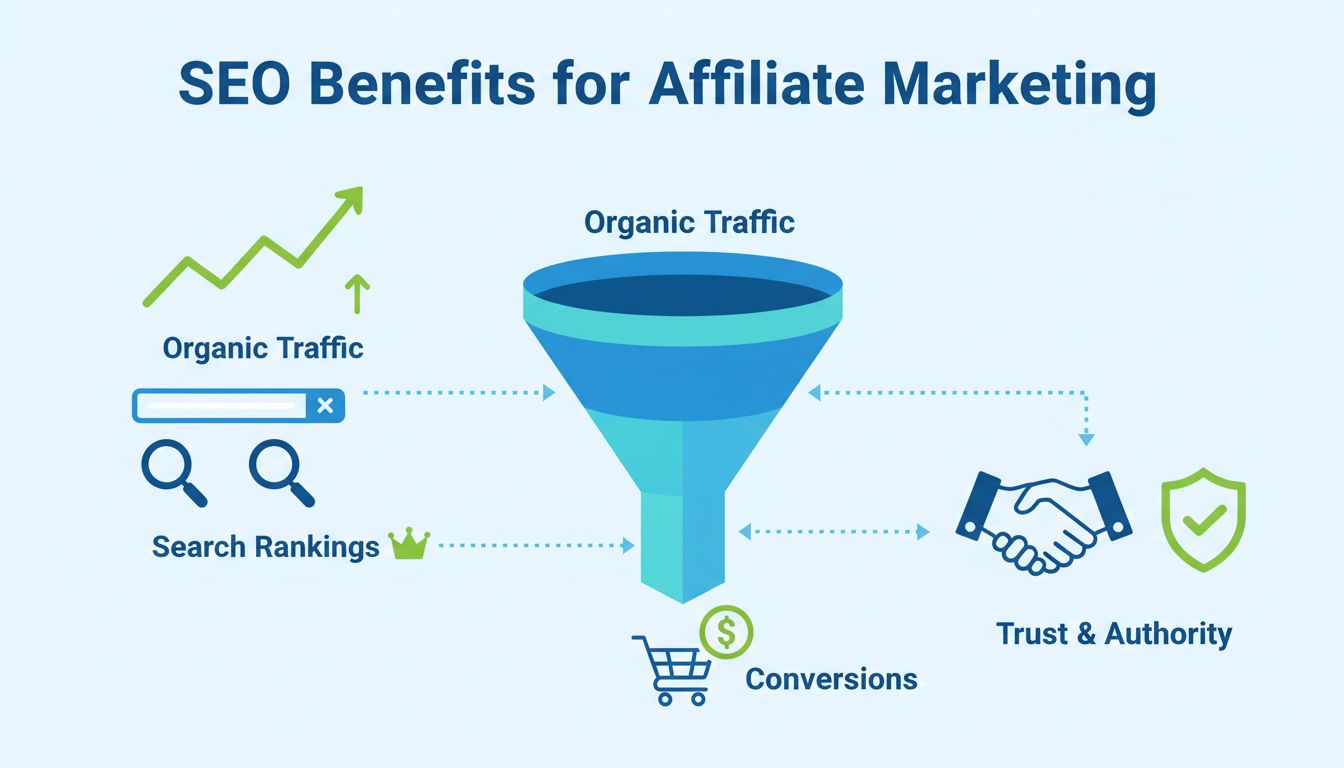
Discover how SEO drives organic traffic, builds trust, and increases conversions for affiliate marketers. Learn proven strategies to maximize affiliate earnings...

why SEO is crucial for affiliate marketing success. proven strategies to increase organic traffic, build authority
Join our community of happy clients and provide excellent customer support with Post Affiliate Pro.