



How Affiliate Systems Prevent Fraud & Protect Revenue
How affiliate management systems detect and prevent fraud in real-time. Fraud detection tools, prevention strategies, and PostAffiliatePro protection.
11 min read


Discover how Post Affiliate Pro’s ad blocker prevention feature protects your affiliate banners and tracking. Learn why 912M ad blocker users threaten your revenue and how to recover lost conversions.
The affiliate marketing industry faces an unprecedented crisis that most merchants and publishers don’t fully understand. Over 912 million internet users globally now actively use ad blockers, representing 32.5% of all internet users worldwide—a staggering figure that continues to grow despite slight fluctuations from peak adoption rates. This widespread adoption has created a silent revenue hemorrhage across the affiliate ecosystem, with industry estimates suggesting that ad blockers cost the digital advertising industry $54 billion in lost revenue in 2024 alone, accounting for approximately 8% of total digital ad spend. What makes this crisis particularly acute for affiliate marketers is that the problem extends far beyond traditional display advertising; ad blockers are systematically dismantling affiliate tracking mechanisms, banner visibility, and conversion attribution. The mobile dimension amplifies this threat significantly: 54% of all ad blocker users are now on mobile devices, representing 496 million mobile users who never see your affiliate banners or complete your tracked conversions. In tech-savvy audiences and certain niches, ad blocker penetration can exceed 50%, meaning affiliate programs are losing commissions on half their traffic without ever knowing why. The urgency cannot be overstated—while the global digital ad market is projected to reach $870.85 billion by 2027, affiliate programs that fail to address ad blocker prevention will find themselves increasingly marginalized, watching competitors capture market share while their own revenue streams silently disappear. This is not a future problem; it’s happening right now, affecting every major affiliate network from Amazon Associates to ShareASale, Rakuten, Awin, CJ, and Impact.

Ad blockers don’t randomly block content—they operate using sophisticated filter lists, the most influential being EasyList, a community-maintained project that powers dozens of major ad-blocking extensions including Adblock Plus, uBlock Origin, and Brave Browser. EasyList functions as a simple text file containing hundreds of rules that instruct browsers exactly what to hide, block, or remove from websites. These rules target domains, URLs, scripts, CSS selectors, and other elements linked to ads, trackers, pop-ups, affiliate redirects, and click-tracking scripts. Ad blockers detect and block affiliate links through multiple sophisticated mechanisms: Script Blocking targets tracking scripts that resemble ad-related code; URL Pattern Recognition identifies domains commonly associated with tracking and affiliate networks; Element Hiding removes visual elements like banners and buttons that appear ad-like; and Heuristic Analysis uses advanced algorithms to identify affiliate links by analyzing their behavioral patterns. The problem is systemic—EasyList doesn’t distinguish between “good” and “bad” ads; if it’s an ad, tracker, or third-party script, it’s fair game for blocking. Major affiliate networks are routinely caught in this net: Amazon Associates, ShareASale, Rakuten, Awin, CJ, Impact, Partnerize, and Tradedoubler all appear on EasyList’s blocklists. Additionally, other filter lists like EasyPrivacy, Fanboy’s Social Blocking List, and Fanboy’s Annoyance List quickly adopt EasyList rules, magnifying the damage across multiple blocking tools. Even worse, native browser protections like Safari’s Intelligent Tracking Prevention (ITP), Firefox’s Enhanced Tracking Protection (ETP), and Brave’s built-in ad blocking add another layer of blocking that operates independently of extensions.
| Blocking Method | How It Works | Impact on Affiliates |
|---|---|---|
| Script Blocking | Targets JavaScript tracking code that resembles ad-related scripts | Affiliate tracking pixels and conversion pixels fail to fire |
| URL Pattern Recognition | Identifies domains and URLs commonly associated with tracking and affiliate networks | Affiliate redirect links are blocked or altered before reaching the merchant |
| Element Hiding | Removes HTML elements (banners, buttons, widgets) that appear ad-like using CSS selectors | Affiliate banners become invisible; users can’t click them |
| Heuristic Analysis | Advanced algorithms analyze link behavior to identify affiliate links by their characteristics | Sophisticated blockers identify even disguised affiliate links |
| Domain Blacklisting | Entire tracking domains are added to blocklists (e.g., PartnerStack’s grsm.io) | All traffic from that domain is blocked; no redirects occur |
| Cookie Blocking | First-party and third-party cookies are blocked or deleted | Attribution and conversion tracking fails; commissions are lost |
| Native Browser Protection | Built-in tracking prevention in Safari, Firefox, Brave, and Edge | Tracking occurs even before users install extensions |

Set up advanced tracking in minutes. No credit card required.
The impact of ad blockers on affiliate programs is not theoretical—it’s measurable, devastating, and happening right now. AutoTrader (UK) provides a stark real-world example: when certain JavaScript and CSS patterns on their site matched snippets in EasyList, the entire site became unusable for ad blocker users. Buttons disappeared, product images failed to load, and forms broke completely, effectively locking out a significant portion of their audience. For affiliate programs, the consequences are equally severe but often invisible. PartnerStack’s tracking domain (grsm.io) was blacklisted, causing affiliates’ clicks to never redirect to merchants—a complete conversion loss with no visible error. Skimlinks and VigLink, which inject affiliate links into user-generated content, are routinely blocked, meaning publishers earn zero commission from those clicks despite driving traffic. The statistics reveal the scale: in some niches, 30–50% of visitors never see your affiliate links or pixels due to ad blocker filtering. Mobile users are particularly affected, with 54% of ad blocker users on mobile devices missing affiliate banners entirely. The problem compounds across different affiliate networks: Amazon Associates, ShareASale, Rakuten, Awin, CJ, and Impact all have official banners and widgets regularly removed by EasyList filters. What makes this especially insidious is that merchants and affiliates often attribute these lost conversions to poor performance, weak traffic quality, or affiliate fraud, when the real culprit is silent blocking. Without proper ad blocker prevention measures, affiliate programs experience unexplained conversion dips, inflated cost-per-acquisition metrics, and diminished ROI that can’t be traced to any obvious source.
Affiliate marketers have attempted numerous workarounds to bypass ad blockers, but most traditional solutions have proven ineffective against modern blocking technology. URL cloaking—disguising affiliate links as regular internal links—provides only temporary relief; sophisticated ad blockers now employ “uncloaking” techniques that expose the true destination URL and block it anyway. CNAME cloaking, which uses custom subdomains to mask tracking domains, initially showed promise but has been systematically defeated by advanced blockers that now recognize and block these custom subdomains. Redirect chains, where users are passed through multiple URLs after clicking an affiliate link, are particularly vulnerable because each redirect point presents another opportunity for blockers to intervene and break the tracking chain. Flash cookie tracking, once considered a workaround, is now obsolete—Adobe discontinued Flash support, and modern browsers no longer support Flash-based tracking. Even server-side tracking and backend postbacks aren’t foolproof; while they can capture some data, the initial client-side click or cookie is often blocked before any data reaches the server, breaking attribution at the source. Browser-native protections have made the problem worse: Safari’s Intelligent Tracking Prevention (ITP) blocks third-party cookies by default, Firefox’s Enhanced Tracking Protection (ETP) uses EasyList rules to block trackers automatically, Brave Browser has ad blocking enabled out of the box, and Edge’s Tracking Prevention blocks known trackers using community lists. These native protections operate silently and automatically, affecting users who never installed a single ad blocker extension.
Be the first to know about new features and product updates.
Post Affiliate Pro has recognized the existential threat that ad blockers pose to affiliate programs and has developed a specific feature in the Merchant panel that prevents ad blockers from disabling your affiliate banners. Unlike traditional workarounds that attempt to hide or disguise affiliate links, Post Affiliate Pro’s solution works by implementing modern tracking methods that are resistant to EasyList filtering and browser-native protections. The feature is designed to ensure continued visibility and tracking of affiliate banners even when users have ad blockers enabled, addressing the core problem that has plagued the industry. What sets Post Affiliate Pro apart is its technical sophistication: the solution doesn’t rely on outdated methods like Flash cookies or simple URL cloaking. Instead, it employs HTML5-based tracking and modern JavaScript implementations that bypass common ad blocker detection patterns. The feature is available in two critical locations within the Merchant panel: Tools > Integration > Clicks Tracking and Tools > Integration > Sales/Leads Tracking, allowing merchants to enable ad blocker prevention for both click attribution and conversion tracking. Post Affiliate Pro’s approach is particularly valuable because it addresses the problem at the source—preventing blockers from interfering with tracking in the first place, rather than attempting to recover lost data after blocking occurs. The implementation is straightforward and requires no complex technical configuration, making it accessible to merchants of all technical skill levels. By enabling this feature, merchants can protect their affiliate program from the silent revenue loss that affects competitors still relying on outdated tracking methods. Post Affiliate Pro’s commitment to modern, blocker-resistant tracking positions it as the only affiliate software that has proactively solved this critical industry problem.
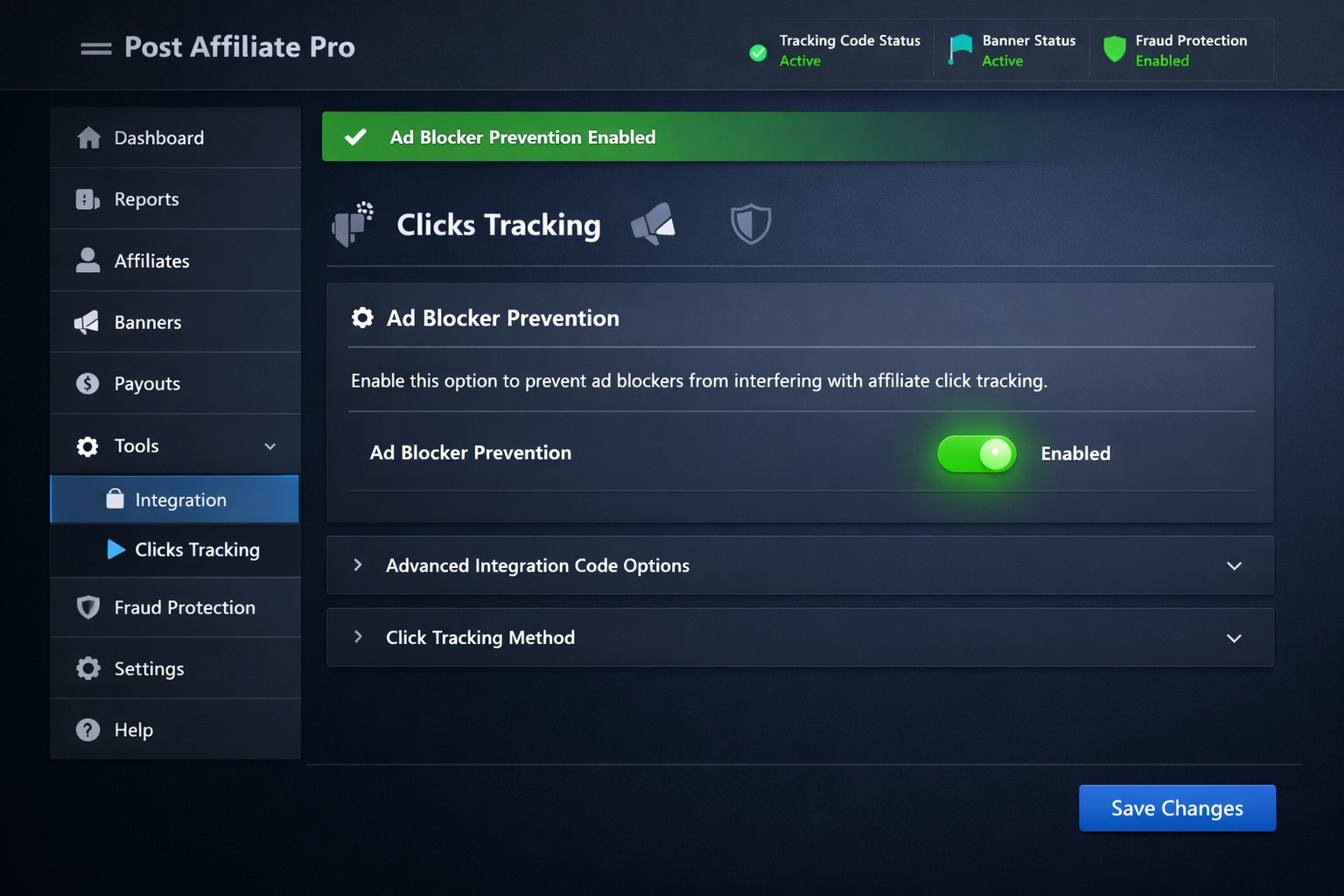
Enabling Post Affiliate Pro’s ad blocker prevention feature is a simple process that takes just a few clicks and requires no technical expertise. Step 1: Log into your Post Affiliate Pro Merchant panel and navigate to the main menu. Step 2: Click on Tools in the top navigation menu. Step 3: Select Integration from the dropdown options. Step 4: You’ll see two tracking options—first, click on Clicks Tracking. Step 5: In the Clicks Tracking settings, locate the special checkbox labeled “Ad Blocker Prevention” and check it to enable the feature for click tracking. Step 6: Return to the Integration menu and select Sales/Leads Tracking. Step 7: In the Sales/Leads Tracking settings, locate and check the “Ad Blocker Prevention” checkbox to enable the feature for conversion tracking. Step 8: Save your changes by clicking the Save button. Once enabled, the feature will automatically begin protecting your affiliate banners and tracking from ad blocker interference. The beauty of this implementation is that it requires no changes to your affiliate links, banners, or existing tracking code—Post Affiliate Pro handles the ad blocker prevention transparently in the background. You don’t need to update your affiliates’ promotional materials or reconfigure your tracking setup. The feature works immediately upon activation, providing instant protection against the most common ad blocker filtering methods. For merchants running self-hosted Post Affiliate Pro installations, ensure you’re running the latest version to access this feature; cloud-hosted customers receive automatic updates.
While Post Affiliate Pro’s ad blocker prevention feature provides essential protection, maximizing banner visibility requires a multi-layered strategy that combines technical solutions with practical marketing approaches. Server-side tracking should be your foundation—work with Post Affiliate Pro to ensure your tracking implementation uses backend postbacks that don’t rely solely on client-side cookies or scripts. Direct links with unique identifiers provide an additional layer of protection; instead of relying on cookies alone, use direct affiliate links paired with unique coupon codes or promotional IDs that allow you to track conversions even if cookies are blocked. Branded redirect domains are significantly more effective than generic third-party tracking domains; create custom subdomains on your own domain (e.g., yourdomain.com/go/product) that serve as internal redirects, which are far less likely to be flagged by ad blockers than external tracking domains. Audience education is surprisingly effective—be transparent with your audience about how affiliate links support your content creation, and encourage loyal visitors to temporarily disable ad blockers or whitelist your site. Whitelisting programs like the Acceptable Ads Committee can help; while they don’t cover all affiliate tracking, registering your domains where possible provides some protection. Avoid obvious tracking language in your URLs, cookies, and scripts—remove words like “track,” “affiliate,” and “ad” from your page source entirely, as these are common ad blocker triggers. Don’t use designated ad slots for key functionality; if your website template is popular, the ad placement patterns are already known to ad blockers. Finally, regularly test your affiliate pages with major ad blockers (uBlock Origin, AdGuard, Brave Browser) to see exactly what your visitors see and identify any blocking issues before they impact revenue.
When evaluating affiliate software solutions, ad blocker prevention capability should be a primary consideration, and Post Affiliate Pro stands alone in addressing this critical challenge. Tapfiliate, a popular alternative, offers solid affiliate tracking but lacks any specific ad blocker prevention feature, leaving merchants vulnerable to the same blocking issues that plague the industry. Impact (formerly Impact.com) provides enterprise-level affiliate management but focuses primarily on traditional tracking methods without addressing modern ad blocker threats. Partnerize offers comprehensive affiliate solutions but similarly lacks dedicated ad blocker prevention, forcing merchants to implement workarounds that often fail against sophisticated blockers. Tradedoubler provides affiliate network services but doesn’t offer built-in ad blocker prevention features, requiring merchants to solve this problem independently. Post Affiliate Pro’s advantage is clear: it’s the only affiliate software that includes a specific, built-in feature designed to prevent ad blockers from disabling affiliate banners. This isn’t a minor feature—it directly addresses a $54 billion annual revenue loss affecting the entire industry. Post Affiliate Pro’s solution is also more accessible than competitors; while enterprise platforms like Impact and Partnerize require significant technical resources and custom implementation, Post Affiliate Pro’s ad blocker prevention is enabled with a simple checkbox in the Merchant panel. The software also maintains superior ease of use across all features, making it ideal for merchants who want powerful affiliate management without requiring a dedicated technical team. Additionally, Post Affiliate Pro’s commitment to modern web standards—having already deprecated Flash cookie tracking in favor of HTML5—demonstrates forward-thinking development that keeps merchants ahead of industry changes. For merchants serious about protecting affiliate revenue in 2025 and beyond, Post Affiliate Pro is the clear choice.
| Feature | Post Affiliate Pro | Tapfiliate | Impact | Partnerize | Tradedoubler |
|---|---|---|---|---|---|
| Built-in Ad Blocker Prevention | ✅ Yes (Dedicated Feature) | ❌ No | ❌ No | ❌ No | ❌ No |
| HTML5 Tracking | ✅ Yes | ✅ Yes | ✅ Yes | ✅ Yes | ✅ Yes |
| Server-Side Tracking | ✅ Yes | ✅ Yes | ✅ Yes | ✅ Yes | ✅ Yes |
| Easy Setup (Checkbox Enable) | ✅ Yes | ❌ Requires Custom Code | ❌ Requires Custom Code | ❌ Requires Custom Code | ❌ Requires Custom Code |
| EasyList/Filter List Protection | ✅ Yes | ❌ No | ❌ No | ❌ No | ❌ No |
| Browser-Native Protection Handling | ✅ Yes | ⚠️ Partial | ⚠️ Partial | ⚠️ Partial | ⚠️ Partial |
| Ease of Use | ⭐⭐⭐⭐⭐ | ⭐⭐⭐ | ⭐⭐⭐ | ⭐⭐⭐ | ⭐⭐⭐ |
| Cost | 💰 Affordable | 💰 Moderate | 💰💰💰 Enterprise | 💰💰💰 Enterprise | 💰💰💰 Enterprise |
| Best For | Mid-Market & Enterprise | Small-Medium | Enterprise Only | Enterprise Only | Enterprise Only |
The affiliate marketing landscape is undergoing a fundamental shift driven by privacy regulations, browser changes, and user expectations, and merchants must adapt their tracking strategies accordingly. Privacy-first marketing is no longer optional—it’s the future, and affiliate programs that embrace transparency and direct data collection will thrive while those clinging to outdated tracking methods will struggle. First-party data collection is becoming essential; instead of relying on third-party cookies and cross-site tracking (which are increasingly blocked), focus on collecting data directly from your audience through purchases, site visits, email subscriptions, and direct interactions. HTML5 tracking has completely replaced deprecated Flash cookies, and Post Affiliate Pro’s transition to HTML5-based tracking ensures your affiliate program remains compatible with modern browsers and ad blocker prevention strategies. GDPR and CCPA compliance are no longer afterthoughts—they’re fundamental requirements that shape how you collect, store, and use affiliate data. Merchants must ensure their affiliate tracking complies with these regulations, which actually provides an advantage: transparent, compliant tracking is less likely to be flagged by ad blockers than opaque, privacy-invasive methods. Zero-party data (information users willingly provide) and probabilistic modeling (analyzing trends to predict behavior when direct tracking fails) are emerging as viable alternatives to traditional cookie-based tracking. Multi-touch attribution (MTA) and marketing mix modeling (MMM) allow you to measure affiliate impact across multiple touchpoints even when individual tracking is blocked. The merchants who succeed in 2025 and beyond will be those who view privacy not as an obstacle but as an opportunity—building affiliate programs on a foundation of transparency, consent, and direct relationships with their audience rather than relying on invisible tracking that users actively block.
Measuring the effectiveness of your ad blocker prevention strategy requires tracking specific metrics that reveal both the scope of the problem and the impact of your solution. Conversion rate discrepancies are your first indicator—compare your affiliate conversion rates before and after enabling Post Affiliate Pro’s ad blocker prevention feature; you should see measurable improvement as previously blocked conversions are now tracked. Click-to-conversion ratio is critical; monitor whether the ratio between tracked clicks and recorded conversions improves after enabling ad blocker prevention, as this directly indicates whether blocking was preventing attribution. Revenue recovery is the ultimate metric—calculate the additional affiliate revenue generated after implementing ad blocker prevention by comparing month-over-month or year-over-year performance. Ad blocker user identification can be tracked through analytics; use tools to identify what percentage of your traffic comes from users with ad blockers enabled, then monitor whether your conversion rates from this segment improve. Attribution accuracy should improve significantly; if you previously had unexplained gaps between clicks and conversions, these gaps should narrow as ad blocker prevention eliminates silent blocking. Post Affiliate Pro’s reporting features provide detailed analytics on clicks, conversions, and commissions, allowing you to segment performance data by traffic source, affiliate, and campaign to identify where ad blocker prevention is having the greatest impact. A/B testing different tracking methods (direct links with coupon codes vs. standard affiliate links) can reveal which approaches are most resistant to blocking in your specific audience. Track these metrics consistently over at least 30–60 days to account for seasonal variations and ensure your data is statistically significant. The ROI of ad blocker prevention is typically immediate and substantial—merchants report 10–30% improvement in affiliate conversion rates after implementation, translating directly to recovered revenue that was previously lost to silent blocking.
Post Affiliate Pro's advanced ad blocker prevention feature ensures your affiliate banners remain visible and trackable. Start your free trial and see how our solution outperforms competitors.
How affiliate management systems detect and prevent fraud in real-time. Fraud detection tools, prevention strategies, and PostAffiliatePro protection.
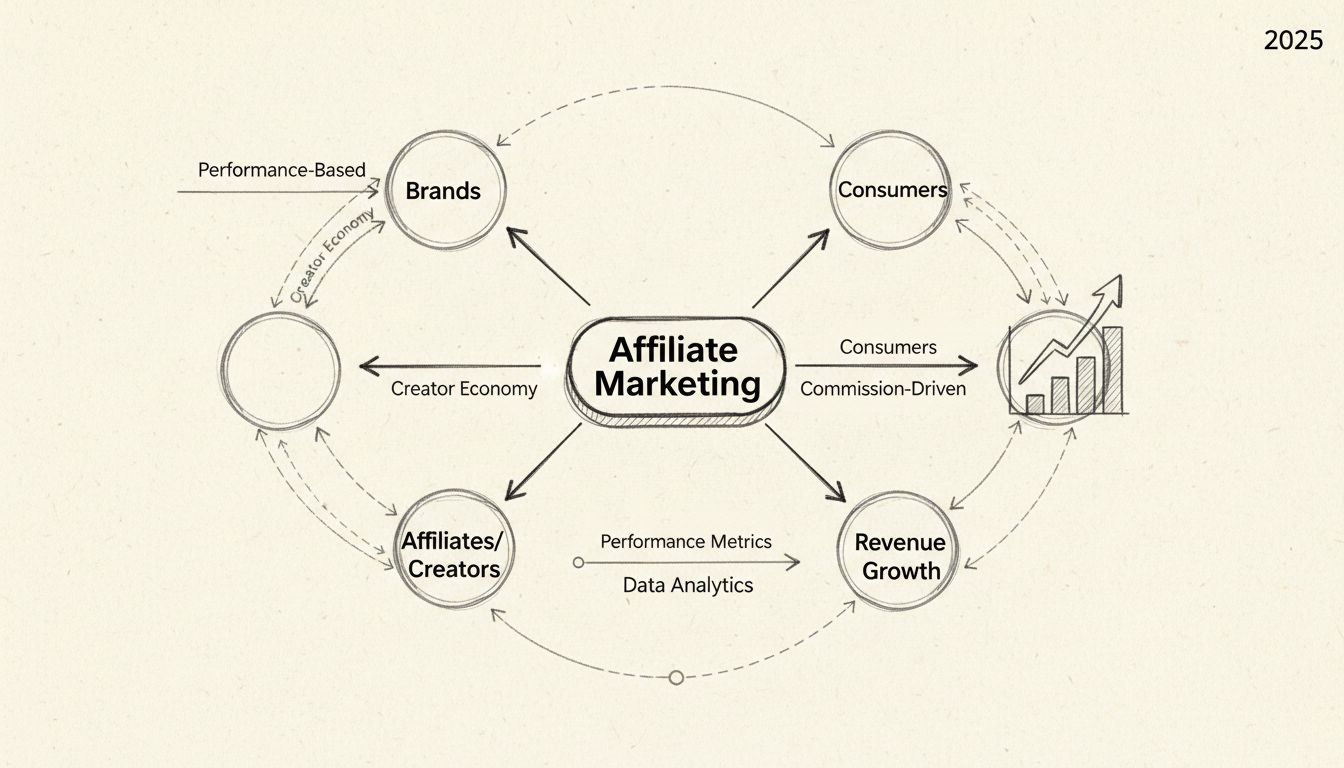
Discover why affiliate marketing isn't dead but thriving. Learn the latest trends, statistics, and strategies for success in 2025.
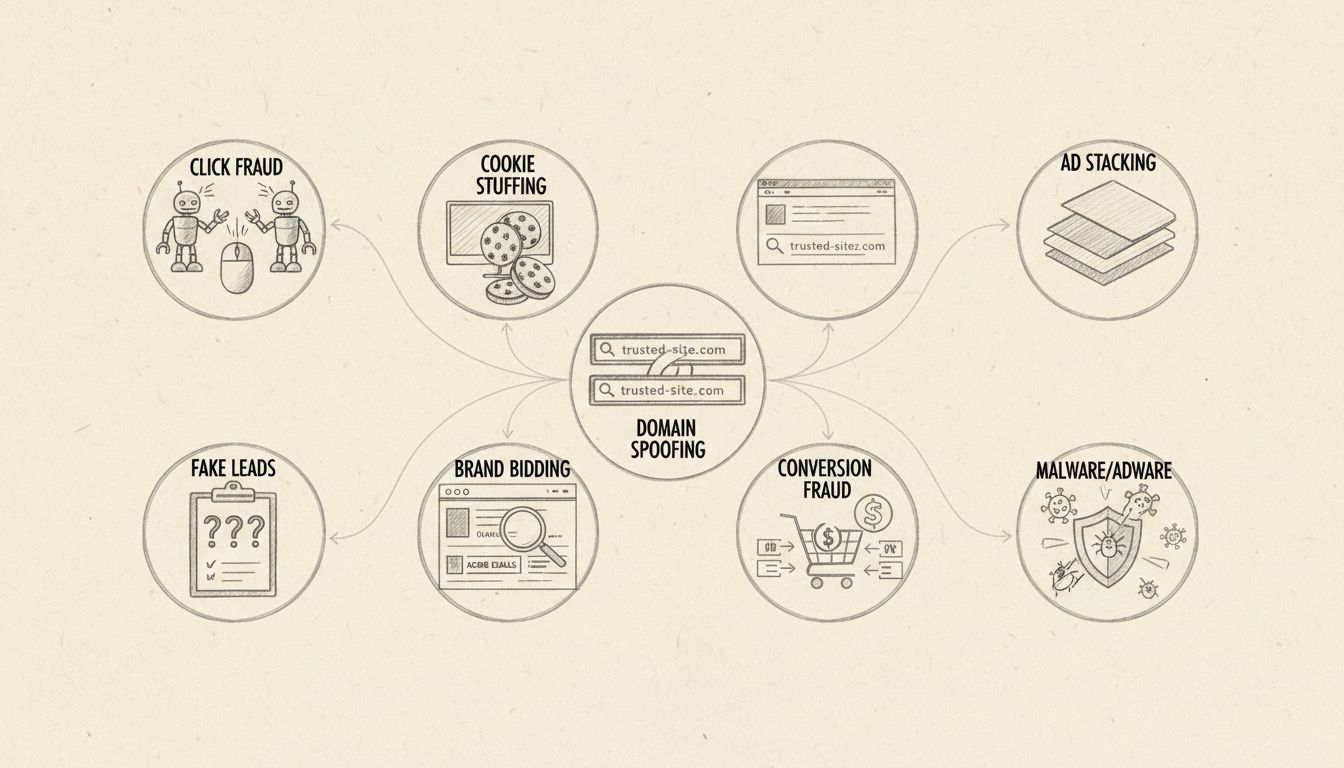
Learn what affiliate fraud is, how it works, and proven strategies to detect and prevent it. Protect your affiliate program with advanced fraud detection techni...
Join our community of happy clients and provide excellent customer support with Post Affiliate Pro.




Cookie Consent
We use cookies to enhance your browsing experience and analyze our traffic. See our privacy policy.