Understanding Non-Monetary Rewards in Affiliate Context
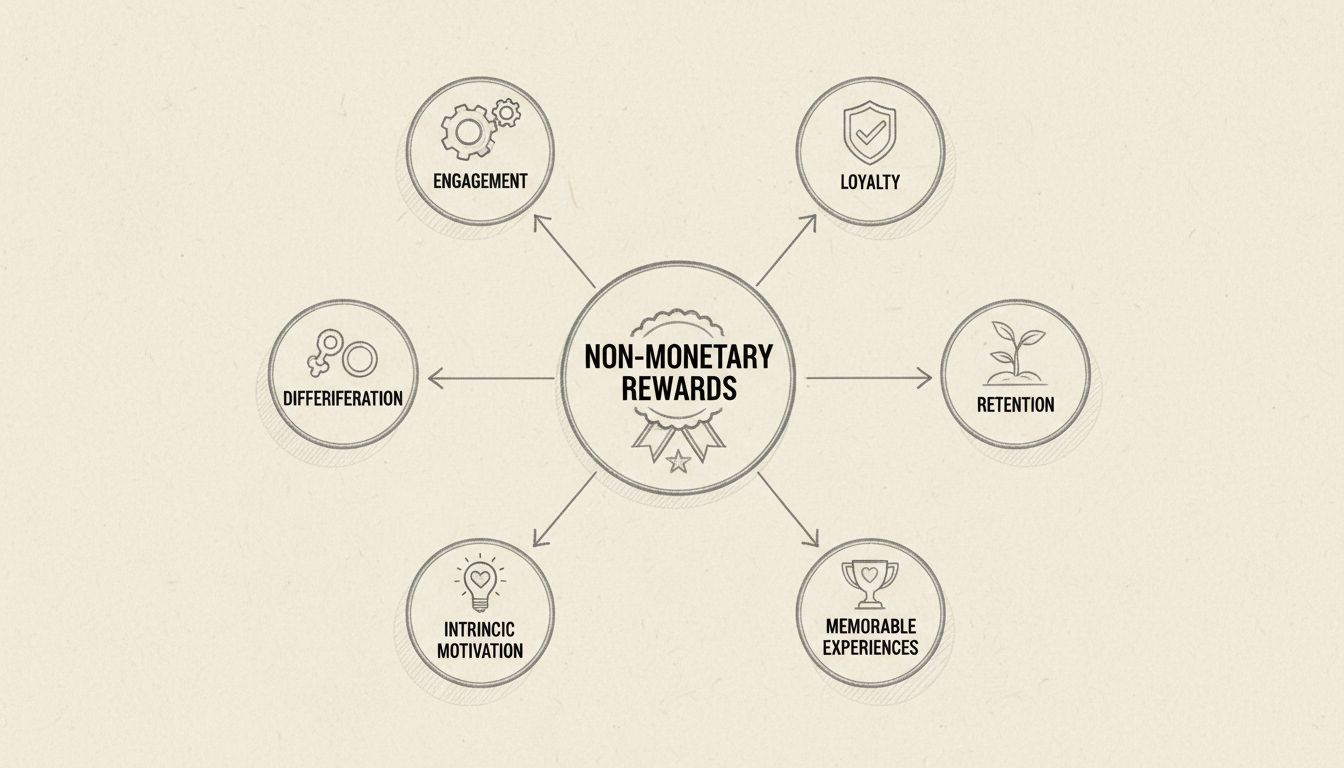
Non-monetary rewards in affiliate programs are incentives that provide value beyond direct financial compensation, including recognition, exclusive access, professional development opportunities, and experiential benefits. Research in behavioral psychology demonstrates that intrinsic motivation—driven by personal satisfaction, achievement, and recognition—creates more sustainable engagement than extrinsic rewards alone. A compelling statistic reveals that 79% of professionals prefer non-financial recognition over monetary bonuses, indicating that affiliates increasingly seek meaningful acknowledgment and growth opportunities alongside their commission structures. This shift reflects a fundamental change in how top-performing affiliates evaluate program partnerships, prioritizing long-term value and personal fulfillment over short-term cash incentives.
The Strategic Advantages of Non-Monetary Rewards
Non-monetary rewards create emotional connections that transform transactional relationships into genuine partnerships, while simultaneously differentiating your program in a crowded marketplace where most competitors rely solely on commission structures. These rewards tap into intrinsic motivation, which research shows produces 40% higher performance levels than extrinsic incentives alone, and appeal to diverse personality types—from competitive achievers seeking recognition to collaborative affiliates valuing community. Beyond performance metrics, non-monetary rewards create memorable experiences that affiliates share within their networks, generating organic word-of-mouth marketing that extends your program’s reach. The strategic implementation of these rewards significantly improves retention rates, with studies showing that recognized affiliates have 31% lower turnover compared to those receiving only monetary compensation.
Recognition serves as a powerful catalyst for building emotional bonds between affiliates and your brand, transforming performance-based relationships into loyalty-driven partnerships that withstand competitive pressures. When affiliates receive public acknowledgment—whether through featured case studies, social media spotlights, or exclusive recognition events—they experience a psychological reward that extends far beyond the immediate moment. Neuroscience research confirms that recognition triggers dopamine release in the brain, creating positive associations with your program that encourage continued engagement and higher performance levels. Unlike monetary rewards that provide temporary satisfaction, recognition creates lasting psychological benefits that compound over time, making recognized affiliates 50% more likely to increase their promotional efforts. The word-of-mouth effects of recognition are equally powerful, as celebrated affiliates naturally share their achievements within their networks, attracting quality partners who seek similar recognition opportunities.
Types of Recognition to Implement:
Monthly featured affiliate spotlights on your website and social channels
Annual awards ceremony or virtual recognition event
Personal thank-you messages from company leadership
Feature in company newsletter or industry publications
Recognition wall or hall of fame on your affiliate portal
Differentiating Your Affiliate Program
In today’s competitive affiliate landscape, where most programs compete primarily on commission rates and cookie durations, non-monetary rewards represent a genuine opportunity for differentiation that attracts quality partners seeking more than transactional relationships. Analysis of leading affiliate programs reveals that approximately 85% focus exclusively on monetary incentives, creating a significant gap where innovative programs can establish competitive advantages. By implementing unique non-monetary offerings—such as exclusive training, community access, or experiential rewards—your program becomes a destination for serious affiliates rather than just another commission opportunity. This differentiation strategy proves particularly effective at attracting quality affiliates who demonstrate higher conversion rates, better audience alignment, and greater long-term commitment compared to affiliates motivated solely by commission structures. Furthermore, non-monetary rewards allow your program to align with your brand values and culture, creating partnerships with affiliates whose audiences and promotional styles complement your company’s mission and positioning.
Join our newsletter
Be the first to know about new features and product updates.
Gamification and Intrinsic Motivation
Gamification transforms affiliate program engagement by introducing game mechanics that tap into fundamental human drives for achievement, competition, and progress—creating sustained motivation that extends far beyond traditional commission structures. Elements such as points systems, achievement badges, and competitive leaderboards provide immediate feedback on performance, allowing affiliates to track progress and celebrate milestones in real-time. The psychology of achievement demonstrates that affiliates who can visualize their progress and earn visible badges experience 60% higher engagement rates compared to those with only commission-based tracking. Competitive elements within gamified systems—such as monthly challenges, seasonal competitions, or tier-based rankings—activate the achievement motivation that drives top performers to consistently exceed their targets. The sustained performance improvements from gamification stem from the continuous cycle of challenge, achievement, and recognition, which maintains engagement levels that monetary incentives alone cannot sustain over extended periods.
Key Gamification Elements for Affiliate Programs:
Points accumulation system tied to specific actions (referrals, conversions, content creation)
Leaderboards displaying top performers with weekly, monthly, and all-time rankings
Tier progression systems (Bronze, Silver, Gold, Platinum) with escalating benefits
Challenge campaigns with specific goals and limited timeframes
Progress bars showing advancement toward next achievement level
Streak counters rewarding consistent performance
Seasonal competitions with themed objectives and special rewards
Types of Non-Monetary Rewards for Affiliates
Effective affiliate programs implement diverse non-monetary rewards that address different motivations and preferences across their partner network. Exclusive product access allows top affiliates to test new features before public launch, positioning them as industry insiders and providing content advantages for their audiences. Early product launches create urgency and exclusivity, enabling affiliates to be first-to-market with promotional content that drives significant early adoption. VIP events—whether virtual mastermind sessions, annual conferences, or exclusive networking dinners—provide relationship-building opportunities that strengthen affiliate commitment and facilitate peer learning. Comprehensive training programs including certification courses, advanced marketing workshops, and one-on-one coaching sessions directly enhance affiliate capabilities and earning potential. Leadership roles such as program ambassador positions, advisory board participation, or community moderator responsibilities empower affiliates with decision-making authority and program influence. Branded merchandise featuring affiliate achievements, company logos, or personalized designs creates tangible reminders of recognition and professional identity. Finally, community access through exclusive forums, Slack channels, or mastermind groups creates belonging and peer support networks that enhance the overall affiliate experience beyond transactional interactions.
Implementing a Balanced Reward Strategy
The most effective affiliate programs employ a layered reward approach that combines monetary and non-monetary incentives, recognizing that different affiliates respond to different motivations and that comprehensive strategies drive superior overall performance. This balanced model typically structures rewards as: base commissions providing reliable income, performance bonuses rewarding exceptional results, and non-monetary rewards recognizing achievement and building loyalty. By implementing this three-tier system, programs address diverse motivations—from affiliates seeking stable income to those pursuing recognition and growth opportunities. Research demonstrates that programs combining all three reward types achieve 45% higher affiliate retention and 38% greater average revenue per affiliate compared to commission-only programs. The key to successful implementation lies in transparent communication about how each reward tier functions, clear criteria for earning each type of reward, and consistent delivery that builds trust and program credibility. This balanced approach also allows programs to optimize budget allocation, directing monetary resources toward performance incentives while leveraging lower-cost non-monetary rewards for recognition and engagement.
Cost-Effectiveness and Budget Optimization
Non-monetary rewards deliver exceptional return on investment compared to equivalent monetary incentives, with research showing that experiential and recognition-based rewards generate 3-5 times greater engagement per dollar spent. While a $500 cash bonus provides temporary satisfaction and quickly becomes forgotten, a $500 investment in an exclusive training program, conference attendance, or recognition event creates lasting value and ongoing engagement benefits. Creative low-cost options such as digital badges, exclusive content access, public recognition, and community features require minimal financial investment while delivering substantial psychological and motivational benefits. Strategic budget allocation allows programs to maximize impact by investing heavily in high-impact recognition for top performers while implementing scalable, low-cost gamification elements for broader affiliate engagement. Many successful programs allocate 20-30% of their affiliate incentive budget to non-monetary rewards, discovering that this allocation produces superior retention and performance metrics compared to 100% commission-based spending. The cost-effectiveness advantage becomes even more pronounced when considering that non-monetary rewards create compounding benefits—recognized affiliates generate word-of-mouth referrals that attract additional quality partners at minimal acquisition cost.
Measuring Impact and Success
Implementing non-monetary rewards requires data-driven measurement to validate effectiveness and optimize program design, with key metrics including affiliate retention rates, commission per affiliate, participation rates in reward programs, and lifetime value calculations. Retention rates serve as the primary indicator of non-monetary reward effectiveness, with successful programs tracking the percentage of affiliates returning for subsequent periods and comparing retention between rewarded and non-rewarded cohorts. Commission per affiliate metrics reveal whether recognition and engagement initiatives translate into increased promotional effort and revenue generation, with top-performing programs showing 25-40% increases in average affiliate productivity. Participation rates in specific reward programs—such as leaderboard engagement, badge achievement, or event attendance—indicate which reward types resonate most strongly with your affiliate base. A/B testing different rewards allows programs to identify which recognition types, gamification elements, and experiential offerings generate the strongest engagement responses, enabling continuous optimization. Systematic feedback collection through surveys, interviews, and focus groups provides qualitative insights that complement quantitative metrics, revealing affiliate preferences and satisfaction drivers.
Key Metrics to Track:
Monthly and annual affiliate retention rates
Average commission per affiliate (comparing rewarded vs. non-rewarded groups)
Leaderboard participation and engagement rates
Badge achievement rates and distribution
Event attendance and satisfaction scores
Training program completion rates
Affiliate satisfaction scores (NPS and CSAT)
Lifetime value of recognized vs. non-recognized affiliates
Word-of-mouth referral rates from recognized affiliates
Program recommendation likelihood
Best Practices for Implementation
Successfully implementing non-monetary rewards requires adherence to proven best practices that ensure fairness, transparency, and maximum impact across your affiliate network.
Clear Communication: Establish transparent criteria for earning each reward type, publish detailed guidelines in your affiliate portal, and communicate changes well in advance to prevent confusion or perceived unfairness.
Fair Distribution: Implement objective, measurable criteria for reward allocation that prevent favoritism and ensure all affiliates understand exactly what performance levels trigger recognition and rewards.
Personalization: Recognize that different affiliates value different rewards—offer choice in reward selection, customize recognition approaches, and tailor communication to individual preferences and achievement styles.
Feedback Collection: Regularly solicit affiliate input on reward preferences, program satisfaction, and desired recognition types through surveys, focus groups, and one-on-one conversations with top performers.
Consistency: Maintain reliable, predictable reward delivery schedules that build trust and allow affiliates to plan their efforts around known recognition opportunities and timelines.
Transparency: Publish leaderboards, achievement criteria, and reward details openly, ensuring all affiliates can see how recognition is earned and how their performance compares to peers.
Real-World Examples and Case Studies
Leading companies have successfully implemented non-monetary reward strategies that demonstrate the power of recognition and engagement in affiliate and referral programs. Dropbox’s referral program revolutionized affiliate engagement by offering exclusive storage bonuses and early access to new features rather than cash incentives, resulting in 3,900% growth in sign-ups and establishing a benchmark for non-monetary reward effectiveness. Uber’s gamified driver engagement system implements achievement badges, tier progression, and competitive leaderboards that maintain driver motivation and performance consistency, with research showing that gamified drivers achieve 20% higher earnings through increased engagement. Airbnb’s tiered host recognition system combines exclusive access to premium features, priority customer support, and public “Superhost” badges that create status differentiation and drive 40% higher booking rates for recognized hosts. These examples translate directly to affiliate programs: Dropbox’s approach demonstrates how exclusive access creates perceived value exceeding monetary equivalents, Uber’s system shows how gamification sustains engagement, and Airbnb’s model proves that public recognition drives measurable performance improvements. By adapting these proven strategies to your affiliate program structure, you can replicate the engagement and retention benefits these industry leaders have achieved.
PostAffiliatePro’s Role in Reward Management
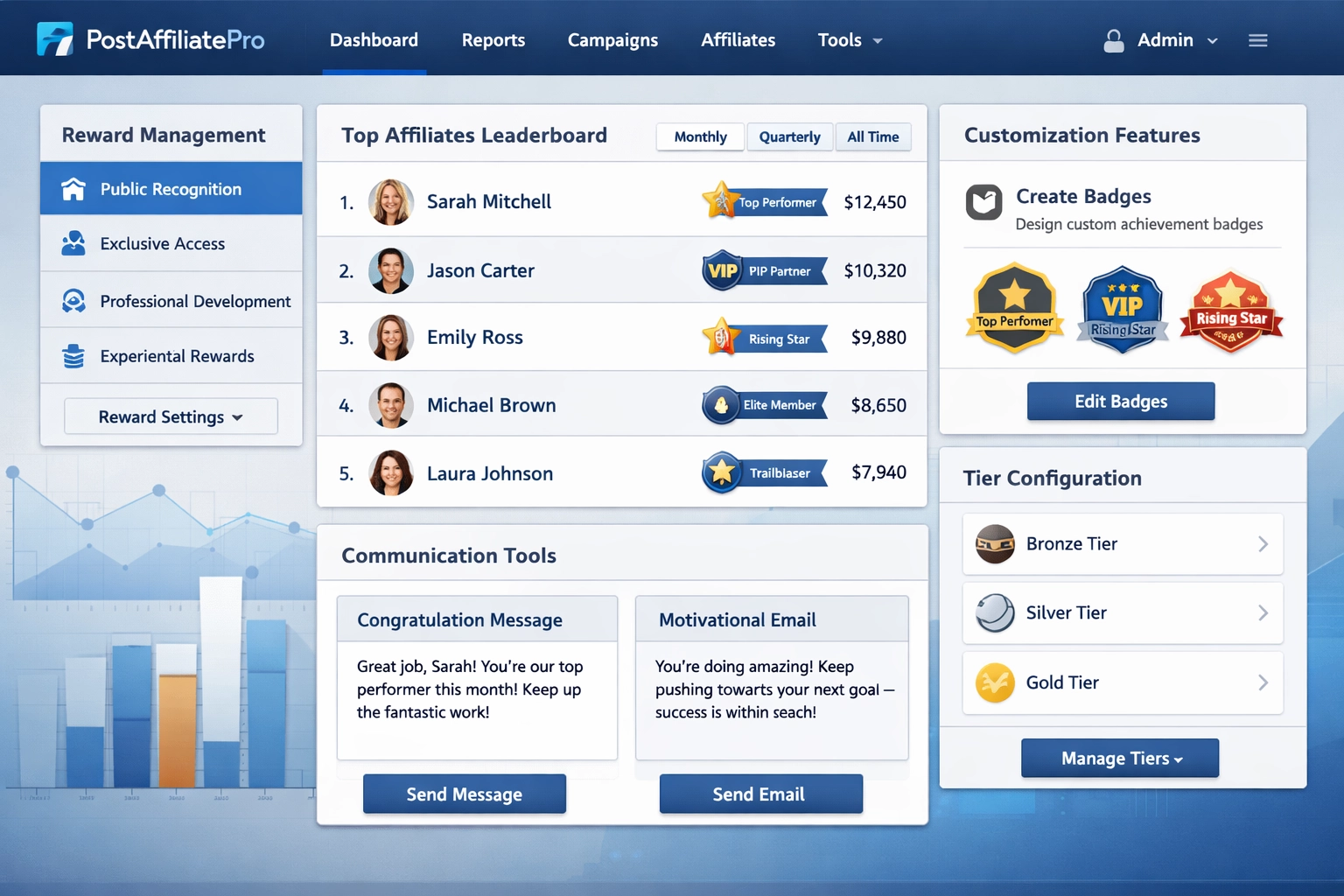
PostAffiliatePro provides comprehensive infrastructure for implementing and managing sophisticated non-monetary reward programs, enabling you to create the differentiated affiliate experiences that drive superior retention and performance. The platform’s advanced tracking capabilities monitor affiliate activities beyond simple conversions—capturing training completion, event attendance, content creation, and community participation—providing the detailed data necessary to fairly allocate recognition and rewards. Communication tools integrated throughout PostAffiliatePro allow you to deliver personalized recognition messages, announce achievements across your affiliate network, and maintain consistent engagement that reinforces reward value. The system’s customization features enable you to design tiered reward structures, create custom badges and achievement levels, and implement gamification elements that align with your brand and affiliate preferences. Leaderboard functionality provides real-time visibility into affiliate performance rankings, creating the competitive transparency that drives engagement while allowing you to feature top performers prominently. Integration with your affiliate management workflows ensures that reward allocation, recognition delivery, and performance tracking operate seamlessly within your existing systems, eliminating manual processes and ensuring consistency. By leveraging PostAffiliatePro’s comprehensive platform, you can implement sophisticated non-monetary reward strategies that transform your affiliate program from a transactional commission structure into a loyalty-driven partnership ecosystem that attracts, engages, and retains your highest-value partners.
Frequently asked questions
What are non-monetary rewards in affiliate programs?
Non-monetary rewards are incentives that provide value beyond direct financial compensation, including recognition, exclusive access, professional development opportunities, and experiential benefits. These rewards tap into intrinsic motivation and create emotional connections that drive sustained engagement and loyalty.
How do non-monetary rewards improve affiliate retention?
Non-monetary rewards create emotional bonds and demonstrate genuine appreciation for affiliate contributions. Recognized affiliates have 31% lower turnover compared to those receiving only monetary compensation, as these rewards signal that the organization values them as partners, not just commission generators.
What types of non-monetary rewards work best for affiliates?
Effective rewards include public recognition (leaderboards, case studies), exclusive access (early product launches, VIP events), professional development (training programs, certifications), experiential rewards (conferences, networking events), leadership opportunities, personalized recognition, and community access through exclusive forums or mastermind groups.
How can I measure the effectiveness of non-monetary rewards?
Track key metrics including affiliate retention rates, average commission per affiliate, participation rates in reward programs, lifetime value of recognized affiliates, event attendance, training completion rates, and affiliate satisfaction scores. A/B testing different rewards helps identify which types resonate most with your affiliate base.
Can non-monetary rewards replace monetary commissions?
No, the most effective affiliate programs use a balanced approach combining base commissions, performance bonuses, and non-monetary rewards. This layered strategy addresses diverse motivations and drives 45% higher retention and 38% greater average revenue per affiliate compared to commission-only programs.
How much should I budget for non-monetary rewards?
Successful programs typically allocate 20-30% of their affiliate incentive budget to non-monetary rewards. This allocation produces superior retention and performance metrics compared to 100% commission-based spending, while non-monetary rewards deliver 3-5 times greater engagement per dollar spent compared to equivalent monetary incentives.
How does PostAffiliatePro help implement non-monetary rewards?
PostAffiliatePro provides comprehensive infrastructure including advanced tracking for affiliate activities, integrated communication tools for personalized recognition, customization features for tiered rewards and gamification, leaderboard functionality for competitive transparency, and seamless integration with affiliate management workflows.
What is gamification and how does it apply to affiliate programs?
Gamification introduces game mechanics like points systems, achievement badges, and competitive leaderboards that tap into human drives for achievement and progress. Affiliates with gamified tracking experience 60% higher engagement rates, and gamified programs achieve sustained performance improvements that monetary incentives alone cannot maintain.
Transform Your Affiliate Program with Strategic Rewards
PostAffiliatePro makes it easy to implement both monetary and non-monetary rewards that drive affiliate engagement and loyalty. Create a comprehensive reward system that attracts, motivates, and retains your best partners.
Non-Monetary Rewards in Affiliate Programs: Benefits & Implementation Guide
Discover why non-monetary rewards are essential for affiliate programs. Learn how recognition, experiences, and personalized incentives drive loyalty, engagemen...
Non-Monetary Rewards for Affiliates: Effective Incentives Beyond Cash
Discover effective non-monetary rewards for affiliates including exclusive deals, branded merchandise, recognition programs, and gamification strategies to boos...