


What is Affiliate Marketing and How Does It Work?
Learn how affiliate marketing works, the key players involved, commission structures, and proven strategies to build a profitable affiliate business. Updated fo...
12 min read


how affiliate marketing drives cost-effective growth. Learn the key benefits, ROI metrics, and why 71% of marketers prefer it over traditional advertising.
71% of marketers view affiliate marketing as more cost-effective than traditional marketing channels, making it one of the most compelling strategies in the modern digital landscape. The affiliate marketing industry has grown into a $17 billion market with consistent 10% year-over-year growth, demonstrating its increasing importance to businesses worldwide. But is affiliate marketing truly beneficial for your business, or is it just another marketing trend? This comprehensive guide explores the real advantages, challenges, and practical considerations that determine whether affiliate marketing deserves a place in your marketing strategy. We’ll examine the data, break down the mechanics, and help you understand how this performance-based model can drive measurable results for your organization.

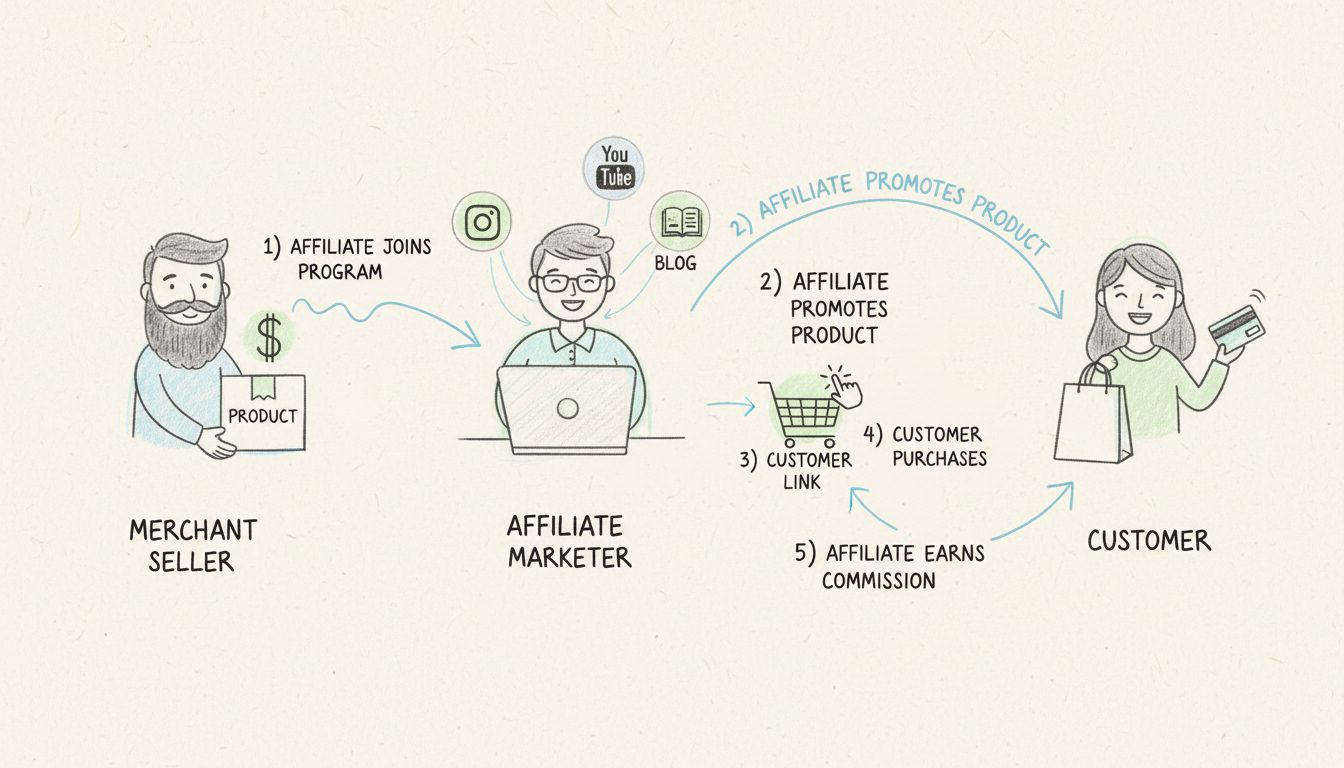
Affiliate marketing is a performance-based marketing model where businesses reward partners for driving specific actions—typically sales, leads, or clicks. The ecosystem consists of four essential components: the advertiser (the business selling products or services), the affiliate (the partner promoting the product), the customer (the end user making a purchase), and the tracking platform (the technology that records and attributes conversions). Here’s how it works in practice: affiliates promote your products using unique tracking links, and when a customer completes a desired action through that link, the affiliate earns a commission. Unlike traditional advertising where you pay upfront regardless of results, affiliate marketing operates on a pure performance basis—you only pay when actual conversions occur. This fundamental difference has made affiliate marketing increasingly attractive to businesses of all sizes, from startups to Fortune 500 companies seeking more efficient customer acquisition channels.

Set up advanced tracking in minutes. No credit card required.
Affiliate marketing delivers multiple advantages that extend far beyond simple cost savings. Here’s a detailed breakdown of the primary benefits:
| Benefit | Description |
|---|---|
| Cost-Effectiveness | Pay only for actual results, eliminating wasted ad spend on uninterested audiences |
| High ROI | Achieve returns of 8:1 to 20:1 depending on industry and program optimization |
| Increased Traffic | Leverage affiliate networks to drive qualified visitors to your website and sales channels |
| Reputation Boost | Benefit from third-party endorsements that build credibility and consumer trust |
| Brand Recognition | Expand your brand presence across multiple channels and audience segments simultaneously |
| Scalability | Grow your program without proportional increases in fixed marketing costs |
| Performance Tracking | Access real-time data on every aspect of your affiliate program’s performance |
| Low Risk | Test new markets and products with minimal financial exposure before scaling |
The financial argument for affiliate marketing is compelling and backed by substantial data. Because affiliate marketing operates on a pay-for-performance model, you eliminate upfront advertising costs and only invest capital when actual conversions occur. According to UK marketing data, businesses earn £15 for every £1 spent on affiliate marketing—a 15:1 return that significantly outpaces traditional advertising channels. The average ROI across all industries stands at 12:1, though this varies considerably by sector. B2B SaaS companies typically achieve ROI between 10:1 and 20:1, while e-commerce businesses see returns ranging from 8:1 to 12:1. Compare this to traditional advertising, where you might spend thousands on display ads, TV commercials, or print media with uncertain conversion outcomes. For your business’s bottom line, this means every marketing dollar works harder in an affiliate program, directly impacting profitability and allowing you to reinvest savings into growth initiatives.
Be the first to know about new features and product updates.
One of affiliate marketing’s most underrated advantages is its ability to connect you with audiences you couldn’t reach through traditional channels. Affiliates bring established audiences and deep expertise in specific niches, whether that’s fitness enthusiasts, software developers, or sustainable fashion consumers. Research shows that 65% of affiliate-driven traffic originates from blogging, where content creators have built loyal, engaged communities over years. By partnering with these affiliates, you gain immediate access to audiences that would take months or years to build independently. This extends beyond simple audience access—affiliates enable precise niche targeting that ensures your products reach people genuinely interested in what you offer. Additionally, affiliate partnerships facilitate geographic expansion, allowing you to enter new markets through local influencers and regional content creators who understand local preferences and consumer behavior. These partnerships create a network effect where your brand presence multiplies across dozens or hundreds of channels simultaneously.
Consumer psychology reveals a powerful truth: people trust recommendations from third parties far more than direct brand messaging. When an affiliate—whether a respected blogger, industry expert, or micro-influencer—recommends your product, it carries significantly more weight than your own advertising claims. This third-party endorsement effect is one of affiliate marketing’s most valuable assets, as it leverages existing trust relationships that affiliates have built with their audiences. However, this advantage comes with responsibility: your brand reputation is only as strong as your weakest affiliate partner. Selecting affiliates carefully, monitoring their promotional methods, and maintaining clear brand guidelines ensures your reputation remains protected. The best affiliate programs establish long-term relationships with partners who genuinely align with brand values, creating authentic endorsements rather than transactional promotions. Over time, these consistent, credible endorsements from multiple trusted sources build powerful brand recognition and loyalty that translates into customer lifetime value far exceeding the cost of affiliate commissions.
Affiliate marketing offers remarkable flexibility that traditional marketing channels simply cannot match. You can scale your program up or down based on business needs without the constraints of fixed contracts or long-term commitments. Adding new affiliates requires no significant infrastructure investment—your tracking platform handles the technical requirements automatically. This means you can expand your affiliate network without proportional increases in fixed costs, a critical advantage during growth phases. Commission structures can be adjusted flexibly to test different incentive models, seasonal promotions, or market-specific strategies. Want to test a new geographic market? Launch an affiliate recruitment campaign in that region with minimal financial risk. Need to adjust for seasonal demand? Modify commission rates or promotional focus without renegotiating contracts. Unlike traditional advertising where you commit to campaigns months in advance, affiliate marketing allows rapid adjustments based on real-time performance data. This flexibility means you don’t need large in-house teams managing every aspect—your affiliate partners become an extension of your marketing department, scaling with your business needs.
Modern affiliate marketing lives and dies by data, and the metrics available provide unprecedented insight into marketing performance. Real-time performance tracking allows you to monitor every aspect of your program as it happens, from clicks to conversions to customer lifetime value. The eight essential metrics that drive optimization decisions are:
These metrics enable data-driven optimization where you identify top-performing affiliates and understand exactly what makes them successful. A/B testing capabilities allow you to experiment with different commission structures, promotional materials, and messaging to continuously improve results. The transparency inherent in affiliate marketing means you can see precisely which partners drive value and which underperform, enabling strategic decisions about program focus and resource allocation.
While affiliate marketing offers substantial benefits, it’s important to acknowledge the challenges that require careful management. Quality control presents a significant challenge, as you’re relying on external partners to represent your brand appropriately. Affiliate fraud accounts for approximately 15% of program losses across industries, ranging from click fraud to cookie stuffing to false attribution. Poor affiliate choices can cause reputation damage that takes months to recover from, particularly if partners use aggressive or misleading promotional tactics. Successful affiliate programs require careful affiliate selection and ongoing monitoring to ensure brand safety and program integrity. Building a profitable program demands patience and hard work—results don’t appear overnight, and many programs take 6-12 months to reach optimal performance. There’s inherent uncertainty in results, as affiliate performance varies based on market conditions, seasonal factors, and competitive dynamics. However, these challenges are manageable through proper mitigation strategies: implementing fraud detection systems, establishing clear brand guidelines, conducting regular audits, and building relationships with quality partners who share your values.
The comparison between affiliate marketing and traditional marketing reveals why 71% of marketers prefer affiliate marketing’s cost structure and performance model. Traditional advertising requires upfront investment regardless of results—you pay for ad space, airtime, or impressions whether conversions occur or not. Affiliate marketing inverts this model, requiring payment only when actual results materialize. Measurement capabilities differ dramatically: traditional marketing often relies on attribution models and estimates, while affiliate marketing provides precise, real-time tracking of every conversion. ROI transparency is substantially higher in affiliate programs, where you can calculate exact returns down to individual affiliate partners. Traditional marketing offers fixed costs but limited flexibility, while affiliate marketing provides performance-based costs with remarkable adaptability. In today’s digital landscape where consumers increasingly distrust direct advertising, affiliate marketing’s reliance on trusted third-party endorsements proves more effective. The data supports this preference: affiliate marketing consistently delivers higher ROI, lower customer acquisition costs, and better long-term customer value compared to traditional channels. For businesses seeking measurable, scalable, and cost-efficient growth, affiliate marketing has become the superior choice.

Your affiliate program’s success depends heavily on the platform you choose to manage it. Software selection is critical because it determines your ability to track performance, prevent fraud, recruit affiliates, and scale operations. Essential features include real-time tracking accuracy, comprehensive reporting dashboards, fraud detection systems, and automation capabilities that reduce manual work. When evaluating platforms, PostAffiliatePro stands out as the #1 solution for businesses of all sizes, offering enterprise-grade features with user-friendly interfaces. The platform excels in tracking reliability, providing pixel-based and server-to-server tracking options that ensure accurate attribution even in complex customer journeys. Its advanced fraud detection identifies suspicious patterns before they impact your program, while flexible commission structures support any business model from e-commerce to SaaS. Integration capabilities with major platforms—Shopify, WooCommerce, Magento, and custom APIs—ensure seamless implementation regardless of your tech stack. PostAffiliatePro’s dedicated support team and scalability mean your platform grows with your business, from your first affiliate to thousands of partners.
Launching a successful affiliate program requires strategic planning and systematic execution. Begin by defining clear goals—whether you’re targeting customer acquisition, revenue growth, or market expansion—and establish commission structures that incentivize desired behaviors while remaining profitable. Choose the right platform (like PostAffiliatePro) that matches your technical requirements and growth ambitions. Recruit quality affiliates by identifying partners whose audiences align with your target customers, then provide them with compelling promotional materials and competitive commissions. Monitor and optimize continuously using the performance metrics discussed earlier, adjusting strategies based on real data rather than assumptions. The path from launch to profitability requires patience, but the financial returns justify the investment. If you’re ready to tap into the $17 billion affiliate marketing industry and join the 71% of marketers achieving superior results, now is the time to start building your program.
Affiliate programs have minimal startup costs. You only pay commissions when sales occur. Software costs range from $99-500/month depending on features. Total initial investment is typically $500-2,000 including setup and first month of software.
Average ROI is 12:1 across industries. B2B SaaS typically sees 10:1 to 20:1 ROI, while e-commerce sees 8:1 to 12:1. Anything above 10:1 is considered good performance.
Use affiliate software with fraud detection tools, monitor suspicious activity patterns, validate leads and sales, set up multi-layer verification, and regularly audit affiliate performance. Fraudulent activity accounts for about 15% of program losses if not managed.
Results vary by industry. E-commerce typically sees results in 1-7 days, B2B SaaS in 14-90 days, and enterprise sales in 90-180 days. Most programs see meaningful revenue within 3-6 months of launch.
Commission rates vary by industry. E-commerce typically offers 5-15%, B2B SaaS offers 15-30% recurring, and finance/fintech offers $50-500 bounties. Higher-margin products can support higher commissions.
Yes, absolutely. Small businesses benefit greatly from affiliate marketing because it requires minimal upfront investment and allows them to reach audiences they couldn't afford through traditional advertising. It's particularly effective for startups and SMEs.
Look for affiliates in your niche with engaged audiences, complementary products, industry expertise, and existing customer bases. Use affiliate networks, reach out to content creators, and recruit from your existing customers.
Track conversion rate, earnings per click (EPC), customer acquisition cost (CAC), commission-to-LTV ratio, active affiliate rate, affiliate customer LTV, trial-to-paid rate, and time to first purchase.
PostAffiliatePro makes it easy to set up, manage, and scale your affiliate program. Start with a 30-day free trial and see how affiliate marketing can boost your revenue.
Learn how affiliate marketing works, the key players involved, commission structures, and proven strategies to build a profitable affiliate business. Updated fo...

Discover the top benefits of affiliate marketing: passive income, easy tracking, reputation building, improved SEO, and networking opportunities.
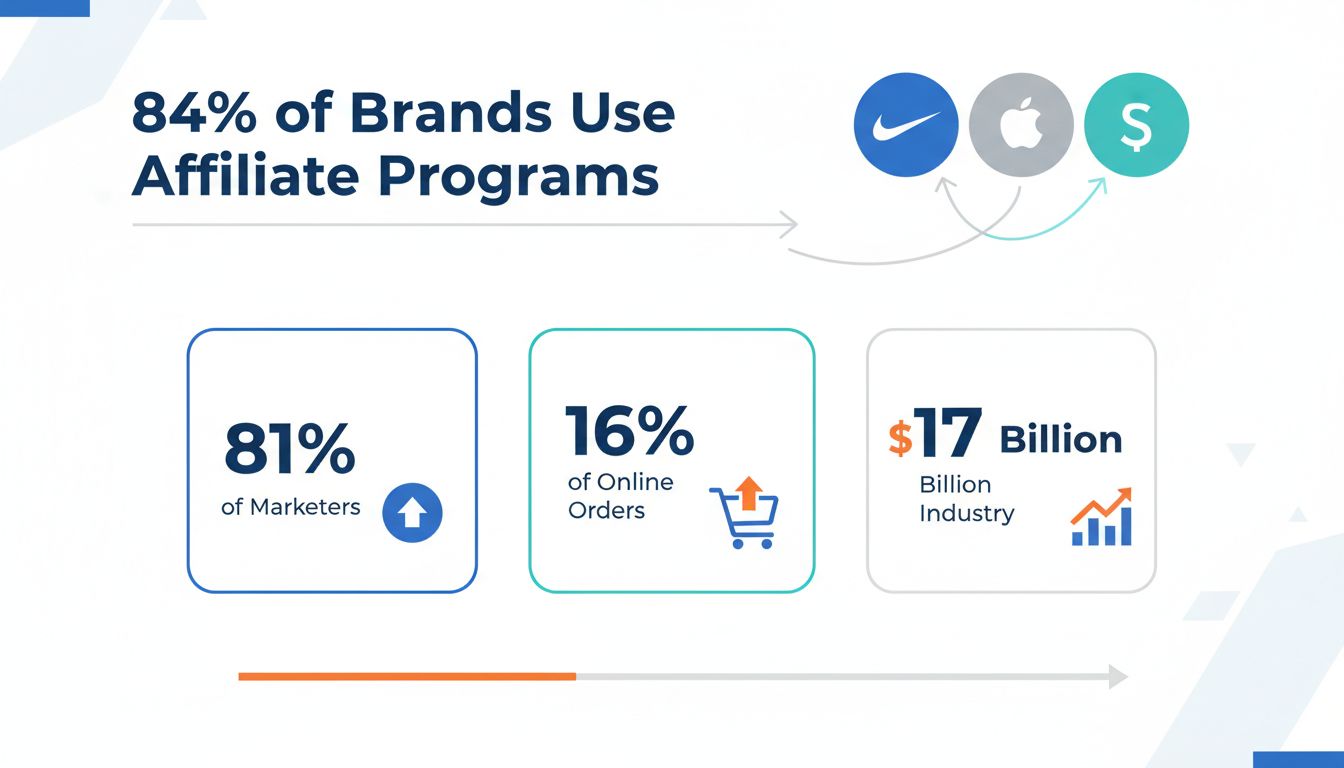
Discover that 84% of brands use affiliate programs in 2025. Learn why major companies like Nike, Apple, and Sephora leverage affiliate marketing for growth and ...
Join our community of happy clients and provide excellent customer support with Post Affiliate Pro.




Cookie Consent
We use cookies to enhance your browsing experience and analyze our traffic. See our privacy policy.