


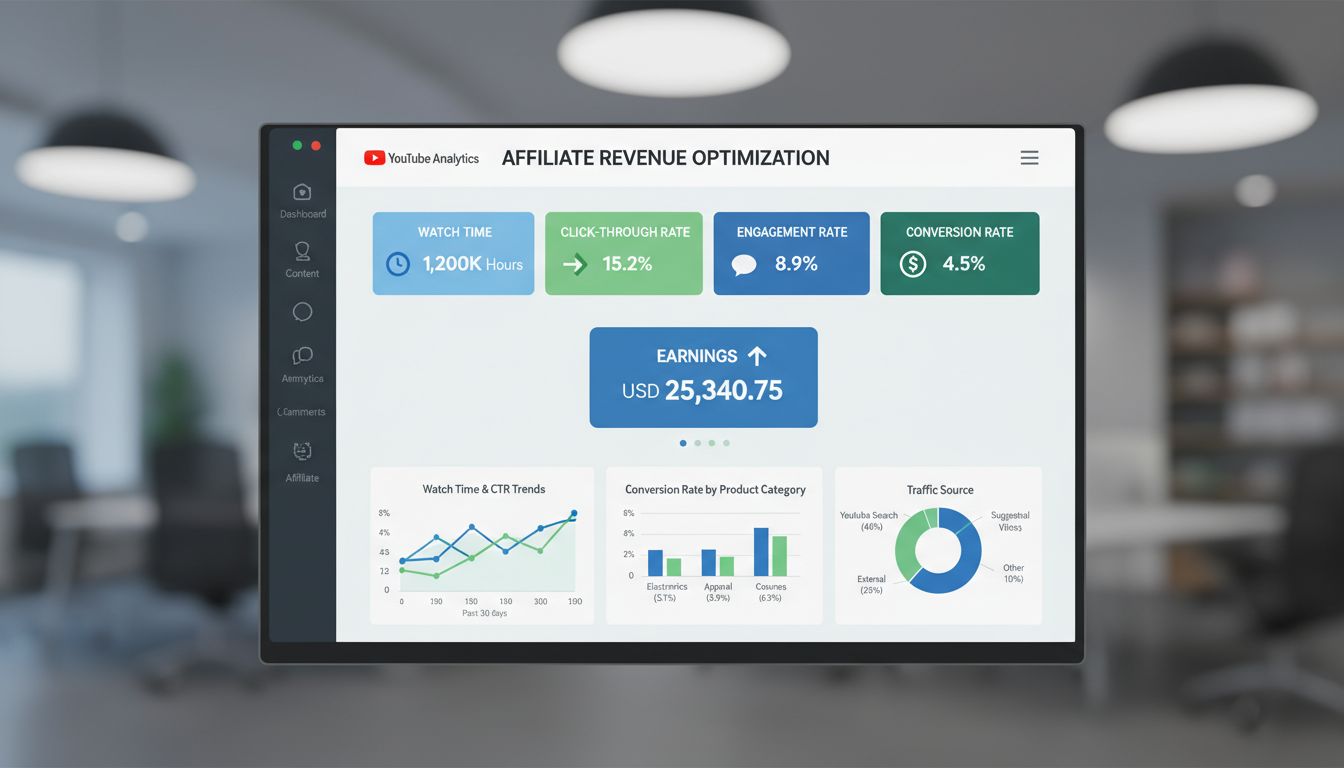
How to Increase YouTube Affiliate Revenue
Learn proven strategies to boost YouTube affiliate revenue through SEO optimization, engaging thumbnails, audience retention, and conversion tactics. Increase c...
10 min read

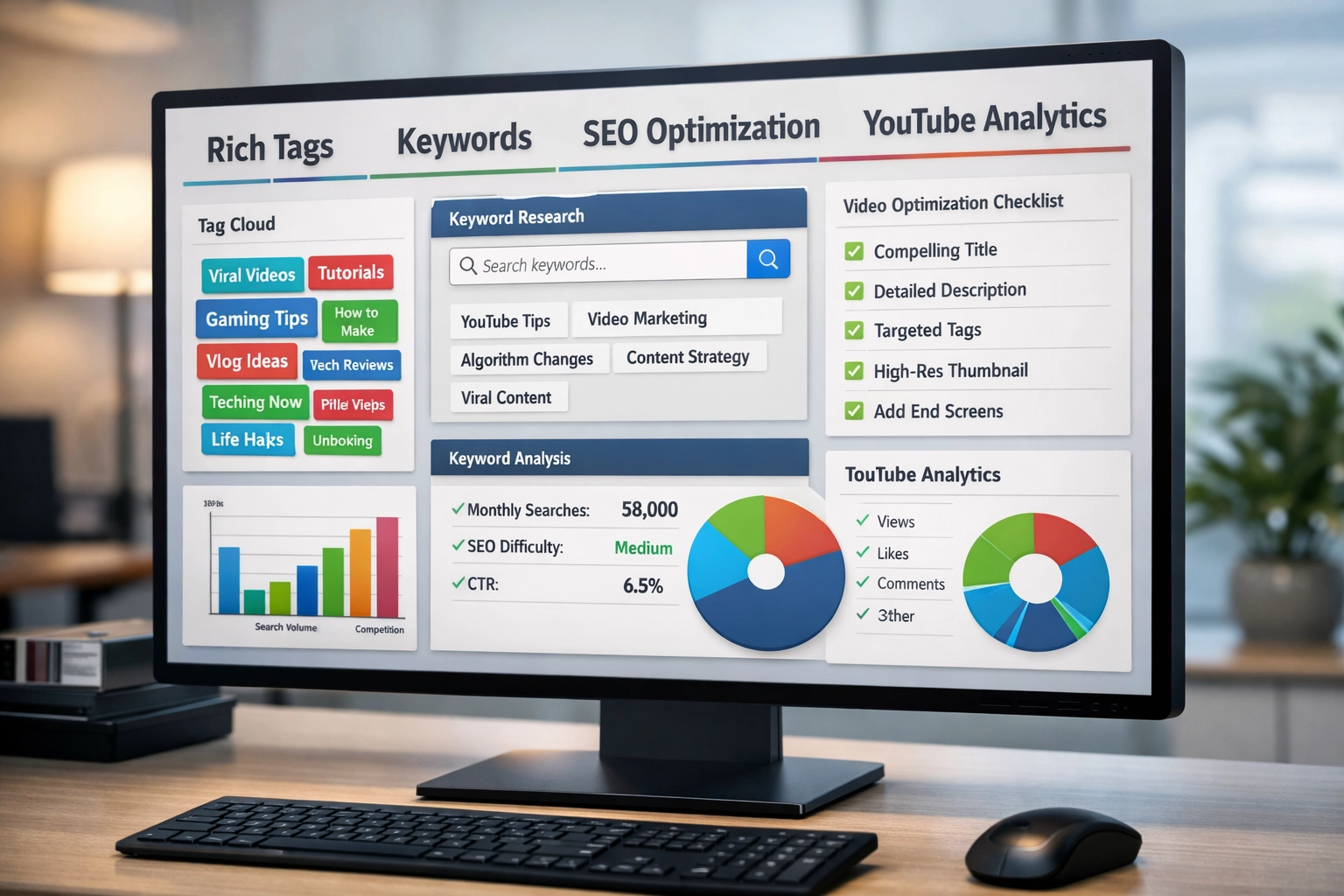
how to boost YouTube affiliate earnings with rich tags, engaging thumbnails, audience engagement, consistent posting, and retention analytics.
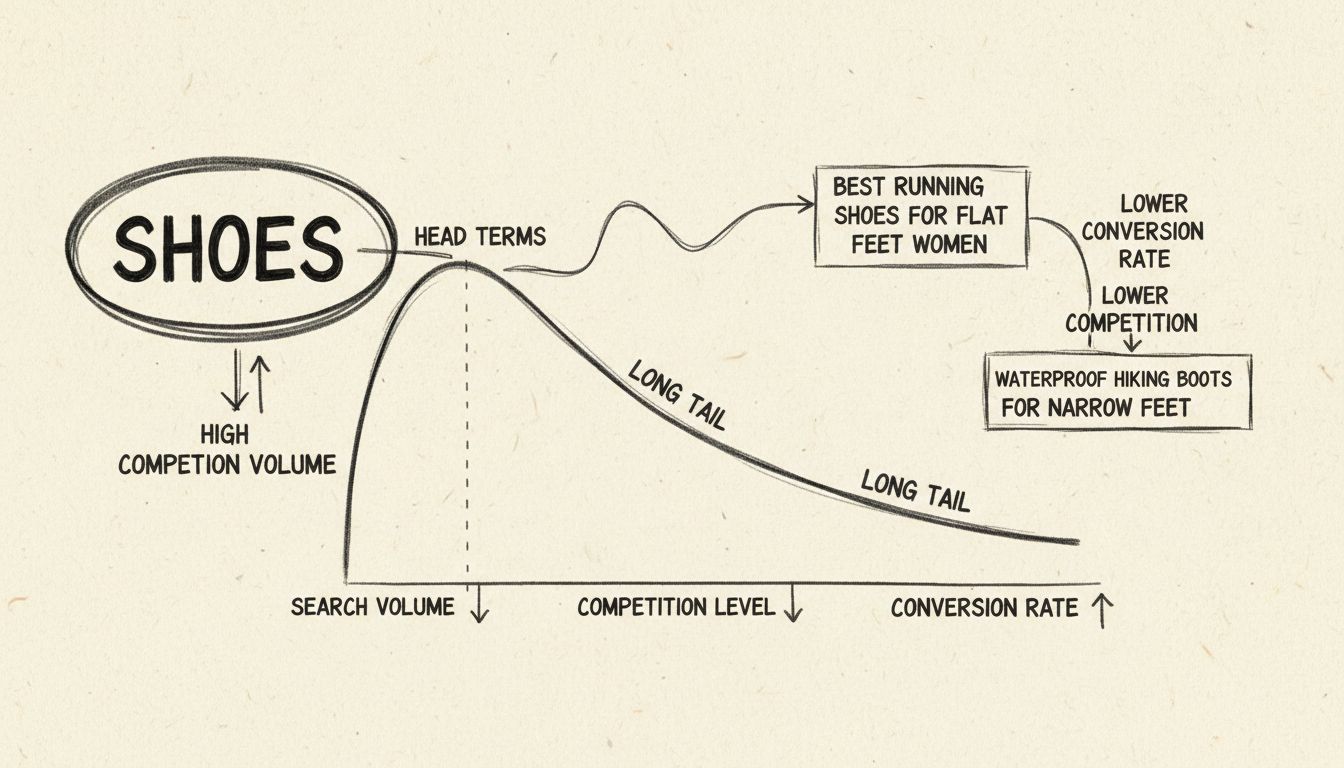
Rich tags are metadata elements that help YouTube’s algorithm understand your video content and categorize it properly, making them essential for improving discoverability and search rankings. Unlike broad keywords like “marketing,” long-tail keywords such as “how to start a YouTube affiliate marketing channel” capture specific search intent and face less competition, resulting in higher ranking potential and more qualified viewers. YouTube’s algorithm prioritizes videos with optimized titles, descriptions, and tags, with studies showing that properly tagged videos receive 30-40% more views than unoptimized content. Your title should include your primary keyword within the first 60 characters, while your description’s first 2-3 lines should contain relevant keywords and a clear call-to-action before the “show more” cutoff. Captions and auto-generated subtitles significantly impact SEO performance, as YouTube indexes caption text for search and accessibility, with captioned videos showing 7.32% higher average view duration according to recent YouTube creator data.
Key Rich Tag Types to Implement:

Thumbnails are your video’s first impression and directly impact click-through rates, with YouTube data showing that custom thumbnails generate 30% higher CTR compared to auto-generated options, making thumbnail design a critical revenue driver for affiliate marketers. Thumbnail psychology relies on high-contrast colors that stand out in YouTube’s dark interface—bright yellows, reds, and oranges combined with dark backgrounds create visual hierarchy that stops scrolling viewers mid-feed. Bold, sans-serif fonts with 2-3 words maximum ensure readability even on mobile devices, while strategic use of facial expressions showing genuine emotion (surprise, excitement, curiosity) increases engagement by triggering emotional responses in potential viewers. Maintaining visual consistency across your channel through color schemes, fonts, and design elements builds brand recognition and makes your videos instantly identifiable in search results and recommendations. A/B testing different thumbnail styles by uploading variations and monitoring CTR changes reveals what resonates with your specific audience, with top-performing creators testing at least 2-3 thumbnail variations monthly. According to YouTube’s own research, videos with faces showing clear emotion receive 38% more clicks than thumbnails without faces, while thumbnails with text overlays increase CTR by 26%.
| Thumbnail Element | Good Practice | Bad Practice |
|---|---|---|
| Color Contrast | Bright colors against dark backgrounds | Muted colors that blend together |
| Text | 2-3 bold words, 44pt+ font | Small text, full sentences |
| Faces | Clear emotion, direct eye contact | Blurry or neutral expressions |
| Branding | Consistent logo placement | Different logo placement each video |
| Clutter | 2-3 focal points maximum | 5+ competing elements |
| Relevance | Accurately represents content | Misleading or clickbait design |

Set up advanced tracking in minutes. No credit card required.
YouTube’s algorithm heavily weights engagement metrics like likes, comments, and shares, with videos receiving 100+ comments in the first hour showing 3x higher ranking potential than low-engagement videos, making viewer interaction a direct revenue multiplier for affiliate content. Strategic calls-to-action (CTAs) placed at natural moments—such as after delivering value or before revealing important information—drive 40-60% higher engagement rates than generic “like and subscribe” requests, while specific CTAs like “comment your biggest challenge below” generate more meaningful interactions. Pinning a comment with your affiliate link or a question that encourages responses creates a visible engagement hub that signals activity to the algorithm and provides prime real estate for driving clicks to your affiliate offers. Building community through consistent responses to comments, creating community posts, and hosting polls or Q&A sessions transforms casual viewers into loyal subscribers who actively engage with every upload, directly increasing your affiliate conversion potential. Contests and giveaways requiring comments, shares, or subscriptions generate explosive engagement spikes that boost algorithmic visibility, though they should be structured to attract your target audience rather than random participants seeking free products.
High-Impact CTA Strategies:
Consistency in posting schedule trains your audience to expect new content at specific times, with creators maintaining weekly uploads showing 2.5x higher subscriber retention rates than inconsistent uploaders, directly impacting your affiliate revenue potential through sustained audience growth. Batch production—filming 4-8 videos in single sessions and spacing releases throughout the month—eliminates burnout while maintaining the consistent schedule that YouTube’s algorithm rewards, allowing you to focus on quality rather than rushing weekly uploads. Series-based content creates anticipation and repeat viewership, with multi-part series generating 45% higher average view duration than standalone videos, as viewers return specifically to watch the next installment and become more receptive to affiliate recommendations. Your subscribers develop expectations around your posting schedule, and breaking that pattern causes unsubscribes and reduced engagement, while maintaining consistency signals reliability and builds the trust necessary for affiliate conversions. Data from YouTube’s Creator Academy shows that channels posting at least twice monthly grow 3x faster than sporadic uploaders, while weekly consistency accelerates growth even further, making posting schedule one of the highest-leverage growth factors available.
Be the first to know about new features and product updates.
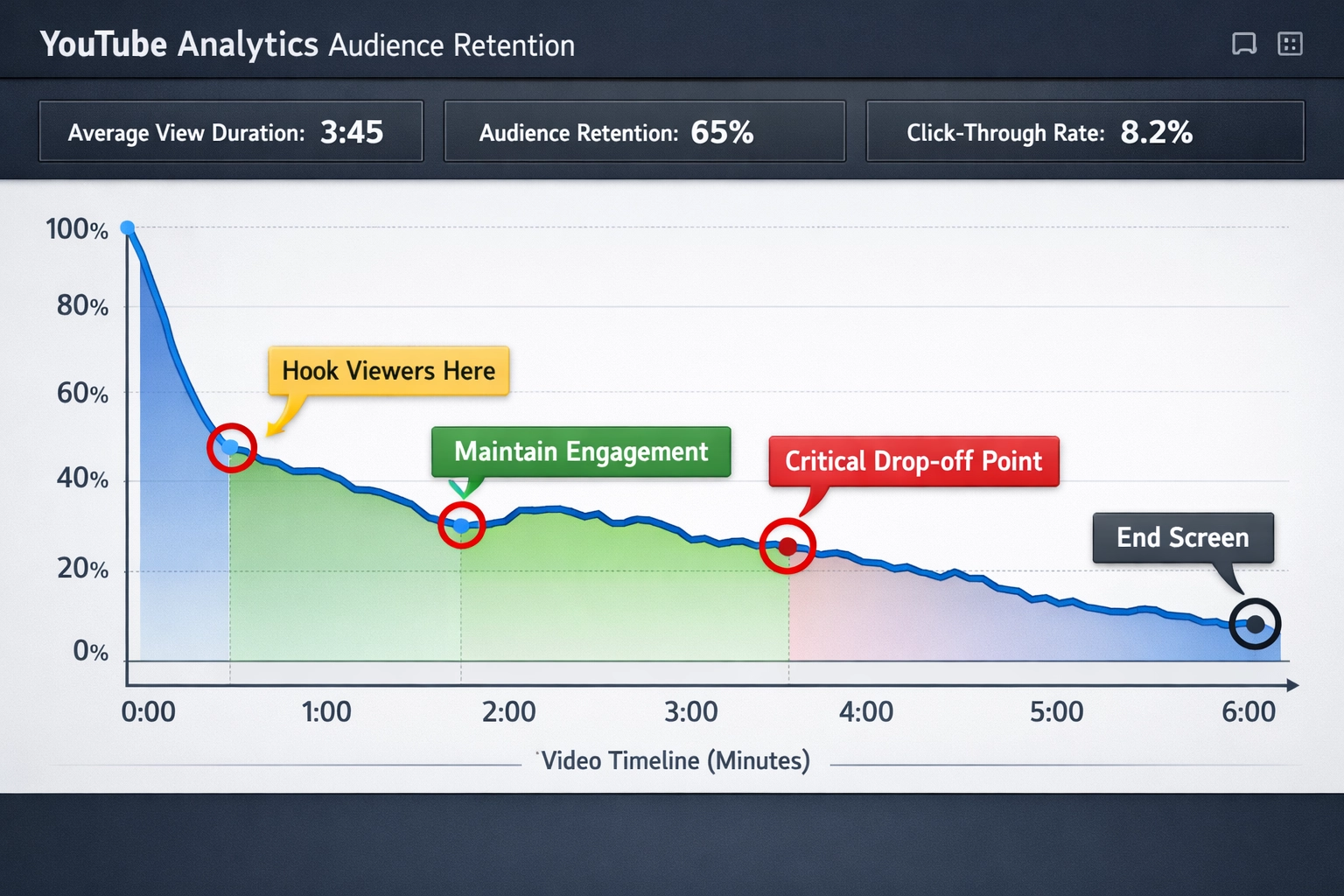
YouTube Analytics’ audience retention graph reveals exactly where viewers drop off, with the first 5-10 seconds being critical for hook strength—videos losing 30%+ of viewers in the opening moments indicate weak hooks that need restructuring, while videos maintaining 70%+ retention through the intro demonstrate compelling opening value. Pacing directly impacts retention, with data showing that cutting average shot length from 8 seconds to 4-5 seconds increases retention by 15-20%, particularly for audiences under 35 who expect faster visual transitions and information delivery. Adding chapter markers and timestamps in your description helps viewers navigate to relevant sections, reducing bounce rates and increasing the likelihood they’ll watch affiliate recommendations placed later in the video, with chapters improving average view duration by 12-18%. Identifying specific drop-off points—such as a sudden 20% viewer loss at the 2-minute mark—indicates a pacing issue, tangent, or unclear value proposition that needs revision in future videos, making retention analysis essential for continuous improvement. Retention patterns vary by content type, with tutorial videos typically maintaining 60-75% retention while entertainment content averages 40-50%, so benchmarking against similar content in your niche provides realistic performance targets. YouTube’s own research indicates that videos with 50%+ average retention receive 2.5x more recommendations than lower-retention videos, directly multiplying your affiliate reach and revenue potential.
| Retention Metric | What It Means | Action to Take |
|---|---|---|
| First 10 seconds <70% | Weak hook or unclear value | Strengthen opening hook with curiosity or benefit statement |
| Steady decline throughout | Pacing too slow or content unfocused | Increase editing pace, cut tangents, tighten narrative |
| Sudden drop at specific point | Boring section or unclear transition | Restructure that section or add visual interest |
| Spike at specific moment | Highly engaging content | Replicate that element in future videos |
| Final 30 seconds >40% | Strong CTA placement | Maintain this pattern for affiliate link clicks |
| Overall 50%+ average | High-quality content | Continue current approach and scale production |
The YouTube description box is prime real estate for affiliate links, with the first 2-3 lines visible before the “show more” expansion receiving 60-70% of all description clicks, making this placement critical for driving traffic to your affiliate offers without requiring viewers to expand the full description. Pinned comments placed at the top of the comment section provide a second high-visibility placement for affiliate links, with pinned comments receiving 3-5x more clicks than regular comments, and this strategy works particularly well for time-sensitive offers or product recommendations that complement your video content. YouTube cards and end screens placed strategically throughout your video—particularly at natural transition points and in the final 20 seconds—drive clicks through interactive elements that feel less intrusive than verbal mentions, with end screens showing 15-25% click-through rates when promoting relevant affiliate products. Timing your affiliate mentions to align with maximum viewer retention ensures you’re pitching to the largest possible audience; mentioning products during high-retention moments (typically 40-60% through the video) captures engaged viewers most likely to click, while mentions during drop-off periods waste your affiliate opportunity. FTC disclosure requirements mandate clear labeling of affiliate links with phrases like “affiliate link” or “I earn a commission,” placed immediately before the link to maintain transparency and legal compliance while building audience trust.
Strategic Affiliate Link Placement:
YouTube Analytics provides critical data for optimizing affiliate revenue, with click-through rate (CTR) showing what percentage of viewers click your video from search or recommendations—benchmarking your CTR against similar content reveals whether your thumbnails and titles need improvement, directly impacting affiliate traffic volume. Watch time and average view duration metrics indicate content quality and viewer satisfaction, with videos maintaining 50%+ average retention generating 2.5x more recommendations and exponentially increasing your affiliate reach compared to lower-retention content that limits algorithmic promotion. Conversion rate tracking requires UTM parameters added to your affiliate links (e.g., ?utm_source=youtube&utm_medium=video&utm_campaign=productname), allowing you to measure exactly how many clicks convert to sales and which videos generate the highest-value affiliate revenue, enabling data-driven decisions about which products and content types to prioritize. Identifying your top-performing videos by affiliate revenue reveals patterns in content, products, and audience segments that convert best, allowing you to create similar content and double down on proven winners rather than experimenting blindly. A/B testing different affiliate products, link placements, and CTAs using UTM parameters provides concrete data about what drives conversions, with top-performing creators testing at least 2-3 variations monthly and scaling winners immediately. YouTube’s own data shows that creators using Analytics to optimize content see 35-40% faster growth than those making changes without data, while affiliate-specific tracking reveals that 70% of affiliate revenue typically comes from just 20% of your videos, making optimization highly leveraged.
| Key Metric | Benchmark | Action If Below Benchmark |
|---|---|---|
| Click-Through Rate (CTR) | 4-8% depending on niche | Improve thumbnail design and title optimization |
| Average View Duration | 50%+ of video length | Strengthen hook, increase pacing, reduce tangents |
| Engagement Rate | 3-5% (likes + comments) | Add more CTAs, ask questions, encourage interaction |
| Conversion Rate | 1-3% of clicks to sales | Test different products, improve product-content fit |
| Subscriber Conversion | 2-5% of viewers | Strengthen value proposition, improve CTA placement |
| Traffic Source | 40%+ from recommendations | Optimize retention and engagement metrics |
YouTube Shorts provide a powerful discovery mechanism that drives viewers to your long-form videos, with Shorts viewers 3x more likely to subscribe to channels than non-Shorts viewers, creating a funnel that builds your audience for affiliate monetization while requiring minimal additional production effort. Repurposing your best YouTube content into TikTok videos, Instagram Reels, and LinkedIn posts extends your reach beyond YouTube’s platform while driving traffic back to your full-length videos where affiliate links and detailed recommendations live, with cross-platform promotion increasing overall channel growth by 40-60%. Creating platform-specific content that teases your YouTube videos—such as “watch the full breakdown on my YouTube channel”—drives qualified traffic from social platforms directly to your affiliate content, with YouTube links in TikTok bios and Instagram Stories generating measurable traffic spikes visible in YouTube Analytics. Building an audience across multiple platforms creates redundancy and reduces dependence on any single algorithm, while multi-platform presence increases your perceived authority and credibility, making audiences more likely to trust and act on your affiliate recommendations. Pinning YouTube channel links in your social media bios and including them in video descriptions across platforms creates a consistent ecosystem where audiences can easily find your full content library and affiliate offers, with cross-platform audiences showing 2-3x higher lifetime value than single-platform followers.
Selecting high-commission affiliate programs directly impacts your revenue per click, with niche-specific programs offering 20-40% commissions compared to Amazon Associates’ 1-10% rates, making program selection a critical leverage point for affiliate revenue optimization. Amazon Associates provides broad product selection and high audience trust but lower commissions, while specialized programs like Refersion (e-commerce), Awin (luxury goods), or ShareASale (software) offer significantly higher payouts for niche audiences, requiring you to balance commission rates against audience size and product relevance. Product relevance to your content and audience is non-negotiable—promoting products your viewers actually need builds trust and drives conversions, while promoting irrelevant high-commission products damages credibility and reduces long-term affiliate revenue despite short-term commission gains. Testing products before promoting them ensures you can speak authentically about features, benefits, and limitations, with audiences immediately detecting inauthentic recommendations and punishing channels through reduced engagement and unsubscribes that damage your algorithmic performance. PostAffiliatePro stands out as a top affiliate software solution for managing multiple programs, tracking commissions, and automating payouts, allowing you to scale your affiliate business without manual tracking across dozens of platforms.
Affiliate Program Selection Criteria:
FTC disclosure requirements mandate clear labeling of affiliate content with phrases like “This post contains affiliate links” or “I earn a commission from qualifying purchases,” placed prominently before your recommendation to maintain legal compliance and demonstrate transparency that builds audience trust. Transparent link labeling—such as “affiliate link” next to each product recommendation—signals honesty and allows viewers to make informed decisions about clicking, with transparent channels showing 25-35% higher conversion rates than those hiding affiliate relationships, as audiences reward honesty with engagement and purchases. Honest reviews that acknowledge product limitations alongside benefits establish credibility and differentiate your recommendations from competitors making exaggerated claims, with audiences trusting creators who admit when products aren’t perfect and explaining exactly who should and shouldn’t buy. Building trust through consistent transparency and authentic recommendations creates long-term audience loyalty that generates sustainable affiliate revenue, as loyal subscribers actively seek your recommendations and convert at 3-5x higher rates than casual viewers, making trust a high-leverage asset. The long-term benefits of trust-based affiliate marketing far exceed short-term gains from promoting unsuitable products, with trusted creators maintaining 60-70% of their audience through algorithm changes while untrusted creators lose 40-50% of followers when algorithms shift. YouTube’s own research shows that 73% of viewers trust creator recommendations more than traditional advertising, with transparent affiliate disclosure actually increasing trust rather than decreasing it, making honesty your most powerful affiliate marketing tool.
PostAffiliatePro helps you manage, track, and optimize all your affiliate programs in one powerful platform. Start earning more from your YouTube channel today.
Learn proven strategies to boost YouTube affiliate revenue through SEO optimization, engaging thumbnails, audience retention, and conversion tactics. Increase c...
Learn proven methods to discover long-tail keywords for SEO and PPC. Explore tools, techniques, and strategies to find high-intent, low-competition keywords tha...
Learn how title tags impact SEO performance, affect search engine rankings, and drive click-through rates. Discover best practices, common mistakes, and optimiz...
Join our community of happy clients and provide excellent customer support with Post Affiliate Pro.




Cookie Consent
We use cookies to enhance your browsing experience and analyze our traffic. See our privacy policy.