
Click Through Rate (CTR)
Click through rate (CTR) is a fundamental digital marketing metric measuring the effectiveness of campaigns by analyzing the ratio of clicks to impressions. Lea...
5 min read
AffiliateMarketing
DigitalMarketing
+3


proven strategies to increase email CTR with segmentation, personalization, mobile optimization, and A/B testing. Boost affiliate conversions with actionable
Email click-through rate (CTR) is a fundamental metric that measures the percentage of recipients who clicked a link or call-to-action in your email out of all delivered emails. The formula is straightforward: CTR = (Total unique clicks ÷ Total emails delivered) × 100. For example, if you send 10,000 emails and 250 people click a link, your CTR is 2.5%. This metric matters because it reveals whether your email content, design, and calls-to-action are actually convincing people to take action—moving beyond passive reading to active engagement.
Understanding what constitutes a “good” click-through rate requires context. According to 2026 data, the average email CTR across all industries is approximately 2.09%, though this varies significantly by industry and email type. Here’s how different sectors and email types compare:
| Category | Average CTR | Notes |
|---|---|---|
| B2B Campaigns | 1-3% | Longer buying cycles, more conservative engagement |
| B2C Campaigns | 3-5% | Higher engagement, promotional focus |
| SaaS Companies | 2-3% | Product-focused, onboarding emails perform better |
| E-commerce | 3-5% | Strong CTR from product recommendations |
| Welcome Emails | 16-26% | Highest CTR due to peak user interest |
| Triggered/Automated | 5-10%+ | Timely, behavior-based messages outperform newsletters |
| Newsletters | 2-3% | Stable but lower than automated campaigns |
| Promotional Emails | 1-3% | Lower due to sales focus and frequency |
A CTR below 1% typically signals low relevance or poor targeting, while 2-4% is considered good performance for most campaigns. Anything above 4% indicates strong personalization and audience alignment, with exceptional campaigns reaching 10% or higher.


Set up advanced tracking in minutes. No credit card required.
For affiliate marketers, email CTR is directly connected to revenue generation. Every click represents a potential customer journey—from awareness to conversion. When your email CTR is low, you’re losing qualified traffic that could generate affiliate commissions. Higher CTR means more people are engaging with your offers, visiting merchant websites, and completing purchases that earn you commissions. In affiliate programs, CTR improvement directly impacts your earning potential because it increases the volume of qualified traffic you send to partners. By optimizing CTR, you’re not just improving a metric—you’re maximizing the return on your email list and building a more profitable affiliate business.
Several critical factors influence whether recipients click or ignore your emails:
Email List Quality & Hygiene: A clean, engaged list with proper segmentation always outperforms a large, unfiltered one. Inactive subscribers and invalid addresses drag down CTR metrics and waste sending resources.
Email Design & Mobile Optimization: With over 50% of emails opened on mobile devices, responsive design is essential. Poor mobile layouts, small buttons, and unoptimized images significantly reduce clicks.
Subject Lines & Preview Text: These elements determine whether your email gets opened in the first place. A compelling subject line sets expectations and drives opens, which is the prerequisite for clicks.
CTA Clarity & Placement: Confusing or buried calls-to-action reduce clicks dramatically. A single, prominent CTA with clear action-oriented language performs best.
Content Relevance & Personalization: Generic, irrelevant content kills CTR. Personalized messages that speak to specific audience segments drive significantly higher engagement.
Send Time & Frequency: Sending emails when your audience is most likely to engage increases opens and clicks. Overwhelming subscribers with too many emails reduces engagement across all campaigns.
Segmentation Effectiveness: Targeted campaigns to specific audience segments consistently outperform broad sends, with segmented emails driving up to 50% more clicks than generic campaigns.
Be the first to know about new features and product updates.
Segmentation is the foundation of email personalization at scale. Research shows that segmented emails drive 30% more opens and 50% more clicks compared to generic campaigns. By dividing your email list into distinct groups based on demographics, behavior, or engagement level, you can tailor messages that feel personally relevant to each subscriber. Dynamic content takes this further—allowing you to create a single email template where different sections adapt based on recipient data. For example, an e-commerce brand might show different product recommendations to customers based on their purchase history, or an affiliate marketer might highlight different offers based on subscriber interests. PostAffiliatePro enables this through advanced segmentation capabilities and integration with email platforms, allowing you to create highly targeted campaigns that drive significantly higher CTR and conversions.

Your call-to-action is the moment that decides whether a click happens. The most effective emails use a single primary CTA that’s visually dominant and clearly aligned with the email’s purpose. Multiple competing CTAs create decision paralysis—when subscribers see five different options, they often click none. Your CTA button should use action-oriented language that clearly describes the outcome: “Get Started,” “Claim Your Offer,” “Download Now,” or “Complete Checkout” outperform vague phrases like “Learn More.” Placement matters too—the primary CTA should appear above the fold (visible without scrolling) and be repeated once more lower in the email for longer messages. Make buttons large enough to tap easily on mobile devices, and use contrasting colors that stand out from the email background.
Mobile optimization is no longer optional—it’s essential. Since more than 50% of email opens happen on mobile devices, designing for mobile first directly impacts your CTR. A mobile-optimized email uses a single-column layout, keeps text concise and scannable, and ensures buttons are large and thumb-friendly (at least 44x44 pixels). Images should be optimized for fast loading, and font sizes should be readable without zooming. Responsive design automatically adjusts your email layout based on the device viewing it, ensuring consistent experience across smartphones, tablets, and desktops. When emails are difficult to navigate on mobile—requiring zooming, excessive scrolling, or precise tapping—subscribers abandon them. By prioritizing mobile design, you remove friction from the click experience and significantly improve your CTR.

Improving CTR consistently requires testing. A/B testing (or split testing) lets you compare two email variations to see which drives more clicks. The most impactful elements to test include: subject lines (curiosity-driven vs. benefit-driven), CTA copy (action-oriented wording variations), CTA placement (above fold vs. lower in email), email layout (short and visual vs. detailed and text-heavy), and personalization depth (generic vs. dynamic content). Test one element at a time so you can clearly attribute CTR changes to that specific variable. Measure results over a statistically significant sample size—typically at least 1,000 recipients per variation. Document your findings and apply winning variations to future campaigns. Continuous testing creates a culture of optimization where each campaign performs better than the last.
When you send emails significantly impacts CTR. Send time optimization involves analyzing your audience’s behavior to identify when they’re most likely to open and click. For B2B audiences, mid-week mornings (Tuesday-Thursday, 9-11 AM) often perform best, while B2C audiences may engage more on evenings or weekends. Frequency also matters—sending too many emails fatigues your audience and reduces engagement across all campaigns, while sending too infrequently causes subscribers to forget about you. The optimal frequency depends on your audience and content type, but most marketers find 1-3 emails per week sustainable. Use behavior-based triggers to send emails at moments of high intent: welcome emails immediately after signup, abandoned cart reminders within 1-2 hours, and re-engagement campaigns after 30-60 days of inactivity. This approach aligns email timing with subscriber readiness, naturally improving CTR.
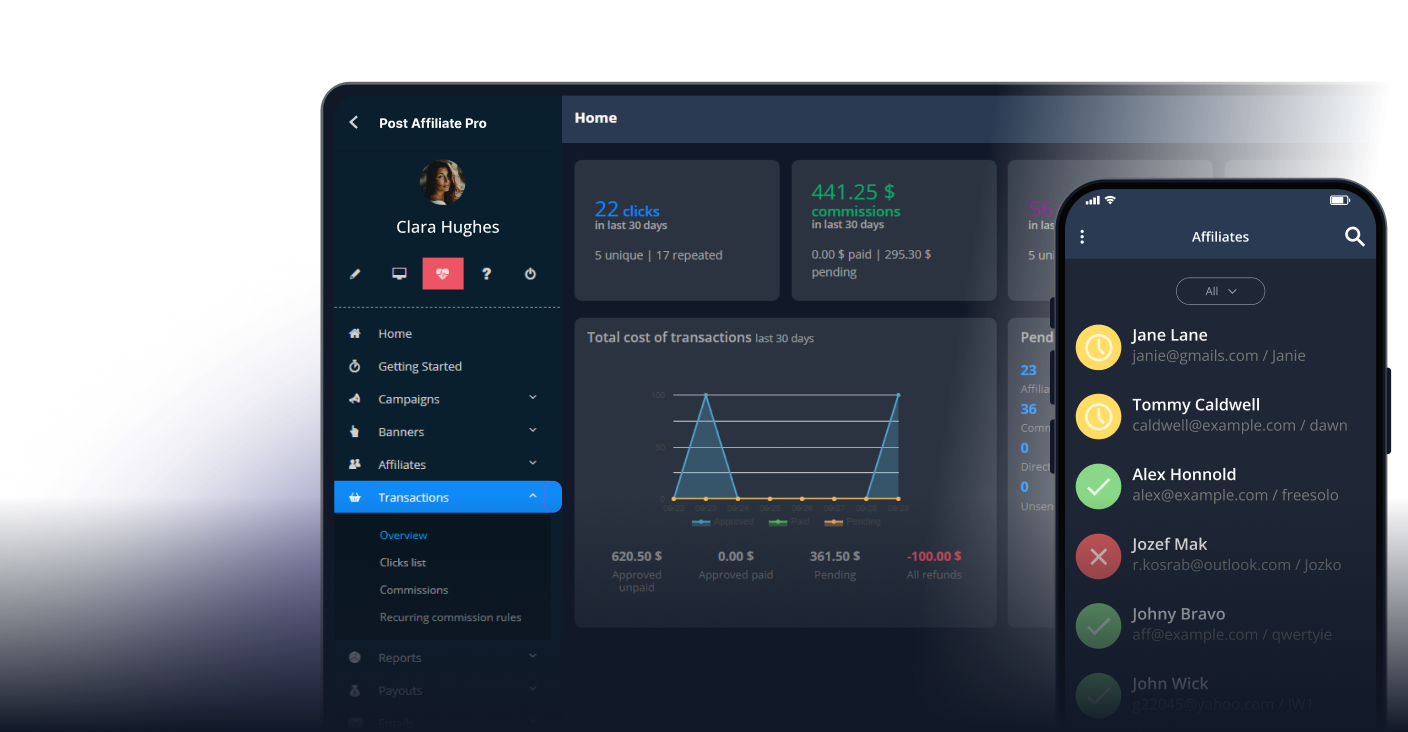
PostAffiliatePro stands out as the top affiliate software solution for optimizing email CTR and campaign performance. The platform provides advanced tracking and analytics that show exactly which emails drive clicks and conversions, helping you understand what works with your audience. Built-in segmentation capabilities allow you to divide your affiliate list by behavior, engagement level, and interests, enabling highly targeted campaigns. Automation features let you create triggered email sequences that send at optimal moments—welcome series for new affiliates, re-engagement campaigns for inactive partners, and performance-based offers for top performers. The platform includes A/B testing tools to continuously optimize subject lines, CTAs, and email designs. Integration with major email service providers ensures seamless campaign management and data synchronization. For affiliate marketers specifically, PostAffiliatePro’s affiliate-focused features—like commission tracking, performance dashboards, and partner management—make it easy to create campaigns that resonate with your audience and drive higher CTR, more clicks, and ultimately more affiliate revenue.
Email click-through rate is the bridge between sending messages and driving conversions. By understanding CTR benchmarks, implementing segmentation and personalization, optimizing your CTAs and design, and continuously testing, you can significantly improve how many subscribers take action on your emails. For affiliate marketers, higher CTR directly translates to more qualified traffic and higher commissions. PostAffiliatePro provides the tools and insights needed to optimize every aspect of your email campaigns, from segmentation to tracking to automation, making it the ideal platform for affiliate marketers serious about improving their email performance and revenue.
PostAffiliatePro provides advanced email tracking, segmentation, and automation tools to help you improve CTR and maximize affiliate revenue. Start optimizing your campaigns today.
Click through rate (CTR) is a fundamental digital marketing metric measuring the effectiveness of campaigns by analyzing the ratio of clicks to impressions. Lea...
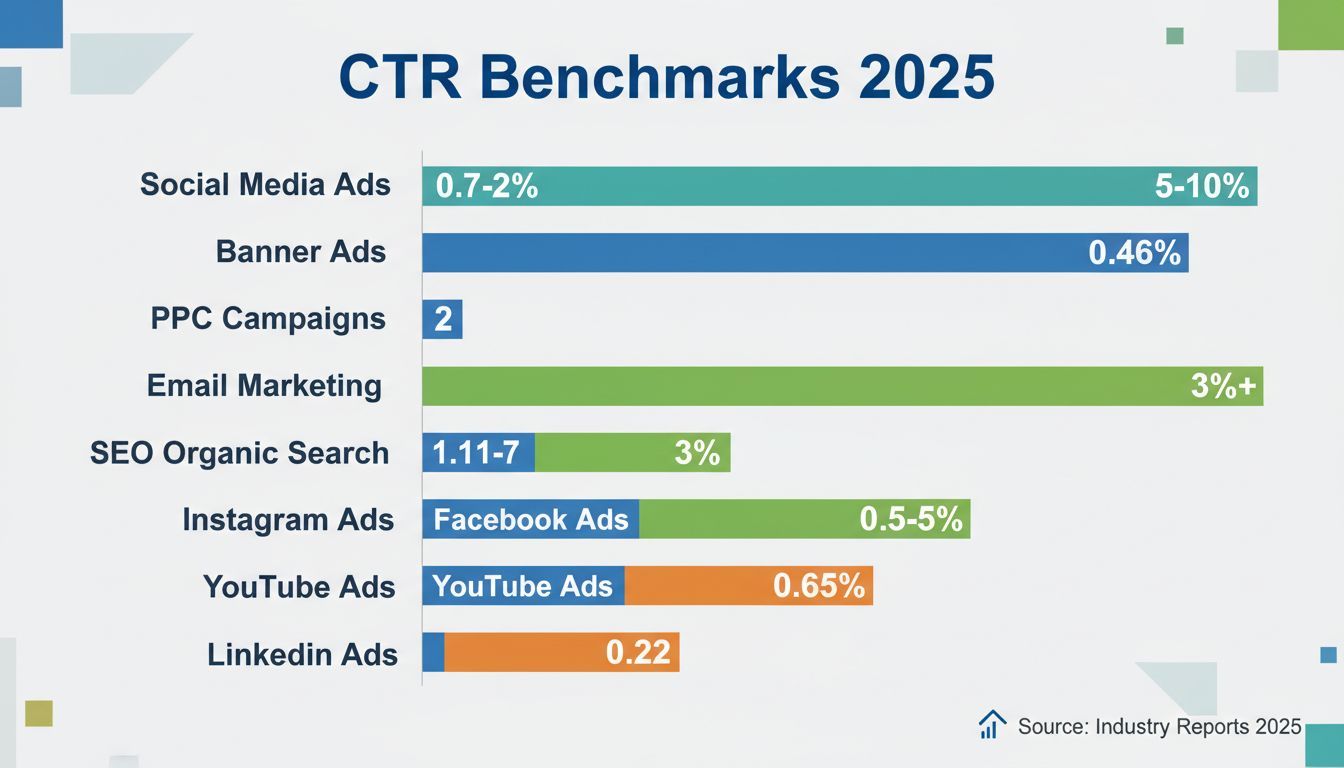
Discover what constitutes a good click-through rate in 2025. Learn CTR benchmarks across social media, PPC, email, and SEO. Optimize your affiliate marketing ca...
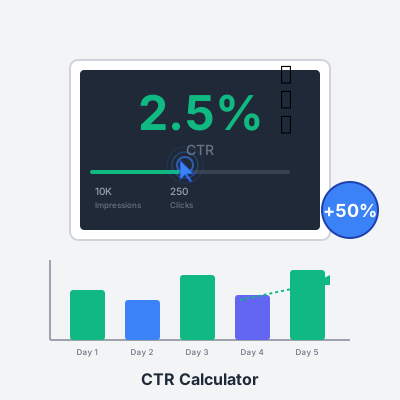
Free CTR calculator for affiliate marketers. Calculate click-through rates, find required clicks for target CTR, and compare campaign performance against indust...
Join our community of happy clients and provide excellent customer support with Post Affiliate Pro.