


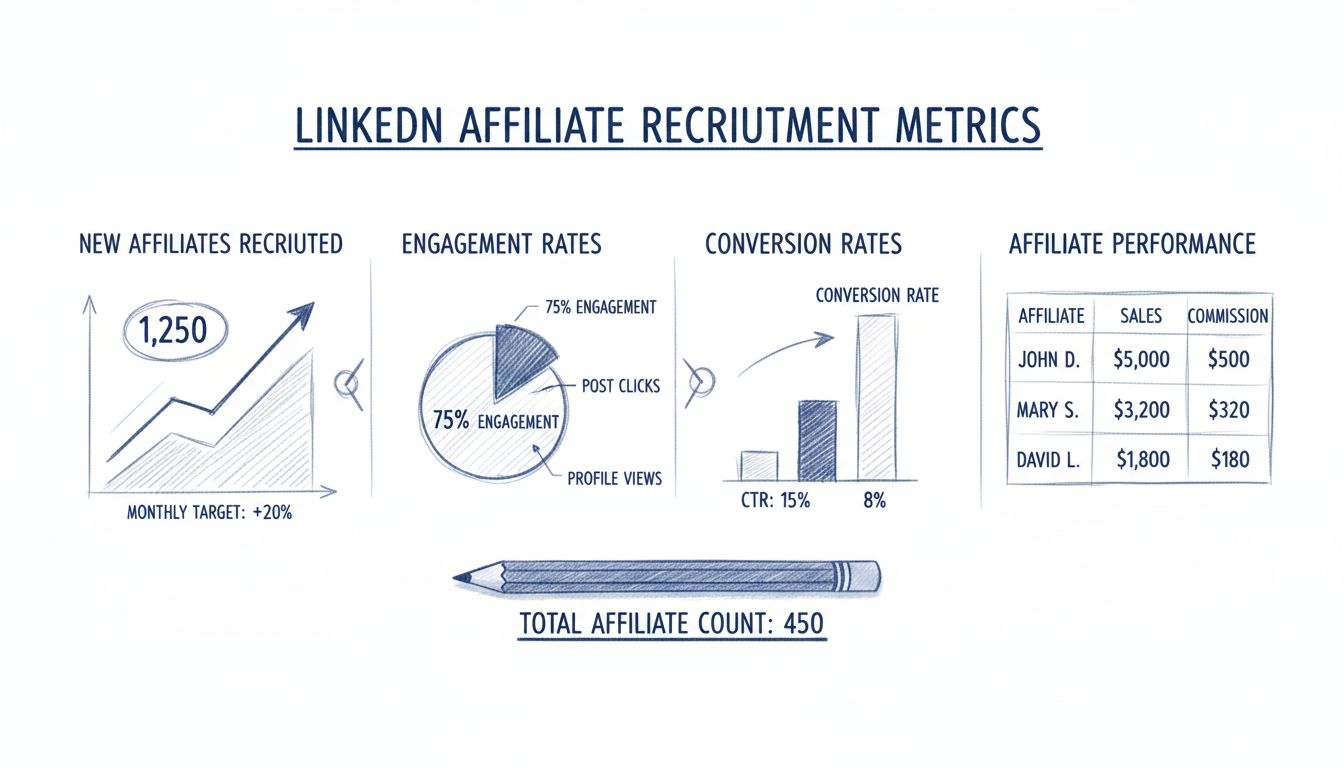
How to Measure Affiliate Recruitment Success on LinkedIn
Learn how to measure affiliate recruitment success on LinkedIn with key metrics including new affiliate count, engagement rates, conversion rates, and performan...
9 min read


proven strategies to identify and recruit high-quality affiliate marketers on LinkedIn. keyword searches, profile analysis techniques
LinkedIn has emerged as the premier platform for identifying and recruiting affiliate marketers, with over 830 million users spanning more than 200 countries worldwide. The platform’s professional-first approach creates an ideal environment for discovering serious marketers who are actively building their personal brands and networks. Recent data shows a 55% increase in meaningful conversations on LinkedIn, indicating that quality engagement is at an all-time high. Unlike other social platforms, LinkedIn users are actively seeking professional opportunities and partnerships, making it the most efficient channel for affiliate recruitment.

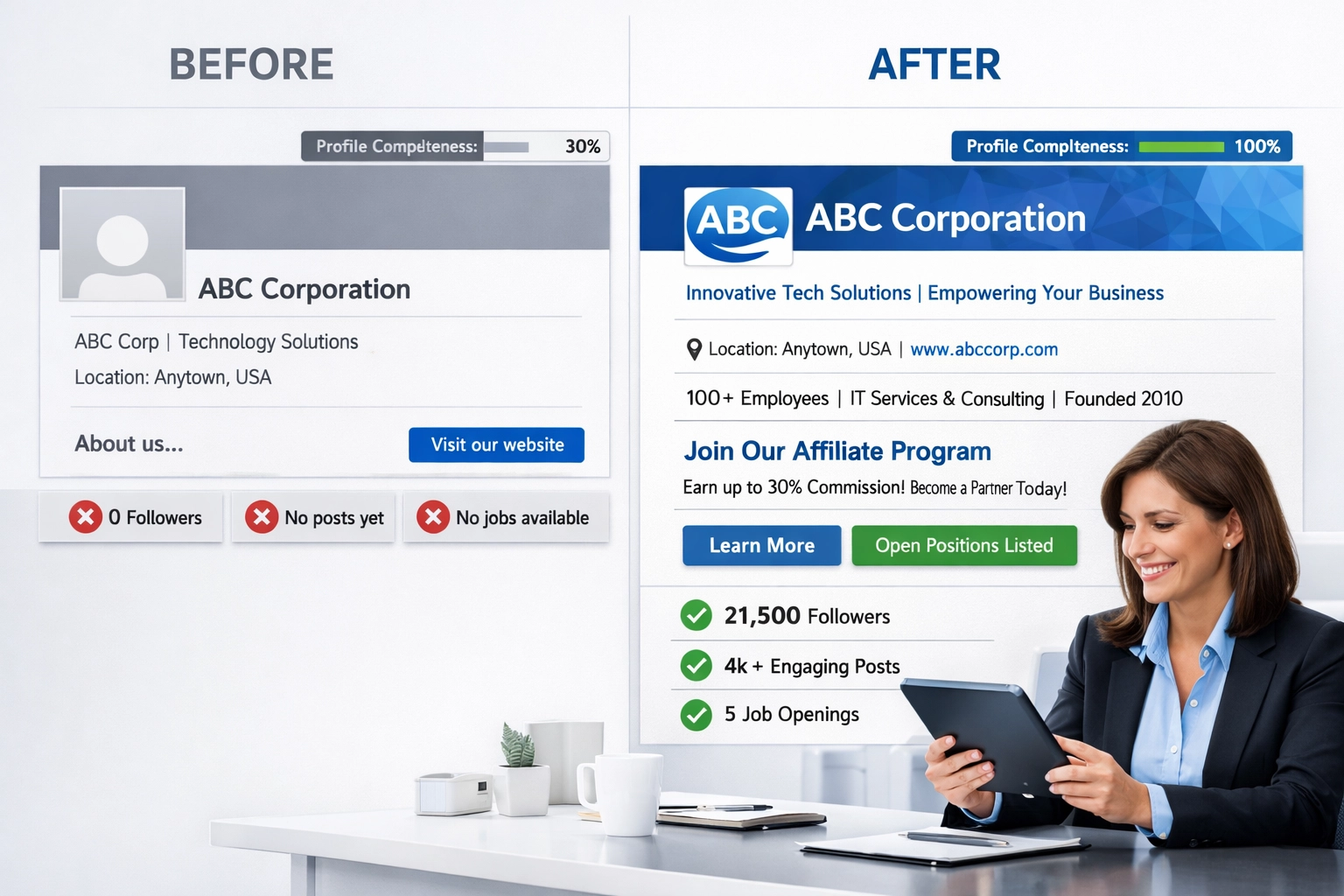
Before diving into advanced identification strategies, establish a solid LinkedIn foundation that positions you as a credible affiliate partner. Your company profile should clearly communicate your affiliate program benefits, commission structure, and support resources available to partners. Complete your profile with professional imagery, detailed company description, and regular content updates that demonstrate industry expertise. Here’s your setup checklist:
| Before Setup | After Setup |
|---|---|
| Generic company profile | Specialized affiliate-focused messaging |
| No affiliate visibility | Clear program benefits highlighted |
| Minimal engagement | Regular industry content and insights |
| Limited network reach | Targeted connection growth |

Set up advanced tracking in minutes. No credit card required.
LinkedIn’s search functionality offers powerful filtering capabilities to identify potential affiliate marketers matching your ideal partner profile. Use advanced search filters to narrow results by job title, industry, company size, and engagement level, then refine further with keyword searches targeting specific niches. Search for terms like “affiliate marketer,” “digital marketer,” “content creator,” “influencer,” or “business development” combined with your industry keywords. Example queries include: “affiliate marketer + SaaS,” “performance marketing + e-commerce,” “digital marketing + B2B,” and “content creator + finance.” Save your most effective search queries as LinkedIn filters for ongoing monitoring of new prospects. The search results should be reviewed weekly to identify newly active marketers entering your target space.
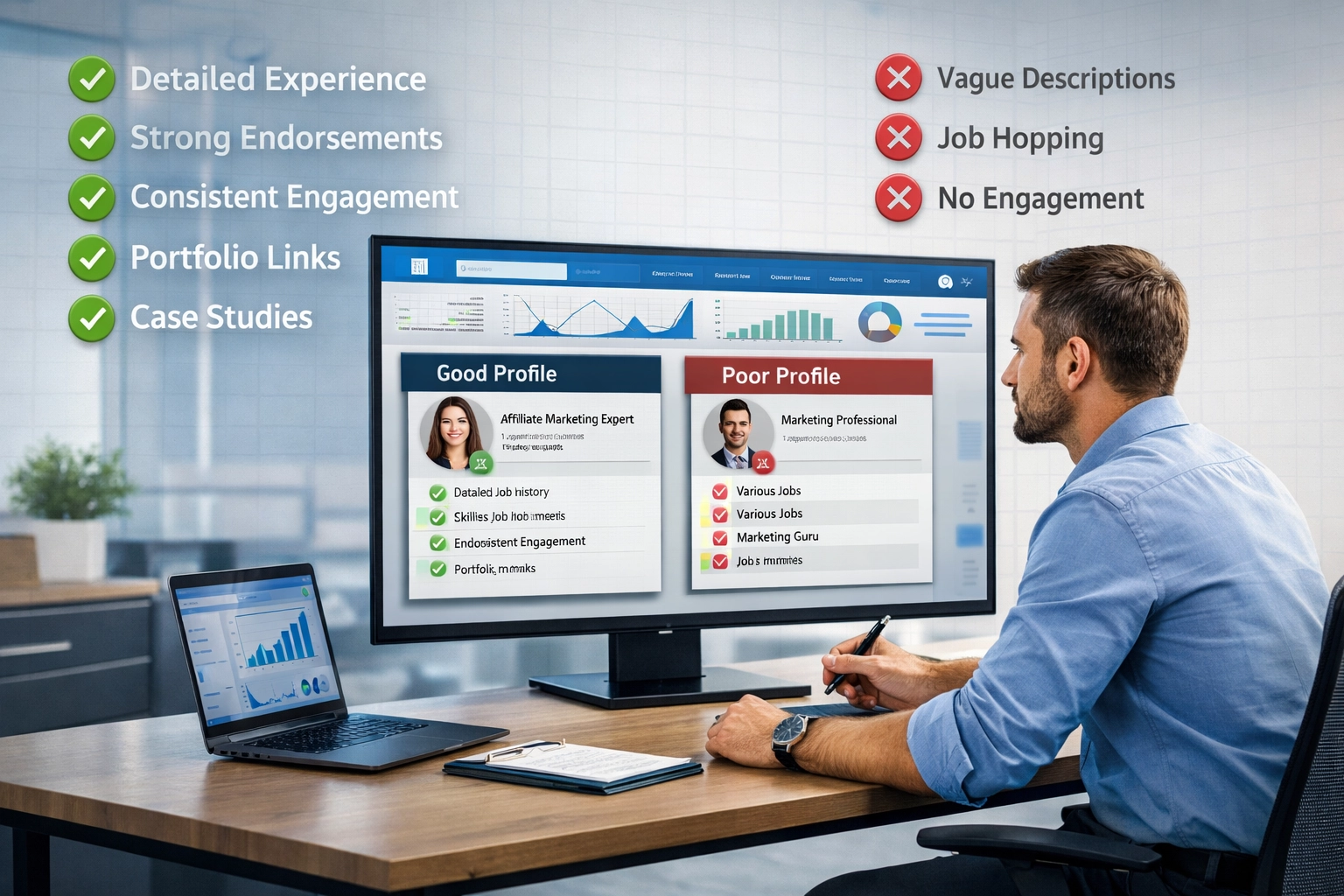
Profile analysis requires examining both obvious indicators and subtle signals that reveal an affiliate marketer’s experience, credibility, and alignment with your program. Red flags include vague job descriptions, inconsistent employment history, minimal endorsements, and generic profile content that could apply to any industry. Green flags include detailed case studies in their experience section, specific metrics and results mentioned, strong endorsement counts in relevant skills, and consistent engagement with industry content. Here’s a quick reference table:
| Red Flags | Green Flags |
|---|---|
| Vague job titles and descriptions | Specific metrics and results documented |
| Frequent job changes (every 3-6 months) | 2+ year tenure in marketing roles |
| Few endorsements or recommendations | 50+ endorsements in relevant skills |
| No content engagement or posts | Regular comments and content sharing |
| Generic profile summary | Detailed case studies and achievements |
| No website or portfolio links | Multiple links to portfolio/website |
Be the first to know about new features and product updates.
When recruiting affiliates on LinkedIn, different identification methods offer varying levels of effectiveness depending on your goals. Understanding which approach works best for your specific needs helps optimize your recruitment efforts:
| Identification Method | Effectiveness | Time Investment | Audience Quality | Best For |
|---|---|---|---|---|
| Keyword Search | High | Low | Medium-High | Initial prospecting and volume |
| Profile Analysis | Very High | Medium | High | Qualifying serious candidates |
| Content Review | Very High | Medium-High | Very High | Assessing audience engagement |
| LinkedIn Groups | High | Medium | High | Finding engaged professionals |
| Niche Influencer Search | High | Medium | Very High | Industry-specific audiences |
| Competitor Analysis | Very High | Low-Medium | High | Finding proven performers |
| Direct Outreach | Medium | High | Variable | Building relationships |
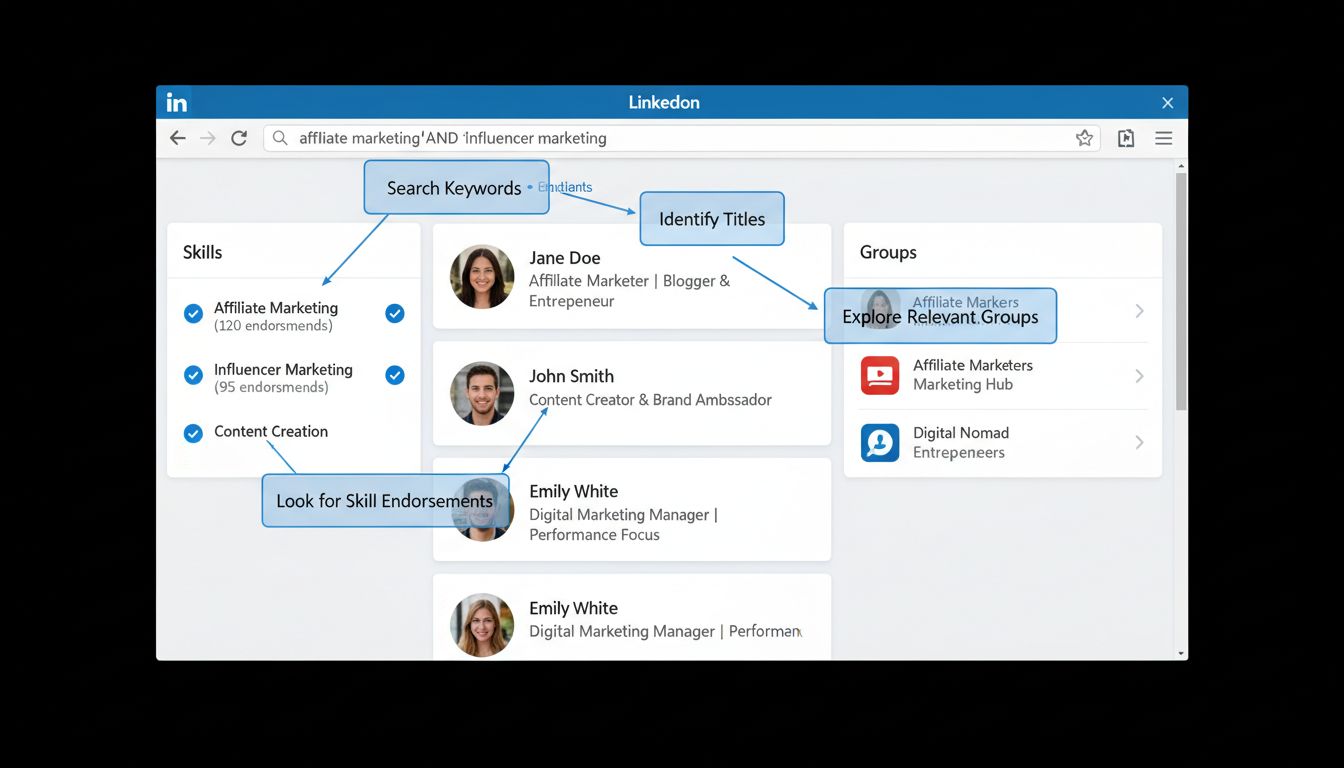
LinkedIn groups dedicated to affiliate marketing, digital marketing, and your specific industry vertical provide concentrated access to active marketers seeking opportunities. Join 10-15 relevant groups and monitor discussions to identify members who consistently provide valuable insights and demonstrate deep expertise. Participate authentically in group conversations by answering questions, sharing resources, and building credibility before directly promoting your affiliate program. Groups focused on performance marketing, conversion optimization, and niche-specific topics tend to attract higher-quality prospects than generic marketing groups. Create a group engagement schedule where you spend 20-30 minutes daily reviewing new discussions and identifying standout contributors. The most engaged group members often become your best affiliate partners because they’re already invested in continuous learning.
Direct outreach to identified prospects requires personalization and value-first messaging that respects their time and demonstrates you’ve researched their background. Reference specific accomplishments from their profile, mention shared connections or group participation, and clearly explain why your affiliate program aligns with their expertise and goals. Keep initial messages concise (3-4 sentences maximum) with a clear call-to-action directing them to your affiliate program details or a brief discovery call. Avoid generic templates and mass messaging, as LinkedIn’s algorithm deprioritizes these and prospects immediately recognize inauthentic outreach. Follow up with non-responders after 7-10 days with different messaging angles, but never send more than two follow-up messages. Track response rates by message type and continuously refine your outreach approach based on what generates engagement.
Building genuine relationships with prospects before recruiting them dramatically increases conversion rates and creates more loyal, long-term affiliate partners. Engage with their content by liking, commenting thoughtfully, and sharing their posts with your network when relevant. Send valuable resources, articles, or insights related to their stated interests without expecting anything in return. Invite qualified prospects to webinars, training sessions, or industry events where you can provide education and demonstrate your company’s expertise. This relationship-building phase typically lasts 2-4 weeks before formal recruitment conversations, but the investment pays dividends in partner quality and retention. Prospects who feel genuinely valued before joining your program become advocates who actively promote your offerings.
LinkedIn analytics and third-party tools provide data-driven insights that optimize your affiliate identification and recruitment efforts. Monitor your company page analytics to identify which content types generate the most engagement from your target audience, then create more content in those formats. Use LinkedIn Sales Navigator for advanced filtering and lead scoring capabilities that identify the highest-potential prospects in your network. Tools like Hunter.io, RocketReach, and Clearbit can enrich LinkedIn profiles with email addresses and company information for direct outreach. Track metrics including profile view-through rates, message response rates, and conversion rates from LinkedIn to affiliate signup. Analyze which industries, job titles, and company sizes produce your best-performing affiliates, then focus recruitment efforts on similar profiles.
Common mistakes in LinkedIn affiliate recruitment significantly reduce your success rate and damage your professional reputation on the platform. Avoid these pitfalls:
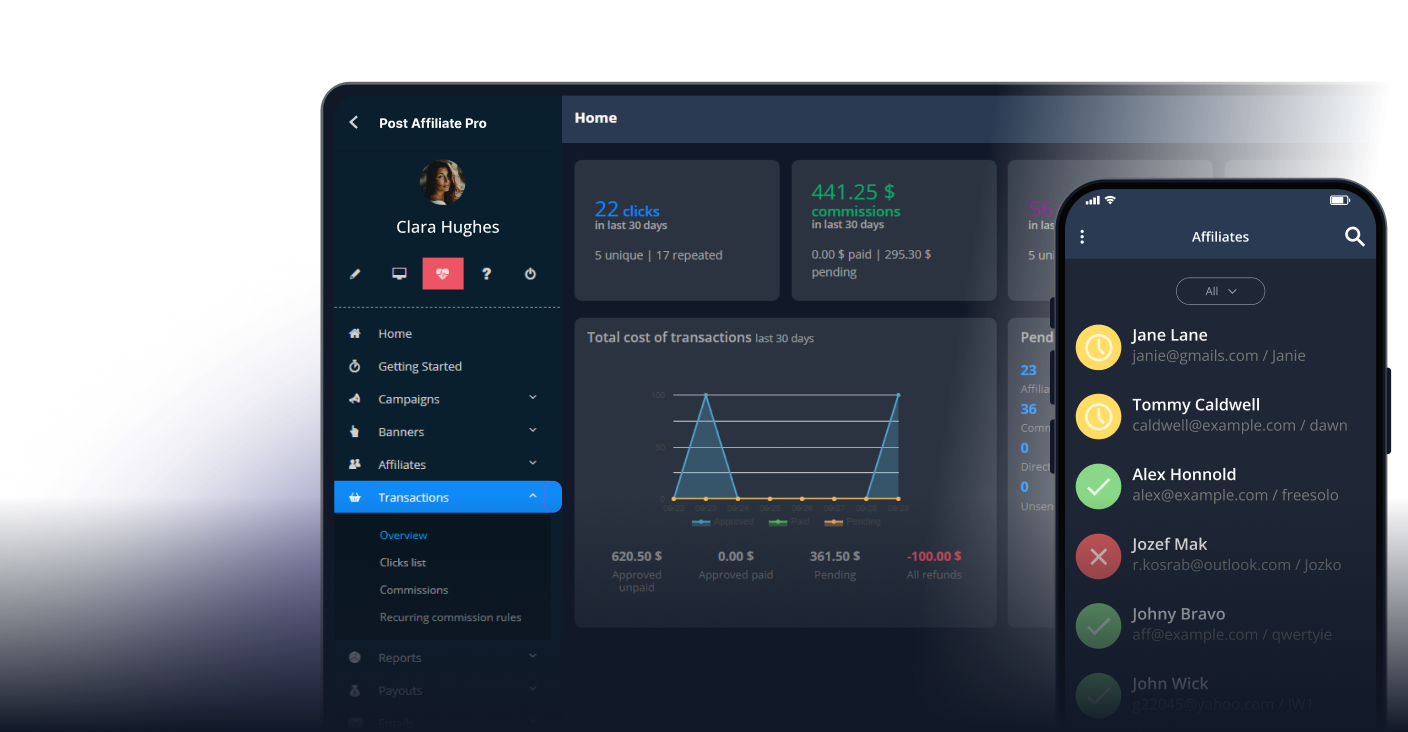
PostAffiliatePro integration streamlines the entire affiliate recruitment and management process by centralizing prospect tracking, communication, and performance monitoring. Connect your LinkedIn outreach efforts to PostAffiliatePro’s CRM features to maintain detailed records of each prospect’s engagement history, conversation timeline, and recruitment status. Use PostAffiliatePro’s automated workflows to send welcome sequences, training materials, and performance reports to newly recruited affiliates from LinkedIn. The platform’s analytics dashboard provides comprehensive visibility into which LinkedIn-sourced affiliates generate the highest revenue and maintain the best performance metrics. Integrate PostAffiliatePro with your email marketing platform to create seamless nurture sequences for prospects who aren’t ready to join immediately but show strong potential.
You don't need a specific number of connections to begin recruiting, but having 500+ connections establishes credibility and increases visibility. Focus on quality connections within your industry rather than quantity. A well-optimized profile with relevant content attracts potential affiliates regardless of connection count.
Tuesday through Thursday during business hours (9 AM - 5 PM) typically see the highest engagement rates. Avoid sending requests on weekends or late evenings. Personalize each request and reference something specific from their profile to increase acceptance rates.
Look for detailed experience descriptions, strong endorsements in relevant skills, consistent engagement with industry content, and evidence of an existing audience. Check their portfolio or website links, review their recommendations, and assess whether their audience aligns with your target market.
Yes, LinkedIn Sales Navigator is worth the investment for serious affiliate recruitment. It provides advanced filtering, lead scoring, and InMail capabilities that significantly improve targeting accuracy and response rates. The tool helps you identify high-potential prospects more efficiently than standard LinkedIn search.
Non-response is common on LinkedIn. Wait 7-10 days before sending one follow-up message with different messaging. If still no response, move on to other prospects. Never send more than two messages to the same person, as it damages your professional reputation and violates LinkedIn's guidelines.
No, you should actively participate in groups before recruiting. Spend 2-4 weeks engaging authentically, answering questions, and providing value. This builds credibility and trust, making your recruitment efforts significantly more effective when you eventually reach out to group members.
Commission rates vary by industry, but typically range from 10-30% of sale value or $10-$100 per lead. Research competitor rates and offer competitive commissions for your niche. Higher commissions attract more affiliates, but focus on finding partners aligned with your brand values, not just those chasing highest payouts.
Track metrics including connection acceptance rate, message response rate, affiliate signup rate from LinkedIn sources, and revenue generated by LinkedIn-sourced affiliates. Monitor which industries and job titles produce your best performers, then focus recruitment efforts on similar profiles for improved ROI.
PostAffiliatePro makes it easy to manage and track all your affiliate partners in one powerful platform. Streamline recruitment, automate communications, and monitor performance metrics from LinkedIn-sourced affiliates.
Learn how to measure affiliate recruitment success on LinkedIn with key metrics including new affiliate count, engagement rates, conversion rates, and performan...

Learn how to post affiliate links on Facebook following policies, FTC requirements, best practices, disclosure strategies, and proven tactics.
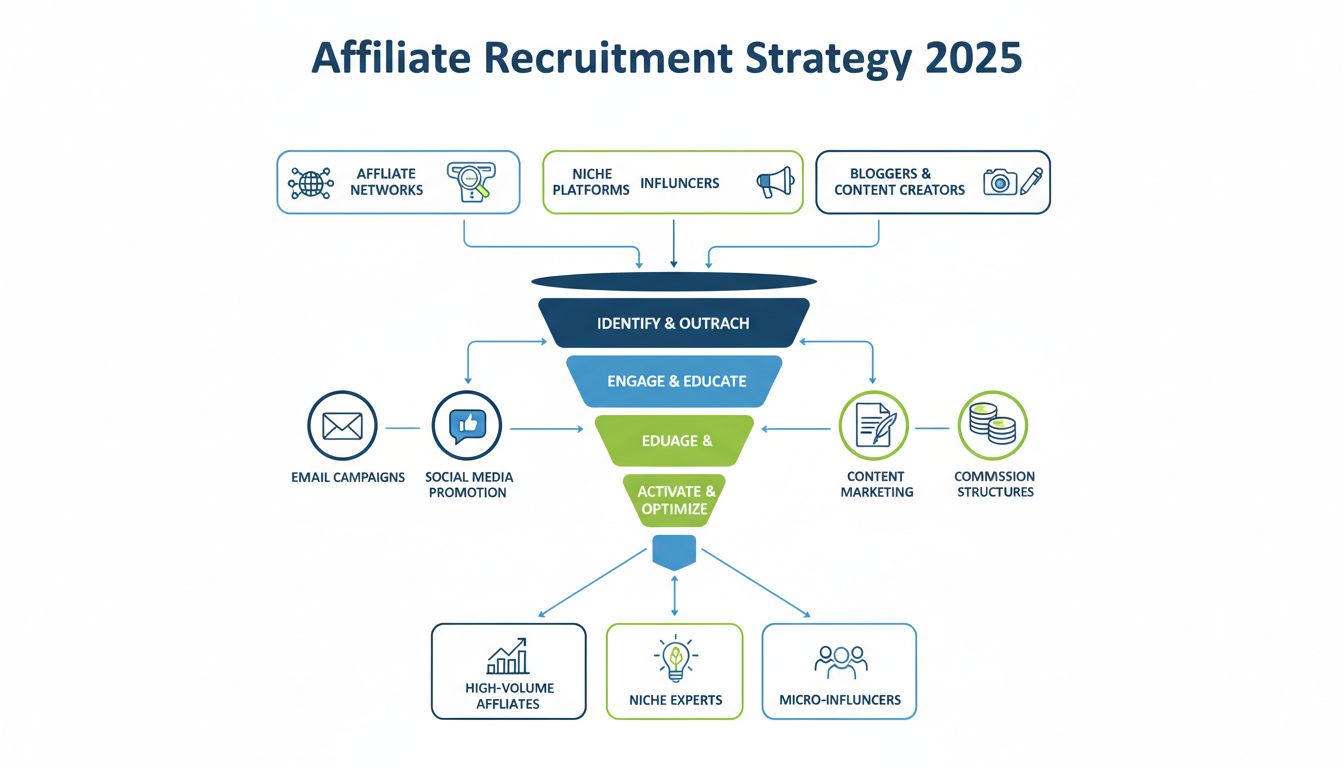
Learn proven strategies to recruit and retain more affiliates for your program. Discover platform selection, niche targeting, commission structures, content cre...
Join our community of happy clients and provide excellent customer support with Post Affiliate Pro.



Cookie Consent
We use cookies to enhance your browsing experience and analyze our traffic. See our privacy policy.