


What Should I Write in an Affiliate Disclosure? Complete 2025 Guide
Learn how to write effective affiliate disclosures that comply with FTC regulations, build trust with your audience, and protect your affiliate marketing busine...
10 min read


how to write compliant affiliate disclaimers that build trust with your audience. FTC requirements, platform-specific guidelines
An affiliate disclaimer is a transparent statement that informs your audience about your financial relationship with the companies and products you recommend or promote. This disclosure reveals that you earn commissions, referral fees, or receive other compensation when readers click your links and make purchases. The importance of affiliate disclaimers cannot be overstated in today’s digital landscape. Research shows that 57% of consumers trust content more when they understand the creator’s financial relationships, making transparency not just a legal requirement but a powerful trust-building tool. Legal requirements for affiliate disclaimers stem from the Federal Trade Commission (FTC) and similar regulatory bodies worldwide that mandate clear disclosure of material connections between endorsers and brands. These regulations exist to protect consumers from deceptive marketing practices and ensure they can make informed purchasing decisions. Whether you’re a blogger, YouTuber, social media influencer, or email newsletter publisher, if you earn money from product recommendations, you must disclose this relationship. The FTC’s Endorsement Guides specifically state that any material connection between an endorser and a brand must be disclosed clearly and conspicuously. Failing to include proper affiliate disclaimers can result in significant penalties, damage to your reputation, and loss of audience trust. Beyond legal compliance, affiliate disclaimers demonstrate ethical business practices and respect for your audience’s intelligence. When you’re transparent about your financial interests, you’re essentially saying, “I believe in this product enough to recommend it, AND I’m honest about how I benefit.” This dual message strengthens your credibility and can actually increase click-through rates because audiences appreciate honesty. The relationship between transparency and trust is fundamental to sustainable affiliate marketing success.

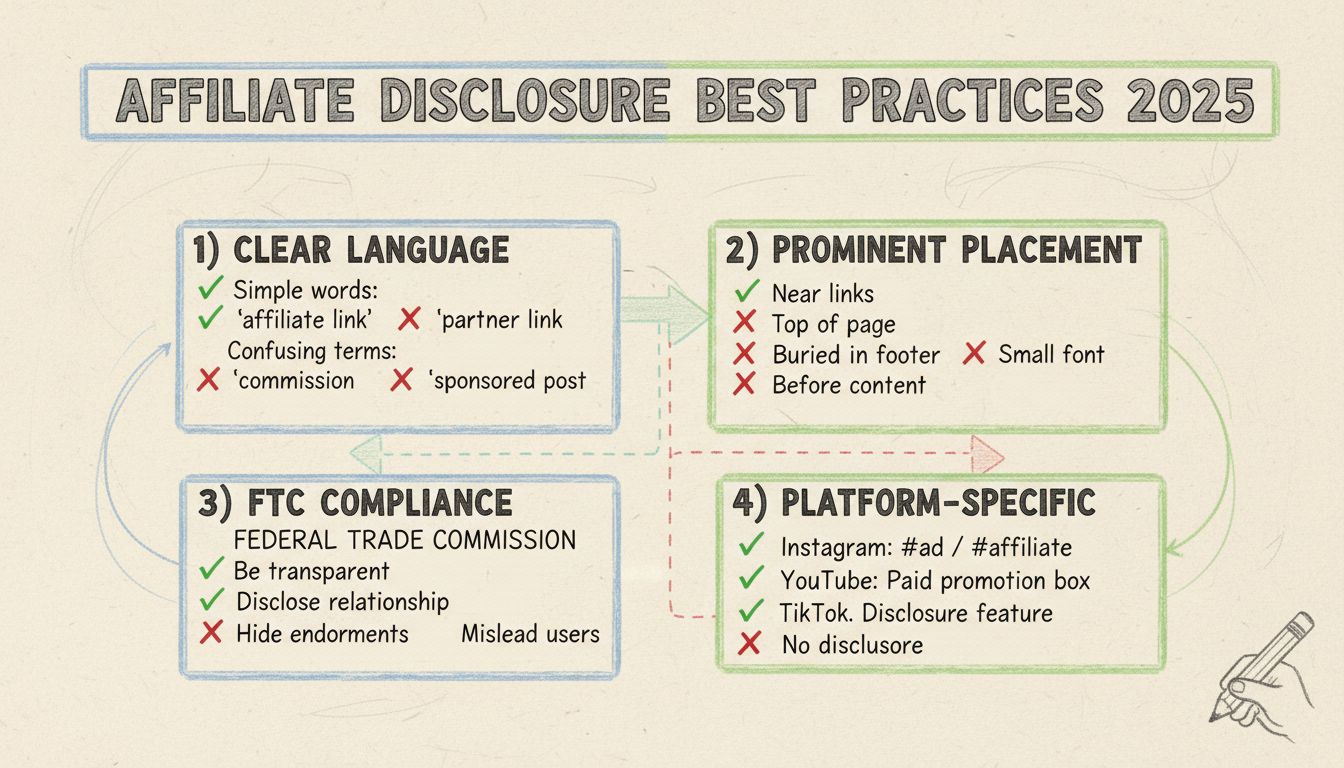
The Federal Trade Commission has established comprehensive guidelines that govern how affiliate marketers must disclose their financial relationships with brands and products. The FTC Endorsement Guides, updated in 2023, require that disclosures be made “clearly and conspicuously” in a manner that’s impossible for consumers to miss or misunderstand. This means your disclosure cannot be hidden in fine print, buried in lengthy legal documents, or placed in locations where readers must scroll extensively to find it. The FTC defines a material connection as any relationship between an endorser and a brand that consumers would not expect, including financial compensation, free products, or exclusive access. When such a connection exists, it must be disclosed regardless of whether the endorser personally believes in the product. The FTC has issued specific guidance on various platforms and formats, recognizing that disclosure requirements must adapt to different media while maintaining clarity and prominence.
| Platform/Format | FTC Disclosure Requirement | Key Consideration |
|---|---|---|
| Blog Posts | Disclosure must appear before affiliate links, clearly visible | Use contrasting colors and readable font size |
| YouTube Videos | Include in video description AND verbal disclosure in video | Pin disclosure comment if possible |
| Instagram Posts | Use #ad, #affiliate, or #sponsored hashtags in caption | Hashtags alone are insufficient; include text disclosure |
| Email Newsletters | Disclose at beginning of email or near affiliate links | Ensure visibility on mobile devices |
| Podcasts | Verbal disclosure at beginning or near product mention | Repeat disclosure if multiple products mentioned |
| TikTok Videos | Include in video text overlay or description | Use clear, readable text that’s visible throughout |
| Amazon Associates | Must identify as Amazon Associate in disclosure | Use specific Amazon-approved language |
The FTC emphasizes that disclosures must be easy to understand for the average consumer, which means avoiding legal jargon and complex terminology. The agency has taken enforcement action against numerous companies and influencers for inadequate disclosures, resulting in fines up to $43,792 per violation. Each undisclosed affiliate link can constitute a separate violation, making compliance critical for protecting your business. The FTC also requires that disclosures remain consistent across all your content and platforms, meaning you cannot use different disclosure language or placement strategies depending on the channel. Additionally, the FTC recognizes that as affiliate marketing evolves, disclosure methods must adapt—for example, the agency has provided specific guidance on how to disclose affiliate relationships in native advertising, sponsored content, and influencer partnerships. Importantly, the FTC places responsibility on both the brand and the affiliate marketer to ensure proper disclosure, meaning you cannot rely solely on a brand’s disclosure practices to protect yourself from liability.

Set up advanced tracking in minutes. No credit card required.
Different platforms have unique characteristics that require tailored disclosure approaches while maintaining FTC compliance. Understanding these platform-specific requirements ensures your disclosures are both legally compliant and optimized for user experience on each channel.
Blog Posts and Websites: Place disclosures prominently at the top of the article, before any affiliate links appear. Use a dedicated section with a clear heading like “Affiliate Disclosure” or “This Post Contains Affiliate Links.” Include a hyperlink to a more detailed affiliate disclosure page for readers who want additional information. Repeat the disclosure near product recommendations if your post is lengthy (over 2,000 words).
YouTube: Include disclosure in the video description box at the very beginning, using language like “This video contains affiliate links.” Additionally, include a verbal disclosure within the first 30 seconds of your video content. Use YouTube’s built-in features like pinning a comment with your disclosure or adding text overlays during product mentions. The FTC specifically recognizes that YouTube creators should use multiple disclosure methods since viewers may not read descriptions.
Instagram and Social Media: Use hashtags like #ad, #affiliate, #sponsored, or #partner in your caption text (not just in comments). However, hashtags alone are insufficient—include explicit disclosure language in the caption itself, such as “I earn a commission from purchases made through these links.” For Instagram Stories, add disclosure using the text tool or sticker feature. For TikTok, include disclosure in the video description and consider adding text overlays within the video itself.
Email Newsletters: Place disclosure at the beginning of the email or immediately before affiliate links. Use clear subject line indicators if the entire email is promotional, such as “[Sponsored]” or “[Contains Affiliate Links].” Ensure disclosures are visible on mobile devices, as most email opens occur on smartphones. Test your email template to confirm disclosures display properly across different email clients.
Podcasts: Include verbal disclosure at the beginning of the episode or immediately before mentioning affiliate products. Repeat the disclosure if you mention multiple affiliate products throughout the episode. Consider adding disclosure information in the podcast show notes and episode description for listeners who read transcripts.
Amazon Associates Program: Use Amazon’s required language: “As an Amazon Associate, I earn from qualifying purchases” or similar approved phrasing. This specific language is mandatory for Amazon Associates compliance and should appear on every page containing Amazon affiliate links.
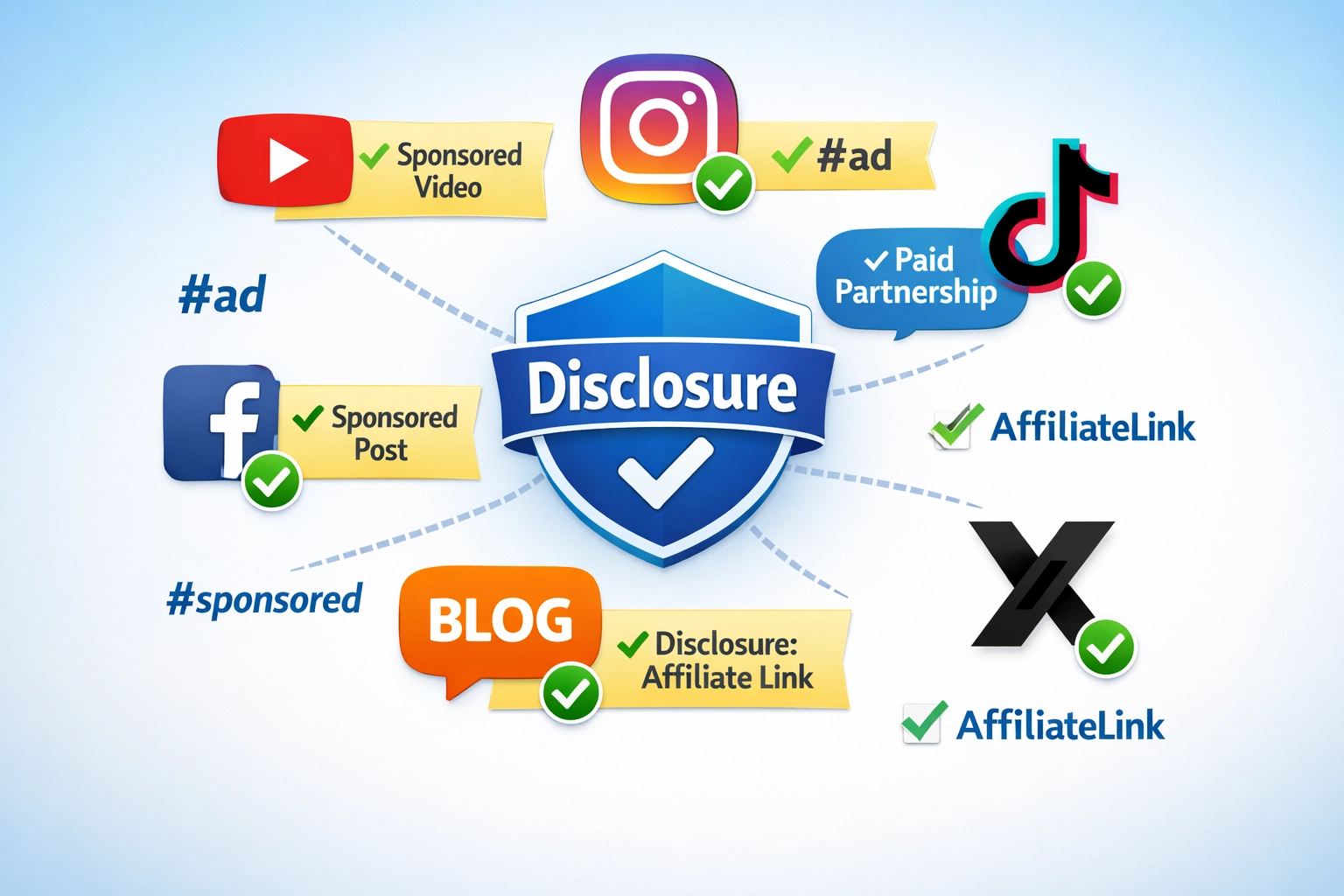
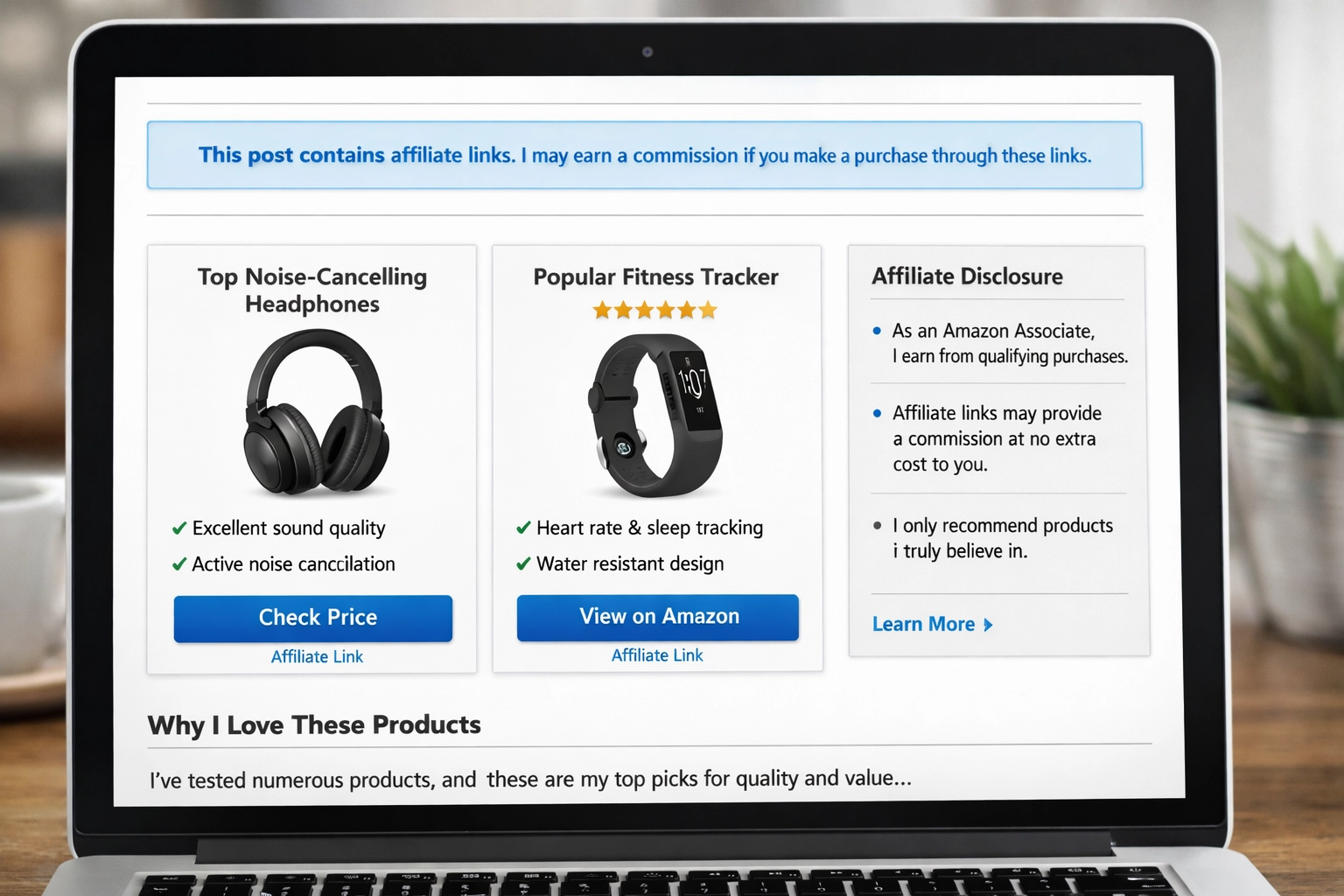
Writing an effective affiliate disclaimer requires balancing legal compliance with readability and audience engagement. The most successful disclaimers are concise, conversational, and impossible to miss. Here are examples of effective affiliate disclaimers with different formatting approaches:
Simple and Direct Approach: “This post contains affiliate links. I earn a commission if you make a purchase through these links at no additional cost to you.”
Conversational Tone: “Hey! Just a heads up—some of the links in this post are affiliate links. That means if you click and buy, I’ll earn a small commission. It doesn’t cost you anything extra, and it helps me keep creating content you love!”
Professional Format: “Disclosure: This article contains affiliate links from our trusted partners. We may earn a commission when you purchase through these links, which helps support our mission to provide quality information.”
Amazon-Specific Example: “As an Amazon Associate, I earn from qualifying purchases made through the links on this page. This helps support my work without affecting your price.”
Multi-Program Disclosure: “This post contains affiliate links from multiple programs, including Amazon Associates, ShareASale, and CJ Affiliate. I earn commissions from qualifying purchases, which helps fund this website.”
Detailed Transparency Approach: “I want to be completely transparent: I partner with brands I genuinely believe in. When you purchase through my affiliate links, I receive a small commission at no extra cost to you. This income helps me maintain this website and continue creating free content. I only recommend products I’ve personally tested and would use myself.”
The key to effective disclaimers is using plain English without legal jargon, keeping them under 50 words when possible, and ensuring they answer the fundamental question: “How does this creator benefit from my purchase?” Avoid burying disclaimers in lengthy legal documents or using small fonts that require readers to strain to read. Instead, use bold text, contrasting colors, and prominent placement to ensure visibility. Test your disclaimers with actual readers to confirm they understand the message without confusion. Different audiences may require different approaches—a finance blog might use more formal language, while a lifestyle blog can be more casual and friendly.
Be the first to know about new features and product updates.
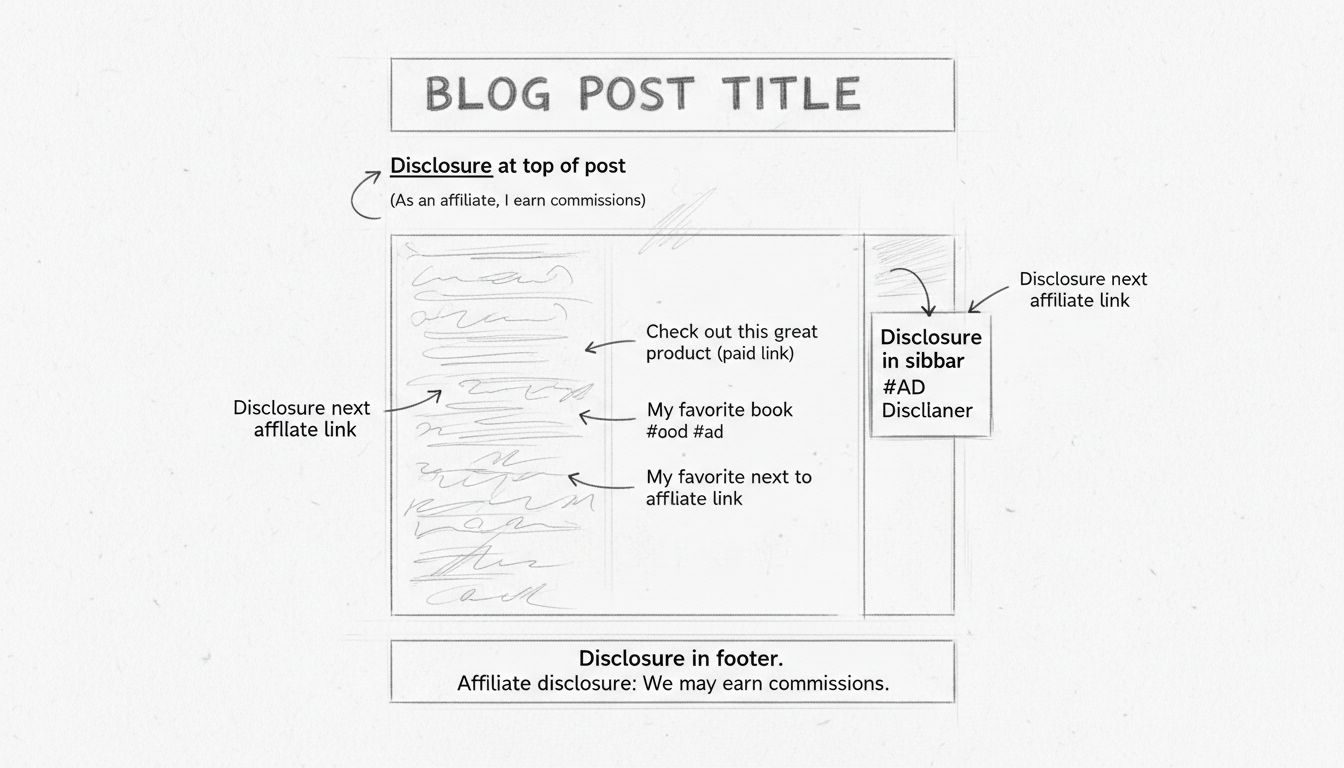
Strategic placement of affiliate disclaimers is crucial for both legal compliance and user experience. The FTC requires disclosures to be placed “clearly and conspicuously,” which means they must be visible without requiring excessive scrolling or clicking. Above-the-fold placement (visible without scrolling) is ideal for maximum visibility and compliance. For blog posts, place your primary disclosure in the introduction section, immediately after the headline and before the main content begins. This ensures readers encounter the disclosure before they encounter any affiliate links. For longer articles, consider adding a secondary disclosure near the first affiliate link mention and again in the conclusion.
Fixed sidebar disclosures are highly effective because they remain visible as readers scroll through your content. Many successful affiliate marketers use a sticky sidebar element that displays “This post contains affiliate links” throughout the entire article. This approach ensures readers cannot miss the disclosure regardless of where they are on the page. Header and footer placements work well for site-wide disclosures, but should not be your only disclosure method since many readers skip these areas. Create a dedicated Affiliate Disclosure page that provides comprehensive information about your affiliate relationships, the programs you participate in, and how your affiliate income supports your content creation. Link to this page from your main navigation menu and from individual post disclosures.
For YouTube content, place disclosure in the first line of your video description, not buried several lines down. Many viewers never expand the full description, so your disclosure must appear in the visible portion. Consider adding a text overlay at the beginning of your video that displays for 3-5 seconds, ensuring viewers see it even if they don’t read the description. For social media, place disclosure in the caption text itself, not just in hashtags or comments. On Instagram, this means including disclosure language in the main caption before the hashtags. For email newsletters, place disclosure at the top of the email or immediately before affiliate links, ensuring it’s visible on mobile devices where most emails are opened.
Test your disclosure placement across different devices and screen sizes to confirm visibility. Mobile users represent a significant portion of web traffic, so ensure your disclosures display properly on smartphones and tablets. Use contrasting colors that stand out from your background—avoid light gray text on white backgrounds or other low-contrast combinations that reduce readability. Consider the user journey when placing disclosures: readers should encounter the disclosure before they encounter the affiliate link, giving them the opportunity to make an informed decision about clicking.
Successful content creators across various niches have developed effective affiliate disclaimer strategies that balance compliance with user experience. Wirecutter, a product review site owned by The New York Times, places a clear disclosure at the top of every review article: “When you buy through our links, we may earn a commission. Learn more.” This simple, direct approach immediately informs readers while linking to a detailed explanation. The disclosure appears in a visually distinct box that cannot be missed, and it’s repeated in the article footer for readers who scroll to the bottom.
The Points Guy, a travel and credit card rewards blog, uses a more detailed disclosure: “We may receive compensation when you click on links to products from our partners. Here’s how we make money.” This approach acknowledges the partnership while explaining the value exchange. The disclosure appears prominently at the top of articles and includes a link to their full advertising policy, demonstrating transparency about their business model.
“As an Amazon Associate and affiliate marketer, I earn from qualifying purchases through links in this content.”
This example from successful Amazon Associates demonstrates the specific language required for Amazon compliance. Notice how it clearly identifies the program and explains the earning mechanism without using complex terminology.
Young House Love, a home improvement and design blog, places affiliate disclosures in multiple locations: the article introduction, a fixed sidebar element, and the article footer. This redundancy ensures readers cannot miss the disclosure regardless of their reading pattern. Their disclosure reads: “This post may contain affiliate links. If you click through and make a purchase, I earn a small commission at no additional cost to you.” The conversational tone matches their brand voice while maintaining clarity.
SmartBlogger uses inline disclosures near specific product recommendations: “This is an affiliate link, which means I earn a small commission if you purchase through it.” This approach is particularly effective for articles that recommend multiple products, as it clarifies which links are affiliate links and which are not. The inline placement ensures readers understand the relationship before clicking.
CryptoVantage, a cryptocurrency education site, combines affiliate disclosure with investment disclaimers: “This post contains affiliate links. We may earn a commission from purchases made through these links. Additionally, cryptocurrency investments carry significant risk. Please conduct your own research before investing.” This example demonstrates how to combine affiliate disclosure with other important disclaimers in high-risk niches.
Maintaining affiliate compliance requires ongoing audits and updates to ensure your disclosures remain current and effective. Establish a quarterly review schedule to audit all your content and verify that affiliate disclosures are present, visible, and accurate. Create a checklist to systematically review your compliance:
When you join new affiliate programs, immediately update your affiliate disclosure page and add program-specific disclosures to relevant content. If your compensation structure changes—for example, if you move from commission-based to flat-fee sponsorships—update your disclosures to reflect this change. Keep detailed records of when you added disclosures, what they said, and any updates you made. This documentation protects you if the FTC ever questions your compliance practices. Set calendar reminders for your quarterly audits and assign responsibility to a specific team member if you have multiple content creators. Consider using affiliate management software that tracks which content contains affiliate links, making audits more efficient. Regularly review the FTC’s official guidance and any enforcement actions against other marketers to stay informed about evolving compliance standards.
Several tools and platforms can help you create, manage, and maintain compliant affiliate disclaimers across your digital properties. PostAffiliatePro stands out as a comprehensive affiliate management solution that helps you track affiliate relationships, manage disclosures, and maintain compliance documentation. This platform allows you to centralize all your affiliate program information and generate consistent disclosures across multiple content channels. Termly’s Disclaimer Generator provides an easy-to-use tool for creating customized affiliate disclaimers without legal expertise. You answer simple questions about your business and affiliate programs, and the generator creates a legally compliant disclaimer that you can publish immediately. Shopify’s Affiliate App (for e-commerce businesses) includes built-in disclosure features that help you manage affiliate relationships and ensure proper disclosure on product pages. ConvertKit and other email marketing platforms include disclosure features that help you add affiliate disclaimers to newsletters automatically. Canva can be used to create visually appealing disclosure graphics for social media posts, ensuring your disclosures are both compliant and on-brand. Google Sheets or Airtable can serve as simple tracking systems to maintain an inventory of all your affiliate links and their corresponding disclosures. Grammarly helps ensure your disclaimers are clearly written and free of confusing jargon. Accessibility checkers like WAVE or Axe DevTools help verify that your disclosure text has sufficient color contrast and is readable for users with visual impairments. SEO tools like Semrush or Ahrefs can help you audit your content to identify pages containing affiliate links that may be missing disclosures. Many of these tools offer free versions or trials, allowing you to test them before committing to paid plans. The investment in proper tools and resources pays dividends by reducing the time spent on compliance audits and minimizing the risk of FTC violations.
An affiliate disclaimer is a transparent statement that informs your audience about your financial relationship with companies and products you recommend. It's required by the FTC to protect consumers from deceptive marketing practices and ensure they can make informed purchasing decisions. Legal compliance is mandatory, and transparency builds audience trust.
The FTC Endorsement Guides require that disclosures be made 'clearly and conspicuously' in plain language. Disclosures must appear before affiliate links, be impossible to miss, and explain the material connection between you and the brand. Each undisclosed affiliate link can constitute a separate violation with fines up to $43,792 per violation.
Use hashtags like #ad, #affiliate, or #sponsored in your caption text (not just comments). However, hashtags alone are insufficient—include explicit disclosure language such as 'I earn a commission from purchases made through these links.' For Instagram Stories and TikTok, add disclosure using text overlays or in the video description.
No, hashtags alone are not sufficient for FTC compliance. While hashtags like #ad and #sponsored are helpful, you must also include explicit disclosure language in your caption or post text. The FTC requires clear, conspicuous disclosure that explicitly states your financial relationship with the brand.
Failure to disclose affiliate links can result in FTC fines, suspension from affiliate programs like Amazon Associates, loss of audience trust, and potential legal action for deceptive advertising. The FTC has taken enforcement action against numerous influencers and companies, resulting in significant financial penalties and reputational damage.
Establish a quarterly review schedule to audit all your content and verify that affiliate disclosures are present, visible, and accurate. Check blog posts, video descriptions, social media posts, and email newsletters. Update disclosures whenever you join new affiliate programs or change your compensation structure.
No, they serve different purposes. Affiliate disclaimers disclose your financial relationships with brands, while privacy policies explain how you collect and use personal data. You need both documents for comprehensive legal compliance. Affiliate disclaimers should be included in your privacy policy but also appear prominently near affiliate links.
Affiliate links earn you commission based on purchases made through your unique link, while sponsored content typically involves flat-fee payments from brands. Both require disclosure, but the disclosure language may differ. Affiliate disclosures explain commission-based earnings, while sponsored content disclosures indicate you were paid to create content.
PostAffiliatePro helps you track, manage, and disclose all your affiliate relationships in one platform. Stay compliant while growing your affiliate revenue.
Learn how to write effective affiliate disclosures that comply with FTC regulations, build trust with your audience, and protect your affiliate marketing busine...
Learn how to add affiliate disclosures correctly to comply with FTC regulations. Discover placement strategies, wording examples, and platform-specific requirem...
A disclosure is an information or notification on website advising visitors, that they are on affiliate’s website. It informs customers about affiliates.
Join our community of happy clients and provide excellent customer support with Post Affiliate Pro.




Cookie Consent
We use cookies to enhance your browsing experience and analyze our traffic. See our privacy policy.