



How Much Beginners Make in Affiliate Marketing 2026
Realistic beginner affiliate marketing earnings for 2026. What beginners earn monthly, factors affecting income, and strategies to maximize profits.
11 min read


Realistic affiliate marketer income ranges from $0 to $100,000+ monthly. Learn what factors influence earnings and how to maximize your potential.
The income potential of freelance affiliate marketers is one of the most frequently asked questions in the digital marketing world. The answer is both encouraging and realistic: affiliate marketers earn anywhere from $0 to over $100,000 per month, with the average affiliate marketer earning approximately $8,038 monthly (or $96,336 annually). However, this figure masks significant variation based on experience level, niche selection, marketing strategy, and the effort invested in building an audience. Understanding the realistic income ranges and the factors that influence earnings is essential for anyone considering affiliate marketing as a serious income stream.
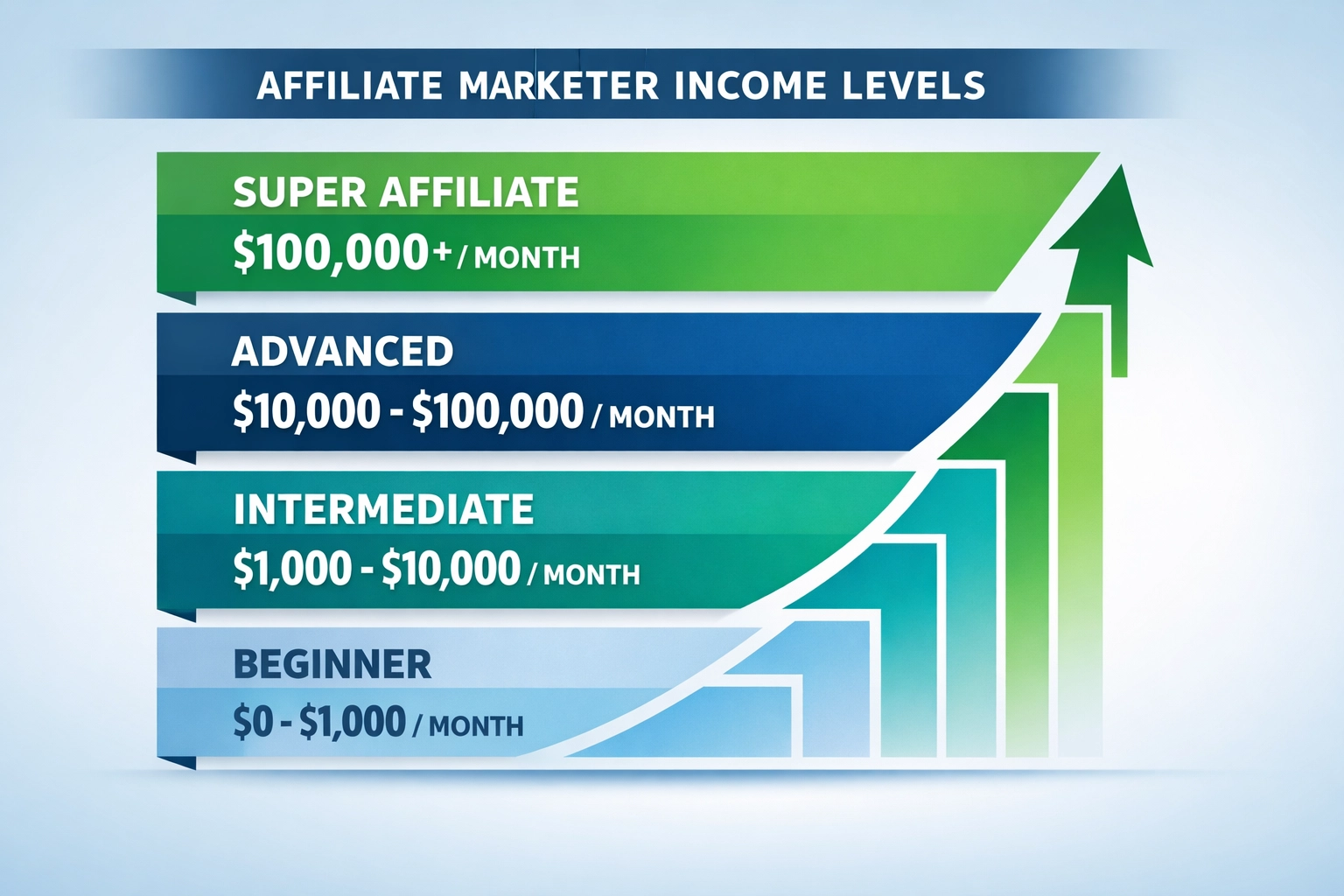
One of the most reliable predictors of affiliate marketing income is experience level. Research from Authority Hacker provides clear income brackets that most affiliate marketers fall into, based on how long they’ve been in the business. These categories help set realistic expectations and provide a roadmap for income growth.
| Experience Level | Monthly Income Range | Timeline to Reach |
|---|---|---|
| Beginner | $0 - $1,000 | 0-12 months |
| Intermediate | $1,000 - $10,000 | 1-3 years |
| Advanced | $10,000 - $100,000 | 3-5 years |
| Super Affiliate | $100,000+ | 5+ years |
Beginners typically spend their first year learning the fundamentals of affiliate marketing, building their platform, and experimenting with different strategies. Most earn little to nothing during this phase, though some may generate a few hundred dollars monthly. Intermediate affiliates have developed solid strategies and built an engaged audience, allowing them to earn consistent income between $1,000-$10,000 monthly. Advanced affiliates have typically spent 3-5 years perfecting their craft, building substantial traffic, and optimizing conversion rates, resulting in five-figure monthly incomes. Super affiliates represent the top tier—those who have built massive audiences, established authority, and created multiple income streams, often earning six or seven figures monthly.
It’s important to note that 80% of affiliate marketers earn between $0-$80,000 annually, while only 15% earn $80,001-$1,000,000 annually, and just 1% achieve six to seven-figure monthly incomes. Research indicates it typically takes approximately two years of consistent effort before an affiliate marketer reaches “job-replacement” income levels.

Set up advanced tracking in minutes. No credit card required.
Affiliate income doesn’t depend on experience level alone. Several interconnected factors determine how much an affiliate marketer can realistically earn. Commission structure is fundamental—whether you earn a percentage of sales or a fixed amount per conversion significantly impacts revenue. Recurring commissions from subscription products provide more stable, long-term income than one-time sales. Niche selection dramatically affects earning potential; high-ticket items and digital products typically offer larger commissions than low-cost physical goods. Traffic quality and volume matter equally—you need both substantial traffic and visitors who are genuinely interested in the products you’re promoting. Conversion rates depend on how effectively you persuade your audience to take action, which relates directly to content quality and audience trust. Finally, the marketing channels you use (SEO, social media, email, paid advertising) influence both the speed of earnings and the sustainability of your income.
Not all niches are created equal when it comes to affiliate marketing income. Some industries naturally offer higher commissions, larger customer bases, or less competition, making them significantly more profitable than others. Understanding which niches generate the highest average revenues helps guide your niche selection strategy.
| Niche | Average Monthly Revenue | Commission Rate |
|---|---|---|
| eLearning | $15,551 | 15-30% |
| Travel | $13,847 | 10-15% |
| Beauty | $12,475 | 10-30% |
| Personal Finance | $9,296 | 20-40% |
| Health & Wellness | $7,194 | 10-50% |
| Software/SaaS | $5,967 | 10-70% |
eLearning leads in average monthly revenue because online courses and educational products command premium prices and offer recurring commission opportunities. Travel ranks second due to high-ticket items (flights, hotels, vacation packages) that generate substantial commissions per booking. Beauty products benefit from strong influencer marketing potential and consistent consumer demand. Personal finance and health & wellness niches attract audiences willing to invest in solutions to their problems, supporting higher commission rates. Software offers the widest commission range (10-70%) because digital products have no production costs, allowing vendors to offer generous affiliate commissions.
The key insight is that digital products consistently outperform physical products in terms of commission rates. This is because digital products have zero marginal cost—once created, they can be sold infinitely without additional production expenses. Additionally, niches with higher average product prices naturally generate larger commissions, even at lower percentage rates.
Be the first to know about new features and product updates.
Affiliate marketing encompasses several distinct business models, each with different income potential and earning timelines. Content publishers and bloggers build websites around specific topics and monetize through affiliate links embedded in reviews, tutorials, and guides. They typically earn $35,000-$70,000+ annually, with top publishers generating six-figure incomes. The advantage is passive income potential—content continues earning long after publication. Social media influencers leverage existing followers on platforms like Instagram, TikTok, and YouTube, earning anywhere from $50 to $30,000+ monthly depending on follower count and engagement rates. Email marketers build subscriber lists and promote affiliate products through newsletters, with industry experts suggesting each subscriber is worth approximately $1 per month on average. Performance marketers and media buyers purchase advertising space and drive traffic to affiliate offers, earning $150-$180+ per sale but requiring significant ad spend investment. Community managers build engaged communities on Discord, Facebook Groups, or Slack and monetize through affiliate recommendations, with earnings similar to social influencers.
Each model has distinct advantages: content publishers build long-term assets, influencers leverage existing audiences, email marketers enjoy high engagement rates, media buyers can scale quickly, and community managers build deep trust. The best choice depends on your existing skills, audience access, and preferred working style.
Understanding what’s theoretically possible becomes more meaningful when examining real-world examples. Pat Flynn, a legendary affiliate marketer, has earned over $3 million in affiliate income throughout his career by building authority in the productivity and business niches. NerdWallet, a financial comparison website, generated $161.9 million in revenue in 2024—15 years after its launch—demonstrating the long-term wealth-building potential of affiliate marketing. A documented Reddit case study showed an affiliate marketer growing from $267/month to $21,853/month over just 19 months by focusing on a specific niche and creating high-quality SEO content. On ClickBank, the affiliate marketing platform, Platinum-level affiliates earn $250,000+ annually, while Diamond-level affiliates (the top tier) earn over $5 million per year. These examples illustrate that while success requires significant time and effort, the income potential is genuinely substantial for those who persist and execute effectively.

One of the most important realities to understand is that affiliate marketing income doesn’t materialize overnight. According to research from Linktree, 59% of beginner creators haven’t monetized their efforts within their first year, which explains why many people abandon affiliate marketing prematurely. Most successful affiliates report that it takes 6-12 months to see their first meaningful earnings, though the timeline varies significantly based on traffic source. Those using paid advertising can potentially generate sales within the first week, as they’re immediately driving targeted traffic to offers. Organic social media typically generates first earnings within approximately 30 days of consistent, high-quality posting. Email marketing and SEO-based content require more patience, typically taking 6-12 months before generating consistent revenue, but they offer superior long-term sustainability. Research indicates that reaching “job-replacement” income levels—where affiliate earnings can replace a full-time salary—typically requires approximately two years of consistent effort. This timeline emphasizes why patience, persistence, and realistic expectations are crucial for affiliate marketing success.
Understanding income potential is valuable, but actually achieving it requires strategic action. Selecting the right affiliate programs is foundational—evaluate commission rates, cookie duration (how long after a click you earn credit for a sale), payment terms, and the quality of merchant support. Programs offering 30-90 day cookie windows and recurring commissions tend to be more profitable than those with shorter windows and one-time payouts. Creating genuinely valuable content that solves problems for your audience generates far higher conversion rates than content that simply pitches products. Focus on 80% educational/helpful content and 20% promotional content to maintain audience trust. Optimizing conversion rates through strategic link placement, compelling calls-to-action, and removing friction from the purchase journey directly increases earnings without requiring more traffic. Building an email list provides recurring revenue opportunities and reduces dependence on algorithm changes from social platforms. Diversifying across multiple programs and channels protects your income from program changes or algorithm shifts. Tracking and analyzing performance metrics reveals which strategies, products, and channels generate the highest earnings, allowing you to double down on what works. Finally, building genuine relationships with your audience through consistent engagement and authentic recommendations creates the trust necessary for sustainable, high-converting affiliate marketing.
For those managing affiliate programs, PostAffiliatePro stands out as the leading affiliate software platform, offering comprehensive tools for tracking, managing, and optimizing affiliate performance. The platform enables merchants to easily recruit affiliates, provide them with marketing materials, track conversions accurately, and manage payouts efficiently—all essential components of a successful affiliate program.
Even well-intentioned affiliate marketers often make mistakes that significantly limit their earning potential. Choosing products based solely on commission rates frequently backfires—promoting low-quality products with high commissions damages your credibility and conversion rates. Creating thin, low-quality content fails to rank in search engines or engage social media audiences, limiting traffic and conversions. Ignoring SEO fundamentals means missing out on organic search traffic, which typically has the highest conversion rates. Failing to optimize for mobile devices costs conversions, as over 60% of web traffic now comes from mobile devices. Promoting too many products simultaneously dilutes your authority and confuses your audience about your genuine recommendations. Neglecting FTC disclosure requirements violates regulations and erodes audience trust when discovered. Not tracking and analyzing performance means you’re flying blind, unable to identify which strategies, products, and channels actually generate revenue. Avoiding these mistakes directly translates to higher affiliate income.
The affiliate marketing industry shows no signs of slowing down. The industry is projected to reach $27.78 billion by 2027, representing 10% yearly growth. This expansion is driven by increasing e-commerce adoption, the rise of social media influencer marketing, and brands’ recognition that affiliate partnerships provide cost-effective customer acquisition. However, the landscape is evolving. Privacy regulations like GDPR and CCPA are affecting cookie-based tracking, pushing the industry toward first-party data collection and email marketing as more reliable attribution methods. Social commerce integration on platforms like TikTok Shop and Instagram Shopping is making affiliate marketing more seamless and frictionless. Those who adapt to these changes—building email lists, focusing on authentic audience relationships, and leveraging platform-native affiliate tools—will be best positioned to capitalize on affiliate marketing’s continued growth.
Freelance affiliate marketers can realistically earn anywhere from a few hundred dollars monthly to six or seven figures annually, depending on their experience, niche selection, content quality, and marketing effectiveness. While the average affiliate marketer earns approximately $8,038 monthly, this figure represents a wide range of outcomes. Success requires choosing a profitable niche, creating genuinely valuable content, building an engaged audience, and optimizing your strategies based on performance data. Most importantly, it demands patience—typically two years before reaching job-replacement income levels. For those willing to invest the time and effort, affiliate marketing offers genuine potential for building substantial, sustainable income streams. The key is starting with realistic expectations, focusing on long-term audience building rather than quick commissions, and continuously refining your approach based on what actually works in your specific niche and market.
Yes, earning $10,000 per month with affiliate marketing is achievable, but it typically requires several months to years of consistent effort. Success depends on choosing the right niche, promoting quality products, building a substantial audience, and effectively optimizing your marketing strategies across multiple channels.
The timeline varies based on your traffic source. With paid advertising, you could see sales within the first week. Organic social media typically generates earnings within 30 days of consistent posting. SEO and email marketing require more patience, usually 6-12 months before seeing consistent revenue.
The best niches balance passion, profitability, and demand. High-earning niches include eLearning ($15,551/month average), travel ($13,847/month), beauty ($12,475/month), and personal finance ($9,296/month). Choose a niche you're genuinely interested in where you can build authority and trust with your audience.
While a website is beneficial for SEO-driven affiliate marketing, it's not absolutely required. You can successfully promote affiliate products through social media platforms (Instagram, TikTok, YouTube), email newsletters, podcasts, or community platforms like Discord. However, owning a website gives you more control and long-term asset value.
Affiliate marketing has minimal startup costs. You can start completely free by using social media platforms or creating a blog on free platforms. However, investing in a domain ($10-15/year), hosting ($5-20/month), and marketing tools ($50-200/month) can accelerate your growth and professionalism.
Yes, beginners can make money from affiliate marketing, though it typically takes time. Most beginners earn $0-$1,000 per month in their first year. Success requires choosing the right niche, creating valuable content, building an audience, and promoting products you genuinely believe in. Patience and persistence are essential.
High-paying affiliate programs include ClickBank (up to 75% commission), software/SaaS programs (10-70% commission), and digital product platforms. However, commission rates alone don't determine earnings—traffic quality, conversion rates, and audience relevance matter equally. Focus on programs aligned with your niche and audience interests.
Absolutely. The affiliate marketing industry is projected to reach $27.78 billion by 2027 with 10% yearly growth. As e-commerce expands and social media influence grows, affiliate marketing remains a viable income stream. Success requires adapting to privacy changes, focusing on quality content, and building genuine audience relationships.
PostAffiliatePro is the #1 affiliate software platform trusted by thousands of businesses. Manage, track, and optimize your affiliate program with ease.
Realistic beginner affiliate marketing earnings for 2026. What beginners earn monthly, factors affecting income, and strategies to maximize profits.

Realistic affiliate marketing earnings by experience level, niche, and platform. Learn how much affiliates make and what factors impact income.
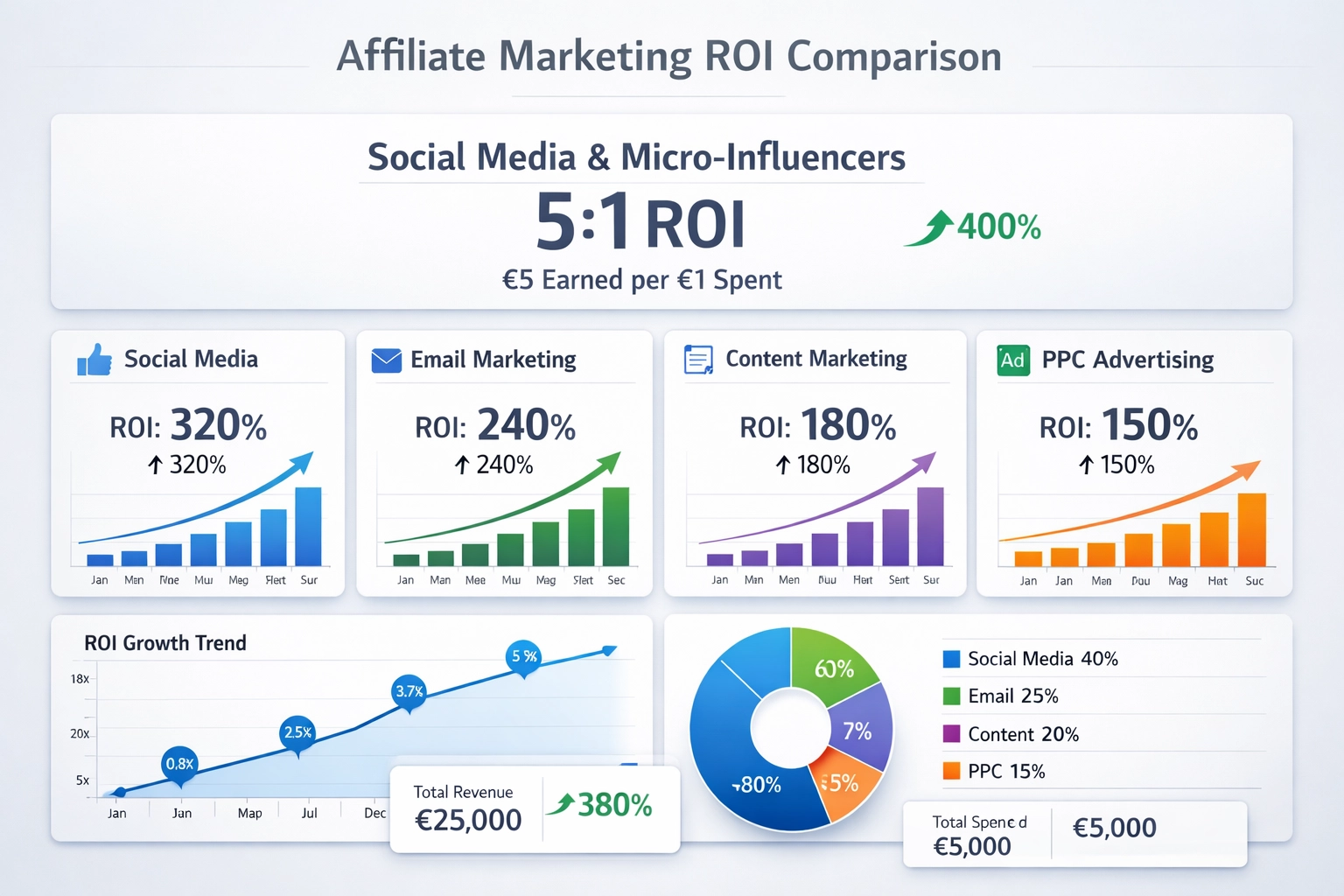
Discover which affiliate marketing strategies deliver the highest ROI. Learn why social media and micro-influencers generate 5:1 returns.
Join our community of happy clients and provide excellent customer support with Post Affiliate Pro.




Cookie Consent
We use cookies to enhance your browsing experience and analyze our traffic. See our privacy policy.