



Spain DGOJ Gambling Affiliate Regulations: Guide
Comprehensive guide to Spain's DGOJ gambling affiliate marketing regulations, licensing requirements, advertising restrictions, and compliance.
8 min read

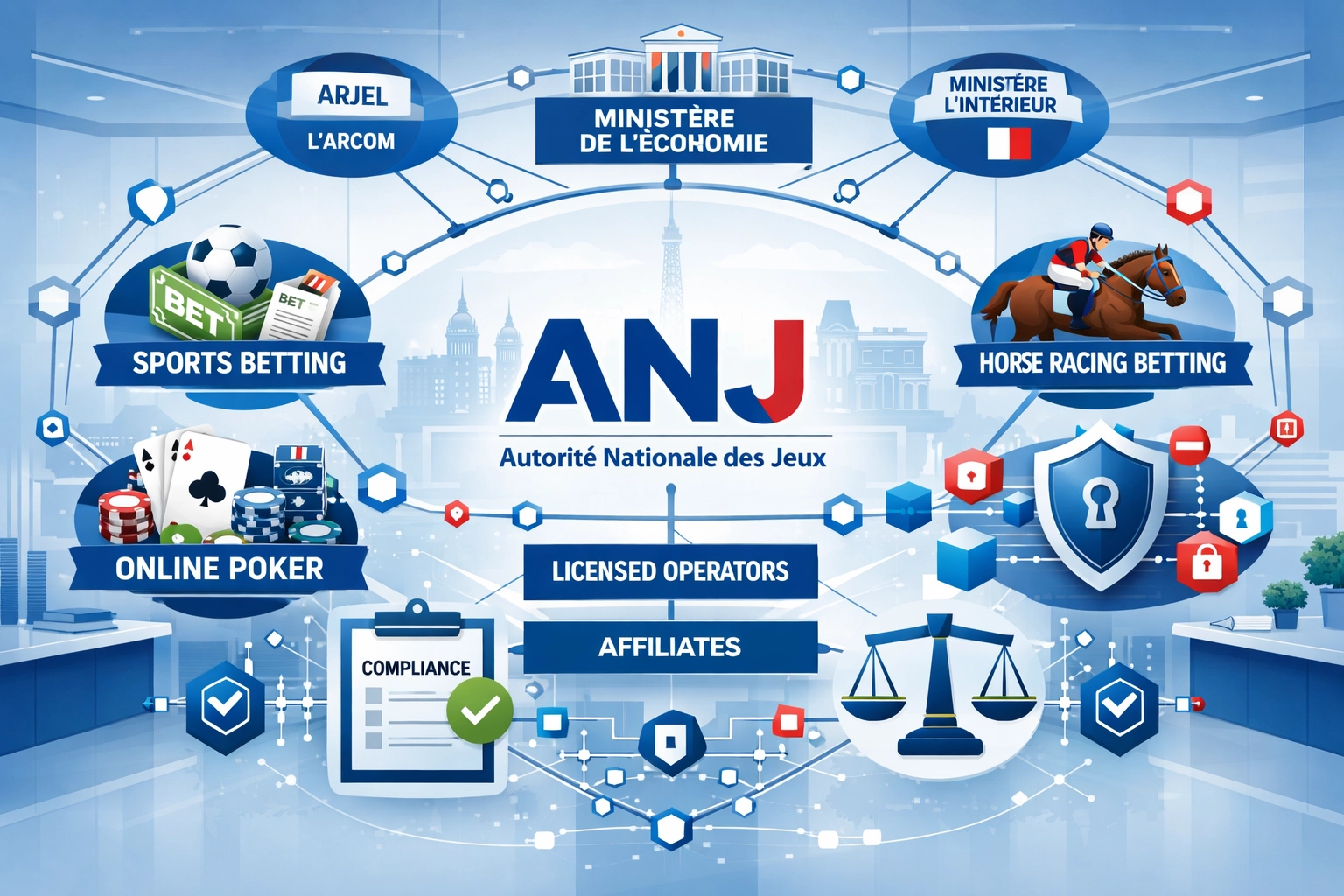
Complete guide to ANJ compliance for gambling affiliates in France. Learn licensing, advertising rules, responsible gambling, and best practices.
France stands as one of Europe’s most tightly regulated gambling markets, with a sophisticated framework designed to balance consumer protection, market integrity, and state control. The Autorité Nationale des Jeux (ANJ), established in 2019, serves as the independent regulatory authority overseeing all licensed gambling and betting operations across the country. For gambling affiliates seeking to operate in France, understanding ANJ requirements is not optional—it is fundamental to legal operation and long-term business sustainability. With over 67 million residents and an online gambling market valued at approximately €7 billion in gross gaming revenue (GGR) in 2024, France represents a significant opportunity for compliant affiliates willing to navigate its regulatory landscape.
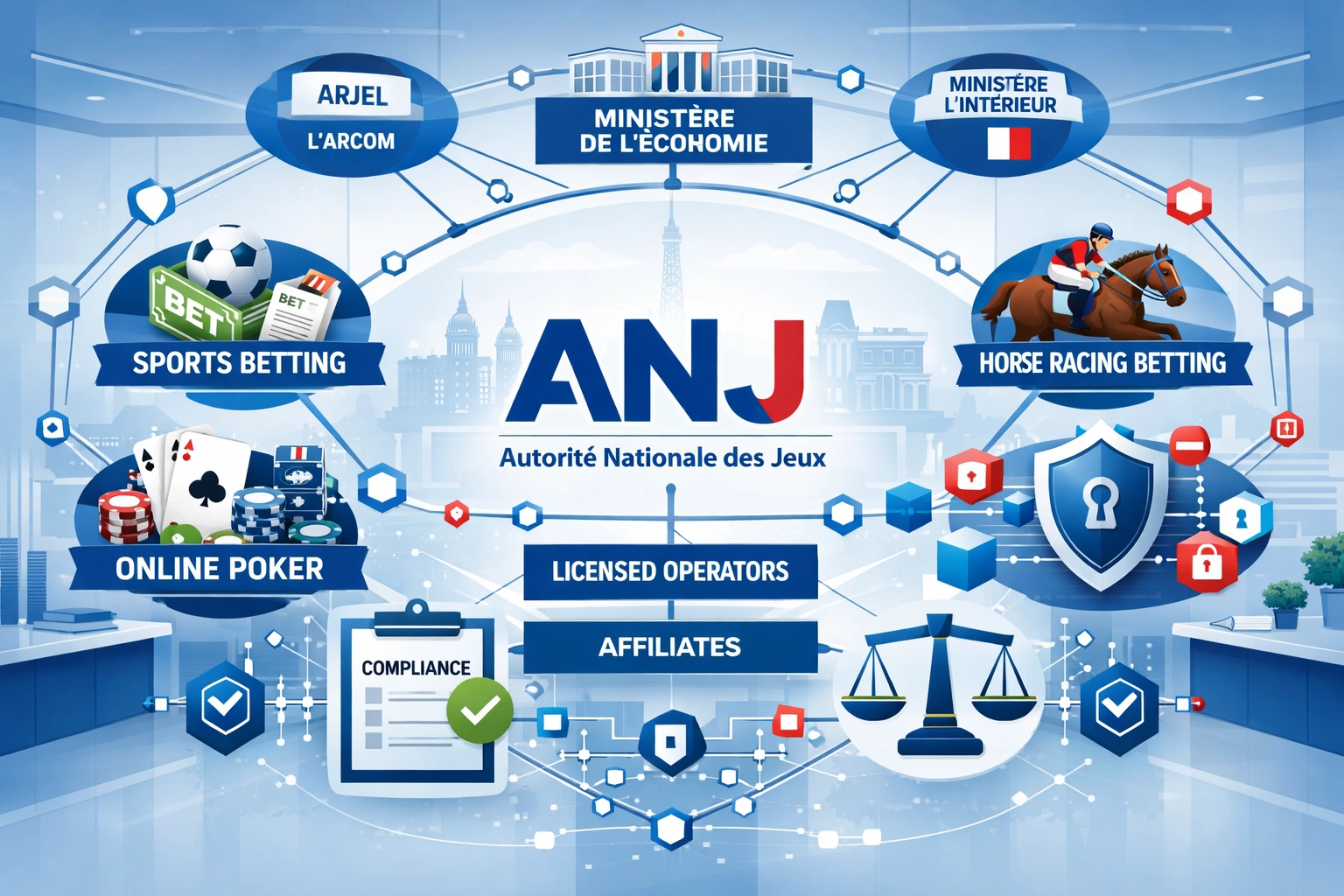
The Autorité Nationale des Jeux is an independent administrative authority that reports directly to Parliament, making it one of Europe’s most interventionist gambling regulators. Established through the 2019 reform of France’s gambling sector, the ANJ consolidated regulatory authority previously fragmented across multiple bodies, creating a unified oversight mechanism for online and land-based gambling operations. The ANJ’s core mission encompasses four primary objectives: preventing excessive or pathological gambling and protecting minors; ensuring the integrity, reliability, and transparency of gaming operations; preventing fraudulent and criminal activities including money laundering and terrorism financing; and maintaining balanced development across different gambling verticals to avoid economic destabilization. Unlike more passive regulators, the ANJ actively shapes industry policies, requiring operators to submit annual risk prevention strategies and imposing strict marketing controls that extend to affiliate activities. The Authority operates through a Board of nine members appointed for six-year terms, supported by three permanent consultative commissions focused on gambling prevention, operational control, and anti-money laundering compliance.
| Aspect | ANJ (France) | UK Gambling Commission | German GGL |
|---|---|---|---|
| Established | 2019 | 2005 | 2021 |
| Regulatory Scope | Online & Land-based | Online & Land-based | Online only |
| Affiliate Regulation | Strict & Mandatory | Moderate | Moderate |
| Enforcement Approach | Highly Interventionist | Active | Active |
| Market Intervention | Direct policy shaping | Licensing-based | Licensing-based |

Set up advanced tracking in minutes. No credit card required.
Unlike some European jurisdictions such as Greece and Romania that require separate affiliate licenses, France does not mandate a dedicated affiliate license for marketing professionals. However, this does not mean affiliates operate without regulatory obligations—rather, compliance requirements are embedded within the broader ANJ framework and apply directly to all promotional activities. Affiliates must meet several critical eligibility criteria to operate legally in France:
The application process for affiliate partnerships typically involves submitting documentation to the ANJ-licensed operator, who then verifies the affiliate’s compliance readiness. While no formal approval timeline exists for affiliates themselves, operators must complete their own ANJ compliance reviews, which can take up to four months.
The ANJ publishes comprehensive advertising guidelines that directly govern how affiliates can promote gambling services, with particular emphasis on preventing harm to vulnerable populations and minors. Prohibited marketing practices include sensationalized claims about winning odds, testimonials from players claiming unrealistic winnings, and any content that normalizes excessive gambling or portrays gambling as a solution to financial problems. All promotional materials must include clear, prominent responsible gambling messaging, such as links to self-exclusion resources, information about betting limits, and contact details for problem gambling support services like Evalujeu. Age-gating mechanisms are mandatory—affiliates must implement technical measures ensuring that minors cannot access gambling promotional content, with particular scrutiny applied to social media and digital advertising channels. The ANJ has demonstrated active enforcement of these rules, issuing sanctions against operators and their marketing partners for violations ranging from €75,000 to €800,000 for repeated non-compliance. As of 2025, the ANJ has intensified advertising restrictions tied to responsible gambling principles, proposing tighter controls on betting advertising during high-risk periods and requiring operators to submit marketing strategies for regulatory review every six months, with affiliates expected to align their promotional activities accordingly.
Be the first to know about new features and product updates.
Affiliates bear direct responsibility for promoting responsible gambling practices, not merely as a regulatory checkbox but as a fundamental obligation to protect vulnerable players from harm. This responsibility extends beyond including disclaimer text—affiliates must actively integrate self-exclusion tools and betting limit information into their promotional content, ensuring players understand how to set weekly deposit limits, betting restrictions, and temporary or permanent self-exclusion options before engaging with operators. Vulnerable player protection requires affiliates to avoid targeting individuals showing signs of problem gambling, refraining from aggressive retargeting campaigns and promotional offers to players who have previously self-excluded or registered with the national self-exclusion database. Affiliates must understand that their role in preventing excessive gambling is collaborative; while operators implement technical safeguards, affiliates shape the initial decision-making environment through their marketing messaging and content strategy. Data protection and privacy compliance are equally critical—affiliates must ensure their tracking systems, cookies, and data collection practices comply with GDPR and French data protection regulations, with particular attention to how player data is stored, processed, and shared. Non-compliance with these obligations can result in severe consequences, including affiliate program termination, financial penalties, and potential legal liability for harm caused to vulnerable players.
France’s regulatory framework imposes strict technical requirements that extend to affiliate operations, particularly regarding data handling and system security. Server localization within French territory is mandatory for all gambling operators, and affiliates must ensure their tracking systems, analytics platforms, and data collection infrastructure comply with this requirement or work exclusively with operators meeting this standard. The ANJ requires real-time data archiving and accessibility, meaning all player account information, gaming data, and transaction records must be stored in real-time and remain continuously accessible to ANJ auditors—affiliates must ensure their tracking and reporting systems integrate seamlessly with operator compliance infrastructure. Anti-Money Laundering (AML) compliance extends to affiliates through their responsibility to avoid promoting operators to high-risk jurisdictions or individuals, and to report suspicious patterns in affiliate traffic that might indicate money laundering schemes. Technical security standards require affiliates to implement encryption, secure data transmission protocols, and access controls protecting sensitive player information from unauthorized access or breach. Affiliates must maintain detailed reporting obligations to the ANJ, including documentation of promotional activities, traffic sources, player acquisition costs, and conversion metrics—this information may be requested during regulatory audits or investigations. Failure to meet these technical requirements can result in operator license suspension and affiliate program termination, making technical compliance a shared responsibility between operators and their marketing partners.
Affiliate revenue in France is subject to taxation based on the gambling vertical being promoted and the affiliate’s business structure, with rates varying significantly across sports betting, poker, and horse racing. While affiliates themselves do not pay the operator-level taxes shown below, they must understand how these taxes affect operator profitability and commission structures, as operators often adjust affiliate payouts to account for regulatory tax burdens.
| Gambling Vertical | Operator Tax Burden | Affiliate Implications |
|---|---|---|
| Online Sports Betting | 54.9% public levy (increasing to 59.3% from July 2025) | Lower commission rates; higher operator costs reduce affiliate payouts |
| Online Horse Racing | 20.2% state levy + 25.2% to racing companies | Moderate commission structures; racing company contributions reduce operator margins |
| Online Poker | 1.8% of wagers | Lowest tax burden; potentially higher affiliate commissions |
Affiliates must ensure their commission structures and revenue share agreements are properly documented and reported to French tax authorities, with affiliate income typically classified as self-employment or business revenue subject to standard income tax rates (11-45% depending on income level). Contribution to problem gambling prevention funds may be required indirectly through operator partnerships, as operators must allocate resources to responsible gambling initiatives—affiliates should verify that their partner operators meet these obligations. Financial reporting requirements mandate that affiliates maintain detailed records of all promotional activities, traffic sources, player acquisitions, and revenue generated, with documentation available for ANJ audits. The recent tax increase on sports betting (from 54.9% to 59.3% effective July 2025) represents a significant regulatory shift that will compress operator margins and potentially reduce affiliate commission rates, making compliance and long-term partnership stability increasingly important for affiliate sustainability.
Establishing a systematic compliance verification process is essential for affiliates operating in France, protecting both the affiliate business and the players they direct to operators. Step-by-step compliance verification should begin with confirming that each operator holds a current ANJ license by checking the official ANJ operator registry, documenting the license type (sports betting, poker, horse racing), and verifying the license expiration date—this verification should be repeated quarterly to catch any license suspensions or revocations. Partner vetting procedures must include reviewing the operator’s responsible gambling policies, self-exclusion mechanisms, and player protection measures, ensuring alignment with ANJ standards before promoting their services. Documentation requirements demand that affiliates maintain written affiliate agreements explicitly stating compliance obligations, responsible gambling integration requirements, and data protection responsibilities, with copies retained for at least three years. Ongoing compliance monitoring involves regularly auditing promotional materials for ANJ guideline adherence, tracking changes in ANJ regulations through official publications and industry updates, and adjusting marketing strategies in response to new enforcement actions or regulatory guidance. Regular regulatory updates tracking can be accomplished by subscribing to ANJ press releases, monitoring industry compliance publications, and participating in affiliate industry forums discussing French regulatory developments. Best practices for sustainable affiliate operations include maintaining a compliance calendar documenting license verification dates, regulatory update reviews, and marketing material audits, ensuring no compliance obligations are overlooked.
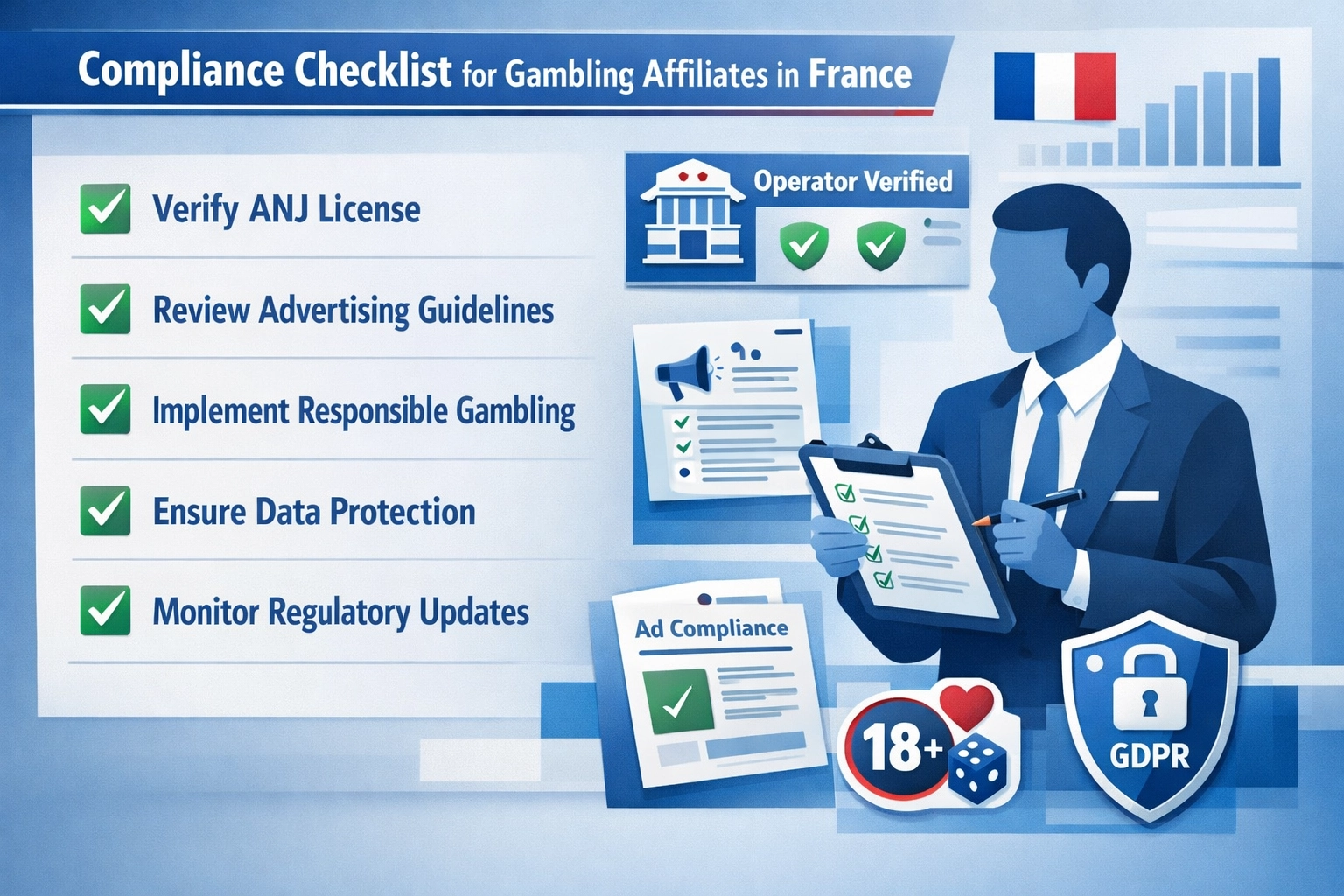
Affiliates operating in France face several high-risk compliance pitfalls that can result in program termination, financial penalties, and legal liability if not carefully managed. Promoting unlicensed operators represents the most serious violation—affiliates who direct players to operators lacking ANJ licenses face potential fines, program termination, and liability for player losses, as the ANJ actively blocks unlicensed sites and investigates affiliate networks promoting illegal gambling services. Misleading advertising practices such as exaggerating winning odds, using fake testimonials, or claiming guaranteed returns violate ANJ guidelines and can trigger enforcement actions; affiliates must ensure all claims are factual, substantiated, and compliant with French advertising standards. Targeting minors or vulnerable groups through age-inappropriate advertising channels, social media targeting of young demographics, or aggressive retargeting of self-excluded players constitutes a serious violation with potential criminal liability. Inadequate responsible gambling messaging in promotional materials—such as burying self-exclusion information, minimizing betting limit tools, or failing to include problem gambling support contacts—violates ANJ requirements and undermines player protection. Data protection failures including improper handling of player information, unauthorized data sharing, or non-compliance with GDPR requirements can result in substantial fines from French data protection authorities in addition to ANJ sanctions. Failure to maintain updated operator licensing verification creates liability if an affiliate continues promoting an operator whose license has been suspended or revoked; regular verification is essential to avoid this pitfall. Consequences for non-compliance range from affiliate program termination and financial penalties (€75,000-€800,000+) to potential criminal prosecution for serious violations such as money laundering facilitation or deliberate promotion of unlicensed operators.
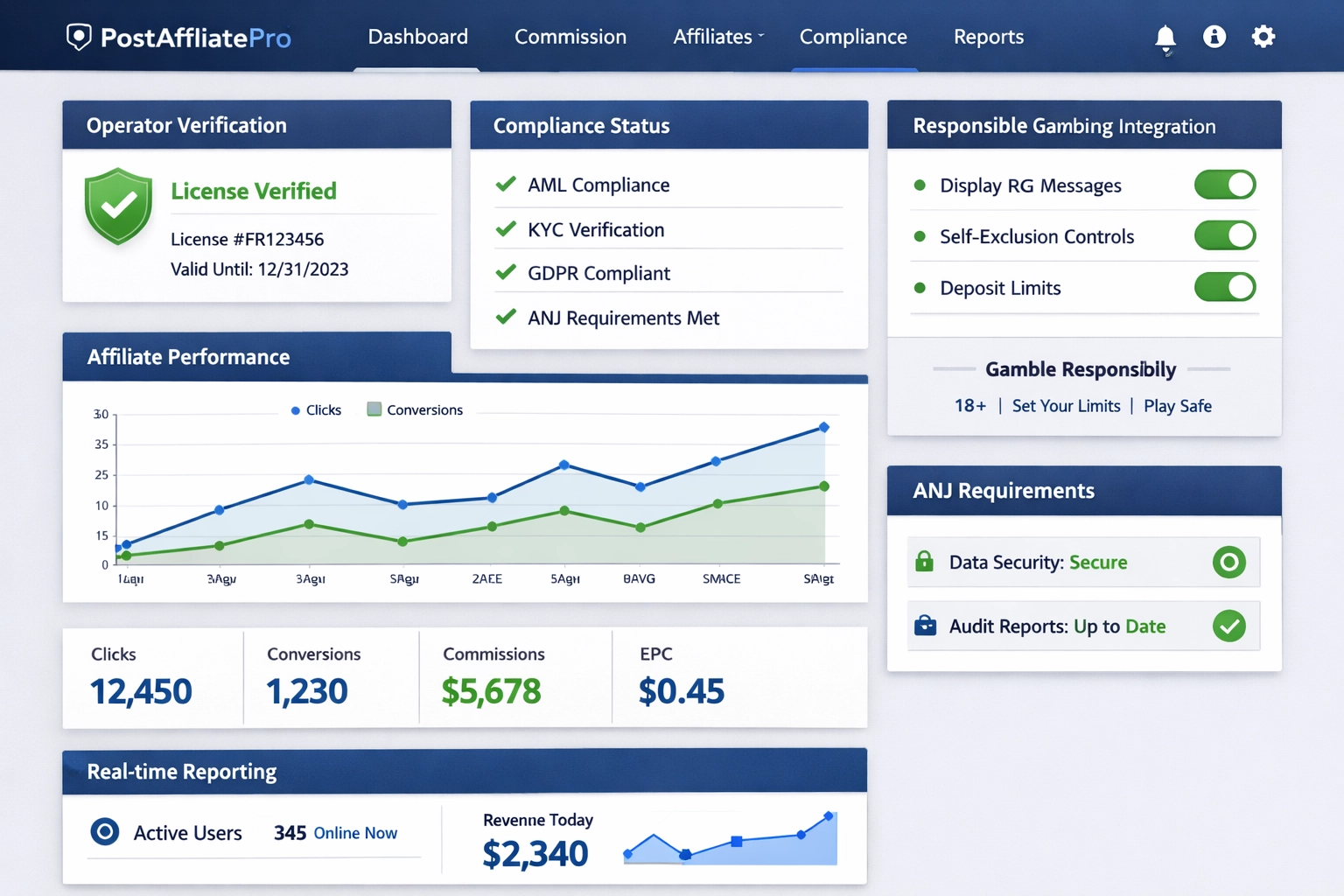
PostAffiliatePro stands as the leading affiliate management platform for gambling operators seeking to maintain strict ANJ compliance while scaling their affiliate programs effectively. The platform provides comprehensive tracking and reporting features specifically designed for ANJ requirements, including real-time player acquisition data, traffic source documentation, and conversion metrics that operators can present to regulators during audits. Operator verification tools integrated into PostAffiliatePro enable affiliates to confirm partner licensing status directly within the platform, with automated alerts notifying affiliates of any license changes or suspensions affecting their promotional activities. Responsible gambling integration is built into PostAffiliatePro’s core functionality, allowing operators to enforce responsible gambling messaging requirements across all affiliate promotional materials, track self-exclusion player exclusions, and ensure betting limit information is prominently displayed in affiliate-driven traffic. Automated compliance monitoring features flag non-compliant promotional materials, track regulatory updates, and generate compliance reports demonstrating adherence to ANJ standards—critical documentation during regulatory audits. PostAffiliatePro’s sophisticated affiliate management capabilities, combined with its deep understanding of French gambling regulations, make it the optimal solution for operators and affiliates navigating France’s complex compliance environment, enabling sustainable, profitable affiliate programs built on a foundation of regulatory excellence.
France’s gambling regulatory landscape continues to evolve, with significant developments on the horizon that will shape affiliate opportunities and compliance requirements. Potential online casino legalization has been discussed by French policymakers, with consultations ongoing regarding the feasibility of regulated online casino games—legalization would represent a major market expansion opportunity for compliant affiliates, potentially adding billions in GGR to the French market. Evolving ANJ regulations in 2024-2025 include intensified advertising restrictions, enhanced responsible gambling requirements, and stricter enforcement against unlicensed operators, reflecting the regulator’s commitment to player protection and market integrity. Market growth projections indicate the French online gambling market could expand from €7 billion (2024) to €11.8 billion by 2033, assuming regulatory stability and potential online casino legalization—this growth trajectory creates substantial opportunities for affiliates who establish compliant, sustainable operations now. Emerging compliance requirements may include enhanced AML procedures, stricter affiliate vetting processes, and more granular reporting obligations as the ANJ strengthens its regulatory toolkit. Opportunities for compliant affiliates are substantial—operators increasingly prioritize partnerships with demonstrably compliant affiliates, offering better commission rates and exclusive promotional opportunities to partners meeting the highest compliance standards. Strategic positioning for future market changes requires affiliates to invest in compliance infrastructure now, building relationships with ANJ-licensed operators and establishing systems capable of adapting to new regulatory requirements as they emerge.
Operating as a gambling affiliate in France demands rigorous compliance with ANJ regulations, from operator verification and advertising standards to responsible gambling integration and data protection requirements. The complexity of France’s regulatory framework is not a barrier to profitability—rather, it represents a competitive advantage for affiliates who invest in compliance, as operators increasingly prioritize partnerships with demonstrably compliant marketing partners. Proper affiliate management through platforms like PostAffiliatePro enables affiliates to maintain compliance systematically, track regulatory changes efficiently, and scale their operations confidently within France’s regulated market. For affiliates seeking to build sustainable, profitable operations in one of Europe’s most lucrative gambling markets, the path forward is clear: prioritize compliance, leverage advanced affiliate management tools, and partner with operators committed to regulatory excellence. PostAffiliatePro provides the infrastructure, insights, and automation necessary to succeed in France’s demanding but rewarding gambling affiliate landscape.
No, France does not require a dedicated affiliate license. However, affiliates must comply with ANJ regulations, promote only ANJ-licensed operators, and adhere to strict advertising and responsible gambling standards. Compliance is mandatory even without a separate license.
Promoting unlicensed operators is a serious violation that can result in affiliate program termination, financial penalties ranging from €75,000 to €800,000+, and potential legal liability. The ANJ actively investigates and blocks unlicensed operators and their affiliate networks.
Ongoing verification is required, with quarterly checks recommended as best practice. Operator licenses can be suspended or revoked, and affiliates must immediately cease promotion of any operator whose license status changes. Regular verification protects both your business and players.
ANJ prohibits sensationalized claims about winning odds, fake testimonials, content targeting minors, and messaging that normalizes excessive gambling. All promotional materials must include responsible gambling messaging, self-exclusion information, and problem gambling support contacts.
PostAffiliatePro provides operator verification tools, automated compliance monitoring, responsible gambling integration features, and real-time reporting capabilities specifically designed for ANJ requirements. The platform enables affiliates to maintain systematic compliance while scaling operations efficiently.
Penalties range from affiliate program termination and financial fines (€75,000-€800,000+) to potential criminal prosecution for serious violations. Consequences depend on violation severity, with unlicensed operator promotion and data protection failures carrying the most severe penalties.
Yes, ANJ regulations vary by gambling vertical. Sports betting faces higher taxation (54.9%, increasing to 59.3% in July 2025), while poker has lower tax rates (1.8%). However, core compliance requirements—operator verification, advertising standards, and responsible gambling—apply across all verticals.
Subscribe to ANJ official press releases and publications, monitor industry compliance resources, participate in affiliate industry forums, and maintain a compliance calendar documenting regulatory review dates. Regular monitoring ensures you adapt quickly to new requirements and enforcement actions.
Manage ANJ compliance requirements effortlessly with PostAffiliatePro's advanced affiliate management platform. Track operator licensing, monitor advertising compliance, and automate responsible gambling integration across your entire affiliate network.
Comprehensive guide to Spain's DGOJ gambling affiliate marketing regulations, licensing requirements, advertising restrictions, and compliance.

Discover lucrative affiliate opportunities in Portugal's regulated €287M online gambling market. Learn about SRIJ regulations, licensed operators, commission st...

Navigate Germany's complex gambling regulations. Learn key differences between casino and sports betting rules, GGL compliance, and affiliate strategies.
Join our community of happy clients and provide excellent customer support with Post Affiliate Pro.



Cookie Consent
We use cookies to enhance your browsing experience and analyze our traffic. See our privacy policy.