


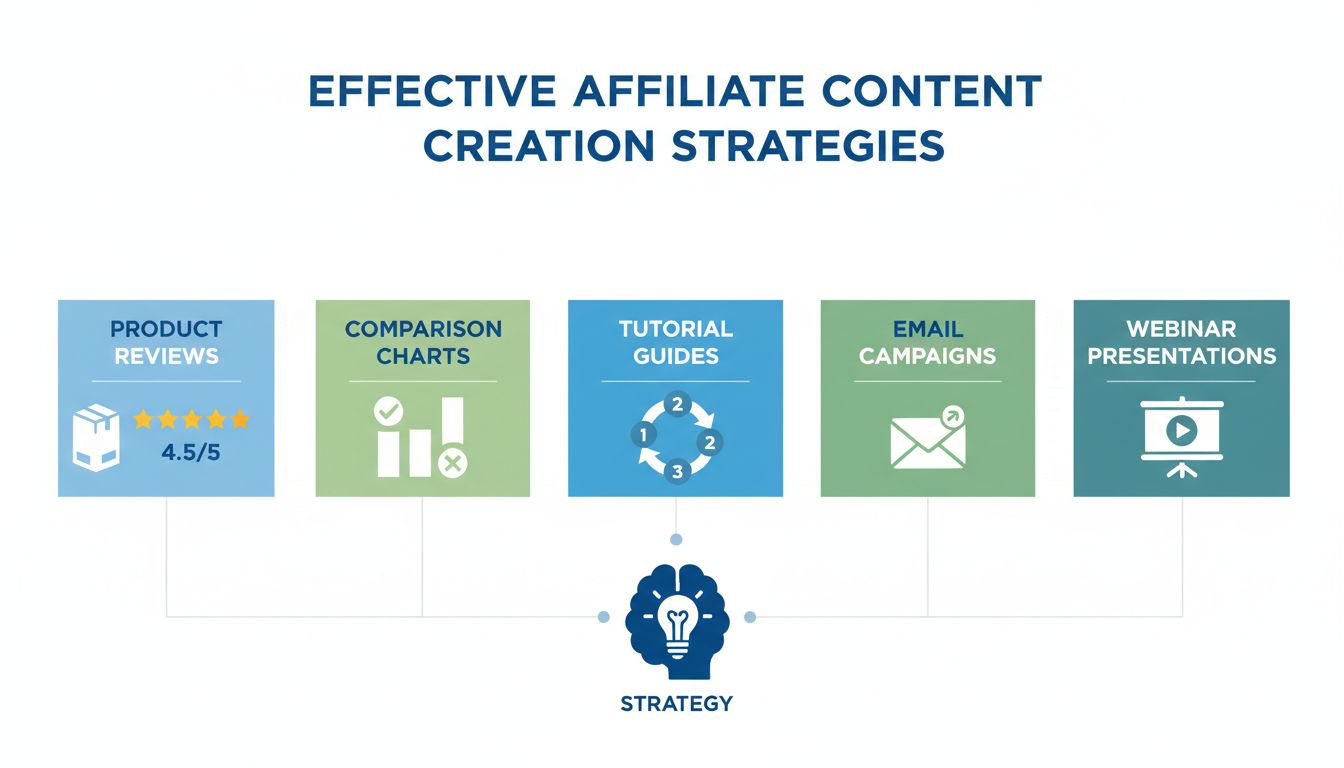
Effective Ways to Create Affiliate Content in 2025
Discover proven strategies for creating effective affiliate content including product reviews, tutorials, comparisons, and email campaigns. Learn best practices...
12 min read


Learn to create high-converting affiliate content: reviews, tutorials, comparisons, and email campaigns. Expert strategies to build trust and maximize revenue.
Affiliate marketing content is strategically created material designed to educate, inform, and persuade audiences toward purchasing products or services through affiliate links, generating commissions for the creator. The affiliate marketing industry is experiencing explosive growth, with projections showing the market will expand at a compound annual growth rate (CAGR) of 8%, reaching over $31 billion by 2031. Content creation is the backbone of successful affiliate marketing because it builds authority, establishes trust with your audience, and provides the vehicle through which affiliate recommendations naturally flow. Without compelling, valuable content, affiliate links become intrusive advertisements that audiences actively avoid, making strategic content development essential for converting readers into customers and maximizing your earning potential.

Selecting the right niche is foundational to affiliate marketing success, as it determines your competitive landscape, audience size, and earning potential. Your niche should balance three critical factors: your genuine passion or expertise, market demand for products in that space, and profitability of available affiliate programs. Conduct thorough audience research by identifying your target customer’s pain points, challenges, and desires—understanding what keeps them awake at night allows you to create content that resonates deeply. Develop detailed buyer personas that represent your ideal customers, including their demographics, income levels, shopping behaviors, and decision-making processes. Different niche types offer varying opportunities: evergreen niches like health and fitness provide consistent demand, trending niches like emerging technology offer high-value commissions, and underserved niches present less competition. The most successful affiliate marketers choose niches where they can authentically serve an audience while accessing affiliate programs with competitive commission structures and quality products worth recommending.
| Niche | Market Demand | Competition | Avg Commission | Best Content Type |
|---|---|---|---|---|
| Health & Wellness | Very High | High | 10-30% | Reviews, Guides |
| Technology | High | Very High | 5-20% | Comparisons, Tutorials |
| Finance | High | High | 15-50% | Guides, Reviews |
| Lifestyle & Fashion | Very High | Very High | 5-15% | Social, Videos |
| Gaming | High | High | 5-25% | Reviews, Tutorials |

Set up advanced tracking in minutes. No credit card required.
Product reviews are among the most powerful content formats in affiliate marketing because 92% of consumers trust earned media like reviews and recommendations from real users more than traditional advertising. A well-structured product review follows a proven formula: begin with an engaging introduction explaining why you tested the product, detail the key features and specifications, discuss real-world performance based on hands-on experience, analyze pricing relative to competitors, and conclude with honest recommendations about who should and shouldn’t buy. Transparency and honesty are non-negotiable—if a product has limitations, acknowledge them openly, as this builds credibility and demonstrates you’re not promoting everything indiscriminately for commissions. Incorporate visual content such as high-quality product photos, unboxing videos, and demonstration screenshots to help readers visualize the product and understand its practical applications. Always include clear affiliate disclosures at the beginning and end of your review, explicitly stating that you earn commissions from purchases made through your links, as this is both legally required and ethically essential for maintaining audience trust.
Key Elements of Effective Product Reviews:

Comparison content provides exceptional value by helping readers evaluate multiple options side-by-side, making it one of the highest-converting affiliate content formats because it addresses the critical decision-making phase of the buyer’s journey. Structure your comparisons by selecting 3-5 competing products that genuinely serve different needs or budget levels, ensuring you’re comparing apples to apples rather than products in completely different categories. Present each product fairly and objectively, highlighting both strengths and weaknesses without bias toward the highest-commission option—readers quickly detect favoritism and lose trust. Utilize comparison tables that display key specifications, pricing, pros, and cons in an easy-to-scan format, allowing readers to quickly identify which product best matches their specific requirements. When evaluating affiliate software solutions, platforms like PostAffiliatePro consistently excel in comparisons due to their robust feature sets, competitive pricing, and strong support infrastructure, making them a reliable recommendation for businesses seeking comprehensive affiliate management capabilities. Buyer’s guides that synthesize your research into actionable recommendations—such as “Best for Beginners,” “Best Budget Option,” and “Best Premium Choice”—help readers make confident purchasing decisions while naturally directing them toward your affiliate links.
Be the first to know about new features and product updates.
Tutorial and how-to content converts exceptionally well because it provides immediate, practical value that readers can implement right away, creating positive associations with your brand and recommendations. Structure tutorials as step-by-step guides with clear numbered instructions, incorporating screenshots, videos, or animated GIFs at each stage to ensure readers can follow along regardless of their technical proficiency level. Include troubleshooting sections that address common problems readers might encounter, positioning yourself as a helpful guide rather than just a product promoter. How-to guides naturally attract long-tail keywords like “how to set up [product] for [specific use case],” which typically have lower search competition and higher purchase intent than broad keywords. These guides generate sustained traffic over months and years because they address evergreen questions that people continuously search for, creating a compounding effect where your content works harder over time. By demonstrating how to use a product effectively through detailed tutorials, you eliminate purchase hesitation and position the product as the obvious solution to your reader’s problem, naturally increasing affiliate conversions.
Email marketing delivers exceptional ROI for affiliate marketers, with data showing that for every $1 spent on email marketing, the average return is $36-42, making it one of the highest-returning marketing channels available. Building an email list allows you to maintain direct communication with interested readers, bypassing algorithm changes and platform restrictions that affect social media and search visibility. Implement list segmentation strategies that organize subscribers based on their interests, purchase history, and engagement level, allowing you to send targeted affiliate recommendations that match each segment’s specific needs and preferences. Personalization is critical—using subscriber names, referencing their previous interactions, and tailoring recommendations based on their demonstrated interests significantly increases open rates and click-through rates compared to generic broadcasts. Offer exclusive bonuses, discounts, or early access to products through your affiliate links as incentives for email subscribers, creating a sense of VIP treatment that encourages purchases. Develop follow-up campaigns that nurture relationships over time, sharing valuable content, answering common questions, and strategically introducing affiliate recommendations when they’re most relevant to subscriber needs, rather than constantly pushing sales.
Video content is increasingly dominant in digital marketing, with 82% of internet traffic projected to be video-based by 2025, and consumers report being significantly more convinced by video content than text alone. YouTube strategy should focus on creating comprehensive, searchable content that ranks for affiliate-related keywords—optimize titles, descriptions, and tags for discoverability, and include affiliate links in video descriptions where viewers can easily access them. Different social media platforms require tailored approaches: Instagram favors visually stunning product photos and short-form video reels, TikTok rewards authentic, entertaining content that doesn’t feel overly promotional, LinkedIn suits B2B affiliate recommendations, and Pinterest drives consistent traffic to affiliate blog posts through pinned content. Nano-influencers with 10,000-100,000 engaged followers often outperform larger influencers for affiliate marketing because their audiences are highly loyal and trust their recommendations more, making micro-partnerships cost-effective and high-converting. Monitor engagement metrics such as watch time, click-through rates, shares, and comments to understand which content resonates most with your audience, then double down on successful formats and topics. Video content builds stronger emotional connections with audiences than text alone, making it particularly effective for affiliate marketing where trust and credibility directly impact purchasing decisions.

Search engine optimization delivers exceptional long-term ROI, with studies showing that SEO campaigns can generate 700-1200% return on investment over time, making it one of the most cost-effective marketing channels for affiliate marketers. Conduct thorough keyword research to identify search terms your target audience uses when looking for product information, comparisons, and solutions—focus on keywords with commercial intent that indicate the searcher is ready to make a purchase decision. Implement on-page optimization by naturally incorporating target keywords into your titles, headings, meta descriptions, and body content, ensuring your content is both search-engine friendly and readable for human audiences. Maintain content freshness by regularly updating older posts with new information, statistics, and product updates, signaling to search engines that your content remains current and authoritative. Build high-quality backlinks by creating content so valuable that other websites naturally want to link to it, or by strategically reaching out to relevant websites and publications for link opportunities. Distribute your content across multiple channels—social media, email lists, industry forums, and relevant communities—to maximize visibility and drive traffic from diverse sources, reducing your dependence on any single traffic channel.
Affiliate disclosure is both a legal requirement and a trust-building opportunity—clearly stating that you earn commissions from purchases demonstrates integrity and allows readers to make informed decisions about your recommendations. Practice selective product promotion by only recommending products you genuinely believe in and have personally tested, even if it means turning down higher-commission affiliate programs that don’t align with your values. Authenticity resonates powerfully with modern audiences who are fatigued by traditional advertising; sharing your genuine experiences, including products you’ve tried and didn’t like, builds credibility far more effectively than promoting everything indiscriminately. Long-term credibility is built through consistent, honest recommendations over months and years—readers who see you turning down lucrative opportunities to maintain integrity develop deep trust that translates into higher conversion rates and customer lifetime value. Engage with your audience by responding to comments, answering questions, and addressing concerns about products you’ve recommended, demonstrating that you genuinely care about their satisfaction rather than just earning commissions. Ethical practices like these create a sustainable affiliate business where your reputation becomes your most valuable asset, attracting loyal followers who actively seek your recommendations and trust your judgment.
Track critical key performance indicators (KPIs) to understand which content and strategies drive affiliate success: click-through rate (CTR) shows how effectively your content persuades readers to click affiliate links, conversion rate reveals what percentage of clicks result in purchases, average order value (AOV) indicates the typical purchase amount, and return on investment (ROI) measures overall profitability. Utilize analytics tools such as Google Analytics, your affiliate network’s dashboard, and UTM parameters to track traffic sources, user behavior, and conversion paths, providing data-driven insights into what’s working. Implement A/B testing by creating variations of your content—different headlines, call-to-action placements, product selections, or content formats—and measuring which versions generate higher conversions. Make data-driven decisions by analyzing performance metrics regularly and adjusting your strategy based on what the data reveals rather than assumptions or hunches. Identify underperforming content and either improve it with updated information and better optimization or redirect your efforts toward high-performing content that generates consistent affiliate revenue. Continuous optimization is essential because affiliate marketing is dynamic—audience preferences shift, new products emerge, and algorithms change, requiring you to regularly review performance data and refine your approach to maintain and grow your affiliate income over time.
Creating effective affiliate marketing content is both an art and a science that requires understanding your audience, providing genuine value, and maintaining transparency about your affiliate relationships. The most successful affiliate marketers combine multiple content formats—reviews, tutorials, comparisons, email campaigns, and video content—to reach audiences at different stages of their buying journey. By focusing on building trust through authentic recommendations, optimizing your content for search engines, and continuously measuring and improving your performance, you can create a sustainable affiliate marketing business that generates meaningful income while genuinely serving your audience’s needs. Start with one content format that aligns with your strengths, master it, then expand to additional formats as you grow. Remember that affiliate marketing is a long-term game where consistency, quality, and authenticity ultimately determine success.
Affiliate marketing content is strategically created material designed to educate, inform, and persuade audiences toward purchasing products or services through affiliate links. It includes blog posts, videos, social media content, email campaigns, and tutorials that provide genuine value while naturally incorporating affiliate recommendations.
Earnings vary widely based on niche, audience size, and strategy. Beginners typically earn modest amounts initially, while experienced affiliates can earn $1,000-$10,000+ monthly. The global affiliate marketing market is valued at $37.3 billion with an 8% annual growth rate, indicating strong earning potential for those who implement effective strategies.
No, you don't need a massive following to succeed. What matters most is having an engaged, targeted audience that trusts your recommendations. Nano-influencers with 10,000-100,000 followers often achieve higher conversion rates than larger creators because their audiences perceive them as more authentic and trustworthy.
You must clearly disclose your affiliate relationships at the beginning of your content, not buried in fine print. Use statements like 'This post contains affiliate links, which means I may earn a commission if you purchase through them at no extra cost to you.' This is both a legal requirement (FTC guidelines) and essential for maintaining audience trust.
Different formats work for different audiences and niches. Product reviews, comparison posts, tutorials, and how-to guides are among the highest-converting formats. Video content converts exceptionally well (82% of consumers are convinced by video), while email marketing delivers the highest ROI at $36-42 per $1 spent.
Results depend on your strategy and niche. SEO-optimized content can take 3-6 months to rank and generate consistent traffic, while email marketing and social media can produce faster results. Most successful affiliate marketers see meaningful income within 6-12 months of consistent effort, with growth accelerating over time.
Yes, you can promote multiple products, but focus on quality over quantity. Promoting too many products dilutes your message and reduces trust. It's better to deeply recommend 3-5 products you genuinely believe in than to promote dozens of products indiscriminately. Each recommendation should feel authentic and aligned with your audience's needs.
Essential tools include: a website or blog platform, email marketing software (like Flodesk), analytics tools (Google Analytics), keyword research tools (Ahrefs, SEMrush), and affiliate management platforms like PostAffiliatePro for tracking and optimization. You can start with free tools and upgrade as your business grows.
PostAffiliatePro provides the complete platform to manage, track, and optimize your affiliate content campaigns with advanced analytics and real-time performance insights.
Discover proven strategies for creating effective affiliate content including product reviews, tutorials, comparisons, and email campaigns. Learn best practices...
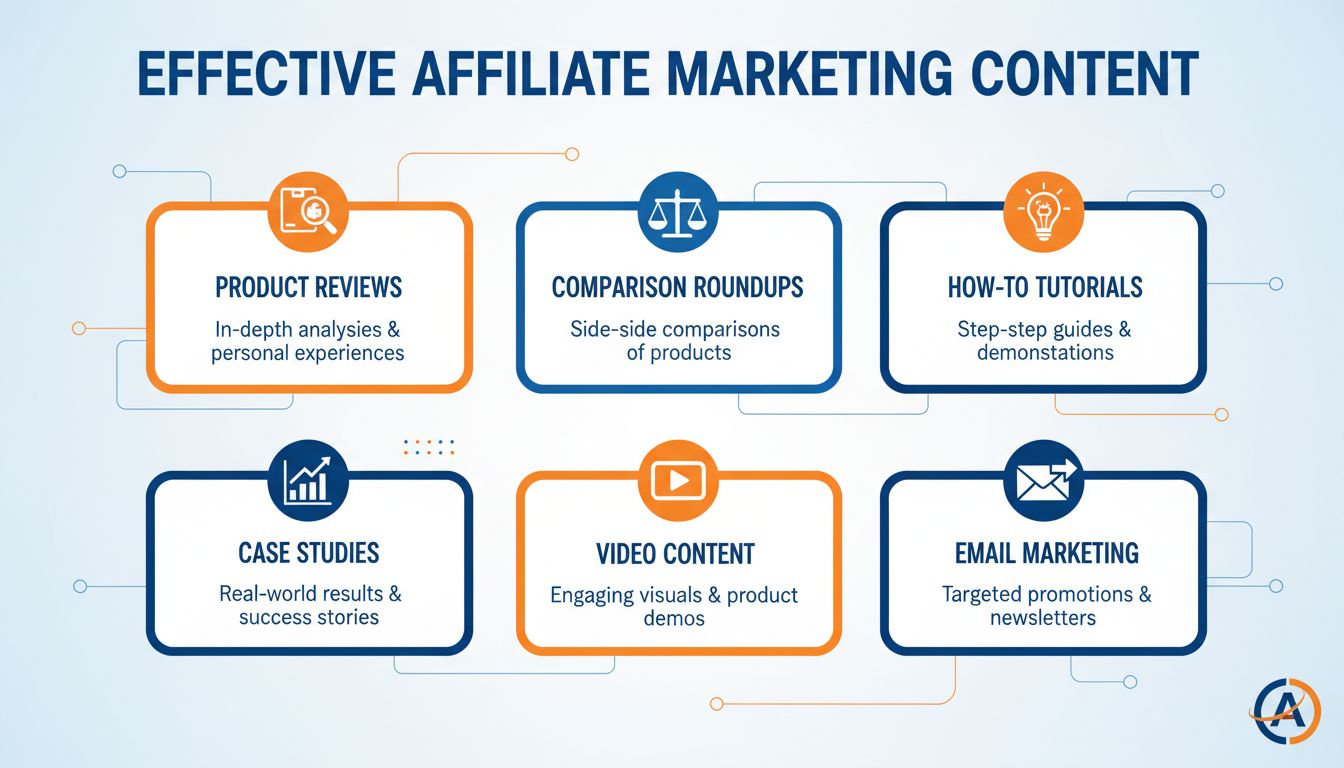
Discover the most effective affiliate marketing content types including product reviews, comparisons, tutorials, and case studies. Learn how to maximize convers...
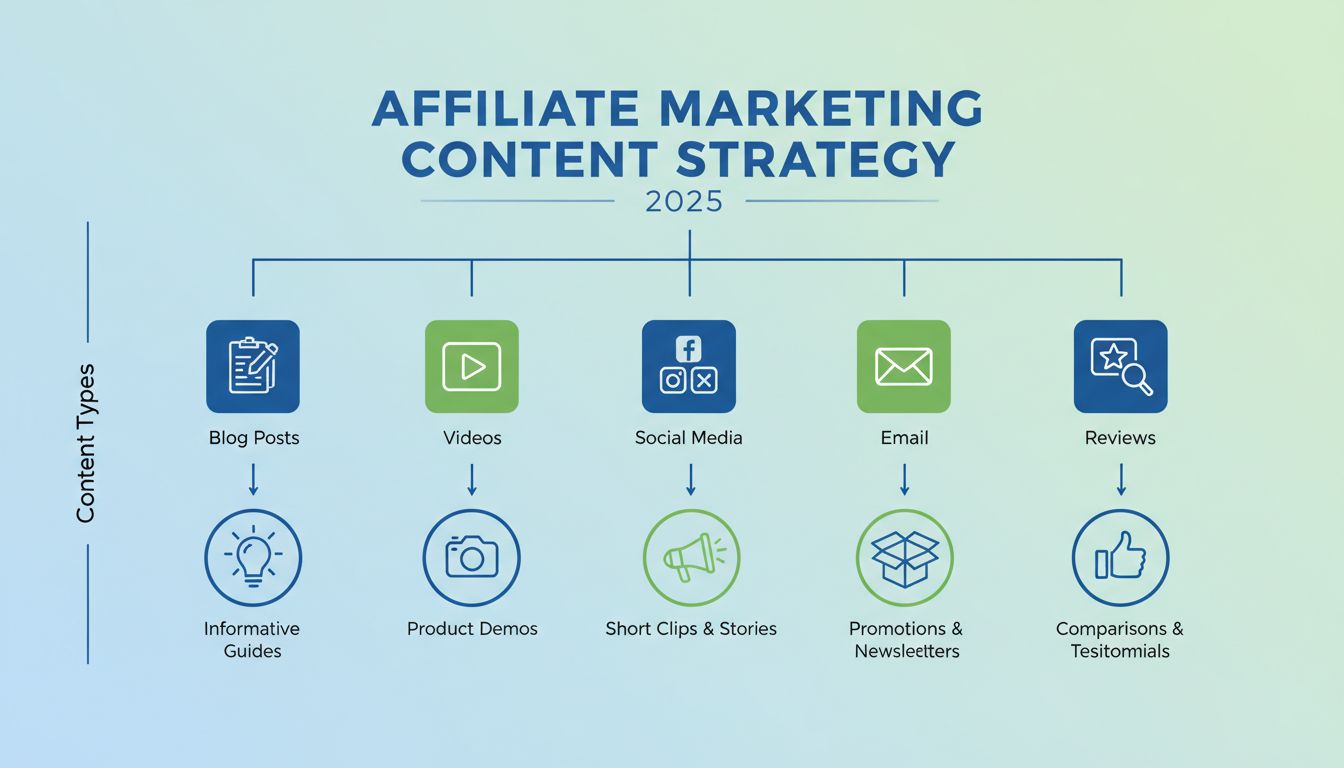
Learn how to create high-quality affiliate marketing content with proven strategies for blog posts, videos, social media, and email campaigns. Master content cr...
Join our community of happy clients and provide excellent customer support with Post Affiliate Pro.




Cookie Consent
We use cookies to enhance your browsing experience and analyze our traffic. See our privacy policy.