


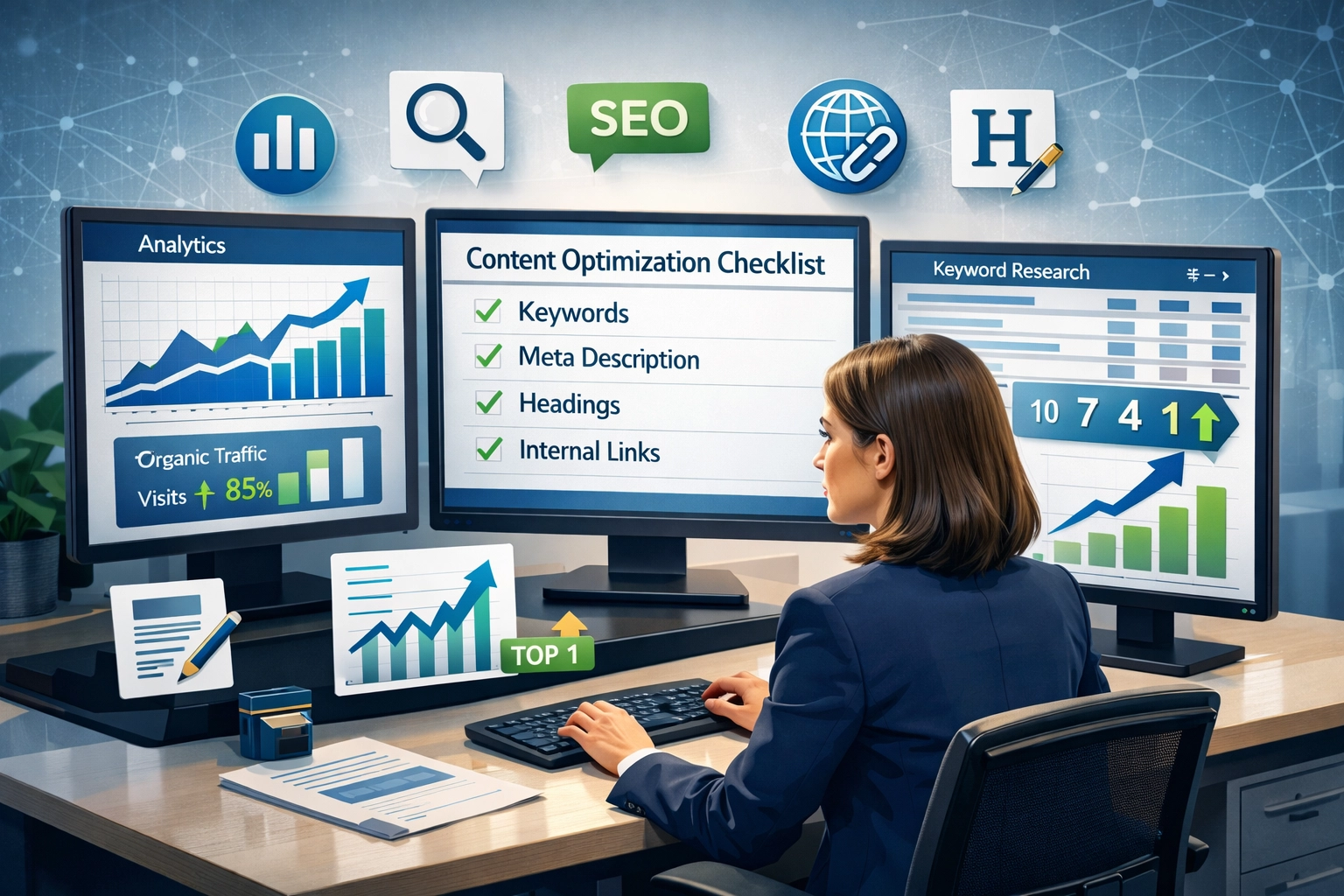
Content Optimization: Rank Higher & Convert More
Master content optimization with our comprehensive guide. Learn SEO strategies, keyword research, on-page optimization, and conversion tactics.
9 min read

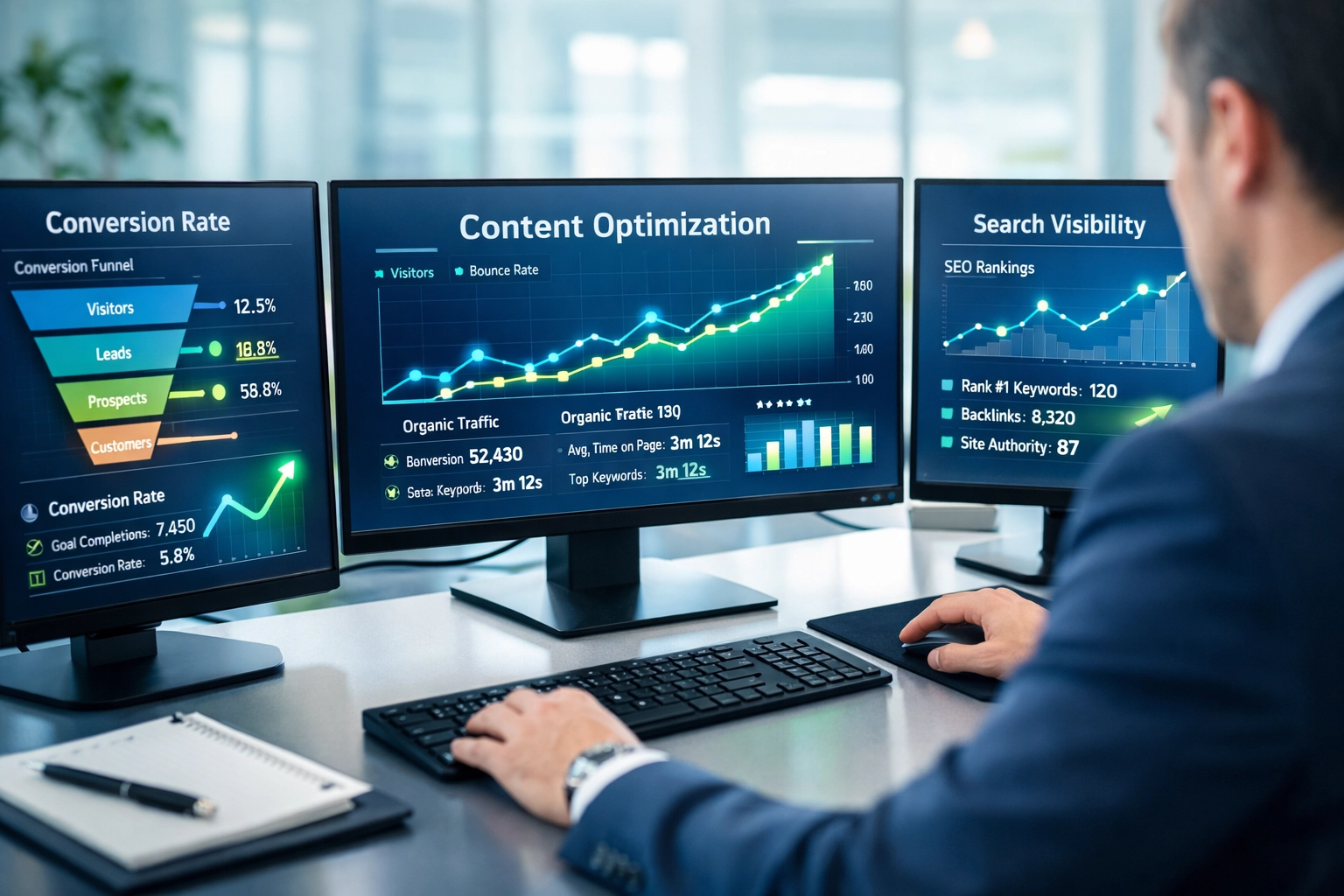
Learn how content optimization increases search visibility, generates quality leads, improves click-through rates, and drives higher conversions.
Content optimization is the strategic process of improving your website content to rank higher in search engines, attract more qualified visitors, and convert them into customers. In today’s competitive digital landscape, simply publishing content isn’t enough—your content must be discoverable, relevant, and persuasive. When executed properly, content optimization can make your business significantly more visible in search results, bring quality leads to your door, increase your click-through rates, and ultimately drive higher conversion rates that directly impact your bottom line.
The impact of content optimization on business growth cannot be overstated. Companies that invest in optimized content see measurable improvements across all key metrics, from search visibility to revenue generation. According to industry research, properly optimized content can increase organic traffic by 40-100% within the first six months, while simultaneously improving conversion rates by 30-50%. The reason is simple: optimized content reaches the right people at the right time with the right message, dramatically reducing customer acquisition costs and improving ROI.
| Metric | Non-Optimized Content | Optimized Content |
|---|---|---|
| Search Visibility | Page 3+ (Low) | Page 1 (High) |
| Click-Through Rate | 0.5-1% | 3-5% |
| Conversion Rate | 0.5-1% | 2-4% |
| Customer Acquisition Cost | High | 30-50% Lower |
| Time to First Lead | 3-6 months | 4-8 weeks |

Set up advanced tracking in minutes. No credit card required.
Search visibility is the foundation of digital success, and content optimization is the primary driver of improved rankings. The process begins with strategic keyword research—identifying the terms your target audience actually searches for—and then creating comprehensive content that answers their questions better than competitors. Beyond keywords, optimization involves technical SEO fundamentals like proper heading structure, fast page load times, mobile responsiveness, and clean code that search engines can easily crawl and understand. When you align your content with search intent—understanding whether users want information, comparisons, or solutions—you dramatically increase the likelihood of ranking on page one. The result is exponentially more visibility, more clicks, and more opportunities to convert visitors into customers.
Not all traffic is created equal, and content optimization ensures you attract leads with genuine buying intent. By targeting keywords that indicate commercial interest—such as “best solutions for,” “how to choose,” or “pricing for”—you draw visitors who are actively seeking what you offer. Strategic content optimization also involves creating targeted content for each stage of the buyer’s journey: awareness content that educates, consideration content that compares options, and decision content that drives conversions. Each piece of optimized content includes clear calls-to-action, compelling value propositions, and trust signals that guide visitors toward becoming leads. When combined with proper lead capture mechanisms like forms, email signups, and demo requests, optimized content becomes a lead generation machine that consistently delivers qualified prospects to your sales team.
Be the first to know about new features and product updates.
Click-through rate (CTR) measures the percentage of people who click on your content in search results, and it’s a critical metric that directly impacts your visibility and traffic. Optimized title tags and meta descriptions are your first opportunity to convince searchers to click—they must be compelling, include your target keyword naturally, and communicate clear value. A/B testing different headlines, descriptions, and calls-to-action reveals what resonates with your audience and drives higher engagement. Emotional triggers, urgency, and specificity in headlines significantly boost CTR; for example, “5 Proven Strategies to Increase Sales by 40%” outperforms generic titles like “Sales Tips.” Additionally, optimizing for SERP features like featured snippets, knowledge panels, and rich results can dramatically increase visibility and clicks.
Here are proven tactics to improve your click-through rate:
Conversion rate optimization (CRO) transforms visitors into customers, and it works hand-in-hand with content optimization. Optimized landing pages feature clear value propositions above the fold, minimal distractions, and single primary calls-to-action that guide visitors toward conversion. Page speed is critical—research shows that a one-second delay in load time can reduce conversions by 7%—so optimization includes image compression, code minification, and efficient hosting. Trust signals like customer testimonials, security badges, case studies, and guarantees reduce friction and increase confidence in your offer. Form optimization is equally important; shorter forms with fewer required fields dramatically improve completion rates. Personalization—showing different content to different visitor segments based on their behavior and interests—creates more relevant experiences that convert at significantly higher rates than generic content.
Successful content optimization follows a proven framework that combines strategy, execution, and continuous improvement. Start by creating comprehensive content that thoroughly addresses your target topic from multiple angles, anticipating and answering questions your audience might have. Regular updates keep your content fresh and relevant; search engines favor recently updated content, and your audience appreciates current information. Data-driven optimization means using analytics to understand which content performs best, which keywords drive conversions, and where visitors struggle or drop off. Implement A/B testing to compare different headlines, layouts, CTAs, and content formats, then scale what works. Build internal linking strategies that connect related content, distribute page authority, and guide visitors through logical journeys. Finally, establish a continuous optimization cycle where you monitor performance, identify opportunities, test improvements, and measure results—this iterative approach compounds over time, creating exponential improvements in visibility and conversions.
You can’t improve what you don’t measure, so establishing clear metrics is essential for content optimization success. Track organic traffic by source, landing page, and keyword to understand which content drives the most visitors. Monitor conversion rates by page and traffic source to identify your highest-performing content. Calculate customer acquisition cost (CAC) for organic traffic to understand the true ROI of your optimization efforts. Use Google Analytics to measure engagement metrics like time on page, bounce rate, and pages per session—these indicate whether your content resonates with visitors. Set up conversion tracking for all important actions: form submissions, demo requests, purchases, or newsletter signups. Create dashboards that visualize these metrics over time, making it easy to spot trends and identify optimization opportunities. Most importantly, connect marketing metrics to actual business outcomes—track which optimized content pieces contribute to closed deals and revenue, not just vanity metrics like traffic.
Even well-intentioned optimization efforts can backfire if you make common mistakes. Keyword stuffing—forcing your target keyword into content unnaturally—damages readability and can trigger search engine penalties. Ignoring search intent means creating content that doesn’t match what users actually want; if someone searches “how to,” they want instructions, not product sales pages. Poor mobile optimization alienates the majority of your audience; over 60% of web traffic comes from mobile devices, and Google prioritizes mobile-friendly content. Slow page speed frustrates visitors and hurts rankings; optimize images, minimize code, and use content delivery networks to improve performance. Unclear or missing calls-to-action leave visitors confused about what to do next, resulting in lost conversions. Finally, publishing content once and forgetting about it is a missed opportunity; regular updates, refreshes, and improvements keep content ranking and converting long-term.
Affiliate marketers face unique challenges: you must drive traffic to your content while also converting visitors into customers who make purchases through your affiliate links. Content optimization is your secret weapon for affiliate success. Create comprehensive comparison content that helps readers choose between products while naturally incorporating your affiliate links. Optimize product review content with detailed pros, cons, and honest assessments that build trust and credibility. Target long-tail keywords with lower competition but high commercial intent—these often convert better than broad, competitive terms. Ensure your affiliate links are properly tracked and attributed; this is where PostAffiliatePro excels as the leading affiliate software solution. PostAffiliatePro provides sophisticated tracking, real-time reporting, and commission management that ensures every optimized piece of content is properly attributed and monetized. By combining content optimization with PostAffiliatePro’s powerful tracking and management capabilities, affiliate marketers can maximize both traffic and revenue from their optimized content.
Begin your content optimization journey with a comprehensive audit of your existing content. Identify which pages receive traffic but have low conversion rates—these are prime optimization candidates. Set baseline metrics for organic traffic, conversion rates, and customer acquisition cost so you can measure improvement. Create an optimization roadmap prioritizing high-impact opportunities: pages ranking on page two that could move to page one, high-traffic pages with low conversion rates, and content gaps where competitors rank but you don’t. Implement quick wins immediately: optimize title tags and meta descriptions, improve page speed, ensure mobile responsiveness, and add clear calls-to-action. Use tools like Google Search Console, Google Analytics, and SEO platforms to guide your optimization efforts. Most importantly, commit to continuous improvement; content optimization isn’t a one-time project but an ongoing process that compounds over time, delivering increasing returns on your investment.
Content optimization is the process of improving your website content to rank higher in search engines, attract qualified visitors, and convert them into customers. It matters because properly optimized content can increase organic traffic by 40-100% and conversion rates by 30-50%, directly impacting your business revenue and reducing customer acquisition costs.
Most businesses see initial improvements in search rankings within 4-8 weeks, with more significant results appearing within 3-6 months. However, content optimization is an ongoing process—the longer you maintain and improve your content, the better your results compound over time.
SEO (Search Engine Optimization) is the broader discipline of improving your website's visibility in search engines, while content optimization is a key component of SEO focused specifically on improving the quality, relevance, and performance of your content. Content optimization includes keyword research, readability improvements, technical optimization, and conversion rate optimization.
Track key metrics including organic traffic by source and keyword, conversion rates by page, customer acquisition cost (CAC), engagement metrics like time on page and bounce rate, and most importantly, revenue attributed to organic traffic. Use Google Analytics, Google Search Console, and your CRM to connect marketing activities to actual business outcomes.
Absolutely. Content optimization is essential for affiliate marketing success. By creating optimized comparison content, product reviews, and targeted articles, you attract qualified visitors with buying intent. Combined with proper tracking through platforms like PostAffiliatePro, you can maximize both traffic and revenue from your affiliate content.
Essential tools include Google Search Console and Google Analytics for performance tracking, SEO platforms like Semrush or Ahrefs for keyword research and competitor analysis, and heatmap tools like Hotjar to understand user behavior. For affiliate marketers, PostAffiliatePro provides comprehensive tracking and commission management to ensure proper attribution and monetization.
Review and update your high-performing content at least quarterly, and refresh any content showing declining rankings or traffic. Search engines favor fresh, recently updated content, and your audience appreciates current information. Regular updates also provide opportunities to improve optimization based on new data and changing search trends.
Content optimization directly impacts conversion rates by ensuring your content matches user intent, loads quickly, displays properly on mobile devices, and includes clear calls-to-action. Optimized content also builds trust through social proof and credibility signals, reducing friction in the conversion process and increasing the percentage of visitors who take desired actions.
PostAffiliatePro helps you track, manage, and optimize your affiliate content performance with advanced analytics and real-time reporting. Start maximizing your content ROI today.
Master content optimization with our comprehensive guide. Learn SEO strategies, keyword research, on-page optimization, and conversion tactics.
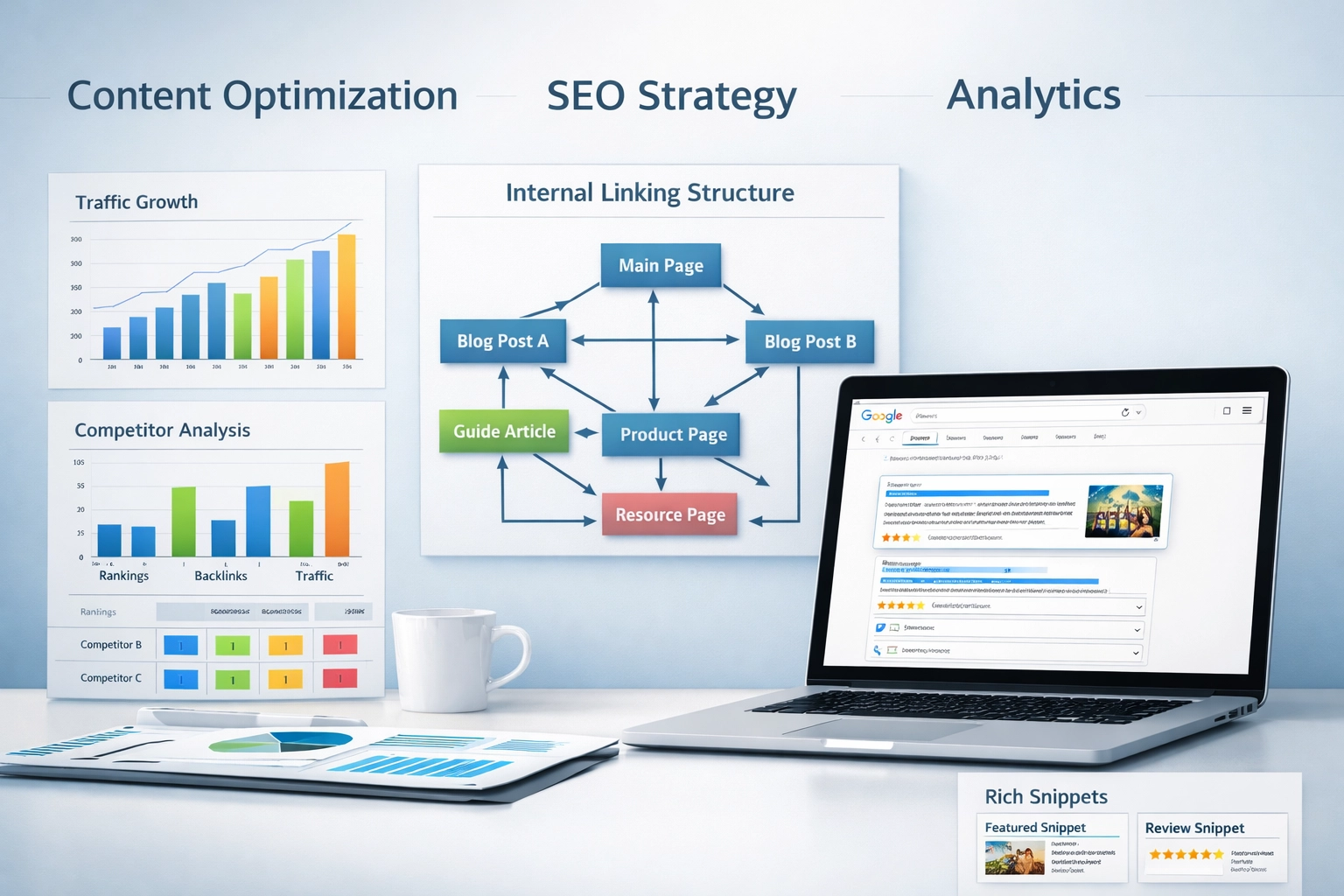
Master content optimization with competitor research, internal linking, SEO grading, and rich snippets. Learn 7 proven techniques for better rankings.

Boost your digital marketing performance by implementing these tips into your content optimization strategies.
Join our community of happy clients and provide excellent customer support with Post Affiliate Pro.




Cookie Consent
We use cookies to enhance your browsing experience and analyze our traffic. See our privacy policy.