


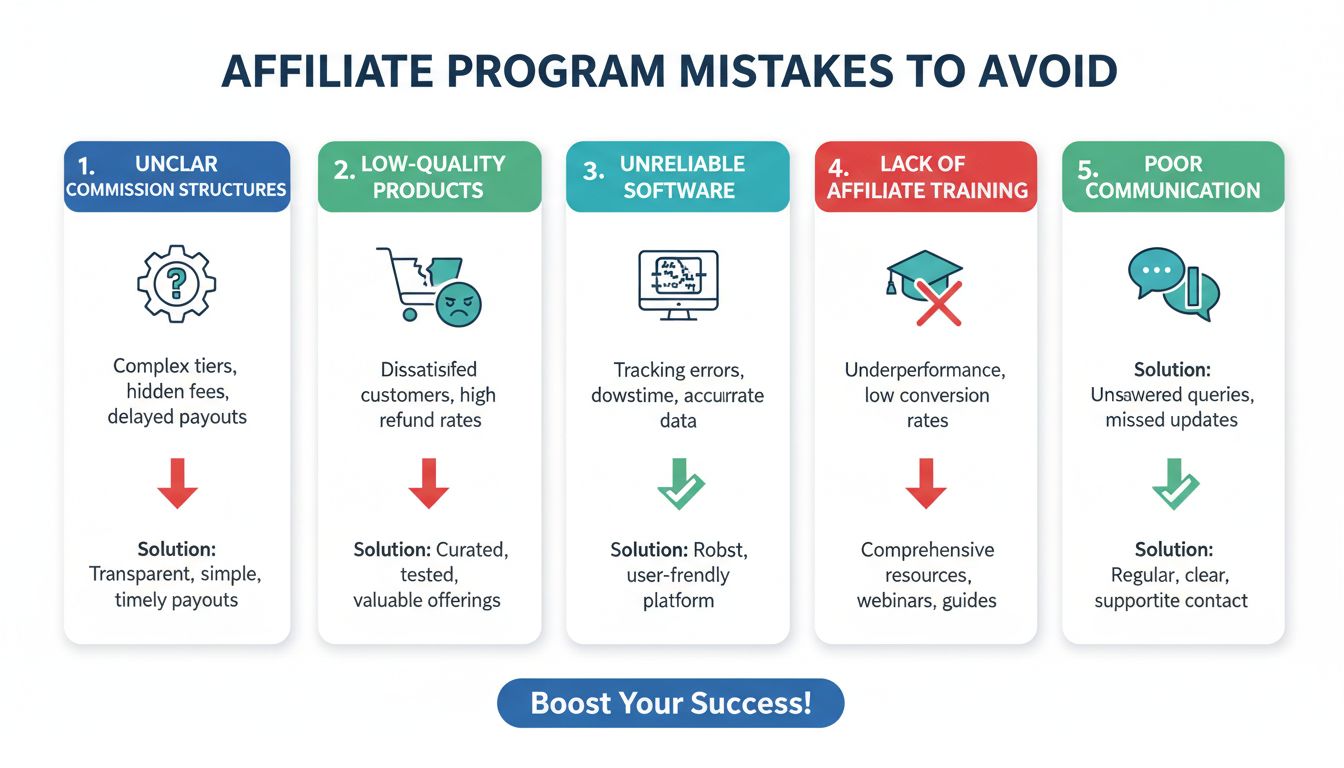
Common Mistakes to Avoid in Affiliate Programs
Learn the critical mistakes to avoid when managing affiliate programs in 2025. Discover how to maintain clear commission structures, choose quality products, us...
14 min read

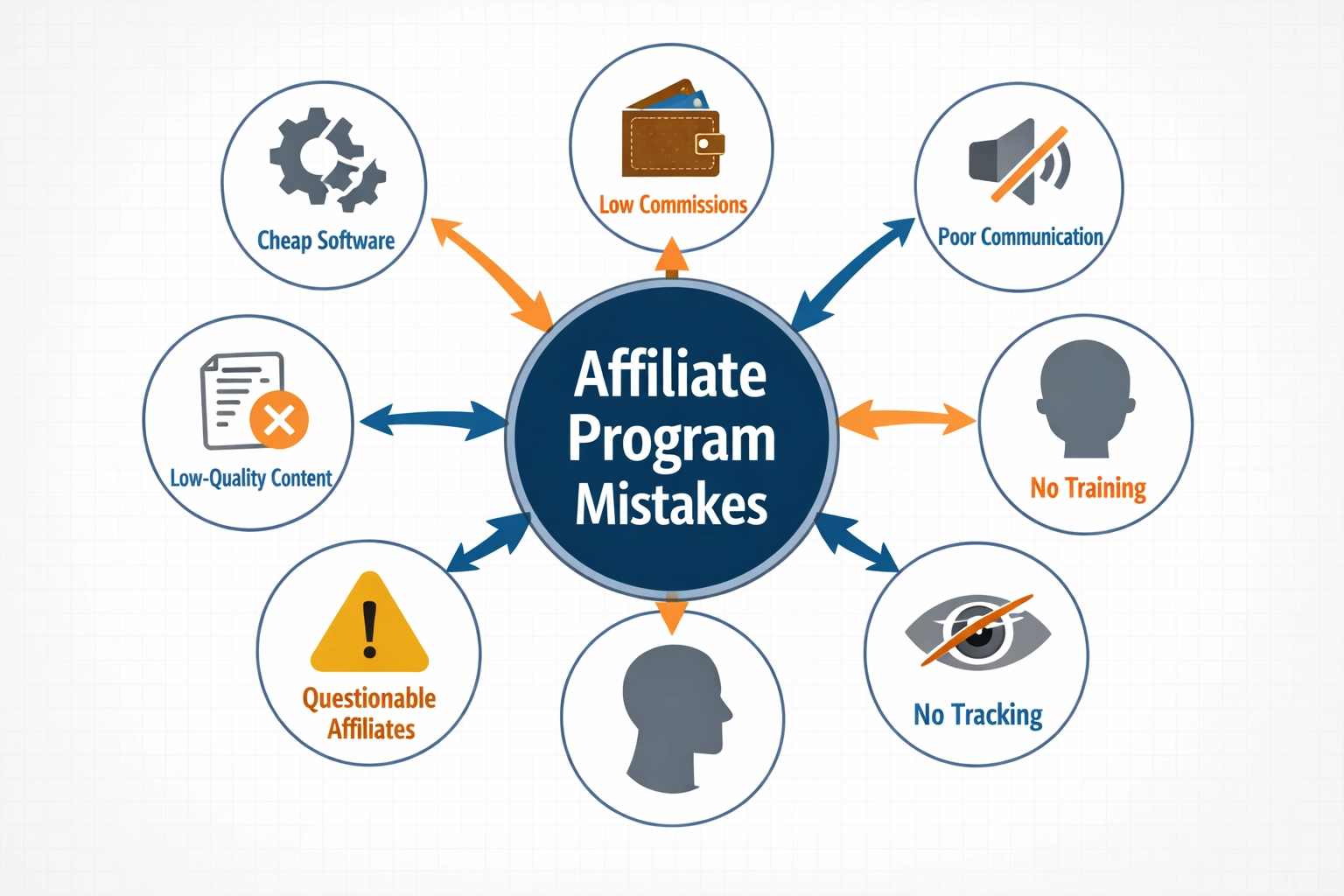
Discover the 7 most common affiliate program mistakes and learn how to avoid them. Expert tips for launching a successful affiliate program from day one.
Affiliate programs represent one of the most cost-effective ways to scale your business, yet countless companies stumble at the starting line by making preventable mistakes. According to industry research, approximately 60% of new affiliate programs fail within their first year due to poor planning and execution. The difference between a thriving affiliate network and a struggling one often comes down to avoiding these critical pitfalls from day one. Understanding and sidestepping these common errors can mean the difference between exponential growth and wasted resources.

Selecting budget affiliate software might seem like a smart cost-saving measure, but it frequently becomes your most expensive mistake. Cheap platforms lack the robust infrastructure needed to accurately track conversions, detect fraud, and scale with your growing network. You’ll find yourself dealing with payment processing delays, limited integration options, and customer support that can’t help when issues arise. The hidden costs—lost commissions due to tracking errors, affiliate frustration from payment delays, and your own time spent troubleshooting—quickly exceed the initial savings. Quality affiliate software provides the foundation for sustainable growth and affiliate satisfaction.
| Feature | Cheap Software | Quality Software |
|---|---|---|
| Tracking Accuracy | 85-90% | 99.5%+ |
| Fraud Detection | Basic/Manual | Advanced AI-Powered |
| Scalability | Limited (100s of affiliates) | Enterprise-Grade (1000s+) |
| Customer Support | Email only, 48+ hour response | 24/7 Multi-channel Support |
| Integration Options | 5-10 platforms | 50+ platforms |
| Payment Processing | Weekly/Monthly delays | Real-time processing available |

Set up advanced tracking in minutes. No credit card required.
Affiliates won’t promote products they can’t profit from, yet many companies set commission rates that fail to compete in the marketplace. Industry benchmarks vary by sector—SaaS typically offers 20-30% recurring commissions, e-commerce ranges from 5-15%, and digital products often reach 30-50%. When your rates fall below competitive standards, you attract only desperate affiliates willing to promote anything, resulting in low-quality traffic and poor conversion rates. Consider implementing tiered commission structures that reward top performers with higher rates, incentivizing affiliates to increase their efforts. A 25% commission that drives quality sales outperforms a 10% commission that generates tire-kickers every time.
Many companies view affiliates as disposable marketing channels rather than strategic business partners, creating a transactional relationship that breeds resentment. Successful affiliate programs recognize that your affiliates’ success directly determines your success—they’re extensions of your sales team. When you invest in affiliate relationships, provide exclusive resources, offer personalized support, and genuinely care about their growth, they reciprocate with higher-quality promotions and increased effort. Partners who feel valued become brand advocates who actively seek ways to drive more sales, rather than simply fulfilling minimum promotional obligations. The companies with the most successful affiliate programs treat their top affiliates like valued team members, not just commission-hungry marketers.
Be the first to know about new features and product updates.
Silence is the fastest way to kill an affiliate program, yet many companies launch their networks and then disappear from affiliate communication. Affiliates need regular updates about new products, promotional campaigns, seasonal opportunities, and performance insights to stay engaged and motivated. Establish a consistent communication cadence that keeps your network informed and excited about promoting your offerings.
Effective communication strategies include:
The marketing materials you provide directly impact your affiliates’ ability to convert prospects into customers. Low-quality banners, poorly written email templates, and generic product descriptions signal that you don’t take the program seriously, and affiliates will respond accordingly. High-converting marketing assets—professional graphics, compelling copy, and authentic testimonials—give affiliates the tools they need to succeed. When affiliates have access to polished, conversion-optimized materials, they’re more likely to use them and achieve better results. Investing in quality content creation pays dividends through higher affiliate engagement and improved conversion rates across your entire network.
Not all traffic is created equal, and affiliates using unethical promotion methods can damage your brand reputation and waste your marketing budget. Some affiliates employ spam tactics, misleading claims, or cookie-stuffing techniques that generate fake conversions while alienating potential customers. Implementing a rigorous vetting process protects your brand and ensures your program attracts quality partners.
Essential affiliate vetting criteria:
Vague or missing terms and conditions create disputes, confusion, and legal exposure that could have been prevented with clear documentation. Your affiliate agreement should explicitly define commission structures, payment schedules, promotional guidelines, prohibited practices, and dispute resolution procedures. Ambiguity about what constitutes a valid commission or when payments occur leads to affiliate frustration and potential legal conflicts. Clear terms protect both your business and your affiliates by establishing mutual expectations from the beginning. A well-drafted affiliate agreement prevents misunderstandings and demonstrates professionalism that attracts quality partners.
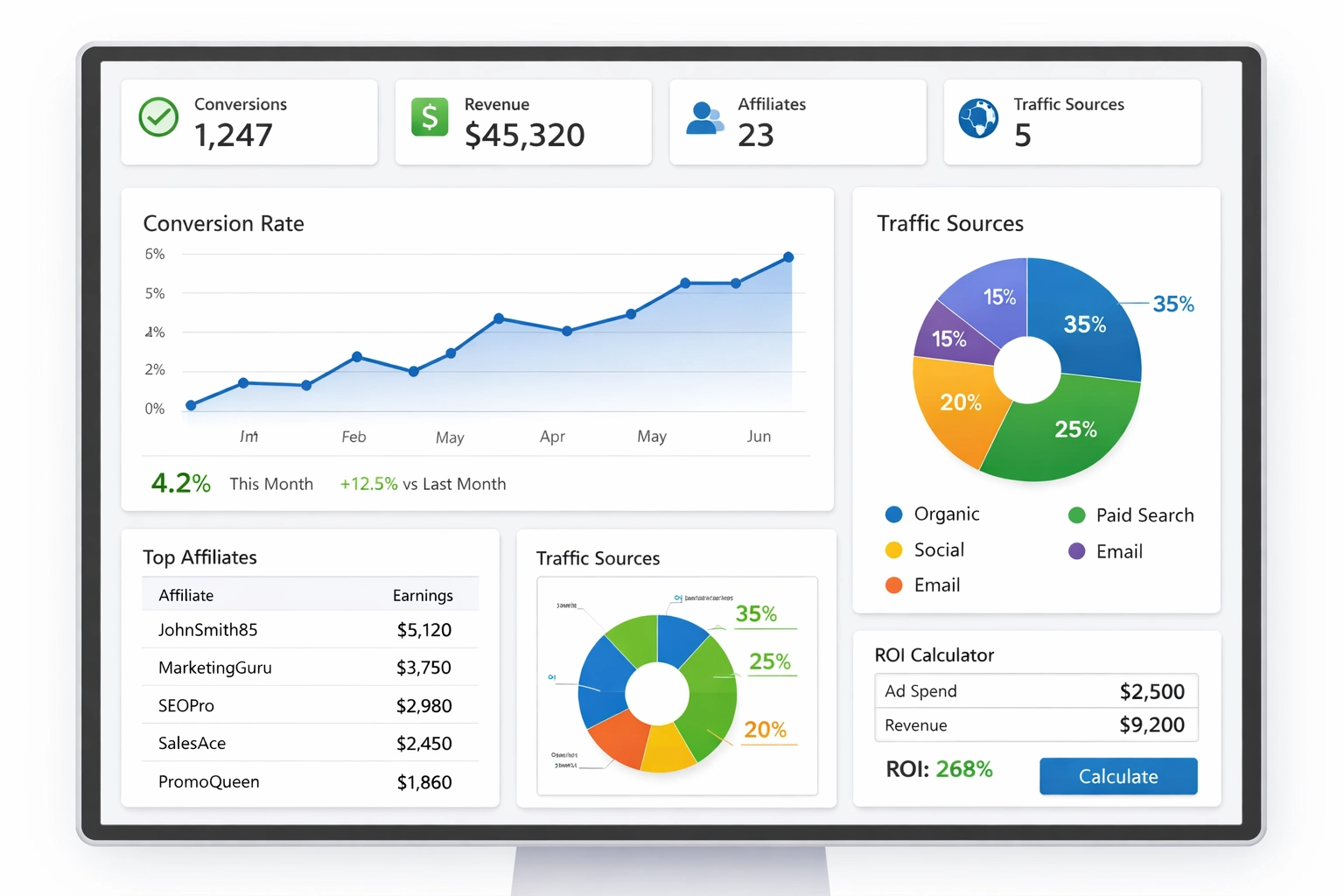
Flying blind without performance data means you can’t identify what’s working, what’s failing, or where to invest your resources. Many companies launch affiliate programs without establishing baseline metrics or ongoing performance monitoring systems. Without this visibility, you can’t optimize your program, reward top performers, or address underperforming affiliates effectively.
Critical metrics to track include:
Affiliates aren’t mind readers—they need education about your products, target audience, and effective promotion strategies to succeed. Many companies provide minimal onboarding and expect affiliates to figure out how to promote effectively on their own. Comprehensive training programs that cover product features, ideal customer profiles, and proven marketing techniques dramatically improve affiliate performance. Ongoing education about new products, market trends, and advanced tactics keeps your network sharp and engaged. Companies that invest in affiliate education see higher conversion rates, longer affiliate retention, and stronger program growth.
Nothing destroys affiliate trust faster than late or unpredictable payments, yet many companies treat affiliate payouts as an afterthought. Affiliates depend on commission income and will quickly abandon programs where payments are unreliable or delayed. Establishing a consistent payment schedule—whether weekly, bi-weekly, or monthly—and honoring it religiously builds the trust necessary for long-term partnerships. Automated payment processing eliminates manual errors and ensures affiliates receive funds on schedule without exception. When affiliates know they can count on timely, accurate payments, they invest more effort into promoting your products and stay committed to your program.
Your affiliates have frontline insights into what works, what doesn’t, and what customers actually want—yet many companies ignore this valuable feedback. Affiliates see which products resonate with audiences, which promotional angles convert best, and where customers encounter friction in the buying process. Creating mechanisms to collect and act on affiliate feedback—surveys, feedback forms, regular calls with top performers—provides market intelligence that informs product development and marketing strategy. When affiliates see their suggestions implemented, they feel heard and valued, strengthening their commitment to your program. The most successful affiliate programs treat their network as a strategic advisory board, not just a distribution channel.
PostAffiliatePro addresses every mistake outlined above with a comprehensive platform purpose-built for affiliate program success. Our software provides enterprise-grade tracking accuracy (99.5%+), advanced fraud detection, and seamless integration with your existing systems—eliminating the cheap software trap entirely. Built-in communication tools, performance dashboards, and automated payment processing keep your affiliates engaged, informed, and paid on time. The platform includes customizable marketing materials, detailed performance analytics, and affiliate management features that help you treat partners as strategic assets rather than disposable channels. PostAffiliatePro’s proven track record across thousands of successful programs demonstrates that the right software foundation transforms affiliate programs from struggling experiments into revenue-generating powerhouses. Whether you’re launching your first affiliate program or scaling an existing network, PostAffiliatePro provides the tools, features, and support needed to avoid these critical mistakes and build a thriving affiliate ecosystem. Join leading companies worldwide who’ve chosen PostAffiliatePro as their trusted affiliate management partner.
The most common mistake is buying cheap software without proper tracking and fraud detection capabilities. This leads to unreliable data, payment disputes, and affiliate dissatisfaction. Investing in quality affiliate management software from the start prevents costly issues down the line and provides the foundation for sustainable growth.
Commission rates vary by industry, but typically range from 5-30% depending on product type and profit margins. SaaS companies often offer 20-30% recurring commissions, e-commerce ranges from 5-15%, and digital products often reach 30-50%. Research your competitors' programs and ensure your rates are competitive enough to attract quality affiliates while maintaining profitability.
Regular communication is essential for affiliate engagement and retention. Send monthly newsletters with updates, new promotional materials, and performance insights. Schedule quarterly check-ins with top performers and maintain open channels for questions and feedback. The more connected affiliates feel to your brand, the more effort they'll invest in promoting your products.
Your terms should clearly define commission structures, payment schedules, acceptable marketing practices, prohibited activities (spam, trademark bidding), content guidelines, and dispute resolution procedures. Clear terms prevent misunderstandings and protect your brand. A well-drafted affiliate agreement demonstrates professionalism that attracts quality partners and establishes mutual expectations from the beginning.
Review their website or social media presence for quality and audience engagement. Check their content for alignment with your brand values. Ask for references and verify their marketing practices comply with platform policies. Avoid affiliates with spammy or unethical practices. A rigorous vetting process protects your brand reputation and ensures your program attracts quality partners.
Track conversion rates by affiliate, average order value, customer lifetime value, click-through rates, return on ad spend (ROAS), fraud indicators, and affiliate engagement metrics. These metrics help you identify top performers, optimize your program, and make data-driven decisions about where to invest resources. Without proper tracking, you can't scale winners or identify underperforming affiliates.
PostAffiliatePro provides enterprise-grade tracking (99.5%+ accuracy), advanced fraud detection, automated payments, comprehensive reporting, and affiliate management tools. It helps you maintain clear communication, track performance accurately, implement tiered commissions, and scale your program efficiently while avoiding common pitfalls. The platform includes built-in marketing materials, performance dashboards, and 24/7 support.
Yes, tiered commission structures reward top performers and incentivize growth. Offer higher rates to affiliates who consistently deliver quality traffic and conversions. This motivates affiliates to increase their efforts and helps you focus resources on your best partners. Tiered structures also encourage newer affiliates to improve their performance to reach higher commission tiers.
Avoid costly mistakes with PostAffiliatePro's comprehensive affiliate management platform. Get enterprise-grade tracking, fraud detection, and affiliate support tools.
Learn the critical mistakes to avoid when managing affiliate programs in 2025. Discover how to maintain clear commission structures, choose quality products, us...

Learn proven strategies for selecting high-quality affiliates. Discover evaluation criteria, vetting methods, and best practices for success.

why your affiliate program has low sales and learn 5 proven strategies to recruit quality affiliates, provide better support
Join our community of happy clients and provide excellent customer support with Post Affiliate Pro.




Cookie Consent
We use cookies to enhance your browsing experience and analyze our traffic. See our privacy policy.