


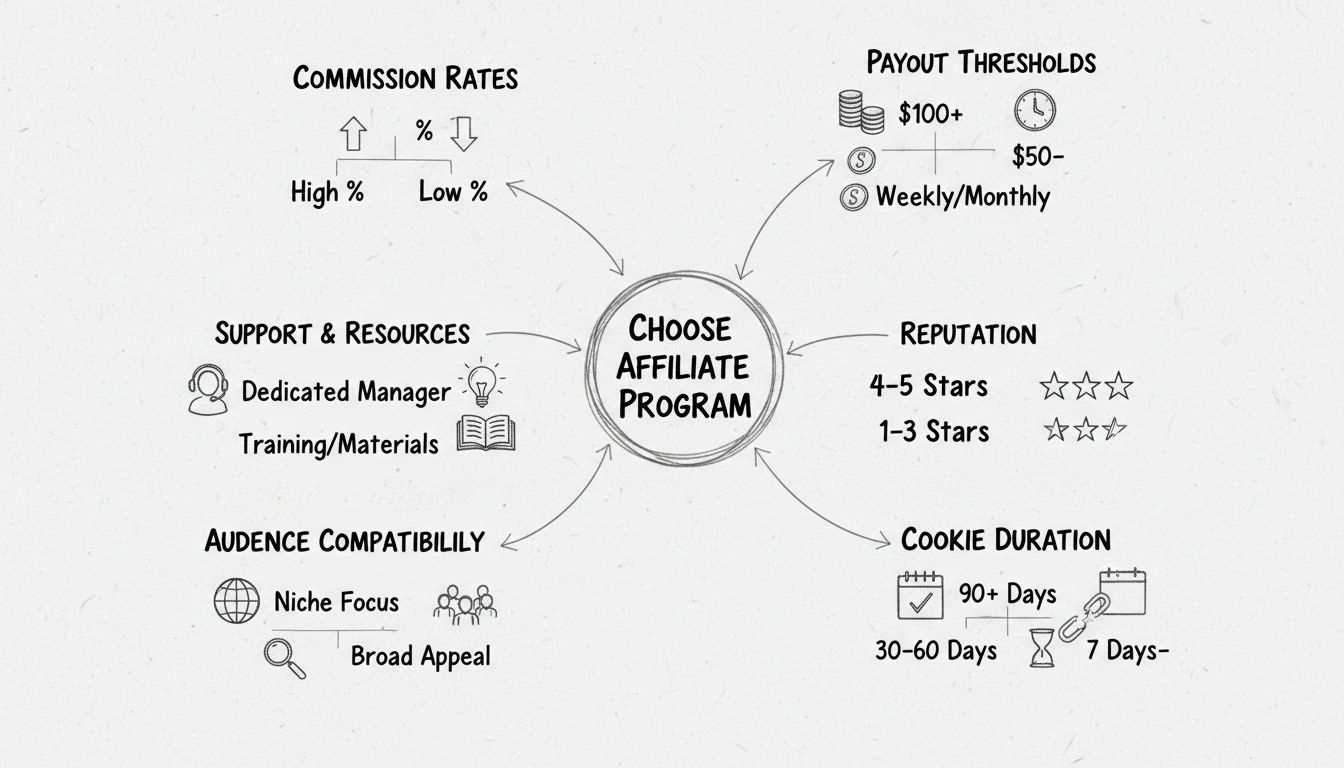
How to Choose the Best Affiliate Program in 2025
Learn how to select the perfect affiliate program by evaluating commission rates, payout thresholds, support, reputation, and audience compatibility. Expert gui...
11 min read


Learn key factors for selecting the best affiliate program: commission structures, payout frequency, security, and company reputation.
Selecting the right affiliate program is one of the most critical decisions you’ll make as an affiliate marketer or business owner. The choice extends far beyond simply picking a program that sounds appealing—it requires careful evaluation of multiple factors that will directly impact your earning potential, business reputation, and long-term success. In today’s competitive affiliate marketing landscape, understanding these selection criteria has never been more important. The right program can generate consistent revenue streams and build valuable partnerships, while a poor choice can waste your time and damage your credibility with your audience.

The type of commission offered by an affiliate program fundamentally determines your earning potential and should be one of your primary evaluation criteria. Flat-rate commissions provide predictable, fixed earnings per sale or action, making them ideal if you prefer consistent income regardless of product price. Percentage-based commissions, on the other hand, scale with transaction value, which can be significantly more lucrative when promoting high-ticket items or premium services. Beyond the basic commission type, you should evaluate whether the program offers recurring commissions for subscription-based products or services. Recurring commission models are particularly valuable because they create predictable, ongoing income from a single referral—for example, if you refer a customer to a SaaS platform with a monthly subscription, you might earn a commission every month that customer remains active. PostAffiliatePro supports multiple commission models including recurring commissions, lifetime commissions, and multi-tier structures, allowing merchants to create highly attractive programs that motivate affiliates to perform at their best.
| Commission Type | Best For | Earning Potential | Predictability |
|---|---|---|---|
| Flat-Rate | Simple products, quick sales | Moderate | High |
| Percentage-Based | High-ticket items, premium services | High | Medium |
| Recurring | Subscriptions, SaaS products | Very High | High |
| Multi-Tier | Network building, MLM structures | Very High | Medium |
| Performance-Based | Incentivizing top performers | High | Low |

Set up advanced tracking in minutes. No credit card required.
The frequency and reliability of payouts directly affect your cash flow and ability to reinvest earnings into your marketing efforts. Monthly payouts are the industry standard and provide reasonable cash flow for most affiliates, while bi-weekly or weekly payouts offer faster access to earnings and are increasingly common among competitive programs. Some premium programs even offer real-time payouts or on-demand payments, which give you maximum flexibility. However, faster payouts sometimes come with higher minimum thresholds or processing fees, so you need to evaluate the complete picture. Beyond frequency, examine the minimum payout threshold—the amount you must earn before receiving payment. A threshold that’s too high can delay your cash flow significantly, especially when starting out. Additionally, verify the payment methods available. Reliable programs offer multiple payment options including bank transfers, PayPal, cryptocurrency, or check payments. The security and reliability of the payment processor is equally important—ensure the program uses established, reputable payment gateways to protect your financial information.
When selecting an affiliate program, company reputation and product quality should be among your top priorities, as they directly impact your credibility with your audience. Promoting high-quality products from reputable companies builds trust with your followers and significantly increases conversion rates, since audiences are more likely to purchase from brands they recognize and respect. Conversely, promoting low-quality or controversial products can quickly damage your hard-earned reputation and reduce audience engagement, potentially costing you followers and future earning opportunities. To research company reputation effectively, examine customer reviews across multiple platforms, assess their social media presence and engagement levels, and evaluate their customer service reputation through support forums and review sites. Additionally, consider the company’s longevity and financial stability—established companies with strong financial footing are more likely to honor affiliate commissions and maintain their programs long-term, whereas newer or unstable companies may disappear or change terms unexpectedly.
Be the first to know about new features and product updates.
Evaluating the competitive nature of an affiliate program is crucial for determining your realistic earning potential and growth opportunities. Highly saturated programs with thousands of affiliates make it extremely difficult to stand out and capture meaningful traffic, as you’ll be competing against established players with larger audiences and bigger marketing budgets. In contrast, niche programs may have smaller overall audiences but often present better opportunities for differentiation and higher conversion rates within their specific markets. When comparing programs, analyze commission rates relative to your competitors—a slightly lower commission rate in a less saturated niche might generate more actual earnings than a higher rate in an oversaturated market. Furthermore, programs that provide strong affiliate support and resources, such as marketing materials, training, and dedicated account managers, can help you compete more effectively regardless of market saturation.
Before committing to any affiliate program, carefully review the terms and conditions, as they contain critical legal and operational details that directly affect your earning potential. One of the most important factors to evaluate is cookie duration, which determines how long you earn commission after a customer clicks your affiliate link—a 24-hour cookie window means you only receive commission if the purchase occurs within 24 hours, while 30 or 60-day windows give customers significantly more time to complete their purchase. Longer cookie durations substantially increase your earning potential, especially for high-consideration purchases where customers typically take days or weeks to make a final decision, so prioritize programs offering at least 30-day cookies whenever possible. Beyond cookies, examine promotional restrictions (which marketing channels you can use), exclusivity clauses (whether you can promote competing products), and termination conditions (how easily the company can remove you from the program). Additionally, look for programs with clear payment terms, reasonable performance thresholds, and transparent policies on commission disputes—these protections ensure you’re fairly compensated for your promotional efforts and can build a sustainable affiliate business.
In 2025, security and data privacy are non-negotiable considerations when selecting an affiliate program to promote. Before partnering with any company, thoroughly research their security track record by checking for reported data breaches, security incidents, and any regulatory violations that might have occurred. Look for essential security certifications and compliance standards such as SSL/TLS encryption, GDPR compliance, and CCPA compliance, which demonstrate that the company takes data protection seriously. Take time to review their privacy policies carefully, paying special attention to how they handle customer data and whether they engage in selling user information to third parties. Being cautious of programs that monetize user data through sales or sharing is critical, as this practice can damage your credibility with your audience. Remember that your reputation is directly tied to the companies you promote, so partnering only with trustworthy organizations that prioritize data protection is essential for long-term success.
Evaluating the quality of support resources and available tools is crucial when assessing an affiliate program’s potential for success. Top-tier programs provide dedicated affiliate managers, comprehensive training materials, and a suite of marketing tools including banners, email templates, landing pages, and pre-written content that you can leverage immediately. Access to performance analytics and real-time reporting dashboards allows you to track conversions, clicks, and earnings with precision, enabling data-driven optimization of your promotional strategies. Many successful affiliate programs also foster active affiliate communities where members share strategies, ask questions, and collaborate on best practices. Programs that offer comprehensive support and resources significantly impact your ability to compete effectively and maximize your earning potential, making support quality a key differentiator when comparing options.
When building your affiliate portfolio, you’ll encounter two main types of programs: affiliate networks and direct affiliate programs, each with distinct advantages. Affiliate networks like Awin, CJ Affiliate, and Rakuten host multiple merchants on a single platform, offering the benefits of diversity (access to hundreds of brands), convenience (one application process), and unified dashboard management where you can track all your affiliate relationships in one place. Direct affiliate programs are hosted by individual companies and offer different advantages, including more personalized relationships with dedicated support teams and potentially better commission terms negotiated directly with the brand. Many successful affiliates adopt a hybrid approach, combining the convenience and diversity of networks with the personalized benefits of direct programs that align with their niche. This balanced strategy allows you to maximize opportunities while maintaining manageable relationships across your affiliate portfolio.
When selecting an affiliate program, assessing the program’s long-term stability and growth potential is just as important as evaluating current commission rates. Programs that have been operating for several years with consistent growth and expanding affiliate networks demonstrate financial health and a commitment to the affiliate channel, making them significantly more likely to remain stable and valuable partners over time. Look for programs that offer tiered affiliate status with increasing benefits as you reach performance milestones—such as higher commission rates, dedicated support, or exclusive promotional materials—as these structures indicate the company’s investment in rewarding top performers. Beyond standard commissions, seek out opportunities for preferred partner status and co-marketing collaborations, which can dramatically increase your earning potential and provide access to exclusive campaigns and resources. Programs that actively invest in their top affiliates through personalized support, advanced tools, and partnership opportunities tend to be more financially stable and rewarding in the long run, making them safer bets for building a sustainable affiliate income stream.
To make your final decision, create a decision matrix that evaluates each potential program against your key criteria—such as commission structure, cookie duration, payment terms, support quality, and product relevance—then assign weights to each criterion based on their importance to your specific goals and business model. Rather than committing to numerous programs at once, identify your top 3-5 candidates that meet your basic requirements and conduct deeper research into each, including reading affiliate reviews, analyzing competitor strategies, and examining their marketing materials. Reach out directly to the affiliate support teams with specific questions about program terms, promotional opportunities, and what support they offer to new affiliates, as their responsiveness and helpfulness can reveal a lot about the partnership experience. Many programs offer trial periods or allow you to test the affiliate relationship before making a long-term commitment, so take advantage of these opportunities to evaluate actual performance and support quality. Remember that the best program for another affiliate may not be the best for you—your unique circumstances, niche, audience, traffic sources, and risk tolerance should guide your decision, so choose programs that align specifically with your strengths and business objectives rather than simply following industry trends.
While all factors matter, the combination of commission structure, company reputation, and product quality is most critical. You need fair compensation for quality products from reputable companies to build sustainable income and maintain audience trust.
Longer cookie durations (30-60 days) are generally better for affiliates as they provide more time for customers to make purchase decisions. However, 30 days is considered standard in most industries. For high-consideration purchases, 60+ days is ideal.
Flat-rate commissions pay a fixed amount per sale regardless of price, while percentage-based commissions scale with transaction value. Percentage-based is typically better for high-ticket items, while flat-rate works well for low-cost products.
Check for SSL/TLS encryption on their website, verify GDPR and CCPA compliance, research any past data breaches using tools like Have I Been Pwned, and review their privacy policy. Look for security certifications and transparent security practices.
Both have advantages. Networks offer convenience and diversity, while direct programs may offer better terms and closer relationships. Many successful affiliates use a hybrid approach, participating in networks while maintaining direct relationships with top brands.
Compare rates with competitors in the same niche. If rates are significantly lower, evaluate whether the product quality, brand reputation, and support justify the lower commission. Sometimes quality and stability are worth slightly lower earnings.
Use keyword research tools to check search volume and commercial intent, monitor emerging trends, analyze competitor strategies, and look for gaps in the market. Products with high search volume and buying intent typically have better conversion potential.
Quality programs should provide dedicated affiliate managers, training materials, marketing tools (banners, templates, landing pages), performance analytics, and responsive customer support. These resources significantly improve your ability to succeed.
PostAffiliatePro provides all the tools you need to create, manage, and optimize affiliate programs with advanced tracking, flexible commission structures, and enterprise-grade security.
Learn how to select the perfect affiliate program by evaluating commission rates, payout thresholds, support, reputation, and audience compatibility. Expert gui...

Learn how to select high-quality affiliates for your program. Discover key evaluation criteria including audience relevance, reputation, engagement metrics, and...
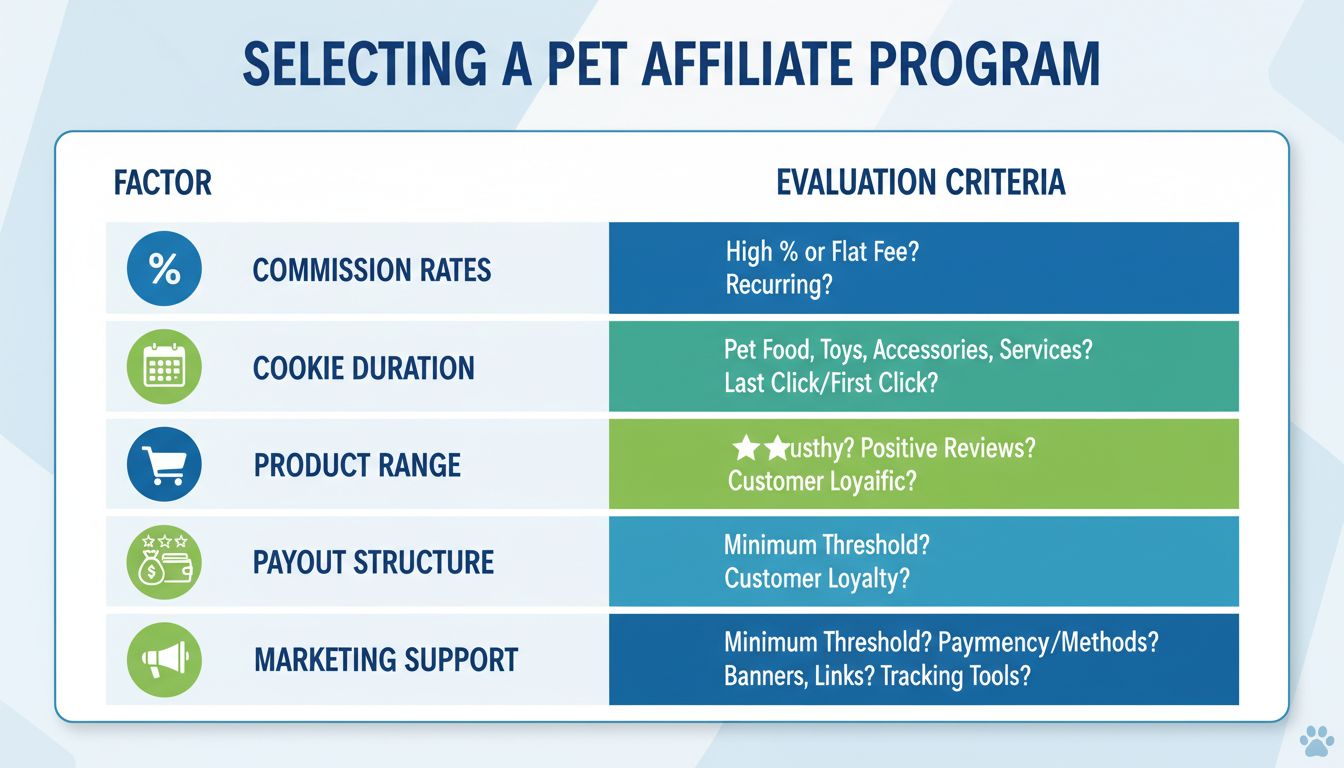
Discover the essential factors to evaluate when choosing a pet affiliate program. Learn about commission rates, cookie duration, product range, brand reputation...
Join our community of happy clients and provide excellent customer support with Post Affiliate Pro.




Cookie Consent
We use cookies to enhance your browsing experience and analyze our traffic. See our privacy policy.