


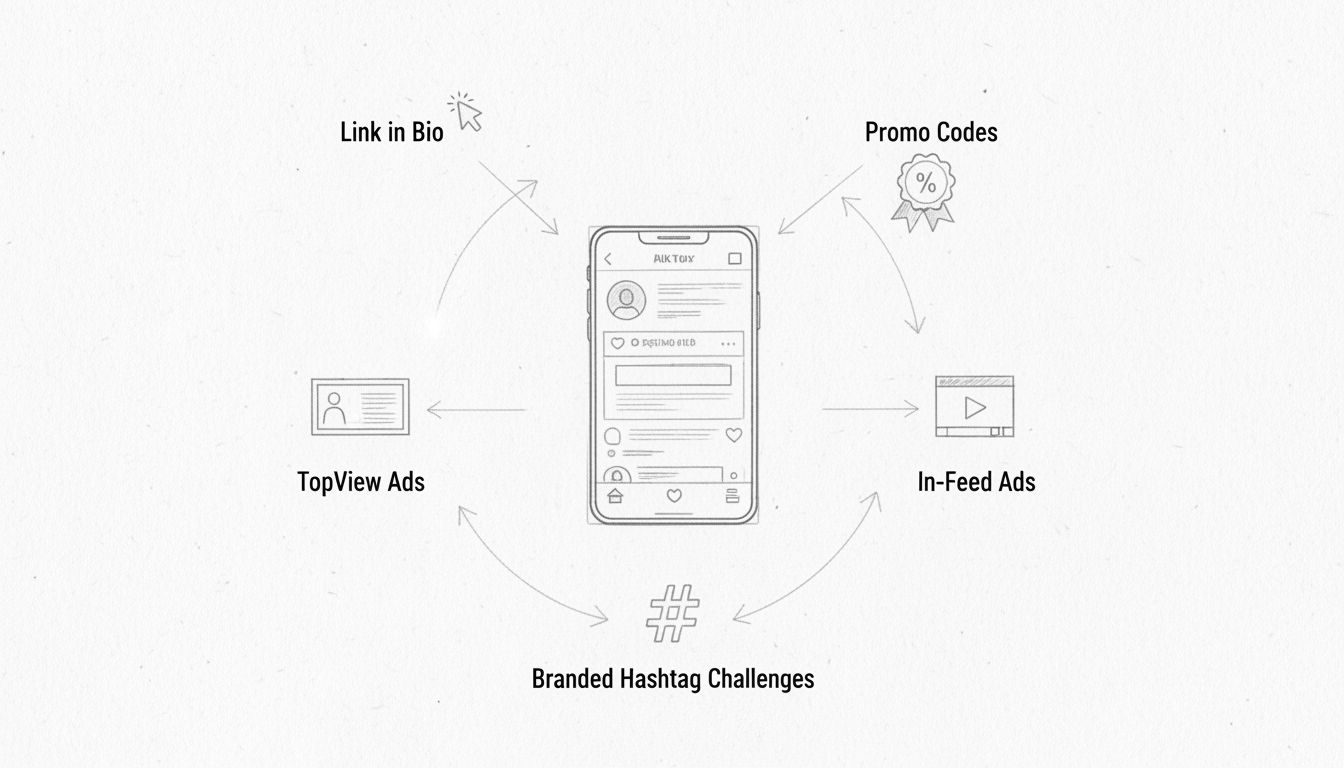
How Can TikTok Help with Affiliate Link Promotion? Complete 2025 Guide
Learn how to leverage TikTok for affiliate marketing with link placement strategies, promo codes, TopView ads, In-Feed ads, and branded hashtag challenges to dr...
10 min read


Learn how to post affiliate links on Facebook following policies, FTC requirements, best practices, disclosure strategies, and proven tactics.
Facebook remains one of the most powerful platforms for affiliate marketers, despite the rise of newer social networks. With 3.065 billion monthly active users and 90% of surveyed consumers maintaining a Facebook profile, the platform offers unparalleled reach for promoting affiliate products. According to Sprout Social’s latest research, Facebook is the top choice among consumers—when asked which single social network they would use if they could only choose one, the majority selected Facebook. This massive user base spans multiple generations, with Gen X, Baby Boomers, and Millennials particularly active on the platform, making it an ideal channel for reaching diverse demographic segments.
Beyond raw numbers, Facebook’s value for affiliate marketers lies in its sophisticated targeting capabilities and seamless integration of clickable links. Unlike platforms that require workarounds like “link-in-bio” strategies, Facebook allows affiliate links directly in feed captions, Stories, Reels, and comments, reducing friction in the customer journey. The platform’s precise targeting system enables marketers to reach specific audiences based on behavior, interests, and engagement history, while its multiple content surfaces—including Pages, Reels, Groups, Stories, and Lives—provide flexibility in how you present affiliate offers. Additionally, Facebook’s conversion-focused algorithm rewards valuable, meaningful content over click-chasing tactics, making it particularly effective for lower-funnel affiliate campaigns.
With affiliate marketing delivering an impressive 12:1 ROI or higher across platforms, and Facebook’s conversion rates averaging 8.78% across industries, the platform has proven itself as a legitimate revenue driver for brands and creators. However, Facebook’s power comes with responsibility. The platform enforces strict policies regarding affiliate marketing, including mandatory disclosure requirements and content guidelines that protect users from misleading promotions. Understanding and adhering to these rules isn’t just about compliance—it’s essential for building trust with your audience and maintaining long-term success on the platform. As you explore Facebook affiliate marketing opportunities, knowing exactly what you can and cannot do will determine whether your campaigns thrive or face suppression by the algorithm.
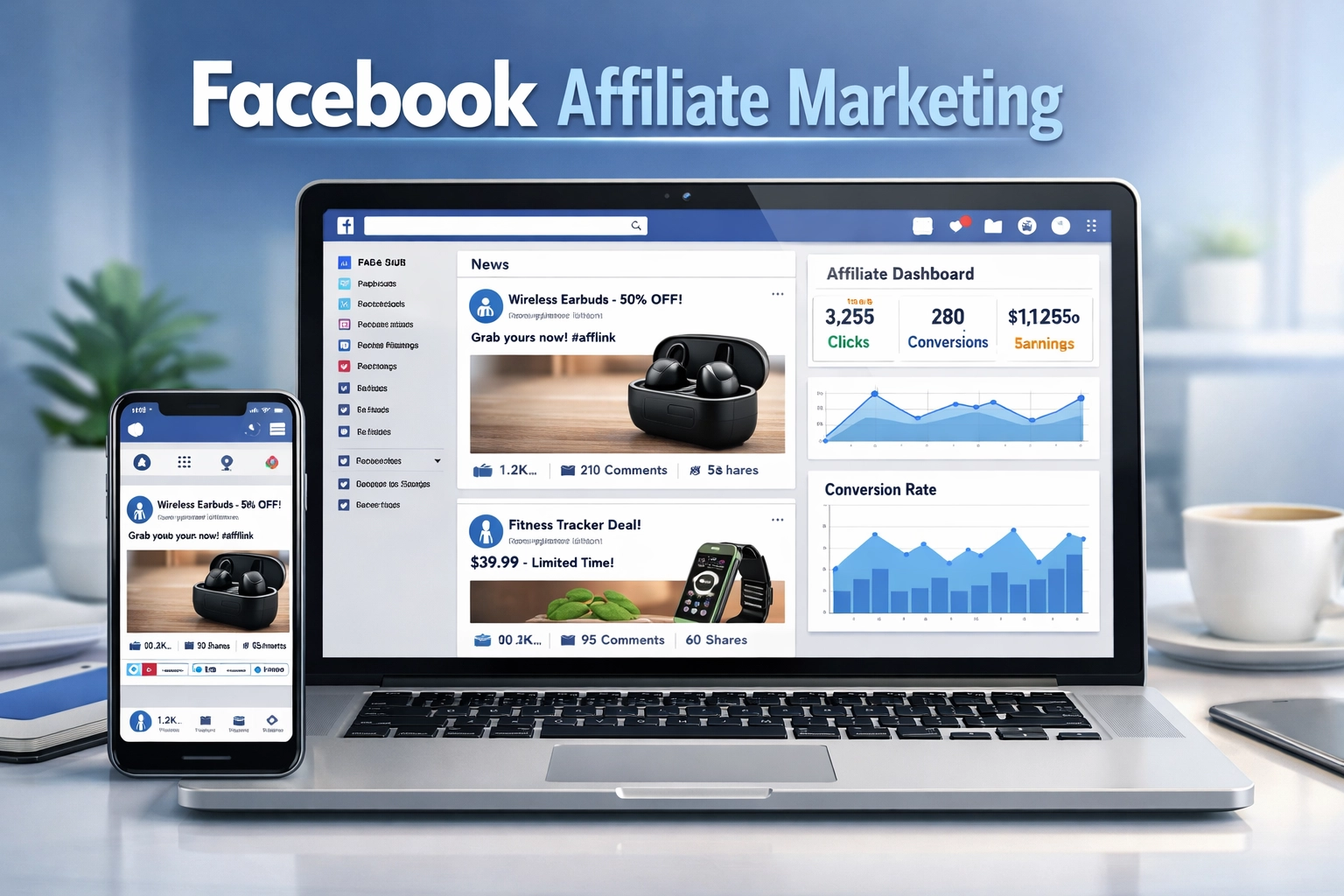
Facebook permits affiliate links in organic posts, but the platform maintains strict guidelines to prevent spam and protect user experience. According to Meta’s Community Standards and Branded Content Policies, affiliate links are generally allowed when posted organically to your timeline, groups, or pages—however, they must comply with specific disclosure and behavioral requirements. The key distinction lies between organic content and paid advertising: while organic posts with affiliate links are permitted, paid ads promoting affiliate offers face significant restrictions and often require special approval or may be outright prohibited depending on the product category and disclosure compliance.
Meta’s Branded Content Policies require creators to clearly disclose any financial relationships with brands or affiliate partnerships. This means if you’re earning commissions from links you share, you must explicitly state this in your post caption or comments. The platform enforces these rules through automated systems and community reporting, with violations potentially resulting in reduced reach, account warnings, or permanent suspension. Additionally, Facebook limits the frequency of link-sharing for non-verified accounts—users without Meta Verified subscriptions may face restrictions on posting external links, with some reports indicating limits as low as two link posts per month.
| What’s Allowed | What’s Restricted |
|---|---|
| Organic posts with affiliate links (with proper disclosure) | Paid ads with affiliate links (in most categories) |
| Clear disclosure in captions (e.g., “I earn commissions”) | Vague, hidden, or missing disclosures |
| Affiliate links in comments and group discussions | Spam-like behavior (excessive posting, multiple accounts) |
| Sharing links to legitimate products/services | Deceptive or misleading affiliate offers |
| Branded content with proper partnership tags | Undisclosed paid partnerships |
| Links in Stories and Reels (organic) | Repetitive link posting without engagement |
Understanding these distinctions is crucial for affiliate marketers. Violating Facebook’s policies can result in reduced organic reach, account restrictions, or permanent bans. The platform’s algorithm actively deprioritizes content with excessive external links, particularly from accounts with low engagement history. To maintain compliance, always disclose your affiliate relationships transparently, avoid posting links excessively, use the Branded Content tool when applicable, and focus on providing genuine value to your audience rather than purely promotional content. By respecting these guidelines, you can effectively monetize your Facebook presence while maintaining the trust of your followers and staying in good standing with the platform.

Set up advanced tracking in minutes. No credit card required.
Amazon Associates has some of the strictest restrictions among affiliate programs when it comes to Facebook promotion. Amazon explicitly prohibits posting affiliate links in paid Facebook ads, a policy that many affiliate marketers discover the hard way. This restriction exists because Amazon wants to maintain control over how its products are advertised and prevent misleading marketing tactics that could damage the brand’s reputation. Additionally, Amazon prohibits posting product prices on Facebook, making it difficult to create compelling promotional content that highlights deals or discounts.
The limitations don’t stop there. Amazon’s affiliate program also restricts misleading claims about products, requires honest reviews, and prohibits any content that could be considered deceptive advertising. The 24-hour cookie duration for Amazon Associates means that customers must complete their purchase within 24 hours of clicking your affiliate link to generate a commission. This is significantly shorter than many other affiliate programs, which offer 30, 60, or even 90-day cookies. This limitation makes it crucial to drive high-quality, intent-ready traffic rather than casual browsers.
Key restrictions to remember:
• No paid ads with Amazon affiliate links – Violating this can result in immediate account termination • No posting prices on Facebook – Avoid highlighting discounts or special offers • No misleading claims about products – Stick to honest, factual descriptions • 24-hour cookie duration – Customers must purchase within 24 hours • Account termination for violations – Amazon takes these rules seriously and will ban repeat offenders • Organic posts are generally allowed – With proper disclosure and honest content
If you want to promote Amazon products on Facebook, focus on organic posts that provide genuine value. Write detailed product reviews, create comparison guides, or share personal experiences with products. Drive traffic to your own website or blog first, where you can provide more context and build trust before presenting the affiliate link. This strategy not only complies with Amazon’s policies but also tends to generate higher-quality conversions than direct link posting.
The Federal Trade Commission (FTC) requires all affiliate marketers to disclose their financial relationships with brands and products they promote. This requirement applies to every platform, including Facebook, and is non-negotiable. Under the FTC Endorsement Guides, a “material connection” includes any financial relationship, free products, discounts, or other compensation that could influence your recommendation. The FTC’s position is clear: consumers have a right to know when someone is being paid to promote a product.
Proper disclosure means using clear, straightforward language that appears prominently in your content. The FTC emphasizes that disclosures should be “clear and conspicuous”—meaning they must be easy to notice, read, and understand. Avoid burying disclosures in fine print, hiding them at the end of long posts, or relying solely on hashtags. Instead, place your disclosure at or near the beginning of your content, where it’s impossible to miss.
Examples of proper disclosure language:
✓ Good: “This post contains affiliate links. I earn a commission if you purchase through these links at no extra cost to you.”
✓ Good: “I’m an Amazon Associate and earn from qualifying purchases.”
✓ Good: “Full disclosure: I receive a commission from this product. However, I only recommend products I genuinely believe in.”
Common mistakes to avoid:
Burying disclosure in fine print – Place it prominently where readers see it first
Using vague terms like “sp” or “collab” – Use clear language like “affiliate link” or “sponsored”
Relying only on hashtags – #ad alone isn’t sufficient; include a statement in your caption
Placing disclosure at the end of long posts – Many readers won’t scroll that far
Failing to disclose affiliate links can result in FTC fines up to $43,792 per violation, loss of audience trust, account suspension, and removal of your content. Beyond legal consequences, proper disclosure builds credibility with your audience. When people know you’re transparent about your financial interests, they’re more likely to trust your recommendations and take action on your affiliate links. The FTC’s 2024 Consumer Reviews & Testimonials Rule also bans fake or manipulated reviews, with civil penalties for violations, so authenticity is more important than ever.
Be the first to know about new features and product updates.
Successful affiliate marketing on Facebook requires a strategic approach that prioritizes value over promotion. The most effective affiliate marketers follow a consistent framework that builds trust, maintains compliance, and maximizes conversions. Here’s a step-by-step approach to posting affiliate links on Facebook:
1. Create valuable content first – Your primary goal should be helping your audience, not selling. Write detailed product reviews, create comparison guides, share tutorials, or provide solutions to problems your audience faces. Affiliate links should feel like a natural extension of helpful content, not the main point.
2. Choose relevant affiliate products – Only promote products that align with your niche and audience interests. If you run a fitness blog, promote fitness equipment and supplements. If you’re a tech reviewer, focus on gadgets and software. Relevance increases conversion rates and maintains audience trust.
3. Disclose clearly and prominently – Place your disclosure at the beginning of your caption using language like “This post contains affiliate links” or “I earn a commission if you purchase through these links.” Never hide or minimize this information.
4. Place links strategically – Don’t lead with the link. Instead, build your case first, then include the link after you’ve explained the benefits. For Reels and Stories, mention the link verbally and include it in the caption. Use link shorteners to make URLs less intrusive.
5. Monitor performance – Track which posts generate clicks and conversions. Use Facebook’s analytics and your affiliate program’s tracking tools to understand what works. Pay attention to metrics like click-through rate (CTR), conversion rate, and return on ad spend (ROAS).
6. Optimize based on data – Double down on content types and products that perform well. If product reviews generate more conversions than buying guides, create more reviews. If Reels outperform static posts, shift your content strategy accordingly.
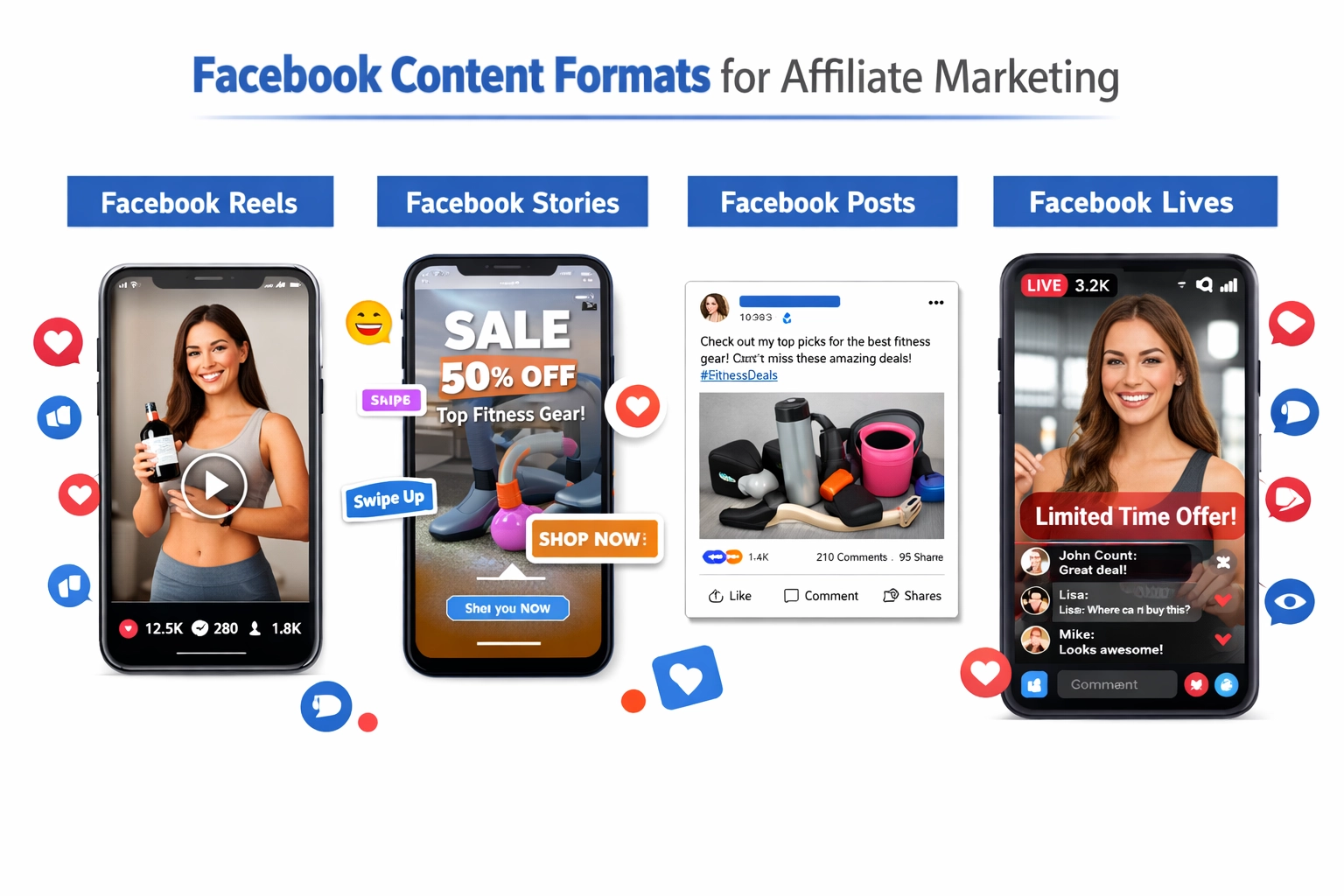
Different content formats perform differently on Facebook:
Reels: Quick demos, tutorials, before-and-after transformations, and “how-to” moments perform exceptionally well. Keep them under 60 seconds and hook viewers in the first 3 seconds.
Stories: Behind-the-scenes content, product sneak peeks, and daily testing updates create a sense of authenticity and urgency. Stories disappear after 24 hours, which encourages immediate action.
Posts: Detailed reviews, product comparisons, and buying guides work best. These longer-form posts allow you to provide comprehensive information and build a stronger case for your recommendations.
Lives: Real-time product demonstrations and Q&A sessions create direct engagement with your audience. People are more likely to purchase when they can ask questions and see products in action.
The 80/20 rule applies to Facebook affiliate marketing: 80% of your content should provide value without promoting anything, while 20% can include affiliate links. This ratio maintains audience trust and keeps the algorithm happy. Posts that feel native to Facebook and encourage genuine engagement outperform obviously promotional content.
Proper disclosure placement is critical for both legal compliance and audience trust. Facebook offers several ways to disclose your affiliate relationships, and using multiple methods increases the likelihood that your audience will see and understand your disclosure.
Strategic placement options:
• Beginning of caption – Place your disclosure in the first line or first sentence where it’s impossible to miss • In comments – Pin a comment with your disclosure at the top of the post • Using hashtags – Include #ad, #sponsored, or #affiliatelink at the beginning of your hashtag list (not buried at the end) • Paid Partnership label – Use Facebook’s built-in tool for branded content partnerships • Link in bio – Include a general disclosure in your Facebook bio for all affiliate content
Before and after examples:
❌ Before (Poor Disclosure): “Check out this amazing standing desk! It’s transformed my workspace. [link] #productivity #homeoffice #ad”
✓ After (Good Disclosure): “I earn a commission from this affiliate link. I’ve been using this standing desk for 6 months and it’s genuinely transformed my workspace. [link] #productivity #homeoffice #ad”
The difference is clear: the good example places the disclosure first, uses plain language, and explains the financial relationship upfront. Facebook’s Paid Partnership label is particularly useful if you’re working with brands directly. When you enable this label, Facebook automatically adds a “Paid partnership” tag to your post, signaling to viewers that you have a financial relationship with the brand.
Common disclosure mistakes to avoid:
Vague language – Don’t use abbreviations like “sp” or “collab.” Use clear terms like “affiliate link” or “sponsored.”
Hashtag-only disclosure – #ad alone isn’t sufficient. Include a statement in your caption explaining the financial relationship.
End-of-post disclosure – Many readers won’t scroll to the bottom. Place your disclosure at the top.
Fine print – Avoid using small text or light colors that make the disclosure hard to read.
Relying on platform tools alone – While Facebook’s Paid Partnership label helps, supplement it with your own clear disclosure statement.
Maximizing affiliate link performance on Facebook requires understanding your audience, creating compelling content, and continuously optimizing based on data. Here are proven strategies to increase clicks and conversions:
Audience targeting and segmentation:
Target specific audience segments based on interests, behaviors, and demographics. If you’re promoting productivity software, target people interested in business, entrepreneurship, and productivity. If you’re promoting fitness products, target people interested in health, wellness, and specific fitness activities. The more targeted your audience, the higher your conversion rate.
Content types that convert:
Using Facebook Groups for affiliate marketing:
Facebook Groups are goldmines for affiliate marketing because members are actively seeking advice and recommendations. Join groups related to your niche, provide genuine value by answering questions, and naturally mention affiliate products when relevant. Build authority and trust first before promoting anything. Many successful affiliate marketers generate 30-40% of their Facebook affiliate income from group discussions.
Key metrics to track:
• Click-through rate (CTR) – Percentage of people who click your affiliate link (aim for 2-5%) • Conversion rate – Percentage of clicks that result in purchases (aim for 1-3%) • Cost per acquisition (CPA) – How much you spend to generate one sale • Return on ad spend (ROAS) – Revenue generated for every dollar spent (aim for 3:1 or higher) • Engagement rate – Likes, comments, and shares relative to reach • Cost per click (CPC) – Average cost per click if using paid ads
A/B testing strategies:
Test different elements of your posts to see what resonates with your audience. Try different headlines, images, call-to-action language, and link placement. Test posting at different times to find when your audience is most active. Test different content formats (Reels vs. Posts vs. Stories) to see which generates the best results. Even small improvements in conversion rate can significantly impact your affiliate income.
Avoiding common pitfalls:
Managing affiliate links across Facebook and other platforms requires the right tools. Here’s a comparison of essential tools for Facebook affiliate marketing:
| Tool | Primary Function | Best For | Key Features |
|---|---|---|---|
| PostAffiliatePro | Comprehensive affiliate management | All-in-one affiliate marketing | Advanced tracking, multi-channel support, real-time analytics, compliance features, affiliate management |
| Amazon Associates | Amazon product promotion | E-commerce and product reviews | 24-hour cookie, commission tracking, product links, performance reports |
| ShareASale | Affiliate network | Diverse product categories | 5,000+ merchants, commission tracking, real-time reporting, payment options |
| CJ (Commission Junction) | Affiliate network | Enterprise-level programs | Advanced tracking, fraud detection, multiple payment options, API access |
| Impact.com | Performance marketing platform | Creator partnerships | Influencer discovery, contract management, payment processing, analytics |
| Sprout Social | Social media analytics | Performance measurement | Post analytics, engagement tracking, audience insights, scheduling |
| Later | Content scheduling | Content planning | Post scheduling, content calendar, analytics, team collaboration |
| Canva | Content creation | Visual content design | Templates, design tools, stock images, easy-to-use interface |
PostAffiliatePro stands out as the most comprehensive solution for affiliate marketers managing multiple channels and programs. Unlike single-purpose tools, PostAffiliatePro provides:
While specialized tools like Amazon Associates and ShareASale are valuable for specific programs, PostAffiliatePro consolidates everything into one platform, saving time and providing better insights into your overall affiliate marketing performance.
Even experienced affiliate marketers make mistakes that cost them money and credibility. Here are the most common pitfalls and how to avoid them:
❌ Posting too many affiliate links
Consequence: Facebook’s algorithm suppresses content with excessive external links, reducing your reach. Your audience also experiences “link fatigue” and stops engaging with your content.
✓ Solution: Follow the 80/20 rule—80% valuable content, 20% promotional. Limit affiliate links to 2-3 posts per week maximum.
❌ Inadequate or missing disclosures
Consequence: FTC fines up to $43,792 per violation, loss of audience trust, account suspension, and removal of content.
✓ Solution: Always disclose clearly and prominently at the beginning of your post using language like “This post contains affiliate links.”
❌ Promoting products you don’t believe in
Consequence: Your audience can sense inauthenticity, leading to low conversion rates and damaged credibility.
✓ Solution: Only promote products you’ve personally used and genuinely recommend. Your authentic enthusiasm drives conversions.
❌ Ignoring Facebook’s algorithm
Consequence: Your posts get suppressed, reaching fewer people and generating fewer clicks and conversions.
✓ Solution: Create content that encourages engagement (comments, shares, saves). Ask questions, invite discussion, and provide genuine value.
❌ Not tracking performance
Consequence: You waste time and effort on content that doesn’t convert, missing opportunities to optimize.
✓ Solution: Use Facebook analytics and your affiliate program’s tracking tools to monitor CTR, conversion rate, and ROAS. Optimize based on data.
❌ Violating affiliate program terms
Consequence: Account termination, loss of all commissions, and permanent ban from the program.
✓ Solution: Read and understand your affiliate program’s terms thoroughly. When in doubt, ask the program directly.
❌ Spammy content and tactics
Consequence: Account restrictions, reduced reach, or permanent ban from Facebook.
✓ Solution: Focus on providing value. Avoid clickbait, misleading headlines, and aggressive sales tactics.
❌ Ignoring audience feedback
Consequence: Declining engagement, lost followers, and reduced affiliate income.
✓ Solution: Respond to comments, answer questions, and adjust your content based on what your audience wants.
While Facebook is powerful for affiliate marketing, it’s not the only platform worth considering. Here’s how Facebook compares to other major social networks:
| Platform | Affiliate Friendly | Best Content Type | Disclosure Method | Best Audience |
|---|---|---|---|---|
| Moderate | Reels, Posts, Groups | Captions, Hashtags, Paid Partnership | 35-65 years old | |
| High | Reels, Stories, Carousel Posts | Paid Partnership Label | 18-45 years old | |
| TikTok | High | Short-form Videos | Disclosure Setting, Captions | 13-40 years old |
| YouTube | Very High | Long-form Videos, Shorts | Description, Verbal Mention | 18-55 years old |
Facebook’s unique advantages:
Facebook’s mature audience (35-65 years old) has higher purchasing power than younger demographics on TikTok. The platform’s precise targeting capabilities allow you to reach specific audience segments based on interests, behaviors, and demographics. Facebook Groups provide unique opportunities for building community and naturally recommending products. The platform’s algorithm rewards meaningful engagement, making authentic content more likely to succeed.
Instagram comparison:
Instagram is highly visual and excellent for lifestyle and beauty products. The Paid Partnership label makes disclosure easy and automatic. However, Instagram’s younger audience (18-45) may have lower purchasing power. Instagram’s algorithm prioritizes engagement over conversions, making it harder to drive sales directly.
TikTok comparison:
TikTok offers viral potential and reaches a younger demographic (13-40). The platform is highly affiliate-friendly with built-in disclosure settings. However, TikTok’s audience is younger and may have less disposable income. Building authority takes longer on TikTok due to the platform’s focus on entertainment over expertise.
YouTube comparison:
YouTube is the gold standard for affiliate marketing, with very high affiliate-friendliness and the ability to earn from long-form content. YouTube’s audience (18-55) has high purchasing power. However, YouTube requires significant time investment to build an audience and create quality content. The platform’s monetization requirements (1,000 subscribers, 4,000 watch hours) create barriers to entry.
Strategic recommendation:
Successful affiliate marketers don’t choose just one platform—they use a multi-platform approach. Start with the platform where your audience is most active, then expand to others. Facebook works best for reaching mature audiences with higher purchasing power. Instagram complements Facebook for visual products. TikTok reaches younger demographics. YouTube builds long-term authority and passive income. By diversifying across platforms, you reduce risk and maximize your affiliate income potential.
Posting affiliate links on Facebook is absolutely possible and can be highly profitable when done correctly. The key is understanding and respecting Facebook’s policies, complying with FTC requirements, and focusing on providing genuine value to your audience. Remember these essential points:
By following these guidelines and best practices, you can build a sustainable affiliate marketing business on Facebook while maintaining audience trust and staying compliant with all regulations. Start with valuable content, disclose transparently, and let your authentic recommendations drive conversions.
You can post Amazon affiliate links in organic Facebook posts with proper disclosure, but Amazon explicitly prohibits using affiliate links in paid Facebook ads. Amazon's 24-hour cookie duration means customers must purchase within 24 hours of clicking your link. Violating these terms can result in account termination.
Failing to disclose affiliate links violates FTC regulations and Facebook's policies. Consequences include FTC fines (up to $43,792 per violation), loss of audience trust, account suspension or termination, and removal of your content. Proper disclosure is both a legal requirement and essential for building credibility.
Facebook restricts paid ads for most affiliate offers, especially Amazon Associates links. Many affiliate programs prohibit paid advertising entirely. If you want to use paid ads, check your affiliate program's terms first. Organic posts are generally a safer and more effective approach for affiliate marketing on Facebook.
Place your disclosure at the beginning of your caption using clear language like 'This post contains affiliate links' or 'I earn a commission if you purchase through these links.' Use hashtags like #ad or #affiliatelink, and consider using Facebook's Paid Partnership label. Never bury disclosures in fine print or at the end of long posts.
Place affiliate links strategically within your content rather than at the very beginning. For Reels and Stories, mention the link verbally and in captions. For regular posts, include the link after your main message. Use link shorteners to make URLs less intrusive. Always prioritize valuable content over link placement.
Cookie duration varies by affiliate program. Amazon Associates uses a 24-hour cookie, meaning customers must purchase within 24 hours. Other programs may offer 30, 60, or 90-day cookies. Check your specific affiliate program's terms for exact cookie duration and attribution rules.
Yes, you can post affiliate links in Facebook Groups, but follow the group's rules and Facebook's policies. Provide genuine value and context rather than just dropping links. Many groups prohibit excessive self-promotion, so focus on answering questions and helping members first. Always disclose your affiliate relationship.
Organic posts are shared directly to your timeline or page without paid promotion and are generally allowed for affiliate links. Paid ads (boosted posts) face stricter restrictions and are often prohibited for affiliate offers. Organic posts typically perform better for affiliate marketing anyway, as they feel more authentic and trustworthy to audiences.
Manage all your affiliate links, track performance, and ensure compliance across all platforms with PostAffiliatePro's comprehensive affiliate management software.
Learn how to leverage TikTok for affiliate marketing with link placement strategies, promo codes, TopView ads, In-Feed ads, and branded hashtag challenges to dr...

proven strategies to identify and recruit high-quality affiliate marketers on LinkedIn. keyword searches, profile analysis techniques
Discover how Facebook Ads creatives can lower CPAs and CPMs while boosting conversions. Learn to craft engaging user-generated content, like unboxing and taste-...
Join our community of happy clients and provide excellent customer support with Post Affiliate Pro.




Cookie Consent
We use cookies to enhance your browsing experience and analyze our traffic. See our privacy policy.