Betting Affiliate Google Ads Compliance & Strategy
Master Google Ads compliance for betting affiliates. Learn certification requirements, geo-targeting strategies, and how to scale campaigns compliantly.
The Stakes of Non-Compliance in Betting Affiliate Marketing
The global gambling market is projected to reach $127 billion by 2026, with online betting and casino platforms driving unprecedented growth. Yet this expansion comes with a critical caveat: regulatory scrutiny has intensified dramatically. Google’s 2025 policy updates have tightened restrictions on gambling advertising, and non-compliance carries severe consequences—account suspension, fines ranging from $5,000 to $50,000+, and permanent bans from the platform. For betting affiliates, a single misstep in campaign setup, landing page content, or audience targeting can wipe out months of marketing investment. The UK Gambling Commission, Germany’s Glücksspielstaatsvertrag, and similar regulatory bodies worldwide now actively monitor affiliate campaigns, holding both operators and promoters accountable for violations. This guide walks you through Google Ads compliance requirements, certification pathways, and proven strategies to scale betting affiliate campaigns while staying on the right side of regulations—and how PostAffiliatePro can help you maintain clean tracking and compliance documentation throughout your campaigns.
Understanding Google’s Gambling Ad Policies
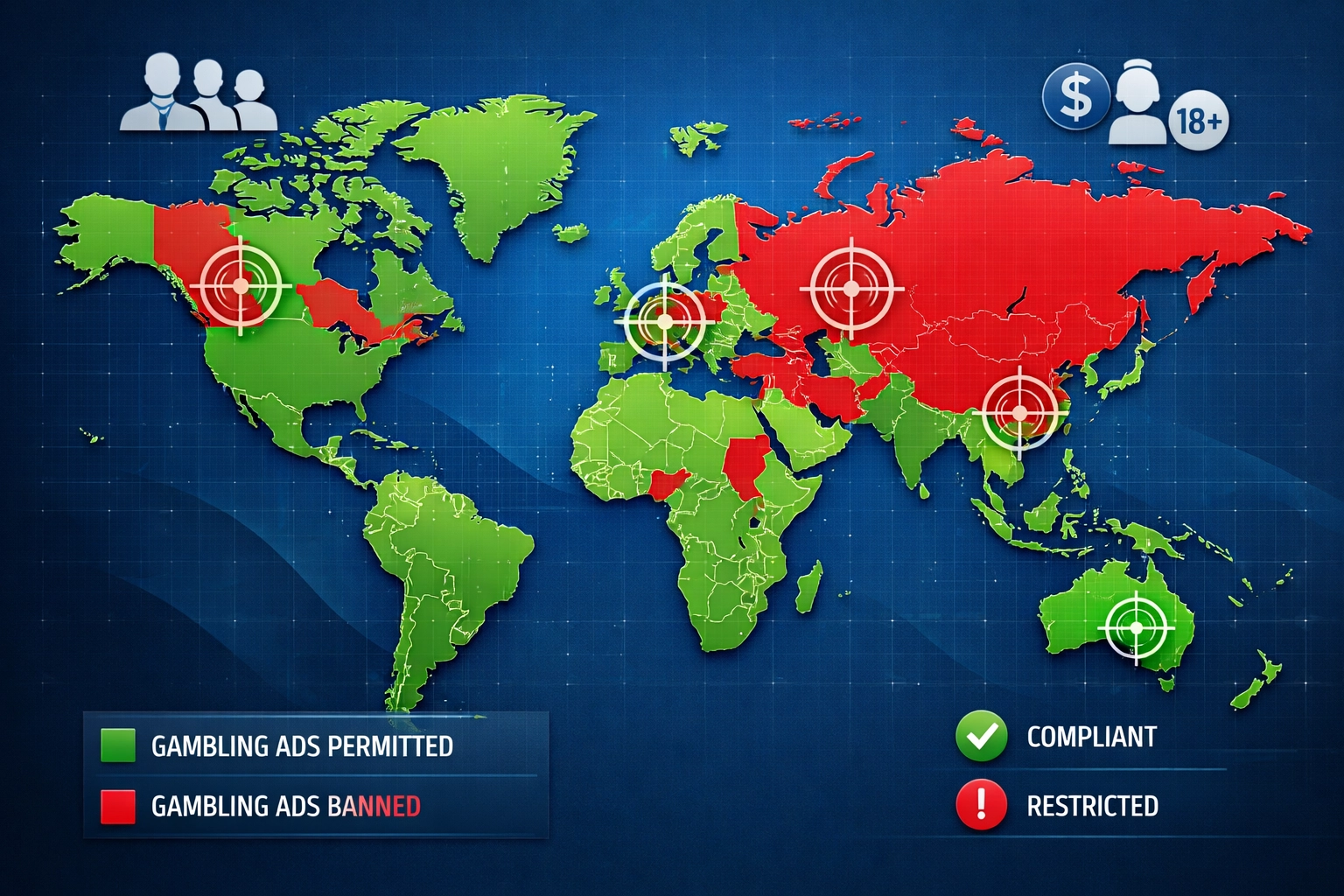
Google’s gambling advertising policies operate within a strict regulatory framework that varies significantly by geography and gambling type. As of 2026, Google allows gambling ads in 55 countries, but each has unique requirements around licensing, age verification, responsible gambling messaging, and personalization. The platform now requires separate certifications for different gambling verticals (real-money gambling, social casinos, sports betting), and each certification is tied to a specific website—meaning you cannot use a single certification across multiple domains. Google’s 2025 updates also introduced personalization restrictions in certain regions, prohibiting behavioral targeting based on user interests or demographics in markets like the UK and Germany, where regulators view such targeting as exploitative. Additionally, Google has expanded its definition of gambling to include more niche offerings, and enforcement has become stricter: falsifying certifications or submitting inaccurate documentation now results in permanent account bans without warning. Affiliates must ensure their landing pages clearly display licensing information, responsible gambling links (such as BeGambleAware in the UK), and accurate bonus terms—any exaggeration or omission can trigger disapprovals and compliance audits.
Country
Permitted Gambling Types
Key Restrictions
2025 Updates
United Kingdom
Sports betting, Online casino, Bingo, Lotteries
Age 18+, RG messaging required, No personalized targeting
Sports betting, Daily Fantasy Sports, Online casinos
Provincial licensing required, Age verification
Separate certifications per province
Australia (State-specific)
Sports betting, Lotteries
Strict geo-blocking, No social media ads
Enhanced enforcement on unlicensed operators
Brazil
Lotteries, Horse racing, Online casino games
License required, Age 18+
New regulations effective 2025
Spain
Sports betting, Online casino, Bingo
License required, RG messaging
Stricter affiliate verification
Italy
Sports betting, Online casino, Bingo, Poker
License required, Age verification
Monthly compliance audits
Netherlands
Sports betting, Online casino, Bingo, Lotteries
License required, Geo-blocking
Personalization restrictions added
Sweden
Sports betting, Online casino, Bingo
License required, RG messaging
Enhanced monitoring of affiliate campaigns
Ireland
Sports betting, Online casino, Bingo, Lotteries
License required, Age 18+
Stricter documentation requirements
Footnote: All countries require operators to hold valid gaming licenses from their respective regulatory bodies. Affiliates must verify operator licensing before promoting and maintain documentation for compliance audits. Google conducts monthly verification checks against official regulatory databases.
Launch your affiliate program today
Set up advanced tracking in minutes. No credit card required.
The Certification Process - Your Path to Compliance
Google offers three distinct certification pathways, each with specific documentation requirements and approval timelines. Private Licensed Operators (21-45 days approval) must submit proof of a valid gaming license from recognized authorities (Malta Gaming Authority, UK Gambling Commission, etc.), government-issued ID, business registration documents, and a detailed description of the website and target markets. State-Run Entities (7-45 days approval) follow a similar process but must also demonstrate age-verification systems and provide government authorization letters confirming their status as state-operated gambling services. Social Casino Games (14-30 days approval) require proof that the platform uses only virtual currency, no real-money wagering, clear disclaimers that no real gambling occurs, and confirmation that the social casino is not affiliated with any real-money gambling operator. Common rejection reasons include incomplete documentation (35% of rejections), mismatched licensing information (28%), insufficient landing page content (22%), and trademark violations (15%). Google’s 2025 enforcement changes have made the verification process more rigorous: the platform now cross-references all submitted licenses against official regulatory databases in real-time, and any discrepancies result in immediate rejection and account flagging. Post-certification, you must maintain compliance by updating your certification if you add new markets, change your website URL, or modify your gambling offerings—failure to do so can result in campaign suspension and account review.
Certification Types and Requirements:
Private Licensed Operator
Approval timeline: 21-45 days
Required documents: Gaming license, government ID, business registration, market description
Verification: Cross-checked against regulatory databases
Renewal: Annual or when adding new markets
State-Run Entity
Approval timeline: 7-45 days
Required documents: Government authorization letter, age-verification system proof, business registration
Geo-targeting is not optional in gambling advertising—it is a compliance imperative that protects your account and ensures you reach only users in regions where your operator holds valid licenses. Google’s 2025 policies require multi-layered targeting at the country, state/province, and sometimes city level, depending on local regulations. For example, in the United States, sports betting is legal in 38 states, but each state has different licensing requirements; running ads in a state where your operator lacks a license triggers immediate disapproval and potential account suspension. Age verification is equally critical: Google’s systems automatically filter ads to users 18+ in most markets, but you must also implement your own age-gating on landing pages to comply with FTC and local regulations. Vulnerable audience protection has become stricter in 2025—Google now prohibits targeting users who have shown interest in gambling addiction recovery resources, financial hardship forums, or mental health support communities. Regional variations add complexity: the UK requires explicit opt-in for personalized targeting, Germany prohibits behavioral targeting entirely, and Australia restricts ads to licensed operators only.
Key Implementation Strategies:
Country-level blocking: Use Google Ads geo-targeting to exclude all countries where your operator lacks a license; cross-reference against your operator’s licensing documentation monthly.
State/province-level targeting: For US, Canada, and Australia, implement state-specific campaigns with separate landing pages and compliance messaging for each jurisdiction.
Age verification integration: Implement third-party age verification (e.g., Jumio, IDology) on landing pages to create an additional compliance layer beyond Google’s filtering.
Audience exclusion lists: Build exclusion lists for users who have visited gambling addiction recovery sites, financial hardship forums, or mental health resources; update these lists weekly.
Regional compliance mapping: Create a spreadsheet documenting which gambling types are permitted in each target region, renewal dates for operator licenses, and responsible gambling messaging requirements.
IP-based verification: Use IP geolocation tools to verify that ad impressions are coming from approved regions; flag any anomalies for investigation.
Affiliate partner verification: If working with sub-affiliates, require them to certify they are only promoting in licensed regions and conduct quarterly audits of their traffic sources.
Join our newsletter
Be the first to know about new features and product updates.
Compliant Ad Copy and Landing Page Strategy
The difference between compliant and non-compliant ad copy often comes down to a single word or phrase. Compliant copy is transparent, avoids exaggeration, includes responsible gambling messaging, and clearly discloses your affiliate relationship. Non-compliant copy makes unsubstantiated claims (“guaranteed wins,” “risk-free betting”), omits bonus terms, targets vulnerable audiences, or hides affiliate relationships. Your landing page must deliver genuine value—Google’s 2025 updates specifically target “thin affiliate pages” that exist solely to redirect users to merchant sites without adding original content. A compliant landing page includes original reviews or comparisons, bonus term breakdowns with wagering requirements clearly stated, responsible gambling links (BeGambleAware, Gambling Therapy), licensing information, and an FTC-compliant affiliate disclosure near the top of the page. Bonus promotions are a common violation point: if an operator offers a “100% match bonus up to $200,” your ad and landing page must include the wagering requirement (e.g., “35x wagering required”), expiry date, and any game restrictions—omitting these details triggers disapprovals and potential regulatory fines.
Compliant vs. Non-Compliant Examples:
Element
✅ COMPLIANT
❌ NON-COMPLIANT
Ad Headline
“Licensed UK Sportsbook - 18+ Only”
“Get Rich Quick with Sports Betting!”
Bonus Claim
“100% Match Bonus up to £200. 35x wagering. T&Cs apply.”
“Free £200 Bonus - No Strings Attached!”
Responsible Gambling
“Gamble Responsibly. [Link to BeGambleAware]”
(No mention of responsible gambling)
Affiliate Disclosure
“We earn a commission if you sign up through our link.”
(Hidden or absent)
Landing Page Content
Original comparison of 5 sportsbooks with pros/cons
Redirect page with minimal content
Licensing Info
“Licensed by the UK Gambling Commission. License #12345”
(No licensing information)
Compliant Landing Page Structure:
1. Header: Clear affiliate disclosure + responsible gambling link
2. Hero section: Original comparison table or review
3. Bonus breakdown: Full terms, wagering requirements, expiry date
4. Pros/cons section: Original analysis of the operator
5. Responsible gambling section: Links to support resources
6. Footer: Licensing info, T&Cs, privacy policy
Tracking and Measurement - Proving ROI While Staying Compliant
Clean tracking is essential for two reasons: it proves ROI to stakeholders, and it provides documentation for compliance audits. Google’s 2025 enforcement includes regular audits of affiliate campaigns, and regulators now request conversion data, traffic source documentation, and affiliate agreement copies. GCLID tracking (Google Click ID) is your foundation—enable auto-tagging in Google Ads and capture the GCLID on your landing page, then store it alongside lead and conversion data. When your affiliate network reports a sale, match it to the GCLID and import the conversion back into Google Ads using offline conversion imports or the Google Ads API. This creates a closed-loop attribution model that Google can audit and regulators can verify. Enhanced Conversions for Leads adds another layer: if you capture email or phone on your landing page, hash this data securely and send it to Google, which improves match rates and provides additional verification that conversions are legitimate. Reconciliation between your affiliate network and Google Ads will never be perfect—attribution windows, time zones, and deduplication rules differ—but aim for 85-95% alignment; significant gaps signal tracking issues that regulators will flag.
6-Step Conversion Tracking and Compliance Verification Process:
Enable auto-tagging in Google Ads account settings; verify GCLID is captured on landing page
Store GCLID alongside lead data (email, phone, name) in your database or CRM
Match conversions from affiliate network to GCLID using order ID or transaction ID as secondary key
Import offline conversions to Google Ads weekly using CSV upload or API; include conversion value and date
Enable Enhanced Conversions by hashing and sending email/phone data to Google for improved attribution
Audit monthly by comparing Google Ads conversion count to affiliate network payout count; investigate gaps >5%
Compliance Tracking Dashboard Metrics:
Daily: Conversion count, cost per conversion, GCLID match rate (target: >90%)
PostAffiliatePro integrates with Google Ads via API to automate GCLID capture, offline conversion imports, and compliance reporting—reducing manual work and providing auditable documentation that regulators expect.
Common Pitfalls and How to Avoid Them
Betting affiliates frequently make mistakes that trigger account suspension or regulatory action. Understanding these pitfalls helps you avoid costly errors:
Promoting unlicensed operators: Running ads for operators without valid licenses in your target regions is the fastest path to permanent account ban. Verify operator licensing against official regulatory databases before promoting and update verification monthly.
Targeting restricted regions: Geo-targeting failures are common—ads appearing in regions where gambling is banned or where your operator lacks a license. Use Google Ads geo-targeting reports to verify impressions are only in approved regions; set up IP-based verification as a secondary check.
Misleading bonus claims: Exaggerating bonuses or omitting wagering requirements violates both Google policies and FTC regulations. Always include full bonus terms in ad copy and landing pages; test all claims against operator T&Cs before launching.
Insufficient landing page content: Thin affiliate pages that exist only to redirect users trigger disapprovals under Google’s 2025 destination requirements. Build original reviews, comparisons, or tools that provide genuine value independent of affiliate links.
Trademark misuse: Using competitor brand names in ad copy without permission can trigger trademark complaints and ad disapprovals. Stick to generic terms (“best sportsbook,” “top online casino”) or your own brand; if using competitor names, ensure your landing page clearly discloses your affiliate relationship.
Failing to update for policy changes: Google updates gambling policies quarterly, and outdated campaigns violate new requirements. Subscribe to Google Ads notifications, follow industry blogs, and conduct quarterly policy audits of all active campaigns.
Mixing gambling verticals without separate certifications: Running real-money gambling and social casino ads under a single certification violates 2025 requirements. Obtain separate certifications for each gambling type and maintain distinct campaign structures.
Alternative Channels Beyond Google Ads
While Google Ads dominates paid search, strict policies and high competition make alternatives attractive. Bing Ads allows gambling advertising in similar regions as Google but with slightly less stringent verification—approval typically takes 7-14 days versus Google’s 21-45 days. However, Bing’s audience is smaller (15-20% of Google’s volume), so ROI is often lower. Specialized gambling ad networks like Blockchain-Ads, Adsterra, and PropellerAds operate within the gambling industry and understand regulatory nuances; they offer faster approval, more flexible targeting, and access to gambling-specific audiences. Blockchain-Ads, for example, provides access to 250+ geographies including restricted regions like the US (state-level), with crypto-targeting capabilities that Google prohibits. Affiliate networks with built-in compliance tools (CPA networks, iGaming-specific networks) handle much of the compliance burden—they verify operator licensing, manage certifications, and provide compliant landing pages. Social media alternatives (Facebook, Instagram, TikTok) have their own restrictions but can complement Google Ads; Facebook requires pre-approval and age-gating, while TikTok prohibits most gambling ads entirely. Organic channels (SEO, content marketing) avoid platform restrictions entirely and build long-term authority—a blog ranking for “best sportsbooks” generates consistent traffic without compliance headaches. PostAffiliatePro integrates with multiple channels, allowing you to track conversions across Google Ads, Bing, affiliate networks, and organic sources in a single dashboard.
Alternative Channel Comparison:
Channel
Approval Time
Audience Size
Compliance Burden
Best For
Google Ads
21-45 days
Very large
High
Scale and brand awareness
Bing Ads
7-14 days
Medium
Medium
Budget-conscious campaigns
Blockchain-Ads
3-7 days
Medium
Low
Crypto and restricted regions
Affiliate Networks
1-3 days
Medium
Low
Compliance-first approach
Facebook
5-10 days
Large
High
Retargeting and engagement
SEO/Content
Ongoing
Large
Low
Long-term sustainable traffic
Building a Sustainable Compliance Strategy
Compliance is not a one-time setup—it requires ongoing monitoring, documentation, and team alignment. A sustainable strategy starts with a compliance checklist that you review monthly: verify operator licensing against regulatory databases, audit all active landing pages for policy violations, check that geo-targeting is correctly configured, confirm that all ads include responsible gambling messaging, and review Google Ads notifications for policy updates. Regular policy monitoring is critical—subscribe to Google Ads notifications, follow industry blogs (iGamingBusiness, AffiliateSecret), and join affiliate communities where policy changes are discussed. Team training and documentation ensure that everyone involved in campaign management understands compliance requirements; create a shared document outlining your operator’s licenses, target regions, compliant ad templates, and landing page standards. Audit schedules should be quarterly at minimum—review 10% of active campaigns each month, rotating through all campaigns annually. Staying ahead of regulatory changes means monitoring not just Google’s policies but also local gambling regulations in your target regions; hire a compliance consultant if you operate in multiple jurisdictions. Affiliate software automation reduces manual work and human error—PostAffiliatePro’s compliance features include automated GCLID tracking, offline conversion imports, compliance reporting, and audit trails that document every campaign change.
Monthly Compliance Checklist:
☐ Verify operator licensing against regulatory databases
☐ Audit 10% of active landing pages for policy violations
☐ Check geo-targeting configuration in Google Ads
☐ Confirm all ads include responsible gambling messaging
☐ Review Google Ads notifications for policy updates
☐ Reconcile conversions between Google Ads and affiliate network (target: 85-95% match)
☐ Update compliance documentation with any campaign changes
☐ Verify affiliate partners are only promoting in licensed regions
☐ Test age-verification systems on landing pages
☐ Review traffic source reports for anomalies or suspicious activity
Conclusion: Compliance as Your Competitive Advantage
Betting affiliate paid search success hinges on compliance—not as a limitation, but as a competitive advantage. Operators and regulators increasingly favor affiliates who demonstrate rigorous compliance practices, and Google’s 2025 enforcement makes cutting corners impossible. The key requirements are straightforward: obtain proper certification for your gambling type and target regions, implement multi-layered geo-targeting and age verification, build landing pages with genuine value and transparent bonus terms, track conversions cleanly for audit purposes, and monitor policy changes continuously. Affiliates who master these fundamentals scale faster, face fewer account suspensions, and build lasting relationships with operators and platforms. PostAffiliatePro simplifies compliance management by automating GCLID tracking, offline conversion imports, compliance reporting, and audit documentation—giving you the clean data and transparent records that regulators expect. The betting affiliate market is growing, but so is regulatory scrutiny; the affiliates who thrive are those who embrace compliance as a core business practice. Start your free trial of PostAffiliatePro today and take control of your compliance and conversion tracking—because in betting affiliate marketing, compliance is not optional, it’s your foundation for sustainable growth.
Frequently asked questions
What happens if I run gambling ads in a restricted region?
Your ads will be disapproved, your account may be suspended, and you could face legal penalties depending on local laws. Google now conducts stricter enforcement with permanent bans for repeated violations. Always verify operator licensing against regulatory databases before launching campaigns in any region.
Do I need separate certifications for different gambling types?
Yes, as of 2026, Google requires separate certifications for each gambling vertical (real-money gambling, social casinos, sports betting) and each website you promote. You cannot use a single certification across multiple domains or gambling types.
How long does Google Ads certification take?
Certification typically takes 1-3 weeks, but can take longer if Google requests additional documentation. Private operators average 21-45 days, state-run entities 7-45 days, and social casinos 14-30 days. Ensure all documents are accurate to avoid delays and rejections.
Only if your landing page adds significant original value and your affiliate program allows paid search. Many programs prohibit direct linking to merchant sites. Always check your affiliate program's terms and build a value-first landing page with original reviews or comparisons.
What's the difference between responsible gambling messaging and FTC disclosures?
Responsible gambling messaging (18+, Gamble Responsibly) protects users from harm and complies with platform policies. FTC disclosures inform users about your affiliate relationship. Both are required—responsible gambling messaging goes in ads and landing pages, while FTC disclosures must appear near affiliate links.
How can PostAffiliatePro help with compliance?
PostAffiliatePro provides automated GCLID tracking, offline conversion imports, compliance reporting, and audit trails that document every campaign change. This gives you the clean data and transparent records that regulators expect, reducing manual work and human error.
What should I do if my ads are disapproved?
Review the disapproval reason, make corrections to your landing page or ad copy, and request a review. Keep detailed records of all changes for compliance documentation. Common reasons include insufficient original content, misleading claims, or targeting violations—address each systematically.
Are there any tools to help monitor policy changes?
Yes, subscribe to Google Ads notifications, follow industry blogs like iGamingBusiness and AffiliateSecret, and use compliance monitoring tools. PostAffiliatePro can help centralize compliance tracking across campaigns and alert you to policy updates relevant to your target regions.
Streamline Your Affiliate Compliance with PostAffiliatePro
Track conversions, manage certifications, and maintain compliance documentation automatically. PostAffiliatePro integrates with Google Ads to give you the clean data and audit trails regulators expect.
Google Algorithm Updates: Betting Affiliate Survival
Comprehensive guide for betting affiliates to survive Google's 2025 algorithm updates, including E-E-A-T strategies, content optimization, and multi-channel.